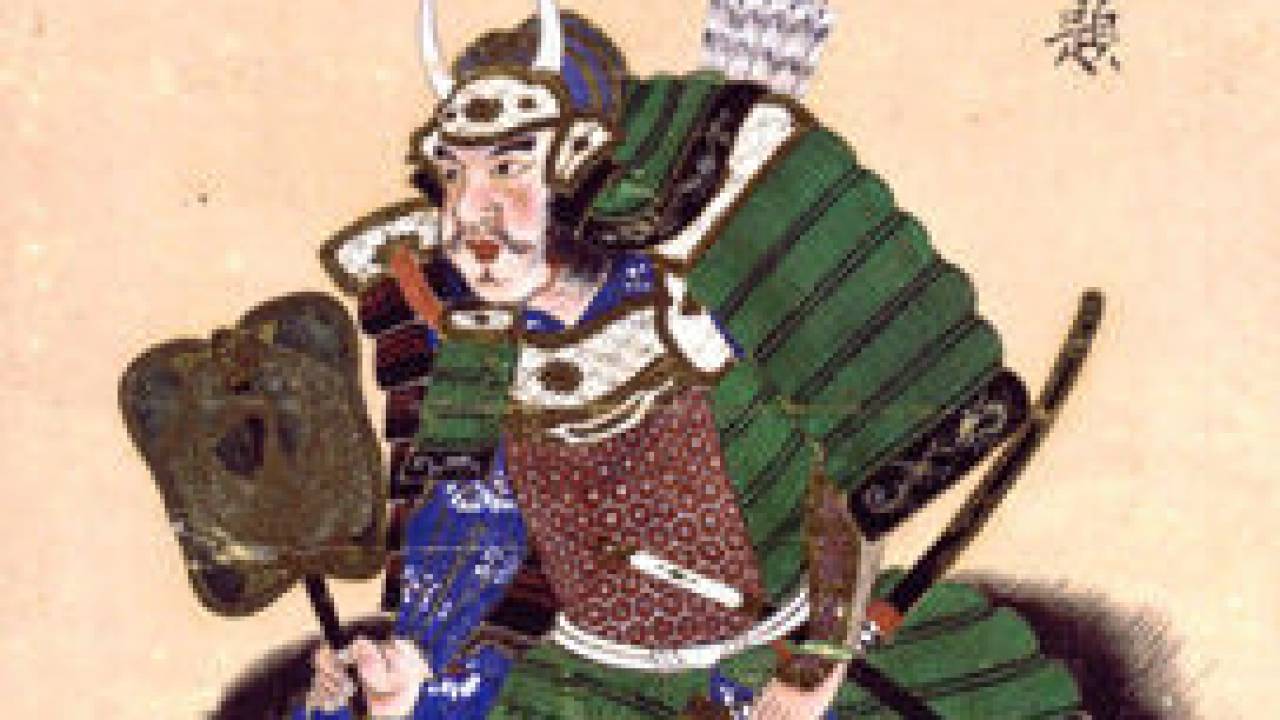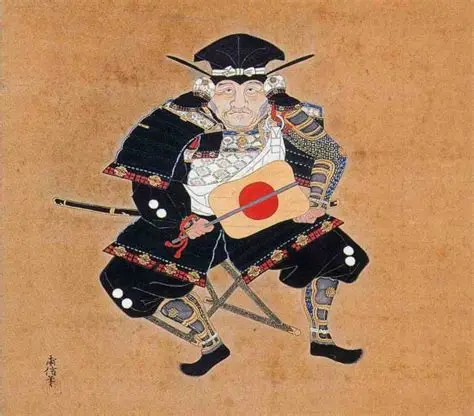
In the year 1536, during the Tenbun era, Ikeda Tsuneoki was born in Owari Province.
His childhood name was Katsusaburo. His father was Ikeda Tsunetoshi, and his mother, who later became known as Yotokuin, was a woman of notable standing.
Yotokuin served as a wet nurse to Oda Nobunaga.
Nobunaga, born in 1534, was two years older than Tsuneoki, and the two were known as milk brothers.
From a young age, Tsuneoki served close to Nobunaga, and as Nobunaga’s influence expanded from Owari to Mino, Omi, and the Kinai region, Tsuneoki’s status within the Oda clan rose accordingly.
Even after Nobunaga’s death in the Incident at Honnoji, Tsuneoki continued to fight.
His final adversary was Tokugawa Ieyasu.
Katsusaburo, Two Years Younger Than Nobunaga
There are few historical records about Tsuneoki’s father, Ikeda Tsunetoshi, and various theories exist regarding the origins of the Ikeda family.
A significant aspect of understanding Tsuneoki’s early years is the relationship between his mother, Yotokuin, and the Oda family.
A wet nurse was not merely someone who fed an infant; she and her family often maintained long-standing ties with the lord’s household.
As Yotokuin’s child, Tsuneoki was close to Nobunaga from a young age and eventually served as his retainer.
Around 1551, during the Tenbun era, Nobunaga succeeded his father, Nobuhide, as head of the family.
In Owari, internal conflicts within the Oda clan persisted, and Nobunaga expanded his influence while facing opposition from his family, including his brother Nobuyuki (Nobukatsu).
On May 19, 1560, during the Battle of Okehazama, when Imagawa Yoshimoto invaded Owari with a large army, Tsuneoki is said to have participated on Nobunaga’s side.
There are fewer detailed records of Tsuneoki’s activities in his youth compared to later years.
His name grew prominent within the Oda clan as Nobunaga extended his power beyond Owari.
Guardian of Inuyama Castle
In 1567, during the Eiroku era, Nobunaga captured Inabayama Castle from Saito Tatsuoki and renamed the castle town Gifu.
The following year, in Eiroku 11, he escorted Ashikaga Yoshiaki to the capital.
As Nobunaga expanded his influence from Mino to the Kinai region, Tsuneoki was entrusted with Inuyama Castle in northern Owari.
Inuyama Castle was located on the southern bank of the Kiso River, with Mino on the opposite shore.
For Nobunaga, based in Gifu, it was a strategic area connecting Owari and Mino.
Following Nobunaga’s military campaigns, Tsuneoki established his position within the Oda clan as a lord with his own castle and lands.
The turning point that shifted his activities from Owari to Settsu was the rebellion of Araki Murashige.
Pursuing Araki Murashige to Hanakuma Castle
In 1578, during the Tensho era, Araki Murashige, who had been entrusted with Settsu, rebelled against Nobunaga.
Murashige barricaded himself in Arioka Castle, which was then besieged by Oda forces.
In September of the following year, Tensho 7, Murashige escaped from Arioka Castle with a small retinue and moved to Hanakuma Castle via Amagasaki.
Hanakuma Castle was located in what is now the Chuo Ward of Kobe City.
In 1580, during the Tensho era, Tsuneoki, along with his eldest son Mototsuke, attacked Hanakuma Castle.
Murashige’s forces also launched sorties from the castle, and the battle lasted several months.
Eventually, Hanakuma Castle surrendered, and Murashige fled westward, seeking refuge with the Mori clan.
After the war, Tsuneoki was granted part of the former Araki clan’s territory, establishing a substantial domain in Settsu.
It is said that Hanakuma Castle was dismantled, and Tsuneoki built Hyogo Castle in Hyogotsu.
Previously overseeing Inuyama in northern Owari, Tsuneoki shifted his focus to controlling Hyogotsu, a gateway to the Seto Inland Sea.
In 1582, Tsuneoki’s lord, Oda Nobunaga, fell in Kyoto.
The Incident at Honnoji—The Death of Nobunaga
On June 2, 1582, Akechi Mitsuhide attacked Honnoji in Kyoto.
Nobunaga took his own life at Honnoji, and his heir, Nobutada, also perished at Nijo Palace.
Upon learning of Nobunaga’s death, Hashiba (Toyotomi) Hideyoshi, who was engaged in battle with the Mori clan at Takamatsu Castle in Bitchu, made peace with the Mori and returned his forces to the Kinai region.
Tsuneoki joined Hideyoshi’s forces.
On June 13, Hideyoshi’s army clashed with Mitsuhide’s forces at Yamazaki.
Alongside Tsuneoki, Hideyoshi’s side included Niwa Nagahide, Nakagawa Kiyohide, and Takayama Ukon.
The battle ended in victory for Hideyoshi’s forces, and the defeated Mitsuhide lost his life while fleeing from Katsuragi Castle to Omi.
This occurred 11 days after the Incident at Honnoji.
With the simultaneous loss of Nobunaga and Nobutada, the Oda clan faced the challenge of deciding a successor and redistributing their domains.
Tsuneoki participated in these discussions.
The Kiyosu Conference—Sitting with Katsuie and Hideyoshi
Around June 27, the senior retainers of the Oda clan gathered at Kiyosu Castle in Owari.
Shibata Katsuie, Niwa Nagahide, Hashiba (Toyotomi) Hideyoshi, and Ikeda Tsuneoki were present.
The discussion on Nobunaga’s successor included his second son, Nobukatsu, third son, Nobutaka, and Nobutada’s young son, Sanposhi.
Sanposhi was chosen as the successor to Nobunaga and Nobutada, and the Oda clan’s territories were redistributed.
Tsuneoki received an increase in his holdings in Settsu.
Having served Nobunaga since childhood, Tsuneoki was now in a position to participate in the crucial discussions shaping the future of the Oda clan alongside Shibata Katsuie, Niwa Nagahide, and Hashiba (Toyotomi) Hideyoshi.
Following the Kiyosu Conference, tensions between Hideyoshi and Shibata Katsuie deepened.
Tsunekatsu aligned himself closely with Hideyoshi.
To Mino Ogaki, 130,000 Koku
In 1583, the conflict between Hideyoshi and Shibata Katsuie escalated into the Battle of Shizugatake.
Katsuie was defeated and took his own life at Kitanosho Castle in Echizen, and Nobunaga’s third son, Nobutaka, also lost his life shortly thereafter.
After the war, Tsunekatsu moved to Mino and was granted 130,000 koku centered around Ogaki.
His eldest son, Motosuke, also took up residence in Gifu Castle.
Around this time, Tsunekatsu adopted the name “Katsunyu.”
In the following year’s Battle of Komaki and Nagakute, he appears in records under the name Ikeda Katsunyu.
Tsunekatsu had sons named Motosuke and Terumasa, and one of his daughters was married to Mori Nagayoshi.
In 1584, Tsunekatsu was 49 years old, Motosuke was 26, and Mori Nagayoshi was 27.
The three stood by Hashiba Hideyoshi’s side and headed towards Owari.
Hideyoshi and Ieyasu Face Off at Komaki
In 1584, relations between Hideyoshi and Oda Nobukatsu broke down.
Nobukatsu allied with Tokugawa Ieyasu to oppose Hideyoshi.
On March 13, Ieyasu entered Kiyosu Castle and subsequently set up camp at Mount Komaki.
Hideyoshi’s forces also advanced from Mino to Owari.
Tsunekatsu joined the battle on Hideyoshi’s side and captured Inuyama Castle, where he had once been the lord.
The forces of Hideyoshi and those of Ieyasu and Nobukatsu confronted each other around Komaki.
Both sides held large armies, fortifying their positions and facing off against each other.
In April, a separate detachment from Hideyoshi’s side began moving through eastern Owari towards Mikawa.
The target was Ieyasu’s stronghold at Okazaki.
Later accounts, such as the “Taikoki,” recount that Tsunekatsu proposed this “Mikawa Invasion” to Hideyoshi.
The overall commander was Hideyoshi’s nephew, Miyoshi Nobuyoshi, later known as Toyotomi Hidetsugu, with Ikeda Tsunekatsu and his son Motosuke, Mori Nagayoshi, Hori Hidemasa, and Hasegawa Hidekazu joining the campaign.
Tsunekatsu’s second son, Terumasa, also joined the expedition with his father and brother.
The forces departed Komaki on the night of April 6, advancing eastward towards Okazaki.
The Detachment Heading to Okazaki
Ieyasu’s main forces remained at Komaki.
To strike Okazaki by passing behind enemy lines into Mikawa, the detachment continued its advance in separate units.
This movement was detected by Tokugawa’s forces.
On the night of April 8, Ieyasu also departed from Mount Komaki.
The Tokugawa army pursued the Hashiba detachment into eastern Owari.
By the early morning of April 9, Tsunekatsu’s forces had reached the vicinity of present-day Nisshin City.
Iwasaki Castle lay along their path.
Early Morning of April 9th—The Assault on Iwasaki Castle
Niwa Ujitsugu, the lord of Iwasaki Castle, was aligned with the Tokugawa and had set out to join Ieyasu.
His brother, Niwa Ujishige, and Kato Kagezane were among those left behind to defend the castle.
As the Ikeda forces passed by on their way to Okazaki, the defenders of Iwasaki Castle attempted to block their path.
Tsuneoki directed his troops toward the castle.
According to the legends of present-day Nisshin City, over 300, including Niwa Ujishige, perished in the Battle of Iwasaki Castle.
Iwasaki Castle fell to the Ikeda forces.
Meanwhile, a battle had already erupted behind the Ikeda forces.
The Tokugawa army caught up with a separate detachment of Hashiba forces and launched an attack on Miyoshi Nobuyoshi’s troops in the Shirayama Woods, causing them to scatter.
Following this, Hori Hidemasa engaged the Tokugawa forces near Hinokigane, repelling the pursuing troops. Hori then withdrew his forces instead of advancing to Okazaki.
Upon learning of the rear battle, Tsuneoki and Mori Nagayoshi halted their march to Okazaki and turned their forces toward Nagakute.
There, they faced an advancing army led by Ieyasu himself.
Nagakute—The Battlefield of a Father and His Two Sons
April 9th, Nagakute.
The forces of Tsuneoki, his sons Mototsuke and Terumasa, and Mori Nagayoshi confronted the pursuing Tokugawa army.
Beside Tsuneoki stood his eldest son, Mototsuke, and his second son, Terumasa.
On the Tokugawa side, Ieyasu led the main forces, with Ii Naomasa among the ranks.
The Ikeda forces were reportedly positioned around Butsugane, while the Mori forces took up positions to the north.
As the battle commenced, the Ikeda and Mori forces clashed head-on with the Tokugawa army.
During his assault on Ieyasu’s lines, Mori Nagayoshi was shot and killed by gunfire.
He was 27 years old.
Despite the loss of their son-in-law, Nagayoshi, the Ikeda forces continued to fight.
The Tokugawa attack reached the area where Tsuneoki and Mototsuke were, resulting in a chaotic melee between the two armies.
Having marched since the previous night aiming for Okazaki and attacking Iwasaki Castle at dawn, the Ikeda forces found themselves battling Ieyasu’s main army at Nagakute that same day.
Mototsuke also fell in this battle.
He was 26 years old.
Tsuneoki himself could not retreat from Nagakute.
Ikeda Katsunaga, The Final Moments at 49
Tsuneoki was killed by the Tokugawa forces on the battlefield of Nagakute.
The person credited with killing Tsuneoki is Tokugawa retainer Nagai Naomasa.
April 9, 1584, in the 12th year of the Tensho era.
He was 49 years old.
At the Nagakute battlefield today, the “Katsunaga Mound” marks the site of Tsuneoki’s death.
His eldest son, Mototsuke, also perished at Nagakute, with his head reportedly taken by Tokugawa retainer Ando Naotsugu.
His son-in-law, Mori Nagayoshi, also died in battle at the age of 27.
Tsuneoki’s second son, Terumasa, managed to escape the battlefield and survived.
A father at 49, a brother at 26.
At the age of 20, Terumasa inherited the Ikeda family.
Terumasa Survives Nagakute
After losing his father and brother, Terumasa took over the Ikeda family and continued to serve Hideyoshi.
In 1590, following the Siege of Odawara, he was granted 152,000 koku in Mikawa Yoshida, and later married Tokugawa Ieyasu’s daughter, Tokuhime.
During the Battle of Sekigahara in 1600, he sided with the Eastern Army, and after the war, his holdings were increased to 520,000 koku in Harima Himeji.
It was Ikeda Terumasa who advanced the large-scale construction that led to the present-day Himeji Castle.
On April 9, 1584, at Nagakute, Tsuneoki, Motosuke, and Mori Nagayoshi fell on the same battlefield.
Terumasa returned from there and succeeded the Ikeda family.
Ikeda Tsuneoki, two years younger than Nobunaga, ended his 49 years at Nagakute, and the Ikeda family was passed on to the 20-year-old Terumasa.
Learn more about “Komaki and Nagakute” where Ikeda Tsuneoki fell.
The Battle of Komaki and Nagakute was the final battlefield for Ikeda Tsuneoki. What were Hideyoshi and Ieyasu aiming for, and why was the “Middle Invasion” into Mikawa carried out?
Hirayama Yu’s book, “The Battle of Komaki and Nagakute: The True Story of Hideyoshi and Ieyasu’s Decisive Battle,” provides a detailed examination of the battle’s progress based on historical sources. It’s a recommended read for those who want to delve deeper into the entire Battle of Komaki and Nagakute, not just Tsuneoki’s end.