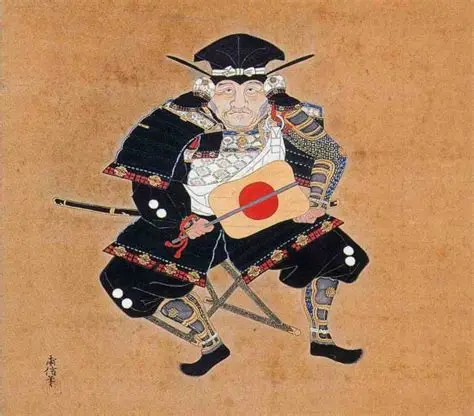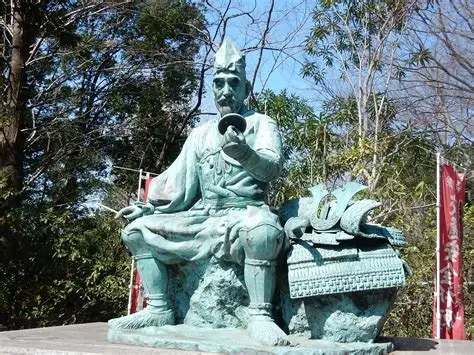
In the first year of the Eiroku era (1558), Mori Nagayoshi was born as the second son of Mori Yoshinari, a retainer of Oda Nobunaga.
He was commonly known as Katsuzō.
Later, he would take the title of Musashi-no-kami and become known to posterity by the nickname “Oni Musashi” (Demon Musashi).
His father, Yoshinari, was a veteran retainer who served Nobunaga from the time he expanded his influence from Owari to Mino.
The Mori family was entrusted with Kanayama Castle in eastern Mino, where Nagayoshi was born.
In the first year of the Genki era (1570), the Mori family suffered a series of battlefield deaths.
First, his elder brother, Katsuaki, was killed in Echizen, and in September of the same year, his father, Yoshinari, also fell in battle in Omi.
When Nagayoshi inherited the family headship and Kanayama Castle, he was just 13 years old.
The history of Kanayama Castle in Kani City also records that after Yoshinari’s death, the 13-year-old Nagayoshi became the castle lord.
The young lord of Kanayama Castle would go on to walk the battlefields with Nobunaga, eventually being entrusted with northern Shinano at the age of 24.
During the Incident at Honnōji, he lost Nobunaga and three of his brothers.
Then, on April 9, 1584, at Nagakute.
Nagayoshi fought against Tokugawa Ieyasu’s forces and lost his life at the age of 27.
Fourteen days earlier, Nagayoshi had written a will in preparation for his potential death in battle.
Mori Yoshinari and Kanayama Castle
His father, Mori Yoshinari, was a warrior from Mino who accompanied Nobunaga in his campaigns to conquer Mino and march to Kyoto.
In the eighth year of the Eiroku era (1565), when Nobunaga extended his influence into eastern Mino, Yoshinari was granted Uho Castle.
The castle was renamed Kanayama Castle and was located in present-day Kaneyama, Kani City, Gifu Prefecture.
It was a mountain castle overlooking the Kiso River, strategically positioned to control the area from eastern Mino to the Kiso region.
Nagayoshi had an elder brother, Katsuaki, and younger brothers named Bōmaru, Rikimaru, and Naritoshi.
Naritoshi served as a page to Nobunaga and is generally known by the name Mori Ranmaru.
The men of the Mori family served the Oda family just like their father.
The year Genki 1 greatly changed the future of the Mori family.
A 13-Year-Old Who Lost Both Brother and Father
In April of Genki 1, Nobunaga attacked Asakura Yoshikage in Echizen.
Katsuaki, the heir of the Mori family, also went to battle and is said to have died in the assault on Tedutsu-yama Castle.
The second son, Nagayoshi, became the successor of the Mori family.
About five months later, in September, his father Yoshinari also perished in battle.
The forces of the Asai and Asakura advanced into Omi, threatening the area around Nobunaga’s Usa-yama Castle.
Yoshinari confronted them and lost his life in the battle on September 20.
Nagayoshi lost both his brother and father in the same year and inherited the headship of the Mori family and Kanayama Castle at the age of 13.
From then on, he served Nobunaga as the lord of eastern Mino.
The Young Lord of Kanayama
In later years, Nagayoshi is often depicted as “Oni Musashi,” a figure racing across battlefields.
Kani City also introduces him as a figure known as “Oni Musashi” due to his fierce fighting style.
The responsibilities of the lord of Kanayama Castle extended beyond just warfare.
In Kanayama, which benefited from the water transport on the Kiso River, merchants and craftsmen gathered in the castle town, leading to the development of the area.
Nagachika grew as a lord governing eastern Mino while defending Kanayama as a military stronghold.
In 1574, he joined the campaign against the Ikkō-ikki in Ise Nagashima, and in May of the following year, he participated in the Battle of Nagashino, where Takeda Katsuyori faced the Oda-Tokugawa allied forces.
It had been five years since his father’s death.
As a teenager, Nagachika had begun to join Nobunaga’s military campaigns as the head of the Mori family.
A major turning point for Nagachika came with the campaign against the Takeda in 1582.
1582: Into Takeda Territory
In February 1582, Nobunaga launched a large-scale invasion against the Kai Takeda clan.
The main force was led by his heir, Oda Nobutada.
Nagachika joined Nobutada’s army and advanced into Shinano.
The Oda forces moved south through the Ina Valley, capturing various Takeda-held castles.
On March 2, Takato Castle, defended by Nishina Morinobu, fell, and the army continued its advance into Kai.
On March 11, Takeda Katsuyori took his own life at the foot of Mount Tenmoku.
The Kai Takeda clan was destroyed.
After the war, Nobunaga distributed the former Takeda territories among his retainers.
Nagachika was granted a domain far larger than Kanayama.
Entrusted with Northern Shinano at 24
Nagachika was given the area centered around Kawanakajima in northern Shinano.
Records from Kani City confirm that in 1582, Nagachika was transferred to Shinano Kawanakajima.
His younger brother, Ranmaru, took over Kanayama.
Nagachika made Kaizu Castle his base and took charge of the newly acquired Oda territories.
He brought the local lords of the former Takeda lands under control, issuing prohibitions and land grants to consolidate his rule.
To the north lay Uesugi Kagekatsu’s Echigo, necessitating vigilance against their movements.
Eleven years had passed since he became the lord of Kanayama Castle at the age of 13.
Nagachika had evolved from a castle lord to a commander entrusted with a region of Shinano.
However, his control did not last long.
It was only about two months after Nagachika entered northern Shinano.
The Incident at Honnōji: Nobunaga and His Three Brothers
On June 2, 1582, Akechi Mitsuhide attacked Honnōji in Kyoto.
Oda Nobunaga took his own life.
Nagachika’s brother, Naritoshi, was also at Honnōji.
Both Bōmaru and Rikimaru served close to Nobunaga, and all three lost their lives at Honnōji.
Nagachika lost his lord and three brothers at once.
He himself was far away in northern Shinano.
After Nobunaga’s death, Oda control over the former Takeda lands weakened, and Uesugi Kagekatsu sought to expand his influence into Shinano.
Nagachika decided to leave Kaizu Castle and return to Mino.
From Shinano to Kanayama
There are various anecdotes passed down about Nagachika’s retreat after the incident at Honnoji.
Documents like the “Mori Family Genealogy” and “Mori Family Predecessors’ Records” detail his tense journey back to Mino, amid strained relations with the local lords of Shinano and Minamoto no Yoshinaka.
Much of these details come from later historical sources related to the Mori family.
It is confirmed that Nagachika left Kaizu Castle and returned to Kanayama after the Honnoji Incident.
The history of Kanayama Castle in Kani City also records that after the death of Ranmaru and others in the Honnoji Incident of 1582, Nagachika returned to Kanayama Castle.
Following Nobunaga’s death, the relationships within the Oda family, including Hashiba (Toyotomi) Hideyoshi, Shibata Katsuie, Oda Nobukatsu, and Oda Nobutaka, began to shift.
Amidst this, Nagachika aligned himself closely with Hideyoshi.
Strengthening Eastern Mino under Hideyoshi
In 1583, the conflict between Hideyoshi and Shibata Katsuie escalated to the Battle of Shizugatake.
Katsuie was defeated and took his own life at Kitanosho Castle in Echizen.
Nagachika also sided with Hideyoshi, consolidating his power in Eastern Mino.
Nagachika’s wife was the daughter of Ikeda Tsuneoki.
Tsuneoki also moved to Hideyoshi’s side after the Honnoji Incident and eventually became a powerful lord of Mino-Ogaki.
The following year, in 1584, as the conflict between Hideyoshi and Tokugawa Ieyasu and Oda Nobukatsu began, Nagachika and Tsuneoki marched to Owari together.
Before setting out, Nagachika left behind a will.
Nagachika’s Will on March 26
March 26, 1584.
Nagachika wrote his will.
This “Mori Nagachika’s Will” is currently housed in the Nagoya City Museum.
In it, he outlined the future of his family in the event of his death in battle.
He wished for his mother to reside in Kyoto.
He did not want his daughter to marry into a samurai family, but rather into a Kyoto townsman.
He requested that his young brother not immediately succeed him, but instead serve under Hideyoshi.
The Nagoya City Museum notes that this will reflects Nagachika’s desire for his family’s safety over the prosperity of the Mori family.
The name “Oni Musashi” conjures up images of a fierce warrior charging into enemy lines.
Yet, in his last will and testament, we see a 27-year-old head of the family contemplating the future of his mother, daughter, and younger brother.
Fourteen days after writing this will, Nagachika fell in battle at Nagakute.
The Battle of Haguro—Repelled by Ieyasu’s Forces
In the 12th year of Tensho, relations between Hideyoshi and Oda Nobukatsu broke down.
Nobukatsu allied with Tokugawa Ieyasu to oppose Hideyoshi.
Ikeda Tsuneoki captured Inuyama Castle, and Nagachika advanced into Owari.
On March 17, Nagachika engaged Tokugawa forces near Haguro.
Sakai Tadatsugu and others from the Tokugawa side attacked Mori’s forces.
Nagachika was defeated in this battle and withdrew his troops.
Subsequently, the Ieyasu-Nobukatsu army fortified their position around Komaki Mountain, while Hideyoshi also moved a large army into Owari.
As both armies faced off around Komaki, in April, Hideyoshi’s forces devised a plan to send a detachment behind Ieyasu’s lines.
The target was Mikawa Okazaki.
Aiming for Okazaki
Later records, such as the ‘Taikoki,’ suggest that this “central entry” into Mikawa was proposed to Hideyoshi by Ikeda Tsuneoki.
The commander of the detachment was Hideyoshi’s nephew, Miyoshi Nobuyoshi, later known as Toyotomi Hidetsugu, and included Tsuneoki, his son Mototsugu, Nagachika, Hori Hidemasa, and Hasegawa Hidekazu.
On the night of April 6, Nagachika began advancing towards Okazaki with Tsuneoki and others.
The movement of the detachment was detected by Tokugawa forces.
By the morning of April 9, the rear units were repeatedly attacked by Ieyasu’s forces, halting their advance towards Okazaki.
Nagachika and Tsuneoki turned their troops back.
Their destination was Nagakute.
April 9, Nagakute
At Nagakute, Ieyasu’s main forces were already in position.
Records from Nagakute City indicate that Ieyasu’s main body arrived around Mount Irokane in the morning and had set up camp from Fujigane to Butsugane by around 10 a.m.
It is said that Tsuneoki placed his eldest son, Mototsugu, on the right flank and his son-in-law, Nagachika, on the left flank.
Nagachika was 27 years old.
His father-in-law, Tsuneoki, was 49 years old.
Mototsugu was 26 years old.
On the Tokugawa side, Ieyasu himself led the troops, with Ii Naomasa and others joining the battle line.
Fierce fighting continued until around noon.
In Nagakute City, it is said that Nagayoshi was shot in the head by a bullet while advancing towards Ieyasu’s main camp and died in battle.
April 9, 1584.
Mori Nagayoshi, aged 27.
Today, in Nagakute City, there remains a site known as “Musashizuka,” which marks the place where Nagayoshi is said to have fallen.
After Nagayoshi fell, the tide of battle turned in favor of the Tokugawa forces.
Ikeda Tsuneoki was defeated by Nagai Naokatsu, and Motosuke was also killed by Ando Naotsugu. By around 1 PM, the fighting at Nagakute had come to an end.
The scenario Nagayoshi had considered in his will on March 26, “in case I do not return,” became a reality.
Tadamasa, Heir to the Mori Family
Nagayoshi had no sons to inherit the family estate.
The Mori family was succeeded by his younger brother, Tadamasa.
In his will, Nagayoshi had expressed reservations about having his young brother directly succeed him. Nevertheless, after Nagayoshi’s death, Tadamasa became the lord of Kanayama Castle, a fact recorded in the history of Kani City.
In 1600, Tadamasa was relocated to Kawanakajima in Shinano.
Eighteen years after his brother Nagayoshi left the land due to the Incident at Honnoji, Tadamasa moved in.
Later, Tadamasa moved to Mimasaka Tsuyama, and the Mori family continued into the Edo period.
Sixteen years after Nagayoshi fell at Nagakute, the Mori family returned to Kawanakajima once more.
Delve Deeper into the Life of “Oni Musashi” Mori Nagayoshi
At the age of 13, Mori Nagayoshi inherited the Mori family, fought under Nobunaga, and perished at Nagakute at 27.
Ken Taniguchi’s book, “Mori Nagayoshi: The Young Fierce General ‘Oni Musashi’ Respected by Nobunaga,” captures the intense and short life of Mori Nagayoshi, from his advance into Northern Shinano during the Takeda campaign, through the Incident at Honnoji, to his final days at the Battle of Komaki and Nagakute.
For those who wish to learn more about Mori Nagayoshi, known as “Oni Musashi,” this book is highly recommended.