On the intercalary 10th month, 1st day of Juei 2 (1183), in Mizushima, Bitchu Province.
Off the coast near present-day Tamashima in Kurashiki City, Okayama Prefecture, the fleets of Minamoto no Yoshinaka and the Taira clan faced each other.
According to the “Tale of the Heike,” Yoshinaka’s fleet consisted of over 500 ships. In contrast, the Taira clan deployed more than 1,000 ships.
From a distance, arrows were shot, and as the ships drew closer, swords were wielded, and grappling hooks were used to pull enemies overboard. Some warriors fell into the sea while grappling with their foes.
Amidst the fierce battle, an unusual phenomenon occurred in the sky.
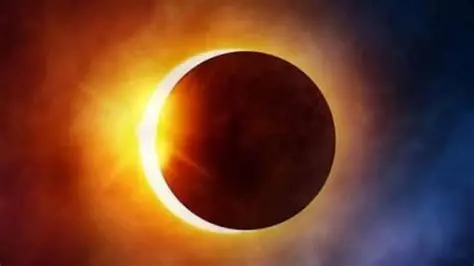
The sun began to eclipse.
Indeed, a solar eclipse took place around Mizushima on that day.
The diary “Gyokuyo” by Kujo Kanezane also records this solar eclipse.
The “Genpei Seisuiki” recounts that while the Minamoto forces were thrown into confusion by the sudden darkness, the Taira, aware of the eclipse, continued their assault.
Eventually, the samurai general of Yoshinaka’s forces, Unno Yukihiro, was killed, and the commander Yata Yoshikiyo also lost his life.
The victors were the Taira.
Having been defeated at Kurikara Pass and Shinohara, and losing Kyoto, the Taira launched a counterattack in the Seto Inland Sea.
The Battle of Mizushima became a symbol of the Taira clan’s resurgence.
The Taira Leave Kyoto and Regroup in the West
On the 25th day of the 7th month of Juei 2, the Taira clan, led by Taira no Munemori, left Kyoto.
This was because they could no longer hold Kyoto after being defeated by Minamoto no Yoshinaka’s forces at Kurikara Pass and Shinohara on the Hokuriku Road.
The Taira took Emperor Antoku and the Imperial Regalia with them as they headed west.
The “Tale of the Heike” records that the Taira forces leaving the capital numbered over 7,000 horsemen.
The clan descended as far as Dazaifu, but they could not establish a stable base in Kyushu, eventually returning to the Seto Inland Sea. They rebuilt their power with Yashima in Sanuki Province as a key stronghold.
For the Taira, the Seto Inland Sea had long been a region of political, economic, and military importance.
Taira no Kiyomori emphasized the importance of Fukuhara in Settsu Province and developed the port of Owada to promote trade with the Song dynasty.
Along the Seto Inland Sea and in the western provinces, there were samurai and local powers allied with the Taira.
The Taira leveraged this foundation to gather forces and control maritime traffic.
The “Tale of the Heike” depicts the Taira, with their base at Yashima, as having control over “fourteen provinces in total, including eight provinces along the Sanyo Road and six along the Nankai Road.”
Several months after leaving Kyoto, the Taira had once again become a significant military force in the west.
Yoshinaka Moves Against the Taira in the West
Minamoto no Yoshinaka, having entered Kyoto, could not ignore the movements of the Taira.
On the 20th day of the 9th month of Juei 2, Yoshinaka set out on the Sanyo Road to pursue the Taira in the west.
However, Yoshinaka himself did not fight at Mizushima.
According to the “Tale of the Heike,” the commander of the forces sent to Mizushima was Yata Hangan-dai Yoshikiyo, and the samurai general was Unno Yapei Shiro Yukihiro from Shinano Province.
The same text records that this force numbered over 7,000 horsemen.
Yoshinaka’s forces advanced along the Sanyo Road, reaching Mizushima in Bitchu Province.
Mizushima corresponds to the area around Tamashima in present-day Kurashiki City, Okayama Prefecture. At that time, the sea extended further inland than it does now.
Beyond lay the Seto Inland Sea, and across the waters was the Taira stronghold of Yashima.
The Tale of the Heike recounts that Yoshinaka’s forces floated their ships at Mizushima, preparing to attack Yashima.
It was then that the Taira fleet appeared.
Over 500 Genji Ships, Over 1,000 Taira Ships
On the intercalary 10th month, 1st day of the 2nd year of Juei.
According to the Tale of the Heike, the first to appear at Mizushima was a small boat.
Yoshinaka’s soldiers thought it was a fishing or pleasure boat, but it was a messenger’s ship sent by the Taira.
Upon seeing this, Yoshinaka’s forces launched over 500 ships that had been pulled ashore.
The Taira countered with over 1,000 ships.
The Tale of the Heike names Taira no Tomomori as the commander of the Taira forces, with Taira no Noritsune as his deputy.
Meanwhile, the Shinano Historical Records, which includes the Hyakurensho, records that Unno Yukihiro and others of Yoshinaka’s side fought against “Taira no Shigehira and others” and were defeated.
There are discrepancies in historical sources regarding the Taira commanders involved.
The Tale of the Heike provides a detailed account of the battle.
Taira no Noritsune ordered his men to link their ships together.
The over 1,000 ships were tied with cables and ropes, with moorings in between, and planks laid across them.
The Tale of the Heike describes this setup as “flat as a floor on the ships.”
By connecting many ships, the warriors could move from ship to ship and fight.
Soon, both sides raised their battle cries.
The battle began on the waters of Mizushima.
Bows, Swords, Grappling Hooks—Fierce Fighting on the Ships
The battle started with an exchange of arrows.
As the distance closed, the fighting intensified.
The Tale of the Heike describes,
shooting arrows at distant enemies.
Slashing at nearby foes with swords.
Hooking enemies with grappling hooks to pull them into the sea.
Engaging in hand-to-hand combat, stabbing each other and plunging into the sea.
Such scenes of shipboard combat are recorded.
This was a battlefield vastly different from land-based cavalry battles.
The Taira even had horses on their ships.
As the tide of battle turned, they tilted the ships to lower the horses into the sea, swimming them alongside the vessels.
When the water was shallow enough for the horses to stand, the warriors mounted and charged, led by Taira no Noritsune, as depicted in the Tale of the Heike.
Fighting on the sea, they transitioned to cavalry battles as they approached the shallows.
In the Battle of Mizushima, set against the backdrop of the Seto Inland Sea, the Taira’s use of their fleet proved to be a formidable force.
On this day of battle, another event occurred that would be recounted for generations.
During the Battle, the Sun Was Eclipsed
On the intercalary 10th month, 1st day of the second year of Juei, during the Battle of Mizushima, a solar eclipse took place.
The eclipse itself is not just a tale preserved in military chronicles.
The diary of the court noble Kujō Kanezane, known as the Gyokuyō, also records the eclipse on this day.
It can be confirmed that the Battle of Mizushima and the solar eclipse coincided on the same day.
The Genpei Seisuiki connects this astronomical event with the course of the battle.
According to the text, during the battle, the sky suddenly darkened, and the sun’s light disappeared.
The soldiers on Yoshinaka’s side did not know it was an eclipse.
Suddenly losing their bearings on the darkened sea, they began to retreat their ships.
On the other hand, the Taira forces were aware of the impending eclipse and continued their attack, according to the Genpei Seisuiki.
Did only the Taira know about the eclipse in advance on the actual battlefield?
How much did the eclipse influence the outcome of the battle?
These aspects cannot be confirmed from contemporary sources.
However, the fact that an eclipse actually occurred on the day of the battle is fascinating when considering the Battle of Mizushima.
In the daytime, the sun was obscured over the sea, and the surroundings rapidly darkened.
It was a time when astronomical information was not widely accessible as it is today.
What did the soldiers feel when they witnessed that spectacle?
The eclipse anecdote in the Genpei Seisuiki was born against the backdrop of this real astronomical event.
The Death of Unno Yukihiro, and Yada Yoshikiyo Vanishes at Mizushima
Amidst the fierce fighting, Unno Yukihiro, a samurai general on Yoshinaka’s side, was slain.
The Heike Monogatari depicts how Yada Yoshikiyo, upon witnessing this, boarded a small boat with seven retainers and charged at the enemy.
Yoshikiyo and his men fought valiantly but eventually sank their boat and perished.
Records based on sources like the Hyakurenshō also confirm that Unno Yukihiro and others fought the Taira at Mizushima and were defeated.
With the loss of their commanders, Yoshinaka’s forces crumbled.
As Taira no Noritsune and others dismounted and attacked, the soldiers fled in retreat, as the Heike Monogatari recounts.
The outcome was decided.
It was a victory for the Taira.
The Heike Monogatari describes this victory as,
“The Taira avenged their humiliation at Kuaiji by winning the battle at Mizushima.”
After a series of defeats by Yoshinaka’s forces since Kurikara Pass, the Taira finally avenged their losses at Mizushima.
As Yoshinaka Faces Defeat at Mizushima, Yoritomo Moves Behind the Scenes
As Yoshinaka’s forces faced defeat at Mizushima, the situation in Kyoto was also undergoing significant changes.
While Yoshinaka was campaigning in the western provinces, negotiations between Retired Emperor Go-Shirakawa and Minamoto no Yoritomo were progressing.
In the 10th month of the second year of Juei, the court issued the Juei Second Year Tenth Month Decree to Yoritomo.
The decree allowed Yoritomo to oversee the collection of the original taxes and dues from the estates and public lands in the Tokai and Tosando regions.
This was a significant proclamation for Yoritomo as it marked the recognition of his control over the eastern provinces by the imperial court.
Meanwhile, Yoshinaka’s forces, which had headed west, suffered a defeat at Mizushima.
Yoshinaka returned to Kyoto on the intercalary 10th month, 15th day.
It was less than a month since his departure on September 20th.
The campaign against the Taira had failed to achieve results, and he returned to the capital having lost key military leaders.
Moreover, in Kyoto, his relationship with Emperor Go-Shirakawa continued to deteriorate.
At the same time as the Taira victory at Mizushima, the political situation surrounding Yoshinaka was rapidly becoming more severe.
From Mizushima to Muroyama—The Taira Counterattack Continues
After their victory at Mizushima, the Taira maintained their momentum and increased pressure to the east.
In the following November, they clashed with the forces of Minamoto no Yukie at Muroyama in Harima Province.
This was the Battle of Muroyama.
The Taira emerged victorious once again.
Mizushima, and then Muroyama.
Within a few months of their retreat from the capital, the Taira had regrouped their forces in the west and successively defeated the armies of Yoshinaka and Yukie.
Meanwhile, in Kyoto, the conflict between Yoshinaka and Emperor Go-Shirakawa was reaching a breaking point.
On the 19th day of the 11th month of the second year of Juei, Yoshinaka attacked the Hojuji Palace.
Additionally, from the east, the forces of Minamoto no Noriyori and Minamoto no Yoshitsune, dispatched by Yoritomo, were advancing towards Kyoto.
In January of the third year of Juei (1184), Yoshinaka’s forces were defeated by Yoritomo’s army at Uji River and Seta.
Yoshinaka left Kyoto and headed for Omi, but he was killed in battle at Awazu.
During this time, the Taira were advancing into the Fukuhara area of Settsu Province, preparing their forces.
The next target for the victorious forces of Noriyori and Yoshitsune, who had defeated Yoshinaka, was the Taira.
On February 7th of the third year of Juei.
The Minamoto and Taira armies clashed at Ichinotani.
It was about three months after the Taira, having lost Kyoto, began their counterattack at the Battle of Mizushima.
The “Heike Monogatari” vividly recounts the details of the Genpei War, including the Battle of Mizushima.
It brings to life the scenes of battle that are difficult to discern from historical records alone, such as the Taira forces fighting with linked ships and the deaths of Yada Yoshikiyo and Unno Yukihiro at Mizushima.
For those who wish to delve deeper into the Genpei War, modern translations and annotated editions of the “Heike Monogatari” are recommended.