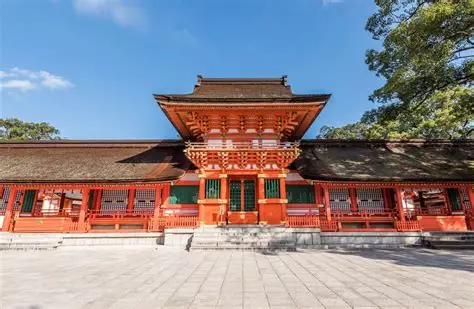
The year was 769, during the Jingo-keiun era.
A government official returning from the Usa Hachiman Shrine presented an oracle concerning the imperial succession to the court.
This official was Wake no Kiyomaro.
Previously, the Dazaifu had relayed a message that if the monk Dōkyō were to ascend to the throne, peace would reign across the land.
However, the oracle Kiyomaro brought back from Usa was different.
It stated that the throne should be occupied by someone of imperial lineage.
As a result, Dōkyō’s ascension to the throne did not come to pass.
Meanwhile, Kiyomaro was stripped of his rank, renamed “Betsubetsu no Emaro,” and exiled to the province of Osumi.
Wake no Kiyomaro’s name became widely known due to this incident involving the oracle from the Usa Hachiman Shrine.
However, his life did not end there.
In the following year, 770, he was called back to the capital and later served again as an official under Emperor Kōnin and Emperor Kanmu.
In Settsu Province, he worked on flood control projects, contributed to the construction of Nagaoka-kyō, and was involved in the relocation and construction of Heian-kyō.
How did this official, born to a local noble family and dispatched to Usa, navigate the political upheavals at the end of the Nara period and contribute to the construction of a new capital in the Heian period?
We will trace his life.
1. Born in 733 in Fujino District, Bizen Province
Wake no Kiyomaro was born in the fifth year of the Tenpyō era (733) in Fujino District, Bizen Province.
This is around present-day Wake District in Okayama Prefecture.
His father was known as Omaro, and their original family name was Iwanashi Betsukimi.
The Wake clan was a local noble family based in the Kibi region.
In later generations, Kiyomaro is often celebrated as a “loyal retainer who protected the imperial line.”
However, at the time of his birth, he was not part of the influential aristocracy in the central government.
He was born into a family of local nobility, not a central aristocrat like the Fujiwara clan.
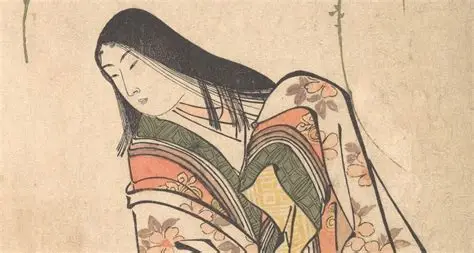
An important figure in understanding Kiyomaro’s life is his sister, Wake no Hiroko, who was three years his senior.
2. His Sister, Wake no Hiroko, and Empress Kōken
Wake no Hiroko served Empress Kōken and took the tonsure herself, adopting the name Hōkin, when the Empress became a nun.
After the Fujiwara no Nakamaro’s Rebellion in 764, she is said to have pleaded for the lives of 375 individuals sentenced to execution, resulting in their sentences being commuted to exile or imprisonment.
Moreover, she is also said to have taken in and raised 83 abandoned children left behind by famine and disease.
Hiroko was a lady-in-waiting close to Empress Kōken, later known as Empress Shōtoku.
During this period, Kiyomaro also began to serve as an official in the central government.
In the first year of the Tenpyō-jingo era (765), he held the rank of Junior Sixth Rank, Upper Grade, and served as a Minor Captain of the Right Guards, receiving the Sixth Order of Merit following the suppression of Fujiwara no Nakamaro’s Rebellion.
In the same year, he was also granted the clan name of Kibi no Fujino Wake no Mahito.
These honors are believed to be due to his contributions in quelling Nakamaro’s Rebellion.
3. The Year 766: Promotion to Junior Fifth Rank, Lower Grade
The year was 766, the second year of the Tenpyō-jingo era.
Kiyomaro was promoted to the Junior Fifth Rank, Lower Grade.
In the same year, Dōkyō became the Hōō, or Buddhist King.
With the strong trust of Empress Shōtoku, Dōkyō, despite being a monk, received special treatment akin to that of an emperor.
Three years later, a significant incident concerning the imperial succession would arise around Dōkyō.
This incident, known as the Oracle of Usa Hachiman Shrine Incident, would make Kiyomaro’s name widely known in history.
4. The Year 769: “If Dōkyō Ascends the Throne, Peace Will Reign”
The year was 769, the third year of the Jingo-keiun era.
From Dazaifu to the imperial court, the oracle of Usa Hachiman was conveyed.
The message was that if Dōkyō ascended the throne, peace would reign throughout the land.
The one who reported this oracle was the chief priest of Dazaifu, Shōnagon Asomaro.
Empress Shōtoku had no heirs, and Dōkyō already held the unusual position of Hōō.
In this context, the oracle directly pertained to the issue of imperial succession.
Empress Shōtoku sought to reconfirm the intentions of the Usa Hachiman deity.
Initially, this task was assigned to Kiyomaro’s sister, Hōkin, also known as Wake no Hirotsugu.
However, as it was deemed difficult for Hirotsugu, a woman, to endure the long journey, her brother Kiyomaro was sent to Usa instead.
5. Wake no Kiyomaro’s Journey to Usa
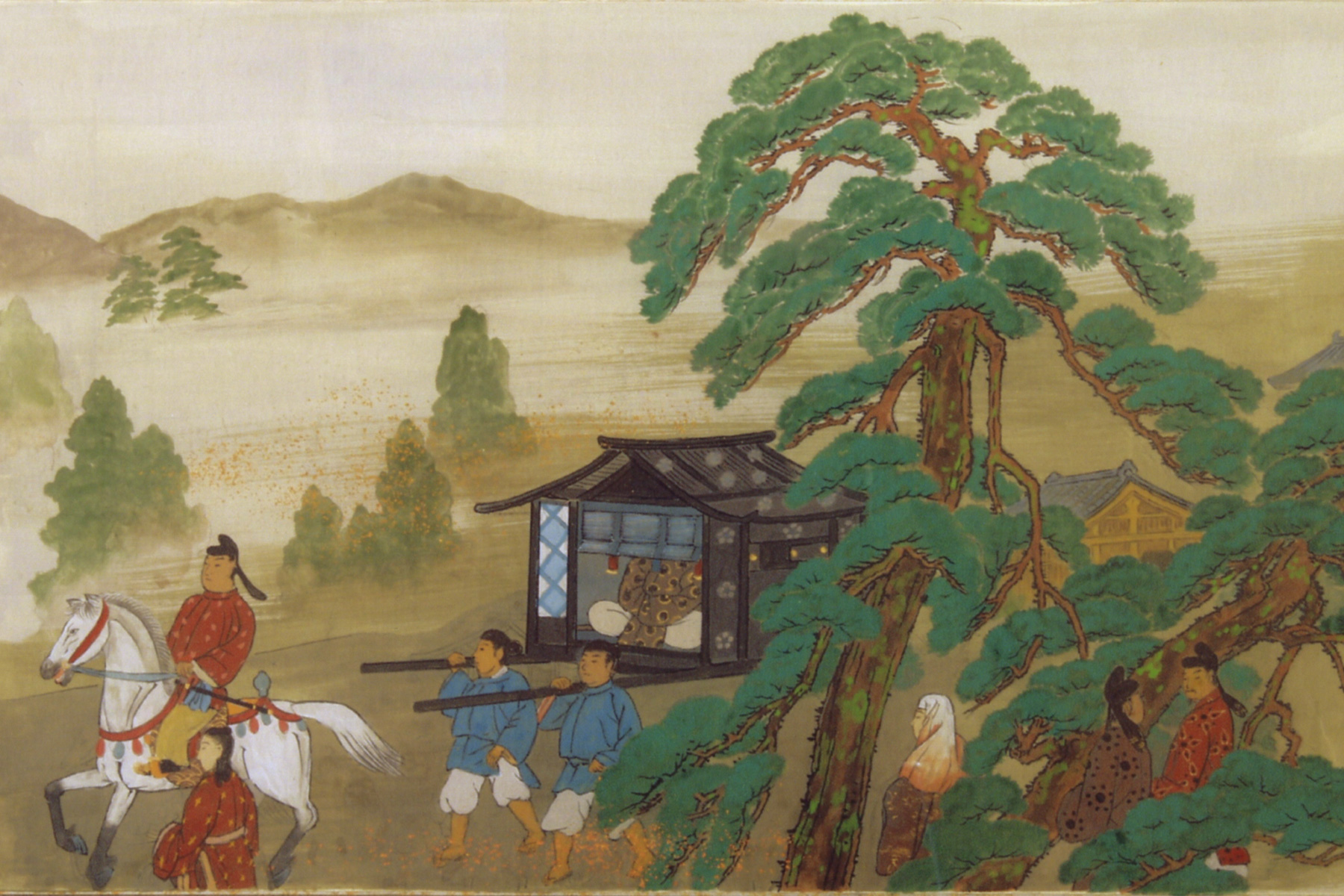
Kiyomaro set out for Usa Hachiman Shrine in Buzen Province.
According to Kiyomaro’s later biography, before his departure, Dōkyō offered him a ministerial position but also pressured him with threats of severe punishment if he did not comply.
However, such anecdotes cannot be confirmed with the same certainty as the events of the Usa Oracle Incident itself.
These stories should be distinguished as accounts recorded in the later biography of Kiyomaro.
When Kiyomaro inquired about the divine will at Usa and returned to the capital, the content he reported differed from the initial oracle.
The essence was that the throne should be occupied by someone of imperial lineage, and a subject should not be made emperor.
Dōkyō did not ascend the throne.
However, it is an oversimplification to say that “Kiyomaro single-handedly exposed Dōkyō’s plot.”
There remain uncertainties about how the initial oracle came about and the extent of Dōkyō’s involvement.
The role of Kiyomaro, as confirmed by historical sources, was to travel to Usa as an envoy to verify the oracle concerning the imperial succession and report a different oracle to the court.
6. From “Kiyomaro” to “Kegamaro”
After Kiyomaro’s report, severe punishment was imposed.
He was stripped of his official rank and his name was changed to “Wakabe Kegamaro.”
Furthermore, he was exiled to the province of Osumi.
His sister, Hiromushi, was also forced to return to secular life, renamed “Wakabe Samushi,” and exiled to Bingo Province.
From Kiyomaro to Kegamaro.
From Hiromushi to Samushi.
The siblings were not only stripped of their ranks and positions but also had their names changed and were expelled from the center of power.
There is no need to speculate on whose intentions were reflected in this punishment.
What can be confirmed is that after Kiyomaro’s report, the siblings faced severe punishment from the court.
7. Assassins and Boars—The Legend of Kiyomaro in Later Generations
Many anecdotes emerged in later generations about Kiyomaro’s journey to Osumi Province.
One story tells of would-be assassins thwarted by a sudden change in the weather.
Another tale describes a herd of boars appearing before the injured Kiyomaro, escorting him to Usa.
It is also said that his legs healed after his pilgrimage to Usa.
These are stories that spread through later legends and beliefs about Kiyomaro and cannot be confirmed as events from 769.
However, the boar legend significantly influenced the later image of Kiyomaro.
Today, Kyoto’s Goou Shrine still maintains a belief connecting Kiyomaro with boars.
While it is important to separate fact from legend, the stories that shaped the later image of Kiyomaro are also part of his historical narrative.
8. The Year 770—The Death of Empress Shotoku and Kiyomaro’s Return
The first year of Hoki (770).
Empress Shotoku passed away, and Dokyo lost his position in central politics.
Prince Shirakabe ascended the throne, becoming Emperor Kounin.
The circumstances surrounding Kiyomaro changed significantly.
In 770, Kiyomaro was summoned back to the capital from Osumi Province.
By the following year, 771, he had his original name and rank restored.
His family name continued to evolve, and by the fifth year of Hoki (774), he was granted the name Wake no Ason.
Approximately five years after the Usa Oracle Incident.
The man once known as “Wakabe Kegamaro” returned to serve the court as Wake no Kiyomaro.
9. An Administrator Under Emperor Kanmu
The first year of Ten’ō (781).
Emperor Kanmu ascended the throne.
Kiyomaro was appointed to the lower fourth rank and subsequently held positions such as Assistant Minister of Popular Affairs, Governor of Settsu, and Chief of the Inner Palace.
Due to the strong impression left by the Usa Oracle Incident, Kiyomaro is often remembered as “the person who stopped Dokyo.”
However, a look at his career after reinstatement reveals that he was actively involved as an official well-versed in administrative affairs for a long time.
He is credited with compiling the 20 volumes of the “Minbusho-rei,” related to civil administration, and contributing to the creation of the “Washi-fu.”
His role as a practical bureaucrat is particularly evident in the flood control projects in Settsu Province.
10. 785 & 788 – Flood Control Projects in Settsu
Enryaku 4 (785).
Under Kiyomaro, who was then the governor of Settsu, the Mikuni River was dug to connect the Yodo River to the Kanzaki River.
This project, related to flood control and water utilization in the Yodo River basin, is credited with influencing the subsequent geography and urban development of Osaka.
Furthermore, in Enryaku 7 (788).
Kiyomaro proposed to the court a large-scale project to redirect the Kawachi River westward to mitigate flood damage in Kawachi and Settsu and develop new land.
According to the “Shoku Nihongi,” over 230,000 people were provided with food and engaged in the construction work.
However, this project was never completed.
The major rerouting of the Yamato River to flow directly into Osaka Bay, as it does today, occurred much later, during the Edo period.
Although Kiyomaro’s plan was not realized, it reveals an aspect of him as an administrative official involved in large-scale flood control and land development, beyond just the Usa Oracle Incident.
11. 784 – Construction of Nagaoka-kyo
Enryaku 3 (784).
Emperor Kanmu moved the capital from Heijo-kyo to Nagaoka-kyo.
Kiyomaro was involved in the construction of Nagaoka-kyo and was promoted for his contributions.
However, the construction of Nagaoka-kyo continued for a long time thereafter.
The political situation was also greatly shaken when Fujiwara no Tanetsugu, the central figure in the construction, was assassinated in 785, leading to the dethronement of Prince Sawara.
According to Kiyomaro’s obituary in the “Nihon Koki,” despite years of construction, Nagaoka-kyo remained incomplete, and the costs had escalated.
It is said that Kiyomaro, considering this situation, secretly advised Emperor Kanmu to relocate the capital to a new location.
12. From Nagaoka-kyo to Heian-kyo – The Relocation to Kadono
The specific time when Kiyomaro advised abandoning Nagaoka-kyo and constructing a new capital is not clear.
His obituary in the “Nihon Koki” states that Kiyomaro raised concerns about the construction costs of Nagaoka-kyo and urged Emperor Kanmu to inspect the land in Kadono.
Emperor Kanmu went hunting in the Kadono area in Enryaku 11 (792), which is thought to have been a site inspection for the new capital.
The following year, in Enryaku 12 (793) January.
Senior Counselor Fujiwara no Oguramaru and others conducted a field survey of the Uta area in Kadono District, and the construction of the new capital began.
It is not entirely accurate to think that “Wake no Kiyomaro alone decided the location of Heian-kyo.”
The decision and construction of the new capital involved Emperor Kanmu, Fujiwara no Oguramaru, and many other court nobles and officials, as well as the Palace Construction Office.
Kiyomaro was among those who advised the abandonment of Nagaoka-kyo and the construction of a new capital.
On October 22, 794.
Emperor Kanmu moved to the new capital.
On October 28, the edict for the capital’s relocation was issued, and by November 8, the new capital was named “Heian-kyo.”
Kiyomaro also participated in the construction of the new capital as the Chief of Palace Construction.
13. The Year 796—Promotion to Junior Third Rank
In the year 796.
Kiyomaro was elevated to the Junior Third Rank due to his contributions to the construction of Heian-kyo, joining the ranks of the court nobles.
Born in 733 to a local noble family in Bizen Province, he rose to become one of the highest officials in the court over the span of more than 60 years.
His official career reveals a life not solely defined by the Oracle of Usa.
Starting as a military officer, his roles expanded to include local administration, civil affairs, flood control in Settsu, and the construction of Nagaoka-kyo and Heian-kyo.
Kiyomaro’s life coincided with the period when the nation’s center shifted from the Nara period to the Heian period.
14. The Year 799—The Death of Wake no Kiyomaro
On February 21, 799.
Wake no Kiyomaro passed away.
He was said to be 67 years old.
At the time of his death, he held the positions of Minister of Popular Affairs, Chief of Palace Construction, and Junior Third Rank, and was posthumously awarded the Senior Third Rank.
His sister, Wake no Hirotari, also passed away shortly before him on January 20 of the same year.
The most well-known episode of Kiyomaro’s life is the Oracle of Usa incident in 769.
After reporting the oracle, his name was changed to “Kegemaro,” and he was exiled to the province of Osumi.
However, this was just one scene in a life that spanned over 66 years.
After his return, Kiyomaro served as an administrative official under Emperor Kōnin and Emperor Kanmu, working on flood control projects in Settsu.
He was involved in the construction of Nagaoka-kyo and later advocated for the move to a new capital.
In Heian-kyo, he participated in the construction as the Chief of Palace Construction.
In later generations, he was celebrated as a “loyal retainer” who protected the imperial lineage and was aided by wild boars, with many stories woven around this legend.
Yet, the life of Wake no Kiyomaro as seen through historical records is not solely defined by the Oracle of Usa.
Born in Bizen Province, this local nobleman returned from exile to the court, engaged in flood control and administration, and participated in the construction of a new capital, living through the significant transition from the Nara period to the Heian period.
In honor of the “boar” that is said to have protected Wake no Kiyomaro.
After the Oracle of Usa incident, a legend remains that about 300 boars appeared to guide Kiyomaro to Usa Hachiman Shrine.
After learning about the legend of Kiyomaro and the boars, this is a dish you might want to savor.
"Wake no Kiyomaro: Biographical Series New Edition" by Hirano Kunio