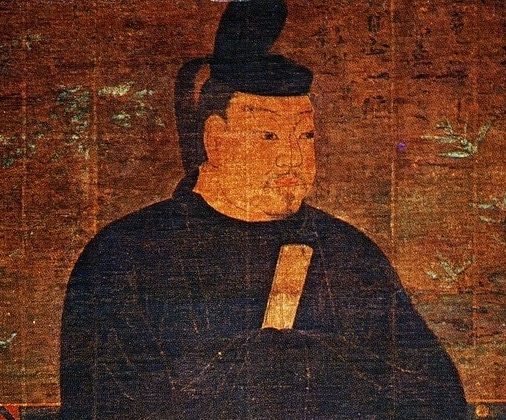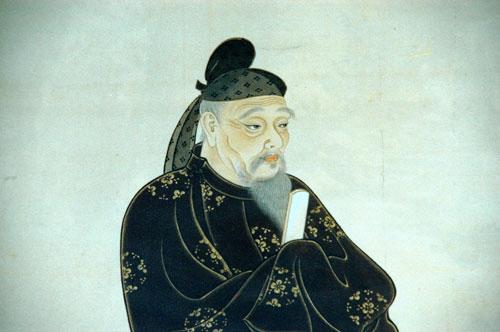
The year was 764, in the Tenpyō-hōji era.
The conflict between Fujiwara no Nakamaro and the faction supporting Empress Kōken escalated into armed confrontation.
One of those who joined the campaign against Nakamaro was Kibi no Makibi.
At this time, Makibi was around 70 years old.
About half a century earlier, he had crossed the sea as a student envoy to Tang China, where he studied for nearly 18 years.
After returning to Japan, he was involved in the education of Crown Prince Abe, and was highly valued under the administration of Tachibana no Moroe.
During the Fujiwara no Hirotsugu’s Rebellion, he was targeted for removal along with Genbō, and when Fujiwara no Nakamaro rose to power, Makibi left the central government and moved to Kyushu.
Later, he crossed the sea again as a second envoy to Tang, and upon his return, he was involved in the defense of the western regions at Dazaifu.
Then came the year 764.
Having been away from the central political scene for a long time, Makibi returned to the capital and sided against Fujiwara no Nakamaro.
Two missions to Tang.
Long service in Kyushu.
Two major political upheavals involving Fujiwara no Hirotsugu and Fujiwara no Nakamaro.
Born into a local powerful family, Kibi no Makibi ultimately rose to the position of Right Minister.
His life story not only follows the politics of the Nara period but also reveals how Japan assimilated knowledge from Tang China.
1. 693 or 695 — Born into the Shimotsumichi Clan
There are theories that Kibi no Makibi was born in either 693 or 695.
His original name was Shimotsumichi no Makibi.
He hailed from the influential Shimotsumichi clan, based in the Shimotsumichi district of Kibi Province, and his father was said to be Shimotsumichi no Kunitsugu.
Although Makibi eventually rose to the rank of Right Minister, he did not come from a family like the Fujiwara, which had long produced ministers in the central government.
What dramatically changed his life was being selected as a student envoy to Tang China.
The year was 716, in the Reiki era.
Makibi was chosen as a student envoy to Tang.
The following year, 717, he joined the mission to Tang led by Tajihi no Agatamori and crossed the sea.
Among the same mission were Abe no Nakamaro and Genbō.
Makibi was likely in his early twenties.
Thus began his study abroad, which would last about 18 years until his return to Japan.
2. 717 — The Start of a Long Study in Tang
During Makibi’s stay, Tang was under the rule of Emperor Xuanzong.
This was a time when the capital, Chang’an, was a hub of political systems, scholarship, religion, and international exchange.
There are many legends about what Makibi learned in Tang China and to what extent.
Stories abound about him bringing back military tactics, the game of Go, and various secret arts to Japan, but we cannot treat these legends as historical fact.
On the other hand, the books and artifacts he presented upon his return suggest he had been exposed to a wide range of knowledge, including Confucianism, ceremonial practices, calendar studies, and music.
Abe no Nakamaro, who was also a student in Tang, chose to remain there as an official.
Makibi, however, chose to return to Japan.
In the 6th year of Tenpyo (734), he set out on his journey back and returned to Japan in 735.
It had been about 18 years since he had left for Tang.
3. 735—What Was Brought Back from Tang
Upon his return, Makibi presented many books and artifacts he had acquired in Tang to the court.
These included a wide array of items, such as the 130 volumes of the “Tang Li,” books on calendars, music-related texts, musical instruments, and surveying tools.
Among these was the Dayan Calendar.
The Dayan Calendar was a calendrical system created by the Tang monk Yixing and others.
Although Makibi brought it back to Japan in 735, it was not immediately adopted.
Its official adoption was decided in 763.
It began to be used in Japan in 764.
Thus, the knowledge Makibi brought back from Tang was adopted as the national calendrical system about 30 years later.
After returning, Makibi served in roles such as University Assistant and later took part in the education of Crown Prince Abe no Naishinno.
4. Involvement in Abe no Naishinno’s Education
Makibi became a tutor at the crown prince’s court and is said to have lectured Abe no Naishinno on texts such as the “Book of Rites” and the “Book of Han.”
Abe no Naishinno would later become Empress Koken.
A local nobleman who had studied extensively in Tang rose to the position of educating the future emperor.
Makibi was also favored by Tachibana no Moroe, who became the center of power after the death of the four Fujiwara brothers.
Similarly, Genbo, who also returned from Tang, grew in influence close to Emperor Shomu.
However, there was someone who petitioned the court to remove Makibi and Genbo.
That person was Fujiwara no Hirotsugu.
5. 740—Targeted by Fujiwara no Hirotsugu
In the 12th year of Tenpyo (740).
Fujiwara no Hirotsugu, who was then a minor official at Dazaifu, sent a petition to the court demanding the removal of Genbo and Kibi no Makibi from central politics.
Subsequently, Hirotsugu gathered troops in Kyushu.
The court deemed Hirotsugu’s actions a rebellion and dispatched a punitive force.
Hirotsugu faced the court’s army at the Itabitsu River in Buzen Province, but after being defeated, he fled and was captured and executed in Matsuura District, Hizen Province.
This rebellion cannot be explained solely by personal conflict between Makibi and Hirotsugu.
Though Hirotsugu’s petition named Genbo and Makibi, the background included changes in the political landscape and succession issues following the death of the four Fujiwara brothers.
Makibi himself did not fight Hirotsugu on the battlefield.
Nonetheless, the fact that he became a target for removal indicates that Makibi held a significant position within the court at this time.
6. The Year 746—Becoming “Kibi Makibi”
Originally from the Shimotsumichi clan, Makibi was known as “Shimotsumichi Makibi.”
In the 18th year of Tenpyo (746).
He was granted the surname Kibi no Ason, and from then on, he was known as “Kibi Makibi.”
It had been about ten years since he returned from his first study trip to Tang China.
Makibi, who had been a student from a local powerful family, had grown into a prominent official in the central government.
However, in 749, when Empress Koken ascended the throne, Fujiwara no Nakamaro began to increase his influence.
This also brought changes to Makibi’s official career.
7. The Year 750—Leaving the Capital for Kyushu
In the 2nd year of Tenpyo-shoho (750).
Makibi was appointed as the Governor of Chikuzen, and later served as the Governor of Hizen.
He left the central political scene and moved to Kyushu.
This appointment is generally understood as a demotion, distancing Makibi from the capital as Fujiwara no Nakamaro’s power grew.
However, it cannot be definitively stated that Nakamaro orchestrated this solely to eliminate Makibi.
What is clear is that during Nakamaro’s rise, Makibi left the capital and was assigned to work in Kyushu.
This connection with Kyushu would hold significant importance in the latter part of Makibi’s life.
But before that, Makibi was to cross the sea once more.
8. The Second Mission to Tang China
In the 3rd year of Tenpyo-shoho (751).
Makibi was appointed as a deputy envoy to Tang China.
The following year, 752, he crossed over to Tang China once again.
About 35 years had passed since his first journey to Tang China.
This time, he was not a student but a deputy envoy representing Japan.
In Tang China, Abe no Nakamaro, who had crossed the sea with him during his first study trip, remained as an official.
In November 753.
Makibi departed Tang China on the third ship.
On December 7 of the same year, he arrived at Yakushima, and later drifted ashore at Murozaki in Kii Province, as recorded in the “Shoku Nihongi.”
In 754, Makibi returned to Japan.
This return voyage included the Chinese monk Jianzhen, who had made several attempts to travel to Japan.
However, Jianzhen was not on Makibi’s ship.
Jianzhen was on the second ship with Deputy Envoy Otomo no Komaro, while the monk Fusho, who had worked hard to invite Jianzhen, was on Makibi’s third ship.
It is not accurate to say “Kibi Makibi brought Jianzhen back on his own ship.”
9. The Year 754—Defending the Western Provinces as Dazai Daini
In April of the 6th year of Tenpyo-shoho (754).
Makibi was appointed as Dazai Daini.
The entry for April 5th, 754 in the “Shōja City History” confirms this appointment, as recorded in the “Shoku Nihongi.”
Returning once more to Kyushu, Makibi took on the role of a senior official at Dazaifu, becoming involved in the administration and defense of the western provinces.
One of his notable projects was the construction of Itosaki Castle.
In June of 756, during the Tenpyō Shōhō era.
Construction began on Itosaki Castle in the area surrounding Mount Takasu in what is now Itoshima City, Fukuoka Prefecture.
The official in charge at the start of construction was Kibi no Makibi.
However, it was not Makibi alone who completed the castle.
The project was later handed over to Saeki no Imakito and was completed in 768, during the Jingo Keiun era.
This undertaking took approximately 12 years from start to finish.
The construction of Itosaki Castle employed the Chinese-style mountain castle building techniques.
It is noteworthy that Makibi, who had studied in Tang China twice, was the initial official responsible for the construction. However, it cannot be definitively stated that he directly applied the castle-building techniques he learned in Tang.
What can be confirmed is that Makibi, with his extensive experience studying in Tang, was in charge of constructing a key defensive castle in the western provinces.
In March of 759, during the Tenpyō Hōji era, Makibi, then serving as Dazai no Daini, submitted a report to the court outlining four concerns about the defense of Dazaifu.
Among these concerns were the defensive vulnerabilities following the abolition of the eastern provincial guards and the use of these guards in the construction of Itosaki Castle.
Makibi’s tenure in Kyushu was a period when he was deeply involved in the defense of the western provinces.
10. The Year 763—The Taiyen Calendar Brought Back 30 Years Ago
The Taiyen calendar, which Makibi brought back from his first study trip to Tang China, was not officially adopted in Japan for a long time.
The situation changed in 763, during the Tenpyō Hōji era.
In that year, it was decided to replace the existing Gihō calendar with the Taiyen calendar.
It was set to be used in Japan starting in 764.
Makibi returned from his first study trip to Tang in 735.
The knowledge he brought back nearly 30 years earlier now became the nation’s official calendar system.
Around the same time, Makibi himself had the opportunity to return to the central political scene.
11. The Year 764—The Fujiwara no Nakamaro Rebellion
In 764, during the Tenpyō Hōji era.
Makibi, who was serving as Dazai no Daini, had requested to retire, but before his request was submitted, he was appointed as the chief officer of the Tōdaiji Temple Construction Office, bringing him back to the central government.
In September of that year.
A conflict between Fujiwara no Nakamaro and the faction supporting Empress Kōken escalated into armed confrontation.
Makibi joined the military efforts on the side of Empress Kōken, reportedly moving troops to cut off Nakamaro’s retreat.
In later generations, Kibi no Makibi was sometimes portrayed as a “genius strategist.”
However, there is no contemporary evidence to confirm that it was solely Makibi’s strategy that led to Nakamaro’s defeat.
What is confirmed is that he participated in the court’s military response and was involved in blocking Nakamaro’s advance.
Nakamaro was repeatedly blocked by pursuing forces and died on September 18th in Takashima District, Ōmi Province.
After the rebellion, Makibi was promoted to Junior Third Rank and awarded the Order of Merit, Second Class, and was appointed as the Commander of the Middle Guards.
Returning to the capital around the age of 70, Makibi continued to rise to even higher positions.
12. The Year 766—Appointment as Right Minister
Under Empress Shotoku, Makibi was promoted through the ranks of Sangi, Chunagon, and Dainagon.
In the second year of Tenpyo Jingo (766).
He finally became the Right Minister.
This was an exceptional rise for someone from a provincial noble family.
Makibi, who had crossed the sea as a student envoy to Tang China in 717, became one of the highest officials in the court nearly half a century later.
Even during the Usa Hachiman Oracle Incident in 769, Makibi held the position of Right Minister.
However, it is unclear what specific role Makibi played in the oracle incident itself.
In the same year, he collaborated with Yamato Nagaoka and others to compile 24 articles of the ‘Santei Ritsuryo.’
This was a revision of the Yoro Code, correcting contradictions and inappropriate parts, and it was officially enacted in 791.
Makibi’s career, which began as a student returning with knowledge from Tang China, reached a point where he was involved in shaping the very system of the Ritsuryo state.
13. The Year 770—The Death of Empress Shotoku and the Succession
The first year of Hoki (770).
Empress Shotoku passed away.
Deciding on her successor became a major political issue.
According to the “Momokawa Den,” a later source cited in the ‘Nihon Kiryaku,’ Makibi, then the Right Minister, recommended Bunbu no Josa, a descendant of Emperor Tenmu, as the crown prince.
On the other hand, Fujiwara no Nagate, Fujiwara no Yoshitsugu, and Fujiwara no Momokawa opposed this and promoted Prince Shirakabe’s appointment as crown prince.
There is also a tradition that after Bunbu no Josa declined, Makibi attempted to recommend his brother, Bunbu no Oichi.
However, such detailed political negotiations are not directly recorded in the main text of the ‘Shoku Nihongi.’
Since much of this is conveyed through later historical sources, it is important to avoid oversimplifying the situation as a direct confrontation between Kibi no Makibi and the Fujiwara clan over the throne.
Ultimately, Prince Shirakabe ascended the throne and became Emperor Konin.
The following year, 771, Makibi retired from his official duties.
14. The Year 775—The Death of Kibi no Makibi
On October 2, in the sixth year of Hoki (775).
Kibi no Makibi passed away.
More than half a century had passed since he crossed the sea as a student envoy to Tang China in 717.
After completing his initial study in Tang China, which lasted nearly 18 years, he returned to Japan and was involved in the education of Princess Abe.
He was demanded to be removed by Fujiwara no Hirotsugu along with Genbo and moved to Kyushu when Fujiwara no Nakamaro rose to power.
As an envoy to Tang China for the second time, he crossed the sea again, and after returning, he served as Dazai Daini, involved in the defense of the western regions and began the construction of Itosaki Castle.
The Daien Calendar, which he brought back in his youth, was adopted as the national calendar system about 30 years later.
In 764, he was involved in the campaign against Fujiwara no Nakamaro, and subsequently rose to the position of Right Minister.
The life of Kibi no Makibi was not solely characterized by a smooth ascent through the ranks.
He spent a significant amount of time away from the capital in Kyushu, and regarding the imperial succession in 770, later historical records suggest that the candidate Makibi supported did not ascend to the throne.
Nevertheless, Makibi’s career, which began as a student returning with knowledge from Tang China, expanded to encompass education, diplomacy, administration in Dazaifu, defense of the western regions, calendrical science, military affairs, the Ritsuryō legal system, and central politics.
Born into a local noble family, Shimichi no Makibi crossed the sea twice, survived significant political upheavals of the Nara period, and ultimately reached the rank of Right Minister as Kibi no Makibi.

Kibi no Makibi (Biographical Series, New Edition) [Miyata Toshihiko]
In connection with “Kibi,” a place associated with Kibi no Makibi, be sure to try Okayama’s famous kibidango.
These treats offer a chewy texture and gentle sweetness, making them a representative specialty of Okayama.
They are a perfect accompaniment to tea after reading about history.
[5 boxes] Kibidango 10 pieces x 5 boxes (Yamagata Eijudo) | Okayama Kibi Dango Yamagata Dango Kibidango Kibidango