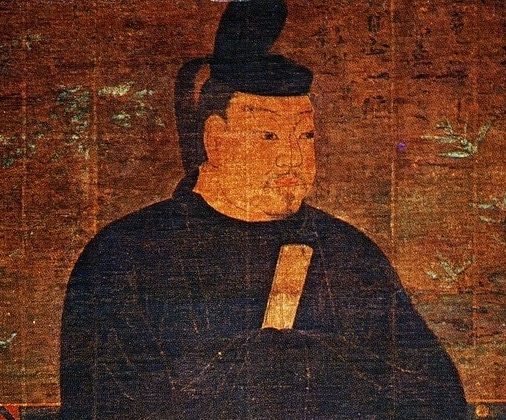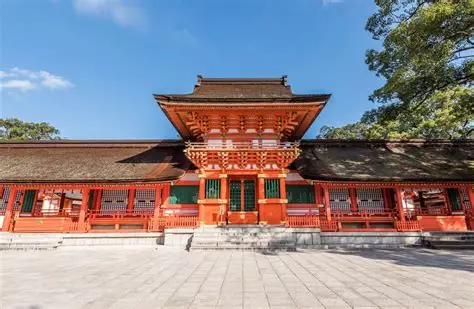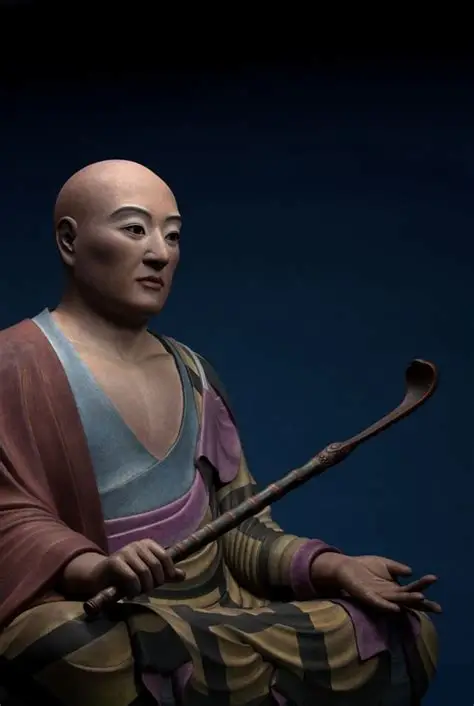
The year was 769, during the Jingo-keiun era.
A divine oracle from Usa Hachiman Shrine in Kyushu sent ripples through the Nara court.
“If Dōkyō ascends to the throne, peace will reign over the land.”
Dōkyō was not of imperial blood.
Though he held immense power in the court under the trust of Empress Shōtoku, his lineage was unrelated to the imperial line.
The idea of making Dōkyō emperor.
If realized, it would have been a groundbreaking event, shaking the traditional method of imperial succession to its core.
To reaffirm the divine will, Empress Shōtoku dispatched an official to Usa.
That official was Wake no Kiyomaro.
The oracle Kiyomaro reportedly brought back was the complete opposite of the first.
“The heavenly succession must be established from the imperial lineage.”
The throne should be inherited from the imperial line—.
For delivering this message, Kiyomaro was stripped of his rank and exiled to the distant province of Ōsumi.
Nevertheless, Dōkyō never became emperor.
Why did such an extraordinary oracle emerge?
Was Dōkyō truly aiming for the throne?
And why did an oracle from the distant Usa Hachiman Shrine influence the issue of the next emperor?
The Usa Hachiman Shrine Oracle Incident was not merely a “confrontation between Dōkyō and Wake no Kiyomaro.”
It was an event where imperial succession, politics, and religion intersected at the end of the Nara period.
1. The Background of the Incident—Empress Shōtoku and Dōkyō
To understand the Usa Hachiman Shrine Oracle Incident, one must first examine why Dōkyō held such immense power.
A major turning point was the Fujiwara no Nakamaro Rebellion in 764.
At the time, the conflict between the retired Empress Kōken and Fujiwara no Nakamaro had reached a critical point.
Nakamaro raised an army but was defeated and killed.
Subsequently, the retired Empress Kōken ascended the throne once more, becoming Empress Shōtoku.
Under her strong trust, Dōkyō’s political status rapidly rose.
Dōkyō was appointed as the Grand Minister of State and later as the Buddhist King.
A monk, neither of the imperial family nor a powerful noble like the Fujiwara, had reached the highest echelons of national politics.
However, a significant issue remained during Empress Shōtoku’s reign.
The matter of succession.
2. Empress Shōtoku Had No Clear Heir to the Throne
Empress Shōtoku had no children.
Nor was there a Crown Prince appointed.
In other words,
“Who would succeed Empress Shotoku?”
was not clearly determined.
The succession of the imperial throne during the Nara period was not always straightforward.
There were multiple candidates within the imperial family, and political ambitions of influential nobles were intertwined around them.
Amidst this, Dokyo, who wielded unprecedented power at the court, emerged.
Empress Shotoku.
Dokyo.
And the undecided next emperor.
In this situation, the oracle incident of 769 occurred.
3. Why the Oracle of Usa Hachiman?
The stage of the incident, Usa Hachiman, is located in present-day Usa City, Oita Prefecture.
It is far from the capital in Nara.
Even so, the court could not ignore this oracle.
By the Nara period, the Hachiman deity had already strengthened its ties with the state.
Especially during the construction of the Great Buddha of Todai-ji, the Hachiman deity played a crucial role and was deeply revered by the court.
Thus, Usa Hachiman was not merely a local deity.
It was an entity with religious authority deeply connected to the state.
Therefore, when the oracle stating
“If Dokyo is made emperor, the realm will be peaceful”
was delivered, it carried significant political implications.
4. The First Oracle—”If Dokyo is Made Emperor, the Realm Will Be Peaceful”
In the third year of Jingo Keiun (769).
The incident was triggered by Shoni Ason Maro, the chief deity of Dazaifu.
According to the “Shoku Nihongi,” Shoni Ason Maro conveyed to the court the oracle from Usa Hachiman,
“If Dokyo is made emperor, the realm will be peaceful.”
It is important to note here.
In later times, the image spread that Dokyo himself fabricated a false oracle to seize the throne.
However, in the narrative of the “Shoku Nihongi,” Shoni Ason Maro appears as the person who first conveyed the oracle.
The text suggests that Shoni Ason Maro, seeking favor with Dokyo, falsely relayed the teachings of the Hachiman deity.
On the other hand, it is recorded that Dokyo rejoiced upon hearing this news.
Therefore, according to historical sources,
“Dokyo himself fabricated the first oracle”
cannot be simply concluded.
However, the fact that the Shoku Nihongi records Dokyo welcoming the content that affirmed his own ascension is crucial when considering this incident.
5. Empress Shotoku Sought to Confirm the Divine Will Once More
Even after receiving the initial oracle, Empress Shotoku did not immediately enthrone Dokyo.
She sought to reaffirm the divine will.
According to the Shoku Nihongi, an oracle was conveyed that Hachiman Daijin requested a nun named Hokun to be sent as an envoy.
Hokun was Wake no Kiyomaro’s sister, Wake no Hirobugi.
However, Hokun was frail and could not endure a long journey.
Thus, it was her brother, Wake no Kiyomaro, who was to travel to Usa in her stead.
Kiyomaro was entrusted with an extremely significant role.
The outcome of the oracle he would bring back from Usa had the potential to influence the entire imperial succession issue.
6. Kiyomaro’s Journey to Usa—The Answer Dokyo Hoped For
Before Kiyomaro set out for Usa, the Shoku Nihongi recounts that Dokyo spoke to him.
From the content of his words, it is evident that Dokyo was hoping for an oracle favorable to himself.
Furthermore, it is said that he promised a government position if Kiyomaro returned with good news.
The initial oracle stated,
“If Dokyo is placed on the throne, the realm will be peaceful.”
Dokyo was expecting an oracle that would confirm this message.
In this context, Kiyomaro embarked on his journey to Usa.
The answer he is said to have brought back was entirely different from what Dokyo had hoped for.
7. The Second Oracle—”The Heavenly Succession Must Establish the Imperial Lineage”
The oracle Kiyomaro is said to have brought back from Usa contained words of great importance regarding the imperial succession.
According to the Shoku Nihongi,
“The heavenly succession must establish the imperial lineage.”
This meant that the throne should be inherited from the imperial line, not given to a subject as a ruler.
Moreover, the oracle included a stern message calling for Dokyo’s exclusion.
The initial oracle stated,
“If Dokyo is placed on the throne, the realm will be peaceful.”
In contrast, the second oracle declared,
“The throne must be inherited from the imperial lineage.”
This was the direction indicated.
Regarding the same Usa Hachiman, a divine oracle with a completely opposite message was delivered to the court.
Kiyomaro returned to Nara and reported the contents to Empress Shotoku.
8. The Harsh Punishment Awaiting Kiyomaro
What awaited Kiyomaro, who reported the divine oracle, was not advancement.
It was a severe punishment.
Kiyomaro was stripped of his official position and demoted to an external post in Inaba.
Furthermore, he was deprived of his rank, removed from the registry, and exiled to Osumi Province.
Even his name was changed.
From Wake no Kiyomaro,
to “Betsubefu no Emaro.”
His sister, Wake no Hiroko (Hokin), was also defrocked, renamed Betsubefu no Samaro, and exiled to Bingo Province.
This was not a mere personnel transfer.
It was a punishment severe enough to completely strip them of their political and social standing.
The cost of reporting the divine oracle that denied Dokyo’s ascension was that great.
9. Yet Dokyo Did Not Become Emperor
Kiyomaro was punished.
However,
Dokyo did not become emperor either.
The initial divine oracle did not come to fruition, and Dokyo did not ascend the throne during Empress Shotoku’s lifetime.
The following year, the situation changed dramatically.
In the fourth year of Jingo Keiun (770), in August,
Empress Shotoku passed away.
Dokyo lost his greatest political supporter.
Subsequently, the throne was taken by Prince Shirakabe.
He became Emperor Kounin.
Prince Shirakabe was a member of the imperial family, a grandson of Emperor Tenji.
Meanwhile, Dokyo was removed from the central political scene and transferred to Shimotsuke Province’s Shimotsuke Yakushiji.
Kiyomaro, who had been exiled to Osumi, was pardoned and eventually returned to the central government.
In 769, Dokyo was near the pinnacle of power, while Kiyomaro was in exile.
In a short period, their positions changed dramatically.
10. Did Dokyo Really Aim for the Throne?
When discussing the Usa Hachiman Shrine Oracle Incident, there is an unavoidable question.
Did Dokyo truly aspire to become the Emperor?
The Shoku Nihongi records that Dokyo was delighted upon hearing the first oracle and that he expressed hopes to Kiyomaro, who was heading to Usa, for a favorable divine message.
Thus, there is evidence to suggest that Dokyo harbored expectations of ascending to the throne.
However, that is not the same as saying,
“Dokyo orchestrated everything and fabricated a false oracle to seize the throne.”
The first oracle was reportedly delivered by Shoni Asomaro.
It is also difficult to definitively determine how seriously Empress Shotoku considered Dokyo’s ascension as a realistic option.
Moreover, this was not an incident where Dokyo attempted to seize the throne through military force.
We must distinguish between the later portrayal of Dokyo as an “evil monk aiming for the throne” and the content that can be verified from Nara period sources.
11. The Real Issue of the Incident: Who Will Be the Next Emperor?
The biggest issue underlying the Usa Hachiman Oracle Incident was,
“Who will succeed Empress Shotoku on the throne?”
This was a matter of imperial succession.
Empress Shotoku had no children.
There was also no Crown Prince.
Meanwhile, her close aide Dokyo had risen to the unprecedented position of Ho-o (Buddhist King).
In this situation,
an oracle emerged stating, “If Dokyo ascends to the throne, the realm will be peaceful.”
Therefore, to understand this incident, one must look beyond just the two figures of Dokyo and Kiyomaro.
Behind it lay the political issue of succession in the Nara court following Empress Shotoku.
12. Why Did “Divine Words” Influence Imperial Succession?
From a modern perspective, one might wonder,
“Why would an oracle influence the issue of who becomes the next Emperor?”
However, in the Nara period, politics and religion were not as distinctly separated as they are today.
Divine will and auspicious omens were deeply intertwined with state politics.
Moreover, Usa Hachiman had elevated its national authority through its involvement in projects like the construction of the Great Buddha at Todai-ji.
Therefore, the important question is not whether “the gods truly spoke,” from a modern perspective.
Who conveyed the oracle?
In what political context was it delivered?
And how did the court handle that oracle?
We need to look at it from that perspective.
The Oracle Incident at Usa Hachiman Shrine is a testament to how closely intertwined politics and religion were during the Nara period.
13. The Later Creation of “The Evil Monk Dokyo” and “The Loyal Retainer Kiyomaro”
As time went on, this incident became a straightforward story.
Dokyo was portrayed as an evil monk who sought to seize the throne.
Wake no Kiyomaro was seen as the loyal retainer who protected the imperial line.
Indeed, this narrative makes the incident easier to understand.
However, the actual political situation was not that simple.
Dokyo wielded significant power.
The “Shoku Nihongi” records that he rejoiced at the initial oracle.
Kiyomaro presented an oracle that denied Dokyo’s ascension.
As a result, Kiyomaro faced severe punishment.
These facts can be confirmed from historical records.
On the other hand,
what political intentions lay behind the initial oracle?
To what extent did Empress Shotoku consider Dokyo’s ascension?
At what point did Dokyo realistically desire the throne?
These aspects require careful consideration.
In later times, Kiyomaro was celebrated as “the loyal retainer who protected the imperial line.”
However, it is important to distinguish between the image of Kiyomaro that developed later and the complex political processes of 769.
Simply dividing historical figures into good and evil does not reveal the core of this incident.
14. The Year After the Incident, Nara Politics Changed Dramatically
In 770, Empress Shotoku passed away.
It was not Dokyo who ascended the throne.
Instead, it was Prince Shirakabe, later Emperor Konin, a grandson of Emperor Tenji.
This lineage would eventually lead to Emperor Kanmu.
During Emperor Kanmu’s reign, the capital was moved to Nagaoka-kyo, and later to Heian-kyo.
Meanwhile, Dokyo disappeared from the central political scene.
He died in Shimotsuke Province in the third year of the Hoki era (772).
Kiyomaro returned to the central government and later became involved in the process surrounding the relocation of the capital from Nagaoka-kyo.
The Oracle Incident at Usa Hachiman Shrine did not directly end the Nara period.
However, the year following the incident saw the end of Empress Shotoku’s reign, and a significant shift in the succession and political landscape.
The incident of 769 was one of the events that symbolized the politics of the late Nara period.
Summary: The Incident of Dokyo Not Becoming Emperor and What Lay Behind It
The year was 769, during the Jingo-keiun era.
From Usa Hachiman Shrine came a prophecy:
“If Dokyo ascends to the throne, peace will reign across the land.”
This divine message was delivered to the imperial court.
Dokyo had earned the trust of Empress Shotoku and had risen to the unprecedented position of Ho-o, or Buddhist King.
Moreover, Empress Shotoku had no clear successor to the throne.
Thus, this prophecy was not dismissed as merely a religious matter.
Empress Shotoku sought to verify the divine will and dispatched Wake no Kiyomaro to Usa.
What Kiyomaro reportedly brought back was a prophecy stating:
“The imperial line must be maintained by a descendant of the imperial family.”
As a result of this report, Kiyomaro was stripped of his rank, had his name changed, and was exiled to the province of Osumi.
Even so, Dokyo did not become emperor.
The following year, in 770, Empress Shotoku passed away.
Prince Shirakabe, a grandson of Emperor Tenji, ascended the throne as Emperor Konin, and Dokyo was removed from the central political scene.
This incident cannot be summed up in a single sentence as:
“The evil monk Dokyo’s attempt to usurp the throne was thwarted by the loyal retainer Wake no Kiyomaro.”
Underlying this event was the issue of succession, as there was no designated heir to Empress Shotoku.
Dokyo had advanced to the highest echelons of the court.
Usa Hachiman Shrine, with its national authority, played a role.
And it was a time when political matters were discussed in the form of “divine oracles.”
The Usa Hachiman Shrine Oracle Incident was not only about Dokyo not becoming emperor,
but also an event where imperial succession, politics, and religion intersected in the Nara period.
To deeply understand the Usa Hachiman Shrine Oracle Incident from historical records, refer to the “Shoku Nihongi.” The events surrounding Dokyo, Empress Shotoku, and Wake no Kiyomaro can be discerned from sources close to that era. It is also recommended for those who wish to learn about Nara period politics in depth.

Dokyo (Biographical Series, New Edition) [ Kenichi Yokota ]
After exploring the oracles of Usa Hachiman Shrine, why not try a modern specialty from Usa? From the ancient Usa where oracles once flew, enjoy the “Usa Karaage” for a delightful experience.

Usa Karaage Marinade & Karaage Flour Set Trial 85g+80g (For Pre-seasoning Fried Chicken, About 500g of Chicken) Karaage Seasoning Liquid Ready-to-cook Ingredients at Room Temperature Narumi General Planning