In November 1183, Minamoto no Yoshinaka launched an attack on the Hojuji Palace, the residence of the cloistered Emperor Go-Shirakawa.
Having driven the Taira clan out of Kyoto, why did Yoshinaka turn his military might against the imperial court?
This article will provide a detailed explanation of the conflict with Minamoto no Yoritomo, the October 1183 imperial edict, the fierce Battle of Hojuji, and the capture of Emperor Go-Shirakawa.
November 19, 1183, Kyoto.
Minamoto no Yoshinaka’s forces advanced on the Hojuji Palace, the residence of the cloistered Emperor Go-Shirakawa.
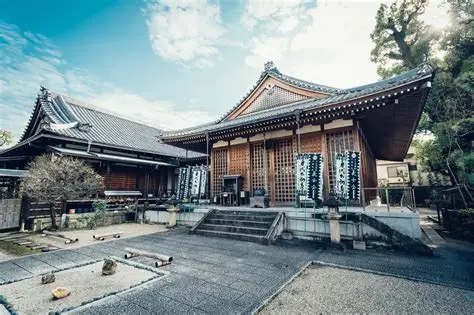
The Hojuji Palace, which spread across the area now known as Sanjusangendo, was a gathering place for Emperor Go-Shirakawa, Emperor Go-Toba, members of the imperial family, court nobles, high-ranking monks, and samurai.
Defensive preparations, such as digging moats, were underway around the palace in anticipation of a military clash with Yoshinaka.
Yoshinaka had entered Kyoto just four months earlier, on July 28.
After defeating the Taira forces at Kurikara Pass and Shinohara, Yoshinaka had driven the Taira out of Kyoto and was a commander ordered by Emperor Go-Shirakawa to pursue the Taira.
Yet now, Yoshinaka directed his forces towards the emperor’s residence.
As the battle commenced, the Hojuji Palace was engulfed in flames, resulting in numerous casualties on the imperial side, including the emperor’s sons and the head of the Tendai sect.
Emperor Go-Shirakawa fell into Yoshinaka’s hands, and the political landscape of Kyoto was dramatically altered by Yoshinaka’s military power.
This was the Battle of Hojuji, where Minamoto no Yoshinaka’s power peaked, setting the stage for his eventual downfall.
Minamoto no Yoshinaka Drives the Taira from Kyoto
In May of 1183, Minamoto no Yoshinaka defeated the Taira forces advancing into the Hokuriku region at Kurikara Pass.
Following his victory at the Battle of Shinohara, Yoshinaka advanced from the Hokuriku Road to Omi, closing in on Kyoto.
On July 25, the Taira clan, led by Taira no Munemori, left Kyoto with Emperor Antoku and the Imperial Regalia, heading west.
Three days later, on July 28, Yoshinaka and Minamoto no Yukie entered Kyoto.
Emperor Go-Shirakawa ordered Yoshinaka and his allies to pursue the Taira and maintain order in Kyoto.
Having raised his army in Shinano, Yoshinaka seized control of the Hokuriku Road, positioning himself to influence Kyoto’s military affairs.
However, upon entering Kyoto, Yoshinaka found himself embroiled in political maneuvering with Emperor Go-Shirakawa.
Clashing with Emperor Go-Shirakawa Over the Imperial Succession
With the Taira gone, Kyoto was grappling with a severe food shortage that had persisted since the famine of Yowa.
The influx of troops into Kyoto necessitated the procurement of provisions and horse feed, leading to issues with Yoshinaka’s samurai forcibly requisitioning supplies.
Tensions quickly arose between Emperor Go-Shirakawa and Yoshinaka over the governance of Kyoto.
Their conflict further intensified over the issue of imperial succession.
The Taira had taken Emperor Antoku and the Imperial Regalia to the western provinces.
In Kyoto, there was a movement to establish a new emperor, and Minamoto no Yoshinaka put forward Prince Hokuriku, the child of Prince Mochihito, as a candidate.
However, Emperor Go-Shirakawa chose Prince Takakura’s son, Prince Tokihito.
On August 20, Prince Tokihito ascended the throne as Emperor Go-Toba.
In the western provinces, Emperor Antoku was still reigning, creating an unusual situation in Kyoto where Emperor Go-Toba ascended the throne without the Three Sacred Treasures.
Yoshinaka’s recommendation of Prince Hokuriku was not accepted.
Less than a month after entering Kyoto, cracks had already begun to form in the relationship between Yoshinaka and Emperor Go-Shirakawa.
October 1183 Imperial Edict—Minamoto no Yoritomo Pressures Yoshinaka
For Yoshinaka, a greater threat than Emperor Go-Shirakawa was emerging in the form of Minamoto no Yoritomo from Kamakura.
In October 1183, the court issued an edict entrusting Yoritomo with the task of restoring the payment of taxes to the rightful lords of the estates and provincial lands in the Tokaido and Tosando regions.
This was the October 1183 Imperial Edict.
With this edict, Yoritomo’s control over the eastern provinces was granted official authority by the court.
The Tosando region included Shinano Province, which was Yoshinaka’s base of operations.
However, out of consideration for Yoshinaka, the Hokurikudo region was excluded from the edict’s scope.
According to the “Gyokuyo,” on October 20, Yoshinaka expressed to Emperor Go-Shirakawa’s envoy that the inclusion of a clause allowing Yoritomo to pursue him was a “lifelong grievance.”
As the court’s relationship with Yoritomo deepened, Yoshinaka’s position in Kyoto became increasingly unstable.
The Battle of Mizushima—Yoshinaka’s Forces Defeated
While Yoshinaka was increasingly wary of Yoritomo, the Taira clan was also regrouping its forces in the western provinces.
Yoshinaka left Kyoto to pursue the Taira and advanced his troops westward.
On the intercalary 10th month, 1st day of 1183, the Battle of Mizushima occurred in Bitchu Province.
Yoshinaka’s forces were defeated by the Taira army, which attacked from the sea, and prominent warriors like Ashikaga Yoshikiyo were killed in action.
Yoshinaka returned to Kyoto on the intercalary 10th month, 15th day.
In the west, the Taira were beginning their counterattack, while from the east, Yoritomo’s forces were approaching.
Moreover, Yoshinaka’s relationship with Emperor Go-Shirakawa was deteriorating.
The situation surrounding Yoshinaka had drastically changed since he entered Kyoto in July.
November 16—Troops Gather at Hojuji Palace
On November 16, 1183, Emperor Go-Shirakawa moved to the southern palace of Hojuji Temple.
Troops were gathered at Hojuji Temple, and defensive preparations such as digging moats around the area were underway.
Rumors of a battle between Minamoto no Yoshinaka and the imperial faction spread throughout Kyoto.
The following day, on the 17th, the “Gyokuyo” recorded that warriors gathered at the imperial residence, and the city of Kyoto was in a state of turmoil.
Emperor Go-Shirakawa sent an envoy to Yoshinaka, urging him to leave Kyoto and head west to pursue the Taira clan.
He also demanded that if Yoshinaka intended to fight Yoritomo’s forces, he should do so independently, without involving the court.
He took a firm stance, indicating that if Yoshinaka remained in Kyoto, it would be considered a rebellion.
Yoshinaka explained that he had no intention of defying the court.
Although political negotiations continued, preparations for battle at Hojuji Temple were steadily progressing.
November 18 — Emperor Go-Toba Also Moves to Hojuji Temple
On November 18, Emperor Go-Toba moved to Hojuji Temple.
Prince Shukaku of Ninna-ji Temple and Tendai Zasu Myoun, among others, also entered Hojuji Temple, and Emperor Go-Shirakawa’s son, Prince En’e, joined the imperial faction.
Hojuji Temple, now filled with royalty, court nobles, high priests, and warriors, became a base for preparing for a clash with Yoshinaka.
Kujou Kanezane noted in the “Gyokuyo” that the commotion in the world was intensifying day by day.
Two days after Emperor Go-Shirakawa demanded Yoshinaka leave Kyoto.
On the morning of November 19, Yoshinaka mobilized his forces.
November 19, 1183 — Minamoto no Yoshinaka Surrounds Hojuji Temple
The “Heike Monogatari” records that Yoshinaka had six to seven thousand cavalry from the northern provinces remaining with him at this time.
Yoshinaka divided his forces into seven groups, assigning over two thousand cavalry to Higuchi Kanemitsu to move towards the Shin-Kumano area. He ordered the remaining forces to advance from various directions towards the riverbank, while he himself headed for the western gate of Hojuji Temple.
Regarding the imperial faction, the “Heike Monogatari” states that over twenty thousand people were holed up in Hojuji Temple.
The numbers of Yoshinaka’s six to seven thousand cavalry and the imperial faction’s over twenty thousand are figures conveyed by the “Heike Monogatari.”
The same text depicts Taira no Tomoyasu, who was entrusted with military command of the imperial faction, standing atop the western wall, holding a spear in one hand and a vajra bell in the other, calling out to Yoshinaka’s forces.
Tomoyasu threatened Yoshinaka’s forces, warning that if they drew their bows against the emperor, the arrows would return upon them.
Yoshinaka ordered his troops to raise a battle cry and commenced the attack.
Imai Kanehira’s Fire Arrows — The “Heike Monogatari” Depicts the Conflagration
As the battle began, Higuchi Kanemitsu’s forces, who had moved towards Shin-Kumano, also raised a battle cry.
According to the “Heike Monogatari,” immediately after this, Imai Kanehira shot a fire-tipped arrow into the roof of the imperial residence at Hojuji Temple.
The strong winds at the time quickly spread the fire, causing chaos among the imperial faction’s forces.
When Taira no Tomoyasu, who was in charge of military command, left the battlefield, the troops gathered at Hojuji Temple collapsed, and Yoshinaka’s forces stormed the imperial residence.
The detailed battle scenes, including Imai Kanehira’s fire arrows, are narratives from the “Heike Monogatari.”
Meanwhile, the attack on Hojuji Temple by Yoshinaka on November 19, 1183, and the burning of the imperial residence are also recorded in contemporary documents such as the “Gyokuyo.”
Yoshinaka, who was called upon by the court to use military force to pursue the Taira clan, ended up attacking the imperial residence in the heart of Kyoto.
Prince En’ei, Myoun, Minamoto no Mitsunaga—Heavy Losses for the Cloistered Emperor’s Forces
As the defensive line at Hojuji Palace crumbled, the Cloistered Emperor’s side suffered numerous casualties.
Minamoto no Mitsunaga, the Governor of Hoki, fought alongside his son Minamoto no Mitsuyuki, and both father and son perished in battle.
Fujiwara no Nobuyuki, the Governor of Echizen, and Kiyohara no Yorikata, the Master of the Waterworks, also lost their lives.
Furthermore, Prince En’ei, a son of Emperor Go-Shirakawa and the head of Onjoji Temple, as well as Myoun, the Tendai Zasu, were killed in this conflict.
The fact that members of the imperial family and prominent Buddhist monks of the time were killed illustrates the intense nature of the battle at Hojuji Palace.
According to diaries from that era, over 100 heads from the Cloistered Emperor’s side were displayed on the riverbank.
The “Tale of the Heike” depicts that on November 20, more than 730 heads were lined up at the Rokujogawara.
Although the numbers vary across sources, it is consistently noted that the Cloistered Emperor’s side suffered significant losses.
Emperor Go-Shirakawa Falls into Yoshinaka’s Hands
With the defeat of the Cloistered Emperor’s forces, Emperor Go-Shirakawa also left Hojuji Palace.
The “Gyokuyo” records that news reached Kujo Kanezane that the Cloistered Emperor’s side was defeated and Yoshinaka’s troops had captured Emperor Go-Shirakawa.
The “Tale of the Heike” describes how Yoshinaka’s warriors discovered the Emperor being transported in a palanquin and moved him to the residence of Regent Konoe Motomichi at Gojo Higashinoin.
Emperor Go-Shirakawa was placed under Yoshinaka’s watch, and Emperor Go-Toba also left Hojuji Palace.
In July, Yoshinaka had been ordered by Emperor Go-Shirakawa to pursue the Taira clan, but four months later, he ended up detaining the Emperor himself by force.
Yoshinaka Influences Court Appointments
After his victory in the Battle of Hojuji, Yoshinaka significantly intervened in court appointments.
Regent Konoe Motomichi lost his position, and Matsudono Motofusa’s son, Matsudono Morie, became the new regent. Morie was only 12 years old at the time.
Yoshinaka allied with Matsudono Motofusa and Morie, shaping the political landscape of Kyoto.
On November 28, over 40 courtiers and close associates of Emperor Go-Shirakawa were dismissed from their positions.
The political forces supporting Emperor Go-Shirakawa were severely weakened by the Battle of Hojuji, allowing Yoshinaka to exert significant influence not only militarily but also over court appointments.
The power of Minamoto no Yoshinaka reached its peak at this time.
However, even after seizing control of Hojuji Palace, the forces of Yoritomo advancing from the east did not stop.
Troops led by Minamoto no Noriyori and Minamoto no Yoshitsune approached Kyoto, and in January of Juei 3 (1184), Yoshinaka faced the Kamakura forces at Uji River and Seta.
About two months after the Battle of Hojuji.
Having seized Kyoto, Minamoto no Yoshinaka now prepared to defend it in the Battle of Uji River.
For Those Wanting to Learn More About the Conflict Between Minamoto no Yoshinaka and Minamoto no Yoritomo
For those interested in delving deeper into the relationship between Minamoto no Yoshinaka and Minamoto no Yoritomo leading up to the Battle of Hojuji, we recommend Shochi Nagamura’s “Minamoto no Yoritomo and Minamoto no Yoshinaka.”
In addition to Yoshinaka’s advance to Kyoto, it covers the October decree of Juei 2 and the Battle of Hojuji, providing a deeper understanding of why Yoshinaka clashed with Emperor Go-Shirakawa and moved towards confrontation with Yoritomo.
This book is also an accessible read for those wanting to know more about the continuation of this article.
▶ View ‘Minamoto no Yoritomo and Minamoto no Yoshinaka’ on Rakuten Books