The Life of an Official Who Governed the Provinces, Put Down the Gangyo War, and Rose at Last to the Ranks of the Court Nobility
Ask someone to name a Heian-period statesman, and they will likely think of a powerful figure from the Fujiwara Northern House, an emperor, or a scholar like Sugawara no Michizane.
But the Heian state was also actually run, day to day, by officials who traveled out to the provinces, collected taxes, kept the peace, rebuilt agriculture, and carried out the center’s orders on the ground.
Among them, one man stands out.
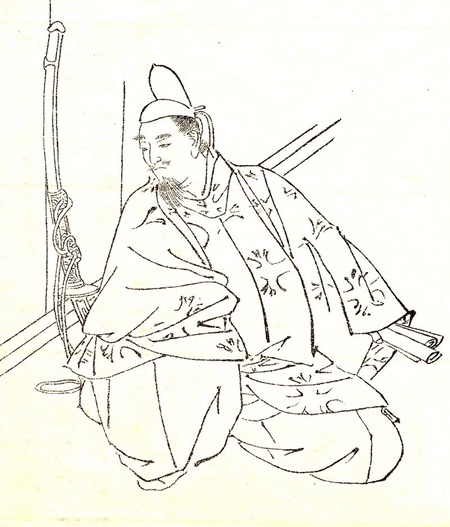
Fujiwara no Yasunori.
Born in the second year of Tencho (825), he died on the 21st day of the 4th month of the seventh year of Kanpyo (895), at the age of seventy-one.
He came from the Fujiwara Southern House.
In his youth he gained practical experience across several ministries in the capital, and from his forties he served as a provincial governor in Bicchu and Bizen.
Then, when a large-scale uprising broke out in Dewa in the second year of Gangyo (878), he went there himself as Provisional Governor of Dewa.
And there, Yasunori sent the court words that would be remembered for generations.
“There is a great deal of reason in this.”
Reading the grievance the rebels had submitted, Yasunori judged it “highly reasonable.”
An official of the court itself had acknowledged that the words of men who had risen against the court held real merit.
Yasunori never thought only of striking down the enemy.
He looked into the causes of the uprising, accepted those who surrendered, and rebuilt local governance.
As a result, the Gangyo War moved steadily toward its end.
Yasunori’s life was never about “how to rule people.” It was a lifelong effort to answer a different question: “what would keep people from feeling driven to break away from the court’s rule at all.”
1. Born Into the Fujiwara Southern House
Fujiwara no Yasunori was born in the second year of Tencho (825).
His father was Fujiwara no Sadao. His mother was a daughter of Abe no Ototomi.
Yasunori came from the Fujiwara Southern House.
The Fujiwara Southern House traced its founding to Fujiwara no Muchimaro, a prestigious line in its own right.
Yasunori’s ancestors had included men who were active in the central government from the Nara period into the early Heian period.
But by Yasunori’s own time, the center of Fujiwara power had already shifted to the Northern House.
Though born a member of the Fujiwara clan, Yasunori was never in a position to stand at the summit of central politics from the start.
From here, Yasunori rose entirely through his own practical ability.
2. A Central Official at Thirty
The first major milestone confirmed in Yasunori’s career comes in the second year of Saiko (855).
That year, he became Junior Secretary of the Ministry of Civil Administration.
He was thirty years old.
He went on to hold posts including Senior Secretary of the Ministry of Popular Affairs, Junior and then Senior Secretary of the Ministry of Military Affairs, and Junior Secretary of the Ministry of Ceremonial.
The Ministry of Civil Administration handled diplomacy, ceremony, and religious institutions; the Ministry of Popular Affairs, household registers and taxation; the Ministry of Military Affairs, military matters; and the Ministry of Ceremonial, personnel decisions for officials.
Which is to say, Yasunori gained experience across multiple areas of administration from a young age.
This matters greatly for understanding the man Yasunori would become.
He went out to the provinces already knowing the workings of central government.
That experience would carry directly into his later work governing the provinces.
3. Age Forty-Two, to Bicchu
The eighth year of Jogan (866).
Yasunori’s life changed dramatically.
That year, Yasunori was granted Junior Fifth Rank, Lower Grade, and took up a post in Bicchu Province.
He was forty-two.
Bicchu corresponds to the western part of what is now Okayama Prefecture.
Here Yasunori confronted the harsh reality of provincial administration firsthand.
The Biography of Fujiwara no Yasunori describes in particular detail the devastation of Aga and Tetta Districts.
Famine. Farmers fleeing their land. Unpaid taxes. Bandits. Collapsing public order.
And a harsh style of rule under his predecessor.
The Biography of Fujiwara no Yasunori describes how the previous governor’s severe crackdowns had punished people regardless of the severity of their offenses, leaving the region devastated.
Here Yasunori changed the whole direction of governance.
He pardoned minor offenses. He aided the destitute. He encouraged agriculture. He cut wasteful spending.
And he called back the people who had fled.
According to the Biography of Fujiwara no Yasunori, fields were gradually cultivated once more, the population recovered, and tax revenue rose along with it.
This record of “good government” would come to establish Yasunori as one of the great model officials remembered by later generations.
4. What Yasunori Changed Was Not “the People” but “the Conditions”
What matters most in understanding Yasunori’s governance is that he did not rely on relentlessly cracking down on offenders.
The land lay devastated. Farmers could not make a living. They could not pay their taxes. They fled.
Order broke down. The response was harsher enforcement still.
Which only made it harder still for people to survive.
Yasunori tried to break this vicious cycle.
Rebuild agriculture. Aid the destitute. Bring back those who had fled.
And stabilize the region itself.
Which is to say, Yasunori tried to build a society that produced fewer criminals in the first place, rather than simply punishing crime after the fact.
This same way of thinking would appear again, years later, in the Gangyo War.
5. From Bicchu to Bizen
In the 13th year of Jogan (871), Yasunori was promoted to Junior Fifth Rank, Upper Grade.
That same year, he became Governor of Bicchu.
And in the 16th year of Jogan (874), he became Provisional Governor of Bizen.
Bizen corresponds to the southeastern part of what is now Okayama Prefecture.
Yasunori took charge of provincial governance in Bizen as well.
A famous story survives from this period that captures a great deal about who Yasunori was.
6. The Bandits Who Turned Themselves In — the Model Official of the Biography
The Biography of Fujiwara no Yasunori tells a story like this.
Bandits from another province stole government property and fled into Bizen.
There the bandits heard about Yasunori’s own governance.
“What sort of man is the governor of this province?”
They were told that Yasunori cared deeply for the people and despised wrongdoing without mercy.
Frightened, the bandits eventually turned themselves in to Yasunori of their own accord.
They are said to have handed back what they had stolen and confessed their crime.
Rather than punishing them, Yasunori acknowledged that they had reformed and sent them on their way.
This is a wonderful story.
But how it is read matters a great deal.
Rather than treating this as a confirmed contemporary fact — “the bandits really did act this way” — it is better read as an anecdote through which Miyoshi no Kiyoyuki, the author of the Biography, portrayed the kind of man Yasunori was.
That is because the Biography of Fujiwara no Yasunori itself is a work written to present Yasunori as an ideal “model official.”
Which is why the real interest of this anecdote lies
not only in whether the bandits truly turned themselves in.
It lies in the fact that Miyoshi no Kiyoyuki, an intellectual of the early 10th century, judged that
“Yasunori was a provincial official of such virtue that even criminals would repent because of him.”
That judgment itself is the real substance of the story.
7. Back in Kyoto, Now Responsible for Public Order
The 18th year of Jogan (876).
Yasunori returned to Kyoto.
He became Provisional Assistant Captain of the Right Gate Guards, and also took on the role of Kebiishi.
The kebiishi were responsible for maintaining order and investigating crime within Heian-kyo.
Having governed people in the provinces, Yasunori now took charge of order in the capital itself.
Here Yasunori’s accumulated experience paid off.
Provincial administration. Taxation. Public order. Personnel matters.
Yasunori had already worked across a wide range of administrative posts.
He went on to become Assistant Master of the Ministry of Popular Affairs, and then advanced into the very core of central government as a Ben official.
And then, in the second year of Gangyo (878).
The event that would carve Yasunori’s name into history took place.
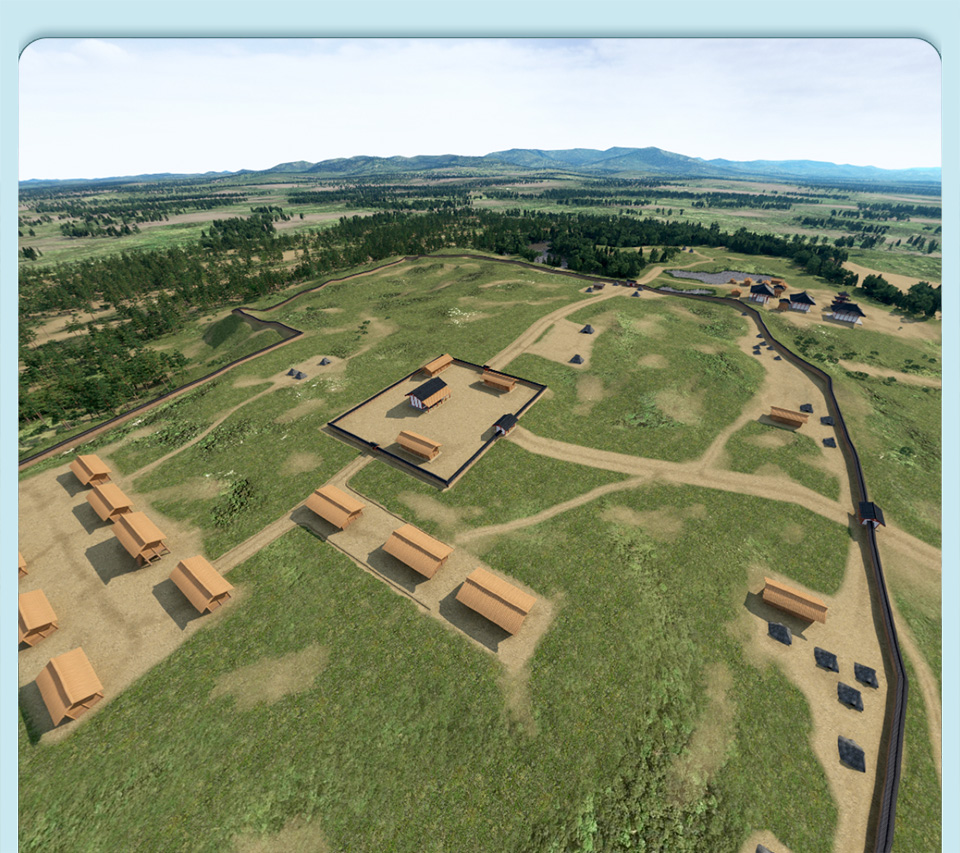
8. The Gangyo War — Akita Castle Comes Under Attack
The second year of Gangyo (878).
A large-scale uprising broke out in Dewa Province.
(See this article.)
In the region centered on what is now Akita Prefecture, people known as fushu rose in rebellion.
Akita Castle was attacked, and the court’s own forces suffered heavy losses.
The court tried to put down the uprising by force.
But the fighting did not settle easily.
And so the court dispatched Fujiwara no Yasunori to Dewa Province.
The 4th day of the 5th month, the second year of Gangyo.
Yasunori became Provisional Governor of Dewa.
Here everything in Yasunori’s life up to this point came together as one.
He had rebuilt a devastated region in Bicchu. He had governed a province in Bizen. He had handled matters of public order in Kyoto.
The court sent this same Yasunori as “a man who could govern a region in the midst of war.”
9. What Yasunori Saw First in Dewa
Arriving in Dewa, Yasunori did not treat the rebel forces as his only enemy.
Why had the uprising happened in the first place?
He investigated.
The Biography of Fujiwara no Yasunori describes the backdrop of the uprising as harsh tax collection continuing under the Dewa provincial government and the Akita Castle command, despite the previous year’s poor harvest.
In particular, the Akita Castle commander Yoshimine no Chikashi is portrayed in extremely harsh terms.
He never stopped collecting taxes. His demands had no limit. The slightest failure to comply brought severe punishment.
The Biography of Fujiwara no Yasunori holds up Yoshimine no Chikashi as the very model of a corrupt official.
Here, the same problem Yasunori had seen in Bicchu appeared once again.
Oppressive government drove people into a corner.
Yasunori saw this same structure at work.
10. Yasunori Never Abandoned Military Force
Understanding Yasunori as merely “a statesman who did not fight” misses the point.
On arriving in Dewa, Yasunori also put military preparations in order.
He positioned troops and held the court’s own strongholds.
And he worked closely with military commanders such as Ono no Harukaze.
At the same time, he used the court’s own reserves to relieve suffering among the people, and accepted those who surrendered.
Which is to say,
he brought the uprising to a political end, with military strength standing behind him the whole time.
This was Yasunori’s method.
11. “There Is a Great Deal of Reason in This”
There is one moment that cannot be left out of any account of the Gangyo War.
The rebels appealed to the court, laying out their own grievances.
This document became known as their petition of grievance.
Yasunori read it.
And he reported to the court.
“There is a great deal of reason in this.”
Highly reasonable.
This single line reveals Yasunori’s whole political stance.
He did not dismiss the words of men who had risen against the court
as “mere rebel talk.”
He acknowledged the real cause of the uprising.
And he concluded that “removing the cause would bring the war itself to an end.”
12. Accepting Surrender Together With Ono no Harukaze
One man played a major military role in the Gangyo War.
Ono no Harukaze.
Yasunori handled politics and administration; Harukaze handled the military side.
This combination mattered a great deal.
Men from the rebel side began coming forward to surrender.
On the court’s own side, some doubted whether these surrenders were genuine.
But Harukaze went to see for himself, and judged that the surrenders were sincere.
And so he accepted them.
Throughout this process, fushu who had submitted to the court also took part in the fighting and in persuading others to surrender.
Which is to say, the Gangyo War was never “simply a war fought head-on between the court’s army and the Emishi.”
Among the local people themselves, some sided with the court and others with the rebels.
Yasunori made full use of that reality.
13. What Yasunori Asked of the Court
At first, the court had taken a policy of hunting down and destroying the rebels.
But Yasunori opposed putting down the uprising through force alone.
Accept those who surrender. Reform oppressive governance. Rebuild local administration.
By doing so, prevent the uprising from spreading further.
The court came to accept this approach.
In the end, the Gangyo War was resolved not through a massive campaign of annihilation, but through accepting those who surrendered and rebuilding local governance.
This is the single greatest reason Yasunori is remembered for his role in the Gangyo War.
14. After the Gangyo War, Yasunori Rises Further Still
Even after bringing the Gangyo War to an end, Yasunori continued his work in provincial administration.
In the fifth year of Gangyo (881), he also served as Provisional Governor of Harima.
In the sixth year of Gangyo (882), he was promoted to Junior Fourth Rank, Lower Grade, and also served as Provisional Governor of Sanuki.
His career as a provincial official did not end there.
In the third year of Ninna (887), he was appointed Governor of Iyo.
But Yasunori declined the post.
He instead became Senior Assistant Governor-General of Dazaifu.
Dazaifu was the vital office responsible for the administration, military affairs, and diplomacy of Kyushu.
The man who had put down the Gangyo War in Tohoku now moved to the most important stronghold in western Japan.
That same year, he was promoted to Junior Fourth Rank, Upper Grade.
15. Governing Once More at Dazaifu
Dazaifu was never merely a provincial office.
It bore responsibility for governing all of Kyushu.
It was tied to diplomacy. It was tied to military affairs. And it had to respond to conditions on the Korean peninsula.
Yasunori took charge of its administration as well.
A document survives from the first year of Kanpyo (889), issued by Yasunori in his capacity as Senior Assistant Governor-General.
It sets out specific regulations concerning shrines, temples, shrine attendants, land, and taxation.
This source shows that Yasunori worked at Dazaifu to organize the relationship between religious institutions and administration, and to resolve matters concerning land and taxation.
Which is to say, Yasunori was never simply the man who put down an uprising in Tohoku.
He was an official who thoroughly understood the workings of provincial government itself.
16. Into the Central Government Under Emperor Uda
The third year of Kanpyo (891).
Yasunori became Major Controller of the Left.
The Major Controller of the Left held an important Ben post within the Daijokan.
Yasunori, after years of experience in provincial administration, had returned once again to the very core of central government.
Then, on the 28th day of the 4th month, the fourth year of Kanpyo (892), he became Councillor.
At sixty-eight, he had finally joined the ranks of the court nobility.
In the fifth year of Kanpyo (893), he also served as Provisional Governor of Omi, and that same year, in the second month, became Minister of Popular Affairs.
The Minister of Popular Affairs headed the Ministry of Popular Affairs.
A crucial post tied to household registers, taxation, and the state’s control over its population and finances.
Yasunori’s career had followed a path of
central working official → provincial governor → guardian of order in the capital → suppression of the Gangyo War → Dazaifu → Major Controller of the Left → Councillor → Minister of Popular Affairs.
He was not a man who rose to glory young.
He reached the very center of the central government only as he approached seventy.
Here lies what makes Yasunori’s life so interesting.
17. The “Ideal Official” Portrayed by Miyoshi no Kiyoyuki
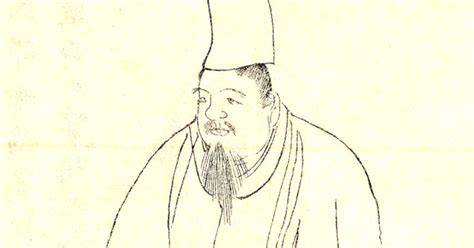
After Yasunori’s death, one man carried his memory forward to later generations.
Miyoshi no Kiyoyuki.
Kiyoyuki wrote the Biography of Fujiwara no Yasunori during the Engi era.
This biography describes Yasunori’s provincial administration in great detail.
And it holds Yasunori up as a “model official.”
This also reflects the political thought of the early 10th century.
Miyoshi no Kiyoyuki himself held strong views on how provincial administration ought to be conducted.
Which means the Biography of Fujiwara no Yasunori is not simply a portrait of one man.
It is also, in its own way, a political argument:
“this is exactly the kind of provincial official we need.”
Which is exactly why stories emphasizing Yasunori’s virtue appear one after another — the bandits who turned themselves in, the people who begged him to stay when his term ended.
These stories are genuinely fascinating for understanding the man Yasunori was.
At the same time, the career that can be confirmed as historical fact and the ideal image later ages built around him need to be read separately.
18. The People Begged Yasunori to Stay When He Returned to the Capital
The Biography of Fujiwara no Yasunori also tells a story of Yasunori’s return to the capital after his term in Bizen ended.
When people learned Yasunori was leaving, they gathered along the road.
Grieving the parting, they tried to hold him back. Elders brought him wine and food. The people mourned his departure.
Overwhelmed by their devotion, Yasunori is said to have quietly departed by boat.
This story, too, shows just how fondly Yasunori was remembered by the common people.
And it captures the defining feature of Yasunori’s governance in miniature.
A governor who had come from the center carrying its orders, mourned by the people themselves when his term came to an end.
That was the “ideal governor” Miyoshi no Kiyoyuki set out to portray.
19. Known as a “Good Governor of Two Thousand Bushels”
A traditional image survives of Yasunori, comparing him to the great provincial officials of ancient China.
That image is “a good governor of two thousand bushels.”
“Two thousand bushels” referred to the high official rank of provincial governors under China’s Han dynasty.
Which is to say, Yasunori was praised as “a superb official who governed the provinces admirably.”
A man who lived in Heian Japan was compared to the ideal provincial officials of Chinese classical literature.
This, too, reveals how the intellectuals of the age judged Yasunori.
20. His Final Years — Death at Seventy-One
The 21st day of the 4th month, the seventh year of Kanpyo (895).
Fujiwara no Yasunori died.
He was seventy-one.
His final rank and offices were Junior Fourth Rank, Upper Grade; Councillor; Minister of Popular Affairs.
A man who became Junior Secretary of the Ministry of Civil Administration at thirty went out to the provinces in his forties, governed Bicchu and Bizen, responded to the Gangyo War in Dewa, passed through Dazaifu, returned to central politics, and became Councillor at sixty-eight.
And at seventy-one, his life came to an end.
By the standards of the Heian period, this was a long life.
And, remarkably, his political weight only grew heavier the further into that life he went.
21. Yasunori’s Final Years and Buddhism
A tradition survives concerning Buddhism in Yasunori’s final years.
Later biographical accounts say that Yasunori deepened his Buddhist faith, and in the end entered Mount Hiei, dying while chanting the nembutsu.
This needs to be treated separately from any contemporary source directly recording the moment of Yasunori’s death.
Even so, this tradition is fascinating for understanding who Yasunori was.
Because even in his work as a provincial administrator, Yasunori placed real weight on his relationship with the gods and buddhas.
In Yasunori’s own character,
the pragmatism of an administrator and religious faith existed side by side.
This is an important feature for understanding Heian-period officials more broadly.
22. What Truly Made Fujiwara no Yasunori Remarkable
Looking across Fujiwara no Yasunori’s life, one feature stands out.
Yasunori was never a man judged only by battlefield achievements.
In Bicchu, he rebuilt a devastated region.
In Bizen, he governed the province. In Kyoto, he took charge of order as a kebiishi. In Dewa, he responded to the Gangyo War.
At Dazaifu, he administered Kyushu. And at the center, he rose to Major Controller of the Left, Councillor, and Minister of Popular Affairs.
Which is to say, Yasunori was “a central official who understood the provinces.”
This was an extraordinarily valuable skill for the court of his era.
Policies decided at the center had to be carried out in the provinces.
But the provinces had their own realities.
Tax people too hard, and they flee.
Govern too harshly, and resentment grows.
Suppress that resentment with force alone, and it only grows stronger still.
Yasunori had lived through exactly this, in the provinces, with his own eyes. Which is why, in the Gangyo War,
when he read the rebels’ grievance, he could say “there is a great deal of reason in this.”
23. Yasunori and the Gangyo War — Why Was He Chosen?
Yasunori’s dispatch to the Gangyo War was no accident.
What the court needed was not simply a military commander.
The court’s own army had already been defeated.
And there was no guarantee that sending an even larger force would fully subdue local society in Tohoku.
What was needed instead was
a man who understood how to govern once the fighting was over.
Yasunori had exactly that experience.
Bicchu. Bizen. Kyoto.
He carried all of it with him into Dewa.
And he broke the rebellion apart through politics, all while holding military strength firmly in reserve.
This method is what carried the Gangyo War to its resolution.
24. Yasunori Is All the More Interesting for Separating Fact From Legend
A remarkably beautiful image of Fujiwara no Yasunori has come down to us.
Bandits turning themselves in. The people begging him to stay. His reverence for the gods and buddhas.
Even listening to the grievances of rebels.
None of these stories need to be read as literal fact.
But there is no need to dismiss them either.
Because they tell us exactly how Yasunori came to be judged by later generations as an official.
The career confirmed by contemporary sources, and his actions in the Gangyo War.
And the ideal image of a model official later portrayed in the Biography of Fujiwara no Yasunori.
Laying these two together brings the man Fujiwara no Yasunori into full, three-dimensional view.
Summary
Fujiwara no Yasunori was born in the second year of Tencho (825) as a member of the Fujiwara Southern House.
He became Junior Secretary of the Ministry of Civil Administration at thirty, and went on to serve in the Ministries of Popular Affairs, Military Affairs, and Ceremonial.
Having learned the workings of central administration, Yasunori took up a post in Bicchu in the eighth year of Jogan (866), at the age of forty-two.
Here began Yasunori’s life as a distinguished official.
In Bicchu, he governed a region devastated by famine, the burden of taxation, and collapsing public order.
He then moved to Bizen, building further on his record as a provincial governor.
The Biography of Fujiwara no Yasunori preserves the story of bandits who turned themselves in after hearing of Yasunori’s good governance, and of the people who begged Yasunori to stay when his term ended.
These are anecdotes from a later biography that portrays Yasunori as an ideal “model official.”
In the 18th year of Jogan (876), he returned to Kyoto and became Provisional Assistant Captain of the Right Gate Guards and Kebiishi.
Beyond provincial administration, he now had experience in maintaining order within the capital as well.
Then, in the second year of Gangyo (878), the Gangyo War broke out in Dewa.
With Akita Castle under attack and the court’s own forces struggling, Yasunori was sent to the region as Provisional Governor of Dewa.
Even as he strengthened military preparations, Yasunori investigated the causes of the uprising.
Reading the rebels’ own grievance, he reported to the court that
“there is a great deal of reason in this.”
This single phrase captures Yasunori’s entire approach to governance.
It was never simply “strike them down because they rebelled.”
He asked why they had rebelled. What had driven them to break away from the court in the first place.
He thought that far.
He accepted those who surrendered, rebuilt local governance, and worked with commanders such as Ono no Harukaze to bring the uprising to its end.
Afterward, he took on important provincial posts in Sanuki and Dazaifu, and went on to become Major Controller of the Left in the third year of Kanpyo (891), Councillor in the fourth year of Kanpyo (892), and Minister of Popular Affairs in the fifth year of Kanpyo (893).
He died on the 21st day of the 4th month, the seventh year of Kanpyo (895), at the age of seventy-one.
He had not been a man of dazzling power in his youth.
He became a working official at thirty, went out to the provinces at forty-two, built up years of experience in local governance, weathered the Gangyo War, and only finally became Councillor at sixty-eight.
Fujiwara no Yasunori’s life was one in which years of steady, practical work eventually carried him to a place at the very center of government.
And what best represents Yasunori, in the end, is the Gangyo War.
With the court’s own army struggling, Yasunori did not simply insist on sending a larger force.
He listened to the words of the rebels, and found reason within them.
That judgment alone shows that Yasunori was never merely a provincial official — he was a man who understood the very art of governing an ancient state.
Fujiwara no Yasunori.
The history of the Heian period was not shaped by warriors on the battlefield alone.
Officials who understood the realities of the provinces, governed people, put down uprisings, and kept the state itself moving also shaped its great turning points.
Fujiwara no Yasunori stands as their finest example.