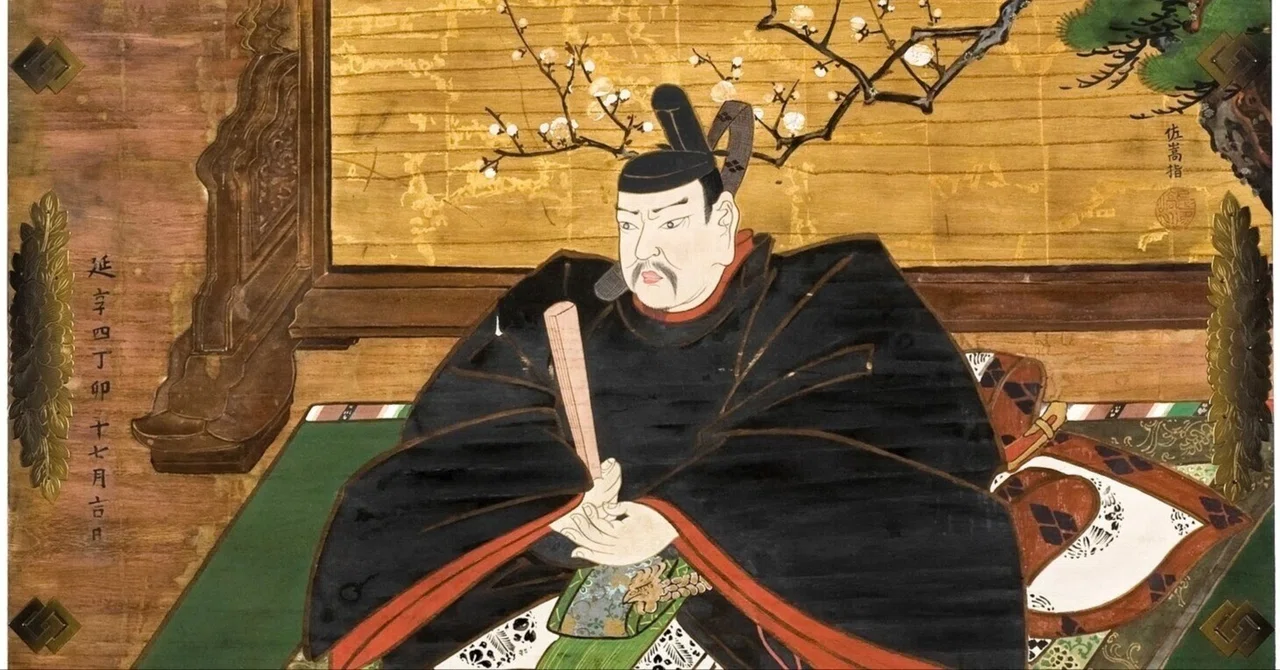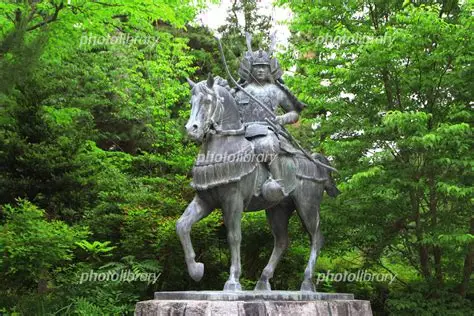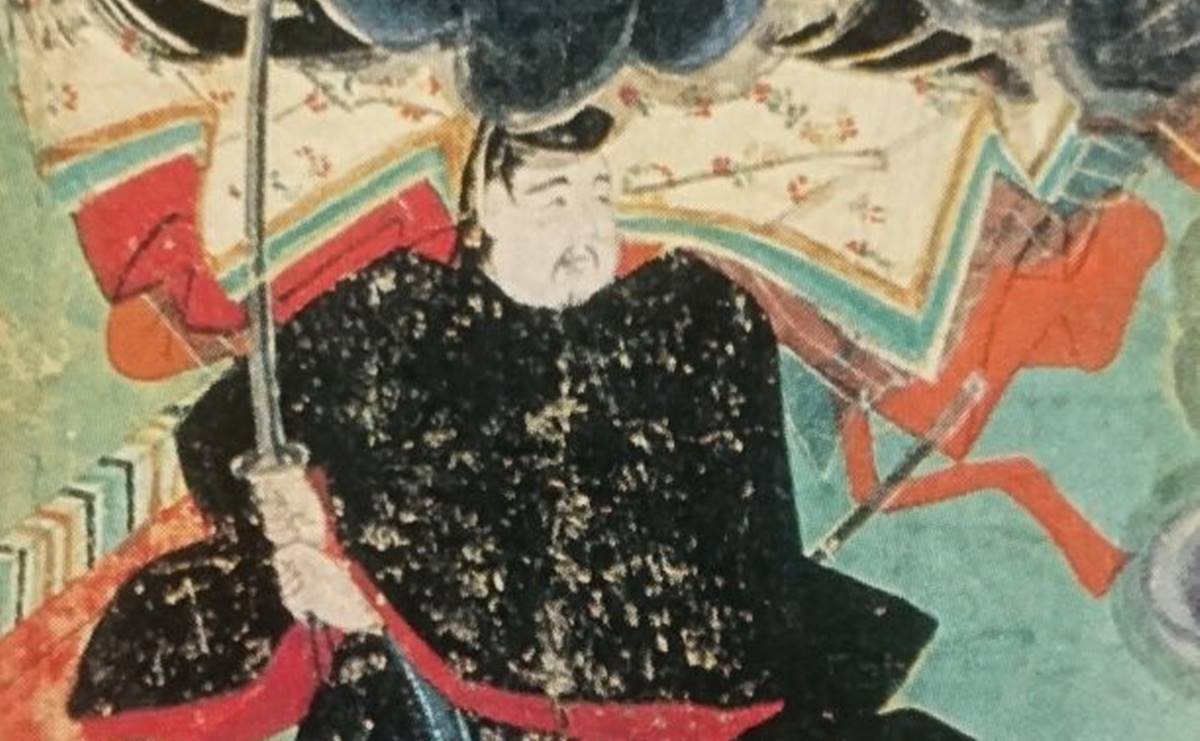
The “Villain Who Brought Down Michizane” Was in Truth a Statesman Who Ran the Heian Court
901, the year Sugawara no Michizane was exiled to Dazaifu.
The man at the center of that affair was Fujiwara no Tokihira.
In later Japanese history, the strong impression left of him is that of
“the man who envied Sugawara no Michizane and slandered him into exile.”
Michizane was sent to Dazaifu and died there in 903.
Tokihira, meanwhile, also died young, in 909, at only thirty-nine.
In later ages, the lightning strikes, epidemics, and the deaths of political rivals that followed Michizane’s own death all came to be linked to his vengeful spirit.
And so Tokihira, too, gained the image of “a man who was punished for exiling Michizane.”
But tracing the historical Fujiwara no Tokihira reveals an entirely different figure.
Born the direct heir of the Fujiwara Northern House, Tokihira advanced early into the center of the court, became Sangi at twenty-eight and Minister of the Left at twenty-eight, and after Michizane’s fall supported Emperor Daigo’s own government.
In 902 he issued the Shoen Consolidation Edict.
He sought to restore order to the ritsuryo state’s control of land, and even carried out a handen land redistribution.
He was also involved in compiling the Engi Kyaku, helping put the Heian court’s legal system in order.
Fujiwara no Tokihira was never a man who ends the story simply by exiling Michizane.
He was a statesman who carried the actual running of the Heian state on his own shoulders.
1. 871 — Born at the Summit of the Fujiwara Northern House
Fujiwara no Tokihira was born in the 13th year of Jogan (871).
His father was Fujiwara no Mototsune.
Fujiwara no Mototsune is covered in detail in a separate article (Japanese only).
His mother was a daughter of Prince Sanetsu.
Mototsune was among the greatest powers ever to move the court in the early Heian period.
From the reign of Emperor Seiwa through Emperor Yozei, Emperor Koko, and Emperor Uda, he stood at the very center of politics, and is known as the first man in Japanese history to hold the office of Kampaku.
As his eldest son, Tokihira was born already carrying the weight of the Fujiwara Northern House’s direct line.
His younger brother was Fujiwara no Tadahira, who would later become regent and Kampaku.
His sister Onshi became a consort of Emperor Uda, and his sister Onshi (Ononshi) became the empress of Emperor Daigo.
Tokihira’s family built one marriage tie after another with the imperial house.
In other words, Tokihira grew up as a man who carried both the political power of the Fujiwara clan and blood ties to the imperial house.
2. 886 — Extraordinary Treatment at His Coming-of-Age Ceremony at 16
In the second year of Ninna (886), Tokihira came of age at sixteen.
The man who performed the capping ceremony was Emperor Koko himself.
What is more, the certificate granting Tokihira Junior Fifth Rank, Lower is said to have been written in Emperor Koko’s own hand.
This was extraordinary treatment even for the coming-of-age of a young noble.
Tokihira went on to serve as Jiju and other posts before becoming Head Chamberlain, entering the practical business of court administration.
Born into the direct line of the Fujiwara, Tokihira did not become a finished statesman on lineage alone.
He gained hands-on experience in the court’s administrative work and steadily advanced toward its center.
3. 891 — Sangi at 28
In the third year of Kanpyo (891), Tokihira became Sangi.
Twenty-eight.
Sangi was a member of the Council of State’s deliberative body, directly involved in shaping court policy.
He went on to be promoted to Middle Counselor and Major Counselor.
Around this time, Emperor Uda was pursuing direct personal rule.
Emperor Uda sought to curb the political influence that Fujiwara no Mototsune had wielded so powerfully during his father Emperor Koko’s reign, and to lead government himself.
Sugawara no Michizane was one of the men who supported this effort.
And another key figure was Fujiwara no Tokihira.
Here the paths of the two men crossed.
4. Tokihira and Michizane — Two Statesmen Standing Side by Side
Sugawara no Michizane, born into a family of scholars, achieved an extraordinary rise at court.
Deeply trusted by Emperor Uda, he passed through Head Chamberlain, Sangi, and Provisional Major Counselor before becoming Minister of the Right in 899.
Minister of the Left at the time was Fujiwara no Tokihira.
In other words, by 899,
Minister of the Left Fujiwara no Tokihira and Minister of the Right Sugawara no Michizane
this arrangement had come into being.
The two were the highest-ranking statesmen supporting Emperor Daigo.
And at this point, there is no need to think of Tokihira and Michizane as simply “enemies from the start.”
Their two families had a history of contact, going back to the generation of Tokihira’s father Mototsune and Michizane’s father Koreyoshi.
As their political positions drew closer, the two men entered a relationship of growing tension over leadership at court.
5. 899 — Minister of the Left at 28
In the second year of Shotai (899), Tokihira became Minister of the Left.
At only twenty-eight.
The highest office in the court.
Michizane, meanwhile, was at the center of government as Minister of the Right.
At this point, Tokihira and Michizane stood together as Ministers of the Left and Right.
Roughly two years later, a great crisis would shake the court.
6. January 7, 901 — the Two Are Raised to the Same Rank on the Same Day
The seventh day of the first month, the fourth year of Shotai (901).
Tokihira and Michizane were promoted together to Junior Second Rank.
As Ministers of the Left and Right, the two stood at the highest tier of the court.
But eighteen days later, on the 25th.
The court suddenly announced a sweeping personnel decision.
Sugawara no Michizane was exiled as Provisional Governor-General of Dazaifu.
Tokihira became the central figure of this coup.
A mere eighteen days.
The life of Michizane, one of the court’s two great ministers, collapsed all at once.
7. The Shotai Incident — What Crime Was Michizane Charged With?
January 25, 901.
The reason the court gave for Michizane’s punishment was clear.
It held that Michizane had deceived Retired Emperor Uda and sought to depose Emperor Daigo and place another member of the imperial family on the throne.
The key figure in the background was Prince Tokiyo.
Prince Tokiyo was a son of Emperor Uda.
And he was Michizane’s son-in-law.
For this reason, suspicion arose within the court that Michizane was trying to place Prince Tokiyo on the throne.
Michizane was exiled as Provisional Governor-General of Dazaifu, and his children, too, were each exiled or banished to the provinces.
This was the Shotai Incident.
The full course of the Shotai Incident is covered in a separate article.
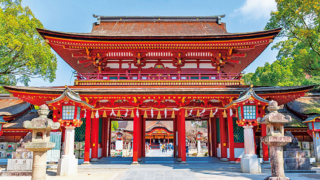
In later ages, the settled view became that Tokihira slandered Michizane and brought about this political affair.
Indeed, both contemporary sources and later histories consistently link Tokihira deeply to Michizane’s fall.
Even so, the Shotai Incident cannot be explained by Tokihira’s personal grudge alone.
At the time, the court was tangled in
the political relationship between Emperor Daigo and Retired Emperor Uda, the question of imperial succession, Michizane’s own rapid rise,
and the political standing of the senior nobility centered on the Fujiwara clan.
The Shotai Incident was a coup in which these political conflicts erupted all at once.
8. Retired Emperor Uda Tried to Save Michizane
On learning of Michizane’s exile, Retired Emperor Uda took action.
Retired Emperor Uda went to meet Emperor Daigo, trying to overturn the decision.
But the palace guard blocked his entry.
Retired Emperor Uda waited there a long while, but never obtained an audience with Emperor Daigo.
Because of this, Michizane’s punishment was never overturned.
Michizane, who had supported the government since Emperor Uda’s own reign, now vanished entirely from the center of the court.
And it was Tokihira who now stood at the head of the court’s government.
9. 901 — the Age of Tokihira Begins
Michizane was gone.
Tokihira now stood at the center of politics under Emperor Daigo.
This era of Emperor Daigo’s reign came to be known in later ages as “the Engi Era of Good Government.”
And Tokihira was one of the men who carried the core of that governance.
Once in power, Tokihira began working to restore order to the court’s institutions and its control of land.
The representative example was the Shoen Consolidation Edict of the following year, 902.
10. 902 — the Engi Shoen Consolidation Edict
The second year of Engi (902). The court issued the Shoen Consolidation Edict.
At the time, the private development and donation of land was advancing rapidly in the provinces.
A growing movement used the authority of powerful figures, temples and shrines, and members of the imperial family to secure land and escape tax and labor obligations.
This was a serious problem for the court.
The financial base of the state rested on taxes collected from the people.
If land and people flowed instead under the control of powerful figures, the court’s own revenue would decline.
So the court put forward a policy
regulating unlawful land seizure by chokushiden estates and by imperial family members and powerful nobles.
This was the Shoen Consolidation Edict of 902.
What matters here is not to misread this simply as “a ban on shoen estates.”
Its aim was to regulate new land seizures and unlawful donations, and to restore order to the state’s control of land and its finances.
This policy captures well the character of Tokihira’s own government.
Having won power through his political struggle with Michizane, Tokihira poured that power directly into the running of the state.
11. 902 — the Last Handen
That same year, 902.
The court carried out a handen land redistribution.
Handen was the fundamental ritsuryo system of allotting rice fields to the people based on the household register.
And this handen of 902 became, in the end, the last one ever carried out in Japanese history.
This is a highly significant fact.
The land system of the ritsuryo state had been gradually drifting from reality ever since the eighth century.
Land development advanced, and private control of land expanded.
The court carried out this final handen even as it simultaneously worked to consolidate shoen estates.
A politics trying to hold the ritsuryo system together, and the response to a changing society, were unfolding at the same time.
This was the age of Tokihira.
12. 901 — Completion of the Nihon Sandai Jitsuroku
In the era when Tokihira stood at the center of politics, historical compilation was also underway.
One such work was the Nihon Sandai Jitsuroku.
The Nihon Sandai Jitsuroku is an official national history covering the reigns of Emperors Seiwa, Yozei, and Koko, from 858 to 887.
Fifty volumes in all.
It stands as the last of the Six National Histories.
Fujiwara no Tokihira was involved in its compilation.
It was completed in the eighth month of the first year of Engi (901).
At the time, Tokihira was not yet even thirty-nine.
A mere seven months after Michizane’s exile, this major state project of historical compilation, involving Tokihira among others, was completed.
The Nihon Sandai Jitsuroku records imperial edicts, memorials to the throne, natural disasters, and much else in detail, and remains an extremely important source for understanding the early Heian period.
13. The Engi Kyaku — Putting the Court’s Rules in Order
Another important part of Tokihira’s governance was the Engi Kyaku.
“Kyaku” were laws that supplemented or revised the ritsuryo code.
“Shiki” were the detailed regulations for putting the ritsuryo and kyaku into actual practice.
By the Heian period, an enormous volume of laws had piled up since the original enactment of the ritsuryo code.
The court needed to put all of this in order.
And so, under Emperor Daigo, the compilation of the kyaku and the shiki moved forward.
The Engi Kyaku was completed in 907.
The Engi Shiki, meanwhile, was completed in 927, and put into effect in 967.
In other words, it would be a mistake to treat the entire project through the Engi Shiki as Tokihira’s work alone.
Tokihira led the early stage of this compilation, and the work continued after his death under his younger brother Tadahira and others.
Tokihira’s own politics moved beyond the immediate power struggle in front of him, toward putting the whole legal system of the court in order.
14. What Kind of Man Was Tokihira?
Fujiwara no Tokihira left behind not only the stern face of a statesman, but also a reputation as a colorful, expansive personality.
The Okagami, a historical narrative composed in the late Heian period, preserves a famous anecdote about Tokihira’s character.
At a certain banquet, another guest broke wind.
Tokihira burst into laughter. And once he started laughing, he could not stop.
This episode was later even worked into the kabuki piece “Tokihira’s Seven Laughs.”
The Okagami also contains another anecdote, in which Tokihira, conspiring with Emperor Daigo, showed up at court in extravagant dress and was scolded by the emperor for it.
Such stories paint Tokihira in the Okagami as a bold, unrestrained figure.
Even so, the Okagami was compiled more than a hundred years after Tokihira’s death.
These stories are therefore not primary sources directly proving Tokihira’s own words and actions between 901 and 909.
Even so, they remain valuable material for understanding how later generations remembered Tokihira.
15. Tokihira’s Family — the Children Who Would Carry the Fujiwara Forward
Tokihira had several children.
Among them were Fujiwara no Yasutada and Fujiwara no Atsutada, who would later become senior nobles.
His daughter Hoshi became a consort of Emperor Uda.
Tokihira’s family kept strengthening the bond between the Fujiwara Northern House and the imperial family, a bond that had continued since his father Mototsune’s own time.
And after Tokihira’s death, his political standing passed to his younger brother, Fujiwara no Tadahira.
The history of the Fujiwara clan was not cut short by Tokihira’s death.
If anything, it was carried forward into the next generation.
16. April 4, 909 — Tokihira Dies at 39
In the ninth year of Engi (909), Fujiwara no Tokihira died.
Thirty-nine. Far too young.
Only eight years after the Shotai Incident of 901.
Tokihira had been in the very midst of leading the court’s own government, advancing land reform and legal compilation.
That statesman’s life ended at thirty-nine.
In later ages, his cause of death came to be spoken of in connection with Michizane’s vengeful spirit.
But here, historical fact and legend need to be kept separate.
There is no historical fact that Tokihira was killed by Michizane’s vengeful spirit.
After Tokihira’s death, a social and religious movement fearing Michizane’s vengeful spirit grew stronger, and within that current, Tokihira’s own death, too, became linked to Michizane’s curse.
Tokihira was posthumously granted Senior First Rank and the office of Daijo Daijin.
17. After Tokihira’s Death — to Fujiwara no Tadahira
When Tokihira died, the political center of the Fujiwara Northern House passed to his younger brother, Fujiwara no Tadahira.
Tadahira was Tokihira’s younger brother.
He later became regent and Kampaku, standing at the center of court politics even after Emperor Daigo’s death.
From here, the Heian court moved from the age of Tokihira into the age of Tadahira.
And it was during Tadahira’s era that a great crisis arose in the eastern provinces.
The revolt of Taira no Masakado.
About thirty years after Tokihira’s death in 909.
While aristocratic society continued to run the court’s own politics, the power of the warrior class in the provinces was beginning to grow.
The figure who symbolized that change was Taira no Masakado.
Summary
Fujiwara no Tokihira was born in 871, the eldest son of Fujiwara no Mototsune.
His father was one of the greatest powers to move the court in the early Heian period.
As his direct heir, Tokihira came of age at sixteen, received extraordinary treatment from Emperor Koko, and advanced young into the center of the court.
In 891, at twenty-eight, he became Sangi. In 899, Minister of the Left.
Around the same time, Sugawara no Michizane held the office of Minister of the Right.
The two stood together as Ministers of the Left and Right, supporting Emperor Daigo.
But in 901, the Shotai Incident occurred.
Eighteen days after being promoted together to Junior Second Rank on the seventh of the first month, Michizane was exiled as Provisional Governor-General of Dazaifu.
The reason the court gave was that Michizane had deceived Retired Emperor Uda in an attempt to depose Emperor Daigo and place Prince Tokiyo on the throne.
Tokihira became the central figure of this political affair, and after Michizane’s fall led the government of Emperor Daigo’s court.
In 902, he issued the Shoen Consolidation Edict.
That same year, he carried out the last handen land redistribution in Japanese history.
He was also involved in compiling the Nihon Sandai Jitsuroku and the Engi Kyaku, work that put the court’s institutions and records in order.
In other words, Fujiwara no Tokihira is not a man defined only by
“the man who exiled Sugawara no Michizane.”
He was a statesman who rose to the summit of the court as heir to the Fujiwara clan, prevailed in a fierce political struggle, and carried the running of the state under Emperor Daigo.
But his life was strikingly short.
On April 4, 909, Tokihira died at thirty-nine.
As legends of Michizane’s vengeful spirit spread after his death, Tokihira, too, was woven into the story as “a man cursed for exiling Michizane.”
But the historical Tokihira was no villain pursued by a vengeful ghost.
He was one of the greatest statesmen of the early Heian period — a man who, carrying the power of the Fujiwara clan, rose to the summit of the court while still young, drove Emperor Daigo’s own government forward through his political struggle with Sugawara no Michizane, worked to reform land and legal institutions, and closed his life at only thirty-nine.
That was Fujiwara no Tokihira.
And after Tokihira’s death, it was his younger brother, Fujiwara no Tadahira, who inherited the Fujiwara clan’s own governance.
Under Tadahira, the politics of the court would change further still.
And around that same time, a man would appear in the eastern provinces who would shake the court itself.
Taira no Masakado.
From here, the story moves from the politics of the aristocracy toward the age of the provincial warrior.