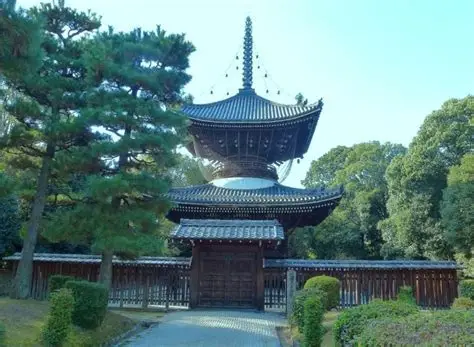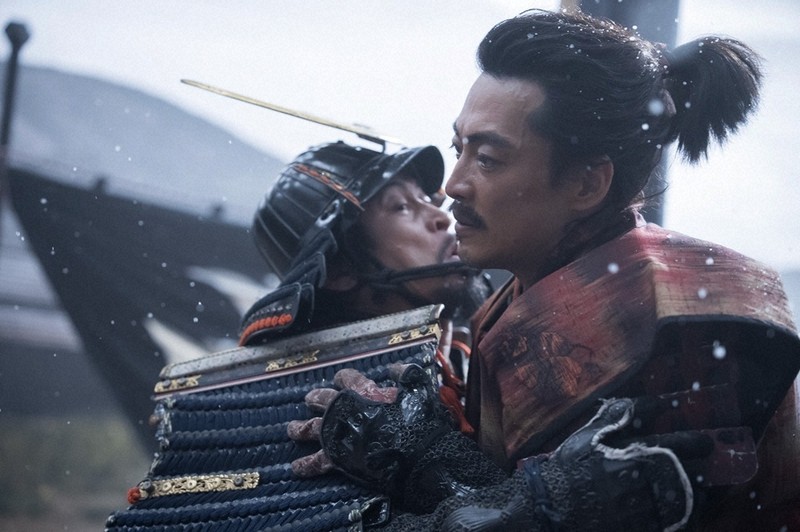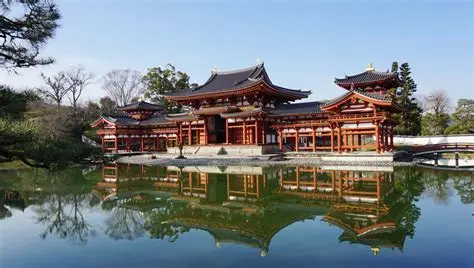
On May 26, 1180, Minamoto no Yorimasa met his end at the Byodo-in Temple in Uji.
He was 77 years old by the traditional Japanese count. Two years earlier, he had been promoted to the Junior Third Rank, earning him the nickname “Gen Sanmi,” the venerable general.
During the Hogen Rebellion, he sided with Emperor Go-Shirakawa, and in the Heiji Rebellion, he ultimately joined Taira no Kiyomori’s side. Even after the Kawachi Genji were driven out of Kyoto, he remained at court.
He was one of the few Minamoto who rose to the rank of court noble during the peak of the Taira’s power.
Yet, at the end of his life, Yorimasa turned his bow against the Taira.
Yorimasa supported Prince Mochihito, the son of the cloistered Emperor Go-Shirakawa.
Despite being an imperial prince, Mochihito was nearing 30 without having been granted the title of “Shinnō” (Imperial Prince).
In the previous year’s political upheaval of 1179, his father, Emperor Go-Shirakawa, was imprisoned, and Mochihito lost control of the Chokoin Temple estate, which he had long managed. Furthermore, in February 1180, Emperor Antoku, Kiyomori’s three-year-old grandson, ascended the throne.
Between April and May, a proclamation in Mochihito’s name calling for the overthrow of the Taira began to circulate.
When the plan was exposed, the prince fled to Onjo-ji Temple.
The Taira prepared to attack Onjo-ji, and Minamoto no Yorimasa was initially listed among the forces tasked with the assault.
However, on the night of May 21 into the early hours of the 22nd, Yorimasa and his family entered Onjo-ji.
The 77-year-old Minamoto, who was supposed to be among the pursuers, suddenly found himself on the side of the pursued.
Unable to secure support from Enryaku-ji, remaining at Onjo-ji became untenable.
On the night of the 25th, Mochihito and Yorimasa set out for Kofuku-ji in Nara. The following day, they were overtaken by Taira forces in Uji.
Yorimasa took his own life at Byodo-in, and Mochihito was killed while fleeing to Minami-Yamashiro. The uprising was quickly crushed.
Yet, the incident did not end there. The call to arms against the Taira in Mochihito’s name persisted even after his death, spreading unrest from the summer of that year into the eastern provinces, Kai, and Shinano.
The rebellion defeated at Uji marked the beginning of the five-year-long Genpei War.
The Prince Who Could Not Become “Shinnō” at 30
Prince Mochihito was born in 1151 as a son of Emperor Go-Shirakawa.
His mother was Nariko, daughter of Fujiwara no Suenari. He was considered the third son of Go-Shirakawa.
However, Mochihito never received the title of “Shinnō” even after reaching adulthood.
Being a son of the emperor did not automatically make one a “Shinnō.” Only upon receiving the title from the court did one become an official imperial prince. Thus, in historical records, Mochihito remained a “prince” throughout his life.
On the other hand, it wasn’t as if his status as a member of the imperial family was low.
Prince Mochihito was adopted by Princess Junshi of Hachijo-in.
Hachijo-in was the daughter of Emperor Toba and a powerful member of the imperial family, possessing vast estates.
The Hachijo-in estates had a significant impact on later political history, forming extensive connections with nobles, warriors, and temples.
Prince Mochihito himself was known as a cultured individual, skilled in poetry and flute, and was referred to as “Takakura-no-miya” and “Sanjo-no-miya.”
Yet, he drifted further from the line of imperial succession.
The major turning point was when his half-brother, Prince Norihito, advanced to the throne.
Prince Norihito’s mother was Taira no Shigeko, the half-sister of Taira no Kiyomori’s wife, Tokiko.
In the third year of Nin’an (1168), Prince Norihito ascended the throne at the age of eight, becoming Emperor Takakura.
Furthermore, in the second year of Jōan (1172), Kiyomori’s daughter, Tokuko, entered the court of Emperor Takakura.
In November of the second year of Jisho (1178), Tokuko gave birth to Prince Tokihito, who became Crown Prince the following month.
Then, on February 21st of the fourth year of Jisho (1180), Emperor Takakura abdicated, and Prince Tokihito ascended as Emperor Antoku.
He was a young emperor, merely three years old by traditional count, and one year old by modern reckoning.
At that time, Prince Mochihito was approaching the age of thirty by traditional count.
Despite being the son of Emperor Go-Shirakawa, he was not granted the title of prince, and the throne passed from his half-brother, Emperor Takakura, to the latter’s young son.
Compounding this was the political upheaval of the third year of Jisho the previous year.
Emperor Go-Shirakawa was confined to the Toba Palace, and many of his close courtiers were ousted.
By the spring of 1180, the situation surrounding Prince Mochihito was fraught with issues of imperial succession and dissatisfaction with the Taira regime.
Minamoto no Yorimasa at 77—A Genji Who Rose Under the Taira Regime
Minamoto no Yorimasa is indispensable when discussing Prince Mochihito’s uprising.
Yorimasa was born in the first year of Chōji (1104). He belonged to the Settsu Minamoto clan, a branch of the Seiwa Genji, and his father was Minamoto no Nakamasa.
Although he shared the Seiwa Genji lineage with Minamoto no Yoshitomo and his son Yoritomo, his line was different.
Yorimasa served the court from a young age, involved in maintaining public order and security in Kyoto.
In the first year of Hogen (1156), he sided with Emperor Go-Shirakawa during the Hogen Rebellion.
Three years later, during the Heiji Rebellion, Minamoto no Yoshitomo rose in arms alongside Fujiwara no Nobuyori, but Yorimasa ultimately did not join Yoshitomo and sided with Taira no Kiyomori instead.
After Yoshitomo’s defeat and death, the prominent members of the Kawachi Genji disappeared from Kyoto, but Yorimasa remained with the court.
Even during the peak of Taira power, he was not ousted.
In the first year of Nin’an (1166), he was granted the rank of Senior Fifth Rank, Lower Grade, and was permitted to enter the court, continuing to rise in rank thereafter.
By the second year of Jisho (1178), he was promoted to Junior Third Rank, joining the ranks of the kugyo (court nobility).
He was 75 years old when he achieved the Junior Third Rank.
This led to Yorimasa being referred to as “Gen Sanmi.”
The notion that an elder of the Genji, long oppressed by the Taira, suddenly rose in rebellion out of long-standing resentment does not fully explain Yorimasa’s career.
Yorimasa survived within the court for over 30 years, never directly opposing Kiyomori, and rose to Junior Third Rank under the Taira regime.
This is why Yorimasa’s shift to Prince Mochihito’s side in 1180 carries significant weight.
The “Under the Tree” Poem and the Rank of Sanmi—A Tale from the Heike Monogatari
There is a famous story in the Heike Monogatari about how Yorimasa achieved the rank of Junior Third Rank.
Yorimasa, who had long been unable to attain the rank of Sanmi,
composed the poem:
“With no means to ascend, I must live
Gathering acorns beneath the trees.”
It conveyed the meaning, “Having no way to rise, I must live by gathering acorns under the trees,” and it is said that Kiyomori, upon hearing it, arranged for Yorimasa’s promotion.
While it is true that Yorimasa rose to Junior Third Rank, the story of his promotion due to this poem should be viewed as an anecdote from the Heike Monogatari.
Similarly, the tale of Yorimasa’s son, Nakatsuna, having his prized horse seized by Taira no Munemori, leading to his humiliation and Yorimasa’s subsequent rebellion, is prominently featured in the Heike Monogatari.
Munemori desired Nakatsuna’s horse, and when refused, forcibly took it, naming it “Nakatsuna” and publicly shaming him. This humiliation angered Yorimasa, prompting his resolve to overthrow the Taira.
While a memorable story, it cannot solely account for Yorimasa’s decision to rise in arms.
After the political upheaval of Jisho 3, the very politics of the court underwent significant changes. The cloistered rule of Emperor Go-Shirakawa was halted, and in February 1180, the young Emperor Antoku ascended the throne.
Yorimasa was a warrior who had long been active within the court.
The background to Yorimasa’s final alliance with Prince Mochihito cannot be explained by a personal grudge over a single horse alone.
April: Prince Mochihito Calls for the Overthrow of the Taira
The Azuma Kagami records that on April 9, 1180, Prince Mochihito issued an edict calling upon the Minamoto clan and warriors across the provinces to rise against the Taira clan.
The content of this edict was intense.
It denounced Taira no Kiyomori and his family as disruptors of the imperial order, urging the Minamoto and other warriors to join the campaign against them. Prince Mochihito even styled himself as “Prince Saisho,” envisioning a new political order after the Taira’s defeat.
The Azuma Kagami mentions Minamoto no Yukie as the person who carried this edict to various regions.
Yukie was the son of Minamoto no Tameyoshi and the younger brother of Minamoto no Yoshitomo, making him an uncle to Minamoto no Yoritomo.
According to the Azuma Kagami, on April 27, Yukie delivered Prince Mochihito’s edict to Minamoto no Yoritomo, who was exiled in Izu.
This edict dated April 9 is a crucial document for understanding the internal conflicts of the Jisho-Juei period.
However, caution is necessary.
The Azuma Kagami is not a contemporary diary from 1180 but a historical record compiled long after the establishment of the Kamakura shogunate. There has been longstanding debate over the format and creation process of the edict’s text as it survives today, and whether it can be treated as the “original text from April 9, 1180” remains a matter of scholarly disagreement.
On the other hand, the fact that Prince Mochihito’s “imperial edict” was disseminated across the provinces and used in the subsequent anti-Taira movements is corroborated by other historical sources like the Gukansho.
Prince Mochihito’s efforts to rally the provinces and encourage the Minamoto and other warriors to rise against the Taira are key to understanding the uprisings across the country in 1180.
The Plan is Discovered—Officials Head to Prince Mochihito’s Residence
The plan was uncovered by the Taira.
Efforts to capture Prince Mochihito began, and the court moved to strip him of his imperial status, renaming him “Minamoto no Yukimitsu” and exiling him to Tosa.
Before he could be captured, Prince Mochihito fled Kyoto.
The Heike Monogatari depicts him escaping through the night in the guise of a lady-in-waiting.
While this should be read as a dramatic scene typical of war tales, the fact that Prince Mochihito escaped Kyoto and took refuge at Onjo-ji is confirmed by the course of events.
Onjo-ji is the present-day Miidera in Otsu City, Shiga Prefecture.
At the time, temples were not just places where monks chanted sutras.
They held vast estates, maintained many warrior monks, and wielded significant influence over court politics.
Onjo-ji had long been in conflict with Enryaku-ji on Mount Hiei.
Prince Mochihito sought to rally the monks of Onjo-ji to his side to confront the Taira forces.
And Minamoto no Yorimasa also made his decision.
Around May 22—Yorimasa Joins Prince Mochihito with His Clan
After Prince Mochihito fled to Onjoji Temple, the Taira clan began preparing to attack the temple with military force.
Looking at Minamoto no Yorimasa’s position, the unexpected nature of the incident becomes clear.
Among the commanders listed for the attack on Onjoji were members of the Taira clan such as Taira no Munemori, Taira no Yorimori, Taira no Norimori, Taira no Tomomori, Taira no Shigehira, and Taira no Koremori, alongside Minamoto no Yorimasa.
At this point, the Taira did not consider Yorimasa an enemy.
However, on the night of May 21st to the early hours of the 22nd, Yorimasa left his residence at Konoe Riverbank and led his family, including his sons Nakatsuna and Kanetsuna, to Onjoji. The veteran general, who was supposed to join the Taira’s punitive force, instead rushed to the temple that was under threat.
According to sources like the “Gyokuyo,” Yorimasa’s defection sent shockwaves through Kyoto.
How to reconcile the narrative in the “Heike Monogatari” and “Azuma Kagami,” which suggests Yorimasa had long been conspiring with Prince Mochihito, with the fact that he was counted among the Taira’s forces until the end, remains a point of scholarly debate.
No historical records remain in which Yorimasa himself explains why he turned his back on the Taira. It cannot be pinned down to a single cause, such as having a prized horse taken by Munemori or lamenting the decline of the Minamoto clan.
What is certain is that Yorimasa, who had risen to the rank of Junior Third Rank within the Taira regime, abandoned his established position at the age of 77.
Onjoji sought cooperation from Enryakuji and Kofukuji. While there was movement in Kofukuji to support Prince Mochihito, Enryakuji ultimately did not fully participate. The Taira also reached out to Mount Hiei, further isolating Onjoji.
On the 25th, Prince Mochihito and Yorimasa decided to leave Onjoji and head for Kofukuji, where they hoped to find reinforcements.
Night of May 25th—Departing Mii-dera for Nara
On the night of May 25th, Prince Mochihito and Yorimasa set out from Onjoji.
Their destination was Kofukuji.
To travel from present-day Otsu to Nara, there is a route that goes south from the Yamashina area along the eastern side of the Kyoto Basin, passing through Uji.
Prince Mochihito’s party traveled through the night.
The “Heike Monogatari” depicts Prince Mochihito as exhausted from the long escape, falling off his horse multiple times along the way. For a royal not accustomed to long-distance horseback travel, moving through the night must have been grueling.
Considering the proximity of the pursuing Taira forces, there was no time to rest.
The group reached Uji on the 26th.
There were still about 30 kilometers to go before reaching Nara.
It was in Uji that the pursuing forces closed in.
Uji Bridge—Yorimasa Removed the Bridge Planks to Await the Taira Forces
The Uji River poses a significant obstacle when heading south from the Kyoto Basin.
Since ancient times, a bridge has spanned the area around the present-day Uji Bridge, serving as a crucial route connecting Kyoto with southern Yamashiro and Nara.
It is said that after crossing the Uji River, Yorimasa and his group removed the planks from Uji Bridge to delay the pursuit.
They did not completely destroy the bridge but left the girders intact, making it difficult to cross.
Yorimasa and his forces took up positions on the southern side of the river, ready to face the Taira army.
The “Heike Monogatari” records the Taira forces as being vast in number, but these figures should not be taken as literal.
Prominent members of the Taira clan, such as Taira no Tomomori, Taira no Shigehira, and Taira no Koremori, are said to have participated.
Opposing them, Prince Mochihito and Yorimasa’s side was primarily composed of Yorimasa’s family and warrior monks from Onjoji.
The disparity in numbers was significant.
For Yorimasa’s side, the Uji River was one of the few geographical features they could use to offset this disadvantage.
When the enemy advances across a narrow bridge, even a large army can only attack with a limited number of soldiers at a time.
This sets the stage for one of the most dramatic battle scenes in the Tale of the Heike.
Tsutsui Jomyo—Firing 24 Arrows and Fighting on the Bridge
Jomyo Meishu, a warrior monk from Onjoji, is said to have stepped onto the bridge girder and begun shooting arrows.
According to the Tale of the Heike, out of 24 arrows, he killed 12 men with 12 arrows and wounded 11 with another 11. Holding the last arrow, he discarded his bow, switched to a naginata, and when that broke, drew his sword.
From behind him came Ichirai Hoshi. On the narrow bridge, Jomyo blocked the way, preventing him from advancing.
“Excuse me, Jomyo-bo,”
Ichirai Hoshi called out, placing a hand on Jomyo’s helmet, and leapt over his shoulder to confront the enemy.
This scene makes excellent use of the battlefield’s terrain. On the narrow Uji Bridge, with the planks removed, even a large army could not rush across all at once. The battle could be depicted as a fight where one person stepped forward at a time over a single bridge girder.
What Yorimasa’s side needed was time. They wanted to delay the Taira forces here long enough to get Prince Mochihito closer to Kofukuji. If they could reach Nara, there was still a chance to continue the fight.
The Taira Forces Cross the Uji River
Simply defending the bridge would not secure victory.
The Uji River had a current, and crossing it was dangerous, but there were places where it was possible to cross on horseback.
In the Tale of the Heike, it is depicted that Ashikaga Tadatsuna and others led their horses into the river to cross, and seeing this, the Taira forces followed one after another.
While the details of this crossing and the characters involved may be embellished by the epic, it is clear from the outcome of the battle that the Taira forces ultimately broke through at the Uji River.
Yorimasa’s defensive line collapsed.
The group retreated to Byodoin, located southwest of Uji Bridge.
Today, Byodoin is famous for the Phoenix Hall on the ten-yen coin, but even then, it was a major temple associated with the Fujiwara clan, situated just south of the Uji River.
This would be Yorimasa’s final stand.
Yorimasa’s Sons Fall One After Another, Yorimasa Heads to Byodoin
As the Taira forces crossed the Uji River, the battle moved to the area around Byodoin.
Yorimasa’s sons also fought.
Many members of the Yorimasa family, including his eldest son Nakatuna, were killed.
Yorimasa himself was already 77 years old.
The Hogen Rebellion had been 24 years ago, and the Heiji Rebellion 21 years ago.
In the Tale of the Heike, it is said that Yorimasa, wounded in battle and realizing he could no longer escape, withdrew to a corner of Byodoin.
There, he ordered his retainer, Watanabe Sho, to assist him in ending his life.
There is a poem said to have been composed by Yorimasa at the end of his life.
“The buried tree
never bloomed,
yet how poignant
its final fate.”
This poem likens his long life to a buried tree that never blossomed.
Given that Yorimasa rose to the rank of Junior Third Rank, interpreting his life as “never rewarded” does not align with his actual career.
The depiction of his final moments, including this death poem, is largely shaped by the “Heike Monogatari.”
However, the fact that Yorimasa was defeated at Uji on May 26 and lost his life at Byodoin remains unchanged.
His 77-year life ended here.
Prince Mochihito Fled to Nara—He Did Not Die at Byodoin
Even after Yorimasa died at Byodoin, Prince Mochihito was still alive.
It is not accurate to lump together “Prince Mochihito and Yorimasa both died in battle at Byodoin.”
While Yorimasa and his forces held back the Taira army at Uji, Prince Mochihito fled further south towards Nara.
If he could reach Kofuku-ji, he might receive support from the warrior monks.
The straight-line distance from Uji to Nara is over 25 kilometers.
After moving all night from Onjo-ji and getting caught up in the battle at Uji, he was on the run.
The Taira army continued their pursuit.
Prince Mochihito made it to Minami-Yamashiro but could not reach Kofuku-ji.
He was overtaken and killed near present-day Kizugawa City in Kyoto Prefecture.
He was 30 years old by traditional count.
Born as a son of Emperor Go-Shirakawa, he never received the title of Imperial Prince and ultimately raised an army to oppose the Taira.
Prince Mochihito’s Uprising Was Defeated in Just a Few Days
From a military perspective, the uprising by Prince Mochihito and Yorimasa was a failure.
They could not capture Kyoto nor defeat Kiyomori.
They failed to rally all the temple and shrine forces to their side, and just a day after leaving Onjo-ji, Yorimasa fell at Uji, and Prince Mochihito was pursued and killed.
The Taira regime remained intact.
In fact, after this incident, Kiyomori intensified pressure on the rebellious temples and shrines.
However, the incident left another outcome.
Prince Mochihito’s side called for the overthrow of the Taira across the provinces.
Even though the rebellion in Kyoto was suppressed, they could not retract the call that had already spread.
On April 27, the Imperial Order Reached Yoritomo in Izu, According to the “Azuma Kagami”
According to the “Azuma Kagami,” Minamoto no Yukie visited Minamoto no Yoritomo in Izu on April 27.
Yoritomo, the third son of Minamoto no Yoshitomo, had spent nearly 20 years in exile in Izu following the Heiji Rebellion.
At this point, he did not immediately raise an army.
Even after Prince Mochihito and Yorimasa were defeated and killed in May, Yoritomo remained in Izu.
Nevertheless, receiving the imperial order became one of the justifications for Yoritomo to eventually raise his forces.
Then, in August, Yoritomo attacked Kanetaka Yamaki in Izu Province.
In Kai, Takeda Nobuyoshi and the Kai Genji were on the move, while in Shinano, Minamoto no Yoshinaka was expanding his influence.
The anti-Taira movements were not limited to Yoritomo alone.
It was not as if the Genji across the country unified and acted exactly as Prince Mochihito had envisioned. Each region’s samurai had their own disputes over land, conflicts with the provincial government, and local interests.
Still, “Prince Mochihito’s Imperial Order” became a political banner that various factions could rally around when raising their armies.
Why the Taira, Victorious at Uji Bridge, Could Not End the War
In the political upheaval of the 3rd year of Jisho (1179), Taira no Kiyomori marched thousands of troops into Kyoto, replaced the regent, dismissed many of the retired emperor’s close advisors, and even imprisoned Emperor Go-Shirakawa. Yet, no force in Kyoto dared to openly challenge Kiyomori.
Six months later, that situation changed.
The prince of Emperor Go-Shirakawa called for the overthrow of the Taira, and Minamoto no Yorimasa, who had lived within the Taira regime for over 20 years since the Heiji Rebellion, defected with his family at the age of 77. Onjoji Temple accepted the prince, Kofukuji Temple also took action, and the call to overthrow the Taira spread beyond Kyoto.
Kiyomori won the battle on May 26. Yorimasa died at Byodoin, and Prince Mochihito was killed in Minami Yamashiro.
However, that summer, Yoritomo raised an army in Izu. By October, forces from the eastern provinces had advanced to the Fuji River, and in Shinano, Minamoto no Yoshinaka was extending his power. The conflict spread to Omi, Mino, the Hokuriku region, and the western provinces.
It was Prince Mochihito and Yorimasa who fell at Uji Bridge.
Yet, the banner they raised to overthrow the Taira could not be brought down at Uji.
This is a recommended introductory book for those who want to start reading “The Tale of the Heike.” It offers an easy-to-read modern translation covering events from Prince Mochihito’s uprising and the Battle of Uji Bridge to the rise and fall of the Taira. It’s an accessible choice even for those who find the original text a bit daunting.

Today, when one thinks of Uji, alongside the famous Byodoin Temple, Uji tea also comes to mind. The rich Uji matcha sweets crafted by Uji’s long-established tea shops can be enjoyed even through mail order.