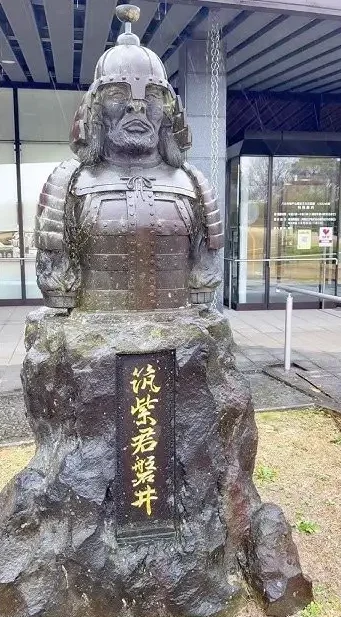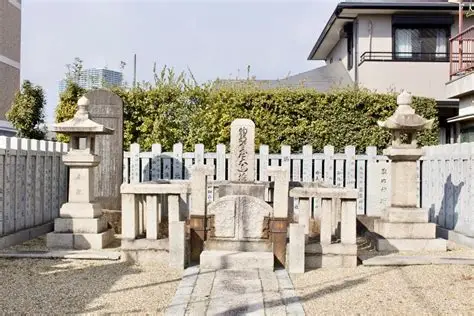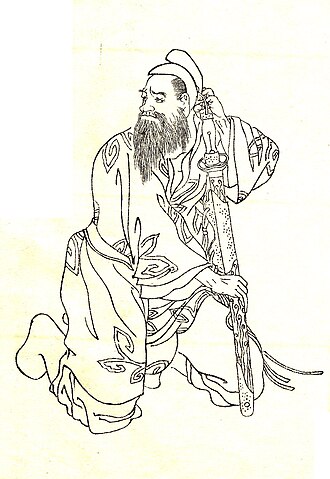
In August of the 21st year of Emperor Keitai’s reign (527 AD), Mononobe no Arakai was ordered to subjugate Iwai, the Chikushi Lord.
According to the Nihon Shoki, Emperor Keitai entrusted Arakai with the imperial axe and halberd, declaring that he would govern “east of Nagato” himself, while “west of Chikushi” would be entrusted to Arakai.
On November 11, 528, the two forces clashed in the Mii District of Chikushi Province.
“Banners and drums faced each other, and the dust clouds met.”
The Nihon Shoki describes the battle as one where the banners and drums of both sides confronted each other, with dust clouds rising and mingling.
Arakai had been at the heart of the imperial court for more than 20 years before the battle with Iwai.
Mononobe no Arakai, the Great Minister
The birth year of Mononobe no Arakai is unknown.
His name is also recorded as “Arakai” or “Arakabi,” with various readings such as “Arakai,” “Arakahi,” and “Arakabi.”
Later genealogies suggest he was the son of Mononobe no Masara.
The Mononobe clan was a powerful family based in Yamato, deeply involved in the military and religious affairs of the imperial court.
The position of “Great Minister” held by Arakai was a central role within the court, reserved for the most influential families bearing the surname “Muraji.”
In the early 6th century, Otomo no Kanamura also served as Great Minister, while Kose no Omi held the position of Chancellor.
Upon the death of Emperor Buretsu, Arakai joined Kanamura and Omi in efforts to welcome the next ruler.
The Death of Emperor Buretsu and Prince Yamato
In December of the 8th year of Emperor Buretsu’s reign (506 AD).
According to the Nihon Shoki, Emperor Buretsu died without leaving any heirs.
Otomo no Kanamura and others sought to welcome Prince Yamato, who resided in Kuwata District of Tanba Province.
A group prepared with arms set out to greet him.
Seeing the approaching forces from afar, Prince Yamato fled into the mountains in fear.
The Nihon Shoki records that his whereabouts were unknown thereafter.
Otomo no Kanamura then proposed Odo no Okimi as the next candidate.
The Nihon Shoki describes him as a fifth-generation descendant of Emperor Ojin.
In January of the first year of Emperor Keitai’s reign (507 AD), when Otomo no Kanamura proposed Odo no Okimi, Mononobe no Arakai and Kose no Omi also agreed.
The Nihon Shoki states that the court ministers declared,
“Only Odo no Okimi is wise,”
and sent envoys to Echizen Province’s Mikuni to invite him.
The Ascension of Emperor Keitai in 507
Odo no Okimi heard the circumstances of his invitation from Kawachi Makainushi Arakago and departed from Echizen.
On January 24 of the first year of Emperor Keitai’s reign, he entered the Kusuha Palace in Kawachi Province.
On February 4, Otomo no Kanamura presented him with the mirror, sword, and imperial seal.
Though Odo no Okimi initially declined, the court ministers repeatedly urged him to ascend the throne, and the Nihon Shoki records that he eventually accepted the imperial position.
This was Emperor Keitai.
Otomo no Kanamura held the position of Omi, Kose no Otoneri was the Oomi, and Mononobe no Arakabi was the Omi.
According to the Nihon Shoki, it is stated that the three “remained as they were,” retaining their previous positions.
Arakabi had served as Omi even before Emperor Keitai ascended the throne and maintained his position under the new regime.
Five years later, Arakabi’s name appeared in diplomatic affairs concerning the Korean Peninsula.
In 512, Baekje Requests Four Counties from Mimana
The sixth year of Emperor Keitai’s reign (512), December.
Envoys from Baekje visited, requesting the four counties of Kami-Tari, Shimo-Tari, Sata, and Muro in Mimana.
According to the Nihon Shoki, Hozumi no Omi Oshiyama, the governor of the Tari region, argued that these four counties were close to Baekje and far from Yamato, suggesting they be given to Baekje.
Otomo no Kanamura agreed with this suggestion.
Mononobe no Arakabi was chosen as the envoy to convey this decision to the Baekje envoys.
Arakabi was to head to the Naniwa Palace, where the Baekje envoys were staying.
However, his wife tried to stop his departure.
“You Will Be Criticized by Future Generations”
The Nihon Shoki records the words of Arakabi’s wife as she admonished her husband.
She spoke of how the deity Sumiyoshi had granted foreign lands to Empress Jingu, and how this relationship had continued for a long time. She warned that if the four counties were given to Baekje,
“In future generations, you will be criticized.”
Arakabi listened to his wife’s words but feared disobeying the emperor’s command.
His wife suggested he feign illness to avoid carrying out the imperial order.
Arakabi declined the envoy role, citing illness as the reason.
The decision to give the four counties to Baekje remained unchanged and was conveyed by another envoy.
The name of Arakabi’s wife is not recorded in the Nihon Shoki.
Fifteen years later, a military force bound for the Korean Peninsula was halted in Tsukushi.
In 527, the Forces of Omi no Mino Are Stopped in Tsukushi
The 21st year of Emperor Keitai’s reign (527), June.
Omi no Mino was dispatched to the Korean Peninsula.
The Nihon Shoki records that his forces numbered 60,000.
Their mission was to recover Nangara and Heguri, which had been taken by Silla.
When Mino’s forces reached Tsukushi, they were blocked by Tsukushi no Kimi Iwai.
This individual is referred to as “Tsukushi no Kuni no Miyatsuko Iwai” in the Nihon Shoki.
The same text notes that Iwai had been plotting rebellion for some time and that Silla had sent gifts to encourage him to obstruct Mino’s army.
Iwai extended his influence over the provinces of Higo and Buzen, blocking ships coming from the Korean Peninsula and halting Mino’s advance.
The Iwatoyama Kofun in Yame City, Fukuoka Prefecture, is believed to be Iwai’s tomb.
It is the largest keyhole-shaped burial mound in northern Kyushu, measuring 135 meters in length.
In August of the same year that Mino’s forces were stopped in Tsukushi, Emperor Keitai ordered Mononobe no Arakabi to suppress Iwai.
The Axe and Halberd Bestowed by Emperor Keitai
August 1, 527 AD.
The Nihon Shoki records in detail the conversation between Emperor Keitai and Oshikahiki.
Oshikahiki spoke of Iwai, who relied on the rugged terrain of mountains and rivers to defy the court for many years.
Emperor Keitai told Oshikahiki that a general is entrusted with the lives of soldiers and bears the responsibility for the nation’s survival.
He then took up an axe and halberd and handed them to Oshikahiki.
“From Nagato eastward, I shall govern. From Tsukushi westward, you shall govern.”
The emperor would rule east of Nagato, while Oshikahiki was entrusted with the west of Tsukushi.
He ordered that rewards and punishments be left to Oshikahiki’s discretion, without the need for frequent reports.
Oshikahiki led the army to subdue Iwai in Tsukushi.
The Decisive Battle at Miigun, November 11, 528
November 11, 528 AD.
Mononobe no Oshikahiki and Tsukushi no Kimi Iwai clashed in battle at Miigun in Tsukushi Province.
This took place in the area around present-day Kurume City, Fukuoka Prefecture.
The Nihon Shoki describes the battlefield scene,
“Flags and drums faced each other, and the dust clouds met.”
The flags and drums of both armies confronted each other, with dust clouds rising and mingling.
Furthermore, both sides sought victory, engaging in a battle described as “not avoiding the place of certain death.”
The Nihon Shoki states that Oshikahiki slew Iwai, quelling the rebellion.
There are other traditions regarding Iwai’s demise.
An excerpt from the Chikugo no Kuni Fudoki, quoted in the Shaku Nihongi, tells that Iwai, defeated by the imperial forces, fled alone to the Kamitsukusa District of Buzen Province, where he ended his life in the southern mountains.
The Nihon Shoki claims he was slain by Oshikahiki at Miigun, while the Chikugo no Kuni Fudoki excerpt suggests he escaped to Buzen.
The two sources convey different accounts of Iwai’s end.
Iwai’s Son Katsuko and the Kazuya Manor
December, 528 AD.
The Nihon Shoki records that Iwai’s son, Katsuko, fearing punishment for his father’s crimes, offered the Kazuya Manor as tribute.
Kazuya corresponds to the area from present-day Kazuya District to the eastern part of Fukuoka City in Fukuoka Prefecture.
After concluding the conflict with Iwai (the Iwai Rebellion), Oshikahiki continued to serve the court as a grand minister.
Serving as Grand Minister After Emperor Keitai’s Death
Even during the reign of Emperor Ankan, who succeeded Emperor Keitai, Oshikahiki served as a grand minister.
When Emperor Ankan passed away and Emperor Senka ascended the throne, Otomo no Kanamura and Mononobe no Oshikahiki were both appointed as grand ministers.
In the first year of Emperor Senka’s reign (536 AD), Oshikahiki’s name appears again in the records of establishing the Natsu Palace in Tsukushi.
The imperial court established a government storehouse at Natsu in Tsukushi and ordered the collection of grains from various regions in preparation for emergencies.
Natsu corresponds to the area around present-day Hakata Ward in Fukuoka City.
According to the Nihon Shoki, grains were transported from the imperial storehouses in regions such as Owari and Iga to be gathered at the port of Natsu.
Arakahi was ordered to dispatch the Shinie no Muraji and transport grains from the Shinie imperial storehouse.
Eight years had passed since the defeat of Iwai in the Miigun.
The Death of Mononobe no Arakahi in July 536
In July of the first year of Senka (536).
The Nihon Shoki records,
“Mononobe no Arakahi, the Great Minister, passed away.”
His birth year is not recorded, and his age at death is unknown.
After Arakahi’s death, during the reign of Emperor Kinmei, Mononobe no Okoshi became the Great Minister and stood at the center of the court alongside Soga no Iname.
In the next generation, Mononobe no Moriya emerged.
In 587, Moriya was defeated by Soga no Umako in the Battle of Shigisan and lost his life in Shibukawa, Kawachi Province.
This was 59 years after Mononobe no Arakahi had defeated Tsukushi no Kimi Iwai in 528.
Learn more 📖↓

The True Nature of the Mononobe Clan (Shincho Bunko) [Yuji Seki]