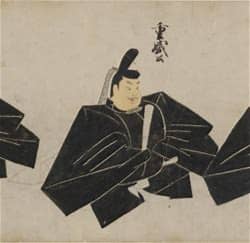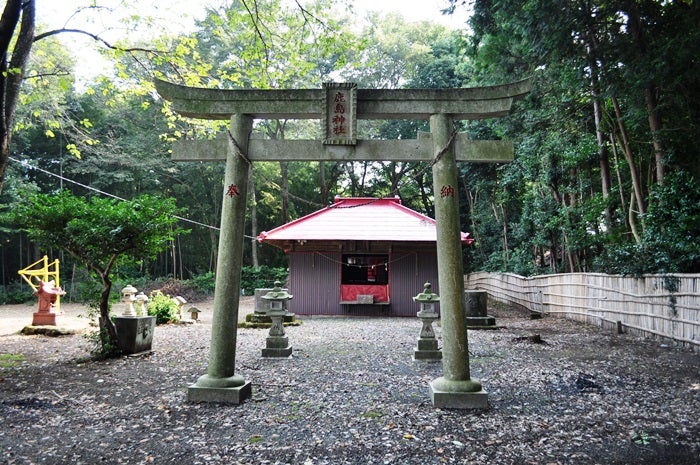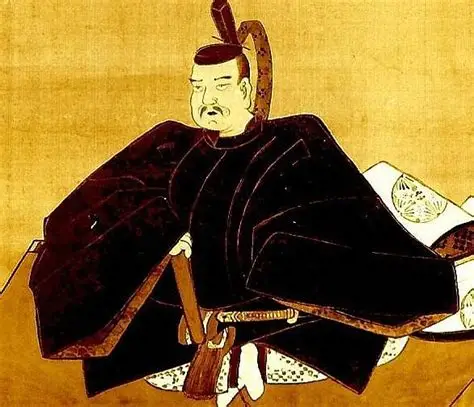
――The Death of Brother Tokihira: The Rise of His Younger Brother to the Pinnacle of the Court
In 909, a politician who had shaken the Heian court passed away.
He was the central figure in the political upheaval that resulted in Sugawara no Michizane’s exile to Dazaifu, and he led court politics under Emperor Daigo.
He was only 39. His death came far too soon.
With his passing, a new figure emerged onto the political stage.
His younger brother, Fujiwara no Tadahira.
Tadahira was born as a son of Fujiwara no Mototsune.
He had brothers Tokihira and Nakahira, and his full sister Onshi became the consort of Emperor Daigo.
When Tokihira died in 909, Tadahira became the head of the Fujiwara clan.
He then rose through the ranks to become Minister of the Right, Minister of the Left, and eventually Chancellor.
By 930, he was the regent for Emperor Suzaku. In 941, he became the chief advisor to the emperor.
When Emperor Murakami ascended the throne in 946, Tadahira continued as chief advisor.
Tadahira was a central figure in court politics spanning the reigns of Daigo, Suzaku, and Murakami.
During Tadahira’s political tenure, a warrior in the eastern provinces began to unsettle the court.
Masakado is said to have served Tadahira in Kyoto during his youth.
Later, he expanded his influence in the eastern provinces, leading to a rebellion against the court in 939.
Thus, tracing Tadahira’s life reveals a significant turning point in Japanese history, where the formation of Fujiwara’s regency politics intersects with the rise of provincial warriors.
1. 880—Born as a Son of Fujiwara no Mototsune
Fujiwara no Tadahira was born in the fourth year of Gangyō (880).
His father was Fujiwara no Mototsune.
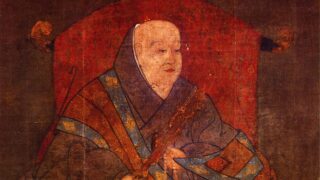
His mother was the daughter of Prince Hitoyasu.
Mototsune was a great statesman who influenced court politics during the reigns of Emperors Seiwa, Yōzei, Kōkō, and Uda.
He was also the first person in Japanese history to be formally appointed as chief advisor to the emperor.
Tadahira was born as the son of Mototsune.
His brothers included Fujiwara no Tokihira and Fujiwara no Nakahira.
Moreover, his full sister Onshi later became the Empress Consort of Emperor Daigo.
Just by looking at this family lineage, one can see how strong a political foundation Tadahira had.
His father was Mototsune. His brother was Tokihira. His sister was the Empress Consort of Emperor Daigo.
Tadahira was born into the Fujiwara Hokke, a family that wielded immense power at the imperial court.
2. The Year 900—Becoming a Councilor at 21
In the third year of Shōtai (900), Tadahira became a councilor at the age of 21.
However, Tadahira ceded the position of councilor to his uncle, Fujiwara no Kiyotsune.
He returned to the position of councilor in 908.
Then, in the following year, 909,
a life-changing event occurred.
The death of his brother, Tokihira.
Tokihira had stood at the pinnacle of the court as the Minister of the Left.
His death left a significant void in the political center of the Fujiwara clan.
It was Tadahira who stepped into that void.
3. The Year 909—How His Brother’s Death Changed Tadahira’s Fate
In the ninth year of Engi (909), Fujiwara no Tokihira passed away.
Subsequently, Tadahira became the Acting Middle Counselor and the head of the Fujiwara clan.
The head of the clan was the representative of the Fujiwara family.
From this point, Tadahira’s rise was meteoric.
In 910, he became a Middle Counselor.
In 911, a Great Counselor.
In 914, a Minister of the Right.
In 924, a Minister of the Left.
In just about 15 years, he ascended to the highest ranks of the court.
When his brother Tokihira died, Tadahira was 29 years old.
From there, he moved to the center of the court, becoming Minister of the Left in his early 40s.
Tokihira’s death was the greatest turning point in Tadahira’s life.
4. What Did Tadahira Become After Being “Tokihira’s Brother”?
Here, Tadahira’s character becomes important.
His brother Tokihira left a strong impression through his political struggle with Sugawara no Michizane.
In contrast, Tadahira is praised in later historical records as a gentle and diligent individual.
Tadahira was well-versed in court ceremonies and precedents.
In the politics of the Heian period, merely knowing the law was insufficient.
Such knowledge of court practices and precedents was politics itself.
Tadahira was a politician well-acquainted with these court rules.
He passed this knowledge on to his sons, Saneyori and Morosuke.
Tadahira was not only a man who wielded power in his own lifetime, but he was also a figure who transmitted the political techniques needed for the Fujiwara clan to govern the court to the next generation.
5. The Year 927—Completion of the Engi-shiki
Essential to understanding Tadahira’s political career is the **Engi-shiki**.
The Engi-shiki is a collection of laws detailing the administration, rituals, taxation, shrines, and court ceremonies of the Ritsuryo state.
Its compilation began during the time of his elder brother, Tokihira.
After Tokihira’s death, Tadahira took over the task.
In the fifth year of Encho (927), the Engi-shiki was completed and submitted to the court.
It was a national project that required many years to complete.
Even today, the Engi-shiki remains an important source for understanding the state and shrine systems of the Heian period.
Thus, Tadahira is also recognized as the person who continued and completed the state system reforms initiated by his brother, Tokihira.
6. The Year 930—Emperor Daigo’s Abdication and Emperor Suzaku
In the eighth year of Encho (930), Emperor Daigo abdicated in favor of his son, Prince Hiroakira.
This was Emperor Suzaku.
Emperor Suzaku was only eight years old.
To support the young emperor, the court required a regent.
The person chosen for this role was Fujiwara no Tadahira.
Tadahira became the regent for Emperor Suzaku.
Shortly after the abdication, the retired Emperor Daigo passed away.
Thus, Tadahira became the highest authority in the court, supporting the young emperor.
7. From Regent to Chancellor—The Political Structure Created by Tadahira
Understanding Tadahira’s political strategy requires recognizing the distinction between the roles of regent and chancellor.
The regent acts on behalf of a young or otherwise incapacitated emperor.
The chancellor assists an adult emperor in governance.
When Emperor Suzaku ascended the throne, Tadahira became the regent.
In 936, he became the Daijō Daijin, or Grand Minister of State.
Then in 941, when Emperor Suzaku came of age, Tadahira resigned as regent and became the Kampaku, or chief advisor.
At this point,
Young emperor → Regent
Adult emperor → Kampaku became a clear structure.
From then on, the Fujiwara clan developed a regency system where they assisted the emperor and led the government.
Tadahira was a central figure during the establishment of this system.
8. Tadahira’s Daughter Onshi—Ties with the Imperial Family
Understanding Tadahira’s political power also requires examining his family connections.
His sister, Fujiwara no Onshi, became the empress consort of Emperor Daigo.
The princes she bore were,
Emperor Suzaku and Emperor Murakami.
In other words, Tadahira was the brother of the empress consort of Emperor Daigo,
and the maternal uncle of Emperor Suzaku and Emperor Murakami.
This familial connection provided Tadahira with a significant political foundation as he stood at the center of the court as regent and Kampaku.
The Fujiwara clan became the maternal relatives of the emperor, supporting the government as regents and Kampaku.
The fundamental structure of the regency government became clearly defined during Tadahira’s era.
9. Taira no Masakado—A Man Who Worked Under Tadahira
This leads us to Taira no Masakado.
It is said that in his youth, Masakado went to Kyoto and served under Fujiwara no Tadahira.
The man who would later become one of the greatest rebels against the court once worked under Tadahira, the highest authority of the Fujiwara clan.
This is quite intriguing.
However, Masakado did not achieve success in Kyoto and returned to the eastern provinces.
There, he became embroiled in disputes over the inheritance of his father, Taira no Yoshimasa’s lands.
In 935, Masakado killed his uncle, Taira no Kunika.
This escalated the conflict within the Taira clan.
In 936, he was summoned to Kyoto due to a complaint from Minamoto no Mamoru and was imprisoned.
He was later pardoned and returned to the eastern provinces.
In 939, Masakado’s life took a decisive turn.
10. 939–940—The Revolt of Taira no Masakado
In the second year of Tengyō (939).
Masakado intervened in disputes in Musashi Province and issues in Hitachi Province.
In November of the same year, Masakado attacked the provincial government office in Hitachi.
From this point, Masakado’s actions shifted from a mere family feud to a rebellion against the imperial court.
Masakado took control of various regions in the Kanto area.
He then declared himself “Shinno”, or “New Emperor”.
He aimed to establish an independent political system in the Kanto region.
The imperial court decided to suppress Masakado.
However, the conflict was resolved before the army led by Fujiwara no Tadabumi, the General of the East dispatched from Kyoto, could arrive.
In February 940, Fujiwara no Hidesato and Taira no Sadamori defeated Masakado.
Thus, Masakado’s rebellion came to an end.
Tadahira himself did not march to the eastern provinces.
Tadahira managed court politics in Kyoto and was at the center of the imperial court’s suppression efforts.
The actual defeat of Masakado was carried out by local samurai and influential figures in the eastern provinces.
This event indicates that the era was moving towards the imperial court utilizing regional military power to quell rebellions.
11. ‘Teishinkoki’—The Record Left by Tadahira Himself
Tadahira had another significant achievement.
He left behind his own diary.
It is known as the ‘Teishinkoki’.
Teishinko is Tadahira’s posthumous title.
The ‘Teishinkoki’ is a diary written by Tadahira, though not all of it survives today.
However, entries from 907 to 948 have been preserved through excerpts and other means.
It is an extremely important source for understanding court politics in the early 10th century and is also one of the fundamental sources for understanding the Jōhei and Tengyō Rebellions.
In other words, Tadahira was both the person who influenced politics and the one who recorded it.
12. The Year 946—The Ascension of Emperor Murakami
In the ninth year of Tengyō (946), Emperor Suzaku abdicated.
His younger brother, Prince Nariakira, ascended the throne. This was Emperor Murakami.
Tadahira once again became the regent.
Thus, Tadahira was at the center of the court through three reigns:
Emperor Daigo
↓
Emperor Suzaku
↓
Emperor Murakami
He was at the heart of the imperial court across these three generations.
He was the maternal uncle of both Emperor Suzaku and Emperor Murakami.
As regent, he supported the emperor.
Tadahira brought the Fujiwara clan’s system of political leadership, leveraging their familial ties with the imperial family, closer to completion.
13. The Year 949—Passing at Age 70
In the third year of Tenryaku (949), Fujiwara no Tadahira passed away.
At the age of 70.
While his brother Tokihira died at 39, Tadahira lived to 70.
After Tadahira’s death, his sons Fujiwara no Saneyori and Fujiwara no Morosuke advanced to the core of the imperial court.
The political foundation Tadahira built was passed on to the next generation.
The Fujiwara clan’s regency politics would further expand from there.
After his death, Tadahira was posthumously awarded the title of “Teishin-kō”.
Chronology of Fujiwara no Tadahira
| Year | Event |
|---|---|
| 880 | Born as the son of Fujiwara no Mototsune |
| 900 | Became a councilor, but ceded the position to his uncle Kiyotsune |
| 908 | Returned as a councilor |
| 909 | Brother Tokihira passed away. Became head of the Fujiwara clan |
| 910 | Became Middle Counselor |
| 911 | Became Major Counselor |
| 914 | Became Minister of the Right |
| 924 | Became Minister of the Left |
| 927 | Completion and submission of the “Engi-shiki” |
| 930 | Emperor Suzaku ascended the throne. Became regent |
| 936 | Became Chancellor |
| 941 | Became Chief Advisor |
| 946 | Emperor Murakami ascended the throne. Continued as Chief Advisor |
| 949 | Passed away at age 70 |
Summary
Fujiwara no Tadahira was born in 880 as the son of Fujiwara no Mototsune.
His father was a major figure in the politics of the early Heian period, from the Northern House of the Fujiwara clan.
His brothers included Fujiwara no Tokihira and Nakahira, and his full sister Onshi became the empress consort of Emperor Daigo.
Tadahira himself entered the court at a young age, becoming a councilor at 21 in 900.
Although he once ceded this position to his uncle Kiyotsune, he returned as a councilor in 908.
When his brother Tokihira died in 909, Tadahira became the head of the Fujiwara clan.
He then rose through the ranks to Middle Counselor, Major Counselor, Minister of the Right, and Minister of the Left.
In 924, he became the Minister of the Left, taking the lead in the politics of the imperial court.
By 927, he had completed and submitted the “Engi-shiki,” a project that had been underway since the time of Tokihira.
In 930.
Emperor Daigo abdicated in favor of his son, Prince Kanmei, who ascended the throne as Emperor Suzaku.
To support the young emperor, who was only eight years old, Tadahira became the regent.
In 936, he was appointed Chancellor of the Realm.
In 941, when Emperor Suzaku came of age, Tadahira transitioned from regent to chief advisor.
Then, in 946, when Emperor Murakami ascended the throne, Tadahira continued as chief advisor.
In essence, Tadahira was a central figure in the era when the system of governance by regents for young emperors and chief advisors for adult emperors was taking shape.
Moreover, Tadahira was well-versed in court ceremonies and precedents, passing this knowledge on to the next generation.
He also left behind his diary, “Teishinkoki.”
This diary is an important historical source for understanding court politics in the early 10th century and is crucial for studying the Jokyo and Tengyo disturbances.
During Tadahira’s administration, Taira no Masakado launched a rebellion in the eastern provinces.

It is said that Masakado served under Tadahira in Kyoto during his youth.
Masakado returned to the eastern provinces, and after internal family conflicts, attacked the provincial government office in Hitachi in 939.
He then seized control of various regions in Kanto, proclaiming himself as the “New Emperor.”
The court decided to suppress him, and in 940, Fujiwara no Hidesato and Taira no Sadamori defeated Masakado.
The Masakado Rebellion symbolized a period of significant change in the relationship between central aristocratic politics and regional military forces.
Tadahira himself did not go to the battlefield but managed court politics in Kyoto.
Then in 949.
Fujiwara no Tadahira passed away at the age of 70.
While his brother Tokihira left a strong impression through his political struggles with Michizane, Tadahira was a figure who organized the court’s systems and ceremonies, establishing the Fujiwara family’s leadership in politics as regents and chief advisors.
If Tokihira was a politician representing the era of power struggles within the Fujiwara clan, Tadahira was the politician who institutionalized that power.
After Tadahira’s death, the Fujiwara political legacy continued to the next generation.
Next in line were,
Fujiwara no Saneyori and Fujiwara no Morosuke
And further down the line,
Fujiwara no Kaneie and Fujiwara no Michinaga.
The golden age of the Fujiwara clan would accelerate from here.
The “Engi-shiki,” completed under Fujiwara no Tadahira’s guidance, is an indispensable source for understanding the politics, rituals, tax systems, and court structures of the Heian period. This book is highly recommended for those who wish to delve deeper into the “systems” of the Heian court.

【Free shipping on orders over 3,000 yen】Engishiki New Edition by Torao Toshiya