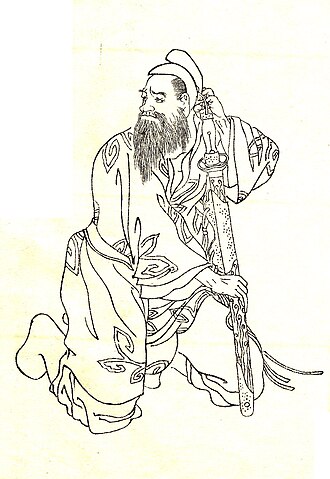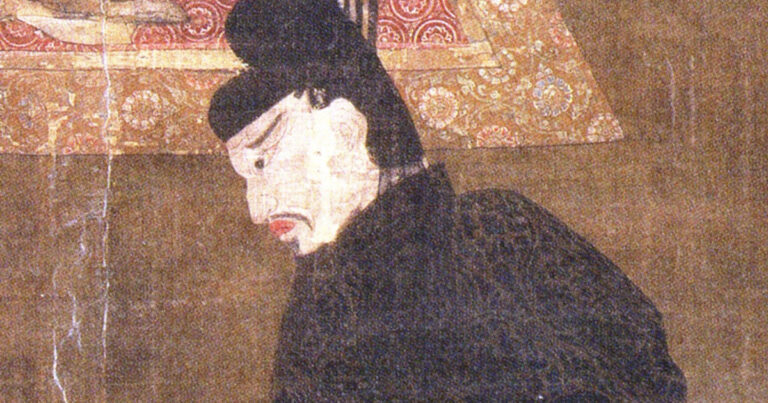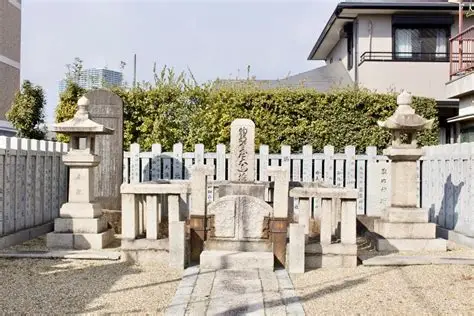
Episode 3: The War of 587 — The Final Showdown Between Soga no Umako and Mononobe no Moriya
In Episode 2, we traced how Buddhism, once it arrived in Japan, gradually grew into a force that shook the political order.
(Episode 2, “The Arrival of Buddhism,” is available in English here.)
The Soga clan, moving to accept Buddhism.
And the Mononobe clan, taking a cautious stance against it.
But there is one thing we need to be careful about here.
This rivalry cannot be understood simply as
“a religious war between pro- and anti-Buddhist factions.”
Behind it, there was likely also a political struggle over which clan would hold power at court.
And in the latter half of the 6th century,
that rivalry finally erupted into armed conflict.
This episode covers
the War of 587 (also known as the Teibi Incident).
Leading the Soga clan was
And leading the Mononobe clan was
Mononobe no Moriya.
Two of the most powerful men in ancient Japan finally clashed on the battlefield.
1. Soga no Umako and Mononobe no Moriya
First, let’s look at these two men.
Soga no Umako was the son of Soga no Iname.
Soga no Umako himself is covered in more detail in (an English translation of the related biography is planned).
Leadership of the Soga clan had passed to the next generation from Soga no Iname, who appeared in Episode 2.
Mononobe no Moriya, meanwhile, is said to have been the son of Mononobe no Okoshi.
In other words,
and
Mononobe no Moriya
each stood as the representative of a great clan.
And the era in which they lived was one of great political turbulence for the Yamato court.
2. Every Change of Emperor, a Political Shockwave
In the latter half of the 6th century,
the throne changed hands one emperor after another.
After Emperor Kinmei came
Emperor Bidatsu.
Then
Emperor Yomei.
And then
In this era, even the question of who would become emperor was bound up with the influence of the great clans.
In other words,
“who would become emperor”
and
“who would support that emperor”
could not be separated from one another.
Amid all this, the rivalry between Soga no Umako and Mononobe no Moriya deepened by the day.
3. The Dispute Over Buddhism
This is where it connects back to Episode 2.
Buddhism.
According to the Nihon Shoki, when Emperor Yomei took the throne, he himself expressed a wish to embrace the Buddhist faith.
Mononobe no Moriya, meanwhile, is portrayed as opposing this.
But caution is needed here as well.
It would be an oversimplification to view the political conflict of this era as
“caused by Buddhism alone.”
The Soga and Mononobe were already powerful clans with great influence at court.
The dispute over accepting Buddhism was likely bound up with that pre-existing political rivalry.
In other words,
it was a religious question, but also a political one.
This is a key point for understanding the War of 587.
4. The Death of Emperor Yomei
Before long, Emperor Yomei fell ill.
And the Nihon Shoki records that he expressed a wish to
“take refuge in the Buddhist faith.”
Once again, Soga no Umako and Mononobe no Moriya found themselves on opposite sides.
But Emperor Yomei died shortly afterward.
With the emperor’s death, a new question arose:
“who would be the next emperor?”
From here, the political situation grew even more tense.
5. The Maneuvering Around Prince Anahobe
After Emperor Yomei’s death, a struggle over the succession began.
The Nihon Shoki introduces
Prince Anahobe,
who is said to have had close ties to Mononobe no Moriya.
Soga no Umako, meanwhile, backed a different imperial candidate.
Amid this maneuvering, the rivalry between the Soga and Mononobe clans could no longer be dismissed as a mere difference of opinion between two clans.
Before long, it was heading toward
a situation that could only be settled by force.
6. Soga no Umako Musters His Forces
Soga no Umako gathered an army.
He then marched his forces into Kawachi to strike down Mononobe no Moriya.
Moriya, for his part, gathered his own troops at Shibukawa, his base in Kawachi.
Here, the two sides finally clashed.
The location was
Kawachi Province,
an area centered on what is now the eastern part of Osaka Prefecture.
This battle is known as
the War of 587.
7. Into Moriya’s Home Territory
The Mononobe had long served as a powerful clan responsible for military affairs.
Its head, Mononobe no Moriya, met the Soga army on his own home ground.
The Nihon Shoki describes Moriya climbing a tree and raining arrows down on the Soga forces, causing them great difficulty.
The Soga army could not simply push through.
The Mononobe possessed real military strength.
This was no one-sided battle.
8. The Soga Army Struggles
Soga no Umako‘s forces struggled against Moriya’s fierce resistance.
It was at this point that a certain figure joined the Soga side.
A figure who would later become one of the most famous names in Japanese history.
Prince Umayado.
Better known today as
The Nihon Shoki records that Prince Umayado joined the Soga side during this battle.
Praying for victory, he is said to have vowed to
carve images of the Four Heavenly Kings and, should victory come, build a temple in their honor.
This story would later become linked to the founding legend of Shitennoji Temple.
9. The Final Clash
The fighting continued.
But gradually, Moriya’s side was pushed into a corner.
And then, according to the Nihon Shoki, a man named
Tomi no Ichii
shot and killed Moriya.
With Moriya’s fall, the tide of battle shifted decisively.
The Mononobe forces were ultimately defeated, and
Soga no Umako‘s side emerged victorious.
Thus, the War of 587 came to an end.
10. Soga no Umako‘s Victory
As a result of this battle, the Soga clan gained enormous influence at court.
And the Mononobe clan’s power was severely diminished.
It would be possible to sum up this battle simply as
“the Soga clan defended Buddhism and defeated the Mononobe.”
But that alone is not enough.
Behind this battle lay several overlapping issues:
- the acceptance of Buddhism
- imperial succession
- rivalry between the great clans
- and the struggle for political leadership at court
In other words, rather than
“the dispute over Buddhism directly turned into armed conflict,”
it may be more accurate to say that
the question of Buddhism was embedded within a larger political rivalry.
Viewed this way, the complexity of this era comes into sharper focus.
11. Was the Mononobe Clan Really “Anti-Buddhist”?
Let’s think once more about the Mononobe clan.
The Nihon Shoki portrays Mononobe no Moriya as opposed to Buddhism.
But it’s difficult to conclude that the Mononobe clan as a whole categorically rejected Buddhism.
To begin with, for people of that era, Buddhism was not confined to what we now think of as a single field called “religion.”
It was bound up with new things arriving from the continent:
culture,
thought,
technology,
and political knowledge.
That is precisely why, behind the question of
“whether to accept Buddhism or not,”
there may have lain a much larger question:
“what kind of country should Japan become from here on?”
12. What Did the Victorious Soga Clan Gain?
Soga no Umako won the War of 587.
But what he gained was more than simple victory.
The Soga clan’s influence at court grew stronger still.
From this point on, the Soga clan would exert enormous influence over the politics of the court.
And Umako went on to hold great power during the reign of
Emperor Sushun
as well.
But
power, once gained, brings new problems of its own.
The relationship between Soga no Umako and Emperor Sushun would eventually grow tense.
And that tension would lead to one of the most shocking events in all of Japanese history.
13. After the War, Japan Begins to Change
The War of 587 was not merely a battle between two clans.
Because of this war,
the Mononobe clan was greatly weakened, and the Soga clan came to hold enormous power at court.
This would have a major impact on the course of later Japanese history.
And as Soga power grew,
the relationship between the emperor and the great clans
began to change as well.
The acceptance of Buddhism also advanced further.
Temples were built.
A new culture spread across the land.
Japan was gradually shifting
from an old clan-based society toward a new political order.
And one of the men at the center of that transformation was
Summary: The Soga Clan Won — But the Conflict Was Far From Over
The War of 587.
It was a clash between two powerful men:
and
Mononobe no Moriya.
At its root lay the dispute over Buddhism.
But that was not all.
Imperial succession.
Rivalry between the great clans.
Leadership at court.
And the question of how to accept a new culture.
All of these overlapped, and in the end, erupted into armed conflict.
Victory went to
Mononobe no Moriya was defeated, and the Mononobe clan’s power was greatly diminished.
But —
the immense power Soga no Umako had gained would go on to create new problems of its own.
“The emperor, and the great clan that supports him. Who truly holds the reins of power?”
This question would come to shake the next era to its core.
And at the center of it stood
Emperor Sushun.
Soga no Umako and Emperor Sushun.
The relationship between the two men would eventually reach a breaking point.
The next episode moves on to
Episode 4, “The Assassination of Emperor Sushun: The Man Who Killed an Emperor.”
We will trace one of the most shocking events in all of ancient Japanese history.
Why was the emperor killed?
And
why did Soga no Umako go so far?
To be continued.
(Episode 4, “The Assassination of Emperor Sushun,” is available in English here.)
This article is an English adaptation of the Japanese original, “丁未の乱――蘇我馬子と物部守屋、最後の決戦,” on Tatakai History (戦いで読み解く日本史).