On June 21, 1185, in the second year of the Genryaku era, at Shinohara-juku in Omi Province.
Taira no Munemori, who was being escorted by Minamoto no Yoshitsune, met his end here.
According to the Azuma Kagami, it was Tachibana no Kimichika, a subordinate of Yoshitsune, who carried out the execution.
The group continued along the highway, and at Nojiguchi, Munemori’s eldest son, Kiyomune, was also executed. It is recorded that Hori Kagemitsu was the one who beheaded Kiyomune.
The father was 39 years old, and the son was 16.
Munemori was born as the third son of Taira no Kiyomori and rose to the position of Junior First Rank, Minister of the Interior.
After the death of his elder brother Shigemori, he became Kiyomori’s successor and led the Taira clan following his father’s death.
In July 1183, during the second year of the Juei era, he fled Kyoto with Emperor Antoku and the Imperial Regalia in the face of Minamoto no Yoshinaka’s advance.
In the western provinces, he achieved victories at Mizushima and the Battle of Muroyama, and for a time, he regained strength up to Fukuhara. However, he suffered defeats at Ichinotani and Yashima, and was finally captured at Dan-no-ura.
The Heike Monogatari recounts that Munemori attempted to throw himself into the sea but swam ashore and was captured alive along with his son.
His mother, Taira no Tokiko, drowned at Dan-no-ura, and his brother Taira no Tomomori also sank into the sea.
Munemori and Kiyomune survived.
And three months later, father and son were executed separately on the highway in Omi.
Munemori, Born as Kiyomori’s Third Son
Taira no Munemori was born in the third year of the Kyuan era (1147) as the third son of Taira no Kiyomori.
His mother was Kiyomori’s lawful wife, Taira no Tokiko.
Taira no Kiyomori’s eldest son, Taira no Shigemori, and his second son, Taira no Motomori, were half-brothers to Taira no Tomomori, Taira no Shigehira, and Kenreimon-in Tokuko, who shared the same mother.
Tokiko’s family hailed from the Kanmu Heishi Takamune line.
Her father, Taira no Tokinobu, served Emperor Toba, and among his children were Taira no Tokitada and Taira no Shigeko, who became a favored consort of Emperor Go-Shirakawa.
Shigeko bore Emperor Go-Shirakawa a son, Prince Norihito.
This prince would later become Emperor Takakura.
When Munemori’s sister, Tokuko, became the Empress of Emperor Takakura and gave birth to Prince Tokihito, who would later be Emperor Antoku, Munemori became the maternal uncle of the young emperor.
Thus, in addition to being Kiyomori’s son, Munemori was deeply connected to the imperial family through his mother.
Munemori was appointed to the junior fifth rank, lower grade, in the second year of Hogen (1157), at the age of 11.
In the first year of Heiji (1159), Kiyomori defeated Minamoto no Yoshitomo in the Heiji Rebellion, expanding the influence of the Taira clan.
Munemori held various positions, including Governor of Tōtōmi, and accumulated ranks at the court.
In the third year of Angen (1177), he returned as Acting Middle Counselor and concurrently served as Captain of the Right Imperial Guards.
In the following year, Jisho 2 (1178), he was promoted to Senior Second Rank in January and Acting Major Counselor in April.
At this time, Munemori was 32 years old.
His father, Kiyomori, had already served as Grand Minister of State, and his half-brother, Shigemori, had risen to Inner Minister.
During an era when the Taira clan occupied high positions in the court, Munemori was advancing to the center of power.
The Death of His Wife, Taira no Kiyoko—Munemori Resigns as Captain of the Right Imperial Guards
Munemori’s wife was known as Taira no Kiyoko.
Kiyoko was the daughter of Taira no Tokinobu and the half-sister of Munemori’s mother, Tokiko.
Thus, Kiyoko was also Munemori’s maternal aunt.
Kiyoko served at the imperial court and bore Munemori a legitimate son, Kiyomune.
However, in 1178, Kiyoko fell gravely ill.
The records of Kiyoko’s illness are preserved in the ‘Sankaiki’ and ‘Gyokuyo’.
Kiyoko developed a swelling on her head and was receiving medical treatment.
That year, when Tokuko became pregnant, Kiyoko was to be the wet nurse for the expected prince.
However, her condition worsened.
On July 10th, Munemori resigned from his position as Captain of the Right Imperial Guards citing his wife’s illness.
Kiyoko passed away on July 16th.
She was 33 years old.
In June of the following year, 1179, it is known that Munemori built a hall near Hoshoji Temple to pray for Kiyoko’s soul.
After his wife’s death, Munemori returned to his position as Captain of the Right Imperial Guards in December of the same year.
The following year, Munemori’s political standing changed significantly.
This was due to the death of his half-brother, Shigemori.
The Anecdote of the Famous Horse “Kinoshita”
Munemori is associated with a famous anecdote from the ‘Tale of the Heike’.
It involves a commotion over the renowned horse “Kinoshita”, owned by Minamoto no Yorimasa’s heir, Minamoto no Nakatomo.
According to the fourth volume, “Kyoso”, of the ‘Tale of the Heike’, Nakatomo possessed a famous chestnut horse that was well-known in the capital.
The horse, named Kinoshita, was said to excel in both speed and comfort.
Hearing of its reputation, Munemori sent a messenger to Nakatomo, requesting the horse be given to him.
However, Nakatomo was reluctant to part with his cherished horse.
He responded that the horse was currently resting in the countryside and attempted to refuse the request.
Yet, Munemori’s retainers informed him that the horse was actually at Nakatomo’s residence.
Munemori persisted, sending messengers repeatedly to demand the horse.
In distress, Nakatomo consulted his father, Yorimasa, who instructed him to hand over the horse.
Nakatomo sent Kinoshita to Rokuhara, accompanied by a waka poem.
“If you long for me, come and see me, for how could I release the shadow that clings to me?”
The poem expressed Nakatomo’s deep attachment to the horse, likening it to his own shadow.
However, Munemori did not respond with a poem, instead branding the horse with Nakatomo’s name.
When guests arrived, he would have the horse brought out, call it by Nakatomo’s name, and ride or whip it, as the tale recounts.
Nakatomo was deeply angered.
Yorimasa, upon hearing this story, also grew increasingly resentful of the Taira clan.
In May of Jisho 4 (1180), Minamoto no Yorimasa rose in rebellion alongside Prince Mochihito.
The “Tale of the Heike” portrays this humiliation over a prized horse as one of the reasons Yorimasa turned against the Taira clan.
However, there are no contemporary records to corroborate the anecdote under the tree.
Just before his uprising, Yorimasa had been promoted to Junior Third Rank, with the backing of Taira no Kiyomori.
Considering the political situation surrounding Prince Mochihito and the relationship between the Minamoto and Taira clans, it is difficult to explain the uprising solely based on the horse incident.
In “The Tale of the Heike,” Munemori is depicted as a person who, in his desire for a fine horse, would tarnish another’s honor.
On the other hand, his resignation from office due to his wife’s illness is documented in records from the time.
The Death of Shigemori: Becoming Kiyomori’s Successor
On July 29, Jisho 3 (1179).
Taira no Shigemori passed away.
Shigemori was the eldest son of Kiyomori and had participated in numerous battles, including the Heiji Rebellion, and had risen to the position of Minister of the Interior at court.
He was considered Kiyomori’s successor.
Shigemori had sons, including Taira no Koremori and Taira no Sukemori.
However, after Shigemori’s death, the central figure of the clan became his half-brother, Munemori.
Munemori was the son of Kiyomori’s principal wife, Tokiko, and had already served as Provisional Major Counselor.
He also held the position of a maternal relative of Emperor Takakura.
Shigemori’s death altered the succession dynamics within the Taira clan.
During this period, the relationship between Kiyomori and the retired Emperor Go-Shirakawa was also deteriorating.
In June of Jisho 3, Kiyomori’s daughter, Moriko, who had married into the regent family, passed away.
Over the management of the regent family’s estates, which Moriko had overseen, Kiyomori opposed the actions of Go-Shirakawa’s faction.
After Shigemori’s death, the province of Echizen, which the Taira clan had held, became a fief of Go-Shirakawa.
Conflicts continued over court appointments.
Motofusa’s son, Shigeie, was promoted to Provisional Middle Counselor at the young age of eight.
For Konoe Motomichi, whom Kiyomori supported, it was a personnel decision that threatened his position within the Sekkan family.
In November of the same year, Kiyomori led his forces from Fukuhara and entered Kyoto.
He dismissed Kanpaku Motofusa and appointed Konoe Motomichi as the new Kanpaku.
Furthermore, he removed several close aides of the retired emperor and confined Emperor Go-Shirakawa to the Toba Palace.
This was the political upheaval of the third year of Jisho.
Kiyomori used military power to revise the court’s personnel and halt the cloistered government.
Munemori, under his father’s leadership, was also tasked with supporting this new political regime.
In February of the following year, Jisho 4 (1180), Emperor Antoku ascended the throne.
He was the son of Munemori’s sister, Tokuko, and was three years old by traditional counting.
However, in May, Prince Mochihito and Minamoto no Yorimasa raised an army.
In August, Minamoto no Yoritomo rose in Izu, and in Shinano, Minamoto no Yoshinaka was expanding his influence.
In October of the same year, the punitive force led by Taira no Koremori was defeated at the Fuji River.
Anti-Taira forces were spreading across the land, and Kiyomori was forced to respond.
The Death of Kiyomori—Munemori Appointed as Commander-in-Chief
Jisho 5 (1181), New Year.
Munemori was appointed as the commander-in-chief overseeing military affairs in the five provinces of the Kinai region, as well as Ise, Iga, Omi, and Tanba.
This position was established by the Taira to mobilize warriors across the regions to quell uprisings.
The role of supporting the Taira’s military activities was entrusted to Munemori.
However, the following month, Kiyomori fell ill.
On the intercalary 4th day of the 2nd month, Kiyomori passed away.
He was 64 years old.
Munemori, who was to lead the Taira clan, was 35 years old by traditional counting.
Shortly thereafter, the Taira defeated the forces of Minamoto no Yukie at the Sumiyoshi River in Owari Province.
However, in the eastern provinces, Yoritomo’s influence was growing, and in the Hokuriku region, Yoshinaka was gathering warriors who did not submit to the Taira.
Moreover, during the Yowa era, famine spread, making it difficult to secure provisions.
Munemori, while dispatching punitive forces to various regions, was also gradually restoring his position at the imperial court.
On September 4, 1182, he was reinstated as Provisional Grand Counselor.
By October 3, he had become the Minister of the Interior.
On January 21 of the following year, 1183, he was promoted to Senior First Rank.
Although he resigned as Minister of the Interior in February, his status as the head of the Taira clan remained unchanged.
It had been about two years since Kiyomori’s death.
Munemori, while achieving the high rank of Senior First Rank, continued to face anti-Taira forces in the eastern and Hokuriku regions, dispatching troops to various areas.
And in the spring of 1183, the large army he sent to Hokuriku was annihilated.
The Defeat at Kurikara Pass—Minamoto no Yoshinaka Advances on Kyoto
April, 1183.
The Taira clan sent a large punitive force to Hokuriku.
One of the commanders was Munemori’s nephew, Taira no Koremori.
The forces advanced from Echizen towards Kaga, aiming to defeat Minamoto no Yoshinaka.
However, on May 11, they suffered a crushing defeat at Kurikara Pass in Etchu Province.
They were also defeated at Shinohara in Kaga Province, leading to a major collapse of the forces in the Hokuriku region.
Yoshinaka advanced into Echizen and further pressed towards Omi.
Around Kyoto, the stance of Enryakuji Temple shifted, and samurai who had followed the Taira began to defect.
Minamoto no Yukie was also watching Kyoto from the Yamato region.
Munemori attempted to gather forces to defend Kyoto, but the defeat in Hokuriku had already cost him many troops.
Meanwhile, Emperor Go-Shirakawa was making contact with Yoshinaka.
He had no intention of leaving Kyoto with the Taira.
Between the night of July 24 and the early morning of July 25, the Emperor slipped out of Kyoto and moved to Mount Hiei.
This was a significant blow to Munemori.
Emperor Go-Shirakawa, who had been imprisoned by Kiyomori during his lifetime, now distanced himself from the Taira and drew closer to Yoshinaka.
Munemori abandoned resistance in Kyoto.
July 25, 1183—The Flight from the Capital with Emperor Antoku and the Imperial Regalia
July 25, 1183.
Munemori, escorting Emperor Antoku, led the Taira clan out of Kyoto.
Emperor Antoku was six years old by traditional reckoning.
His mother, Kenreimon-in Tokuko, and grandmother, Taira no Tokiko, accompanied him.
The clan took with them the three Imperial Regalia: the sacred mirror, jewel, and sword of the Naishidokoro.
The “Gyokuyo” records that the Taira retreated towards Yodo, and that their residences at Rokuhara and Nishihachijo were burned.
After the Taira’s departure, Yoshinaka’s forces soon entered Kyoto.
Munemori aimed to protect Emperor Antoku and the regalia, planning to regroup his forces in the western provinces.
However, this retreat from the capital created significant issues for the imperial court.
While Emperor Antoku was in the western provinces, Retired Emperor Go-Shirakawa attempted to establish a new emperor in Kyoto.
In August of the same year, Emperor Go-Toba ascended to the throne.
The Imperial Regalia had been taken to the west with Emperor Antoku, so the succession to the new emperor did not occur.
Thus, Emperor Go-Toba was enthroned in Kyoto, while Emperor Antoku remained in the western provinces.
Munemori continued to support Emperor Antoku.
However, after the Taira clan left Kyoto, they found themselves pursued by imperial orders.
The clan moved from Fukuhara towards Kyushu.
They attempted to establish a base around Dazaifu, but faced resistance from figures like Ogata Koreie in Bungo Province, making their stay in Kyushu difficult.
Subsequently, the Taira clan returned to the Seto Inland Sea and began organizing their forces centered on Yashima in Sanuki Province.
Victory at Mizushima and Muroyama—The Taira Return to Fukuhara
October 1, 1183 (leap month).
At sea off Mizushima in Bitchu Province, the Taira forces clashed with the army of Minamoto no Yoshinaka.
This was the Battle of Mizushima.
On the Taira side, Tomomori and others led the forces and defeated Yada Yoshikiyo and Unno Yukihiro of Yoshinaka’s army.
In the following November, they also achieved victory over the forces of Minamoto no Yukie at Muroyama in Harima Province.
The Taira clan won these two battles and regained their influence in the western provinces.
There are no definitive records of Munemori himself commanding at Mizushima or Muroyama.
The forces were led by Tomomori, Shigehira, and other commanders of the clan.
Munemori supported Emperor Antoku and coordinated the clan from their base at Yashima.
Eventually, the Taira moved from Harima to Settsu, and by January of 1184, they had returned to the vicinity of Fukuhara.
This was the land where Kiyomori had once sought to establish the capital.
At this time, relations between Minamoto no Yoshinaka and Retired Emperor Go-Shirakawa in Kyoto were deteriorating.
Yoshinaka attacked the Hojuji Palace and seized control of the court, but on January 20, 1184, he was defeated by the forces of Minamoto no Noriyori and Yoshitsune, dispatched by Yoritomo, and was killed in battle at Awazu in Omi Province.
After defeating Yoshinaka, the Minamoto forces continued their advance westward.
Munemori and his followers established a defensive line around Fukuhara to confront the advancing Minamoto forces.
Defeat at Ichinotani—A Letter of Protest to Retired Emperor Go-Shirakawa
February 7, 1184.
The forces of Minamoto no Noriyori and Yoshitsune launched an attack on the Taira forces around Fukuhara.
This is the Battle of Ichinotani.
The Taira clan had established their positions using the eastern Ikuta Forest, the western Ichinotani, and the mountains behind them.
Taira no Munemori ordered his clan’s generals to defend and prepare for the Genji army’s attack.
According to the “Old Horse” chapter of the Heike Monogatari, upon learning that Minamoto no Yoshitsune’s forces might attack from the mountains, Munemori sought a general to take on the defense.
However, because it was a perilous location, no one volunteered for the task.
Munemori sent a messenger to Taira no Noritsune.
Noritsune accepted the mission and led his clan’s forces to defend the mountain side, as the story goes.
Yet on February 7th, the Taira defensive line collapsed.
Taira no Tadanori, Atsumori, and Tsunemori were killed in battle, and Shigehira was captured alive.
Munemori retreated to the sea, taking Emperor Antoku with him.
The clan had to return to Yashima once again.
After this defeat, Munemori sent a letter of protest to Emperor Go-Shirakawa.
According to Munemori’s reply recorded in the Azuma Kagami, a letter from the Emperor had reached him on February 6th, the day before the battle.
It stated that an envoy would be sent on the 8th, and that no battle should commence until the envoy returned.
It was said that the same message had been conveyed to the Genji side.
Munemori claimed that he had been waiting for the envoy upon receiving this news.
Yet on the following day, the 7th, the Genji army attacked.
Munemori questioned whether the Emperor’s order had not reached the Genji, whether they had ignored it, or if there were other reasons.
The diary Gyokuyou by Kujo Kanezane also notes that Emperor Go-Shirakawa had attempted to negotiate peace with the Taira before the Battle of Ichinotani.
Indeed, negotiations were being considered by the court.
Nevertheless, the Taira had also built defensive positions around Fukuhara and sent forces to Mikusayama.
It is unclear whether, as Munemori stated, the Taira had not anticipated any battle at all.
Moreover, Munemori’s reply was written after the defeat.
Even so, Munemori clearly asserted the Taira’s position in this letter.
He argued that they, who served Emperor Antoku, were the army serving the court, and that each time they tried to return to Kyoto, forces on Emperor Go-Shirakawa’s side obstructed them.
The Plea for His Brother Shigehira’s Life and the Imperial Regalia
Shigehira, captured at Ichinotani, was Munemori’s full brother.
He had led forces in events like the burning of Nanto and had been active on the battlefield since the days of Kiyomori.
This Shigehira became a prisoner of the Genji and was sent to Kyoto.
Emperor Go-Shirakawa, through Shigehira, demanded the return of the Imperial Regalia from Munemori.
Negotiations concerning Shigehira’s custody and the regalia are recorded in sources like the “Gyokuyou.”
The “Heike Monogatari” recounts that opinions were divided among the Taira clan on whether to return the regalia to save Shigehira’s life.
However, Munemori did not agree to return them.
Even after being driven from Kyoto, the Taira continued to support Emperor Antoku and retained the regalia.
Returning the regalia would further weaken the Taira’s position, who supported Emperor Antoku against the Kyoto court’s enthronement of Emperor Go-Toba.
Meanwhile, Shigehira’s fate as a captive was left to the discretion of the Minamoto.
Munemori’s reply also included appeals regarding Emperor Antoku’s return and the Taira’s position.
Ultimately, the negotiations failed.
Shigehira was sent to Kamakura, while Munemori and others continued fighting at Yashima.
The brothers never saw each other again.
Defeat at Yashima—Yoritomo Orders Munemori’s Capture
January of Genryaku 2 (1185).
Minamoto no Noriyori was pursuing the Taira in the western provinces but was struggling with a shortage of provisions and ships.
Yoritomo sent multiple letters to Noriyori, instructing him on troop movements.
An interesting note about Munemori is found in Yoritomo’s letter dated January 6, recorded in the “Azuma Kagami.”
“The Minister is an extremely timid person,”
Munemori is so timid that he is unlikely to commit suicide.
Capture him alive and bring him to Kyoto.
That was Yoritomo’s order.
Yoritomo preferred capturing Munemori, the head of the Taira, alive rather than killing him.
However, this letter also reflects Yoritomo’s assessment of the enemy’s commander-in-chief.
One cannot judge Munemori’s character or actions on the battlefield based solely on those words.
February 19 of the same year.
Yoshitsune attacked Yashima in Sanuki Province.
Yoshitsune crossed to Awa Province by ship amidst a storm and appeared behind Yashima by land.
According to the “Azuma Kagami,” Munemori led his family to retreat to the sea.
The Minamoto forces burned the imperial palace at Yashima and Munemori’s residence.
Despite this, the Taira forces counterattacked from the sea, and an exchange of arrows continued between the two sides.
However, the Taira lost their base at Yashima and moved further west.
Munemori and his group retreated towards Hikoshima in Nagato Province, facing the Minamoto across the Kanmon Straits.
The Taira still had a fleet, and warriors from Kyushu joined them.
However, Noriyori’s forces were active in Kyushu, and more warriors were joining the Minamoto in the Seto Inland Sea.
With the loss of Yashima, Munemori had no place left to return to.
Munemori and Kiyomune Captured at Dan-no-ura
March 24 of Genryaku 2.
On the waters of Akama in Nagato Province, the fleets of the Minamoto and Taira clans clashed fiercely.
This was the Battle of Dan-no-ura.
According to the “Azuma Kagami,” the Taira forces had over 500 warships.
Yamaga Hidetō and the Matsuura clan led their troops to confront the Minamoto fleet.
However, the battle ended in defeat for the Taira.
Emperor Antoku perished in the sea, and Taira no Norimori, Taira no Tomomori, and other Taira commanders also lost their lives.
The accounts of Emperor Antoku’s final moments vary among historical sources.
In “The Tale of the Heike,” it is said that his grandmother, Taira no Tokiko, held him and entered the water with the imperial regalia.
On the other hand, the “Azuma Kagami” records that Tokiko carried the sacred sword while the Anzai Bureau held Emperor Antoku and entered the water.
According to the “Azuma Kagami,” Kenreimon-in Tokuko also entered the water but was rescued by Minamoto warriors.
Emperor Antoku did not return.
Munemori and Kiyotsune were captured.
The “Azuma Kagami” entry for March 24 notes that Ise Saburō no Nari captured the father and son alive.
In “The Tale of the Heike,” it is said that Munemori threw himself into the sea but, being a strong swimmer, did not sink and was pulled up by the Minamoto.
Kiyotsune also followed his father into the water and was captured alive.
Whether Munemori actually attempted to drown himself cannot be confirmed from the “Azuma Kagami” records.
What is certain is that the father and son were taken prisoner.
After the Battle of Dan-no-ura, Munemori was placed under the watch of the Minamoto.
His mother, Tokiko, and his brother, Tomomori, were no longer alive.
Munemori, who had inherited the Taira regime built by Kiyomori, was now to be taken back to Kyoto by the Minamoto.
The Six-Year-Old Second Son “Fukushomaru”—Names of Captives in the “Azuma Kagami”
Among the captives at Dan-no-ura was Munemori’s young son.
The “Azuma Kagami” entry for April 11 contains a report by Yoshitsune to Kamakura listing the names of the captives.
Following the names of Munemori, Kiyotsune, and Taira no Tokitada, the entry reads:
“The six-year-old son of the former Minister of the Left, named Fukushomaru.”
The child, Fukushomaru, was the six-year-old son of the former Minister Munemori.
In “The Tale of the Heike,” a young child referred to as “Vice General” appears as Munemori’s second son.
However, in the tale, he is said to be eight years old, indicating a discrepancy in age.
There are variations among different manuscripts, and in later genealogies, he is sometimes recorded under names such as Nonomune.
The “Azuma Kagami” confirms that there was a child listed as “Vice General Maru” among the captives.
On the other hand, “The Tale of the Heike” provides a detailed account of the young child’s final moments.
In the eleventh volume, “Vice General,” it depicts the scene where Munemori seeks a final meeting with this child.
The Child Who Would Not Leave His Father’s Side—A Farewell in “The Tale of the Heike”
May, 1185.
Munemori and Kiyomune were to be escorted to Kamakura by Minamoto no Yoshitsune.
According to “The Tale of the Heike,” before their departure, Munemori sent a messenger to Yoshitsune.
If his young second son, captured at the Battle of Dan-no-ura, was still alive, he wished to see him one last time.
Yoshitsune granted this request, and the Vice General, who had been entrusted to Kawagoe Kotaro Shigefusa, was brought to him.
The Vice General was placed in a carriage, accompanied by two ladies-in-waiting, and brought to his father.
Upon seeing Munemori, the child joyfully ran to him and climbed onto his father’s lap.
Munemori, stroking his son’s hair, began to speak to the guarding samurai.
This child has no mother.
His mother fell ill after childbirth and passed away on the seventh day.
Before she died, she wished that, even if other children were born later, this child would be cherished as her memento.
Munemori kept that promise and raised the Vice General close to him from a young age.
Moreover, he had hoped to make Kiyomune a general and this child a vice general in the future, hence the name Vice General.
The mother was pleased with this name and continued to call him by it until her last moments.
“The Tale of the Heike” recounts that the guards were moved to tears by Munemori’s story.
Evening came.
Munemori told the Vice General to return.
However, the child refused to leave his father’s lap.
His brother Kiyomune also spoke to him.
Go home today, and come back again in the morning.
Yet the Vice General clung to Munemori’s sleeve, crying.
“No, I won’t go back.”
He did not want to leave.
His nurse finally picked him up and placed him in the carriage.
Munemori watched the carriage depart, lamenting that the loneliness he had felt until now was nothing compared to today’s sorrow.
However, the Vice General did not return to his father.
“The Tale of the Heike” recounts that Kawagoe Shigefusa took the child to the banks of the Kamo River and executed him on Yoshitsune’s orders.
The child reportedly sought refuge in his nurse’s arms at the end.
The Vice General’s severed head was eventually handed over to the nurses.
A few days later, two women were found who had thrown themselves into the Katsura River.
One was holding the head of a young child, while the other was embracing a corpse, as the story concludes.
The method of execution and the age of the vice-commander vary across different sources.
What can be confirmed from the Azuma Kagami is that the vice-commander was taken prisoner at Dan-no-ura.
The reunion of father and son and the detailed scenes of the execution need to be read as accounts left in military tales.
Munemori, after parting with this child, headed to Kamakura with Kiyomune.
The Father and Son Sent to Kamakura: Meeting with Yoritomo
According to the Azuma Kagami, Munemori and Kiyomune departed from Kyoto on May 7.
On May 15, news reached Kamakura that the father and son’s party had arrived near Sakaigawa Station.
The following day, on the 16th, Munemori and Kiyomune entered Kamakura.
It is said that spectators lined both sides of the road.
Munemori rode in a palanquin, while Kiyomune was on horseback.
The procession passed along Wakamiya Oji, heading towards Yoritomo’s residence.
The father and son were given quarters in the western wing of the residence.
That night, although food was served, the Azuma Kagami notes that Munemori did not touch it and wept.
Meanwhile, Yoshitsune, who had escorted them, was not permitted to enter Kamakura.
Yoshitsune remained in Koshigoe, sending a letter of explanation to Yoritomo.
Thus, Yoshitsune, who had brought Munemori and his son to Kamakura, was unable to meet his brother.
June 7.
Yoritomo considered whether to meet with Munemori.
Previously, when Taira no Shigehira was sent to Kamakura after being captured at Ichinotani, Yoritomo had met him directly.
However, Oe no Hiromoto opposed this meeting.
Yoritomo had already been appointed to the junior second rank.
In contrast, Munemori was a prisoner who had lost his official rank as an enemy of the court.
There was a concern that a formal meeting between the two might undermine Yoritomo’s status.
Hiromoto’s opinion was adopted, and Yoritomo observed Munemori from behind a screen.
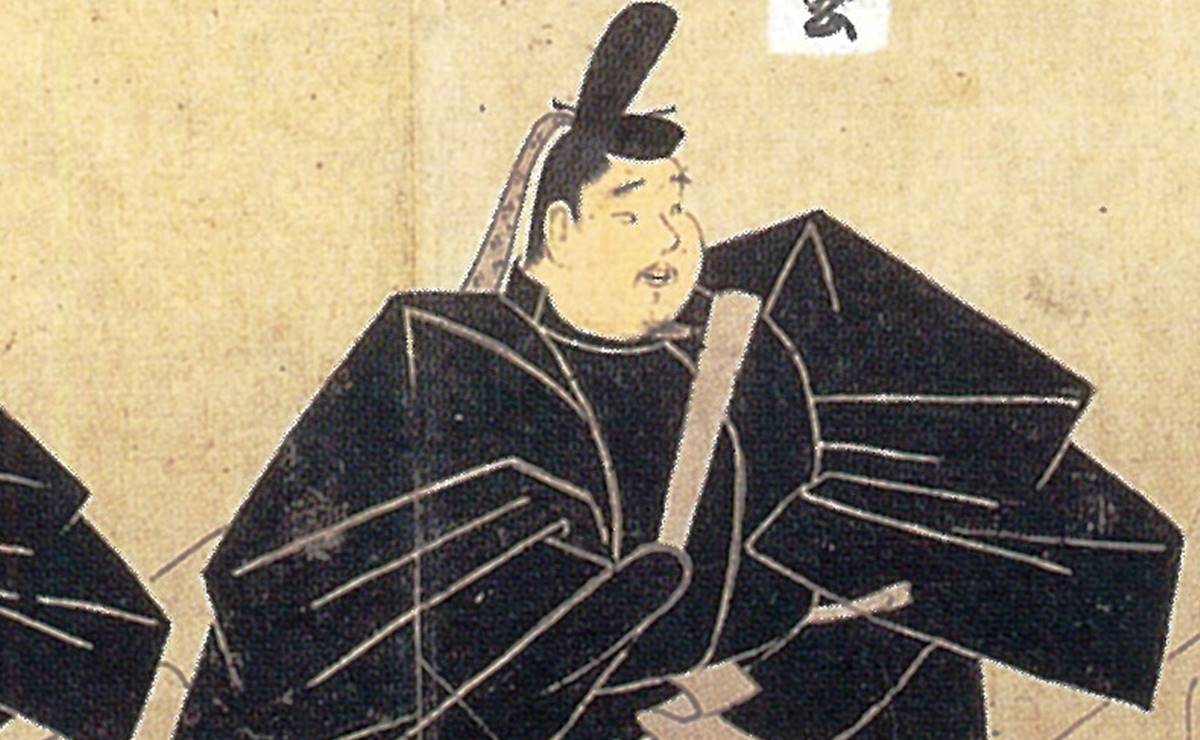
Munemori appeared in ceremonial robes and a tall black cap.
With prominent retainers like Hojo Tokimasa present, Yoritomo conveyed his words through Hiki Yoshikazu.
He stated that he bore no personal grudge against the Taira clan.
He explained that he had pursued them under imperial orders and that capturing Munemori was an honor as a warrior.
In response, Munemori pleaded that if his life were spared, he would become a monk and enter the Buddhist path.
The Azuma Kagami records Munemori bowing deeply to Hiki Yoshikazu, begging for his life, in a manner that was harshly criticized.
Those around also condemned his behavior.
This account includes a perspective from the Kamakura side, evaluating Munemori, who was the vanquished.
In reality, we cannot verify the exact words Munemori used or the precise demeanor he displayed.
However, records remain that he pleaded for his life by requesting to become a monk.
Munemori’s life was not spared.
Two days later, on June 9.
The father and son were once again taken to Kyoto under Yoshitsune’s command.
Shinohara in Omi Province—Father and Son Executed Separately
On June 21, 1185.
Yoshitsune’s party arrived at Shinohara Station in Omi Province.
The Azuma Kagami notes the time as the hour of the hare.
In modern terms, this corresponds to around 6 a.m.
The task of executing Munemori was assigned to Tachibana no Kimichika.
Kimichika was a warrior who had sided with the Minamoto.
Once a Senior First Rank Minister of the Left, Munemori was executed at this post station in Omi.
The Azuma Kagami further records that the party proceeded to Nojiguchi, where Kiyomune was executed by Hori Yataro Kagemitsu.
The father and son were executed at different locations.
It is said that Honsho Shonin of Ohara attended their final moments and guided them into the Buddhist path.
Meanwhile, in the eleventh volume of the Heike Monogatari, “The Minister’s Execution,” a scene is depicted where the father and son, facing death, worry about each other and lament their parting.
Munemori was concerned for Kiyomune, and Kiyomune refused to leave his father’s side.
There are discrepancies in the dates and events surrounding the executions in various military chronicles.
According to the Azuma Kagami entry for June 21, Munemori was executed at Shinohara Station, and Kiyomune at Nojiguchi.
Their heads were sent to Kyoto.
On June 23.
According to the Azuma Kagami, Yoshitsune’s retainers took the two heads to Rokujogawara and handed them over to Taira no Tomoyasu of the imperial police.
They were then displayed on a tree in front of the execution ground.
Kujō Kanezane’s Gyokuyō also records the court’s actions regarding the heads of the father and son.
Their heads, executed in Kyoto, were publicly displayed.
On the same June 23, their brother Taira no Shigehira was also executed in Nanto.
Captured at Ichinotani, Shigehira was sent to Kamakura and later handed over to the temples in Nanto upon their demand.
He was held responsible for the burning of Todaiji and Kofukuji during the siege of Nanto in 1180.
Munemori, Kiyomune, Shigehira.
The remaining members of the Taira clan who survived beyond the Battle of Dan-no-ura met their end in June of that year.
Munemori inherited the leadership of the clan from his father, Taira no Kiyomori, in the fifth year of the Jisho era (1181).
Four years passed.
In the capital, he rose to the rank of Junior First Rank and Minister of the Interior, and then set out for the western provinces with Emperor Antoku.
He achieved victories against the Minamoto forces at Mizushima and Muroyama and advanced to Fukuhara, but suffered defeats at Ichi-no-Tani and Yashima, ultimately becoming a prisoner at Dan-no-ura.
The “Azuma Kagami” records that Munemori, sent to Kamakura, refused food and wept.
The “Tale of the Heike” depicts him tenderly holding his young second son on his knee, stroking his hair, and lamenting their parting.
On June 21, Munemori was executed at Shinohara-juku.
The group continued along the road to Nojiguchi, where Kiyomune also faced execution.
Two days later, the heads of father and son were taken to Rokujogawara in Kyoto.
This was the capital where Munemori had once served as Minister of the Interior and from which he had departed with Emperor Antoku.