On November 3, 592, the minister Soga no Umako announced to the assembled courtiers, “Today is the day we present tributes from the eastern provinces.” As the people gathered, a man named Tono no Komako, acting on Umako’s orders, assassinated Emperor Sushun.
The Nihon Shoki records this incident, stating, “Umako deceived the courtiers, saying, ‘Today, we present tributes from the eastern provinces,’ and then had Tono no Komako assassinate the emperor.” The text clearly notes not only the perpetrator but also that Umako ordered the assassination.
Emperor Sushun was buried at Kurahashioka Tomb later that same day.
Two days later, the court dispatched swift horses to the generals stationed in Tsukushi, instructing them to maintain their duties abroad despite the political upheaval at home. Over 20,000 troops had been stationed in Tsukushi since the previous year.
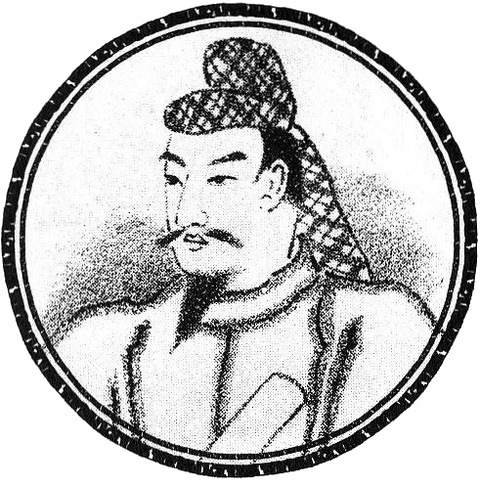
Emperor Sushun, the 32nd sovereign.
Born as a prince of Emperor Kinmei, he ascended the throne shortly after the downfall of Mononobe no Moriya in 587.
During his reign, the construction of Asuka Temple began, envoys were sent to the eastern and northern provinces, and over 20,000 troops gathered in Tsukushi concerning the Korean Peninsula.
About five years later, Emperor Sushun’s life was taken by Minister Soga no Umako.
What led their relationship to culminate in the emperor’s assassination?
The Prince of Emperor Kinmei and Soga no Oane
The birth year of Emperor Sushun is unknown.
Before his accession, he was known as Prince Hasebe.
His father was Emperor Kinmei, the 29th sovereign, and his mother was Soga no Oane, the daughter of Minister Soga no Iname.
Since Soga no Umako was also a child of Soga no Iname, Umako was Prince Hasebe’s maternal uncle.
He had a full brother, Prince Anahobe.
Emperor Kinmei’s children included Emperor Bidatsu, Emperor Yomei, and Princess Nukatabe, who later became Empress Suiko. The imperial succession in the latter half of the 6th century centered around Emperor Kinmei’s offspring.
This succession was deeply influenced by the rivalry between the powerful Soga and Mononobe clans.
Soga no Umako and Mononobe no Moriya
At the time, the court’s power was largely held by Minister Soga no Umako and Great Minister Mononobe no Moriya.
The Soga clan had deepened their marital ties with the imperial family. Emperor Kinmei had taken Soga no Iname’s daughters, Katashirohime and Oane, as consorts, who bore many princes and princesses.
The Mononobe clan, on the other hand, was a powerful family that had long supported the court through military and religious duties.
One of the issues symbolizing the rivalry between these clans was the acceptance of Buddhism.
The Soga clan embraced Buddhism, promoting temple construction and the protection of monks and nuns. Mononobe no Moriya and Nakatomi no Katsumi opposed the acceptance of Buddhism.
The armed conflict that erupted in 587 was fueled by these religious disputes, compounded by political struggles over imperial succession.
Prince Hasebe was also drawn into this conflict.
587 AD: The Death of Emperor Yomei
In 585 AD, Emperor Bidatsu passed away, and his half-brother, Emperor Yomei, ascended to the throne.
Emperor Yomei’s mother was Princess Kashiwade, the daughter of Soga no Iname, which gave him Soga lineage through his maternal side.
In April 587, Emperor Yomei fell ill.
According to the Nihon Shoki, Emperor Yomei, on his sickbed, expressed a desire to embrace Buddhism. Umako showed support for the emperor’s wishes, while Mononobe no Moriya and Nakatomi no Katsumi opposed it.
As tensions within the court escalated, Emperor Yomei passed away in the same month.
Who would be the next emperor?
The struggle for succession began to unfold.
Prince Anahobe and Mononobe no Moriya
One of the royal family members allied with Mononobe no Moriya was Prince Anahobe.
Prince Anahobe was the elder brother of Prince Hasebe, sharing the same mother, Soga no Koanegimi. Despite his Soga lineage, he politically aligned with Moriya.
The Nihon Shoki records that Prince Anahobe and Moriya were closely connected even before Emperor Yomei’s death.
Meanwhile, Prince Hasebe later joined Umako’s forces in the campaign against Mononobe no Moriya.
The brothers, born of the same mother, found themselves on opposing sides in the struggle for the throne.
June 587: The Assassination of Prince Anahobe
About two months after Emperor Yomei’s death, Umako’s faction made the first move.
According to the Nihon Shoki, in June 587, Umako and his allies, acting on the orders of Princess Toyomike Kashikiya, dispatched Saeki no Muraji Karitote, Haji no Muraji Iwamura, and Mato no Omi Makami to confront Prince Anahobe.
In the dead of night, soldiers surrounded the prince’s residence.
Prince Anahobe attempted to escape but was killed by the soldiers.
The following day, Prince Takebe, who was close to Prince Anahobe, was also killed.
Moriya lost the prince who had been his ally in the succession struggle.
In July, the conflict between Soga no Umako and Mononobe no Moriya escalated into a full-scale military confrontation.
July 587: The Battle of the Year of the Fire Sheep
Soga no Umako, along with various princes and courtiers, organized forces to defeat Mononobe no Moriya.
The Nihon Shoki mentions that Prince Hasebe was among them.
In addition to Prince Hasebe, Prince Takeda, Prince Umayado, Prince Naniwa, Prince Kasuga, Ki no Omaro, Kose no Hirafu, Kashiwa no Katabumi, and Katsuragi no Unara participated.
The forces advanced towards Shibukawa in Kawachi Province, the stronghold of Moriya.
Moriya’s resistance was fierce.
The Nihon Shoki describes Moriya climbing a tree and shooting arrows like rain from above. Umako’s forces were intimidated and retreated three times.
During this battle, Prince Shotoku vowed to create statues of the Four Heavenly Kings and promised to build a temple dedicated to them if victorious. The Nihon Shoki also records that Soga no Umako pledged to construct a temple.
Eventually, Tomi no Ichii shot down Moriya, and Moriya along with his sons were killed.
With the loss of their leader, the Mononobe army collapsed.
The main family of the Mononobe clan, which had long been a powerful force in the imperial court, began to withdraw from the political center following this battle.
August 587 — Prince Hatsusebe Ascends the Throne
The month after Mononobe no Moriya was defeated.
In August 587, Prince Hatsusebe ascended the throne.
He became Emperor Sushun, the 32nd emperor.
The Nihon Shoki notes that Toyomike Kashikiya Hime and the court officials encouraged Prince Hatsusebe to take the throne.
It is believed that Soga no Umako, who had strengthened his power by defeating the Mononobe clan, had a significant influence on Emperor Sushun’s ascension. However, the Nihon Shoki’s account of the enthronement does not state that Umako alone installed Emperor Sushun.
Emperor Sushun himself participated in the suppression of Moriya as a member of Umako’s faction during the Battle of the Year of the Fire Horse.
After his ascension, Soga no Umako continued to serve as the Great Minister.
The palace was established at Kurahashi Shibagaki Palace.
This location is near present-day Sakurai City, Nara Prefecture.
From the same faction that defeated Mononobe no Moriya, a new political structure centered around Emperor Sushun and the Great Minister Soga no Umako began.
588 — Construction of Asuka Temple Begins
The year 588, the first year of Emperor Sushun’s reign.
Monks, relics, and skilled craftsmen such as temple builders, tile experts, and painters arrived from Baekje to assist in temple construction.
Soga no Umako began the construction of Hokoji Temple in Asuka.
This would later become known as Asuka Temple.
In the 587 Battle of the Year of the Fire Horse, Umako had vowed to build a temple if victorious over Mononobe no Moriya.
The following year, large-scale temple construction began.
By October 592, the construction of the Buddha Hall and corridors had begun, with the temple completed in 596, during the reign of Empress Suiko after Emperor Sushun’s death.
Excavations at the site of Asuka Temple have confirmed a layout with three golden halls centered around a pagoda.
The era of Emperor Sushun marked the end of conflict with the Mononobe clan and the beginning of full-scale temple construction in Asuka.
Consort Otomo no Koteko and Their Two Children
In March 588, Emperor Sushun took Otomo no Koteko, the daughter of Otomo no Nukate, as his consort.
According to the Nihon Shoki, they had two children: Prince Hachiko and Princess Nishikiyo.
There is a later legend about Prince Hachiko leaving the capital after his father’s death and heading to Dewa, where he is said to have founded the Dewa Sanzan.
This story of his escape and the founding of Dewa Sanzan is not recorded in the Sushun Chronicle of the Nihon Shoki.
Koteko herself appears in an alternative account concerning the assassination of Emperor Sushun in 592.
589—Envoys Sent to the Eastern Mountain, Eastern Sea, and Hokuriku Roads
In the second year of Emperor Sushun’s reign, July 589.
The court dispatched envoys in three directions.
Omi no Mimaro was sent to the Eastern Mountain Road to inspect the borders with the Emishi.
Shishito no Karasu was dispatched to the Eastern Sea Road to survey the coastal provinces to the east.
Additionally, Abe no Omi was sent to the Hokuriku Road to confirm the borders of provinces like Koshi.
This is one of the articles in the Nihon Shoki that reports on domestic politics during Emperor Sushun’s reign.
The court of Emperor Sushun was sending personnel to understand the situation in regions extending from the Kinai area to the eastern and Hokuriku regions.
591—Emperor Sushun Consults His Ministers About Mimana
In the fourth year of Emperor Sushun’s reign, August 591.
Emperor Sushun asked his ministers for their thoughts on the restoration of Mimana, which he desired.
The Nihon Shoki records that the ministers agreed with this.
The issue of Mimana did not suddenly arise during Emperor Sushun’s reign.
The Nihon Shoki notes that the states of Mimana were destroyed by Silla in 562, and the court continued diplomatic relations with Baekje and Silla thereafter.
During Emperor Sushun’s reign, a large-scale military mobilization was carried out in response to this issue.
Over 20,000 Troops Head to Tsukushi
November 591.
The court appointed Ki no Omano, Kose no Saru, Otomo no Katsu, and Katsuragi no Unara as generals.
According to the Nihon Shoki, a force of “over 20,000 troops” led by various clan ministers and retainers headed to Tsukushi.
Simultaneously, Kishi no Kane was sent to Silla and Kishi no Mokurenko to Mimana to negotiate the issues surrounding Mimana.
The over 20,000 troops did not immediately cross to the Korean Peninsula.
They stationed in Tsukushi, continuing diplomatic negotiations with Silla and others.
This force did not withdraw even after Emperor Sushun’s death.
The Nihon Shoki records that the generals returned from Tsukushi in July 595, during the third year of Empress Suiko’s reign.
Thus, a large military force remained in northern Kyushu from the late Sushun period into the early Suiko period.
592 AD—The Breakdown of Relations Between Emperor Sushun and Umako
In the fifth year of Emperor Sushun’s reign, October 592.
A wild boar was presented to the Emperor.
According to the Nihon Shoki, Emperor Sushun pointed at the boar and expressed a desire to one day cut off the head of someone he despised, just as the boar’s head had been severed.
Furthermore, many weapons were being prepared within the palace.
Upon hearing this, Umako feared that he might be the target of the Emperor’s hatred.
He then gathered his allies and plotted to assassinate the Emperor.
The Nihon Shoki records this as an event leading up to the assassination.
The specific name of the person Emperor Sushun intended to kill is not mentioned.
Umako concluded that his own life was in danger.
In 587, the Emperor and the minister had stood together to overthrow Mononobe no Moriya, but five years later, their relationship had deteriorated to the point of threatening each other’s lives.
An Alternate Account: The Betrayal by Consort Koteiko
The Nihon Shoki also includes an alternate tradition regarding Emperor Sushun’s assassination.
Consort Otomo no Koteiko resented the waning of the Emperor’s affection for her.
She sent a messenger to Umako, informing him that Emperor Sushun had remarked upon seeing the wild boar, “I wish to cut off the head of someone I hate, just like this boar’s head,” and that weapons were being amassed in the palace.
Umako was astonished upon receiving this news.
However, the Nihon Shoki records this story as an “alternate account” separate from the main text.
Both the main and alternate accounts agree that Emperor Sushun was preparing weapons and that Umako felt threatened.
November 3, 592—Soga no Umako Assassinated the Emperor
November 3.
Umako acted first.
According to the Nihon Shoki, Umako deceived the court officials,
announcing, “Today, we present tribute from the eastern provinces.”
He then ordered Higashi no Hanano Atai no Komaro to assassinate Emperor Sushun.
The Higashi no Hanano clan was a group of immigrant descent involved in the court’s administrative and financial duties, as well as military activities.
The Nihon Shoki records,
“Thus, he commanded Higashi no Hanano Atai no Komaro to slay the Emperor.”
Higashi no Hanano Atai no Komaro was ordered to assassinate the Emperor.
The Assassination of Emperor Sushun is clearly documented in the “Nihon Shoki” with Azumano Omi no Komako as the perpetrator and Soga no Umako as the instigator.
It was about five years after his accession in August 587.
The year of Emperor Sushun’s birth is unknown, and his age at death remains uncertain.
Buried on the Day of Assassination
Immediately after recording the assassination, the “Nihon Shoki” states,
“On this day, the Emperor was buried at Kurahashioka Tomb.”
Emperor Sushun was laid to rest on the very day he was killed.
In ancient times, it was common for emperors to have a period of mourning before formal burial.
However, the “Nihon Shoki” does not mention any mourning period for Emperor Sushun.
The assassination and burial are recorded as events of the same day.
Today, the Imperial Household Agency recognizes Kurahashioka Tomb in Sakurai City, Nara Prefecture, as Emperor Sushun’s mausoleum.
Two Days After the Assassination, a Swift Horse to Tsukushi
November 5th.
The court dispatched a messenger to the generals stationed in Tsukushi.
The order recorded in the “Nihon Shoki” was,
“Do not neglect external affairs due to internal strife.”
This meant that despite domestic upheaval, duties concerning foreign matters should not be ignored.
Over 20,000 troops had been stationed in Tsukushi since the previous year.
Even after the Emperor’s assassination, these forces were not disbanded.
The generals remained in Tsukushi until 595.
The death of Emperor Sushun did not halt the court’s diplomatic and military activities.
The Death of Azumano Omi no Komako, the Assassin
Azumano Omi no Komako, who assassinated Emperor Sushun, did not live long thereafter.
According to the “Nihon Shoki,” Komako took Soga no Umako’s daughter, Kawakami no Iratsume, as his wife.
It is also noted that Kawakami no Iratsume was a consort of Emperor Sushun.
Initially, Umako believed his daughter to be dead.
Once it became clear that Komako had taken Kawakami no Iratsume, Umako killed him.
The assassin of the Emperor met his end within the same November account.
Meanwhile, there is no record of Umako, who ordered the assassination, being punished.
Umako remained in the court as a minister.
December 592 – Empress Suiko Ascends the Throne
With the death of Emperor Sushun, the throne was left vacant.
The court officials recommended Nukatabe no Himemiko, the consort of Emperor Bidatsu, as the next ruler.
Nukatabe no Himemiko was the daughter of Emperor Kinmei and Soga no Katashina Hime, and the half-sister of Emperor Sushun.
According to the Nihon Shoki, although the court officials requested her ascension, Nukatabe no Himemiko initially declined. However, after the crown prince and the officials repeatedly urged her three times, she finally accepted.
December 592.
Nukatabe no Himemiko ascended the throne at Toyura Palace.
She became the 33rd ruler, Empress Suiko.
The following year, in 593, Prince Umayado became the crown prince and began participating in politics, as recorded in the Nihon Shoki.
Soga no Umako also retained his position as a minister.
In 587, Prince Hasebe ascended the throne as a member of the imperial family who had defeated Mononobe no Moriya.
During his reign, the construction of Asuka Temple began, envoys were dispatched to the eastern and northern provinces, and over 20,000 troops were sent to Tsukushi.
On November 3, 592, Soga no Umako assassinated Emperor Sushun.
Even so, the court did not collapse.
The troops in Tsukushi remained stationed, and the following month, Empress Suiko ascended the throne.
The construction of Asuka Temple, which began during Emperor Sushun’s reign, continued under the new emperor.
Thus began the era where Empress Suiko, Prince Umayado, and Minister Soga no Umako held the reins of power.
After assassinating Emperor Sushun, Soga no Umako continued to serve as a minister for another 34 years.
teikimasu.

After reading about Asuka’s history, why not enjoy the flavors of Nara? One of Nara’s representative foods, Nara pickles, is a must-try.