The Twelve Level Cap and Rank System, the Seventeen-Article Constitution, the missions to Sui China.
In Japanese history, these policies have always been associated with the name “Prince Shotoku.”
He could listen to multiple people speaking at once and understand them all. From a young age, he possessed extraordinary wisdom. He had a profound understanding of Buddhism and organized Japan’s political system.
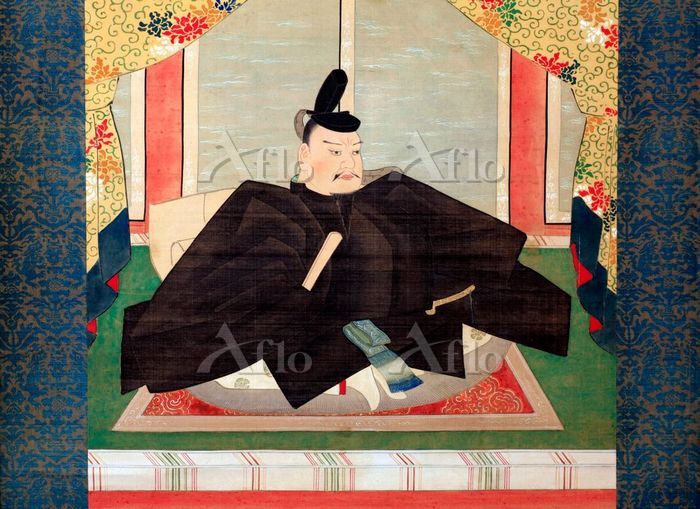
In later generations, Prince Shotoku would be depicted as the ideal statesman representing the Asuka period.
However, the “Prince Shotoku” we know today was not the name used during his lifetime.
The honorific “Shotoku” was established posthumously. The inscription on the pagoda finial of Hoki-ji, said to have been erected in 706, refers to him as “Prince Shotoku of the Upper Palace.” The first existing document to use the name “Prince Shotoku” is the preface of the Kaifuso, compiled in 751.
During his lifetime, the prince is now widely referred to as “Prince Umayado.”
During the reign of Empress Suiko, when Prince Umayado was involved in politics, Empress Suiko was on the throne. There was also the minister Soga no Umako. Prince Umayado was deeply connected to both of them by blood and politics.
We will explore Prince Umayado before he became shrouded in later legends, through the relationships of these three figures who shaped Asuka period politics.
1. The Prince Said to Be Born in 574
Prince Umayado was the son of Emperor Yomei, and his mother was Princess Anahobe no Hashihito.
His birth year is generally considered to be 574. However, this date is based on sources like the Jogu Shotoku Hooteisetsu and cannot be confirmed as definitive.
Looking at the prince’s lineage, his ties to the Soga clan are very strong.
His paternal grandmother was Katasashi Hime, a daughter of Soga no Iname. His maternal grandmother was also a daughter of Soga no Iname, named Oane no Kimi.
Thus, Prince Umayado inherited blood from Soga no Iname through both his father and mother.
Furthermore, the prince took Soga no Umako’s daughter, Tojiko no Iratsume, as his consort. Together, they had a son, Prince Yamashiro no Oe, who would later become a central figure in the imperial succession issue.
Prince Umayado himself was a royal figure bound by multiple layers of kinship with the Soga clan.
This relationship would become significant in considering his later political activities.
2. 587—The Battle with Mononobe no Moriya
In the late 6th century, the Yamato court was embroiled in conflicts over imperial succession and the acceptance of Buddhism.
One of the fiercest rivalries was between the minister Soga no Umako and the great chieftain Mononobe no Moriya.
Their conflict involved not only the acceptance of Buddhism but also struggles over the imperial throne and political dominance among the powerful clans.
In 587, Emperor Yomei passed away.
Mononobe no Moriya supported Prince Anahobe, leading to an inevitable confrontation with Soga no Umako.
After Umako assassinated Prince Anahobe, he gathered various princes and influential clans to attack Moriya.
According to the Nihon Shoki, the young Prince Shotoku was also part of this force.
The Nihon Shoki also recounts an anecdote where, during a critical moment in the battle, Prince Shotoku created statues of the Four Heavenly Kings and vowed to build a temple dedicated to them if victorious.
Following Moriya’s defeat and death, it is said that this vow led to the construction of Shitenno-ji Temple.
This story contributes to the later image of “Prince Shotoku as the protector of Buddhism.”
In the battle of 587, Mononobe no Moriya was defeated, further solidifying Soga no Umako’s political power.
Prince Shotoku also grew within this new political order.
3. The Assassination of Emperor Sushun in 592 and Empress Suiko
After Mononobe no Moriya’s death, Prince Hasebe ascended the throne as Emperor Sushun.
Soga no Umako played a significant role in his enthronement.
However, the relationship between Emperor Sushun and Umako eventually deteriorated.
In November 592, according to the Nihon Shoki, Umako ordered the assassination of Emperor Sushun by Yamato no Aya no Atai Komaro.
This was an unprecedented event where an emperor was killed on the orders of a subject.
The following month, Princess Nukatabe ascended the throne.
She became Empress Suiko.
Empress Suiko had served as the consort of Emperor Bidatsu and was also the full sister of Emperor Yomei. She is regarded as Japan’s first female emperor, reigning for 36 years from 592 to 628.
In 593, the Nihon Shoki records that Prince Shotoku was appointed “Crown Prince” and entrusted with political affairs.
This year later became known as the year “Prince Shotoku became regent.”
However, there is debate about whether the “Crown Prince” or “Regent” of this era can be equated with the institutionalized roles of later periods.
The Yamakawa Japanese History Dictionary introduces skepticism about Prince Shotoku’s designation as Crown Prince, suggesting that his active political role became clear around 602.
It is more accurate to view Prince Shotoku as a prominent royal figure who joined the political core under Empress Suiko.
4. Empress Suiko, Soga no Umako, and Prince Shotoku
Viewing the politics of the Suiko court solely as Prince Shotoku’s reforms obscures the political structure of the time.
Minister Soga no Umako had been at the political center since the reign of Emperor Bidatsu.
He played a role in defeating Mononobe no Moriya in 587, was involved in both the enthronement and assassination of Emperor Sushun, and continued to wield significant power as a minister during the Suiko court.
Empress Suiko remained at the center of royal authority throughout her 36-year reign.
Prince Shotoku joined this political landscape.
The prince was married to Umako’s daughter, Tojiko no Iratsume, strengthening his political and familial ties with the Soga clan.
The Yamakawa Japanese History Concise Dictionary introduces the idea that Prince Shotoku collaborated with Soga no Umako to govern under Empress Suiko. Regarding the Suiko era, it is suggested that instead of opposing the Soga clan, Empress Suiko and Prince Shotoku cooperated with them.
Empress Suiko, Soga no Umako, and Prince Shotoku.
Within the political framework involving these three figures, institutional development and diplomacy progressed in the early 7th century.
5. The Year 603—The Twelve Level Cap Rank System
In the 11th year of Suiko (603), the Twelve Level Cap Rank System was established.
This system divided virtues—Virtue, Humanity, Courtesy, Trust, Justice, and Wisdom—into large and small, creating a hierarchy of twelve ranks.
Unlike the traditional clan-based system, these ranks were awarded to individuals and were not hereditary in principle.
This marked an important shift towards the later rank system.
However, the Twelve Level Cap Rank System did not immediately transform society into one that prioritized ability over lineage.
It is believed that the highest-ranking aristocrats, such as the imperial family and the Soga clan, were excluded from the awards, and its implementation was mainly focused on the Kinai region and nearby provinces.
The key point was the introduction of a system that awarded ranks to individuals serving the court, separate from the clan names.
The system is noted to have been influenced by the official rank systems of the Korean Peninsula, and the need to indicate the status of envoys in East Asian diplomacy is considered a background factor for its establishment.
The Twelve Level Cap Rank System can be seen as part of the institutional development of the Suiko era, which was advancing exchanges with East Asia, rather than solely a policy of Prince Shotoku.
6. The Year 604—The Seventeen-Article Constitution
In the 12th year of Suiko (604).
The Nihon Shoki records that the Crown Prince created the Seventeen-Article Constitution.
The first article emphasizes the importance of harmony among people, while the second advocates reverence for the Three Treasures: Buddha, Dharma, and Sangha.
However, it is not a legal document like a modern constitution that defines state institutions or citizens’ rights.
It strongly reflects the moral and political principles for officials serving the court, incorporating Confucian, Buddhist, and Legalist ideas.
There are discrepancies in historical sources regarding its establishment.
While the Nihon Shoki dates it to 604, the “Jogu Shotoku Hooteisetsu” records it as 605.
Debate continues over the process of the text’s formation as it is known today.
Therefore, it is more cautious to view the Nihon Shoki as linking an important political code of the Suiko era to Prince Shotoku, rather than asserting that he single-handedly wrote all seventeen articles in 604.
7. The Year 607—”The Son of Heaven in the Land of the Rising Sun” and the Envoy to Sui
During the Suiko era, diplomacy with the Chinese mainland also saw significant developments.
The “Book of Sui” notes that in 600, an envoy was sent from Wa to Sui.
This mission is not recorded in the Nihon Shoki.
Subsequently, the Twelve Level Cap Rank System was established in 603, and the Seventeen-Article Constitution in 604.
Information obtained through the 600 envoy mission may have influenced these subsequent institutional developments.
In 607, Ono no Imoko was dispatched to Sui.
The “Book of Sui” records that the state letter sent from Wa to Sui began with a phrase expressing a message from the “Son of Heaven in the Land of the Rising Sun” to the “Son of Heaven in the Land of the Setting Sun.”
Emperor Yang of Sui is said to have shown displeasure upon reading this state letter.
This state letter later became known as a symbol of Prince Shotoku’s diplomacy.
However, the ‘Book of Sui’ does not mention Prince Umayado as the author of the letter.
It is more faithful to historical sources to treat it as part of Suiko’s diplomatic policy.
In 608, the Sui envoy Pei Shiqing visited the Wa country, and Ono no Imoko once again traveled to Sui.
At this time, Takamuko no Kuromaro, Minabuchi no Shoan, and the monk Min also went to the continent as students and scholar monks.
They studied the systems and culture of the Sui and Tang for an extended period and later contributed to political reforms upon their return.
The exchange with the continent that advanced during Suiko’s reign continued to influence Japanese politics even after Prince Umayado’s death.
8. To Ikaruga—Buddhism and Prince Umayado
When considering Prince Umayado, Buddhism holds a significant place.
During the time when Soga no Umako was advancing the construction of Asuka Temple, monks from the Korean Peninsula gathered in Asuka.
It is said that Prince Umayado also learned Buddhism from the Goguryeo monk Hyeja.
In 601, the ‘Nihon Shoki’ records that the prince began constructing the Ikaruga Palace.
By 605, he had moved to Ikaruga Palace.
Ikaruga, located away from Asuka, was a crucial transportation hub connected to the Naniwa area via the Yamato River waterway.
In Ikaruga, a temple that would become the predecessor of Horyu-ji was also established.
Horyu-ji is said to have been completed around 607, fulfilling the wish of Emperor Yomei to establish a temple, a wish carried on by Empress Suiko and Prince Umayado.
On the other hand, the ‘Nihon Shoki’ notes that Horyu-ji was destroyed by fire in 670, and the current Western Precinct is believed to have been rebuilt thereafter.
Ikaruga became an important base for considering the politics and Buddhist activities of Prince Umayado.
The “Sankyo Gisho,” commentaries on the Lotus Sutra, Vimalakirti Sutra, and Srimala Sutra, have also been traditionally attributed to Prince Umayado.
There is debate about the true authorship of the Sankyo Gisho, but some encyclopedias support the prince’s authorship, and ancient manuscripts of the Hokke Gisho, in particular, bear inscriptions attributing them to him.
These are important materials conveying the deep connection between Prince Umayado and Buddhism.
Soga no Umako was also a central figure in promoting Buddhism, advancing the construction of Asuka Temple.
In matters of Buddhism, both Umako and Prince Umayado played significant roles within the same Suiko administration.
9. The Year 620—Compiling History with Soga no Umako
The 28th year of Suiko (620).
The ‘Nihon Shoki’ records that Prince Umayado and Soga no Umako compiled records such as the ‘Tennoki’ and ‘Kokki,’ as well as records concerning various clans including ministers, chieftains, and provincial governors.
The ‘Tennoki’ and ‘Kokki’ themselves do not survive, so their contents cannot be directly confirmed.
Nevertheless, these records are important for considering the political relationship between the two.
The ‘Nihon Shoki’ portrays Prince Umayado and Umako as figures who jointly advanced the project of recording the history of royal authority and various clans within the same government.
There is no documentary basis for dividing Prince Umayado as the “public face” and Umako as the “behind-the-scenes” figure.
Within the core of the Suiko administration, the image of the two jointly engaging in political endeavors emerges.
10. The Year 622—The Death of Prince Umayado
The year of Prince Umayado’s death varies across historical records.
The Nihon Shoki records that the Crown Prince passed away on February 5, in the 29th year of Empress Suiko’s reign (621).
On the other hand, sources like the Jogu Shotoku Hooteisetsu, the inscription on the Tenjukoku Shucho, and the halo inscription of the Shakyamuni Buddha statue in the Horyuji Temple, state it as February 22, in the 30th year of Suiko’s reign (622).
Today, the date of February 22, 622, is widely accepted.
According to the 622 theory, it is said that his consort, Zenbu Hokikimi no Iratsume, died on February 21, and Prince Umayado followed on the 22nd.
After the prince’s death, one of his consorts, Tachibana no Oiratsume, reportedly petitioned Empress Suiko to depict the “Land of Eternal Life” where the prince had ascended, in embroidery.
This is the national treasure, the Tenjukoku Shucho, which remains at Chugu-ji Temple today.
The existing embroidery includes parts made during the Asuka period, indicating that efforts to commemorate Prince Umayado as a special figure began soon after his death.
Prince Umayado never became emperor.
There are no historical records explaining whether he did not wish to ascend the throne himself or if there was some division of roles with Soga no Umako.
What is certain is that the prince died during the reign of Empress Suiko.
According to the 622 theory, Prince Umayado passed away six years before Empress Suiko.
When Empress Suiko died in 628, a succession dispute arose, with Prince Umayado’s son, Prince Yamashiro no Oe, becoming a strong candidate.
Prince Umayado himself had passed away without witnessing this conflict.
11. From Prince Umayado to “Shotoku Taishi”
After Prince Umayado’s death, his persona was gradually enveloped in new narratives over time.
A saint who spread Buddhism. An ideal statesman. A visionary. A prince who could discern the voices of many people at once.
Even in the Nihon Shoki, there are descriptions of his superhuman abilities, and by the Nara and Heian periods, legends surrounding the prince had further proliferated.
By the time of the Shotoku Taishi Denryaku in 917, many of the later legends about the prince had been compiled into a coherent form.
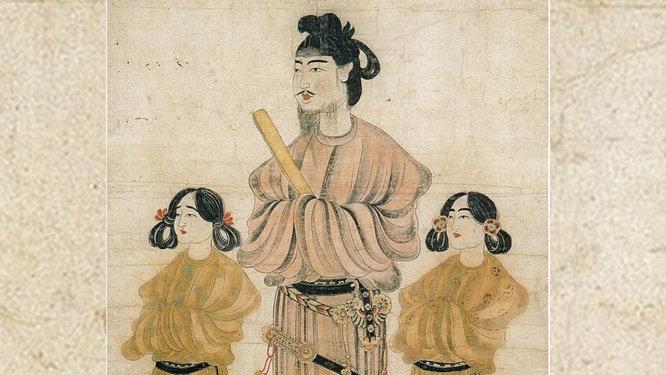
The famous “Shotoku Taishi Nioji Image” is also believed to have been painted not during his lifetime, but in the 8th century Nara period.
The Tokyo National Museum describes this image as “the oldest portrait of Shotoku Taishi,” while also noting the debate over whom it actually depicts.
The image of Shotoku Taishi known today cannot be directly equated with the figure of Prince Umayado in the early 7th century.
From historical records, Prince Umayado emerges as a royal figure deeply connected by blood to the Soga clan, involved in politics alongside Soga no Umako under Empress Suiko.
He lived in a time of rapidly expanding exchanges with East Asia, contributing to the development of the bureaucratic system, political norms, diplomacy, Buddhism, and historical compilation.
The politics and culture of the Suiko court were not created by Prince Umayado alone.
They were shaped through the involvement of Empress Suiko, Soga no Umako, court officials, immigrants, and monks.
Prince Umayado was one of the central figures in this process.
After his death in 622, his memory continued to be retold over the centuries.
From the historical Prince Umayado to the idealized “Shotoku Taishi.”
These two images overlap, and his name remains as one of the representative figures in Japanese history to this day.
For those who wish to delve deeper into Prince Shotoku.
Prince Shotoku cannot be fully described with just the phrase “the great figure who created the Seventeen-Article Constitution.” Understanding his relationship with Soga no Umako and how the Yamato Kingdom was evolving into a “great nation” at the time can change your perspective on Prince Shotoku.

Prince Shotoku: The Prince Who Led the Yamato Kingdom to Become a "Great Nation" (Japanese History Libretto) [ Satoshi Ohira ]
The Horyu-ji Temple associated with Prince Shotoku.
When you think of Horyu-ji, what often comes to mind is “persimmons.”
“When you eat persimmons, the bell tolls at Horyu-ji.”
After reading about history, it might be interesting to try some persimmons from Nara.