June 12, 645.
At the Asuka Itabuki Palace, Prince Naka no Oe stood ready with a long spear, waiting for Soga no Iruka.
In the presence of Empress Kōgyoku, Iruka was killed in the palace, and the following day, his father Soga no Emishi also died.
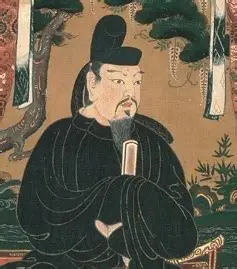
Prince Naka no Oe was the central figure in this Isshi Incident.
However, it was not Prince Naka no Oe who ascended the throne after the coup.
His uncle, Prince Karu, became Emperor Kōtoku, and Prince Naka no Oe was appointed Crown Prince.
Even after Emperor Kōtoku passed away in 654, he did not ascend the throne. In the following year, his mother, the former Empress Kōgyoku, ascended the throne again as Empress Saimei.
After Empress Saimei’s death in 661, Prince Naka no Oe continued to govern without formally ascending the throne, remaining as Crown Prince.
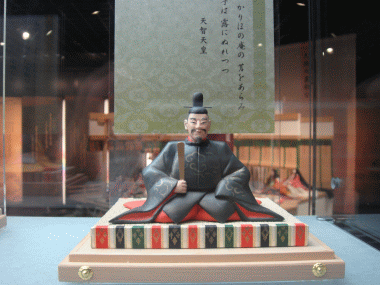
It was not until 668 that he ascended as Emperor Tenji.
This was 23 years after the Isshi Incident.
During this period, there were significant events such as the politics of the Taika era, the death of Soga no Kurayamada Ishikawa Maro, the separation from Emperor Kōtoku, the execution of Prince Arima, the fall of Baekje, the defeat at the Battle of Baekgang, the establishment of a defense system from Kyushu to the Seto Inland Sea, and the relocation of the capital to Ōmi.
Prince Naka no Oe was at the heart of a transformative era in ancient Japan.
626 — Born as the Prince of Emperor Jomei and Empress Kōgyoku
Prince Naka no Oe was born in 626.
His father was Prince Tamura, who later became Emperor Jomei.
His mother was Princess Takara, who later became Empress Kōgyoku and Empress Saimei.
He had a younger brother, Prince Ōama, who later became Emperor Tenmu. His sister was Princess Hashihito.
In 629, his father, Prince Tamura, ascended as the 34th Emperor Jomei.
During Prince Naka no Oe’s early years, Soga no Emishi, who became a powerful minister after the death of Soga no Umako, wielded significant influence in the court.
In 641, Emperor Jomei passed away.
The following year, 642, Princess Takara ascended as the 35th Empress Kōgyoku.
By this time, Soga no Emishi, the son of Soga no Emishi, had emerged on the political stage.
The “Nihon Shoki” records that Iruka took control of the government himself, surpassing even his father Emishi in power.
In 643, Iruka annihilated the family of Prince Yamashiro no Oe.
Then came the year 645.
At the age of twenty, Prince Naka no Oe, together with Nakatomi no Kamatari, executed a plan to overthrow Soga no Iruka.
Meeting Nakatomi no Kamatari
It was Nakatomi no Kamatari who would become a long-time companion of Prince Naka no Oe.
According to the “Nihon Shoki,” Kamatari was contemplating the downfall of the main Soga clan and was searching for someone to carry out this task.
His eyes fell on Prince Naka no Oe.
There is a famous anecdote about how the two came together.
During a kemari game under the zelkova tree at Asuka Temple, Prince Naka no Oe’s shoe came off. Kamatari picked it up and offered it to him on bended knee. The prince also knelt to receive it.
This marked the beginning of their close friendship, as recorded in the “Nihon Shoki.”
Soon, the two began visiting Nanba no Omi, and on their way back and forth, they discussed plans to overthrow the Soga clan.
Soga no Kurayamada Ishikawa Maro, a member of the Soga family, also joined their plan.
Their target was Soga no Iruka.
June 12, 645—The Isshi Incident
On June 12, in the fourth year of Kōgyoku’s reign.
A ceremony was held at the Asuka Itabuki Palace to read out a tribute from the Three Kingdoms of Korea.
Soga no Iruka entered the palace.
According to the “Nihon Shoki,” Iruka was suspicious by nature and always carried a sword, day and night. Thus, the conspirators arranged for Iruka to be disarmed upon entering the palace.
Prince Naka no Oe ordered the palace gates to be shut and took up a long spear himself.
Nakatomi no Kamatari stood by with a bow and arrow.
Ishikawa Maro began reading the tribute.
Saeki no Komaro and Katuragi no Waka Inukai no Amida, tasked with killing Iruka, hesitated out of fear.
As the reading neared its end, Ishikawa Maro was sweating, his voice faltered, and even his hands trembled.
Iruka, sensing something amiss, asked for the reason.
Finally, Prince Naka no Oe himself leaped forward.
Iruka was struck on the head and shoulder, and his leg was injured.
Iruka approached Empress Kōgyoku’s throne, pleading for a trial to determine his guilt.
When Empress Kōgyoku asked Prince Naka no Oe for an explanation, he accused Iruka of destroying the imperial family and threatening the throne.
Empress Kōgyoku withdrew from the hall.
Saeki no Komaro and Katuragi no Waka Inukai no Amida killed Iruka.
The following day, on the 13th, Soga no Emishi also took his own life.
The political power of the main Soga clan, which had extended from Umako to Emishi and Iruka, crumbled.
Empress Kōgyoku’s Abdication—The Ascension of Prince Karu
After the death of Iruka, Empress Kōgyoku abdicated the throne.
The intended successor was Prince Naka no Ōe.
According to the Nihon Shoki, Prince Naka no Ōe consulted with Nakatomi no Kamatari.
Kamatari advised that since Prince Furubito no Ōe was older than Prince Naka no Ōe, and Prince Karu was his uncle, it would be wise to first install Prince Karu.
Prince Furubito no Ōe declined the throne and became a monk.
Thus, Prince Karu ascended the throne.
He became Emperor Kōtoku, the 36th emperor.
Prince Naka no Ōe was made Crown Prince.
The circumstances surrounding why Prince Naka no Ōe did not take the throne in 645 are documented in the Nihon Shoki as being influenced by Kamatari’s advice.
However, there are no historical records that can explain with certainty why he did not officially ascend to the throne for 23 years, until 668.
The Kōtoku Era and “Taika”
Under Emperor Kōtoku, a new political system was established.
Abe no Uchimaro was appointed as the Left Minister.
Soga no Kurayamada Ishikawa Maro became the Right Minister.
Nakatomi no Kamatari was made the Inner Minister.
Prince Naka no Ōe was appointed as Crown Prince.
In 645, the era name “Taika” was established.
In December of the same year, the capital was moved from Asuka to Naniwa Nagara-Toyosaki Palace.
In January of the following year, 646, the Nihon Shoki records the so-called “Taika Reforms.”
The reforms outlined policies to change the control of land and people by the imperial family and powerful clans, and introduced systems for local administration, household registration, tax systems, and more, paving the way for the later ritsuryō state.
However, it is believed that the text of the Taika Reforms in the Nihon Shoki reflects elements of later systems.
Throughout the Taika era, efforts were made to organize the new national structure, including the management of people and land, control of officials, and local administration.
Prince Naka no Ōe, as Crown Prince, was at the center of politics during this period.
The Year 645—The Incident Surrounding Prince Furubito no Ōe
A few months after the Isshi Incident, an event involving Prince Furubito no Ōe occurred.
Prince Furubito no Ōe was a son of Emperor Jomei, and his mother was Hōtetsu no Iratsume, a daughter of Soga no Umako.
With deep ties to the Soga clan, he had entered monastic life in Yoshino shortly after the Isshi Incident.
In September of the same year, the Nihon Shoki records that Prince Furubito no Ōe and Soga no Taguchi Kawahori plotted a rebellion.
Kibi no Kasatori, who was involved in the plot, reported it to Prince Naka no Ōe.
Prince Naka no Ōe dispatched troops.
In an alternate account in the Nihon Shoki, it is stated that on November 30, Prince Naka no Ōe ordered Abe no Koso and Saeki no Komaro to lead 30 soldiers to attack Prince Furubito no Ōe, killing him and his children.
It is said that his consorts and concubines took their own lives.
Even after the collapse of the main Soga family in the Isshi Incident, tensions surrounding the imperial succession continued.
The Year 649—The Ishikawa Maro Incident
The fifth year of Taika, 649.
Soga no Kurayamada Ishikawa Maro, the Right Minister who, alongside Prince Naka no Oe, overthrew Iruka during the Isshi Incident, now finds himself suspected of treason.
The informant was Ishikawa Maro’s half-brother, Soga no Hyuga.
On March 24th, Hyuga accused Ishikawa Maro before Prince Naka no Oe, claiming that Maro intended to assassinate the Crown Prince and start a rebellion.
Prince Naka no Oe believed the accusation and reported it to Emperor Kotoku.
The Emperor dispatched messengers.
Ishikawa Maro requested twice to defend himself directly before the Emperor.
Without the chance to do so, military forces were mobilized, and Ishikawa Maro took refuge in the Yamadadera Temple he had built.
On the following day, the 25th, Ishikawa Maro swore he held no grudge against the Emperor and took his own life.
However, after his death, an investigation of his possessions revealed books labeled “Crown Prince’s writings” and treasures marked “Crown Prince’s belongings.”
The Nihon Shoki records that Prince Naka no Oe realized Ishikawa Maro’s loyalty to the Crown Prince remained pure and untainted, leading him to regret, feel ashamed, and deeply mourn.
Ishikawa Maro’s daughter, Tsukuri-hime, who had become Prince Naka no Oe’s consort, also deeply mourned her father’s death and passed away soon after.
653—Leaving Emperor Kotoku in Naniwa and Returning to Asuka
The fourth year of Hakuchi, 653.
Prince Naka no Oe proposed to Emperor Kotoku that the capital be moved back to the Yamato region.
Emperor Kotoku refused.
Consequently, Prince Naka no Oe returned to Asuka with Empress Dowager Kogyoku, who had become his grandmother, Empress Hashihito, Emperor Kotoku’s consort, and his brother, Prince Oama.
The Nihon Shoki notes that many court officials and ministers also followed Prince Naka no Oe.
Emperor Kotoku remained in Naniwa.
The Nihon Shoki reports that Emperor Kotoku resented this situation and even expressed a desire to abdicate.
In October of the following year, 654, Emperor Kotoku passed away at the Naniwa Nagara-Toyosaki Palace.
Yet, Prince Naka no Oe did not ascend the throne.
655—The Reascension of Empress Kogyoku
January 655.
Prince Naka no Oe’s mother, Empress Dowager Kogyoku, ascended the throne once more.
She became the 37th sovereign, Empress Saimei.
This was a “chokuso,” where a former emperor reascends the throne.
Prince Naka no Oe continued to be involved in the politics of the Saimei court as Crown Prince.
No historical records explain why Prince Naka no Oe’s mother, rather than he, took the throne after Emperor Kotoku’s death.
Even at this time, Prince Naka no Oe did not ascend the throne and remained at the political center as Crown Prince.
658—The Execution of Prince Arima
The fourth year of Saimei, 658.
An incident involving Prince Arima, the son of Emperor Kotoku, occurred.
Soga no Akaye approached Prince Arima, raising three issues with Empress Saimei’s governance.
These issues included the burden on the people caused by large-scale warehouse construction, waterway projects, and transporting stones by ship.
Prince Arima was delighted to hear this and responded with words to the effect that he was now of an age to wield soldiers, as recorded in the Nihon Shoki.
Afterwards, the two discussed their plans for rebellion.
However, Soga no Akaye surrounded Prince Arima’s residence and exposed the plot.
Prince Arima was captured and sent to the hot springs of Muro in Kii, where Empress Saimei and Prince Naka no Oe were staying.
Prince Naka no Oe asked Prince Arima why he had conspired to rebel.
Prince Arima replied that he did not know, suggesting that only heaven and Akaye knew the answer.
On his way back, Prince Arima was executed by hanging at Fujishirozaka.
He was 19 years old.
During the time when Prince Naka no Oe was at the center of politics as Crown Prince, incidents involving Prince Furuta no Oe, Ishikawa Maro, and Prince Arima occurred in succession.
660 AD—The Fall of Baekje
In the 6th year of Saimei, 660 AD.
A major event unfolded on the Korean Peninsula.
Baekje, which had long maintained relations with Japan, fell to the combined forces of Tang and Silla.
Baekje’s remaining ministers continued to resist in various places, seeking aid from Japan.
Japan moved to support Baekje’s restoration.
The following year, 661 AD, Empress Saimei, along with Prince Naka no Oe and others, headed west.
They entered Tsukushi and established their base at the Asakura Tachibana no Hiroba Palace.
However, in July of the same year, Empress Saimei passed away.
She was 68 years old.
Even at this time, Prince Naka no Oe did not formally ascend to the throne.
He entered a period of “shosei,” governing as Crown Prince without formal enthronement.
661 AD—Continuing Baekje Aid After His Mother’s Death Without Ascending the Throne
After the death of Empress Saimei, Prince Naka no Oe continued to aid Baekje without ascending to the throne.
He sent Yeo Pungjang, a member of the Baekje royal family, back to Baekje to support the restoration forces.
Troops from Japan also crossed over to the Korean Peninsula.
Then came 663 AD.
A decisive battle for Baekje’s restoration took place at Baekgang.
663 AD—Defeat at Baekgang
In the 2nd year of Tenji, 663 AD.
The Japanese-Baekje restoration forces clashed with the Tang-Silla allied forces at Baekgang.
According to the Nihon Shoki, the Japanese generals believed the Tang forces were in disarray and rushed to attack.
The Tang forces encircled the Japanese fleet from both sides.
The Japanese forces suffered a crushing defeat.
The Nihon Shoki records that many drowned, unable to maneuver their ships.
All hopes for Baekje’s restoration were dashed.
After the battle, many people from Baekje fled to Japan.
After the defeat at Baekgang, Japan swiftly moved to bolster its defenses against potential invasions from the west.
664—Construction of Mizuki in Kyushu
The year following Baekgang, 664.
Garrisons and signal fires were established on Tsushima, Iki, and Tsukushi.
A water fortress, Mizuki, was constructed in Tsukushi.
This massive defensive structure still stands near what is now Dazaifu City in Fukuoka Prefecture.
The following year, 665, under the guidance of engineers who had come over from Baekje, a castle was built in Nagato, and both Ono Castle and Ki Castle were constructed in Tsukushi.
Furthermore, in 667, the “Nihon Shoki” records the construction of Takayasu Castle in Yamato, Yashima Castle in Sanuki, and Kaneda Castle on Tsushima.
In the wake of Baekgang, a network of defenses was established across the Japanese archipelago to guard against western threats.
667—Relocation from Asuka to Omi
The sixth year of Tenji, March 667.
Prince Nakano Oe moved the capital to Omi.
This was the Omi Otsu Palace.
In the area around present-day Nishikori, Otsu City, Shiga Prefecture, remnants believed to be the core of the palace, including the main hall, south gate, and corridors, have been discovered.
The relocation from Asuka to Omi was not warmly received by the people.
The “Nihon Shoki” notes that the populace did not desire the move, resulting in numerous satirical songs and frequent fires day and night.
Nevertheless, the political center shifted to Omi.
Amidst the ongoing establishment of post-Baekgang defenses, Prince Nakano Oe himself left Asuka, making the Omi Otsu Palace the new political hub.
668—Ascension as Emperor Tenji
The seventh year of Tenji, January 668.
Prince Nakano Oe formally ascended the throne.
He became the 38th Emperor, Emperor Tenji.
He was 43 years old by count.
It had been 23 years since the Isshi Incident of 645.
Following the enthronement of Emperor Kotoku, the re-enthronement of Empress Saimei, and the regency after her death, he finally became Emperor.
No explanation from Prince Nakano Oe himself remains as to why he delayed his formal ascension for so long.
In 645, he declined the throne to become Crown Prince under Emperor Kotoku, and after Emperor Kotoku’s death in 654, his mother re-ascended. When Empress Saimei passed away in 661, he continued the regency, finally ascending in 668.
Each of these 23 years saw different political circumstances.
669—The Final Days of Nakatomi no Kamatari
The eighth year of Tenji, 669.
Nakatomi no Kamatari, who had been a close companion of Prince Nakano Oe since his youth, fell ill.
Emperor Tenji personally visited Kamatari during his illness.
As Kamatari’s condition worsened, Prince Ōama was sent to bestow upon him the ranks of Grand Minister and the Great Woven Cap, along with the surname “Fujiwara.”
The following day, Kamatari passed away.
It had been 24 years since the Isshi Incident.
The relationship between the two, who according to the Nihon Shoki met under the zelkova tree at Asuka Temple, came to an end here.
Nakatomi no Kamatari became Fujiwara no Kamatari, and his descendants would go on to form the influential Fujiwara clan that greatly impacted Japanese politics.
670 — The Kōgo Census
The 9th year of Emperor Tenji, 670.
The nationwide Kōgo Census was compiled.
The census served as a foundation for grasping the populace, taxation, conscription, and administration.
The organization of the national system, which had been progressing since 645, continued under Emperor Tenji’s reign.
The Kōgo Census was valued in later generations as a standard for confirming family names and was preserved as a long-term record.
At the Ōmi Ōtsu Palace, efforts were made to develop a political system that would lead to the later Ritsuryō state.
The Water Clock — A System for Telling Time
Prince Naka no Ōe left records concerning the time system.
According to the Nihon Shoki, in 660, Prince Naka no Ōe constructed the first water clock to inform people of the time.
This was a water clock that measured time using the flow of water.
Furthermore, on April 25, 671, it is recorded that a new platform was built for the water clock, and bells and drums were used to announce the time.
The state developed a system to measure time and inform officials and the public.
The current “Time Day” on June 10 is derived from this water clock entry in the Nihon Shoki.
671 — Prince Ōtomo Appointed as Chancellor
The 10th year of Emperor Tenji, January 671.
Emperor Tenji appointed Prince Ōtomo as Chancellor.
Prince Ōtomo was the son of Emperor Tenji.
Meanwhile, Emperor Tenji’s brother, Prince Ōama, also existed as a prominent member of the royal family.
In the autumn of the same year, Emperor Tenji fell ill.
On his sickbed, crucial discussions took place regarding the succession to the throne.
Emperor Tenji’s Sickbed and Prince Ōama
October 671.
Emperor Tenji summoned Prince Ōama to his sickbed.
According to the Nihon Shoki, Emperor Tenji intended to entrust future matters to Prince Ōama.
Prince Ōama declined.
He suggested that the Empress be placed on the throne and that Prince Ōtomo be entrusted with politics, while he himself wished to become a monk to pray for the Emperor’s recovery.
When Emperor Tenji consented, Prince Ōama shaved his head on the spot.
The next day, he left Ōmi and headed for Yoshino.
Later, the Nihon Shoki in the Chronicles of Emperor Tenmu described Prince Ōama at this time as,
“Like releasing a tiger with wings.”
These words convey the message.
In Omi, Prince Otomo remained, while Prince Oama retreated to Yoshino.
Emperor Tenji’s death was approaching.
December 3, 671—The Passing of Emperor Tenji
On the 3rd of December, in the 10th year of Tenji’s reign.
Emperor Tenji passed away at the Omi Palace.
According to the Nihon Shoki, he was 46 years old.
Born in 626 as the son of Emperor Jomei and Princess Takara, he overthrew Soga no Iruka in the Isshi Incident of 645.
After becoming Crown Prince under Emperor Kotoku, in 649, his ally in the Isshi Incident, Ishikawa no Maro, was suspected of treason and committed suicide.
In 653, he left Emperor Kotoku in Naniwa and returned to Asuka.
In 655, his mother reascended the throne as Empress Saimei, and in 658, Prince Arima was executed.
When Empress Saimei passed away in 661, he did not formally ascend the throne but continued to rule, maintaining the campaign to aid Baekje.
In 663, he suffered a defeat at the Battle of Baekgang.
Subsequently, he fortified defenses by building Mizuki and Yamashiro, and in 667, he moved the capital to Omi.
In 668, he ascended the throne as Emperor Tenji.
In 670, the Kogo Nenja was compiled.
And in 671, the year he appointed Prince Otomo as Grand Minister, his life came to an end.
It had been 23 years since he declined the throne in 645 until he ascended as Emperor Tenji.
No words from him explaining this decision remain.
The historical records trace his involvement in politics as Crown Prince during the reigns of Kotoku and Saimei, his rule after his mother’s death, the defeat at Baekgang, and subsequent strengthening of national defense, leading to his ascension in 668.
Yet, Emperor Tenji’s death did not resolve the issue of succession.
In Omi was Prince Otomo.
In Yoshino was Prince Oama.
The following year, 672.
Between them began the Jinshin War, one of the largest civil conflicts in ancient Japan, Jinshin no Ran.
Learn more 📖↓

【Free Shipping】Emperor Tenchi / Mori Kimikatsu
As you reflect on the history of Asuka and Yoshino where Prince Naka no Oe lived, why not enjoy the local specialty of Nara, Miwa somen noodles? 🍜

Miwa Somen Thin Noodles White Beard Shosoin Pattern Package 【50g×10 bundles 500g Green Box About 6 servings KK-20G】 Miwa Somen Summer Gift Gift High-Quality Hand-Stretched Nara Specialty