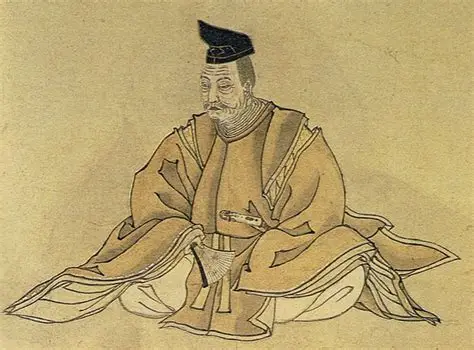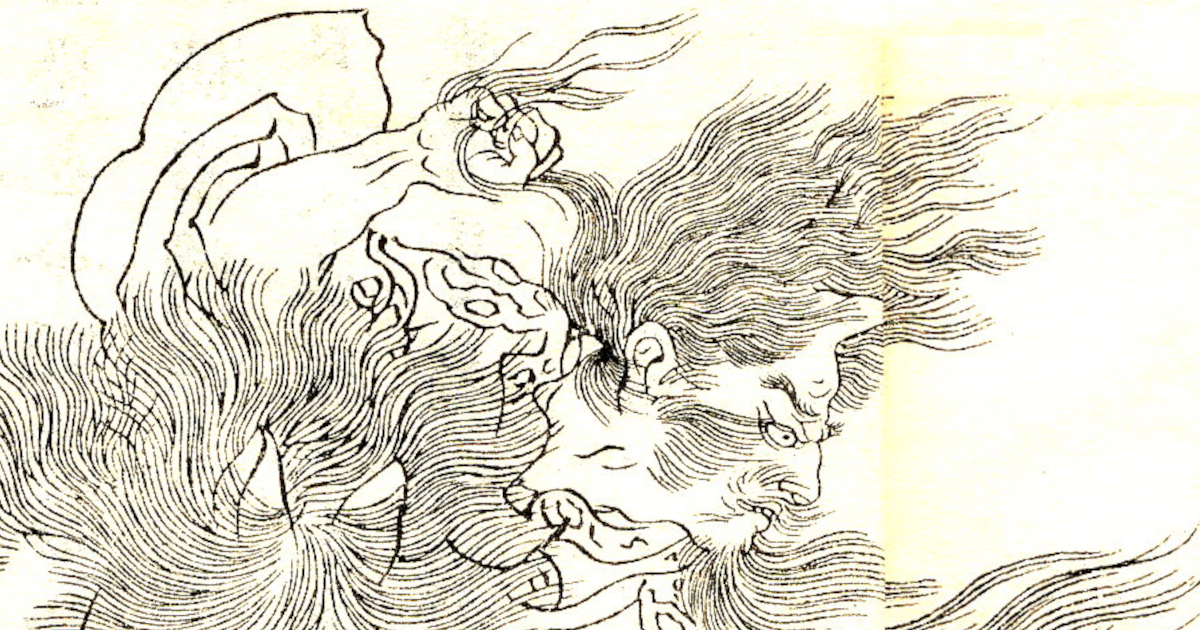
April 24, 1583 — Shibata Katsuie Meets His End at Kitanosho Castle
The 24th day of the 4th month, the 11th year of Tensho (1583).
Kitanosho Castle, Echizen Province.
In what is now the heart of Fukui City, Shibata Katsuie’s final battle was underway.
Surrounding the castle from outside was the army of Hashiba Hideyoshi.
Inside remained Katsuie, who had fled here after his defeat at Shizugatake, his wife Oichi, and the retainers who had stayed loyal to their lord to the very end.
The day before, on the 23rd, Hideyoshi’s forces had launched their assault on Kitanosho Castle.
By that same day, the outer defensive line — the sogamae — had already been breached, and by the time the 24th arrived, all that remained was the last corner of ground centered on the honmaru, the castle’s main compound.
Later chronicles such as the Taikoki record that on this day Katsuie opened the castle gates and sallied out against Hideyoshi’s army seven separate times.
Then, around five in the afternoon.
According to the Mori Family Documents, Katsuie climbed to the tenshu, the castle keep, and called out to the enemy below — telling them, in effect, to watch closely how he cut open his own belly.
At his side stood Oichi.
Barely three days earlier, Katsuie had still been one of the great lords of the Oda house, contesting the leadership of all Japan with Hideyoshi himself.
Why had this same Katsuie been driven into a corner of his own castle in only three days?
The story returns to the moment right after the defeat at Shizugatake.
Kitanosho Castle — the Heart of Echizen That Katsuie Spent Eight Years Building
Kitanosho Castle was not simply a fortress the fleeing Katsuie happened to run into.
It was his own base, built up by Shibata Katsuie himself to govern Echizen.
In the third year of Tensho (1575), Oda Nobunaga suppressed the Ikko-ikki uprising in Echizen and entrusted the province’s rule to Shibata Katsuie.
Katsuie moved into Kitanosho and, while building his castle, pushed forward the development of the castle town around it.
From 1575 onward, temples were relocated and built, and the following year, 1576, a rakuichi decree opening Kitanosho’s markets was issued.
This was never a castle built for war alone.
Katsuie remade Kitanosho into a political city meant to govern Echizen, nurture commerce, and draw people in.
The construction of the castle itself was on a massive scale.
On the 18th day of the 5th month, the 8th year of Tensho (1580), the missionary Luis Frois visited Kitanosho.
Frois recorded that even though Kitanosho Castle was already a splendid fortress, large-scale construction was still underway.
What struck him even more forcefully was the roofing.
The roofs of the castle and the surrounding buildings were finished with beautifully worked stone.
These are thought to have been stone roof tiles made from shakudani stone, quarried locally in Echizen.
After Katsuie’s death, Frois still recalled and wrote down just how smooth and finely shaped that stone had been.
Kitanosho Castle left a striking impression even on the eyes of a contemporary European.
A “Nine-Story” Keep — Just How Enormous Was This Castle?
Any account of Kitanosho Castle inevitably comes back to the “nine-story tenshu.”
In the victory report Hideyoshi sent to Kobayakawa Takakage and others after taking Kitanosho Castle, he wrote that Katsuie had spent several years building the castle, raising a “nine-story” keep atop tall stone foundations.
Whether this should be read literally as a modern nine-story building is a matter of debate.
What is clear, though, is that people of the time perceived Kitanosho Castle as an extraordinarily tall and magnificent fortress.
The entire castle town is also thought to have been enclosed by moats and earthworks, with the Asuwa River forming a natural line of defense to the south.
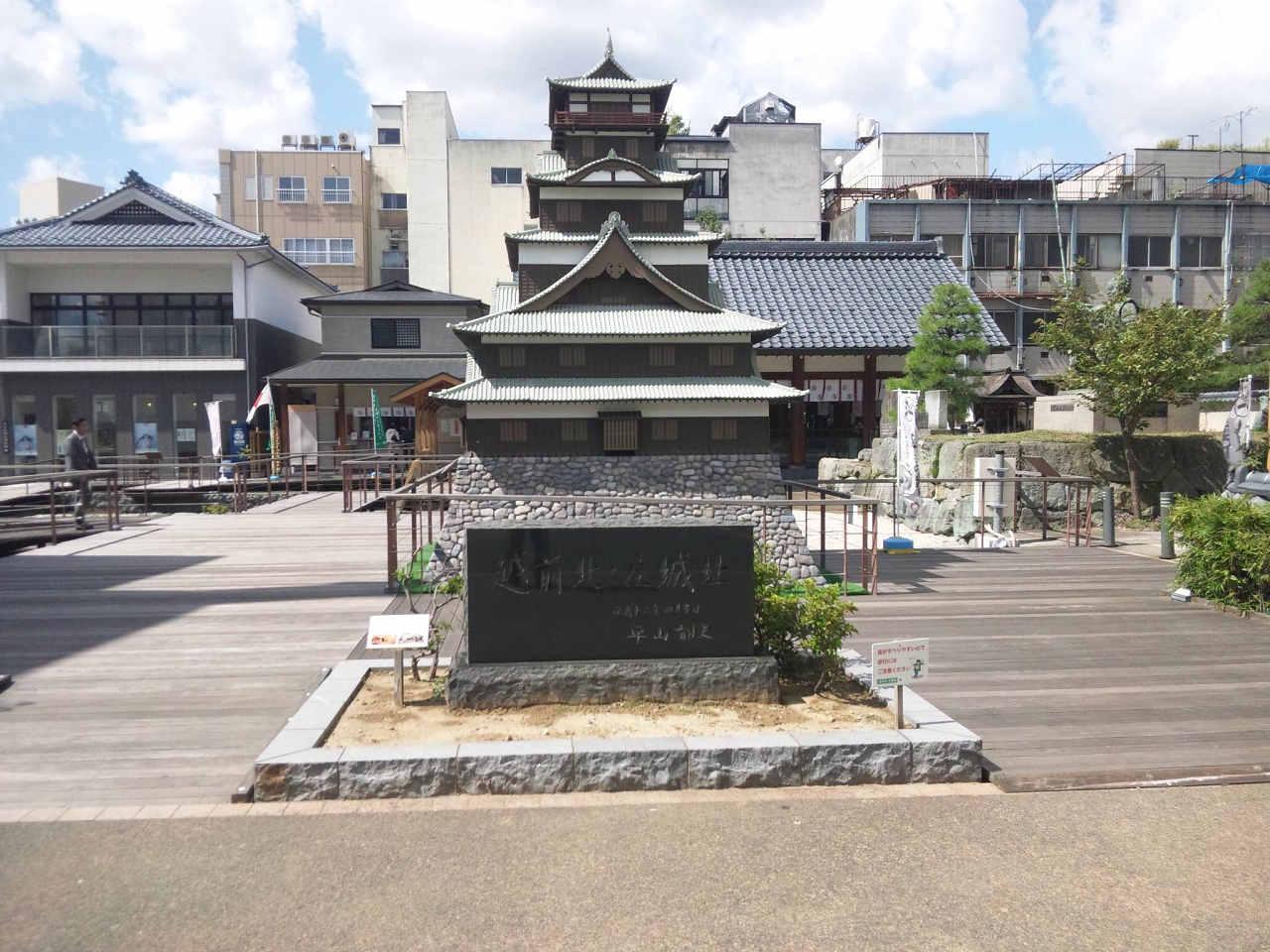
The area around present-day Shibata Shrine in Fukui City is identified as the center of Katsuie’s Kitanosho Castle.
This was the castle Katsuie would choose as the final place of his life.
April 21 — the Shibata Army Collapses at Shizugatake
The 21st day of the 4th month, the 11th year of Tensho (1583).
The Battle of Shizugatake.
(For the full course of the battle, see the Battle of Shizugatake, Part 1 and Part 2 — Japanese only.)
On the Shibata side, Sakuma Morimasa struck at Nakagawa Kiyohide on Oiwayama and killed him.
For a moment, the Shibata forces had scored a major success.
But Morimasa remained at the front instead of pulling back.
In that window, Hideyoshi force-marched back from the direction of Ogaki and fell upon the Shibata army.
Maeda Toshiie also pulled his forces off the field.
The Shibata army collapsed completely.
The men left around Katsuie dwindled, and there was no longer any way to mount a frontal fight against Hideyoshi’s army.
It was here that his retainer Menju Katsuteru made his move.
Katsuteru took up Katsuie’s own battle standard, the golden gohei.
He made it appear that the commander, Shibata Katsuie, was still standing there, drawing Hideyoshi’s forces onto himself in his lord’s place.
In that time, Katsuie slipped away from the battlefield.
Menju Katsuteru kept fighting to let his lord escape.
Katsuie turned north. His destination was Kitanosho Castle.
Katsuie Never Had Time to Regroup
Even after losing at Shizugatake, Kitanosho Castle still stood.
He still had the province of Echizen behind him.
On the surface, it might seem there was a real chance of recovery — return to the castle, gather fresh troops, and settle in for a long siege.
But Hideyoshi never gave him that chance.
This is the single most important point for understanding the Battle of Kitanosho Castle.
The 21st of the 4th month — Shizugatake.
The 22nd — Hideyoshi advances into Echizen.
The 23rd — the assault on Kitanosho Castle begins.
The 24th — the castle falls.
Three days.
Hideyoshi gave Katsuie almost no time to rebuild his forces.
By the 22nd, he had already secured the Fuchu area.
This was Maeda Toshiie’s own territory.
Toshiie, too, went over to Hideyoshi’s side.
What hurt Katsuie was not simply the defeat at Shizugatake itself, but how quickly, even after returning home, any chance of rallying allies around him kept vanishing.
The great castle still stood. But the army meant to defend it had already fallen apart.
No matter how strong Kitanosho Castle itself might be, that made a long siege impossible.
April 23 — Hideyoshi Advances to Mount Asuwa
Hideyoshi took up position near Mount Atago, southwest of Kitanosho Castle — present-day Mount Asuwa.
To Kitanosho’s south flowed the Asuwa River.
Under normal circumstances, this river would have served as a natural barrier protecting the castle.
Hideyoshi’s army crossed it anyway and pressed the attack on Kitanosho Castle.
The assault began on the 23rd of the 4th month.
And that same day, the sogamae was breached.
All that remained was the honmaru.
Kitanosho Castle had been enormous. It had a defensive perimeter that included the whole castle town.
And yet its outer ring was lost in a single day.
It was not that the castle Katsuie had built was weak.
Having just returned from Shizugatake, he had too few men and no time to properly organize the defense.
By this point, it is reasonable to think Katsuie himself had already accepted that the castle would fall the next day.
The Last Night — a Banquet With Katsuie and His Retainers
The night of the 23rd of the 4th month.
Later chronicles such as the Taikoki preserve a story that Katsuie held a final banquet with his senior retainers.
Nakamura Bunkasai. Kojima Wakasa-no-kami.
Those who had stayed in the castle to the very end are said to have gathered and shared cups of sake.
The details of this banquet come from later records, and cannot simply be treated as contemporary historical fact in every particular.
Still, it is confirmed that the sogamae fell that same day, leaving only the honmaru standing.
Which is to say, the circumstances behind the story of the banquet are entirely plausible.
The night of the 23rd.
Katsuie had almost no options left.
Surrender. Flight. Or to share the castle’s fate.
Katsuie chose the last of the three.
Oichi — a Second Fallen Castle
The one who stayed with Katsuie at Kitanosho Castle was Oichi.
The younger sister of Oda Nobunaga.
Her first husband had been Azai Nagamasa.
Oichi had already lived through the fall of a castle once before.
In the first year of Tensho (1573), Odani Castle was attacked by Oda forces.
Azai Nagamasa took his own life.
Oichi left the castle with her three daughters.
Ten years later, it was Kitanosho Castle’s turn to be surrounded.
After the Kiyosu Conference of 1582, Oichi married Katsuie, and around the tenth month of that same year she is thought to have moved to Kitanosho together with her three daughters, Chacha, Ohatsu, and Go.
At Odani Castle, she had walked out alive.
But at Kitanosho Castle, she chose to remain with Katsuie.
Why did she choose death this time?
No contemporary source records Oichi’s own words directly.
So her feelings cannot be reconstructed with any confidence.
What can be said for certain is that she let her three daughters live, and died together with Katsuie.
Chacha, Ohatsu, and Go — Three Sisters Handed Over to Hideyoshi
Oichi’s three daughters were sent out of the castle.
The eldest, Chacha.
The second, Ohatsu.
The third, Go.
All three were handed over to Hideyoshi’s side.
Following the later lives of these three sisters shows just how far the fall of Kitanosho Castle reached into Japanese history.
Chacha would later become known as Yodo-dono.
She became Hideyoshi’s consort, and bore him Toyotomi Hideyori.
Ohatsu became the wife of Kyogoku Takatsugu.
Go became the principal wife of Tokugawa Hidetada, and gave birth to the third shogun, Tokugawa Iemitsu.
Three sisters who walked out of Kitanosho Castle alive went on to marry into
the Toyotomi house.
the Kyogoku house.
and the Tokugawa shogunal house.
The choice Oichi and Katsuie made to send their daughters out of the castle just before their own deaths reaches all the way into the Japanese history that followed.
April 24 — Katsuie Sallies Out Seven Times
The following day, the 24th.
Hideyoshi’s army closed in on the honmaru.
Here begins Katsuie’s final fight.
The Taikoki and other sources record that on this day Katsuie opened the gates and sallied out against the enemy as many as seven times.
Fresh off a defeat.
Few soldiers left. Hideyoshi’s vast army outside.
Even so, Katsuie did not simply wait it out deep inside the castle.
He struck out toward the enemy.
Once. Twice. And a seventh time.
It is worth noting that this figure of “seven times” cannot be confirmed as an exact count from any contemporary record.
Even so, it is certain that Katsuie’s side kept up resistance all the way to the 24th, and that fighting continued to the very end.
Under Oda Nobunaga, Katsuie had ridden the battlefield as a warrior fierce enough to be nicknamed “Charging Shibata.”
His final battle, too, was one in which he threw himself at the enemy rather than simply waiting.
Around 5 P.M. — Katsuie Climbs to the Keep
The fighting continued into the evening.
The Fukui Prefectural History places Katsuie’s death at around five in the afternoon.
Katsuie saw to Oichi’s death, then climbed to the tenshu himself.
He then called out to Hideyoshi’s army below.
According to what survives in the Mori Family Documents,
the gist of his words was to watch closely how he cut open his own belly, so as to learn from it.
Katsuie to the very end.
Not a plea for his life. Not simply an insult hurled at Hideyoshi.
He meant to show the enemy the manner of his own death.
For a warlord of the Sengoku period, seppuku was never simply suicide.
It was also an act of meeting one’s end while preserving one’s martial reputation and pride.
Katsuie turned his own death into a final performance.
Shibata Katsuie and Oichi Die
Katsuie took his own life.
Oichi, too, died at Kitanosho Castle.
Hideyoshi’s own postwar report states that Katsuie killed his wife before taking his own life.
Later stories, by contrast, depicted it as a tragedy of husband and wife meeting their end together.
What can be stated as historical fact is simply this: on April 24, 1583, Shibata Katsuie and Oichi died at Kitanosho Castle.
Set against the arc of Oichi’s own life, this is striking.
Her first husband, Azai Nagamasa, died at Odani Castle. Her second husband, Shibata Katsuie, died at Kitanosho Castle.
At the first fallen castle, she survived along with her daughters. At the second, she let only her daughters live on.
Kitanosho Castle in Flames
With Katsuie’s suicide, Kitanosho Castle was engulfed in flame.
The castle built over years of work. The tall stone foundations. The “nine-story” keep. The stone-tiled roofs that had so struck Frois.
All of it burned to the ground.
Only eight years had passed since Katsuie entered Echizen in the third year of Tensho (1575).
Kitanosho Castle was born together with Shibata Katsuie’s rule over Echizen, and its form was utterly transformed together with his death.
The Fukui Castle ruins that survive today are not Katsuie’s own Kitanosho Castle.
They belong to a new castle built on a different site by Yuki Hideyasu, who entered Echizen in the sixth year of Keicho (1601).
The Kitanosho Castle of Katsuie’s own time is thought to have stood around the area of the present-day Shibata Shrine.
What Made Hideyoshi Truly Formidable Was What Came After the Victory
Looking only at the Battle of Shizugatake, attention naturally falls on the speed of the “Great Return from Mino” as the key to Hideyoshi’s victory.
But what came after is what truly deserves fear.
Hideyoshi did not stop once he had won.
The 21st — he crushes the Shibata army.
The 22nd — into Echizen.
The 23rd — the assault on Kitanosho begins.
The 24th — Katsuie is driven to his death.
From the instant he won, he kept attacking until every chance for his enemy to recover was gone.
Win one battle in the field, and Katsuie might still have rebuilt his power at Kitanosho.
That is exactly why Hideyoshi pursued him all the way to Kitanosho.
He did not merely defeat Katsuie’s army — he erased Katsuie as a political force altogether.
Here we can already see, clearly, the style of fighting that would define Hideyoshi as Japan’s future ruler.
With Katsuie Dead, the Greatest Obstacle Within the Oda House Was Gone
What vanished with the flames of Kitanosho Castle was not one warlord alone.
Shibata Katsuie was among the most senior of all the Oda retainers.
Entrusted with the Hokuriku region, ruling Echizen, he was the man who, after Nobunaga’s death, contested leadership of the Oda house directly against Hideyoshi.
At the Kiyosu Conference, Katsuie and Hideyoshi had clashed over who would succeed Nobunaga.
Katsuie backed Nobunaga’s third son, Oda Nobutaka; Hideyoshi backed Sanposhi, the eldest son of Nobutada.
In the end the matter was settled by installing Sanposhi, but the rivalry between the two men never really cooled afterward.
Hideyoshi’s greatest rival died on April 24, 1583.
Hideyoshi’s rule over all Japan was not completed on this day.
The following year, 1584, still awaited him — the Battle of Komaki and Nagakute, against Tokugawa Ieyasu and Oda Nobukatsu.
Even so, the number of men within the Oda retainer band who could still contest leadership with Hideyoshi on equal terms had shrunk dramatically.
The Shibata army broken at Shizugatake, and Shibata Katsuie dead at Kitanosho.
It was only once both had happened together that Hideyoshi’s victory became truly decisive.
The Girl Who Walked Out of Kitanosho Castle Alive Later Bore Hideyoshi’s Own Son
The Battle of Kitanosho Castle has a strange afterlife.
Katsuie and Oichi died.
Hideyoshi won.
And Chacha, rescued from the castle, in time became Hideyoshi’s own consort.
The child born of that union was Toyotomi Hideyori.
In 1583, a girl who lost her mother and stepfather at Kitanosho Castle would later bear a son to the very man who had brought that castle down.
And thirty-three years afterward, in 1615.
This time it was Chacha herself who met her end amid the fall of Osaka Castle.
Odani Castle. Kitanosho Castle. And Osaka Castle.
The story of Oichi’s family, tossed about again and again by the fall of Sengoku-era castles, did not end at Kitanosho.
Shibata Katsuie’s own era ended on April 24, 1583.
But through the three sisters who walked out of Kitanosho Castle alive, the events of that day carried forward all the way into the ages of the Toyotomi and the Tokugawa.