1056 — A Boy Born Into War
The fourth year of Tengi (1056).
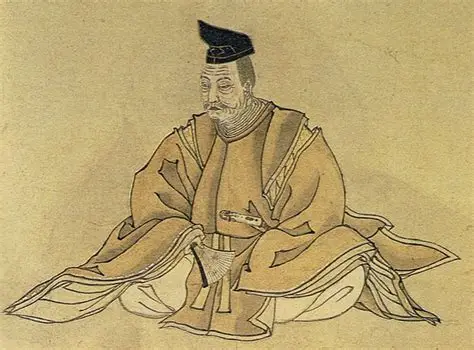
The man who would later found the Oshu Fujiwara clan, Fujiwara no Kiyohira, was born.
His father was Fujiwara no Tsunekiyo.
His mother was a daughter of Abe no Yoritoki.
Through his father he carried Fujiwara blood; through his mother, the blood of the Abe, rulers of the Oku Six Districts.
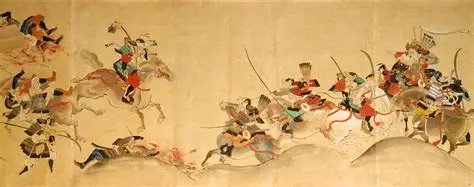
But 1056, the year Kiyohira was born, was also the year fighting between the Abe and Minamoto no Yoriyoshi flared up again.
Triggered by the Akutogawa Incident, Yoriyoshi demanded that Yoritoki hand over his son Sadato. Yoritoki refused, and the Former Nine Years’ War reignited.
His father Tsunekiyo, too, was drawn into the fighting.
From the very moment of his birth, Kiyohira’s life overlapped with a war that would shake all of Oshu. Hiraizumi Town’s own chronology lays out the sequence: Kiyohira born in 1056, the Akutogawa Incident that same year, and Tsunekiyo’s decision to join the Abe side.
His Father, Fujiwara no Tsunekiyo — the Man Who Betrayed Minamoto no Yoriyoshi
Fujiwara no Tsunekiyo had originally stood on Minamoto no Yoriyoshi’s side.
What is more, his wife was a daughter of Abe no Yoritoki — he had a foothold on both sides, with the provincial government and with the Abe.
Then Yoriyoshi killed Taira no Nagahira, another son-in-law of Yoritoki, on suspicion of secretly aiding the enemy.
Tsunekiyo, who was also Yoritoki’s son-in-law, judged that he would be suspected next, and left Yoriyoshi’s army.
He then went over to the Abe side.
From there, Tsunekiyo did not remain merely one warrior among many.
The Mutsu Waki describes him countering the “red tallies” used by the Mutsu provincial government to collect taxes by issuing his own “white tallies” and levying goods under his own authority.
In other words, he did not simply resist Minamoto no Yoriyoshi’s army — he cut directly into the administrative and tax-collecting machinery held by the Governor of Mutsu himself.
To Yoriyoshi, Tsunekiyo became an unforgivable enemy.
The price for that came due in 1062.
1062 — Kiyohira, Age Seven, Loses His Father
The 17th day of the 9th month, the fifth year of Kohei (1062).
Kuriyagawa Stockade, the Abe’s last great stronghold, fell.
Abe no Sadato died of his wounds.
Fujiwara no Tsunekiyo was captured as well.
According to the Mutsu Waki, Minamoto no Yoriyoshi had Tsunekiyo beheaded with a blunted blade.
A deliberately dull sword, used to prolong the suffering of an execution.
Kiyohira was seven by traditional count.
He had lost his father.
His maternal grandfather, Abe no Yoritoki, had already died in 1057.
The Abe, too, had lost the Former Nine Years’ War and vanished from power over the Oku Six Districts.
At seven years old, Kiyohira had lost both of his great backers, on his father’s side and his mother’s, all at once.
Even so, Kiyohira survived.
And the boy was taken in by the very clan that had brought his father down — the Kiyohara. Hiraizumi Town’s chronology records exactly this: Tsunekiyo beheaded in 1062, and the seven-year-old Kiyohira taken into the Kiyohara household of Dewa.
Raised in the House of a Former Enemy, the Kiyohara
After the Former Nine Years’ War, Kiyohira’s mother remarried Kiyohara no Takesada.
Takesada was a son of Kiyohara no Takenori.
Takenori was the very man who, in 1062, marched in at the head of more than ten thousand men to reinforce Minamoto no Yoriyoshi and delivered the decisive blow that destroyed the Abe.
From Kiyohira’s point of view, this was the family that had driven his own father to defeat.
He entered that household together with his mother.
From here, Kiyohira would live as Kiyohara no Kiyohira.
Takesada already had a son, Sanehira.
Takesada and Kiyohira’s mother then had a son of their own, Iehira.
Sorting out the bloodlines takes some work.
Sanehira and Iehira were half-brothers sharing a father.
Kiyohira and Iehira were half-brothers sharing a mother.
Kiyohira and Sanehira shared no blood at all.
Kiyohira, the son of the losing side in the Former Nine Years’ War, grew to adulthood inside the family of the victors, the Kiyohara. Yokote City’s own account likewise places Kiyohira as a member of Takesada’s household, describing Sanehira as his half-brother by their father and Iehira as his half-brother by their mother.
Roughly Twenty Years in the Kiyohara Household
From entering the Kiyohara household in 1062 to the outbreak of the Later Three Years’ War in 1083 was roughly twenty years.
Few sources describe Kiyohira’s day-to-day life during this period in any detail.
What is clear is that the Kiyohara clan itself grew enormously over these twenty years.
After the Former Nine Years’ War, Kiyohara no Takenori became Chinjufu Shogun.
The clan expanded into the Oku Six Districts, once the Abe’s own territory.
And in the Enkyu War of 1070, the Kiyohara backed the court’s own campaign into the far north.
Kiyohira was no orphan of a defeated house living quietly in the shadows.
He came of age inside a Kiyohara clan that was growing into a single vast power spanning both Mutsu and Dewa.
It was precisely that environment which later gave him the standing to take part in the internal struggle that would tear the Kiyohara house apart.
1083 — The Kiyohara Clan Splits
The third year of Eiho (1083).
Conflict within the Kiyohara clan broke into the open.
At the center of the clan stood Kiyohara no Sanehira.
Sanehira clashed with the veteran elder Kimiko no Hidetake.
Kiyohira and Iehira sided with Hidetake.
From here begins the Later Three Years’ War.
The details of the fighting belong to the battle-focused article.
What matters here, in a piece about the man himself, is that Kiyohira was not on Minamoto no Yoshiie‘s side from the very start.
Minamoto no Yoshiie, newly arrived as Governor of Mutsu, initially sided with Sanehira.
Which means Kiyohira, for a time, stood as Yoshiie’s enemy.
Then, in the autumn of 1083, Sanehira died suddenly while on campaign.
The top of the Kiyohara clan vanished without warning.
Kiyohira and Iehira surrendered to Yoshiie.
Later records say Yoshiie divided the Oku Six Districts between the two of them, three districts each.
With Sanehira, their common enemy, now gone, Kiyohira and Iehira found themselves facing each other directly instead.
1086 — His Wife and Children Are Killed
The third year of Ōtoku (1086).
An event occurred that would decisively change the course of Kiyohira’s life.
Iehira struck at Kiyohira.
According to the Yasutomi ki, Kiyohira sensed the danger beforehand.
He hid in the tall grass.
Iehira’s men set fire to Kiyohira’s residence. Kiyohira himself escaped alive.
But his wife, children, and kinsmen did not get away in time.
Kiyohira’s wife, his children, and members of his household were killed.
Kiyohira had lost his father at seven. Roughly twenty-four years later, he now lost his wife and children as well.
And the one who had killed them was his own half-brother, born of the same mother.
This experience cannot be set aside when considering why “mourning the war dead” would come to mean so much in the later half of Kiyohira’s life.
To him, war was not some distant event recorded in a history book.
It was the thing that had taken his father, his wife, and his children.
Borrowing the Strength of the Genji Who Killed His Father
Having survived, Kiyohira went to Minamoto no Yoshiie.
Here we see something of Kiyohira’s clear-eyed grasp of reality.
Yoshiie’s father was Minamoto no Yoriyoshi.
The very man who had ordered Kiyohira’s father Tsunekiyo executed with a blunted blade.
Which is to say, Kiyohira asked for help from the son of the man who had killed his father.
Even so, Kiyohira acted.
He chose survival now over an old grudge.
Bringing down Iehira required Yoshiie’s military strength. Yoshiie, in turn, sided with Kiyohira.
Their first assault on Numa Stockade ended in failure.
Heavy snow and a shortage of food broke Yoshiie’s army, and his soldiers were driven to eating the meat of their own horses.
Even so, the following year, 1087, Yoshiie and Kiyohira attacked Iehira again.
The final stage played out at Kanazawa Stockade.
1087 — Kiyohira Is the One Left Standing
The 14th day of the 11th month, the first year of Kanji (1087).
Kanazawa Stockade fell.
Kiyohara no Takehira was captured and beheaded. Iehira, too, was killed after trying to flee.
Sanehira was already dead. One by one, the men at the center of the Kiyohara clan’s internal war disappeared.
And the one who remained was Kiyohira.
In the Former Nine Years’ War, he had been a seven-year-old child on the losing side. In the Later Three Years’ War, he was the final victor.
Kiyohira took hold of the Oku Six Districts, the Abe’s old homeland. Yokote City’s own account likewise treats the post-war Kiyohira as the man who inherited the Kiyohara’s power and spread his influence across northern Tohoku.
From here, Kiyohira stopped using “Kiyohara,” the name of the family that had adopted him, and began calling himself by his birth father’s surname, Fujiwara.
From Kiyohara no Kiyohira, to Fujiwara no Kiyohira.
The name taken from him at seven had come back, twenty-five years later.
1091 — Two Horses Sent to the Capital
Having won the war, Kiyohira did not choose a path of confrontation with Kyoto.
The 11th month, the fifth year of Kanji (1091).
Kiyohira presented two horses to the Chancellor, Fujiwara no Morozane.
This is where Kiyohira’s skill as a statesman comes through clearly.
His grandfather Abe no Yoritoki and his father Fujiwara no Tsunekiyo had both clashed violently with the Mutsu provincial government.
Kiyohira did not repeat that same path.
In Oshu, he acted as an immense, entrenched regional ruler.
At the same time, he maintained his ties with the Fujiwara regental house and the court in the capital.
Rather than breaking away from Kyoto, he governed Oshu while making use of his connections to central power.
Kiyohira was not a man who ruled Oshu by force alone.
Around 1095 — To Hiraizumi
After the Later Three Years’ War, Kiyohira had been based at Toyoda Hall in Esashi District.
He is said to have then moved his base to Hiraizumi around the second year of Kaho (1095), or possibly around 1099. Hiraizumi Town itself favors around 1095 while noting the 1099 theory alongside it.
Why Hiraizumi?
Hiraizumi made it easy to command the routes along the Kitakami River.
Head south, and it connected to the Mutsu provincial headquarters, and beyond that to Bando and Kyoto.
Head north, and it connected to the Oku Six Districts and the far north of Oshu.
It also linked easily to east-west routes.
It was an outstanding base for gathering the products of Oshu and shipping them toward Kyoto.
Kiyohira transformed the place from the residence of one regional lord into the political, economic, and religious center that moved the whole of Oshu.
Not Gold Alone — the Wealth of Oshu That Supported Kiyohira
Hiraizumi is famous above all for its gold.
Oshu did produce gold.
But gold alone did not support Kiyohira.
Horses. Lacquer. Furs. Seafood. Goods carried down from the far north.
By controlling both the resources and the trade routes of a vast Oshu, Kiyohira drew immense wealth to himself.
And Kiyohira did not spend that wealth only on maintaining his armies.
Temples. Buddhist statues. Sutras. Gardens. A city.
The power he had won in war, he now turned into the power to build Hiraizumi.
1105 — The Founding of Chuson-ji
The second year of Choji (1105).
Kiyohira began the construction of the entire Chuson-ji temple complex.
Temple tradition holds that the Saishoin Tahoto was built this same year.
From here, roughly twenty years followed.
Kiyohira built up a large complex of temple buildings at Hiraizumi.
Halls and pagodas were raised. Buddhist statues were commissioned. Gardens were laid out. Skilled artisans were invited even from Kyoto.
Hiraizumi Town holds that Kiyohira spent roughly twenty years completing Chuson-ji.
What Kiyohira aimed for was not simply a lavish temple.
It was to establish a new order centered on Buddhism in an Oshu that had lived through war.
Around 1117 — Over 50,000 Scrolls of Sutras
Around the fifth year of Eikyu (1117).
Kiyohira launched a massive sutra-copying project.
These are the works now known as the “Chuson-ji sutras” — the complete Buddhist canon written alternately in gold and silver ink on indigo paper.
Each line of scripture was written alternately in gold and silver pigment on deep indigo-dyed paper.
The word “lavish” does not quite cover it.
Completing even a single scroll demanded enormous time and money.
Kiyohira had it done on a staggering scale.
Kiyohira did not simply turn the wealth of Oshu into visible symbols of power.
He poured it directly into Buddhist culture itself.
The man whose father had once been executed, who had himself fled for his life, had by his sixties become a ruler directing the production of tens of thousands of scrolls of scripture.
1124 — the Konjikido
The first year of Tenji (1124).
The building that would come to symbolize Chuson-ji, the Konjikido — the Golden Hall — had its ridgepole raised.
Kiyohira was sixty-nine by traditional count.
The Konjikido survives to this day, the only building that still conveys Chuson-ji’s original form.
Inside and out it was covered in gold leaf, and its interior gathered together some of the most advanced craft of the age — mother-of-pearl inlay using luminous shell, ivory, and gemstones.
Chuson-ji itself describes the Konjikido as embodying Kiyohira’s wish to give concrete form to the vision of the Pure Land paradise.
Looking only at the Konjikido’s splendor, it can seem to belong to another world entirely from Kiyohira’s own life.
But the man who had this golden Amida hall built was someone who had lost his family in two separate wars.
That is precisely what gives it meaning.
1126 — the Wish a 71-Year-Old Kiyohira Left Behind
The 24th day of the 3rd month, the first year of Daiji (1126).
Kiyohira held a ceremony celebrating the completion of Chuson-ji’s great temple complex.
Read aloud on this occasion was the Dedicatory Prayer for the Founding of Chuson-ji.
Kiyohira was seventy-one by traditional count.
Two years before his death.
The prayer sets down a wish for the peace of the state and for the long life and comfort of its people.
Chuson-ji explains that this ceremony led to the temple being ranked among Retired Emperor Shirakawa’s own imperially sponsored temples, recognized as a site of prayer for the nation itself.
What Kiyohira sought was not some isolated utopia confined to Oshu alone.
It was a peaceful order in Oshu built in connection with the court in Kyoto and the wider world of Buddhism.
Why Did Kiyohira Mourn Both Friend and Foe Alike?
Looking back across Kiyohira’s life, the reason he built Chuson-ji comes into focus.
His father, Fujiwara no Tsunekiyo, was executed. His mother’s own Abe clan was destroyed.
He entered the Kiyohara household. He fought against Sanehira. His half-brother Iehira killed his wife and children.
And Kiyohira himself then allied with Yoshiie and destroyed Iehira and Takehira.
Kiyohira was a victim of war. And in the end, he was also its victor.
His was not a life in which only his own side was right and only his enemies were wrong.
He, too, had stood on the side responsible for many lives lost to war.
That is precisely why Kiyohira sought a form of mourning that reached beyond friend and foe alike.
Hiraizumi Town likewise describes Kiyohira as a man who pursued the founding of Chuson-ji to console the spirits of everyone, on both sides, who had died across years of prolonged warfare.
For Kiyohira, Hiraizumi was not a place built to forget war.
It was a place built to carry the memory of war forward into the next age.
1127 — Still an Active Ruler Past Seventy-One
In his later years, Kiyohira was not absorbed in Buddhism alone.
The second year of Daiji (1127).
A dispute broke out with a provincial governor over a newly established shoen estate.
Well past seventy, he remained at the center of the politics of land and rights.
This matters precisely because it keeps Kiyohira from being flattened into some “saint who hated war.”
Kiyohira was a ruler grounded in the real world.
He held territory. He negotiated with the court. He amassed wealth. He fought political battles as well.
It was that power that made it possible to realize the enormous undertakings of Chuson-ji and the Konjikido.
July 1128 — Fujiwara no Kiyohira Dies at 73
The 7th month, the third year of Daiji (1128).
Fujiwara no Kiyohira died.
Seventy-three by traditional count. Hiraizumi Town’s own chronology likewise records his death in the 7th month of 1128, at seventy-three.
His remains were laid to rest inside the Konjikido, the hall he himself had built.
To this day, the remains of Kiyohira and the generations of Oshu Fujiwara who followed him rest on the altar of the Konjikido.
1056.
He was born in the middle of a war.
He lost his father at seven. He was raised in the household of a former enemy, the Kiyohara. In his thirties, his wife and children were killed.
He allied with the son of the Genji warrior who had killed his father, and brought down his own half-brother.
He inherited the Kiyohara’s power and returned to the surname “Fujiwara.”
And then he moved to Hiraizumi.
What Kiyohira left behind in the end was not simply a victory on the battlefield.
The golden Konjikido, and a vast body of sacred scripture.
And Chuson-ji itself — built to mourn, without distinction between friend and foe, the lives that war had taken.
Kiyohira began his life as the son of a defeated house in the Former Nine Years’ War, and ended it seventy-three years later as Fujiwara no Kiyohira, first head of the Oshu Fujiwara clan.