September 18, 764 (Tenpyō-hōji 8).
On the western shore of Lake Biwa, in Takashima District, Ōmi Province.
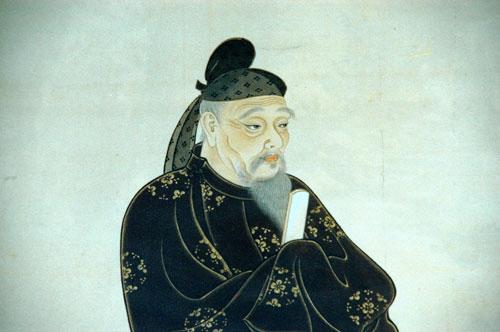
Fujiwara no Nakamaro, who once rose to the highest ranks of the imperial court, was cornered by the pursuing army.
Attempting to advance into Ōmi, he found the bridges burned; heading towards Echizen, the passes were blocked.
Defeated by the pursuing forces at Miozaki, Nakamaro tried to escape across the lake by boat from Katsuno Kie.
However, he was captured by Ishimura no Muraji Ishitate and beheaded.
It is said that 34 of his family and followers were also executed on the lakeshore.
Just seven days earlier.
On the morning of September 11, Nakamaro still held the highest rank of Grand Minister and Senior First Rank.
How did a man who wielded such power in the Nara-period court find himself ousted from the capital and dead by the shores of Lake Biwa in just eight days?
The Rebellion of Fujiwara no Nakamaro.
This political upheaval, later known as the “Rebellion of Emi no Oshikatsu,” quickly escalated from a struggle over imperial seals and internal documents in Heijō-kyō to an armed conflict.
1. Fujiwara no Nakamaro and Emperor Junnin
Fujiwara no Nakamaro was the son of Fujiwara no Muchimaro, the eldest son of Fujiwara no Fuhito.
Leveraging his relationship with his aunt, Empress Kōmyō, he expanded his influence in the court, becoming Shibi no Daijō in 749 and Shibi no Naishō in 757.
In the same year, during the Tachibana no Naramaro Incident, many of the princes and nobles opposing Nakamaro were purged.
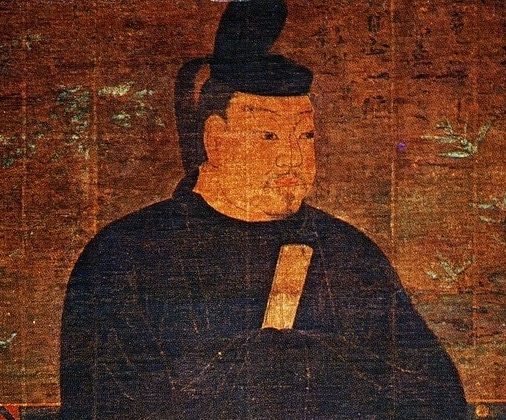
Prince Ōi, who became the crown prince, was closely aligned with Nakamaro, and in 758, he ascended the throne as Emperor Junnin after Empress Kōken abdicated.
Nakamaro was granted the name “Fujiwara no Emi no Asomi Oshikatsu” and rose to the position of Grand Minister in 760.
It was a time when he stood at the pinnacle of power as a subject.
However, in the same year, his political patron, Empress Kōmyō, passed away.
The power dynamics within the court gradually began to shift thereafter.
2. The Conflict Between Empress Kōken and Emperor Junnin
In 761, Empress Kōken and Emperor Junnin moved to the Horamiyake Palace in Ōmi Province.
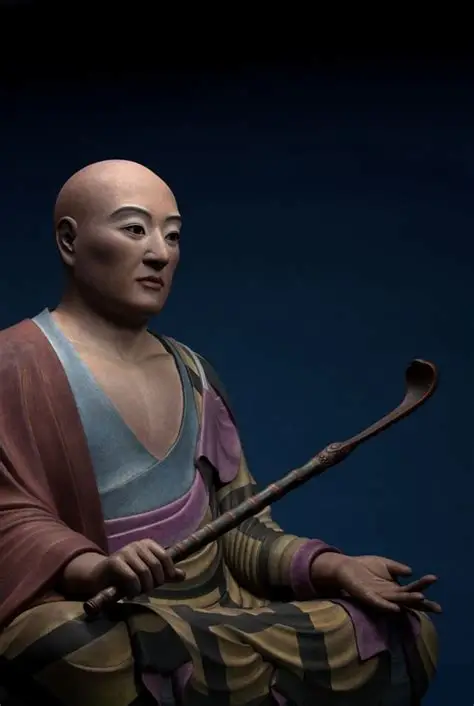
During this time, Empress Kōken fell ill and grew increasingly reliant on the monk Dōkyō, who tended to her.
When Emperor Junnin criticized the relationship between the Empress and Dōkyō, their conflict came to the forefront.
In 762, Empress Kōken, having returned to Heijō-kyō, entered Hokke-ji Temple and on June 3 declared a significant change in the governance of the state.
She announced that she would personally handle the nation’s critical matters and rewards and punishments, while Emperor Junnin would be responsible for routine governmental affairs.
For Nakamaro, who supported Emperor Junnin, the Empress’s reassertion of political leadership marked a major shift.
Nakamaro advanced his sons, Masaki, Kunimaro, and Asomaro, to key government positions and placed family members and close associates in regional posts.
Meanwhile, on Empress Kōken’s side, Dōkyō was appointed as Shōsōzu in 763.
The tension between the Empress and Dōkyō’s faction and that of Emperor Junnin and Nakamaro continued to escalate.
3. September 2, 764 — Military Authority Granted to Nakamaro
On September 2, 764, in the eighth year of the Tenpyō-hōji era.
Nakamaro was appointed as “Governor-General of Military Affairs for the Four Home Provinces, Three Barrier Stations, and the Provinces of Ōmi, Tanba, and Harima.”
This was a special position granting him the authority to summon and inspect soldiers from the regions related to the Four Home Provinces, Ōmi, Tanba, Harima, and the Three Barrier Stations.
Nakamaro sought to gather military forces.
However, his movements were reported to Empress Kōken’s side by Takaoka Hiramaru and Ōtsu Ōura.
Before Nakamaro could amass sufficient troops, the Empress’s faction acted first.
Their target was the imperial seals and the inner seal held by Emperor Junnin.
4. September 11 — The Struggle for the Imperial Seals
On September 11.
Empress Kōken dispatched the minor counselor, Prince Yamamura, to the Chūgūin where Emperor Junnin resided, to retrieve the imperial seals and the inner seal.
The imperial seals were necessary for moving messengers using the station system, and the inner seal was used for imperial orders.
Together, they were referred to as the “imperial seals.”
Upon learning of this move, Nakamaro sent his son Fujiwara no Kunimaro (Kusumaro) and others to reclaim the seals.
Kunimaro initially succeeded in retrieving them.
However, Kōken’s allies, Sakanoue no Karitamaro and Oshika no Shimatarashi, pursued and shot Kunimaro dead.
Nakamaro then sent in the Middle Guard Officer, Yatabe no Oi, but he too was killed.
On the same day, Nakamaro and his descendants were stripped of their official ranks, and the Fujiwara clan name was revoked.
Their estates were confiscated, and orders were issued to secure the Three Barrier Stations of Suzuka, Fuwa, and Aibara.
Nakamaro, who had been at the pinnacle of the court, found himself on the run within a single day.
5. Escape from the Capital Without Emperor Junnin
What was most significant for Nakamaro was his inability to act alongside Emperor Junnin.
With Empress Kōken’s side having taken the initiative, Nakamaro left Heijō-kyō without the Emperor.
Nakamaro took the Great Council of State’s seal and headed from Uji towards Ōmi.
On the following day, September 12, an imperial edict was issued to the provinces of the Hokurikudō, instructing them not to obey orders using the Great Council of State’s seal that Nakamaro had taken.
Ōmi was a region where Nakamaro had long served as a provincial governor.
However, the pursuing forces did not merely follow Nakamaro’s trail.
They hurried along alternate routes to cut off his path.
6. The Burning of Seta Bridge
Nakamaro headed towards Omi from the direction of Uji.
In response, Yamashiro no Kami, Kusakabe no Komaro, and Saeki no Itachi hurried along the Tahara Road and entered Omi ahead of Nakamaro.
The pursuing forces set fire to the Seta Bridge over the Seta River, blocking Nakamaro’s path.
The Shoku Nihongi records that upon seeing the bridge in flames, Nakamaro changed his course and headed towards the Takashima District.
Nakamaro was forced to move north along the western shore of Lake Biwa.
Beyond lay the province of Echizen.
7. Proclaiming Shioyaki as “The Current Emperor”
Nakamaro was unable to bring Emperor Junnin with him.
During his escape, he declared Prince Hikami no Shioyaki, a member of the imperial family, as “The Current Emperor.”
Prince Shioyaki was the son of Prince Nittabe, a child of Emperor Tenmu, and had been considered a candidate for crown prince in 757.
The Shoku Nihongi notes that Nakamaro proclaimed Prince Shioyaki as “The Current Emperor.”
Separated from Emperor Junnin, Nakamaro’s faction set up an alternative claim to the throne, opposing the faction of Empress Koken.
Meanwhile, the pursuing forces had already anticipated Nakamaro’s next move to Echizen.
8. The Road to Echizen—Arafuse Barrier
The governor of Echizen was Nakamaro’s son, Fujiwara no Karakatsu.
Nakamaro attempted to head north along the western shore of Lake Biwa towards Echizen.
The Hokuriku Road connecting Omi to Echizen was guarded by the Arafuse Barrier, one of the three major barriers alongside Suzuka and Fuwa.
Its exact location remains uncertain to this day.
Saeki no Itachi and others from the pursuing forces entered Echizen ahead of Nakamaro and killed Governor Karakatsu.
The Arafuse Barrier was also secured by the pursuing army.
Nakamaro first sent several dozen soldiers to break through the barrier.
However, they were repelled by the pursuing forces.
The initial attempt to advance into Echizen ended in failure.
9. The Ship to Shiotsu—A Second Attempt
Nakamaro sought another route.
He attempted to sail towards Shiotsu on the northern shore of Lake Biwa.
However, the winds hindered the ship’s progress.
Disembarking, Nakamaro’s party once again aimed for the Arafuse Barrier via the mountain paths.
Here too, they were blocked by Saeki no Itachi’s forces.
According to records from the Shoku Nihongi lineage, 8 to 9 members of Nakamaro’s side were killed by arrows.
With the Seta Bridge blocked and unable to break through to Echizen, Nakamaro’s group retreated to the Miozaki area in Takashima District, Omi Province.
10. September 18—The Battle of Miozaki
September 18.
Nakamaro’s forces clashed with the pursuing army near Miozaki in Takashima District, Omi Province.
The pursuers included Saeki no Mino and Ono no Makoto.
As the battle raged on, the forces of Fujiwara no Kurashitamaro joined the pursuit.
Nakamaro’s side crumbled in this conflict, retreating to Katsuno Onie on the shores of Lake Biwa. The World Encyclopedia also recounts how Nakamaro was caught in a pincer attack by the main pursuit forces at Miozaki, subsequently fleeing to Katsuno Onie.
Since Nakamaro left the capital, the pursuing army had systematically secured strategic locations along his route.
The defeat at Miozaki further narrowed the escape routes available to him.
11. Katsuno Onie—The End of Fujiwara no Nakamaro
After their defeat at Miozaki, Nakamaro and his group retreated to Katsuno Onie.
Katsuno Onie is identified with the area around present-day Katsuno in Takashima City, Shiga Prefecture.
Even here, the fighting with the pursuing forces continued.
Nakamaro attempted to escape by boat onto Lake Biwa but was captured by Ishimura no Muraji Ishitate.
Fujiwara no Nakamaro was beheaded.
It is said that 34 members of his family and followers were also executed on the lakeshore.
Hikami no Sakaibe, who was considered the “current emperor,” also lost his life.
From the struggle for the imperial seal on September 11 to September 18.
In just eight days, Fujiwara no Nakamaro’s military campaign came to an end.
12. Why Did Nakamaro Fall in Just Eight Days?
Up until the eve of the conflict, Nakamaro held the highest rank of Taishi and Shoichii, having placed his family and close associates in key positions in both the central and local governments.
Nevertheless, he lost the initiative before he could convert his political status into sufficient military power.
On September 11, the side of Empress Koken seized the imperial seal.
Nakamaro left the capital without being able to act in concert with Emperor Junnin.
When he headed towards Omi, the bridge at Seta was burned.
In Echizen, he lost his son Kankachi, who was the provincial governor, and his advance to Arafuseki was blocked.
Even when he changed course, the pursuing forces anticipated his moves, and he was obstructed by the main army at Miozaki.
The pursuit forces secured transportation routes and strategic points one after another before Nakamaro could regroup a large force at his place of refuge, leading to his defeat in just eight days.
Kibi no Makibi is also said to have been involved in the military response on Empress Koken’s side, acting to cut off Nakamaro’s path.
Nakamaro’s defeat was not determined by the final battle on September 18 alone.
The path to defeat began when he was outmaneuvered in the capital on September 11.
13. The Deposition of Emperor Junnin and the Ascension of Empress Shotoku
After Nakamaro was defeated, the political structure of the court underwent significant changes.
September 20.
Dokyo was appointed as the Great Minister Zenji.
On October 9, Emperor Junnin was deposed and sent to Awaji Province.
Empress Koken was re-enthroned as Empress Shotoku. The Yamakawa Japanese History Dictionary also notes her reign as Empress Shotoku beginning on October 9, 764.
Emperor Junnin is said to have died in 765 after attempting to escape from Awaji.
Under Empress Shotoku, Dokyo further elevated his status, becoming Daijo Daijin Zenji in 765 and then ascending to the position of Ho-o in 766.
On September 2, Fujiwara no Nakamaro was granted extensive military authority, but just 16 days later, he met his end on the western shore of Lake Biwa.
The political turmoil that began with the conflict between Empress Koken and Emperor Junnin escalated into armed clashes over the imperial seal, moving the battlefield to Seta Bridge, Aifuse Barrier, Miozaki, and Katsuno Onie.
After Nakamaro’s death, Emperor Junnin was deposed, and Empress Koken reascended the throne as Empress Shotoku.
The eight days of September 764 marked not only the downfall of a single powerful figure, Fujiwara no Nakamaro, but also a significant shift in the political center of the Nara period.
Why did Fujiwara no Nakamaro, at the pinnacle of his power, ultimately resort to raising an army?
From the Tachibana Naramaro Incident to the Emi Oshikatsu Rebellion, this book is recommended for those who wish to delve deeper into Nakamaro’s rise and fall.
👉 Read more about the life of Fujiwara no Nakamaro

🥒 After reading about Nara period history, why not try some Nara specialties like Nara pickles?
After savoring history, enjoy the flavors of Nara.