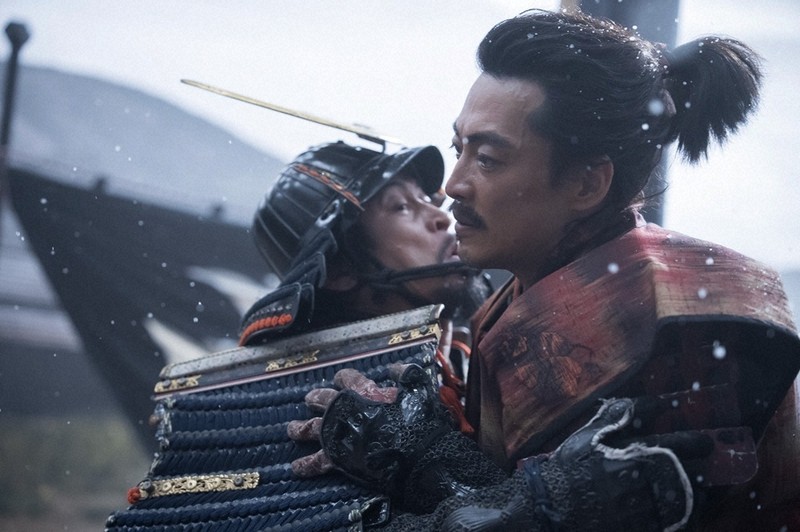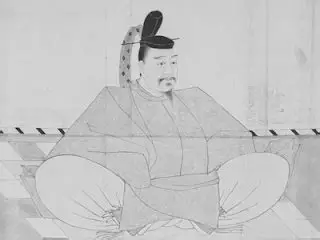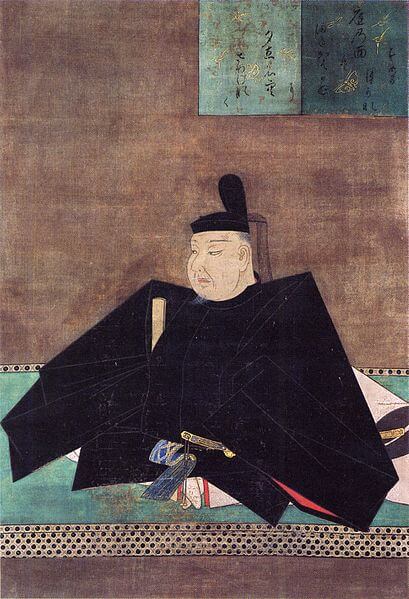
In May of 1180, preparations were underway in Kyoto for an attack on Enryaku-ji Temple.
Prince Mochihito, the son of Emperor Go-Shirakawa, had taken refuge in the temple, calling for the overthrow of the Taira clan.
The punitive force included members of the Taira clan such as Taira no Munemori, Tomomori, Shigehira, and Koremori, with Minamoto no Yorimasa also among their ranks.
Yorimasa was 77 years old. He had served the imperial court in Kyoto for over 20 years since the Heiji Rebellion, and in 1178, he had risen to the rank of Junior Third Rank, joining the ranks of the court nobles.
He was an exceptional elder statesman within the Seiwa Genji, known as “Gen Sanmi.”
However, on the night of May 21st to the early morning of the 22nd, Yorimasa left his residence at Konoe Riverbank.
Leading his family, including his heir Nakatsuna, he headed towards Enryaku-ji, the very place he was supposed to attack.
By the next morning, he had joined Prince Mochihito’s camp.
The man who had not sided with Minamoto no Yoshitomo during the Heiji Rebellion and had climbed the ranks in Taira-dominated Kyoto, reaching the status of a court noble at 75, had now abandoned his position at the end of his life.
The “Tale of the Heike” depicts the seizure of Nakatsuna’s prized horse by Taira no Munemori, and the public humiliation that followed, as the catalyst for Yorimasa’s uprising. However, tracing Yorimasa’s 77 years reveals that he was not a man defined by a single horse.
Renowned as a master archer, he was later celebrated as the hero who shot the nue.
He composed waka poetry at the court for many years, survived the Hogen and Heiji disturbances, and led troops as the court’s military force during temple and shrine protests.
Why did Yorimasa, who had risen to “Gen Sanmi” during Kiyomori’s era, turn against the Taira at the age of 77?
A Warrior Born in Settsu Genji, Serving in Kyoto
Minamoto no Yorimasa was born in 1104, the son of Minamoto no Nakamasa.
Some sources cite his birth year as 1105, but it is generally accepted as 1104. His mother is said to have been the daughter of Fujiwara no Tomomitsu.
Yorimasa’s family belonged to the Settsu branch of the Seiwa Genji, tracing their lineage back to Minamoto no Yorimitsu. Although they shared a common ancestor with the Kawachi Genji, which included figures like Minamoto no Yoshitomo and Yoritomo, the branches diverged during the generation of Minamoto no Mitsunaka‘s children.
The Settsu Genji were based in Settsu, close to Kyoto, and had long served as court warriors for the imperial court and cloistered emperors. Yorimasa’s father, Nakanori, held the position of Hyogo no Kami and frequently visited the court during the reign of Emperor Toba.
Nakanori was also known as a poet, and Yorimasa joined the imperial poetry circles from a young age.
Details of Yorimasa’s early years are scarce, but he served as a kuroudo (chamberlain), advanced to the rank of Junior Fifth Rank, Lower Grade, and in the second year of Kyuuju (1155), he became Hyogo no Kami. The Hyogo Bureau was responsible for managing weapons and armor, with its head being the Hyogo no Kami.
Yorimasa’s role was quite different from the image of a “warlord” in later periods.
He lived in Kyoto, received orders from the court, and commanded troops, growing older as a court warrior.
The Hogen Rebellion at Age 53
In July of the first year of Hogen (1156), following the death of Emperor Toba, the Hogen Rebellion erupted in Kyoto.
On the side of Emperor Go-Shirakawa were Taira no Kiyomori and Minamoto no Yoshitomo, while on the side of the retired Emperor Sutoku were Minamoto no Tameyoshi, Minamoto no Tametomo, and Taira no Tadamasa. Yorimasa sided with Emperor Go-Shirakawa. He was 53 years old by traditional Japanese counting.
In this conflict, both the Minamoto and Taira clans were divided. Yorimasa and Yoshitomo stood on the same side, while Yoshitomo’s father, Tameyoshi, was on the opposing side. It was a time when allegiance and political connections took precedence over bloodlines.
The battle concluded with a victory for Emperor Go-Shirakawa’s forces, and Tameyoshi, Tadamasa, and others were executed. Yorimasa remained on the winning side.
Three years later, during the Hogen Rebellion, Minamoto no Yoshitomo, who had been an ally, raised an army in Kyoto.
Heiji Rebellion—Yoshitomo’s Fall and Yorimasa’s Stay in Kyoto
In December of the first year of Heiji (1159), Fujiwara no Nobuyori and Minamoto no Yoshitomo seized control of Emperor Go-Shirakawa and killed Shinzei. Returning from a pilgrimage to Kumano, Taira no Kiyomori welcomed Emperor Nijo to Rokuhara and launched a counterattack.
Ultimately, Yorimasa parted ways with Yoshitomo and sided with Kiyomori. Although the details are well-documented in war tales like the ‘Heiji Monogatari,’ Yorimasa’s decision not to share Yoshitomo’s fate and remain in Kyoto is evident from his subsequent official career.
Yoshitomo was killed in Owari while fleeing to the eastern provinces. His eldest son, Yoshihira, was captured and executed, and Yoritomo was exiled to Izu. The core of the Kawachi Genji disappeared from Kyoto.
Yorimasa stayed at the court and continued his duties in the imperial administration.
Though both Yoshitomo and Yorimasa belonged to the Seiwa Genji, they led different branches of the family.
From the perspective of the Settsu Genji, who served the court, there was little reason to follow Yoshitomo’s uprising to the end.
Rising Ranks in Kyoto During the Taira’s Peak
After the Heiji Rebellion, Kiyomori rapidly ascended the ranks, becoming the Grand Minister of State in the second year of Nin’an (1167).
Members of the Taira clan also began to emerge as high-ranking courtiers, increasing their influence in Kyoto’s politics.
Yorimasa’s official rank also rose during this period.
In the first year of Nin’an (1166), he was granted the privilege of attending court and promoted to Senior Fifth Rank, Lower Grade. The following year, he advanced to Junior Fourth Rank, Lower Grade, and later to Junior Fourth Rank, Upper Grade. In the second year of Kaō (1170), he served as the Acting Governor of the Right Capital District.
He was not elevated as a retainer of the Taira but steadily built his position as a Kyoto warrior serving the court. He avoided direct confrontation with Kiyomori, continuing his work in Kyoto as the Taira’s influence grew stronger.
At that time in Kyoto, large temples like Enryakuji and Kofukuji frequently shook the court with their powerful protests.
In December of the first year of Kaō (1169), when the monks of Enryakuji moved to accuse Fujiwara no Narichika, Yorimasa was mobilized as a Kyoto warrior. His name also appears in the Enryakuji protest of the third year of Angen (1177).
Even past the age of 70, Minamoto no Yorimasa had not stepped away from his duties in court security. The veteran samurai who survived the Heiji Rebellion was still deemed necessary as a military force for the court.
Yorimasa and the Slaying of the Nue—A Tale of Valor Spread Through the Ages
One of the stories that made Yorimasa’s name widely known is the slaying of the Nue.
In “The Tale of the Heike,” during the reign of Emperor Konoe, a black cloud would cover the palace at night, accompanied by eerie sounds. Troubled by this, the emperor summoned Yorimasa, renowned for his archery skills.
When Yorimasa shot an arrow into the black cloud, a strange creature fell. In the popular version of the tale, it had the head of a monkey, the body of a raccoon dog, the tail of a snake, and the limbs of a tiger. The combination of body parts varies in different versions, and the creature’s appearance evolved as the story was passed down through generations.
There is no contemporary historical record confirming that a monster appeared at Emperor Konoe’s court and that Yorimasa shot it down. The slaying of the Nue is best viewed as a tale of valor that spread through works like “The Tale of the Heike.”
This legend is also linked to an artifact that survives to this day. The Important Cultural Property “Tachi Meitsugu (known as Shishi-ō)” housed in the Tokyo National Museum is said to have been awarded to Yorimasa for his feat in slaying the Nue.
Yorimasa’s fame as an archer grew into tales of monster-slaying in later generations. At the same time, there was another world Yorimasa was deeply involved in, alongside his archery.
A Warrior Poet in the Literary Circles for Decades
Yorimasa was not a samurai who merely dabbled in waka poetry as a hobby.
From his youth, he participated in poetry gatherings and composed one hundred poems, leaving his name in collections such as “Wakatada House’s Two Hundred Poems,” “Chūgūryō Shigeyasu’s Poetry Contest,” “Kenshunmon’in Northern Face Poetry Contest,” “Hirota Shrine Poetry Contest,” and “Wakamiya Shrine Poetry Contest.”
He frequented the poetry salon of Shun’e and was a long-standing figure in the literary circles of the era, alongside poets like Fujiwara no Shunzei, Fujiwara no Kiyosuke, and Fujiwara no Sanetada.
Many of his poems were included in imperial anthologies, and his personal collection “The Collected Poems of Minamoto no Yorimasa” has been passed down. His daughter, Nijōin Sanuki, also left her mark as a poet.
Yorimasa was a warrior with a bow, yet he was deeply immersed in court culture. “The Tale of the Heike” places waka poetry at the center of Yorimasa’s rise and fall, reflecting his actual career.
Regarding his court rank,
“Unknown to others, the mountain guardian of Ōuchi
Sees the moon only through the trees”
he composed, and this poem is said to have led to his permission to enter the court.
In his later years, unable to rise from the fourth to the third rank, he lamented,
“With no means to climb, beneath the trees I remain
Gathering acorns to make my way in the world”
“The Tale of the Heike” recounts this poem, which cleverly plays on the words “acorn” and “fourth rank,” and in the story, Kiyomori hears it and arranges for Yorimasa’s promotion.
There are even more intriguing records in contemporary diaries regarding his actual promotion to the junior third rank.
Promoted to Junior Third Rank at 75—Why Kiyomori Supported Yorimasa
On December 24, 1178, in the second year of the Jishō era, Yorimasa was promoted to the junior third rank at the age of 75.
The junior third rank and above were considered court nobles, making this an extraordinary promotion for a samurai of the Seiwa Genji lineage.
Kujō Kanezane noted in his diary “Gyokuyō” that it was “an unprecedented event,” and recorded that the promotion was at the request of Kiyomori.
Moreover, “Gyokuyō” even preserves the reasons why Kiyomori advocated for Yorimasa.
Taira no Kiyomori stated that both the Minamoto and Taira clans have historically been responsible for defending the nation. He noted that many of the Minamoto warriors had been punished in past conflicts, leaving only Minamoto no Yorimasa. Kiyomori praised Yorimasa as “honest in nature” and “renowned for his bravery,” and, hearing that he was over seventy and gravely ill, petitioned for him to be granted the rank of Third Rank before he passed away.
Reading this record, the uprising in 1180 seems all the more surprising.
Kiyomori did not treat Yorimasa as a dangerous anti-Taira figure. Since the Heiji Rebellion, he had been recognized as a veteran Minamoto warrior serving in Kyoto and was elevated to the rank of court noble. Yorimasa accepted this promotion.
Only about 1 year and 5 months passed until the uprising.
Eight Days After the Political Upheaval of the Third Year of Jisho, He Takes Religious Vows
On November 28, 1179, in the third year of Jisho, Yorimasa took religious vows.
This was about 11 months after he was promoted to Junior Third Rank.
Eight days earlier, Emperor Go-Shirakawa had been moved to the Toba Palace, and his cloistered rule was halted.
On November 14, Kiyomori returned from Fukuhara, dismissed the regent Matsudono Motofusa, and removed many of Emperor Go-Shirakawa’s close courtiers and officials from office. By the 20th, he had isolated the emperor from political affairs.
This was the Political Upheaval of the Third Year of Jisho.
No historical records directly link Yorimasa’s taking of vows to the political upheaval. Consideration must be given to his age, over 75, his illness, and the fact that he had achieved the long-desired rank of Junior Third Rank.
However, the politics of the court, to which Yorimasa had devoted nearly half a century, underwent significant changes during this period.
In February of the following year, Jisho 4 (1180), Emperor Takakura abdicated, and Kiyomori’s grandson, Prince Tokihito, ascended the throne as Emperor Antoku. He was a mere three years old.
That spring, Prince Mochihito, a son of Emperor Go-Shirakawa, began to take action.
The Famous Horse “Kinoshita”—How the ‘Tale of the Heike’ Depicts the Conflict with Munemori
The ‘Tale of the Heike’ begins its account of Yorimasa’s betrayal of the Taira with the story of a horse.
His eldest son, Nakatsuna, owned a famous horse named “Kinoshita.” Taira no Munemori heard of its reputation and requested it be given to him.
Though reluctant, Nakatsuna was persuaded by his father, Yorimasa, to hand it over.
Munemori, having acquired the horse, called it “Nakatsuna” and humiliated it by ordering, “Put a saddle on Nakatsuna,” and “Bring Nakatsuna out,” in front of others.
Upon learning that his son had been made a laughingstock, Yorimasa was enraged and urged Prince Mochihito to move against the Taira.
The ‘Tale of the Heike,’ in its fourth volume “The Contest,” presents this as the catalyst for the uprising.
No contemporary records corroborate this anecdote. Moreover, Yorimasa had recently been promoted to Junior Third Rank at Kiyomori’s request. It is implausible to attribute his relationship with the Taira solely to long-standing personal grievances.
After the Political Upheaval of 1179, the cloistered rule of Emperor Go-Shirakawa was halted, and Kiyomori’s grandson ascended the throne. Prince Mochihito, despite being Emperor Go-Shirakawa’s son, was not granted the title of imperial prince, distancing him from the line of succession. Minamoto no Yorimasa himself had taken vows the previous year, marking the end of his long court life.
In this context, Yorimasa and Prince Mochihito formed an alliance. The historical records do not reveal when exactly this plan began to take shape or what decisive factor prompted Yorimasa to act.
The Night of Joining the Pursuit Army, Rushing to Onjo-ji
When Prince Mochihito’s plan was exposed, he fled Kyoto and took refuge in Onjo-ji Temple. The Taira clan prepared to attack the temple and organized a pursuit army.
Yorimasa was among them.
Alongside Taira clan members such as Munemori, Tomomori, Kiyomori, Norimori, and Koremori, Minamoto no Yorimasa was counted among those pursuing. At least until this point, the Taira were unaware of Yorimasa’s defection.
On the night of May 21st to the early hours of the 22nd, Yorimasa left his residence at Konoe Riverbank. His family members, including Nakatuna and Kanetuna, followed.
Their destination was Onjo-ji.
At 75, the rank of Junior Third Rank he had achieved, and the position he had maintained in Kyoto since the Heiji Rebellion, would be lost here.
Yorimasa joined Prince Mochihito’s camp.
Aside from the tale of his famed horse “Kinoshita,” little is known of Yorimasa’s inner thoughts.
Only the fact remains that the elder statesman, once highly regarded by Kiyomori, turned against the Taira two years later.
At 77, to Uji — The Final Four Days
Once at Onjo-ji, Yorimasa and Prince Mochihito sought support from Enryaku-ji and Kofuku-ji. Enryaku-ji did not fully join, making it difficult for Onjo-ji alone to face the Taira forces. Thus, they decided to seek refuge at Kofuku-ji in Nara.
On the night of May 25th, Prince Mochihito and Yorimasa departed Onjo-ji. The following day, on the 26th, they were caught by the Taira forces at Uji.
The Battle of Uji River is covered in detail in another article, so here we focus on Yorimasa’s final moments.
In “The Tale of the Heike,” warrior monks from Onjo-ji fought on the Uji Bridge, from which the planks had been removed, while the Taira forces eventually crossed the river to the south bank. Yorimasa’s family suffered casualties, including his heir, Nakatuna, who also perished in this battle.
Yorimasa retreated to Byodo-in Temple, where he took his own life. On May 26th, 1180, at the age of 77.
In his final moments,
“Like buried wood, never to bloom,
My end is indeed a sorrowful one.”
This farewell poem is said to have been composed.
While the scene of him reciting this poem at Byodo-in cannot be traced in contemporary records, it is widely known through “The Tale of the Heike” as his final image.
The term “buried wood” has since become strongly associated with Yorimasa’s legacy.
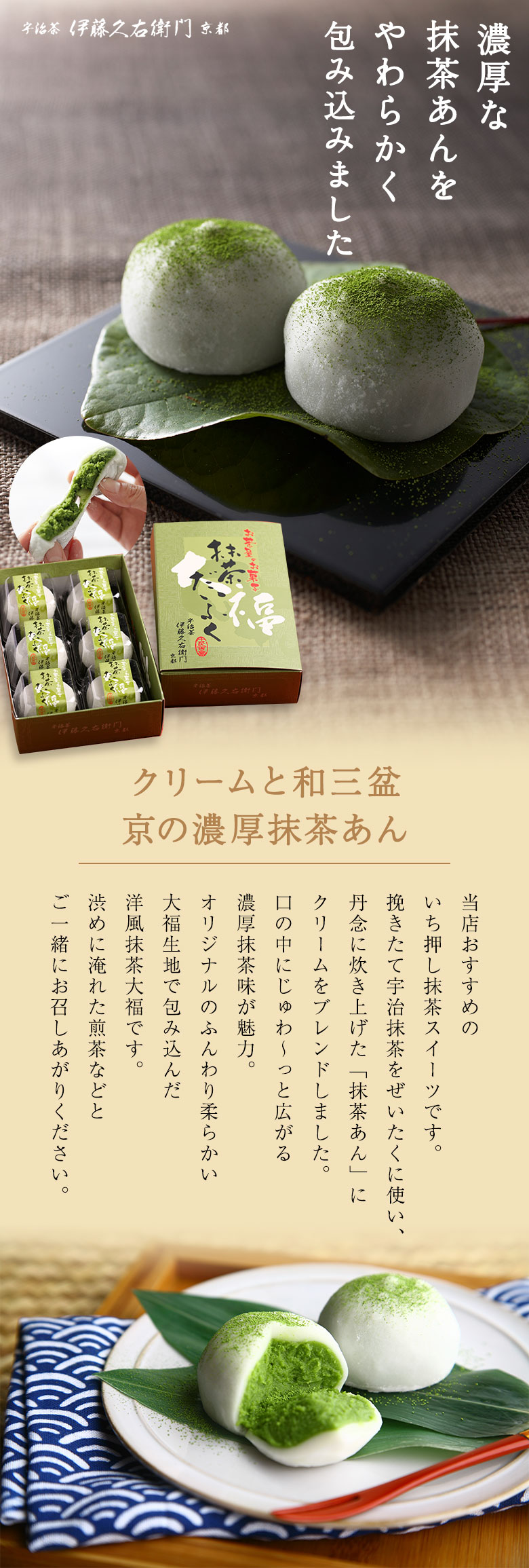
Today, Uji, where Minamoto no Yorimasa met his end, is also known for its Uji tea. Experiencing the atmosphere of Byodo-in and Uji Bridge while enjoying Uji matcha daifuku from a long-established tea shop in Kyoto’s Uji might be a delightful experience.

“Too Long to be Called a “Buried Tree”: 77 Years”
Looking back at the life of Minamoto no Yorimasa, one can see a figure that deviates from the impression of a man who ended without ever blooming.
At the age of 53, he participated in the Hogen Rebellion and navigated through the Heiji Rebellion as well.
Even after the death of Minamoto no Yoshitomo, he remained in Kyoto, supporting the imperial court’s military power well into his 60s and 70s.
During the Enryakuji temple’s strong protests, he guarded the imperial palace, and he continued to compose waka poetry for many years. His poetry collection, ‘Gen Sanmi Yorimasa-shu,’ has been passed down, and his daughter, Nijoin Sanuki, also made her name as a poet.
At the age of 75, when he was promoted to Junior Third Rank, Taira no Kiyomori praised Yorimasa as “honest in nature” and “renowned for his courage.”
The evaluation of Yorimasa, who had worked in Kyoto for nearly 20 years since the Heiji Rebellion, is recorded in contemporary diaries.
About a year and five months later, Yorimasa turned against the Taira clan.
After the defeat at Uji, Prince Mochihito also lost his life in Minami Yamashiro.
Although the uprising was quickly suppressed, the call to overthrow the Taira, issued in the name of Prince Mochihito, spread across the regions, and by August of the same year, Minamoto no Yoritomo rose in arms in Izu.
The Kai Genji and Minamoto no Yoshinaka (Kiso Yoshinaka) also mobilized, and the conflict spread nationwide.
Yorimasa died at Uji, without witnessing what lay ahead.
A legendary archer famed for shooting the mythical nue. A poet who composed verses at the court for decades. A senior figure of the Settsu Minamoto clan who rose to the rank of Junior Third Rank during the height of Taira power in Kyoto. And in his final year, a 77-year-old warrior who abandoned the position he had long upheld.
What makes Yorimasa’s life remarkable is not just his final act of defiance.
Before reaching that point, he spent over twenty years in Kyoto, navigating a path that avoided direct conflict with the Taira.
In May of the fourth year of the Jisho era, the elderly general, who had been elevated to the court nobility at Kiyomori’s request, turned his bow against the Taira.
No words remain from Yorimasa himself to explain his reasons. This absence of explanation ensures that his end remains memorable, not merely as a tale of a legendary horse.
Learn more📖↓

Minamoto no Yorimasa and 'The Tale of the Heike' The Flower that Never Bloomed [ Takayoshi Tochigi ]