――In 988, the People of Owari Petitioned the Court to “Judge This Provincial Governor”
November 8, 988 (Eien 2).
A document was submitted to the imperial court from Owari Province.
The senders were the district officials and commoners of Owari Province.
The accused was the governor of Owari, Fujiwara no Motonaga.
The content of the complaint was clear.
“We want Fujiwara no Motonaga’s illegal and unjust acts to be judged.”
The document, created for this purpose, contained 31 articles of accusations against Motonaga.
He collected more official taxes than prescribed. He committed fraud in the handling of taxes and land.
He purchased silk and cloth at unfairly low prices. He falsified records in the ledgers.
He did not appropriately allocate funds for station expenses. He failed to provide for the repair costs of ponds and ditches.
He forced labor from workers and horses. He sent his sons and retainers to districts and villages to collect goods.
He did not pay salaries to the officials of the provincial government. He did not allocate funds for the repair of the provincial nunnery.
Moreover, he ignored the complaints of the local people.
Finally, there was even an accusation that he did not adequately promulgate the laws issued by the court.
This document is what later generations would call the “Owari Province District Officials and Commoners’ Petition”. The University of Tokyo’s Historiographical Institute regards it as a document in which the district officials and influential farmers of Owari accused Fujiwara no Motonaga of tyranny and sought his dismissal from the court.
1. First, We Need to Understand the Term “Commoners”
When modern people hear “commoners,” they tend to think only of farmers.
However, in the Heian period, “commoners” had a broader meaning.
What is important in this document is that district officials and commoners joined together to file the complaint.
District officials were influential local figures responsible for the administration of the district.
In the 10th-century local society, the relationship between the provincial governors dispatched from Kyoto and the district officials and influential figures who were rooted in the land was extremely important.
Therefore, to understand this incident merely as a case of “poor farmers suffering under a wicked official” misses the essence.
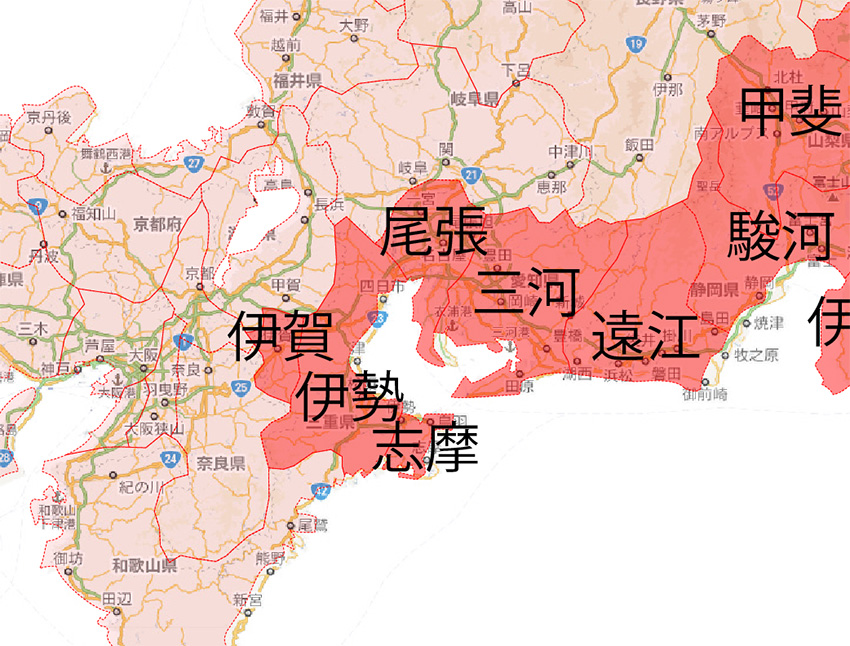
This was a conflict between the provincial governor sent from the center and the local society rooted in Owari.
2. The Opponent: Owari Governor Fujiwara no Motonaga
Fujiwara no Motonaga was the provincial governor of Owari.
In this era, the key figure among the provincial governors who actually managed the administration of their assigned provinces was the juryo.
By the 10th century, the authority of the juryo had become very significant.
The court demanded that the juryo collect the necessary taxes and goods from their provinces.
At the same time, the juryo had broad discretion within their provinces.
The Historiographical Institute of the University of Tokyo explains that during this period, provincial governors would travel to their assigned provinces with their retainers, manipulating tax targets and rates to amass wealth locally.
In other words, the governor of Owari was not merely a “local official.”
He was a powerful figure who effectively controlled Owari Province.
The local officials and farmers of Owari brought a complaint against him to the imperial court.
This is where the significance of this incident lies.
3. November 8, 988—The 31-Article Accusation Begins
The document begins by requesting a judgment on the illegal taxes collected by the governor over three years and the **”31 Articles of Misconduct.”**
In essence,
“We have compiled 31 articles detailing the illegal acts committed by the governor over the past three years. We ask the court to adjudicate.”
And right from the first article, staggering figures emerge.
4. 431,248 Bundles—Figures Emerge from the First Accusation
The first article raised concerns about the official taxes.
Aside from the usual loans, the governor was accused of collecting
431,248 bundles as additional taxes over three years.
Furthermore, he was reported to have gained 129,374 bundles and 4 handfuls and 1 part as interest.
Even just looking at the numbers, one can see how meticulously local administrations managed quantities at the time.
Moreover, the complaint did not end with “we were heavily taxed.”
“431,248 bundles” was the specific quantity presented.
This specificity is a significant characteristic of the Owari Province officials and farmers’ petition.
5. Not Just Taxes—Silk, Raw Silk, and Cloth Also at Issue
The accusations against the governor did not stop at official taxes.
The petition also included complaints about the unjustly low purchase prices of silk, raw silk, and cloth.
The provincial governor gathered various goods from within the province.
During this process, it was alleged that he was “buying them for less than their actual value.”
This was a serious issue for the local people.
They were taxed, and on top of that, their goods were bought cheaply.
If the demands of the provincial governor continued to accumulate, the burden on the local populace would grow significantly.
6. Even the Ledgers Were Questioned
What is even more astonishing is the accusation regarding falsified bookkeeping.
It has been alleged that records like the official tax books contain entries that do not reflect the actual situation.
In local administration, these records were crucial.
What was collected? What was spent? What remains?
These were documented and reported to the imperial court.
If there was fraud in these records themselves, it would strike at the very heart of local governance.
The people of Owari not only questioned Motonaga’s tax collection but also challenged the administrative records themselves.
7. From Station Costs to Pond and Ditch Repairs
The complaint document includes quite detailed administrative expenses.
For instance, there is an accusation of improper spending on station costs.
Stations were vital facilities supporting the transportation system connecting the central and local areas.
Additionally, there are allegations of not spending the necessary funds on pond and ditch repairs.
Moreover, the emergency funds meant for famine and disaster preparedness were also called into question.
This is where it gets interesting.
The people of Owari did not just complain about “heavy taxes.”
They attacked the failure to perform the fundamental administrative duties of a provincial governor.
They questioned the entirety of Motonaga’s governance.
8. Mobilizing People—The Burden of Laborers and Horses
The duties of a provincial governor included not only gathering resources but also maintaining transportation and logistics.
For this, people were needed. Horses were needed too.
The complaint document from Owari mentions that Motonaga forced people into labor, making them transport goods.
Furthermore, it is alleged that Motonaga’s sons and retainers entered districts and villages, collecting various goods under different pretexts.
In other words, Motonaga himself issued orders.
Those around him went to the local areas.
And they gathered resources and labor from the local people.
The power of the provincial governor extended to those around him, penetrating local society.
This is the picture of local politics that emerges from this historical document.
9. Motonaga’s Sons and Retainers Enter the Local Areas
This aspect is extremely important for understanding the society of the time.
The provincial governors were dispatched from Kyoto.
However, it wasn’t as if he governed his province alone.
He brought along his retainers and attendants.
In the complaint, it is stated that every time Motonaga traveled from the capital, he brought with him officials, unattached individuals, and “unsavory characters.”
From the perspective of the people of Owari, it wasn’t just the provincial governor coming from Kyoto.
All those surrounding him also entered Owari.
These people then operated under the authority of the governor.
This led to friction with the local society.
10. Utilizing Land—”Hundreds of Chō” of Private Fields
Furthermore, the complaint mentions that Motonaga’s sons and retainers were managing hundreds of chō of private fields using the local farmers.
“Private fields” refer to land cultivated for personal use.
What stands out here is the scale of “hundreds of chō.”
The complaint alleges that those associated with the provincial governor were exploiting local people to cultivate vast lands and appropriating the produce.
This reveals that the governor’s power extended beyond mere tax collection.
It also infiltrated land and labor.
11. The Governor’s Neglect of Administrative Duties
There is also an accusation against Motonaga himself for not conducting administrative duties at the provincial office.
The second article of the complaint states that because Motonaga neglected his duties, it became difficult for district officials and farmers to have their grievances heard.
This is of great importance.
The provincial governor is the person responsible for local administration.
Yet, he was not performing his duties.
When the local people tried to voice their complaints, they went unheard.
As a result, they gave up on resolving issues within Owari Province and appealed directly to the imperial court.
This is how the complaint of 988 came to be.
12. Accusation of “Not Upholding Imperial Edicts”
Towards the end of the 31 articles, an even more serious issue arises.
There is an accusation that Motonaga failed to adequately promulgate the edicts issued by the imperial court within the province.
According to the “Encyclopedia Nipponica,” Motonaga was accused of not announcing laws that were unfavorable to him.
This is not merely a matter of taxes.
It concerns how the imperial orders are communicated in the provinces. The governor’s responsibility is being questioned to that extent.
The people of Owari were not only saying, “Motonaga collected too much tax,”
“Failing to fulfill duties as a provincial governor,” was the complaint lodged with the imperial court.
13. Did the “Peasants Write This Document” Themselves?
This is a point that history enthusiasts should be familiar with.
The document is known as the “Owari Province District Officials and Peasants’ Petition.”
Thus, one might be inclined to think that “the district officials and peasants of Owari wrote the document themselves and submitted it to the court.”
However, the document itself is written in a very polished style of Japanese-Chinese prose known as the ‘Shiriku Byorei’ style.
As a result, there has long been debate about whether the district officials and peasants actually composed the document themselves.
It has been suggested that scholars, officials, or monks from Kyoto might have been involved in drafting the document. The “Encyclopedia Nipponica” also raises doubts about whether the district officials and peasants themselves created it.
Therefore, it is more accurate to understand it as a document that “records the grievances of the people of Owari.”
14. The Existing Document Is Not the Original from 988
There is another important point to consider.
The existing “Owari Province District Officials and Peasants’ Petition” is not the original from 988.
The ancient manuscript held by the University of Tokyo’s Historiographical Institute was copied using the reverse side of a calendar from Kagen 2 (1304) and a document from Kagen 3 (1305), and the colophon indicates it was copied before Ocho 1 (1311).
There is also a version held by Waseda University, copied in Kōan 4 (1281).
In other words, to learn about the events of 988, we are reading manuscripts that were passed down from the Kamakura period onwards.
The University of Tokyo’s Historiographical Institute preserves this document as a valuable ancient manuscript that conveys the state of provincial life during the Heian period.
15. Consequently, Motonaga Was Dismissed by the Court
The district officials and peasants of Owari submitted their petition on,
November 8, 988 (Eien 2).
As a result of their complaint, Fujiwara no Motonaga was dismissed from his position as governor of Owari.
The dismissal occurred on, April 5, 989 (Eiso 1).
On this day, during the court’s appointments, Motonaga was relieved of his duties.
It took about five months from the submission.
The 31-point accusation led to the replacement of the provincial governor.
For the people of Owari, this held significant meaning.
The provincial governor was a powerful figure dispatched by the imperial court.
The local people directly appealed to the court against this governor.
And indeed, the governor was replaced.
Documents were the driving force behind local politics.
16. Not Just a Story of Farmers Complaining About Corrupt Officials
Reading the “Petition from the District Officials and Farmers of Owari Province” provides a detailed glimpse into local society during the Heian period.
Provincial governors were dispatched from the capital. These governors were responsible for collecting taxes in their assigned provinces.
They gathered resources, maintained records, sustained postal stations, and repaired ponds and ditches, mobilizing the necessary manpower and horses.
Meanwhile, the children and retainers of these governors also infiltrated local areas.
They utilized land, collected miscellaneous goods, and forced labor upon the people, leading to growing discontent among local district officials and farmers.
Eventually, they appealed to the imperial court.
This entire process was documented in a 31-article document.
Thus, the value of this historical source is not limited to understanding a single provincial governor, Fujiwara no Motonaga.
It provides insight into the local politics of the late 10th century.
The Historiographical Institute of the University of Tokyo also positions this document within the framework of provincial governors exerting significant control over their territories, with wealth flowing to the national treasury and the upper nobility.
17. The Events in Owari in 988 Reflect Major Changes in Local Society
During this period, the relationship between the Kyoto court and local society was undergoing significant changes.
In the Ritsuryo state system of the 9th century, the central government had a detailed mechanism for controlling the provinces.
By the 10th century, the practical administration of local governance was increasingly delegated to provincial governors, especially the chief governors.
These governors collected taxes from their provinces and delivered them to the court.
To do so, they wielded significant authority within their territories.
This system was convenient for the court.
However, from the local perspective, the greater the discretion of the governors, the heavier the burden became.
As a result, influential local figures began to resist the governors.
One method of resistance was appealing to the court.
The “Petition from the District Officials and Farmers of Owari Province” is a typical example of this.
18. About Half a Century After the Rebellions of Masakado and Sumitomo—The “Ways of Fighting” in the Provinces Have Changed
The rebellion of Taira no Masakado occurred in 939–940.
The rebellion of Fujiwara no Sumitomo occurred in 939–941.
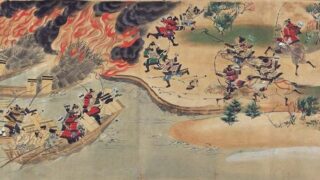
About half a century later, in 988.
What occurred in Owari was not a large-scale armed uprising.
It was a political battle where district officials and farmers drafted a 31-article indictment and submitted it to the imperial court.
Their opponent was the governor of Owari, Fujiwara no Motonaga.
Instead of using force, they leveraged the laws and courts of the imperial court to corner the provincial governor.
This difference is significant.
In the provincial society of the Heian period, not only force but also lawsuits and documents became crucial means to challenge authority.
19. And Thus Begins the Era of the Samurai
In 988, the Owari Province District Officials and Farmers’ Petition was submitted.
At that time, in the eastern provinces, the samurai were amassing power.
The Minamoto and Taira clans were strengthening their ties with the provinces and deepening their relationships with provincial governors and local forces.
Eventually, the relationship between local forces with military power and the imperial court and provincial governors grew even more complex.
What emerged from this was the Rebellion of Taira no Tadatsune.
In the first year of Chogen (1028), Taira no Tadatsune rose in rebellion in the Boso region.
The one who suppressed this rebellion was Minamoto no Yorinobu, the son of Minamoto no Mitsunaka.
Here, the clan of Minamoto no Mitsunaka, who had sided with the imperial court during the Anna Incident, became a trusted force for the court, now backed by military power from the eastern provinces.
The 988 Owari Province District Officials and Farmers’ Petition is a historical document left in the midst of the era when the samurai were rising to prominence.
It records numbers like 431,248 bundles, land, taxes, people and horses, ledgers, and the children and retainers of the provincial governor.
And above all,
the moment when the local society raised its voice to the imperial court, demanding “Judge the provincial governor.”
This voice was inscribed in 31 articles in the Owari Province District Officials and Farmers’ Petition.
The stage for the Owari Province District Officials and Farmers’ Petition was “Owari.”
This book offers a comprehensive understanding of Owari’s history, including its place names, culture, and customs.
Recommended for those who read the article and wondered, “What kind of land was Owari at that time?”

Encyclopedia of Owari Nagoya [ Aramata Hiroshi ]
After reading about Heian-era Owari, why not savor the flavors of modern Owari?
You can enjoy Owari and Nagoya’s famous miso-nikomi udon right at home.
How about experiencing the culinary culture of Owari after delving into its history?

Nagoya Kishimen Tei Nagoya Specialty Cochin Miso Nikomi Udon (10 servings) [tr]