To the Summit as a Scholar — Then a Sudden Fall From the Height of Politics
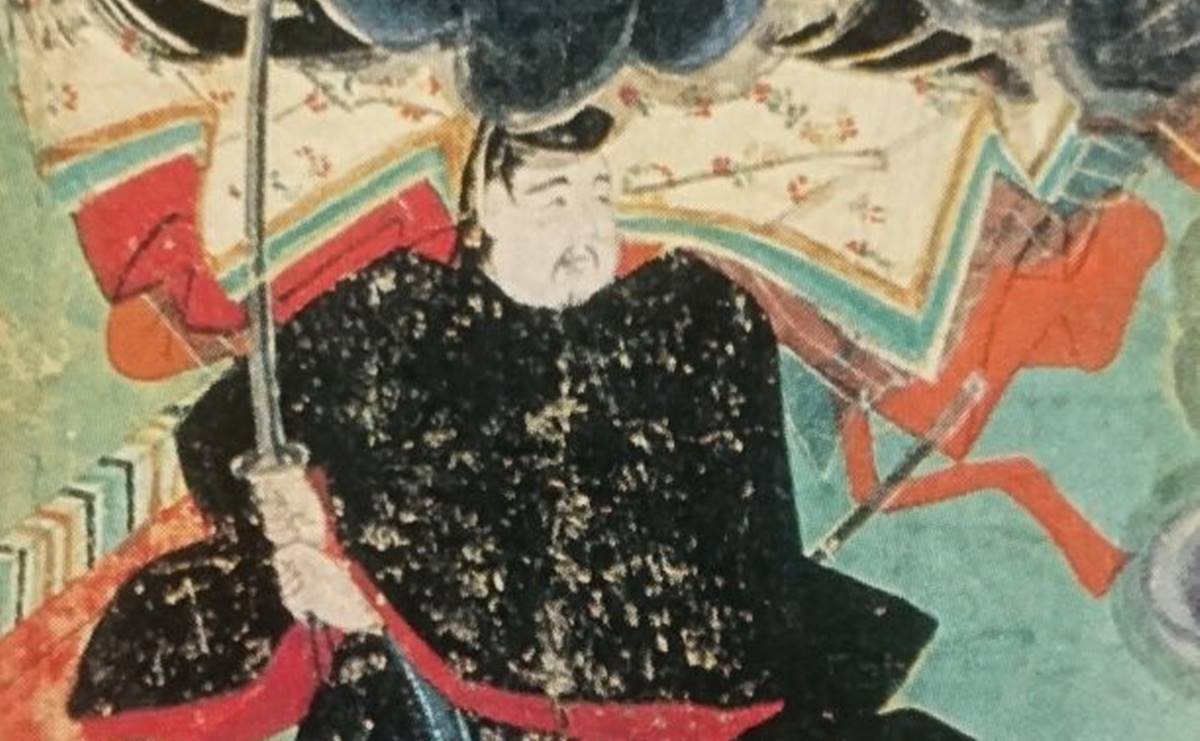
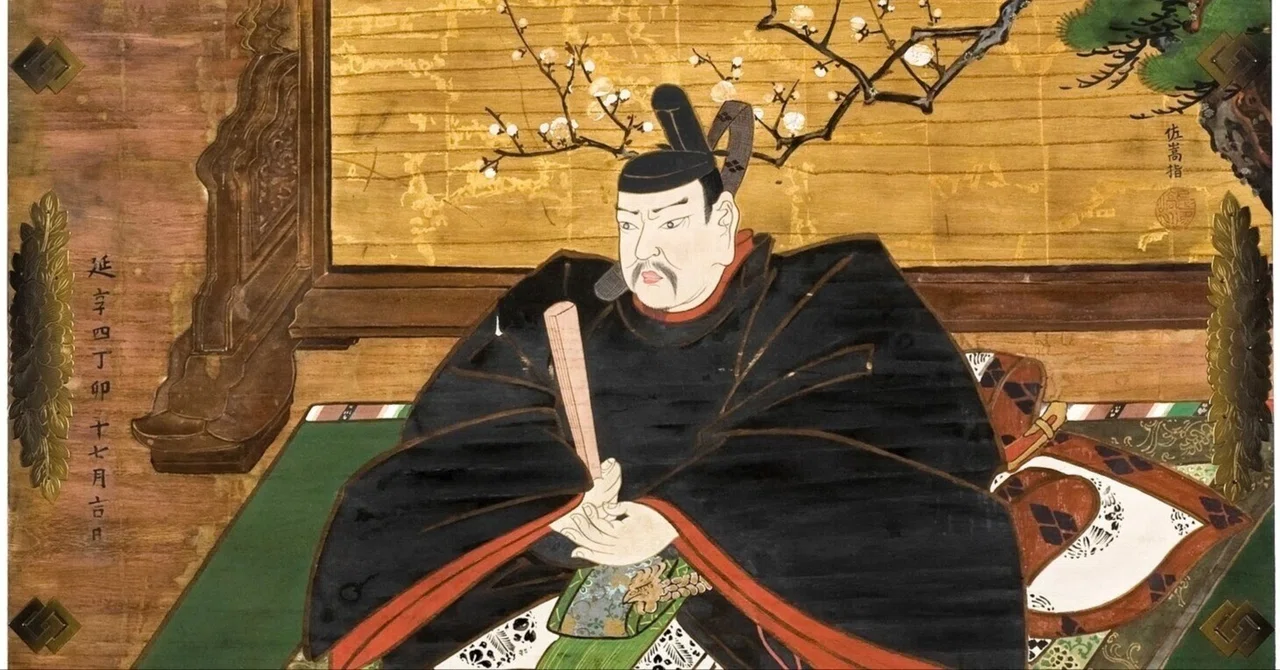
Say “god of learning,” and many people think of Sugawara no Michizane.
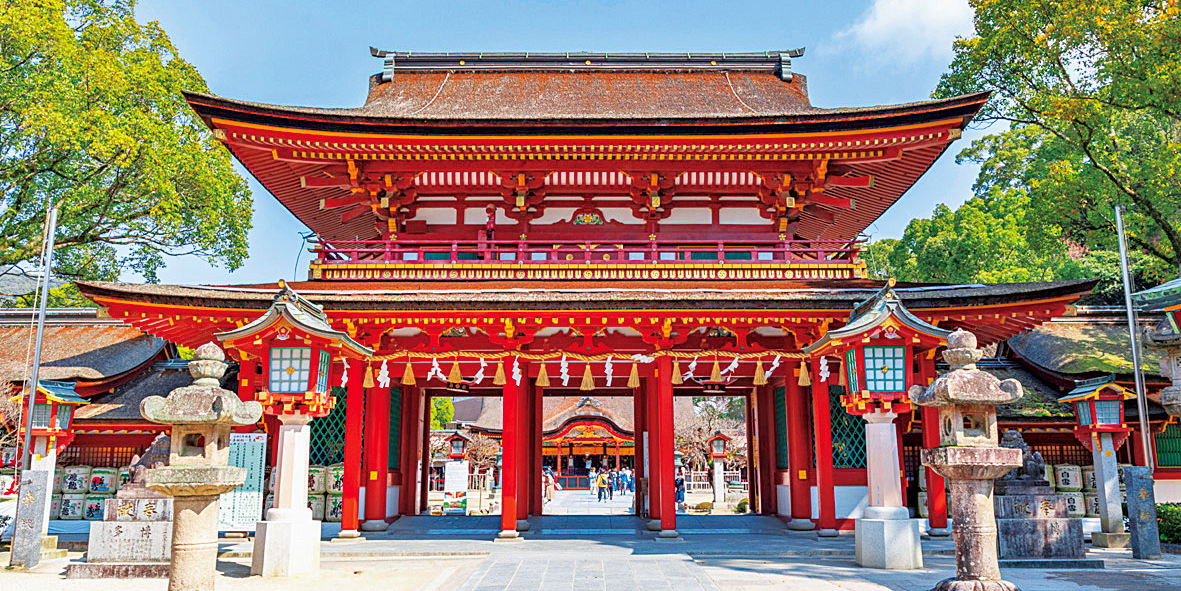
Visiting a Tenmangu shrine before an exam. Picturing plum blossoms.
“Brilliant scholar,” “god of learning” — these images are strongly attached to the Michizane of today.
But in life, Michizane was far more than that.
Scholar, poet, provincial governor, architect of foreign policy, and finally Minister of the Right.
Michizane climbed to the very center of court politics with scholarship as his weapon.
Then, in 901.
Michizane, then Minister of the Right, was suddenly exiled as Provisional Governor-General of Dazaifu.
From Kyoto to Dazaifu. From the highest ranks of the court to a distant province in Kyushu.
Barely two years later, Michizane’s fifty-nine years of life came to an end at Dazaifu.
After death he was feared as a vengeful spirit, in time deified as Tenjin, and today is worshipped across the country as the “god of learning.”
Why did a scholar rise all the way to Minister of the Right? And why was he cast down to Dazaifu at the height of his career?
Following the life of Sugawara no Michizane reveals the politics of the Heian period and the power structure of the Fujiwara clan.
1. 845 — Born Into a Family of Scholars
Sugawara no Michizane was born in the 12th year of Jowa (845).
His father was Sugawara no Koreyoshi. The Sugawara had passed down scholarship as a family trade for generations.
Michizane’s grandfather, Sugawara no Kiyokimi, had also been a renowned scholar, and his father Koreyoshi too was active as a scholar at court.
In other words, Michizane grew up from childhood in an environment steeped in learning.
In this era, Chinese literary learning was never mere cultivation.
Producing the court’s official documents, handling diplomatic correspondence, putting the emperor’s own commands into writing —
fluency in Chinese composition was itself a powerful weapon for anyone working at court.
Michizane came to wield that weapon earlier and more skillfully than anyone else.
2. Monjosho at 18 — an Extraordinary Talent for a Scholar
In the fourth year of Jogan (862), Michizane became a monjosho, a student of literature, at eighteen.
A monjosho was a student at the Daigaku-ryo studying Chinese literature and composition.
He then became a monjo tokugyosho, and in 870 passed the taisaku examination.
The taisaku was the examination by which the state selected the talented men it needed.
Then in 877, Michizane became a Monjo Hakase, professor of literature.
The Monjo Hakase was an important post, teaching Chinese literature at the Daigaku-ryo.
By his early thirties, Michizane had become one of the leading scholars of the court.
From here, Michizane’s life began moving from the path of pure scholarship into the path of politics.
3. Governor of Sanuki — Michizane Sees “Provincial Reality” for the First Time
In the second year of Ninna (886), Michizane was appointed Governor of Sanuki.
The provincial governorship of Sanuki, in what is now Kagawa Prefecture.
For a man who had spent his career studying Chinese poetry and prose in the capital, these four years in Sanuki became a major turning point.
He now stood on the ground of provincial administration, watching people’s daily lives with his own eyes.
Michizane left many poems from his time in Sanuki.
Among them are depictions of people suffering under the burden of taxation, drifting from their land, living in hardship.
His experience governing a province as its governor became the foundation of Michizane’s own statesmanship.
Then a major event pulled Michizane, still in Sanuki, back to central politics.
4. The Ako Incident — Michizane Speaks His Mind to Fujiwara no Mototsune
In the third year of Ninna (887), Emperor Uda took the throne.
Here an incident shook the court.
The Ako Incident.
Mototsune took offense at the wording of the edict Emperor Uda issued naming him Kampaku.
Mototsune stopped conducting government business.
It grew serious enough to bring the court’s own governance to a halt.
At the time, Michizane, still in Sanuki, sent Mototsune a letter of his own opinion.
Even addressing the single most powerful man among the Fujiwara, Michizane set his own thoughts down in writing and made them known.
Through this episode, Emperor Uda came to think highly of Michizane’s ability.
And later, Michizane would become the central figure supporting Emperor Uda’s own government.
5. 891 — the Death of Fujiwara no Mototsune Sets Michizane’s Life in Motion
In the third year of Kanpyo (891), Fujiwara no Mototsune died.
Fujiwara no Mototsune is covered in detail in a separate article (Japanese only).
From here, Michizane’s rise accelerated.
Emperor Uda elevated Michizane as his own confidant.
Michizane became Head Chamberlain, entering the position of handling confidential documents and petitions at the emperor’s side.
Then, in 893, he became Sangi.
A man born a scholar had finally entered the very center of court politics.
In this era, the Fujiwara clan drove the great current of court politics.
Within that world, Michizane, from a family of scholars entirely outside the Fujiwara, rose with striking speed.
This rise fed directly into the political tension that followed.
6. 894 — the Man Who Ended the Embassy to Tang China
In the sixth year of Kanpyo (894), Michizane was appointed ambassador to the embassy to Tang China.
The man in charge of the diplomatic mission sent from Japan to Tang.
But Michizane proposed suspending the mission altogether.
Behind this lay political turmoil within Tang China itself, and the dangers of the sea voyage.
What is more, Japan, which had sent these embassies to learn from Tang, had by now developed a distinct politics and culture of its own.
Michizane, weighing the circumstances of the time, called for an end to the embassies.
The mission that year was never carried out, and the embassies to Tang lapsed thereafter.
And from around this time, Japan began shifting from an age of directly importing Tang culture toward one of developing a culture distinctly its own.
7. 897 — Even After Emperor Uda’s Abdication, Michizane Remained
The ninth year of Kanpyo (897).
Emperor Uda abdicated in favor of Emperor Daigo.
Michizane remained trusted under the new emperor as well.
In 897 he became Provisional Major Counselor, and Fujiwara no Tokihira became Major Counselor.
Retired Emperor Uda positioned both Tokihira and Michizane as key statesmen to support Emperor Daigo’s own governance.
Here two of the Heian court’s most powerful men stood side by side.
Fujiwara no Tokihira, representing the Fujiwara clan. Sugawara no Michizane, born of a family of scholars.
The two men would now share the burden of government within the same court.
8. 899 — Sugawara no Michizane Becomes Minister of the Right
The second year of Shotai (899).
Fujiwara no Tokihira became Minister of the Left. Sugawara no Michizane became Minister of the Right.
The two men became the court’s Ministers of the Left and Right.
This was the crowning achievement of Michizane’s life.
A man born into a family of scholars now stood shoulder to shoulder with the highest officials of the Fujiwara clan.
A man who had started out in the world of scholarship had reached the very highest political tier of the Heian court.
This extraordinary rise earned Michizane many admirers, but it also generated strong tension within the court.
In 900, the Monjo Hakase Miyoshi no Kiyoyuki urged Michizane to resign.
Michizane was already at the very center of politics.
And the following year, everything changed.
9. 901 — From Minister of the Right to Dazaifu
The seventh day of the first month, the fourth year of Shotai (901).
Michizane was raised to Junior Second Rank.
But on the 25th, Michizane was exiled as Provisional Governor-General of Dazaifu.
A mere eighteen days later.
From Minister of the Right, to Dazaifu.
A man at the very center of court politics was suddenly moved to Kyushu.
This event became known as the Shotai Incident.
The full course of the Shotai Incident is covered in a separate article.
The crime laid against Michizane was that he had conspired with Retired Emperor Uda to depose Emperor Daigo and place Prince Tokiyo on the throne.
Prince Tokiyo was a son of Emperor Uda, and Michizane’s daughter had become his consort.
Because of this, political suspicion over imperial succession fell on Michizane.
10. How Much of “Tokihira’s Slander” Is Historical Fact?
Whenever Sugawara no Michizane’s story is told, Fujiwara no Tokihira inevitably appears.
The story widely known in later ages holds that
“Fujiwara no Tokihira, out of jealousy, slandered Michizane and drove him out to Dazaifu.”
This story became the famous symbol of Michizane’s tragedy.
But looking at history precisely, this needs some untangling.
Michizane’s exile in 901 involved genuine political suspicion surrounding the deposition of Emperor Daigo and the enthronement of Prince Tokiyo.
Behind that political backdrop lay the power relationships at court between Michizane and the Fujiwara clan.
In later ages, Michizane’s exile came to be told strongly in the form of “Tokihira’s slander.”
In other words, the Shotai Incident is not simply a story of “the good Michizane against the villainous Tokihira.”
Retired Emperor Uda, Emperor Daigo, Fujiwara no Tokihira, Sugawara no Michizane, Prince Tokiyo.
These figures were caught in a complicated web of imperial succession and court politics.
11. Retired Emperor Uda’s Resistance
On learning of Michizane’s exile, Retired Emperor Uda went to Emperor Daigo, trying to have the decision reversed.
But he could not save Michizane. Michizane left Kyoto and set out for Dazaifu.
The political standing Michizane had built up until then collapsed entirely.
Minister of the Right. Commander of the Right Palace Guards. The very center of court politics.
He lost all of it. And the place he went was Dazaifu.
12. Dazaifu — the Life of an “Exiled Minister of the Right”
Life at Dazaifu was harsh for Michizane.
A man who had lived as a senior official of the court now had to live in Kyushu, far removed from the center of politics.
Michizane continued to write Chinese poetry at Dazaifu.
His most famous work is “The Ninth Day of the Ninth Month.”
The previous year, on the 9th day of the 9th month, Michizane had composed a poem in the palace at Kyoto, given the theme “autumn thoughts” by Emperor Daigo.
The following year.
Michizane greeted the same date at Dazaifu.
The previous year, the imperial palace. This year, Dazaifu.
Michizane set down this dramatic reversal in verse.
At Dazaifu, Michizane continued writing poems of longing for Kyoto and loyalty to the emperor.
And there was one more symbol besides: the plum.
13. “The Flying Plum” — Michizane and the Legend of the Plum Tree
Michizane loved plum blossoms.
There is a famous legend that, on setting out for Dazaifu, he bid farewell to the plum tree at his own residence in Kyoto.
“When the east wind blows, send forth your fragrance, plum blossoms — though your master is gone, do not forget the spring.”
A poem said to have been composed by Michizane himself.
And in later ages, the legend arose of the “Flying Plum” — a plum tree so devoted to its master that it flew from Kyoto all the way to Dazaifu.
At Dazaifu Tenmangu today, the “Flying Plum” remains a symbol of Michizane.
The bond between Michizane and the plum owes much to this legend, and to the development of Tenjin worship.
14. 903 — Death at Dazaifu
On the 25th day of the second month, the third year of Engi (903), Sugawara no Michizane died at Dazaifu.
He was fifty-nine.
Michizane’s remains were buried at Dazaifu.
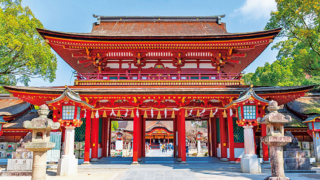
The site leads directly to today’s Dazaifu Tenmangu.
And from here begins the story of Michizane’s afterlife.
15. After Death — Michizane Becomes a “Vengeful Spirit”
After Michizane’s death, various misfortunes struck the court.
Fujiwara no Tokihira, too, died in 909 at thirty-nine.
Afterward, lightning strikes and other calamities struck the court, and people began linking them to Michizane’s vengeful spirit.
Michizane came to be worshipped as a fearsome vengeful spirit.
And the court, too, began reconsidering the punishment it had inflicted on him.
923.
Michizane was restored to Minister of the Right. He was further granted Senior Second Rank.
Posthumous honors for Michizane continued afterward; in 993 he was granted Senior First Rank and Minister of the Left, and further the office of Daijo Daijin.
In life: from Minister of the Right, to Dazaifu.
In death: to Senior First Rank and Daijo Daijin.
Michizane’s life reversed course dramatically once more, even after death.
16. From “Vengeful Spirit” to “Tenjin”
In time Michizane was deified as “Tenman Daijizai Tenjin.”
A being once feared as a terrifying vengeful spirit came, step by step, to be worshipped as a god.
Tenmangu shrines were built across the country, and Michizane spread nationwide as “Tenjin-sama.”
And over the long years that followed, people came to focus more and more strongly on Michizane’s identity as a scholar.
Michizane had shown a gift for Chinese poetry from childhood, became a Monjo Hakase, and rose through scholarship all the way to the summit of the court.
For that reason, his living image as “a man of exceptional learning” merged with
his posthumous identity as “a being worshipped as a god.”
And so the modern image of “Sugawara no Michizane, god of learning” took shape.
17. Tracing Sugawara no Michizane’s Life Year by Year
845
Born, son of Sugawara no Koreyoshi.
↓
862
Becomes a monjosho at eighteen.
↓
867
Becomes a monjo tokugyosho.
↓
870
Passes the taisaku examination.
↓
877
Becomes Monjo Hakase.
↓
886
Becomes Governor of Sanuki.
↓
887
Sends a letter of opinion to Fujiwara no Mototsune.
↓
891
Fujiwara no Mototsune dies.
Elevated by Emperor Uda.
↓
893
Becomes Sangi.
↓
894
Appointed ambassador to Tang China; proposes suspending the mission.
The mission is not carried out, and embassies to Tang later lapse.
↓
897
Emperor Uda abdicates in favor of Emperor Daigo.
Michizane remains trusted under the new emperor.
↓
899
Becomes Minister of the Right.
Fujiwara no Tokihira is Minister of the Left.
↓
900
Urged by Miyoshi no Kiyoyuki to resign.
↓
901
The Shotai Incident.
Exiled as Provisional Governor-General of Dazaifu.
↓
903
Dies at Dazaifu on the 25th day of the second month.
Fifty-nine.
↓
923
Restored to Minister of the Right; posthumously granted Senior Second Rank.
↓
993
Posthumously granted Senior First Rank, Minister of the Left, and further Daijo Daijin.
↓
Afterward
Tenjin worship develops, leading into today’s “god of learning.”
Summary
Sugawara no Michizane was born into a family of scholars and climbed, with scholarship as his weapon, to the very center of court politics.
Becoming a monjosho at eighteen, he advanced through monjo tokugyosho, success in the taisaku examination, and the office of Monjo Hakase, building a firm standing in the world of Chinese literature.
In 886 he became Governor of Sanuki, gaining experience in provincial administration.
In the Ako Incident of 887, he sent Fujiwara no Mototsune a letter of opinion, strengthening his political presence.
When Mototsune died in 891, Emperor Uda elevated Michizane, and in 893 he became Sangi.
In 894 he was appointed ambassador to Tang China and proposed suspending the mission.
Even after Emperor Uda’s abdication in 897, Michizane remained trusted, and in 899 became Minister of the Right.
Fujiwara no Tokihira was Minister of the Left.
A man from a family of scholars now stood at a position running the court alongside the Fujiwara clan’s own highest officials.
But in 901, his life took a sudden, sharp turn.
Michizane was accused of plotting to depose Emperor Daigo and place Prince Tokiyo on the throne, and was exiled as Provisional Governor-General of Dazaifu.
This was the Shotai Incident.
In later ages, the story that Michizane fell through Fujiwara no Tokihira‘s slander became widely known.
But tracing the historical record, the Shotai Incident must be understood as a power struggle over imperial succession and court politics involving Retired Emperor Uda, Emperor Daigo, Fujiwara no Tokihira, Sugawara no Michizane, and Prince Tokiyo.
Michizane left Kyoto for Dazaifu.
There he left behind Chinese poems expressing his longing for Kyoto and his loyalty to the emperor.
And in 903, he died at Dazaifu at fifty-nine.
But Michizane’s story changed dramatically once again from here.
After his death, Michizane was feared as a vengeful spirit; the court restored him to Minister of the Right, and further granted him, posthumously, Senior First Rank, Minister of the Left, and Daijo Daijin.
Michizane was then deified as Tenjin and came to be worshipped at Tenmangu shrines across the country.
Today he is beloved as the “god of learning.”
Sugawara no Michizane’s life traces a great arc: success as a scholar, advancement as a statesman, the summit of Minister of the Right, downfall in the Shotai Incident, death at Dazaifu, and deification after death.
Looking only at the modern image of “god of learning,” the sheer intensity of Michizane’s life does not come through.
But tracing his full life shows that Michizane was a man who profoundly shaped the politics of the Heian period.
He rose to the summit of the court through scholarship, was caught up in a political power struggle, was driven out to Kyushu, and became a god after death.
That is the life of the man named Sugawara no Michizane.