Ask most people to name a powerful figure of the Heian period, and many will think of Fujiwara no Michinaga.
But to understand the mechanism by which the Fujiwara came to dominate the court, we need to look more than a hundred years before Michinaga.
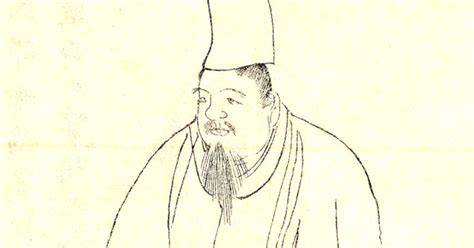
That man is Fujiwara no Mototsune.
Born in the third year of Jowa (836), he died in the third year of Kanpyo (891) at fifty-six.
His life spanned the reigns of four emperors: Seiwa, Yozei, Koko, and Uda.
Mototsune held the offices of Minister of the Right, Daijo Daijin, and regent (sessho), before finally becoming Kampaku.
And his power was never simply a matter of high office.
He was involved in Emperor Yozei’s abdication, engineered Emperor Koko’s enthronement, and after Emperor Uda’s accession wielded enough political force to bring the entire business of the court to a halt.
The clearest symbol of that power was the Ako Incident.
The full course of the Ako Incident is covered in a separate article.
When Mototsune stopped attending to state affairs over the wording of an imperial edict, court business ground to a halt for months.
“The most powerful man in the realm, refusing to obey the emperor’s own command.”
That such an extraordinary situation could arise at all shows just how vast Mototsune’s power had become.
So how did one nobleman come to wield that much power?
The answer lies in Mototsune’s upbringing, and in the political foundation the Northern House of the Fujiwara had already built.
1. Fujiwara no Mototsune’s Early Life
Fujiwara no Mototsune was born in the third year of Jowa (836), the third son of Fujiwara no Nagara.
His father Nagara was a powerful figure within the Northern House of the Fujiwara.
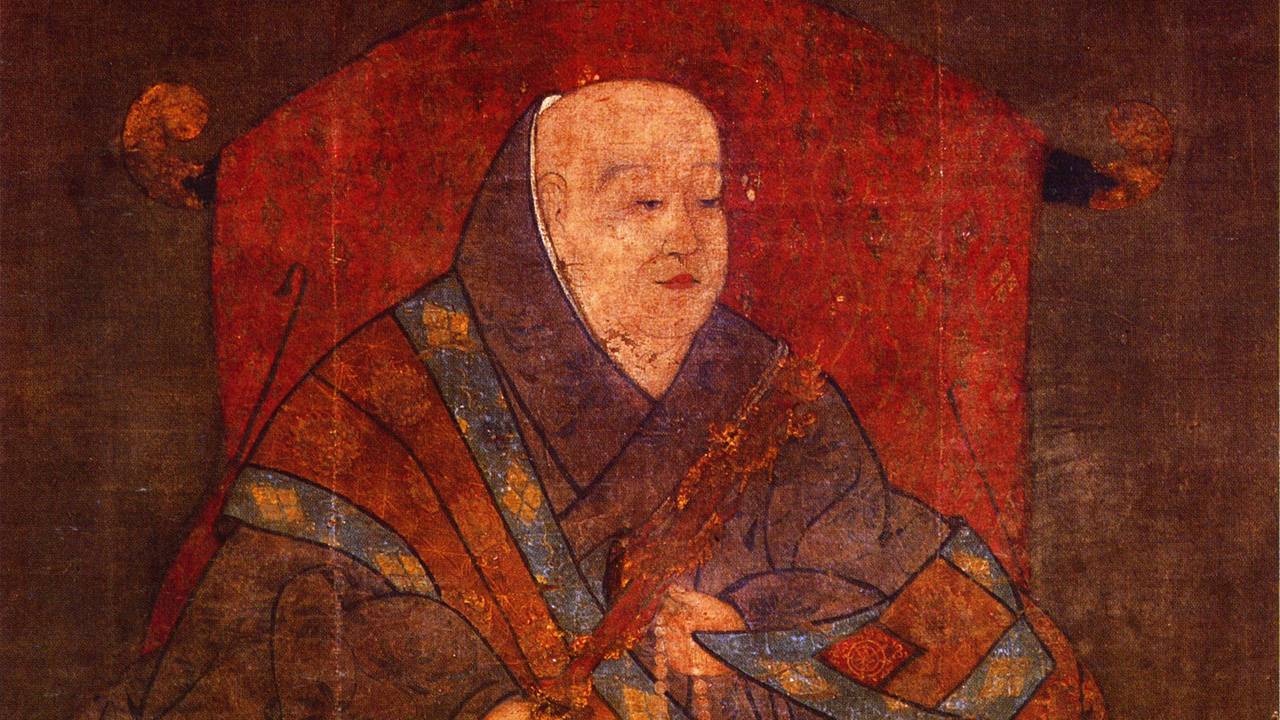
But the man who decisively changed the course of Mototsune’s life was his father’s younger brother,
Yoshifusa adopted Mototsune as his son.
Through this adoption, Mototsune became, at once, a son of Fujiwara no Nagara and the heir to Yoshifusa, the man at the political center of the Northern House.
This adoption would shape the entire course of Mototsune’s life.
Yoshifusa held power as the maternal grandfather of Emperor Seiwa, and was the first subject in history to become regent.
Mototsune grew up as Yoshifusa’s political heir.
In other words, Mototsune had already entered the center of political life from a young age as the man expected to carry the Fujiwara clan into the next generation.
2. Coming of Age at 16, Chamberlain at 17
In the first year of Ninju (851), Mototsune came of age at sixteen.
The following year, the second year of Ninju (852), he became a Kurodo, a chamberlain.
The Kurodo served at the emperor’s side, handling confidential documents and petitions — an important post.
It placed a man close to the emperor and close to the business of state.
From here Mototsune rose in rapid succession:
Jiju, Shonagon, Head Chamberlain, Sangi, Middle Counselor, Major Counselor.
In the sixth year of Jogan (864), he became Sangi.
At twenty-eight.
By this point, he was already one of the senior nobles running the government.
And two years later, an incident occurred that would launch Mototsune’s political career forward dramatically.
3. The Otenmon Incident — Mototsune Vaults to the Center of Power
The eighth year of Jogan (866).
A major incident shook the court at Heian-kyo.
The Otenmon Incident.
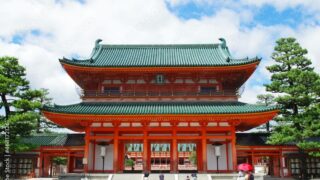
The Otenmon, one of the great gates of the imperial palace, burned down.
The man accused as the culprit was Major Counselor Tomo no Yoshio.
Tomo no Yoshio fell from power and was exiled.
The incident pushed powerful clans such as the Tomo out of the political center, further strengthening the dominance of the Fujiwara Northern House.
Mototsune, too, rose sharply in rank through this affair.
That same year he became Middle Counselor. The following year he advanced further still.
What matters here is that Mototsune had grown, from simply “Yoshifusa’s adopted son,” into
a statesman who moved the very structure of court power under his own initiative.
4. The Death of Yoshifusa — Mototsune Takes Up the Northern House
In the 14th year of Jogan (872), Fujiwara no Yoshifusa died.
Mototsune was thirty-six.
As Yoshifusa’s heir, Mototsune now stood at the political center of the Fujiwara Northern House.
That same year, he became Minister of the Right.
From here Mototsune would lead court politics across four reigns — Seiwa, Yozei, Koko, and Uda.
He inherited the power Yoshifusa had built, and developed it further into an institution.
His first great stage on which to do so was the enthronement of Emperor Yozei.
5. The Enthronement of Emperor Yozei — Mototsune Becomes Regent
In the 18th year of Jogan (876), Emperor Seiwa abdicated, and the crown prince Sadaakira took the throne.
This was Emperor Yozei.
Emperor Yozei was still a child.
Emperor Seiwa therefore named Mototsune regent.
Mototsune now stepped into the role of governing in place of the child emperor.
What is more, Mototsune was also related to Emperor Yozei by blood, through marriage.
Mototsune’s own sister, Fujiwara no Takaiko, had become a consort of Emperor Seiwa, and had given birth to Emperor Yozei.
In other words, Mototsune was at once the emperor’s uncle, his maternal kinsman, and his regent.
The structure by which the Fujiwara used marriage ties to the imperial house to raise their own political standing grew stronger still.
6. Mototsune Becomes Daijo Daijin
In the fourth year of Gangyo (880), Mototsune became Daijo Daijin, the highest office in the ritsuryo bureaucracy.
Even so, understanding Mototsune’s power in this period requires looking beyond the title itself.
What mattered was that Mototsune, as the emperor’s closest confidant, held the actual reins of government.
Mototsune placed enormous weight on the exact form of official titles and political authority.
This trait would show itself unmistakably in the later Ako Incident.
Mototsune refused to accept, unresolved, any ambiguity about exactly what he had been entrusted to do.
This same trait would later produce a fierce confrontation with Emperor Uda.
7. The Gangyo War — the Court Shaken in the Northeast as Well
Mototsune’s era saw major crises not only in the capital but in the provinces as well.
The second year of Gangyo (878).
The Gangyo War broke out in Dewa Province.
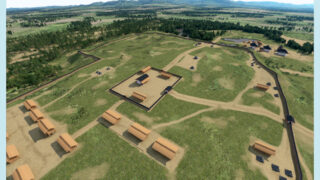
Local forces centered around Akita Castle, including people known as the Emishi, rose in rebellion.
The causes lay in exploitation and misrule by the provincial governor of Dewa, compounded by famine.
The court responded to suppress the revolt.
The man dispatched to the region as acting governor of Dewa was
Yasunori did not rely on force alone; he ended the rebellion by repairing relations with the local powers.
In Mototsune’s era, this kind of problem in provincial governance had become a serious challenge for the court.
8. The Gangyo Kanden — Mototsune Also Grappled With State Finances
Mototsune’s governance was never just about imperial succession and personnel appointments.
In the third year of Gangyo (879), the Gangyo Kanden was established.
This policy set up official rice fields across the Five Home Provinces to reinforce the state’s financial base.
By this time, the finances of the ritsuryo state were undergoing major change.
The system centered on the periodic redistribution of rice fields (handen shuju) was gradually eroding, and securing tax revenue was growing more difficult.
In Mototsune’s era, how to sustain the central government’s finances had become a serious problem in its own right.
Mototsune was not a statesman who worked only the levers of imperial succession.
He was a statesman engaged with the whole operation of the court — state finances and provincial governance included.
9. Conflict With Emperor Yozei
But the relationship between Mototsune and Emperor Yozei gradually soured.
As Emperor Yozei grew up, Mototsune found himself pushed from his role as regent supporting the young emperor into having to actively manage the adult emperor’s own conduct.
Then, in the eighth year of Gangyo (884), a decisive event occurred.
Emperor Yozei abdicated.
Mototsune then placed Prince Tokiyasu on the throne.
This was Emperor Koko.
Emperor Koko was a son of Emperor Ninmyo.
He was an elderly emperor, taking the throne at fifty-five.
Mototsune shifted from being regent to a child emperor into a statesman running the government under an adult emperor.
This marked a major turning point in Mototsune’s political career.
10. Emperor Koko — Entrusting Government to Mototsune
Upon his enthronement, Emperor Koko entrusted the great weight of government to Mototsune.
At this stage, Mototsune came to occupy a position close to what would later be understood as “Kampaku.”
What matters here is that the formal office of Kampaku was not yet established in 884.
Mototsune came to occupy a role functionally equivalent to Kampaku under Emperor Koko.
The formal edict naming him “Kampaku” would not be issued until after Emperor Uda’s accession.
11. The Death of Emperor Koko — Who Would Be Next?
In the third year of Ninna (887), Emperor Koko fell ill.
The question of succession arose.
The next emperor would be Emperor Uda.
Emperor Uda was Emperor Koko’s seventh son.
But before his accession he had once been given commoner status, and went by the name Minamoto no Sadami.
This man was restored to the imperial family and took the throne.
Mototsune’s political judgment played a large part in this succession.
And once Emperor Uda took the throne, a formal edict naming Mototsune Kampaku was issued.
Here, Kampaku Fujiwara no Mototsune came into being.
12. Kampaku — the Supreme Subject Who Assisted the Emperor
What exactly was Kampaku?
Put simply, it was the highest-ranking subject, deeply involved in the emperor’s own governance, assisting him in the business of state.
The edict issued to Mototsune at Emperor Uda’s accession contains the word “Kampaku.”
This is known to history as the first formal edict naming Mototsune Kampaku.
Considering the later history of regental government, this is an extraordinarily important moment.
Fujiwara no Yoshifusa had been the first subject to become regent (sessho); Mototsune now established, under an adult emperor, the political position of Kampaku.
And it was over the exact scope of that authority that Mototsune and Emperor Uda collided.
That incident was the Ako Incident.
13. The Ako Incident — a Single Word Halted the Court
The third year of Ninna (887).
Emperor Uda issued an edict entrusting government to Mototsune as Kampaku.
The man who drafted this edict was Tachibana no Hiromi.
But the edict contained the phrase
“let the post of Ako be his office.”
The problem word was Ako.
Fujiwara no Sukeyo argued that “Ako carries no concrete duties.”
Mototsune accepted this reading and stopped conducting the business of state.
The business of the court came to a halt.
The emperor had issued a command. And still Mototsune would not come to court.
At this moment, the sheer scale of Mototsune’s power was laid bare.
14. Why Did Mototsune Push So Hard?
If the Ako Incident is dismissed as
“a case of Mototsune misunderstanding the meaning of the word Ako,” the real point is lost.
What Mototsune was fighting over was
exactly how far his authority as Kampaku extended into government.
Under Emperor Koko, Mototsune had been granted sweeping authority over the whole of government.
But after Emperor Uda’s accession, the wording of the edict failed to state that authority clearly.
So Mototsune protested.
In other words, the Ako Incident was a political struggle over what exactly the office of Kampaku was meant to do.
Mototsune would not accept his own authority left ambiguous.
And so he resorted to the extreme measure of refusing to attend court at all.
15. Tachibana no Hiromi Is Drawn In
The affair widened further.
Tachibana no Hiromi, who had written the offending edict, was held responsible.
Hiromi enjoyed deep trust from Emperor Uda.
So Emperor Uda tried to protect him.
But Mototsune demanded Hiromi be punished.
Here, the confrontation between Emperor Uda and Mototsune came into sharp focus.
Emperor Uda was young.
Mototsune, by contrast, had run the court for more than twenty years.
His experience and his network of allies were overwhelming.
If Mototsune stopped conducting government, the court simply did not move.
Emperor Uda found himself cornered.
16. More Than Half a Year of Political Deadlock
The Ako Incident was not resolved quickly.
Emperor Uda had scholars examine the meaning of “Ako.”
But the matter would not settle easily.
In the end, Emperor Uda moved to revise the edict, seeking to repair relations with Mototsune.
Even so, Mototsune continued to demand Hiromi’s punishment.
The affair finally came to a close in 888.
Through this incident, Mototsune’s political authority became firmly impressed upon the entire court.
And from then until his death, Mototsune continued to lead the government as Kampaku.
17. Here, Sugawara no Michizane Enters the Story
When considering the Ako Incident, there is one figure who cannot be overlooked.
At the time, Michizane was Governor of Sanuki.
Michizane submitted his own views to Mototsune, urging a resolution.
This episode matters enormously for the history that followed.
Because after Mototsune’s death, Emperor Uda would come to rely heavily on Sugawara no Michizane.
Michizane rose rapidly, eventually reaching the office of Minister of the Right.
Meanwhile, Mototsune’s own son, Fujiwara no Tokihira, became Minister of the Left.
And so Fujiwara no Tokihira and Sugawara no Michizane came to stand together at the summit of court politics.
Then, in 901, the Shotai Incident broke out.
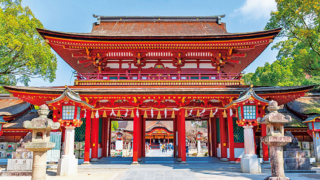
Michizane was exiled to Dazaifu.
It happened barely ten years after Mototsune’s death.
18. Mototsune Was Also a Man of Culture
Fujiwara no Mototsune was not a man of politics alone.
He also took a strong interest in learning and the arts.
He was known in particular as a master of the sho, the mouth organ.
He was also involved in compiling the historical record of Emperor Seiwa’s reign,
the Nihon Montoku Tenno Jitsuroku.
The Nihon Montoku Tenno Jitsuroku is one of the Six National Histories.
While running the government as the most powerful man at court, Mototsune was also engaged in historical compilation and the arts.
Mototsune was not a man who won power through force of arms.
He was a statesman who built power through office, connections, marriage alliances, ceremony, documents, and institutions.
19. Mototsune’s Family — Building the Fujiwara’s Future
Mototsune’s most important son was Fujiwara no Tokihira.
After Mototsune’s death, Tokihira rose to the center of the court and became Minister of the Left.
Mototsune’s daughter, Fujiwara no Onshi, became one of Emperor Uda’s consorts.
During his lifetime, Mototsune had steadily strengthened marriage ties with the imperial house.
These marriage ties would further solidify the Fujiwara’s later political base.
The political foundation Mototsune himself built was passed down to his descendants even after his death.
And beyond that lay the age of Fujiwara no Michinaga.
20. His Final Years — Resigning as Kampaku, and Death
The second year of Kanpyo (890). Mototsune resigned as Kampaku, citing illness.
The following year, the third year of Kanpyo (891), on the 13th day of the first month.
Fujiwara no Mototsune died.
He was fifty-six.
After his death, he was granted Senior First Rank and the posthumous title Lord Shosen.
He was also enfeoffed with Echizen Province.
His life had lasted only fifty-six years.
And yet within those fifty-six years, Mototsune reshaped the political structure of the Heian court.
21. Tracing Fujiwara no Mototsune’s Life in One Line
The third year of Jowa (836).
Born the third son of Fujiwara no Nagara.
↓
Adopted by his uncle Fujiwara no Yoshifusa.
↓
Coming of age at sixteen.
↓
Chamberlain at seventeen.
↓
Advances into the heart of the court at a young age.
↓
The eighth year of Jogan (866).
The Otenmon Incident.
↓
Rises to the center of power as Yoshifusa’s heir.
↓
872.
Yoshifusa dies.
Mototsune becomes the center of the Fujiwara Northern House.
↓
876.
Emperor Yozei’s accession.
Mototsune becomes regent.
↓
880.
Becomes Daijo Daijin.
↓
884.
Emperor Yozei abdicates.
Emperor Koko’s accession.
↓
Emperor Koko entrusts government to Mototsune; he becomes de facto Kampaku.
↓
887.
Emperor Koko dies.
Emperor Uda’s accession.
↓
Mototsune receives the formal edict naming him Kampaku.
↓
The Ako Incident.
↓
888.
The affair is resolved.
↓
890.
Resigns as Kampaku, citing illness.
↓
891.
Fujiwara no Mototsune dies.
↓
After Mototsune’s death, Sugawara no Michizane rises as Emperor Uda’s confidant.
↓
901.
The Shotai Incident. Sugawara no Michizane exiled to Dazaifu.
This sequence makes clear that Mototsune’s life did not end with him alone.
Mototsune’s politics carried forward into the next generation, through Fujiwara no Tokihira and Sugawara no Michizane.
Summary
Fujiwara no Mototsune was born in the third year of Jowa (836), the third son of Fujiwara no Nagara, and was adopted by his uncle Fujiwara no Yoshifusa.
Raised as Yoshifusa’s heir, Mototsune entered the court at a young age and rose swiftly through the offices of Kurodo, Sangi, Middle Counselor, Major Counselor, and Minister of the Right.
After the Otenmon Incident of 866 raised his standing further, he became the leading statesman of the Fujiwara Northern House when Yoshifusa died in 872.
He became regent to Emperor Yozei in 876 and Daijo Daijin in 880.
When Emperor Yozei abdicated in 884, Mototsune installed Emperor Koko on the throne.
Emperor Koko entrusted government to Mototsune, who ran the court in a role functionally equivalent to Kampaku.
When Emperor Koko died in 887, Emperor Uda took the throne.
Mototsune then received the formal edict naming him Kampaku.
But a dispute over the wording of that very edict produced the
Ako Incident.
Mototsune made an issue of the word “Ako,” withdrew from court, and brought government to a standstill.
The affair grew into the matter of Tachibana no Hiromi’s punishment, producing open conflict between Emperor Uda and Mototsune.
What Mototsune was defending here was never merely a question of interpretation.
It was the very scope of his own authority as Kampaku.
Mototsune took a hard line with the emperor to make his political authority unambiguous.
As a result, Emperor Uda revised the edict, and the affair was resolved.
This episode symbolizes the political structure of the early Heian period, in which imperial authority and the actual power of the Fujiwara existed as two separate things.
Beyond politics, Mototsune was also involved in state finances and provincial governance, through measures such as the Gangyo Kanden and the response to the Gangyo War.
He also helped compile the Nihon Montoku Tenno Jitsuroku, and was known as a master of the sho.
He died in the third year of Kanpyo (891) at fifty-six.
But Mototsune’s death did not mark the end of his politics.
His son Fujiwara no Tokihira rose to the center of the court, while Sugawara no Michizane, trusted by Emperor Uda after Mototsune’s death, also rose swiftly.
Then, in 901, the Shotai Incident occurred. Michizane was exiled to Dazaifu.
In other words, Fujiwara no Mototsune’s life was one in which he
inherited the power the Fujiwara Northern House had built under Yoshifusa, developed the political office assisting the emperor from regent into Kampaku, and built the vast structure of power that led into the later era of regental government.
Some hundred years before Fujiwara no Michinaga stood at the summit of regental government,
Mototsune already held enough power to declare, in the face of an imperial command, that he would not conduct the business of state unless his own authority was formally recognized.
He was a man who reshaped the balance of power between the emperor and the Fujiwara, and who gave form to the very political structure of the Heian period.
And after Mototsune’s death, it was within that same political structure that Sugawara no Michizane rose to prominence.
From Mototsune to Tokihira. And then to Michizane.
The power struggles of the Heian court were only beginning to move toward the next age.