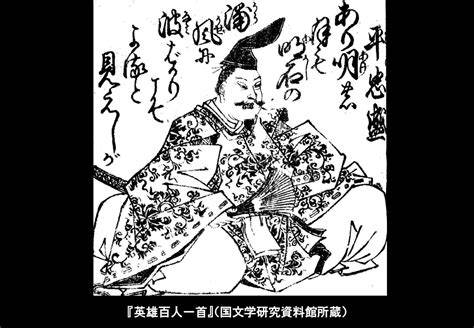
January 15, 1153.
Taira no Tadamori died at fifty-eight.
Right up to the end, he held senior fourth rank upper grade and the office of Minister of Justice — one step below a full court noble.
The Minister of the Left, Fujiwara no Yorinaga, wrote in his diary the Taiki that Tadamori had governed several provinces, amassed enormous wealth, kept retainers stationed across the country, and matched anyone in martial prestige — and yet remained humble and unassuming, never behaving with arrogance.
That was Yorinaga, of all people, praising him to this degree.
It tells you a great deal about how Taira no Tadamori was actually seen by the people of his own time.
The man who inherited everything was his thirty-five-year-old son, Taira no Kiyomori.
Kiyomori would go on to win both the Hogen Rebellion and the Heiji Rebellion and drive the Taira to the very top of the court, eventually rising to Chancellor in 1167.
But as of 1153, Kiyomori already had a substantial fortune waiting in his hands.
Connections with the cloistered government in Kyoto. A foothold in the western provinces built up through years as a governor. Ties to warriors forged while suppressing pirates in the Inland Sea. Even a foothold in trade with Song China through Kyushu.
All of it had been built up over a single lifetime by his father, Tadamori.
And Tadamori happens to have an almost perfect figure to compare him against.
Tadamori and Tameyoshi were both born in 1096.
Tameyoshi’s grandfather was “Hachiman Taro,” Minamoto no Yoshiie — a warrior of the very first rank, famous for the Former Nine Years War and the Later Three Years War.
Tadamori, by contrast, was only the second generation of an Ise Heishi line that had just begun working its way into the center of power under Cloistered Emperor Shirakawa.
In their teens, the Kawachi Genji would have looked like the more prestigious house by far.
By their fifties, the positions had reversed.
Tameyoshi never became a provincial governor and spent his later years working as a retainer for Fujiwara no Yorinaga. Tadamori, meanwhile, held one governorship after another, became a close aide to Cloistered Emperor Toba, and was even granted the privilege of entering the inner palace hall.
Born the same year, working as warriors in the same city — so why did the gap between them grow so wide?
Following Tadamori’s life makes it clear that Kiyomori’s success did not simply appear out of nowhere.
His Father, Masamori, Built “a Taira House That Served the Cloistered Emperor”
Taira no Tadamori was born in 1096, the son of Taira no Masamori.
Tadamori’s house belonged to a branch of the Kanmu Heishi rooted in Ise Province — the line later known as the “Ise Heishi.”
The man who pushed this family up in Kyoto was his father, Masamori.
Masamori served Cloistered Emperor Shirakawa and rose in status as a warrior guarding the retired emperor’s person.
The great turning point came in 1108, with the suppression of Minamoto no Yoshichika.
Minamoto no Yoshichika was a son of Hachiman Taro Yoshiie, generally identified as Tameyoshi’s father. He defied the court in the western provinces and was finally marked for suppression.
It was Taira no Masamori who was sent to Izumo Province to strike him down.
Masamori reported Yoshichika killed and returned to Kyoto in triumph the following year, 1109, to great acclaim from the court.
This is where the fortunes of the two houses began to drift apart.
For Minamoto no Tameyoshi, this was the incident in which his father was struck down as an enemy of the court.
For Taira no Tadamori, it was the incident in which his own father won the court’s recognition and pushed the Ise Heishi up a rung on the ladder.
By the time Tadamori turned thirteen, his father was already a powerful warrior in service to Cloistered Emperor Shirakawa.
Tadamori inherited that foothold and entered the capital on the strength of it.
Junior Lieutenant of the Left Watch at Thirteen — In His Youth, Not So Different From Tameyoshi
In 1108, Tadamori became Junior Lieutenant of the Left Palace Guards at just thirteen.
He went on to serve as a kebiishi as well, and was granted junior fifth rank lower grade in 1113, at eighteen.
Nothing about Tadamori at this stage marks him out as the “future of the Taira house.”
He kept the peace in Kyoto, pursued criminals, and took up arms when called on — steadily building a career as a warrior in service to the court and the cloistered government.
His exact contemporary, Tameyoshi, was walking a very similar path.
Tameyoshi joined the campaign against Minamoto no Yoshitsuna at fourteen and became a Junior Lieutenant of the Left Gate Watch. In 1123, when the monks of Enryakuji staged an armed protest, Tadamori and Tameyoshi stood together on the defending line.
Into their twenties, the two of them were simply two warriors working in Kyoto.
The difference became clear once Tadamori began winning provincial governorships one after another.
From Hoki to Echizen — Every New Governorship Made Tadamori Stronger
Tadamori served in succession as governor of Hoki, Echizen, and Bizen, and stayed closely involved with western provinces such as Mimasaka, Owari, and Harima throughout his career.
A provincial governorship at this time was not a mere administrative post.
A governor ran a province’s administration and tax collection, directed the local officials and warriors on the ground, and could expect to make a considerable income over the course of his term.
Serving as a governor got you things that simply staying in Kyoto never could.
You learned the land. You built relationships with local power-holders. You came to know the roads and the harbors that moved the tax rice.
And, above all, money came in.
Tadamori did not stop at one province. When a term ended, he moved to another and became governor again.
This pattern, repeated, mattered enormously.
The Tadamori who served the cloistered government in Kyoto and the Tadamori who operated as a governor in the western provinces were, of course, the same man — and the two roles fed each other.
Wealth carried back from the provinces could fund temple construction or gifts for the retired emperor. Earning the retired emperor’s trust brought even better appointments in return.
By his thirties, Tadamori had already built this cycle into a running machine.
1129 — Suppressing Pirates Takes Tadamori Out to Sea
In 1129, Tadamori was serving as governor of Bizen.
That March, the court ordered him to suppress pirates along the San’yo and Nankai coasts.
Pirates preying on tax-rice ships and merchant vessels in the Inland Sea had become a real problem, and Tadamori, with his existing foothold in Bizen and the wider western provinces, was given the task of hunting them down.
This is the point where “the sea” enters Tadamori’s sphere of activity.
Pirate suppression could not be handled by his own retainers alone — it required cooperation from coastal warriors, seafaring communities, and the local powers that controlled the harbors.
Operating across the western provinces under the court’s authority to suppress pirates gave Tadamori exactly the opportunity to build those relationships with local warriors.
That same July of 1129, Cloistered Emperor Shirakawa died.
This was a major turning point for Tadamori — the man who had championed the Taira house since his father Masamori’s day was suddenly gone.
Even so, Tadamori’s rise did not stall.
He remained just as valued under Cloistered Emperor Toba, who took over the cloistered government next.
From a warrior serving Cloistered Emperor Shirakawa to a close retainer of Cloistered Emperor Toba.
Tadamori kept his footing even as the man at the center of power changed.
1132 — The Man Who Built a Hall of Thirty-Three Bays
Under Cloistered Emperor Toba, Tadamori was entrusted with a major project.
The Tokujoju-in, built in the Shirakawa district.
On March 13, 1132, its dedication ceremony was held — an event recorded in the diary Chuyuki.
The Kannon hall Tadamori financed and built ran an extraordinary thirty-three bays long, with a great central statue of Kannon flanked by rows of smaller ones on either side.
Construction on this scale demanded enormous sums of money.
The wealth Tadamori had accumulated as a governor had just become visible for everyone to see.
Cloistered Emperor Toba rewarded the achievement generously.
Tadamori received honors tied to reappointment and transfer of office, and — even more significantly — was granted the privilege of entering the inner palace hall.
He was thirty-seven that year.
A Warrior Becomes a Courtier
With the privilege of entering the inner palace hall, Tadamori could now pass into the Seiryoden’s chamber for courtiers.
Courtiers of this rank were the people formally permitted to attend the emperor in person.
Tadamori entered that space as a warrior of the fourth rank.
He is often introduced as “the first warrior ever granted this privilege,” though there were in fact earlier precedents, such as Minamoto no Yorimitsu in the mid-Heian period. Even so, for the Ise Heishi of the early twelfth century, Tadamori’s elevation to the palace hall was nothing short of groundbreaking.
His father Masamori had gotten as close as anyone to Cloistered Emperor Shirakawa; Tadamori had now climbed all the way into the inner palace hall itself.
By this point, the road for the third generation, Kiyomori, to reach the rank of full court noble was already stretching visibly into view.
And yet the Tale of the Heike does not let Tadamori’s elevation stand as an unqualified happy story.
The court nobles, it says, did not simply welcome this newcomer warrior with open arms.
The Silver-Foiled Wooden Sword — “The Ambush in the Palace Hall” From the Tale of the Heike
Book One of the Tale of the Heike contains one of the most essential Tadamori stories: “the ambush in the palace hall.”
Courtiers, jealous of Tadamori’s newly granted access, plotted to attack him under cover of darkness during the Gosechi festival.
Tadamori got wind of the plot.
On the day of the ceremony, he entered the palace as usual with a conspicuous sword at his waist. Drawn slightly in the dim light, its blade caught a cold gleam.
His retainer Taira no Iesada was also waiting outside in the garden.
The men who had planned the ambush never made their move.
Afterward, though, when someone examined Tadamori’s sword, it turned out not to be real at all.
It was a wooden sword coated in silver foil.
Drawing a real blade inside the palace hall would have been Tadamori’s own transgression. Carrying nothing at all might have invited an attack.
So he carried a sword convincing enough to make “drawing it would be dangerous” the obvious conclusion, without it ever actually being a weapon.
As for Iesada, the story adds that Tadamori never brought him into the palace hall itself — he simply had him wait in the garden outside.
According to the Tale of the Heike, when Cloistered Emperor Toba heard the full story, he was impressed rather than displeased by how carefully Tadamori had prepared.
Of course, this episode comes from a war tale composed after the Hogen and Heiji Rebellions. The details of the wooden sword cannot be verified from contemporary sources.
Still, the Tadamori who appears in this story is a genuinely interesting figure.
Rather than silencing the courtiers through brute force, he stopped them from ever acting at all — without breaking a single rule of the palace himself.
This is how later generations chose to remember Kiyomori’s father.
Mocked, But He Never Left the Court
The Tale of the Heike contains one more scene in which Tadamori is mocked by his fellow courtiers.
According to the story, Tadamori had a slight squint, and the courtiers jeered at him with a pun linking “Ise Heishi” to “heishi,” a type of jug — a joke built entirely on wordplay.
This, too, has to be read as a piece of war-tale storytelling, but it conveys something real about the atmosphere Tadamori had to live in.
Rising in rank and being granted access to the palace hall did not mean he was immediately treated as an equal by families who had belonged to the court for generations.
Tadamori did not retreat because of it.
He composed poetry and took part in poetry gatherings. His personal collection, the Taira no Tadamori Ason Shu, survives, and seventeen of his poems were selected for imperial anthologies.
A general who hunted pirates, and a poet at court.
An administrator running a province in the provinces, and a participant in the retired emperor’s ceremonies back in Kyoto.
Moving easily between these two worlds was one of Tadamori’s great strengths.
1135 — Bringing Seventy Pirates Back to Kyoto
In April 1135, Tadamori was again appointed to suppress pirates.
By August, he had captured pirates and returned to Kyoto, handing over seventy of them to the kebiishi.
That is a striking number.
Even so, this campaign drew criticism at the time — some suspected Tadamori of labeling local powers who simply refused to submit to him as “pirates” in order to eliminate them.
From Tadamori’s own perspective, this was a mission ordered by the court to restore order at sea.
From the perspective of people on the ground, it looked like a warrior from the capital using “pirate suppression” as cover to force his way into the balance of local power in the western provinces.
Both things can be true at once.
Every time Tadamori hunted pirates, the Taira name spread further through the Inland Sea, and the bonds with the warriors who cooperated with him endured.
By Kiyomori’s era, the Taira would hold major influence stretching from the Inland Sea all the way to Kyushu. That foundation had been laid, piece by piece, in the days of Masamori and Tadamori.
Tadamori’s Gaze Turned Even Farther Out to Sea
Any account of Tadamori’s ties to the western provinces has to include one more thing: trade with Song China.
Japan had no formal diplomatic relations with Song China in the twelfth century, but merchant ships continued to sail between the two regardless.
Ceramics, spices, medicines, books, and silk textiles arriving from Song China were highly prized in Kyoto, and Song coinage flowed into Japan in large quantities.
Tadamori is thought to have been involved in managing the Kanzaki estate in Hizen Province, a holding of Cloistered Emperor Toba, and to have made contact with Song merchants through it.
The point here is not to cast Tadamori as some kind of modern “trader.”
He held authority as a governor, a position managing a retired emperor’s estate, and a web of connections to western warriors, harbors, and shipping.
Trade with Song China lay at the point where all of these overlapped.
Acquiring goods from overseas was wealth in itself. Presenting them to the retired emperor raised his standing in Kyoto.
He carried what he gained in the west back to the capital, then used the standing he built in the capital to push further into the west again.
Tameyoshi and Tadamori — Same Kind of Warrior, So What Made the Difference?
This brings us back to Minamoto no Tameyoshi.
Tameyoshi was hardly lacking in martial ability.
He joined the campaign against Minamoto no Yoshitsuna at fourteen, and spent decades in Kyoto handling armed temple protests and keeping the peace. In 1146 he was even appointed kebiishi.
His sons included Yoshitomo, Yoshikata, and Tametomo. The Kawachi Genji had not lost its military strength either.
Whatever separated him from Tadamori, it cannot be reduced to who was the stronger or weaker warrior.
Looking at Tadamori’s career, each job seems to have led naturally into the next.
His father Masamori works his way into Cloistered Emperor Shirakawa’s circle.
Tadamori inherits that relationship and becomes a provincial governor.
As governor, he gains wealth and connections across the western provinces.
He is entrusted with suppressing pirates, and builds still more ties with local warriors.
With the wealth he has gained, he builds a temple for Cloistered Emperor Toba.
That achievement earns him access to the palace hall and further office.
From there, he reaches even further, into managing retired-emperor estates and overseas trade.
Each success became, without a break, the foundation for the next one.
Tameyoshi worked long and hard as a warrior in Kyoto, but never had the chance to build real wealth as a governor, and only in his late forties did he strengthen his ties to Fujiwara no Yorinaga.
Tadamori’s house, by contrast, had spent two full generations, starting with Masamori, sinking deep roots into the cloistered government.
That gap in time mattered enormously.
The Death of Ienari — Kiyomori Was Not Always the Obvious Heir
Telling Tadamori’s family story through Kiyomori alone oversimplifies things.
Tadamori’s wife, Fujiwara no Munako — later known as Ike no Zenni — had a son named Taira no Ienari.
Ienari rose in rank early and was active close to Cloistered Emperor Toba. Given Munako’s family background and her connections at court, Ienari clearly carried real weight within the clan.
But in 1149, Ienari died suddenly in his mid-twenties.
Tadamori himself died four years later.
In the years between, Kiyomori moved to the forefront as the central figure of the Taira.
Tadamori had other sons as well — Tsunemori, Norimori, Yorimori, Tadanori among them.
They too gained court office and went on to support the Taira regime that followed.
What Tadamori left behind was never Kiyomori’s fortune alone.
The clan as a whole had grown to a scale where the entire family could operate in Kyoto together.
“Kiyomori Was the Son of Cloistered Emperor Shirakawa” — the Famous Rumor
A famous tradition holds that Taira no Kiyomori was secretly the illegitimate son of Cloistered Emperor Shirakawa.
Various texts of the Tale of the Heike and the Genpei Josuiki preserve a version of this story, in which a child born to Shirakawa and a woman connected to the lady Gion no Nyogo was taken in and raised by Tadamori.
No contemporary source can confirm Cloistered Emperor Shirakawa as Kiyomori’s real father, and the story itself does not appear in a single fixed form.
It cannot, therefore, be treated as established fact.
Even so, the fact that this story was told for so long is worth noting in itself.
Kiyomori’s rise was so extraordinary that people apparently felt compelled to look for its explanation in his very bloodline.
But even without swapping in Cloistered Emperor Shirakawa as the father, what Tadamori actually left to Kiyomori was more than enough on its own.
By the time Kiyomori inherited the house at thirty-five, the Taira were no longer merely “a warrior band on the rise.” They were already a clan with footholds firmly planted in both Kyoto and the western provinces.
Senior Fourth Rank Upper Grade, Minister of Justice — One Step From a Court Noble
Tadamori’s rank continued to climb afterward.
In 1144, he reached senior fourth rank upper grade.
During the Kyuan era he served as governor of Harima and also held the offices of Kura no Kami and Toba-in Betto.
In 1151, he became Minister of Justice.
Born into a warrior house, Tadamori had climbed all the way to senior fourth rank upper grade and Minister of Justice before turning sixty.
Appointment as a Consultant or similar office would have made him a full court noble.
Tadamori fell ill before he could reach it.
In January 1153, he resigned his offices, took Buddhist vows on the 15th, and died that same day at fifty-eight.
Fujiwara no Yorinaga mourned his death.
Enormous wealth. Retainers in every province. Unmatched martial prestige.
And yet, no arrogance.
Reading Yorinaga’s assessment, it becomes clear that Tadamori was never seen merely as “a warrior who happened to get rich.”
He survived for decades inside Kyoto’s aristocratic society and, in the end, died mourned by that very aristocracy.
Three Years After Tadamori’s Death, Kiyomori and Tameyoshi Ended Up on Opposite Sides
Three years after Tadamori’s death, in 1156.
Kyoto saw the outbreak of the Hogen Rebellion.
Kiyomori joined Emperor Go-Shirakawa’s side and, according to the Hyohanki, led over 300 riders toward the Shirakawa Kitadono.
Fighting on the same side was Minamoto no Yoshitomo.
On the opposing side stood Minamoto no Tameyoshi, born, like Tadamori, in 1096.
Tameyoshi lost and was executed within the same month.
The two men’s endings could not have been more different.
Tadamori died of illness as senior fourth rank upper grade and Minister of Justice, handing the family to thirty-five-year-old Kiyomori.
Tameyoshi found himself divided from his own son Yoshitomo on the battlefield, and was executed as one of the defeated.
Even the Taira were not entirely unified — Tadamori’s own brother Taira no Tadamasa stood against Kiyomori in the Hogen Rebellion and was executed afterward.
Even so, the core of the Ise Heishi held together around Kiyomori.
Rank, wealth, connections in the western provinces, retainers, ties to the retired emperor — all of it had continued unbroken from his father’s generation.
Kiyomori was able to carry all of that forward into the next era.
Before Kiyomori, There Was Tadamori
In the history of the Taira, Kiyomori inevitably looms too large.
He won the Hogen Rebellion, defeated Yoshitomo in the Heiji Rebellion, became Chancellor, married his daughter into the imperial family, and eventually made his own grandson emperor.
Because of that, the entire rise of the Taira can easily look like Kiyomori’s achievement alone.
In reality, it took three generations.
Taira no Masamori, who worked his way close to Cloistered Emperor Shirakawa and won recognition by suppressing Minamoto no Yoshichika.
Taira no Tadamori, who inherited that foothold, advanced into the western provinces as a governor, hunted pirates, built up wealth, and climbed all the way to Cloistered Emperor Toba’s palace hall.
And Taira no Kiyomori, who converted everything his father and grandfather had gathered into supreme power at court.
The fact that Tadamori was born in the very same year as Tameyoshi throws this progression into even sharper relief.
Tameyoshi, born the grandson of Hachiman Taro Yoshiie, would have looked far above Tadamori in family standing as a young man. Fifty years later, Tadamori had traveled an immeasurably longer distance.
No single dramatic victory produced that gap.
Go out to the provinces as governor. Build up people and money there. Push out to sea.
Take on work for the retired emperor. Turn the power that brings into the next office.
Tadamori kept that pattern going for half a century.
In 1153, he himself died before ever reaching the rank of full court noble.
But fourteen years later.
His son Kiyomori became the first warrior in history to reach the office of Chancellor.
Most of the road that led there had already been walked by Tadamori.