June, 1181.
A large army descended south from Echigo into Shinano.
Leading them was Jo Shiro Moritsuna.
He was the head of the Jo clan, which had been expanding its influence in Echigo, and was a powerful samurai under the Taira regime.
As the Jo clan’s forces entered Shinano, they advanced south, subjugating local powers along the way.
Few dared to confront them directly, and those who took refuge in castles were swiftly defeated.
Reports reaching the capital claimed their numbers were “over ten thousand horsemen.”
This massive force set up camp along the Yokota River, near the Chikuma River.
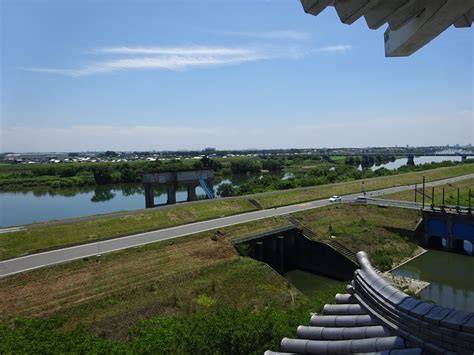
This location corresponds to the present-day area around Yokota, Shinonoi, in Nagano City.
On the opposing side was Minamoto no Yoshinaka.
For Yoshinaka, who had only raised his army the previous year, the Jo clan from Echigo was a foe of an entirely different scale.
Yet, it was not Yoshinaka’s forces that crumbled at Yokota River.
Jo Moritsuna suffered multiple wounds, discarded his armor and bow, and fled back to Echigo. According to the “Gyokuyo,” of the over ten thousand horsemen, only about three hundred returned with Moritsuna.
A Minamoto general raised in the Kiso Valley repelled the large force from Echigo that had surged into northern Shinano.
Two years later, Minamoto no Yoshinaka would defeat the Taira forces at Kurikara Pass and enter Kyoto. The battle at Yokota River was a pivotal moment that greatly expanded his influence.
Yoshinaka’s Uprising
Minamoto no Yoshinaka was born as the son of Minamoto no Yoshikata.
His father, Yoshikata, was a son of Minamoto no Tameyoshi and the younger brother of Minamoto no Yoshitomo. Minamoto no Yoritomo and Yoshinaka were cousins.
In 1155, at Okura Manor in Musashi Province, Yoshikata was killed by Minamoto no Yoshihira.
Yoshihira was the eldest son of Yoshitomo.
The young Yoshinaka, having lost his father, was sent to safety in Kiso, Shinano Province. According to the “Azuma Kagami,” he was raised by a prominent local figure, Nakaura Kanetomo.
Time passed, and in 1180…
The movement to overthrow the Taira clan, led by Prince Mochihito and Minamoto no Yorimasa, began to stir the Minamoto clan across various regions. In August, Yoritomo raised an army in Izu, and the Kai Minamoto also gathered their forces.
Yoshinaka also rose up in Shinano.
Initially, Yoshinaka was supported by warriors connected to Kiso, such as Higuchi Kanemitsu, the son of Nakahara Kanetomo, and Imai Kanehira. From there, Yoshinaka expanded his activities beyond Kiso Valley into eastern Shinano and Kozuke.
In September of the fourth year of Jisho, he clashed with Taira-aligned Kasahara Yorinaga in northern Shinano.
This battle is referred to as “Ichihara” in the Azuma Kagami.
A leading theory suggests it took place near Ichimura, around present-day Wakazato in Nagano City, where Yoshinaka was joined by Murayama Yoshinao and warrior monks from Kurita Temple.
The region around Zenkoji Plain was home to many Taira-aligned warriors, such as the Kasahara, Fuse, Tomibe, and Hoshina clans, making northern Shinano a challenging area for Yoshinaka to control easily.
After driving off Kasahara Yorinaga at Ichihara, Yoshinaka advanced into Kozuke.
According to the Azuma Kagami, he entered Kozuke in October of the same year and returned to Shinano in December.
These movements indicate that Yoshinaka’s base of operations was not limited to Kiso Valley during the time of Yokotagawa. His connections with eastern Shinano, centered around Saku and Chiisagata, and with the warriors of western Kozuke, also bolstered his military strength.
The Jo Clan from Echigo Planning to Invade Shinano
The Jo clan from Echigo was wary of Yoshinaka’s expanding influence.
The Jo clan was a warrior group descended from the Kanmu Taira lineage, believed to be descendants of Taira no Korehira.
They expanded their influence into northern Echigo, including Okuyama Manor, becoming one of the prominent warrior groups in Echigo during the Jisho era.
The leader at the time was Jo Taro Suketaka.
By the end of the fourth year of Jisho, the Taira regime was addressing the spreading rebellion in the eastern provinces, and Suketaka was preparing for military action towards Shinano.
However, at the beginning of the fifth year of Jisho, Suketaka suddenly passed away.
There are discrepancies in historical records regarding the month of his death, with the second volume of the Nagano City History stating February, while the fifteenth volume states March.
Suketaka’s brother, Shiro Sukemoto, took over the leadership of the Jo clan.
He is also referred to as “Jyosuke” in some records and later adopted the name “Nagashige,” becoming known as Jo Nagashige.
Despite losing their leader, the Jo clan did not abandon their plans to invade Shinano.
Sukemoto reorganized the forces and began moving south around May.
Jo Sukemoto’s Forces Enter Shinano
Sukemoto’s army, entering northern Shinano from Echigo, initially advanced with considerable momentum.
An important source documenting this situation is the diary Gyokuyo by Kujo Kanezane.
Kanezane recorded information about Yokota River on July 1, 1181.
Although it wasn’t a firsthand account from the battlefield, the information’s source is relatively clear.
Kanezane heard the story from Fujiwara no Kanemitsu, who had heard it from Fujiwara no Mitsutaka, the lord of Echigo, at the court of Retired Emperor Go-Shirakawa. It is likely that the information came through the provincial government of Echigo.
According to the “Gyokuyo,” there were initially very few who opposed the forces entering Shinano.
Many factions offered to surrender, and those who resisted and fortified themselves in castles were easily defeated.
The forces of Yoshinaka believed that the pacification of Shinano was near.
However, not all the samurai of Shinano immediately sided with Yoshinaka when faced with the large army led by the Jo clan from Echigo.
In northern Shinano, there had long been many factions loyal to the Taira.
Samurai like Kasahara no Yorinaga, Fuse no Koretoshi, Tomibe no Ietoshi, and the Hoshina clan were in opposition to Yoshinaka.
The forces of Yoshinaka advanced south along the Chikuma River, forming alliances with these factions.
Yoshinaka’s Army Moved North from Shiratori River
Upon learning of the Jo clan’s advance, Yoshinaka also gathered his forces.
There is no consensus among military chronicles about where Yoshinaka set out from.
The “Heike Monogatari” claims that Yoshinaka was at Yoda Castle.
Yoda Castle is identified with the Maruko area of present-day Ueda City in Nagano Prefecture.
The “Genpei Seisuiki” describes him gathering troops further east at Shiratori River in Unno Manor, located near present-day Tōmi City along the Chikuma River.
The “Nagano City History” suggests that Yoshinaka organized his forces centered in eastern Shinano and moved north from Shiratori River towards Yokota River.
The core of Yoshinaka’s army included not only warriors from Kiso but also forces from various parts of Shinano.
The “Gyokuyo” leaves an intriguing record here.
It divides the Genji forces that attacked the Jo forces into three groups:
“Kiso Party”
“Sako Party”
“Kai Province Takeda Party”
“Kiso Party” can be understood as the faction centered around Yoshinaka.
There is a theory that “Sako Party” refers to a group of samurai from Saku, while another theory suggests it is a miswriting of “Tako Party,” referring to warriors around Tago Manor in Kozuke Province.
The extent of the Kai Genji’s involvement in the Takeda Party is not definitively known.
The “Heike Monogatari” does not explicitly mention these three factions.
The forces opposing the Jo clan at Yokota River were not all directly Yoshinaka’s vassals,
but rather a coalition of samurai from Shinano, Kozuke, and possibly Kai, united against a common enemy under Yoshinaka’s leadership.
Yokota River—The Decisive Battle in the Southern Zenkoji Plain
Yokota River, where Jo Sukemoto set up camp, corresponds to the area around present-day Yokota in Shinonoi, Nagano City.
This region, where the Chikuma River enters the Zenkoji Plain, was traversed by roads connecting different parts of Shinano.
Many samurai from the Taira clan were present in this region.
The Fusae and Tomibe clans, who held power near Yokota, joined forces with the Jo clan, as recorded in military tales.
The exact date of the battle varies according to different sources.
The Azuma Kagami records it as October 9, 1182.
Various versions of the Heike Monogatari and Genpei Seisuiki place it around June 25, 1181.
The Gyokuyo suggests it was around June 13 or 14.
According to the Kikki, news of Jo Sukemoto’s defeat had already reached the capital by June 27, making it unlikely that the battle occurred on the 25th in Shinano and the information reached Kyoto two days later.
It is most natural to conclude that the Battle of Yokota River occurred around June 13-14, 1181.
This was merely about three months after Minamoto no Yukie was defeated by the Taira forces at the Sumon River on March 10.
The Jo Clan, Leading a Large Army, Was Confident of Victory
The number of troops under the Jo clan varies significantly across sources.
The Heike Monogatari claims over 40,000 horsemen.
Another military chronicle mentions a figure of 30,000 horsemen.
For Yoshinaka’s forces, the Heike Monogatari states there were over 3,000 horsemen.
In medieval military chronicles, “horsemen” often emphasize the scale of the forces, and it is unclear whether this includes attendants and foot soldiers.
The contemporary Gyokuyo describes the Jo clan’s army as “over 10,000 horsemen.”
While this does not provide a definitive number, it is clear that a considerable force moved from Echigo.
After entering Shinano, Sukemoto’s army continued to fight without much resistance until they reached Yokota River.
However, the soldiers, having marched long distances and fought battles, were fatigued.
The Gyokuyo records that they were attacked by the Shinano Genji in this state.
The smooth advance to Yokota River may have led to complacency in Sukemoto’s forces.
Yoshinaka’s Forces Attack from Three Directions
What happened at Yokota River?
The Gyokuyo, the closest contemporary record, does not detail the specifics of the battle.
Nevertheless, it clearly describes the moment the forces collapsed.
Just as Jo Sukemoto’s army was confident of victory, the Shinano Genji forces attacked from three directions.
The Kiso faction.
A force believed to be the Saku faction.
A group identified as the Takeda faction.
The Jo clan’s army, weary from their long campaign, was caught off guard by the sudden assault.
According to the information relayed to the capital by the Gyokuyo, the Jo soldiers were defeated “without even firing a single arrow.”
This expression might contain exaggeration from those reporting the defeat.
Nevertheless, it can be inferred that before the forces of Shishoku could fully form their ranks, they were attacked and quickly lost cohesion.
The outcome of the Battle of Yokotagawara was not determined by a single famous stratagem that would be celebrated in later times.
The simultaneous attacks from multiple directions, combined with the fatigue of the Jo clan’s troops who had marched a long distance, caused their large army to collapse all at once.
“From Red Flags to White Flags” as Depicted in the ‘Tale of the Heike’
Another famous battle scene is recounted at Yokotagawara.
This is the cunning plan involving red flags by Inoue Kuro Mitsumori.
In the ‘Tale of the Heike,’ Yoshinaka’s forces are said to number over three thousand horsemen, divided into seven groups by Mitsumori’s strategy.
The soldiers prepared red flags, the emblem of the Taira clan.
Troops bearing red flags appeared from the mountains and valleys.
To the soldiers of the Jo clan, these approaching forces seemed to be allies.
They were led to believe that reinforcements from the Shinano warriors supporting the Taira had arrived, closing the distance.
Soon, the seven groups united into one.
At that moment, the red flags were discarded.
In their place, the white flags of the Minamoto were raised.
With a battle cry, Yoshinaka’s forces charged, and the Jo clan’s soldiers fell into chaos and disarray, or so the story goes.
This is a representative anecdote of Yokotagawara, but it is a battle depiction conveyed by the ‘Tale of the Heike.’
In the contemporary ‘Gyokuyo,’ neither Inoue Mitsumori nor the red flags appear.
The Nagano City Chronicle acknowledges the possibility that individual anecdotes preserved in military records reflect actual combat experiences, yet it remains cautious about viewing them as the complete picture of the Battle of Yokotagawara.
There is a possibility that deception using flags actually took place.
The Collapse of the Jo Clan’s Forces—Shishoku Fled Wounded
As the Jo clan’s forces crumbled, their retreat became a rout.
Here again, the record in ‘Gyokuyo’ is detailed.
Shishoku sustained wounds in two or three places on his body.
While fleeing under pursuit, he discarded his armor and bow and arrows.
This indicates how desperate his situation was, as he had to abandon them to escape.
The forces he led from Echigo numbered “over ten thousand horsemen.”
Only “over three hundred horsemen” returned to their homeland with Shishoku.
‘Gyokuyo’ notes that of the remaining “over nine thousand horsemen,” some fell into valleys and lost their lives, while others fled into the mountains and disappeared.
This does not mean that over nine thousand were killed in battle.
The number includes those who deserted and left the army, as well as soldiers who scattered into the mountains.
Even so, the report that the army of over ten thousand lost its organized combat capability and that Shishoku returned to Echigo with only a handful of soldiers clearly conveys the magnitude of the defeat.
The Jo clan’s forces were pushed back from Shinano.
The Shinano Warriors Divided into Allies and Enemies
The “Heike Monogatari” and “Genpei Seisuiki” depict the Shinano warriors who fought at Yokota Riverbank.
Among the notable stories are the battle between Tombe Ietoshi, who sided with the Taira, and Nishi Shichiro, who supported Yoshinaka, as well as the tale of Tombe Ietoshi’s retainer, Kinebuchi Shigemitsu, who died trying to avenge his master.
These detailed duels are not confirmed in “Gyokuyo” and should be treated as war tales.
Underlying this was the fact that the warriors of northern Shinano were divided into two factions.
In the vicinity of Yokota Riverbank, forces loyal to the Taira, such as those from Kasahara, Fuse, Tombe, and Hoshina, were present.
Meanwhile, the forces of Murayama Yoshinao and Kurita Temple joined Yoshinaka.
The battle at Yokota Riverbank was not a direct clash between the Taira clan from Kyoto and Yoshinaka.
Instead, it was a conflict where the warriors within Shinano were divided into enemies and allies, centered around the Jo clan from Echigo and Yoshinaka.
The internal strife during the Jisho-Juei period was not merely a war between the Genji and the Taira, as evidenced by the battlefield in northern Shinano.
Yoshinaka’s Forces Grew Significantly at Yokota Riverbank
Yoshinaka had already been engaged in battles before Yokota Riverbank.
At Ichihara, he defeated Kasahara Yorinaga and expanded his influence into eastern Shinano and Kozuke.
However, he had not yet become a figure with control over a vast region like Yoritomo.
The Jo clan, whom he defeated at Yokota Riverbank, was a major power representing Echigo.
Moreover, the Shishoku army advanced into Shinano with a large force, subjugating local powers as they progressed.
Yoshinaka managed to drive this army out of Shinano.
The victory at Yokota Riverbank significantly enhanced Yoshinaka’s military reputation.
It also increased the reasons for warriors to gather under Yoshinaka’s banner.
By serving a strong commander, warriors could better protect their lands and defeat opposing forces.
In an era when warriors chose their allegiances, victories on the battlefield directly led to the formation of new armies.
Yokota Riverbank was the battle that empowered Yoshinaka.
Despite Winning, Yoshinaka Did Not Immediately March to Kyoto
After defeating the Jo clan at Yokota Riverbank, Yoshinaka did not immediately march on Kyoto.
From the fifth year of Jisho to the Yowa era, Japan was struck by a severe famine.
Particularly in Kinai and western regions, food shortages spread, making it difficult to secure provisions for sustaining large armies over long periods.
The Taira side was also unable to continue large-scale expeditions to the eastern provinces.
Yoshinaka consolidated his power base in Shinano while turning his attention to the Hokuriku region.
The Taira did not abandon the Jo clan.
Even after the defeat at Yokota Riverbank, the Shishoku were still tasked with pursuing Yoshinaka.
Nevertheless, the plan to swiftly subdue Yoshinaka by sending a large force from Echigo to Shinano faced a significant setback at Yokotagawara.
Meanwhile, anti-Taira movements were spreading along the Hokurikudo.
Echizen, Kaga, Etchu.
The battlefield gradually shifted to the Hokuriku region.
Two Years Later, Yoshinaka Faces the Taira Army
About two years after Yokotagawara, in the second year of Juei (1183).
The Taira clan dispatched a large military force to suppress the rebellion in the Hokurikudo.
The commanding general was Taira no Korehira.
Unlike the previous year in Shinano, this time the punitive force led by the Taira clan itself advanced towards Yoshinaka.
Yoshinaka, too, was not the same as he had been at Yokotagawara.
He had built up his power in Shinano and formed alliances with the warriors of Hokuriku, growing into a formidable force capable of confronting a large army.
Two years had passed since his victory over the Jo clan from Echigo at Yokotagawara.
Yoshinaka and the Taira army entered into fierce battles over the Hokurikudo.
What awaited them was the Battle of Kurikara Pass in May of the second year of Juei.
Learn more 📖↓