August, 663 AD.
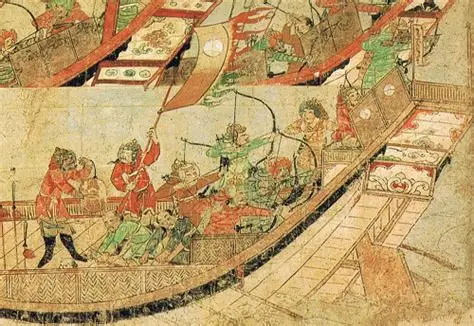
The allied forces of Wa and Baekje suffered a defeat at the hands of the Tang and Silla armies at Baekgang in the Korean Peninsula.
Pungjang, who had been welcomed as the king of Baekje by the restoration forces, fled to Goguryeo, marking the end of the attempts to restore Baekje.
The Wa forces withdrew from the Korean Peninsula, and some of the people of Baekje crossed the sea to settle in Wa.
The following year, 664, defense guards and beacons were established in Tsushima, Iki, and Tsukushi, and a water fortress was constructed in Tsukushi.
In 665, castles were built in Nagato Province, Ohno, and Tsubura.
In 667, Takayasu Castle, Yashima Castle, and Kaneda Castle were constructed, and in the same year, Prince Naka no Oe moved the political center to the Omi Otsu Palace.
After the defeat at Baekgang, the Wa state rapidly developed its defensive facilities across western Japan and reorganized the imperial administration.
661 AD: Empress Saimei Passes Away in Tsukushi
661 AD, the 7th year of Empress Saimei’s reign.
To support the restoration of Baekje, Empress Saimei traveled to Tsukushi with Prince Naka no Oe and others.
While staying at the Asakura Tachibana no Hironiwa Palace, she passed away on July 24 of the same year.
Prince Naka no Oe, who was the Crown Prince, did not ascend the throne at that time.
The “Nihon Shoki” records this period, during which Prince Naka no Oe governed as Crown Prince, as “Shosei” (a regency).
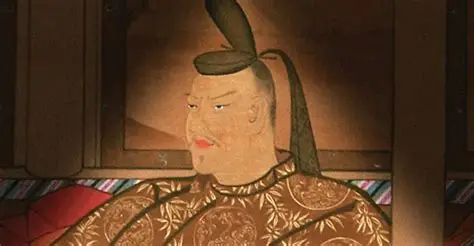
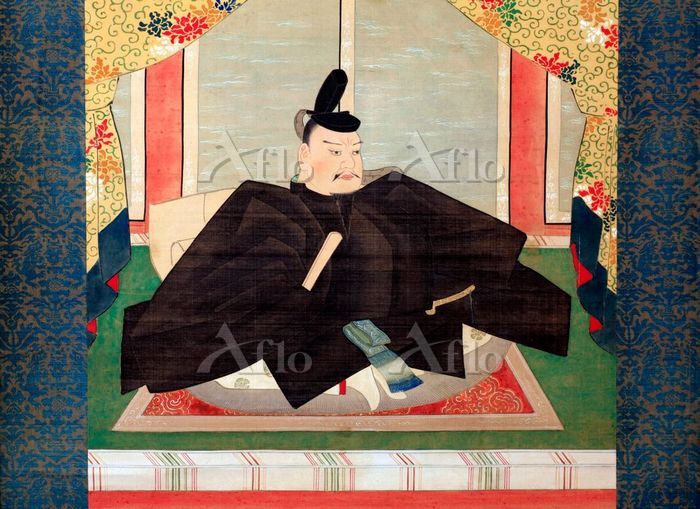
Prince Naka no Oe formally ascended the throne as Emperor Tenji in 668.
This was seven years after the death of Empress Saimei.
During this regency, the battles over the restoration of Baekje and the defeat at Baekgang occurred, followed by the strengthening of defenses in western Japan.
663 AD: The Defeat of Wa Forces at Baekgang
August 27, 663 AD.
The Wa navy engaged in battle with the Tang navy at Baekgang.
The fighting continued into the next day, August 28.
The “Nihon Shoki” notes that the Wa forces attacked the Tang forces without proper formation and were subsequently caught in a pincer attack by the Tang.
Many soldiers fell into the sea and drowned.
The stronghold of the Baekje restoration forces, Sabi Castle, also fell, and Pungjang fled to Goguryeo.
The Wa forces retreated from Baekje.
Among the Baekje people who crossed to Wa were engineers and officials who later contributed to castle construction.
About a year after Baekgang, the development of defensive facilities centered around Tsukushi began.
664 AD: Defense Guards and Beacons in Tsushima, Iki, and Tsukushi
664 AD, the 3rd year of Emperor Tenji’s reign.
The “Nihon Shoki” records,
“Defense guards and beacons were established in Tsushima Island, Iki Island, and Tsukushi Province, among others.”
Defense guards were stationed, and beacons were set up to signal changes with smoke or fire.
Tsushima and Iki, located on the sea route from the Korean Peninsula to Wa (Japan), along with Tsukushi in northern Kyushu, were positioned at the forefront of defense.
Furthermore, a water fortress was constructed in Tsukushi.
The Massive Water Fortress Blocking Tsukushi
The water fortress is a massive embankment that remains today, stretching from present-day Dazaifu City to Onojo City in Fukuoka Prefecture.
The Nihon Shoki records,
“A great embankment was built in Tsukushi to store water, and it was named the Water Fortress.”
as it states.
The main embankment that remains today is approximately 1.2 kilometers long.
The base width reaches about 80 meters.
An outer moat was constructed on the Hakata Bay side, and wooden conduits for channeling water through the embankment have also been confirmed.
It was a defensive structure built to cross the traffic route leading from the north to the Dazaifu area.
The Battle of Baekgang occurred about a year before this.
In the same year, 664, envoys from the Tang side stationed in Baekje came to Tsukushi.
664: Guo Wuchong Comes to Tsukushi
In the fifth month of the third year of Tenji’s reign.
Liu Renyuan, the commander stationed in Baekje, dispatched Guo Wuchong, a junior officer, and others to Wa (Japan).
Guo Wuchong and his party carried a formal letter and tribute items.
This envoy was not sent directly by the Tang emperor as an official mission, but rather from Liu Renyuan, who was stationed in Baekje.
The Wa side received them in Tsukushi.
Though they had been fighting the Tang at Baekgang the previous year, negotiations with the former Baekje region, now under Tang control, had begun immediately afterward.
Guo Wuchong and his party returned home in December of the same year.
The following year, 665, another Tang envoy arrived.
665: Liu Degao and 254 Others Visit
In the fourth year of Tenji’s reign (665).
Liu Degao, Baekje’s Ne Gun, Guo Wuchong, and 254 others were dispatched from Tang.
The group arrived in Tsushima in July and entered Tsukushi in September.
This was a follow-up mission to Guo Wuchong’s visit the previous year.
Two years after the Battle of Baekgang.
The Wa side continued diplomatic exchanges with the Tang while constructing defensive facilities.
In that year, 665, even larger-scale fortifications were underway in western Japan.
665: People from Baekje Involved in Fortification
In the eighth month of the fourth year of Tenji’s reign.
The court constructed castles in Nagato Province and Tsukushi Province.
According to the Nihon Shoki, a Baekje native, Tatsu-rank Tohon Shunsho, was dispatched to Nagato Province.
In the province of Tsukushi, two individuals from Baekje, Okuraifukuro and Shihifukubu, were dispatched.
They are credited with constructing Ono Castle and En Castle.
En Castle is believed to correspond to the later-documented Ki Castle.
Ono Castle remains on Mount Shioji, spanning the present-day cities of Onojo, Dazaifu, and Umi in Fukuoka Prefecture.
Earthworks and stone walls stretch along the mountain’s ridges, extending for several kilometers.
Behind Mizuki, Ono Castle was placed, and to its south, Ki Castle was constructed.
The fortification techniques brought by people from Baekje were utilized in the defensive structures following the Battle of Baekgang.
Migrants from Baekje
After the defeat at Baekgang, it wasn’t only those involved in castle construction who came to Wa from Baekje.
The Nihon Shoki records articles about Baekje officials and men and women being relocated to various regions.
In the 4th year of Tenji (665), over 400 men and women from Baekje were moved to Kamimashiki District in Omi Province, and in the following year, over 2,000 Baekje people were relocated to the eastern provinces.
The people who came from Baekje settled in various parts of Wa.
Some of them were granted official ranks by the court and became involved in politics, technology, and scholarship.
In 667, Three More Mountain Castles Were Built
In November of the 6th year of Tenji (667).
The Nihon Shoki records the construction of three new castles.
Takayasuki Castle in Yamato Province.
Yashima Castle in Yamada District, Sanuki Province.
Kaneda Castle in Tsushima Province.
Kaneda Castle in Tsushima was strategically positioned at the forefront of maritime routes connecting the Korean Peninsula and Wa.
In present-day Tsushima City, Nagasaki Prefecture, remnants such as stone walls, castle gates, and sluice gates remain.
Yashima Castle in Sanuki was placed along the Seto Inland Sea coast, and Takayasuki Castle in Yamato was built in the eastern highlands of the Kinai region.
The Mizuki of 664.
The castles of Nagato, Ono, and En in 665.
The castles of Takayasuki, Yashima, and Kaneda in 667.
The Nihon Shoki records the rapid construction of defensive facilities in the years following the Battle of Baekgang. Both the 667 account in the Nihon Shoki and the ruins confirm the existence of Kaneda Castle.
In that same year, the location of the court also changed.
In 667, the Move to Omi Otsu Palace
On March 19th of the 6th year of Tenji.
Naka no Oe no Oji moved to Omi Otsu Palace.
This corresponds to present-day Otsu City in Shiga Prefecture.
The Nihon Shoki notes that many people were opposed to the relocation and that there were satirical remarks and even a fire.
Nevertheless, the court moved to Omi.
Omi Otsu Palace faced Lake Biwa and was close to routes leading to the eastern provinces.
In the same year, in November, the castles of Takayasuki, Yashima, and Kaneda were constructed.
The following year, in 668, Naka no Oe no Oji formally ascended the throne at this Omi Otsu Palace.
668 AD: Emperor Tenji Ascends the Throne
In the first month of the 7th year of Tenji’s reign (668 AD).
Nakano Oe no Oji ascended to the throne.
This was Emperor Tenji.
Seven years had passed since the death of Empress Saimei in 661.
In the same year, 668, the Goguryeo kingdom on the Korean Peninsula was destroyed by the Tang and Silla forces.
Following the fall of Baekje in 660, the disappearance of Goguryeo significantly altered the power dynamics on the Korean Peninsula.
Close to Emperor Tenji was Nakatomi no Kamatari.
He had been involved in politics alongside Nakano Oe no Oji since the Isshi Incident of 645.
669 AD: The Death of Nakatomi no Kamatari
In the 10th month of the 8th year of Tenji’s reign (669 AD).
Nakatomi no Kamatari fell ill.
On October 15th, Emperor Tenji sent Prince Oama to visit Kamatari.
According to the “Nihon Shoki,” Prince Oama bestowed upon Kamatari the rank of Daishokukan and the title of Minister, and granted him the surname Fujiwara.
The following day, on the 16th, Kamatari passed away.
Thereafter, Kamatari was also known as Fujiwara no Naidaijin.
The name of the Fujiwara clan, which would later wield significant power at court, is recorded in the “Nihon Shoki” as having been given to Kamatari at this time.
670 AD: The Creation of the Kogo Nenja
In the 9th year of Tenji’s reign (670 AD).
The Kogo Nenja was created.
Kogo refers to the sexagenary cycle year of 670.
This was a nationwide registry that recorded people’s surnames, family relationships, and more.
The Kogo Nenja was used as a standard for verifying surnames in later eras and was preserved for a long time.
Around the same time, the maintenance of defensive facilities continued.
The “Nihon Shoki” also records the repair of Takayasu Castle and the storage of grain and salt.
The construction of fortifications, which began after the Battle of Baekgang in 663, did not end immediately thereafter.
The following year, 671, saw significant changes in the personnel of the Omi court.
671 AD: Prince Otomo Becomes Chancellor
On the 5th day of the first month of the 10th year of Tenji’s reign (671 AD).
Prince Otomo was appointed Chancellor.
Prince Otomo was the son of Emperor Tenji, born in the 4th year of Taika (648 AD).
He was 24 years old by traditional counting.
He is the first person explicitly recorded in the “Nihon Shoki” as being appointed Chancellor.
On the same day, Soga no Akayoshi was made Minister of the Left, and Nakatomi no Kane was made Minister of the Right.
Soga no Karamune, Kose no Hito, and Ki no Omi were appointed as Ministers of State.
The court leadership was established with Prince Otomo as Chancellor.
During this period, the “Nihon Shoki” also mentions Emperor Tenji’s brother, Prince Oama, under titles such as “Crown Prince and Great Imperial Brother.”
This is the future Emperor Tenmu.
What Was Prince Oama’s Position?
Prince Oama was the full younger brother of Prince Nakano Oe, and their mother was Empress Saimei.
His birth year is not confirmed.
During Emperor Tenji’s reign, he was a prominent member of the imperial family involved in politics.
In the first month of Tenji’s 10th year, the day after Prince Otomo became the Grand Minister, an order concerning ranks and laws was issued.
According to the main text of the Nihon Shoki, it was Prince Oama who proclaimed it, yet,
“In another account, it is said that Prince Otomo proclaimed it,”
is another tradition that remains.
It is difficult to determine from historical sources the extent of political power held by Prince Oama and Prince Otomo at the end of Emperor Tenji’s reign.
The Nihon Shoki refers to Prince Oama as “Crown Prince” and “Crown Prince Great Younger Brother,” but there is debate over whether this can be understood as equivalent to the later institutionalized role of Crown Prince.
In the autumn of 671, as Emperor Tenji’s health deteriorated, Prince Oama made a significant decision.
October 17, 671: To Emperor Tenji’s Sickbed
September of Tenji’s 10th year.
Emperor Tenji’s condition worsened.
October 17.
According to the Nihon Shoki, Emperor Tenji summoned Prince Oama to his sickbed and said,
“I entrust the future to you.”
Prince Oama did not accept the throne.
He proposed entrusting the realm to the Empress and allowing Prince Otomo to handle state affairs, expressing his wish to become a monk and practice Buddhism for the emperor’s sake.
Emperor Tenji consented.
The Nihon Shoki records that Prince Oama shaved his head on the spot, taking on the appearance of a monk.
The exact words exchanged in this conversation cannot be verified.
The Nihon Shoki was compiled under the lineage of Prince Oama, who would become Emperor Tenmu after winning the Jinshin War the following year, and the articles from the end of Emperor Tenji’s reign should be read with this context in mind.
Two days later, Prince Oama left Omi.
October 19: Prince Oama Enters Yoshino
October 19, Tenji’s 10th year.
Prince Oama met Emperor Tenji again and expressed his wish to enter Yoshino and practice Buddhism.
Emperor Tenji granted permission.
Prince Oama left the Omi Otsu Palace and headed for Yoshino.
The ministers accompanied him as far as Uji.
The Nihon Shoki recounts an anecdote where one person remarked,
“A tiger has been released with wings.”
Prince Oama was accompanied by his family, including Princess Unonosarara, as he entered Yoshino.
In Omi, a court remained with Prince Otomo as Grand Minister.
November 23: The Oath of Prince Otomo and Five Others
November 23, 671.
According to the Nihon Shoki, Prince Otomo, Soga no Akaye, Nakatomi no Kane, Soga no Katsuya, Kose no Hito, and Ki no Omi gathered at the western palace and swore an oath.
It is said that Prince Otomo held an incense burner and the six pledged to unite their hearts in service to the Emperor’s decree.
Earlier that year, Prince Otomo had been appointed Chancellor, while Soga no Akaye served as the Minister of the Left and Nakatomi no Kane as the Minister of the Right.
These were the central figures of the Omi Court.
In the same month of November, a large fleet was reported to have arrived at the Dazaifu in Tsukushi from Tsushima.
Arrival of 47 Ships and About 2,000 People from Tang
November 10.
The governor of Tsushima sent a messenger to the Dazaifu in Tsukushi to report on a group that had arrived from across the sea.
According to the Nihon Shoki, on November 2, four individuals—Shamon Dokyu, Tsukushi no Kimi Satsunoma, Karashima no Katsu Saba, and Fuse no Omi Iwa—returned from Tang.
They were accompanied by:
600 people including the Tang envoy, Guo Wuzong.
1,400 people including the envoy, Shataku Sontou.
In total, about 2,000 people aboard 47 ships were reported to be anchored at Hichijima.
Due to the large number of people and ships, there was a concern that the sudden approach to the Wa country might alarm the border guards, prompting an attack. Therefore, the four were sent ahead.
It had been eight years since the Battle of Baekgang.
Additionally, the Nihon Shoki records an article from 669 stating that “Tang dispatched Guo Wuzong and over 2,000 people.”
The 671 article provides detailed numbers of people, ships, and companions, leading to suggestions that the two articles might be duplicates.
Here, we follow the detailed account from November 671.
December 3, 671: The Passing of Emperor Tenji
December 3, 671.
Emperor Tenji passed away at the Omi Otsu Palace.
The Nihon Shoki records his age as 46.
For ten years, since the death of Empress Saimei in 661, he had governed without formally ascending the throne.
Eight years had passed since the defeat at the Battle of Baekgang.
During this time, the Mizuki of Tsukushi, the castles of Nagato, Ono, Takeru, Takayasu, Yashima, and Kaneda were constructed.
The capital was moved to Omi Otsu Palace, the Kogo Nenja census was created, and Prince Otomo became Chancellor.
When Emperor Tenji passed away, Prince Otomo was in Omi.
Prince Oama was in Yoshino.
In June of the following year, 672.
Prince Oama left Yoshino.
The Jinshin War began.
Learn more 📖↓

[Free shipping on orders over 3,000 yen] The Taika Reform / Toshiki Mizutani / Yukihiro Osugi