January 13, 730 (Tenpyo 2).
At the residence of Dazaifu Governor-General Otomo no Tabito, officials from Dazaifu and various provinces of Kyushu gathered.
White plum blossoms were in bloom in the garden.
The participants admired the plum blossoms while sharing sake and composing poems.
This gathering would later be known as the “Plum Blossom Banquet.”
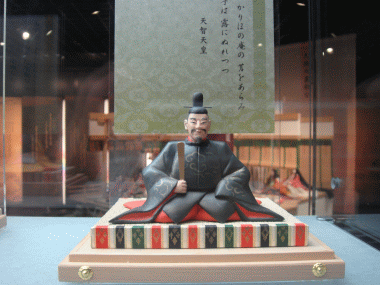
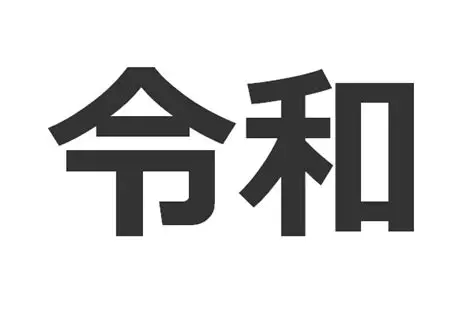
The 32 poems composed on this day were included in Volume 5 of the “Manyoshu,” and the preface to this volume became the basis for the era name “Reiwa” approximately 1,300 years later.
Otomo no Tabito, who hosted the banquet, was not a man who lived by poetry alone.
He rose to the rank of Middle Counselor at the imperial court, and in 720, when the Hayato people rebelled in southern Kyushu, he was dispatched as the Commander-in-Chief of the Conquest of the Hayato.
As a member of the Otomo clan, which had long been responsible for the military affairs of the court, he led troops and returned to Kyushu in his later years as the governor of Dazaifu.
There, he lost his wife, interacted with poets like Yamanoue no Okura, and left behind many poems.
General, politician, poet.
These seemingly disparate roles were united in the life of Otomo no Tabito.
1. Born into the Military Clan of Otomo
Otomo no Tabito is believed to have been born in 665 (Tenji 4).
His father was Otomo no Yasumaro.
The Otomo clan was a powerful family that had long been responsible for the military affairs of the court, producing figures like Otomo no Muroya and Otomo no Kanamura, who were active at the core of the imperial government.
Tabito was born into this family and pursued a career as an official.
Tabito’s official career becomes traceable from the Nara period onward.
In 710 (Wado 3), he is recorded as a Senior Fifth Rank, Upper Grade, and Left General.
This was the year of the relocation to Heijo-kyo.
In 711, he advanced to Junior Fourth Rank, Lower Grade, and in 715 to Junior Fourth Rank, Upper Grade, becoming the Minister of the Center.
In 718, he was appointed as a Middle Counselor.
By the time Tabito was in his 50s, he had become a high-ranking official at the center of the imperial government.
A significant mission, reminiscent of the Otomo clan’s military tradition, was entrusted to Tabito.
In 720.
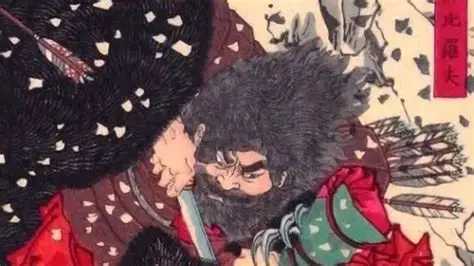
The Hayato people rose in rebellion in southern Kyushu.
2. The Hayato Rebellion of 720
February 29, 720 (Yoro 4).
Dazaifu reported to the court that the Hayato had rebelled and killed the Governor of Osumi Province, Yoko no Fumimaro.
This is the Hayato Rebellion as recorded in the “Shoku Nihongi.”
February 29 was the date of the report to the court from Dazaifu, and the exact date of the rebellion itself, as well as the detailed circumstances of Yoko no Fumimaro’s murder, remain unknown.
The court quickly organized a punitive expedition.
March 4.
Middle Counselor and Junior Fourth Rank, Lower Grade, Otomo no Tabito was appointed as the Commander-in-Chief of the Conquest of the Hayato.
Kasa no Mimuro and Kose no Mahito were chosen as vice-commanders.
Tabito was granted the imperial authority symbolized by the “setsu” and became the supreme commander of the expeditionary force heading to southern Kyushu.
The traveler at the time was in his mid-fifties.
He was already a central figure at the court, holding the position of Middle Counselor.
By not leaving the response solely to local officials and instead dispatching a high-ranking central official as the Grand General, it is clear that the court regarded this rebellion as a serious matter.
3. To Kyushu as the Grand General for the Subjugation of the Hayato
The subjugation army led by the traveler set out for Kyushu.
The “Shoku Nihongi” does not record the total number of troops in the subjugation army.
On June 17, the court sent an envoy to commend the efforts of the traveler and others involved in the subjugation.
The court’s army appeared to have the upper hand in the battle.
Then, on August 12,
the traveler was ordered to return to Kyoto temporarily.
At the same time, the vice generals and others were instructed to remain on site, as the Hayato had not yet been fully subdued.
When the traveler returned to the capital, the war was not yet completely over.
The subjugation continued thereafter, with the vice generals returning in the following year, 721.
It is more accurate to view the traveler as a figure who commanded a crucial phase of the rebellion’s suppression as the Grand General for the Subjugation of the Hayato, rather than as the general who completely subdued the Hayato.
You can follow the details of the “Hayato Rebellion” itself in the article that covers the course of the battle.
This expedition was not the traveler’s last involvement with Kyushu.
A few years later, he returned not as a general leading troops, but as the highest authority in the governance of Kyushu.
4. From Central Politics to Dazai no Sochi
After returning from the subjugation of the Hayato, the traveler further advanced in central politics.
In October 720, he served as an envoy to posthumously confer the titles of Chancellor and Senior First Rank on Fujiwara no Fuhito, who had passed away in August of the same year.
In 721, he attained the Junior Third Rank.
By 724, he had advanced to the Senior Third Rank.
Despite being from the military clan of the Ōtomo, the traveler’s role was not limited to military affairs.
He was involved in national governance as a Middle Counselor and participated in important court affairs and ceremonies as a court noble.
Around the 4th to 5th year of Jinki (727-728), it is believed that the traveler was appointed as Dazai no Sochi and went to Kyushu.
The city of Dazaifu states it was around 727, while the Nara Prefectural Man’yo Cultural Museum suggests the appointment was around 727-728.
This was his second time in Kyushu, following the subjugation of the Hayato in 720.
5. Returning to Kyushu as Dazai no Sochi
Dazaifu was a crucial administrative institution overseeing the provinces of Kyushu, handling diplomacy, defense, and interactions with foreign envoys.
The head of this institution was the Dazai no Sochi.
Previously, the traveler had gone to Kyushu as the supreme commander of a subjugation army.
In his later years, he returned to the same land as a high-ranking official responsible for the administration and diplomacy of Kyushu.
The traveler’s roles in his two visits to Kyushu were markedly different.
In 720, it was military affairs.
In his later years, it was politics, diplomacy, and culture.
At Dazaifu, officials, monks, and culture from the continent and the Korean Peninsula gathered.
In this environment, the poet in Tabito began to emerge strongly.
6. Losing His Wife at Dazaifu
Tabito, who became the governor of Dazaifu, is said to have lost his wife shortly after his appointment.
The Manyoshu contains poems by Tabito mourning his wife’s death.
Yamanoue no Okura, who was the governor of Chikuzen, also sent a poem mourning Tabito’s wife.
Tabito’s poetry output increased significantly after he took up his post in Kyushu as the governor of Dazaifu.
The Nara Prefectural Manyo Culture Museum counts one long poem and 65 short poems by Tabito. The Kaifuso also contains one Chinese poem.
Having been active in the central political scene for a long time, Tabito began to express his separation from his wife, aging, and longing for the capital in his poetry at Dazaifu.
In these works, Tabito’s personal emotions are revealed, beyond his titles as a politician and general.
7. Yamanoue no Okura and the Chikushi Poetic Circle
Around Dazaifu, there were other officials who composed poetry besides Tabito.
A representative figure was Yamanoue no Okura.
Okura was appointed as the governor of Chikuzen and interacted with Tabito.
Many poems were composed in Chikushi, including those by Ono no Komaro, Samimase, and Otomo no Sakanoe no Iratsume.
In later years, this cultural exchange came to be known as the “Chikushi Poetic Circle.”
Dazaifu City introduces the activities of Tabito and Yamanoue no Okura, who actively composed poetry around 728 to 730, as the “Manyoshu Chikushi Poetic Circle.”
Dazaifu was not only a center for politics and diplomacy but also a place where new culture from the continent arrived.
Tabito’s literary work also developed in this environment.
And in January 730, Tabito held a grand banquet at his residence.
8. January 13, 730 – The Plum Blossom Banquet
On January 13, 730 (Tenpyo 2).
Officials from Dazaifu and various provinces of Kyushu gathered at the residence of Otomo no Tabito.
Plum blossoms were in bloom in the garden.
At the time, plum blossoms were rare flowers introduced from the Chinese continent, symbolizing advanced culture.
The participants admired the plum blossoms, exchanged sake, and composed poems.
The “Thirty-two Poems on Plum Blossoms” were composed on this day.
Tabito himself also left one poem.
“In my garden, plum blossoms fall like snow flowing from the distant heavens.”
This poem likens the white plum blossoms falling in the garden to snow flowing from the sky.
It is included as poem number 822 in volume five of the Manyoshu, and Dazaifu City highlights it as a poem incorporating Chinese poetic expressions.
The Plum Blossom Banquet was also a gathering where officials at Dazaifu shared their knowledge of Chinese literature while composing Japanese poetry.
It was a banquet where Tabito’s roles as a politician and a cultured literary figure intersected.
9. The Preface to the Plum Blossom Poems and “Reiwa”
Before the 32 poems about plum blossoms, there is a preface written in classical Chinese.
Within it, there is a passage that reads, “In this auspicious month of early spring, the air is clear and the breeze is gentle.”
In 2019, the characters “Rei” and “Wa” from this text became the source for the new era name “Reiwa.”
The direct source of “Reiwa” was not a waka poem by Tabito himself.
It was the preface to the “Manyoshu” that accompanied the plum blossom banquet held at Tabito’s residence.
The author of this preface has not been definitively identified.
There are theories attributing it to Otomo no Tabito, Yamanoue no Okura, or another official who attended the banquet. The debate has continued for a long time. Many studies support the Tabito theory, but some view the author as unknown.
On the other hand, it is confirmed that Tabito was the host of the banquet.
In 2019, the government explained that “Reiwa” was the first era name in history to be derived from a Japanese classic. However, the preface to the Plum Blossom Poems itself is also noted for its influences from Chinese classics and literature.
In 720, Tabito led an expeditionary force to Kyushu.
Ten years later.
The record of a banquet held in the same Kyushu would, nearly 1,300 years later, lead to a new era name.
10. Sake and Chinese Literature
Among Tabito’s well-known works is a series of 13 poems called “Songs in Praise of Sake.”
These works, which take sake as their theme, celebrate the enjoyment of sake over worldly logic and honor.
The influence of Chinese literature and thought is also noted in the background of these poems.
Tabito was not solely a waka poet.
He also left behind Chinese poems in “Kaifuso.”
The preface to the Plum Blossom Poems incorporates many expressions from Chinese literature.
As a high-ranking court official involved in politics and diplomacy, Tabito lived in Dazaifu, where continental culture converged, and his erudition is reflected in his later literary works.
Tabito the poet and Tabito the politician were not separate entities.
His songs were born from his long life serving the court.
11. November 730—Returning to the Capital as Dainagon
About ten months after the plum blossom banquet.
In November of Tenpyo 2 (730), Tabito was appointed as Dainagon.
The “Manyoshu” title notes that he returned to the capital while still serving as Dazaifu Governor.
The Nara Prefectural Manyo Culture Museum also records that he became Dainagon in November and returned to the capital from Dazaifu.
The Dainagon is a high-ranking official in the Daijokan.
Otomo no Tabito rose to become one of the highest-ranking members of the court in his later years.
In January of the following year, Tenpyo 3 (731), he advanced to Junior Second Rank.
However, his time after returning to the capital was not long.
On July 25 of the same year, Otomo no Tabito passed away.
“Kaifuso” records that he was 67 years old.
Tabito’s son, Otomo no Yakamochi, later served as Governor of Etchu and left behind many poems, and is considered to have been deeply involved in the compilation of the “Manyoshu.”
The works of Yamanoe no Okura and others, with whom his father Tabito exchanged poems at Dazaifu, were preserved for posterity in the Man’yoshu.
In 720, when Tabito first headed to Kyushu, he was a general leading the campaign against the Hayato.
By 730, just before leaving Dazaifu, Tabito had become a renowned poet who hosted a plum blossom banquet, and he served as the Dazai no Sochi, responsible for the politics and diplomacy of Kyushu.
As a member of the military clan Otomo, he served the imperial court and rose to the center of power, leaving behind poetry that represents the Nara period in his later years.
The life of Otomo no Tabito encapsulates the military, political, diplomatic, and literary aspects of the Nara period in a single lifetime.
Learn more 📖↓

The Banquet of the Man'yo People (Kodansha Gendai Shinsho) [Makoto Ueno]
The “plum” loved by Otomo no Tabito.
From the plum blossom banquet held in Dazaifu in 730 to the era of “Reiwa.”
Reflecting on these ancient plums while savoring plums from Nara Prefecture could be quite delightful 🌸