January 1108 — an End the Exact Opposite of His Father’s Fame
The 1st month, the first year of Tennin (1108).
A warrior was struck down in Izumo.
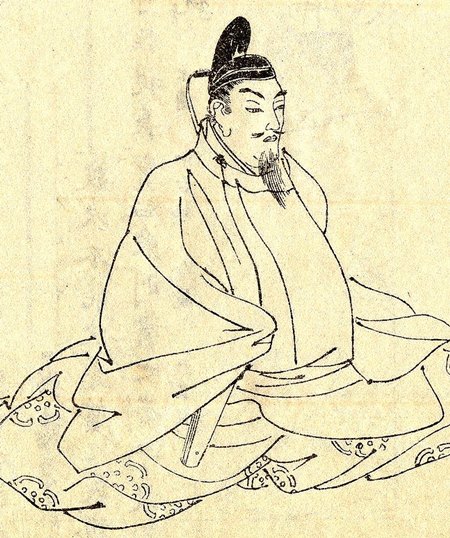
Minamoto no Yoshichika.
His father was “Hachiman Taro” Minamoto no Yoshiie — the central figure of the Kawachi Genji, who had lived through the Former Nine Years War and the Later Three Years War and won deep loyalty from the warriors of the east.
Yoshichika was born his second son, and became his heir after his elder brother Yoshimune died young. A man positioned to inherit his father’s martial reputation and his house, he ended up, in the end, receiving a punitive order from the very court his father had served.
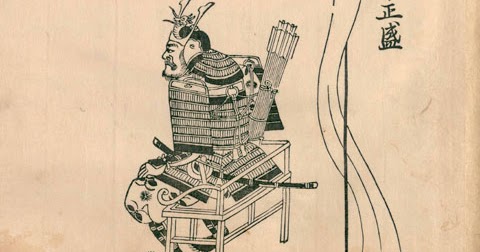
The man who struck Yoshichika down was Taira no Masamori, Governor of Inaba.
Father of Taira no Tadamori, and grandfather of Taira no Kiyomori.
This military achievement raised Masamori’s standing at a stroke, and gave the Ise Taira the foothold from which they rose to power at the center. Reference works treat the suppression of Yoshichika as the direct trigger for the Taira’s ascent.
The father, Yoshiie, raised the name of the Kawachi Genji to its height. The killing of his son, Yoshichika, is what let the Taira rise.
Set against the history of the Genji and the Taira, it is a strangely ironic father and son.
Where exactly did Yoshichika’s path go wrong?
Let’s trace his life.
Birth Year Unknown — Born the Second Son of Minamoto no Yoshiie
Yoshichika’s birth year is unknown.
His father was Minamoto no Yoshiie.
His mother was a daughter of Minamoto no Takanaga, Governor of Mikawa.
Yoshiie had several sons. Yoshichika was the second, and became heir after his elder brother Yoshimune died before him. Reference dictionaries of Japanese history likewise attribute Yoshichika’s rise to heir to his brother’s early death.
In the era when Yoshichika was growing up, his father Yoshiie was heading straight toward the peak of his career.
Born in 1039, Yoshiie had fought in the Former Nine Years War alongside his father Yoriyoshi from a young age, and became Governor of Dewa with the rank of Junior Fifth, Lower Grade, in 1063. On becoming Governor of Mutsu in 1083, he intervened in the internal feud of the Kiyohara clan and fought the Later Three Years War.
In 1098 he rose to Junior Fourth Rank, Lower Grade, and was even granted access to Retired Emperor Shirakawa’s own palace.
For Yoshichika, his father’s presence loomed enormously large.
The name “Hachiman Taro” spread across the eastern provinces, and warriors flocked to Yoshiie’s side. So many even donated their own land to him that the court eventually banned the practice — his influence had grown that large.
As the heir of such a house, Yoshichika must have carried enormous expectations.
From Left Palace Guard Lieutenant to Governor of Tsushima — Yoshichika, Too, Began as a Court Official
Little record survives of Yoshichika’s early years.
Even so, part of his career is known.
Junior Fifth, Upper Grade, Left Palace Guard Lieutenant. And later, Governor of Tsushima.
The Left Palace Guard Lieutenant was an official responsible for guarding the emperor, among other duties.
After that, he became provincial governor charged with Tsushima Province.
Like his father Yoshiie, Yoshichika, too, set out on his career by taking up court office.
The Genji and the Taira of this era did not live apart from the court the way the samurai of the later Kamakura period would. They took rank, served as provincial governors, attended on retired emperors and nobles, and used that standing to expand both military strength and personal connections.
Yoshichika, too, was meant to follow that same road.
The great turning point came after he took up his post as Governor of Tsushima and entered the western provinces.
Governor of Tsushima — Clashing With Dazaifu in Kyushu
Tsushima corresponds to present-day Tsushima City, Nagasaki Prefecture.
A border island near the Korean peninsula, it had extremely deep ties to Dazaifu, which governed the entire western seaboard.
After becoming Governor of Tsushima, Yoshichika began operating across various parts of Kyushu.
And there, his relationship with Dazaifu deteriorated.
The third year of Kowa (1101).
Dazaifu brought Yoshichika’s conduct to the attention of the court.
Reference dictionaries of Japanese history cite embezzlement of tax revenue; encyclopedic sources go further still, listing the killing of local people and the seizure of government property.
Yoshichika held the court-appointed post of Governor of Tsushima, yet operated by his own armed force in open defiance of Dazaifu’s authority.
The man who reported Yoshichika’s name to the court is an interesting figure in his own right.
The Dazai no Daini at the time was Oe no Masafusa.
Oe no Masafusa, Tied to His Father Yoshiie, Now Accuses the Son
Oe no Masafusa was one of the leading scholars of the late Heian period.
The later Oshu Gosannen ki tells an episode in which Minamoto no Yoshiie studied strategy under Masafusa.
Masafusa is said to have acknowledged the young Yoshiie’s valor while judging his grasp of strategy inadequate — and rather than take offense, Yoshiie is said to have gone to Masafusa himself and asked to be taught.
Historical fact and later legend need to be weighed separately here, but it is certain that Yoshiie and Masafusa came to be closely linked in the way later generations told the story.
That same Masafusa now found himself in the position of reporting Yoshiie’s son, Yoshichika, to the court.
In the father’s story, a teacher of strategy. In the son’s story, an accuser.
Seen as a man connected to two generations of the Kawachi Genji, it makes for an interesting contrast.
Was Yoshichika Really Just a “Problem Child”?
Reading only the later reference works, Yoshichika looks like an unmanageable troublemaker.
Seizing tax revenue. Killing people. Defying Dazaifu.
Later, in Izumo, killing a provincial official as well.
There is no doubt that Yoshichika did use armed force in clashes with the court’s own administrative apparatus.
But this alone leaves one thing hard to explain.
Why did local people join him?
In Izumo, forces from the surrounding provinces rallied to Yoshichika’s side. Matsue City’s own historical research frames his conduct within the broader conflict between provincial governors and local powers.
A provincial governor of the late Heian period collected tax revenue and other goods from his assigned province and sent them on to Kyoto.
On the ground, meanwhile, were powerful local figures with their own interests in land, transport, and tax collection.
The two sides collided often.
Into that friction stepped Yoshichika, carrying the enormous name of Hachiman Taro Yoshiie’s own heir.
To anyone at odds with a central government appointee, Yoshichika could serve as a commander who combined military force with a great name.
It is closer to the truth to say that Yoshichika’s actions reflected both his own violent temperament and the clash of local interests at the same time.
His Father, Yoshiie, Steps In — Bring the Boy Back to Kyoto
Following the 1101 complaint, the court began to respond to Yoshichika.
His father, Yoshiie, acted as well.
He sent his own retainers to the western provinces, hoping to bring Yoshichika back to Kyoto.
By this point Yoshiie was already past sixty.
A man who had united the warriors of the east and carried a reputation the court itself watched warily.
Even his father’s order did not bring Yoshichika back.
Matters only grew worse from there.
Yoshichika is said to have even killed an official messenger sent from the court’s side.
This had gone beyond anything his father’s own authority could settle.
The punishment awaiting Yoshichika grew heavier still.
1102 — the Heir of the Kawachi Genji Is Exiled to Oki
The fourth year of Kowa (1102).
Yoshichika was stripped of his post.
His sentence: exile to Oki Province.
Oki corresponds to today’s Oki Islands, Shimane Prefecture.
A place used as a site of exile since the Heian period.
The heir of the Kawachi Genji had lost his court rank and office and become an exile.
This was the same era in which his father, Yoshiie, had risen to Junior Fourth Rank, Lower Grade, and been granted access to Retired Emperor Shirakawa’s palace.
The father’s reputation kept rising. The son was cast out of central society.
Within the very same house, father and son were moving in exactly opposite directions.
Yoshichika After Exile — Several Years Where His Trail Grows Faint
Yoshichika’s movements from 1102 to 1107 cannot be traced in detail.
His exile to Oki is recorded.
After that, he resurfaces in the San’in region.
What matters here is that people did not stop gathering around Yoshichika even after he became an exile.
Even stripped of his office, Yoshichika still had one thing that never disappeared.
The name of being Minamoto no Yoshiie’s son.
The Kawachi Genji had built a military reputation in the east across three generations — Yorinobu, Yoriyoshi, and Yoshiie. Yoshichika was that line’s heir.
Even having lost his rank in Kyoto, that family name retained the power to move people in the provinces.
July 4, 1106 — His Father, Yoshiie, Dies
The 4th day of the 7th month, the first year of Kasho (1106).
Minamoto no Yoshiie died.
Sixty-eight by traditional count.
The man who had upheld the Kawachi Genji’s martial reputation for nearly half a century, from the Former Nine Years War to the Later Three Years War, was gone.
For Yoshichika too, this was a major turning point.
His father had been the man who tried to bring him back to Kyoto — and at the same time, an enormous presence the court could not ignore when deciding how to handle him.
That Yoshiie was now dead.
The following year, 1107, Yoshichika reappeared on the stage of history.
And this time, he turned his weapons directly against the administration of a provincial governor.
June 1107 — Yoshichika Appears in Izumo
The 6th month, the second year of Kasho (1107).
Yoshichika crossed into Izumo Province.
The Governor of Izumo at the time was Fujiwara no Ieyasu.
Yoshichika’s side killed the deputy governors Ieyasu had installed locally, and seized tax revenue and other government property.
A deputy governor was the man responsible for local administration on behalf of a provincial governor residing in Kyoto.
Yoshichika killed that deputy and seized even the goods the provincial office had collected.
From the court’s point of view, this was an act of force turned directly against provincial administration itself.
Yoshichika then entered “the Cave of Kumodo,” thought to correspond to present-day Kumozu, in the Mihonoseki district of Matsue City.
The sources say he built a “fort” there.
Kumozu Harbor, Able to Anchor Ten Ships — the Place Yoshichika Chose
Kumodo is identified with present-day Kumozu Bay.
This was no hideaway deep in the mountains.
It was a harbor facing the sea.
The Izumo no Kuni Fudoki records it as “Kumoto no Ura,” a harbor able to anchor ten ships.
It also lay close to Oki.
And it connected to the maritime traffic running east and west along the Sea of Japan coast.
The significance of Yoshichika’s choice of this location is considerable.
By ship, he could move to Oki. He could also flee along the coast.
He could move supplies and people by sea as well.
Yoshichika had not simply fled into the mountains under pursuit — he had established his base at a strategic crossroads of transportation.
Yoshichika Had Allies Across Provincial Borders
What makes Matsue City’s historical research especially interesting is what it records about Yoshichika’s allies.
When Yoshichika rose up, there were those in neighboring provinces who sided with him as well.
Sources also record that at the time of his suppression, the heads of twelve men who had fought alongside Yoshichika were taken.
The Yoshichika this reveals looks quite different from a lone exile living as a fugitive.
Among local forces resentful of their governors, some were willing to raise Yoshichika up as their commander.
The name of being Minamoto no Yoshiie’s heir. Military force he could command on his own. The nerve to confront a provincial governor and Dazaifu head-on.
These qualities likely drew in forces opposed to the center.
This is also why Yoshichika was so dangerous to the court.
Capturing the man himself was no longer enough to settle the matter.
December 19, 1107 — Taira no Masamori Named as the Punitive Commander
The 19th day of the 12th month, the second year of Kasho (1107).
The court ordered Yoshichika’s suppression.
The commander chosen was Taira no Masamori.
At the time, Governor of Inaba.
Masamori was the grandfather of the later Taira no Kiyomori.
Set against the arc of later Japanese history, this choice was symbolic.
Not long before, the name that came to mind as the leading warrior of the age had been Minamoto no Yoshiie.
Now the task of striking down that same Yoshiie’s son fell to Masamori of the Ise Taira.
And Masamori was a warrior who had built his career by deepening his ties to Retired Emperor Shirakawa.
After Yoshiie’s death, one can already see the retired emperor beginning to rely on the Taira as a new military force.
240 to 250 Men Under Masamori’s Own Command — the Scale of the Suppression
Masamori’s own direct force, according to Matsue City’s research, numbered roughly 240 to 250 men.
It was centered on his own clansmen and warriors from Iga Province, where he held land.
This alone was not enough to move against Yoshichika.
The court granted Masamori the authority to muster warriors from five surrounding provinces.
Izumo. Inaba. Hoki. Oki. And either Iwami or Bingo.
Masamori advanced toward Izumo with his own troops as the core, gathering more men in Inaba and Hoki along the way.
Yoshichika had local supporters.
Masamori had the court’s own order and the military strength of several provinces.
In the end, that gap proved decisive.
January 6, 1108 — Masamori Reaches Izumo
The 6th day of the 1st month, the third year of Kasho (1108), the new year now begun.
Masamori arrived in Izumo.
The fighting with Yoshichika’s side began from here.
Unfortunately, unlike the Mutsu Waki‘s detailed account of troop positions and single combats in the Former Nine Years War, no such source survives for this campaign.
How many men Yoshichika commanded. Where exactly his forces clashed head-on with Masamori’s army.
How the Cave of Kumodo itself was attacked.
None of these details survive.
Even so, it is certain that the outcome was reached with striking speed.
By the 19th of the 1st month, word had already reached Kyoto:
“Yoshichika has been slain,” Masamori reported.
Carrying that news from Izumo to Kyoto took time in itself.
Which means it is entirely possible that fewer than ten days passed between Masamori’s arrival in Izumo and Yoshichika’s fall.
Yoshichika’s End — No Detailed Account of How He Died Survives
Reference works generally date Yoshichika’s death to January 6, 1108.
Matsue City’s history, meanwhile, presents the sequence as Masamori entering Izumo on the 6th of the 1st month, striking down Yoshichika shortly afterward, and the victory report reaching Kyoto on the 19th.
The exact dating differs somewhat depending on the source.
Whether Yoshichika drew his sword and fought to the last, or was captured while fleeing, or who exactly took his head —
none of that scene survives.
His father, Yoshiie, left behind the story of being surrounded by more than two hundred riders at Koromogawa, and the episode of spotting an ambush from the broken formation of geese.
His heir Yoshichika’s own end is, strangely, almost featureless by comparison.
That very vagueness would go on to make the Yoshichika who came after his death an even stranger figure.
January 29 — Yoshichika’s Head Enters Kyoto
Once the report of a successful suppression arrived on the 19th of the 1st month, the court moved toward rewards without waiting for Masamori’s return to the capital.
Masamori was transferred from Governor of Inaba to the more lucrative post of Governor of Tajima.
On the 29th of the 1st month, Masamori returned to Kyoto bearing the heads of Yoshichika and his men.
Twenty-three days after entering Izumo.
Counting from the punitive order issued on the 19th of the 12th month, 1107, barely 41 days had passed.
The martial reputation his father Yoshiie had spent years building.
The suppression of his heir was over in little more than a month.
And Masamori’s standing at the center rose sharply on the strength of this achievement.
He went on to win further merit suppressing pirates and others, consolidating the foundations of the Ise Taira.
His son was Taira no Tadamori.
His grandson was Taira no Kiyomori.
“Was That Head Really Yoshichika’s?”
And yet Yoshichika’s story did not end when his head reached Kyoto.
Doubt lingered over whether the man Masamori had killed was really Minamoto no Yoshichika at all.
Encyclopedic sources record that the truth of Yoshichika’s suppression was already being questioned at the time.
Yoshichika had spent long years moving through Kyushu and San’in.
He was not a man the people of Kyoto saw face to face on a regular basis.
And Masamori’s suppression had concluded far too quickly.
Detailed reports of the fighting itself were scarce as well.
All these conditions together left behind a persistent rumor: “Yoshichika is still alive.”
And that rumor would go on to become a real incident.
1117 — “Minamoto no Yoshichika” Appears in Echigo
Nine years after Yoshichika’s suppression, in the fifth year of Eikyu (1117).
A monk claiming to be the former Governor of Tsushima, Minamoto no Yoshichika, appeared in Echigo Province.
He had been moving in and out of the residence of a local resident, Taira no Nagamoto.
On the 5th of the 5th month, the Kebiishi-cho ordered Nagamoto to hand over this vagrant monk claiming to be “Minamoto no Yoshichika.”
This record survives in regional historical chronologies as well.
It is not evidence that the real Yoshichika had survived 1108.
What is more interesting is that simply claiming to be Yoshichika was enough to bring the Kebiishi-cho into action.
Nine years on, that name still carried political weight.
Why Did a “False Yoshichika” Work?
Men claiming to be Yoshichika kept appearing afterward as well.
Here lies the strangeness of Yoshichika as a figure.
Claiming to be some unknown warrior draws no following.
It mattered because the name was “Minamoto no Yoshichika.”
Son of Hachiman Taro Yoshiie. Heir of the Kawachi Genji. A warrior struck down by the court.
To anyone resentful of a provincial governor or of central authority, it was an extremely usable name to raise as a banner of resistance.
Even though Yoshichika’s own life ended in 1108, the name “Yoshichika” went on living afterward.
Ironically, it was only after being cast out by the court that the name Yoshichika took on an independent power of its own within local society.
His Son Tameyoshi — Thirteen When His Father Was Struck Down
Yoshichika’s bloodline did not die out either.
The most important figure among his descendants was Minamoto no Tameyoshi.
Born in the first year of Eicho (1096).
Encyclopedic sources list him as Yoshichika’s fourth son, by one account his fifth.
When Yoshichika was struck down in 1108, Tameyoshi was thirteen by traditional count. Matsue City’s history likewise gives his age as thirteen at the time of his father’s suppression.
His grandfather Yoshiie had died in 1106. His father Yoshichika was struck down as an enemy of the court in 1108.
The thirteen-year-old Tameyoshi lost, within the span of barely two years, both the grandfather who had built the Kawachi Genji’s golden age and the father meant to inherit that house.
Tameyoshi was afterward adopted, first by his uncle Yoshitada and then by his grandfather Yoshiie, and went on to inherit the main line of the Kawachi Genji.
Tameyoshi’s own eldest son was Minamoto no Yoshitomo. Yoshitomo’s own son was Minamoto no Yoritomo.
The lineage of the Kawachi Genji runs on as
Yoshiie — Yoshichika — Tameyoshi — Yoshitomo — Yoritomo.
Yoshichika, struck down as an enemy of the court, was in fact the great-grandfather of Yoritomo, founder of the Kamakura shogunate.
One Year After Yoshichika’s Death — the Kawachi Genji Fall Further Still
After Yoshichika’s death, leadership of the Kawachi Genji passed to his younger brother, Minamoto no Yoshitada.
Had the clan settled under him, the damage from Yoshichika’s fall might still have been repaired.
But in 1109.
Yoshitada, too, was attacked in Kyoto and died.
Three years after Yoshiie’s death, one year after Yoshichika’s suppression, the clan had now lost Yoshitada as well.
Suspicion for Yoshitada’s assassination fell on the family of Yoshiie’s own brother, Minamoto no Yoshitsuna, and the affair grew into a large-scale conflict within the Kawachi Genji itself. Tameyoshi, fourteen by traditional count, joined the pursuit of Yoshitsuna and was afterward made Left Palace Guard Lieutenant.
The Kawachi Genji’s power, which had swelled continuously right up to Yoshiie’s final years, began shaking violently from within the moment he died.
Father Yoshiie and Son Yoshichika — What Set Them Apart
Minamoto no Yoshiie, too, was never an entirely easy warrior for the court to manage.
In the Later Three Years War, he had fought on even after the court refused to recognize it as an official punitive campaign, and afterward paid his own warriors out of his private wealth.
When land donations to Yoshiie grew excessive, the court banned the practice outright.
Yoshiie, too, was watched closely.
Even so, Yoshiie never let go of the court’s own framework of provincial governorships and official rank.
Governor of Dewa. Governor of Mutsu. Junior Fourth Rank, Lower Grade. Access to a retired emperor’s palace.
He held military power, and turned that power into standing within the court itself.
Yoshichika clashed with Dazaifu in Kyushu, and in Izumo killed a provincial deputy and seized government property.
The father held great military strength. The son held great military strength as well.
What differed was how each of them used that strength within their relationship to the court.
Yoshiie, watched warily all his life, still ended it as the leading figure of the warrior class.
Yoshichika pushed deep into local conflicts, and in the end became a target of the court’s own punitive force.
A Little Too Good to End as Just a “Problem Child”
Laid out plainly, Yoshichika’s record certainly earns him the label “problem child.”
Defying Dazaifu.
Trouble over tax revenue. Exile to Oki. Killing a deputy governor in Izumo. Finally struck down by Taira no Masamori.
Set against his father Yoshiie, his decline looks almost spectacular.
And yet something about Yoshichika’s life resists being explained by that alone.
People kept gathering around him even after his exile.
In Izumo he established his base at a key crossroads of Sea of Japan traffic.
He had allies in neighboring provinces.
Nine years after his death, men still claimed to be Yoshichika, and the Kebiishi-cho itself was moved to act.
Behind all of this lies something more than the man’s own character: the power of the name “son of Hachiman Taro Yoshiie.”
The martial reputation Yoshiie built over his entire life did not vanish even when his son became an enemy of the court.
If anything, once Yoshichika carried that enormous name outside the bounds of the court, he became a figure who drew in the grievances of the provinces.
The father led warriors from within the court.
The son clashed with the court out in the provinces.
And that son’s own son, Tameyoshi, went on to inherit the Kawachi Genji once again, carrying it forward toward the Hogen Disturbance half a century later.
From Yoshiie to Yoshichika. From Yoshichika to Tameyoshi.
It was from this father and son’s own generation that the history of the Kawachi Genji suddenly grew far more precarious.
The man standing at that turning point was Minamoto no Yoshichika.