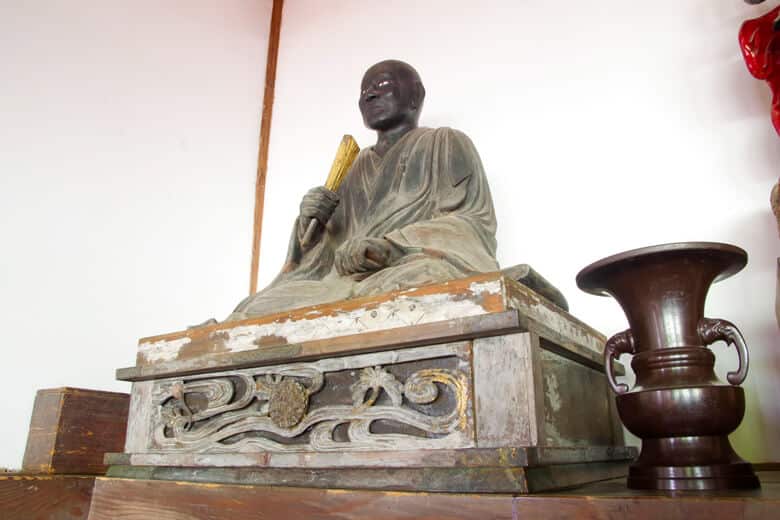
The Son Left Behind at Ishibashiyama
In August 1180, the forces of Minamoto no Yoritomo suffered a defeat at Ishibashiyama in Sagami Province. Yoritomo fled into the mountains, and his allied warriors scattered. Among those retreating was Okazaki Shiro Yoshizane, who lost his eldest son, Sanada Yoichi Yoshitada, in the battle. It is said that Yoshitada grappled with the enemy commander Matano Kagehisa and was slain by Nagao Sadakage, who joined the fray. While the father survived, the son did not return. Following Yoshizane’s story reveals how the magnitude of his loss on the battlefield continued to echo throughout his life.
At the time, Yoshizane was an old general, more than thirty years senior to Yoritomo. He was not a young warrior making his debut at Ishibashiyama. He held lands in Sagami and had long been a member of the Miura clan. Supporting Yoritomo’s uprising and witnessing the establishment of the shogunate, he eventually faced hardship with his lands in his later years, tearfully appealing his plight before Hojo Masako. The path leading to this point cannot be fully explained by his loyalty during the uprising alone.
The Fourth Son of Miura Yoshitsugu
Yoshizane is said to have been born as the fourth son of Miura Yoshitsugu. His eldest brother was Miura Daisuke Yoshiaki, the head of the Miura clan who perished in the Battle of Kinugasa Castle in 1180. Miura Yoshizumi, Yoshiaki’s son, was Yoshizane’s nephew. The people of the Miura clan, who were prominent in the early days of the Kamakura shogunate, did not all reside in a single household. They branched out across various regions, building their strength as warriors from their respective bases.
The Miura clan had been known for their close ties with the Minamoto family since the time of Minamoto no Yoshiie. While the ‘Azuma Kagami’ chronicles this lineage, it cannot be taken as the literal reality of the master-servant relationship over generations. Nevertheless, the clan’s side clearly valued their connection with the Minamoto, as reflected in their later cooperation with Yoritomo. Although Yoshizane was not the head of the main family, he established his own foundation as a branch of the Miura clan.
Why He Took the Name Okazaki
Known as Miura Shiro, Yoshizane established his base in Okazaki, Osumi District of Sagami Province, and took the name Okazaki. This area spans present-day Hiratsuka City and Isehara City. The name Okazaki was not merely a label; it indicated where he had laid down roots and what he considered the center of his household. For medieval warriors, the place of their surname was where they gathered their forces and supported the lives of their family and retainers.
Okazaki Castle is traditionally associated with Yoshizane. However, the current visible remains of the castle cannot be directly equated with Yoshizane’s residence in the 12th century. Okazaki Castle was used during the Sengoku period and underwent numerous modifications over time. In Hiratsuka City and Isehara City, investigations combining excavation results, place names, maps, and traditions have been conducted to study the castle’s history. To understand what facilities existed in Yoshizane’s time, it is necessary to distinguish them from the later castle structures.
Marriage with the Nakamura Clan
It is said that Yoshizane’s wife was the daughter of Nakamura Sohei, who held power in the western part of Sagami. The Nakamura clan was a warrior group that produced figures like Doi Sanehira and Tsuchiya Muneto. The marriage between Yoshizane, a member of the Miura clan, and the Nakamura clan provides insight into the connections spanning eastern and western Sagami. When Minamoto no Yoritomo rose in rebellion from Izu, Doi Sanehira supported his escape, a testament to the bonds among the warriors of this region.
However, having marital ties did not mean that every member of a clan always made the same decisions. Each samurai had their own estates and family to consider, and the degree of risk varied with the tide of battle. In Yoshizane’s case, he had the blood of the Miura clan and ties to the Nakamura clan. These connections were likely significant for survival in Sagami even before Yoritomo’s uprising.
Sanada Yoichi and Tsuchiya Yoshikiyo
Yoshizane’s eldest son was Sanada Yoichi Yoshitada. Yoshitada is believed to have controlled the area west of Okazaki, near present-day Sanada in Hiratsuka City, and took a different place name than his father. Despite being a young warrior, he stood on the battlefield representing his family. His end at the Battle of Ishibashiyama became the most well-known event of Yoshizane’s life.
Another son was Tsuchiya Yoshikiyo. Yoshikiyo was adopted by Tsuchiya Muneto and took on the Tsuchiya name. The relationship between the Miura and Nakamura clans extended beyond marriage, influencing the inheritance of the next generation. As the Genpei War began, Yoshizane had sons connected to various lands and families. His decision to side with Yoritomo was not merely a gamble for his own fame.
Sagami Before Yoritomo’s Uprising
In the first year of Heiji (1159), during the Heiji Rebellion, Minamoto no Yoshitomo was defeated, and his son Yoritomo was exiled to Izu. The samurai of the eastern provinces lived under the Taira regime while maintaining connections through land and blood. For families with ties to Yoshitomo, supporting the exiled Yoritomo was far from a safe choice, as defeat could mean losing their estates and homes.
In Sagami, there were warriors who fought on the side of the Taira clan. Oba Kagechika was a prominent figure among them, and he had his base in the same region as the warriors who supported Yoritomo. The banners of the Minamoto and Taira clans were not neatly divided on the map. Neighboring lords found themselves on opposing sides. Oba Kagechika, whom Yoshizane would later confront, was also familiar with the land of Sagami.
The Elder Generals Who Gathered for the Uprising
In August of the fourth year of the Jisho era, Yoritomo raised an army to overthrow the Taira clan. The Azuma Kagami records that on August 6, prior to the uprising, Yoritomo called upon the gathered warriors one by one, expressing deep trust in each. Among them was the name of Okazaki Shiro Yoshizane. This suggests that Yoshizane was close by even before Yoritomo had amassed a large force.
On August 17, Yoritomo’s forces attacked the residence of Yamaki Kanetaka in Izu. It is said that Yoshizane also participated in this initial action. There is a significant difference in risk between warriors who joined after Yoritomo’s success was evident and those who acted on the uncertain first day. Yoshizane’s later strong sense of loyalty cannot be separated from his experiences during this time.
Yoritomo’s March to Ishibashiyama
After defeating Yamaki Kanetaka, Yoritomo advanced into Sagami. However, the Taira-aligned Oba Kagechika gathered a large force to oppose him. In the Battle of Ishibashiyama on August 23, Yoritomo’s side was defeated. The terrain and weather of Izu and Sagami, along with delays in reinforcements, led to significant losses for the newly raised army. While the details of the battle as recorded in the Azuma Kagami and later war tales vary, Yoritomo’s defeat and retreat, as well as Yoshitada’s death in this battle, are crucial to understanding Yoshizane’s journey.
The main forces of the Miura family were heading towards Yoritomo but did not arrive in time for the battle. It is uncertain whether the outcome would have changed had Yoshizane’s kin arrived. What is certain is that Yoshizane, along with his son, stood by Yoritomo’s side despite the lack of reinforcements. There was no guarantee of victory.
The Last Stand of Yoichi Yoshitada
The death of Sanada Yoichi Yoshitada is vividly depicted in the war tales of Ishibashiyama. The story describes Yoshitada grappling with the enemy Matano Kagehisa, only to be slain by Nagao Sadakage during the struggle. The scene of the young Yoichi subduing an enemy commander has been featured in later narratives and plays. However, these war tales contain embellishments as stories. Details such as which weapon was drawn or the nature of the terrain are difficult to confirm as contemporary facts.
Yoshitada is said to have been twenty-five years old at the time of his death. Yoshizane was about sixty-nine, with an age difference of over forty years between father and son. The aged father and the son, who was to carry on the family, went to the same battlefield, but only the son did not return. The story of Yoshizane later being entrusted with the fate of Nagao Sadakage must be read in light of this loss borne by the father. Seeking vengeance was not the only choice left to the grieving father.
Retreat and Escape by Sea
After his defeat at Ishibashiyama, Minamoto no Yoritomo, supported by Doi Sanehira and others, made his way through the mountains and crossed over to Awa. According to the introduction by the Hiratsuka City Museum, Yoshizane, along with Hojo Tokimasa and his son, escaped by boat from Manazuru and, the following day, welcomed Yoritomo, who had fled with Doi Sanehira, in Awa. The escape across the sea still posed the risk of being discovered by enemies. Yoritomo’s uprising could have ended at Ishibashiyama.
Regarding Yoshizane, it is not possible to trace every step he took thereafter. Nevertheless, it is certain that he joined Yoritomo’s resurgence and remained on the side that entered Kamakura. Even after his son was killed, he did not withdraw from the battle line. For Yoshizane, Ishibashiyama was a defeat, and for his family, it was the loss of his heir, but it was not a reason to cease supporting Yoritomo.
The Brother Who Died at Kinugasa Castle
Around the time Yoritomo was defeated at Ishibashiyama, a crisis was also looming over the Miura clan’s stronghold. The head of the clan, Miura Yoshimasa, defended Kinugasa Castle and was killed in action against the Taira forces. Yoshimasa was Yoshizane’s brother. In the same uprising, Yoshizane lost a son, and the Miura main family lost its head. Before the Miura clan became prominent vassals of the Kamakura shogunate, they suffered such casualties.
The ‘Azuma Kagami’ recounts how Yoshimasa allowed his children to escape and remained in the castle himself. While Yoshimasa’s death was remembered for its significance in the clan’s unity and relationship with Yoritomo, there is no record of the exact moment those words were spoken. For Yoshizane, it was not the death of a legendary old general, but the loss of his real brother. Those with homes and relatives in Sagami would go on to rebuild their power under Yoritomo.
Yoritomo’s Entry into Kamakura and the Hall of Yoshitada
After escaping to Awa, Yoritomo gained the support of the warriors of Boso and rebuilt his forces. By October, he entered Kamakura. When Yoritomo considered the vicinity of Kamegaya, the former site of his father, Minamoto no Yoshitada, as a potential site for his residence, it is noted in the ‘Azuma Kagami’ that Yoshizane had built a hall to commemorate Yoshitada, which was one reason Yoritomo did not establish his residence there. Yoritomo ultimately set up his residence in Okura.
The exact timing and scale of the hall Yoshizane built are not fully detailed in the limited records available. However, the fact that a place was prepared to honor the spirit of Yoritomo’s father, even after his death, is significant. The relationship between Yoshizane and the Minamoto was not one suddenly forged by the August uprising; it had existed long before Yoritomo rose from Izu.
The Fate of the Enemy Who Killed His Son
After the battle at Ishibashiyama, Nagao Sadakage, who had killed Yoshitada, was later captured and placed under Yoshizane’s custody by Yoritomo. It was a decision to entrust the life and death of the opponent to the father of the slain son. The ‘Azuma Kagami’ entry for July 5, 1181, recounts the unexpected outcome that followed. Yoshizane did not immediately execute Sadakage but kept him as a prisoner.
It is said that Sadakage continued to read the Lotus Sutra daily. As Yoshizane listened to these recitations, his resentment gradually faded, as he reported to Yoritomo. It was not without hesitation that he forgave his son’s killer. The conflicting feelings of needing to kill to find peace and the belief that killing someone who recites sutras would not benefit Yoshitada in the afterlife are both present in the narrative. Yoshizane petitioned for Sadakage’s pardon.
The Reason for Pardoning Nagao Sadakage
Yoritomo accepted Yoshizane’s request and pardoned Sadakage. The Azuma Kagami describes Yoshizane as inherently compassionate, but this story is not merely a simple tale of kindness. Although he was granted the right to execute the man who killed his son, Yoshizane chose not to exercise that right. Avenging his son would not bring him back, and sparing Sadakage was likely not an easy decision for a father.
This account was recorded less than a year after Yoshitada’s death in battle. It is impossible to fully capture Yoshizane’s feelings from that record alone. The part about receiving a message in a dream should be taken as it is recorded in the Azuma Kagami. However, Yoshizane’s action of appealing to Yoritomo to forgive his enemy was a story that continued to be told for a long time. Those who remembered the defeat at Ishibashiyama recalled not only the young men who were slain but also the choice made by the father left behind.
Argument with Kazusa no Suke Hirotsune
Another side of Yoshizane is revealed in the story of a banquet in June of the fifth year of the Jisho era. At a feast hosted by Miura Yoshizumi, Yoshizane received a beautiful suihan from Yoritomo. Kazusa no Suke Hirotsune objected, mockingly suggesting that someone like himself should be the recipient. Yoshizane became angry, leading to an argument between the two. It was Sawara Yoshitsura of the Miura clan who intervened to mediate.
Hirotsune was a powerful warrior in the Boso region who played a crucial role in supporting Yoritomo’s resurgence. Yoshizane was an old general who had been close to Yoritomo since he had almost no troops. Neither wanted their contributions to be underestimated. The dispute over a piece of clothing at a drinking party involved more than just the number of soldiers; it also touched on the pride of having served from the early days. The Azuma Kagami recorded this argument, reflecting that the relationships among Kamakura’s vassals were not simply hierarchical.
The Pride of Early Loyalty
What Yoshizane brought up against Hirotsune was his loyalty from the very beginning of Yoritomo’s uprising. Hirotsune, who later led a large army, and Yoshizane, who supported Yoritomo at a time when failure meant ruin, demonstrated their loyalty in different ways. The suihan bestowed by Yoritomo was not just valuable as clothing but also as a symbol of recognition as a veteran warrior. This is why Yoshizane could not remain silent in the face of Hirotsune’s words.
However, it would be premature to label Yoshizane as a stubborn old man based on this incident alone. In the matter of pardoning Sadakage, he showed willingness to compromise on a matter of life and death. Conversely, at the banquet, he fiercely opposed words he perceived as an insult. Both instances are part of the Yoshizane depicted in the Azuma Kagami. The warriors around Yoritomo confirmed their positions not only through battlefield valor but also through such everyday conflicts.
Finding a Place in Kamakura
Having survived Ishibashiyama, Yoshizane became one of the veteran warriors acting near Yoritomo. Not being of an age to lead the charge in large battles, his records do not list many glorious military achievements. The Hiratsuka City Museum suggests that he may have played a role in organizing the rapidly growing number of vassals around Yoritomo, as evidenced by his participation in the campaign against the Northern Fujiwara.
However, the specific duties of such a role are not clearly defined. The influential figures in Kamakura each had their own troops and lands, competing even as they followed Yoritomo’s orders. The fact that Yoshizane received clothing from Yoritomo and could consult him about his son’s killer indicates his closeness to Yoritomo. There was a position for veteran warriors that was not visible through official titles or roles alone.
Dispute Over the Hatano Honjo North
On August 23, 1188, Yoshizane was involved in a land dispute with Hatano Yoshikage, judged by Yoritomo. The contested land was the Hatano Honjo North in Sagami Province. Yoshizane argued that he wanted to give it to his grandson, Senhoshi, but Yoshikage presented a deed passed down in his family, asserting his inheritance rights. According to the Azuma Kagami, Yoritomo sided with Yoshikage, dismissing Yoshizane’s claim.
Yoshizane’s concern was not solely for his own honor. Senhoshi was said to be the child of Yoshitada, who was killed at Ishibashiyama. Considering the future of his grandson who lost his father, Yoshizane sought to secure land, which was the underlying motive of this dispute. Yoshikage was a relative, and the conflict was not with an external enemy but a lawsuit among close warriors. The vassals of the Kamakura shogunate, while all serving Yoritomo, often clashed over land.
Defeat and a Hundred Days of Guard Duty
Yoritomo’s judgment was harsh on Yoshizane. The land was awarded to Yoshikage, and Yoshizane was ordered to serve a hundred days of guard duty at Tsurugaoka Hachimangu and Shochoju-in. Having old merits with Yoritomo did not guarantee victory in lawsuits. Although Yoshizane was a veteran from the time of the uprising and had lost family members, his background did not justify his claim in this case.
This lawsuit cannot be overlooked when considering the governance of the Kamakura shogunate. Around Yoritomo were vassals who contested land not only with force but also with documents and precedents. Although Yoshizane had the circumstance of wanting to support his deceased son’s child, Yoritomo recognized the land rights of another party. Old loyalty and current land control were not the same. Yoshizane learned this through his defeat.
The Battle of Oshu and Old Age
In 1189, Minamoto no Yoritomo launched a military campaign against the Northern Fujiwara clan. The Hiratsuka City Museum notes that Okazaki Yoshizane participated in this campaign. Nine years had passed since the Battle of Ishibashiyama, and Yoritomo was no longer a fugitive but a leader commanding the armies of the eastern provinces. Yoshizane was likely in his late seventies by this time.
It’s not possible to detail Yoshizane’s military achievements during this period. Beyond the fact that he served despite his advanced age, there are limited records specifying which battles he fought or which enemies he faced. Nevertheless, Yoshizane lived through and experienced the era when Yoritomo’s campaign expanded from a small uprising in Izu to a grand expedition to Oshu. His eldest son, lost at Ishibashiyama, did not witness these changes.
Yoritomo’s Visit to Yoichi’s Grave
In 1190, on his return from a pilgrimage to Mishima, Hakone, and Izu-san, Yoritomo stopped by the graves of Sanada Yoichi Yoshitada and his followers at Ishibashiyama. The Azuma Kagami records that Yoritomo was moved to tears as he recalled their deaths. The defeat at the start of his uprising was not easily forgotten, even after establishing his government in Kamakura.
Whether Yoshizane accompanied him on this visit is not clear from the account. However, during Yoshizane’s lifetime, Yoritomo did visit the grave of the young man lost at Ishibashiyama. The memory of that battlefield defeat was not erased from Yoritomo’s victorious history. The Yoichi Mound and Sanada Shrine in present-day Odawara City, Ishibashi, have been preserved as places to remember Yoshitada. The record of the grave visit and subsequent reverence have kept the name of the young warrior alive.
Yoshizane’s Retirement to Monastic Life
In 1193, Yoshizane is said to have retired to monastic life due to old age. This occurred after Yoritomo had become the ruler of Kamakura and was appointed shogun by the imperial court. Throughout his life, Yoshizane defended the lands he acquired in his youth, faced the dangers of uprisings, lost his son, and suffered legal defeats. For Yoshizane, becoming a monk was not only a withdrawal from the battlefield but also a significant change in his status and way of life.
However, retiring to monastic life did not mean he ceased to worry about his family’s future. In medieval Japan, a warrior’s retirement did not always mean severing all ties with the secular world. Those who left behind family and land continued to consider their relatives’ well-being. Yoshizane’s later appeal to Masako clearly illustrates these concerns. Even in old age, after entering the Buddhist clergy, the issue of land to support his descendants remained unresolved.
Kamakura After Yoritomo’s Death
In 1199, Yoritomo passed away. In Kamakura, Minamoto no Yoriie succeeded him, supported by the Hojo clan, including Masako, and other influential retainers. For Yoshizane, who had served Yoritomo from the early days of his uprising, the loss of his direct lord marked a significant change. Warriors who relied on personal bonds and long-standing achievements were likely affected by the transition of power.
In his later years, Yoshizane was not affluent. He experienced disputes over land, and his heir had already passed away. After Yoritomo’s death, Yoshizane’s next appeal was to Yoritomo’s wife, Hojo Masako. The old general who had fought under Yoritomo now visited Kamakura not to wield weapons but to express concerns about the future of his land and descendants.
The Old General Weeping Before Masako
On March 14, 1200, Yoshizane visited Masako, leaning on a cane. The Azuma Kagami records that the frail Yoshizane lamented his family’s poverty and wept. The old general who once vied for the vanguard at Ishibashiyama did not come to boast of his past deeds. He brought with him a desperate plea, as the remaining lands were insufficient to support his descendants.
Yoshizane reportedly expressed his desire to donate his remaining land to a temple to pray for the repose of Yoshitada, who died at Ishibashiyama. Doing so would leave little land for his descendants. The desire to honor his son conflicted with the need to provide for his living family. The father’s anguish over losing Yoshitada in his youth persisted in a different form even after twenty years.
The True Reason Behind Seeking Land
Yoshizane’s appeal to Masako was not merely a complaint about insufficient rewards. The Azuma Kagami notes his anxiety over the lack of a place for his descendants to rely on in the future. Land provided the income necessary for sustenance and was the foundation for a samurai family’s continuation into the next generation. While some retainers held vast lands, former loyalists sometimes had to appeal for land.
Yoshizane’s 1200 appeal contrasts sharply with his image as a hero of Ishibashiyama. However, tracing the events of losing his son, losing a lawsuit over his grandson’s land, and still striving to protect his family shows it was not a sudden occurrence. Even after years of serving Yoritomo, family issues were not automatically resolved. Yoshizane had to plead his case before Masako in his old age.
Masako’s Response and Yoshizane’s Death
Masako reportedly conveyed Yoshizane’s appeal regarding his estate to Yoriie. However, before he could confirm whether his request was granted, Yoshizane passed away on June 21 of that year. According to the Azuma Kagami, he was 89 years old at the time of his death. An introduction to notable figures from Isehara City describes that he spent his final moments at his residence in Yuigahama, Kamakura.
In the end, what remains are not the victories in battle or records of official positions, but his appeal to Masako for land and his death a few months later. By the time Yoshizane died, Yoritomo had already passed away, and the companions who fought alongside him at Ishibashiyama had changed. Yoshizane’s life concluded with his concerns for both the memorial of Yoshitada and the well-being of his descendants.
Okazaki Castle and Yoshizane’s Grave
In the land of Okazaki, where Yoshizane established his base, remnants of a castle and a grave bearing his name remain. The city of Hiratsuka has conducted a comprehensive survey of Okazaki Castle, recognizing it as Yoshizane’s main stronghold and an important site during the Sengoku period. While not all visible terrain and structures date back to Yoshizane’s era, the memory of the Okazaki clan has long been tied to this place.
In Okazaki, Hiratsuka, there is a site believed to be Yoshizane’s grave. In Sanada, there is a hall dedicated to his son Yoshitada, known as Yoichi-do, and remnants of a former castle. The separate locations of the father and son’s names suggest the samurai of that time held individual estates and established homes within their clans. Since the inscriptions on old graves and mounds include later traditions, it is necessary to read them alongside historical sources and local lore.
Twenty Years from Ishibashiyama
From the battle at Ishibashiyama in 1180 to his death in 1200, approximately twenty years passed. Okazaki Yoshizane is noted in the Azuma Kagami as one of the first warriors to follow Minamoto no Yoritomo, and he is also remembered as the father of Sanada Yoichi Yoshitada. On the other hand, stories of him pleading for mercy for enemies, his fierce argument with Kazusa Hirotsune, his defeat in a lawsuit against Hatano Yoshikage, and his petition to Masako are also preserved. No single story can fully capture the years Yoshizane lived.
While expressing his desire to donate land for his son who fell at Ishibashiyama, he sought other lands for his surviving descendants. This was Yoshizane’s final plea. Even twenty years after the young Yoshitada’s battle with Matano Kagehisa, the father continued to bear his son’s death as a family issue. On June 21 of that year, Yoshizane died at his home in Yuigahama, Kamakura. There was no longer time to await the outcome of his appeal to Masako regarding the land.