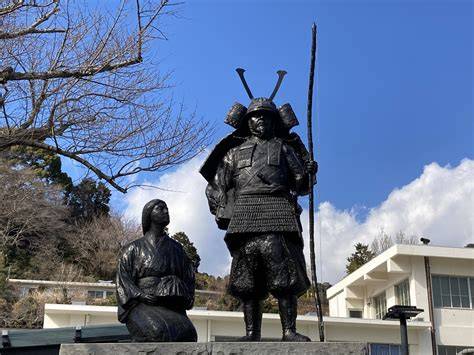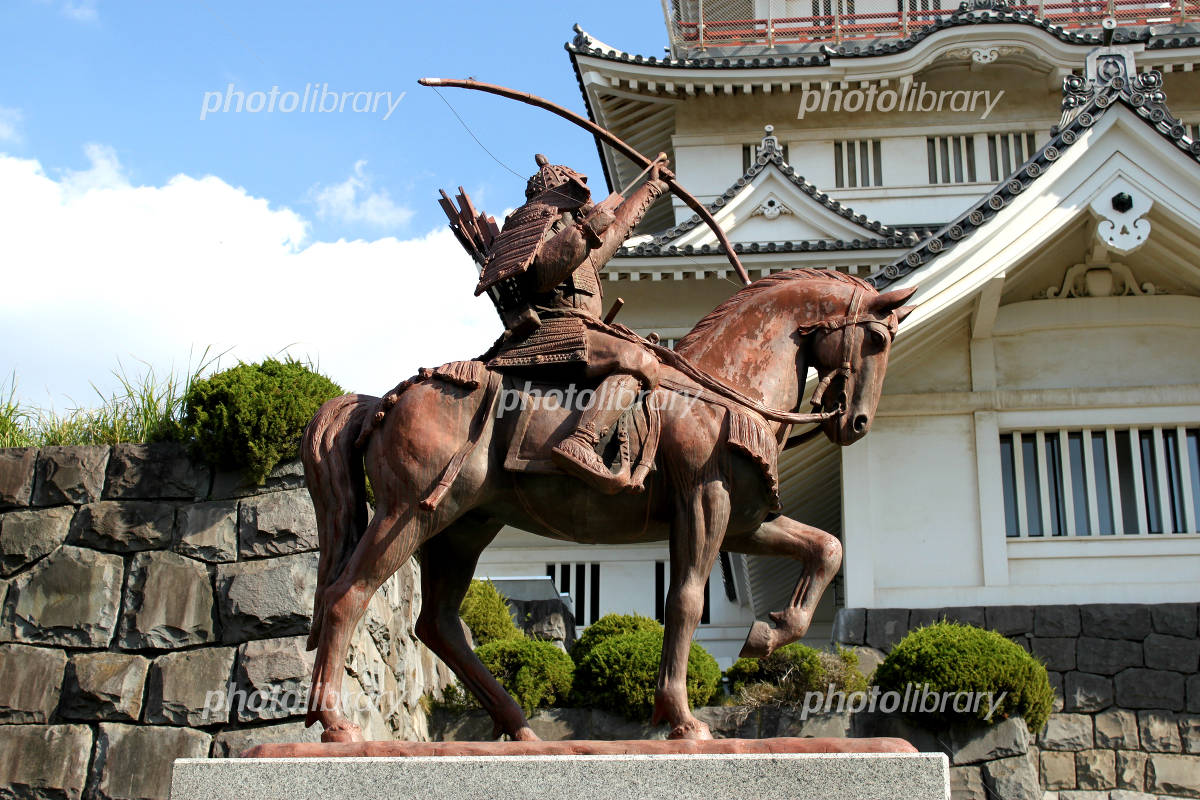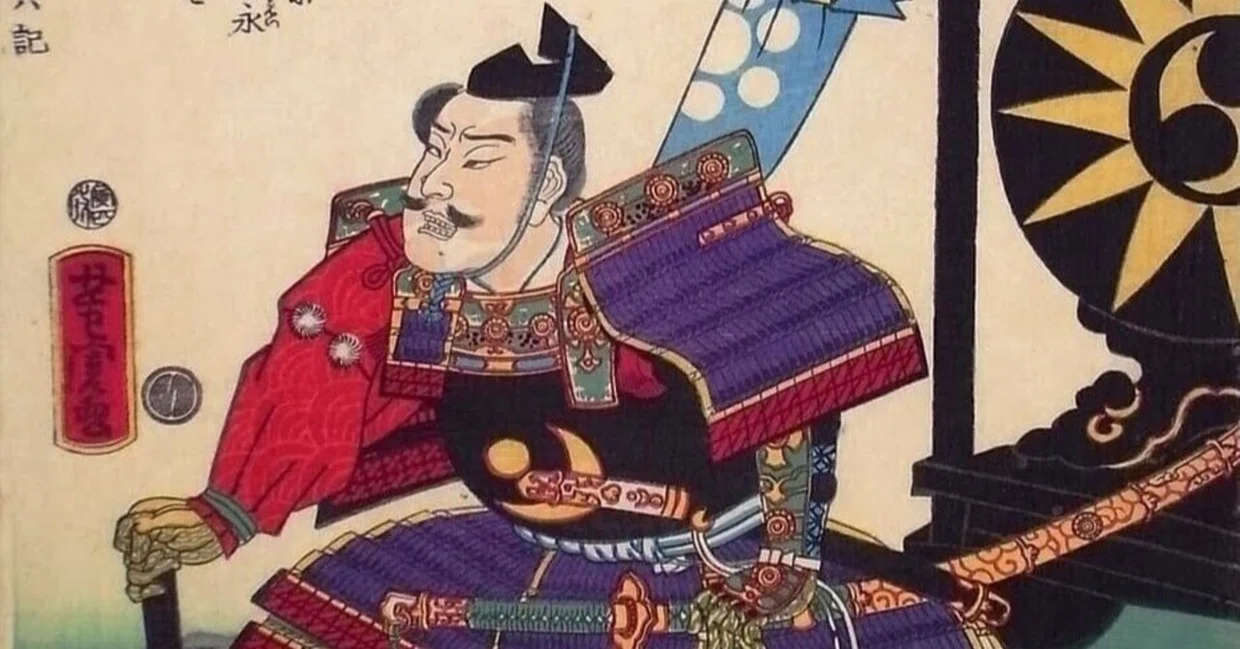
In the winter of 1183, Kazusa Hirotsune was killed on the orders of Minamoto no Yoritomo.
Hirotsune was a military commander with significant influence on the Boso Peninsula. In 1180, after Yoritomo was defeated at the Battle of Ishibashiyama and fled to Awa, Hirotsune supported his resurgence. According to the “Azuma Kagami,” he gathered the warriors of Kazusa and led 20,000 horsemen to join Yoritomo.
Yet, just three years later, Hirotsune’s life was taken.
The execution was reportedly carried out by Kajiwara Kagetoki. In “Gukansho,” written by the Tendai monk Jien, there is a story that Kagetoki took Hirotsune’s head during a game of sugoroku.
It is said that Yoritomo harbored suspicions of treason against Hirotsune.
However, the following year, a prayer document was found in the armor Hirotsune had dedicated to the Ichinomiya of Kazusa Province, expressing wishes for Yoritomo’s success and peace in the eastern provinces. According to the “Azuma Kagami,” Yoritomo regretted the killing after reading this.
Nevertheless, the “Azuma Kagami” from the end of 1183, when Hirotsune was killed, does not contain any surviving articles. The exact date of the killing and the events of that day remain unclear.
Why was such a loyal retainer, who had been instrumental since the uprising, suddenly killed?
Regarding Hirotsune’s death, two historical records from the Kamakura period recount different stories.
The Clan Expanding Influence in Kazusa and Shimosa
The birth year of Kazusa Hirotsune is unknown.
His father was Kazusa Tsunezumi. He was a descendant of Taira no Tadatsune, who led a rebellion in Boso during the mid-Heian period, and belonged to the Kanmu Heishi lineage.
Hirotsune was also known as “Kaihachiro.” In the “Azuma Kagami,” he appears under the name “Kazusa no Gon no Suke Hirotsune.”
Kazusa Province corresponds to the central part of present-day Chiba Prefecture, with its provincial capital located near today’s Ichihara City.
Kazusa was a “prince-appointed province,” where a prince was appointed as the chief official but typically did not take up residence there. Instead, the deputy, or “suke,” handled the actual administration.
The Kazusa clan expanded their influence by leveraging their connections with the provincial government.
Hirotsune’s grandfather, Tsuneharu, held interests in the Soma District of Shimosa Province. From the line of Tsuneharu’s brother, Tsunekane, came Chiba Tsunetane.
The Kazusa and Chiba clans were both part of the Boso Heishi lineage.
However, their relationship was deeply intertwined with disputes over landholdings.
One such dispute involved the Soma Mikuriya in Shimosa Province.
The Soma Manor was an estate of the Ise Shrine, stretching from the northwest of present-day Chiba Prefecture to the southern part of Ibaraki Prefecture.
It is said that Tsuneharu transferred the rights of Soma District to Tsuneshige, the son of Tsunekane. Tsuneshige was the father of Chiba Tsunetane.
When the lands of Soma District were donated to the Ise Shrine, multiple factions became involved in the struggle for control.
Not only Tsuneshige and Tsunetane, but also Kazusa Tsunezumi, Minamoto no Yoshitomo, provincial governors, and the Satake clan also appeared in the disputes over the rights to Soma Manor.
At that time, samurai who developed land could not own it without restrictions.
Donations to estate lords, taxes paid to provincial offices, and local management rights overlapped, making it necessary to maintain relationships with Kyoto nobles and temples to protect one’s holdings.
The Kazusa clan expanded their influence within these complex rights relationships.
During Hirotsune’s era, his family and associated samurai held lands in areas such as Shuto East, Shuto West, Ina South, Ina North, Chonan South, and Chonan North within Kazusa Province.
Each samurai had retainers and gathered under Hirotsune during military actions.
However, it is difficult to consider that Hirotsune directly controlled all samurai in Kazusa Province.
Some within the family held independent estates, leading to conflicts of interest.
Hirotsune’s military power was supported by his position as a unifier of these samurai.
Hirotsune’s Allegiance to Minamoto no Yoshitomo
The relationship between Hirotsune and the Minamoto clan dates back before Yoritomo’s uprising.
Yoritomo’s father, Minamoto no Yoshitomo, was active in the eastern provinces from a young age, forming ties with samurai in Sagami and Boso.
Hirotsune’s father, Tsunezumi, also had a close relationship with Yoshitomo.
In the disputes over Soma Manor, Yoshitomo leveraged Tsunezumi’s claims to exert pressure on Chiba Tsuneshige, as seen in related documents.
Hirotsune himself is said to have followed Yoshitomo during the Hogen Rebellion in 1156 and the Heiji Rebellion in 1159.
Hirotsune’s name appears in works like the “Hogen Monogatari” and “Heiji Monogatari,” but his specific contributions in battles are not well-documented.
During the Heiji Rebellion, Minamoto no Yoshitomo was defeated by Taira no Kiyomori and was killed in Owari Province while fleeing to the eastern provinces.
Yoshitomo’s son, Minamoto no Yoritomo, was captured and exiled to Izu in the first year of Eiryaku (1160).
The samurai from the eastern provinces who had followed Yoshitomo began to seek ways to maintain their lands under the Taira regime.
It is said that Kazusa Hirotsune also aligned with the Taira, but their relationship was not necessarily harmonious.
Later works like the “Gikeiki” recount stories of Hirotsune clashing with Ito Tadakiyo, a prominent retainer of the Taira.
According to tradition, Tadakiyo, who had once been under Hirotsune’s care, later accused Hirotsune over the position in Kazusa.
Hirotsune sent his son, Yoshitsune, to Kyoto to explain, but the Taira demanded Hirotsune himself come to the capital, which reportedly left him resentful.
This story cannot be treated as a reliable contemporary record.
However, it is clear from disputes over the Soma Mikuriya that conflicts with provincial governors and their associates posed a threat to the lands of samurai in Kazusa.
Even a powerful figure like Hirotsune found it difficult to protect his lands without connections to the authority in Kyoto.
Yoritomo Defeated at Ishibashiyama Arrives in Awa
On August 17, 1180, in the fourth year of Jisho, Minamoto no Yoritomo attacked and raised an army against Yamaki Kanetaka, the deputy governor of Izu Province.
However, on the 23rd, he was defeated by the forces of Oba Kagechika at Ishibashiyama in Sagami Province.
Yoritomo fled into the mountains with Doi Sanehira and others, crossing the sea from Manazuru to Awa Province on the 28th.
Yoritomo’s forces in Awa were still small.
At Ishibashiyama, Oba Kagechika had emerged victorious, and the Miura clan had also been defeated at Kinugasa Castle.
For Yoritomo to make a comeback in the eastern provinces, he needed to secure the cooperation of new samurai allies.
Yoritomo turned to Chiba Tsunetane and Kazusa Hirotsune, who held power in the Boso region.
In early September, Yoritomo sent envoys to both of them.
According to the Azuma Kagami, it was Wada Yoshimori who went to Hirotsune.
Meanwhile, Adachi Morinaga was dispatched to Chiba Tsunetane.
At this time, Yoritomo had not yet secured Hirotsune’s cooperation.
Hirotsune had his own circumstances to consider.
Among the Kazusa clan, there were samurai with strong ties to the Taira clan.
Into Tsunemochi, believed to be Hirotsune’s brother, was one such samurai.
Even if Hirotsune wanted to follow Yoritomo, it wasn’t guaranteed that his clan’s opinions were unified from the start.
Additionally, gathering the scattered samurai across Kazusa required time.
It is thought that Hirotsune had to prepare his forces to join Yoritomo while protecting his own lands.
Leading 20,000 Horsemen to the Sumida River
According to the Azuma Kagami, Hirotsune joined Yoritomo on September 19, 1180.
The meeting took place by the Sumida River.
It is recorded that Hirotsune gathered samurai from Shutou, Shusei, Inan, Ihoku, Chonan, and Chohoku, leading 20,000 horsemen.
It is difficult to consider this number as an actual count.
Other historical sources like the Genpei Seisuiki mention different troop numbers and provide varying accounts of Yoritomo’s interactions with Hirotsune.
The Genpei Seisuiki also tells of Hirotsune welcoming Yoritomo to the Kazusa provincial headquarters.
Therefore, it is not always possible to reconstruct the scene from September 19 as described in the Azuma Kagami.
However, it is certain that Hirotsune wielded significant military power in the Boso region.
At the time when Yoritomo was fleeing from Ishibashiyama, Hirotsune was already a powerful figure capable of independently assembling troops.
Securing his cooperation was a major advantage for Yoritomo.
Yet, Hirotsune’s arrival, as told by the Azuma Kagami, took an unexpected turn.
Hirotsune believed that if he arrived with such a large force, Yoritomo would welcome him with open arms.
It is also recorded that if Yoritomo seemed unreliable, Hirotsune intended to take his head and present it to the Taira clan.
However, Yoritomo harshly criticized Hirotsune for his late arrival.
He showed no sign of joy at the arrival of 20,000 horsemen.
Seeing Yoritomo’s demeanor, Hirotsune recognized his caliber and decided to follow him.
The “Azuma Kagami” includes anecdotes of Taira no Masakado and Fujiwara no Hidesato in this scene.
There is a story that when Hidesato visited Masakado, he observed Masakado’s behavior and questioned his capability.
Unlike Masakado, Yoritomo maintained his dignity even when leading a large army.
The “Azuma Kagami” portrays Hirotsune’s participation in such a narrative.
However, the account that Hirotsune intended to kill Yoritomo is a story passed down by later compilers.
It is impossible to ascertain Hirotsune’s true intentions at the time.
The delay in Hirotsune’s arrival might have been due to dealing with opposing forces in Kazusa Province or the time required to gather troops.
When exactly Hirotsune decided to cooperate with Yoritomo is subject to different interpretations in historical records.
Hirotsune Establishes a Residence in Kamakura
On October 6, 1180, Yoritomo entered Kamakura.
Having gathered forces in the Boso region and gained the cooperation of Musashi warriors, Yoritomo now commanded a military power incomparable to when he was defeated at Ishibashiyama.
In Kamakura, the construction of the palace was underway.
A new residence was established in Okura-go, creating a place where warriors from various regions could serve Yoritomo.
On December 12, Yoritomo moved into the completed palace.
According to the “Azuma Kagami,” Yoritomo’s starting point when heading to the new palace was Kazusa Hirotsune’s residence.
Hirotsune also had a residence in Kamakura.
While his main base was in Kazusa, he maintained a residence in Kamakura to operate close to Yoritomo.
At that time, around Yoritomo were gathered Chiba Tsunetane, Miura Yoshizumi, Wada Yoshimori, Hojo Tokimasa, Doi Sanehira, and Ashikaga Yoshikane.
Each had their own territories and led their families and retainers.
Hirotsune was in a similar position, but his influence stood out even among the powerful warriors of the eastern provinces.
Negotiation Skills Demonstrated in the Satake Clan Suppression
In October 1180, the Taira pursuit forces withdrew from the Fuji River.
According to the “Azuma Kagami,” Yoritomo intended to continue advancing westward, but Chiba Tsunetane, Miura Yoshizumi, and Hirotsune opposed this.
In Hitachi Province, the Satake clan still refused to submit to Yoritomo.
Yoritomo halted his westward advance and decided to attack the Satake clan.
On November 4th, Yoritomo arrived at the Hitachi provincial headquarters.
Here, Hirotsune played a crucial role.
Hirotsune had familial ties with the Satake clan, which he used to gather intelligence on their movements.
According to the Azuma Kagami, Hirotsune summoned Satake Yoshimasa to the vicinity of Oyabashi.
As Yoshimasa reached the middle of the bridge, Hirotsune, following Yoritomo’s orders, killed him.
Meanwhile, Satake Hideyoshi barricaded himself in Kanesawa Castle.
Yoritomo’s forces attacked the mountain castle, but the rugged terrain thwarted their frontal assaults.
Hirotsune then approached Satake Yoshisue, Hideyoshi’s uncle.
His plan was to win Yoshisue over and attack the castle from the rear.
According to the Azuma Kagami, Yoshisue agreed to Hirotsune’s persuasion, allowing Yoritomo’s forces to circle behind Kanesawa Castle.
Hideyoshi fled, and the Satake clan’s resistance crumbled.
Hirotsune not only led many troops but also had the ability to negotiate with other powerful warriors.
He was able to dismantle the Satake clan’s unity because he was well-acquainted with the relationships among the warriors of the eastern provinces.
Yoritomo utilized both Hirotsune’s military strength and his network of connections.
Kagami Nagakiyo, Hirotsune’s Son-in-law
On February 1st, 1181, the Azuma Kagami records an entry about marriage.
Ashikaga Yoshikane took Hojo Tokimasa’s daughter as his wife, and Kagami Nagakiyo became the son-in-law of Kazusa Hirotsune.
Kagami Nagakiyo was a member of the Kai Genji clan, belonging to the same lineage as Takeda Nobuyoshi, descended from Minamoto no Yoshikiyo.
For Hirotsune, the marriage with the Kai Genji clan established a new familial connection.
According to the Azuma Kagami, these marriages were realized under Yoritomo’s influence.
The year after he aligned with Yoritomo, Hirotsune married his daughter to a warrior of the Kai Genji clan.
At the time, bonds through marriage were also important among the warriors gathered in Kamakura.
It is not well understood how the marriage between Hirotsune and Nagakiyo affected subsequent political relations.
However, when considering the view that Yoritomo intended to eliminate Hirotsune from the start, these marriage records must be taken into account.
The Day Hirotsune Did Not Dismount Before Yoritomo
On June 19th, 1181, Yoritomo traveled to Miura for a summer retreat.
The Azuma Kagami provides a detailed account of Hirotsune’s behavior on this occasion.
Hirotsune, accompanied by over 50 retainers, joined Yoritomo at the Sagaoka beach.
The retainers dismounted and prostrated themselves on the sandy shore.
However, Hirotsune himself did not dismount.
When Sawara Yoshitsura urged him to dismount, Hirotsune reportedly replied,
“For three generations, both publicly and privately, I have never performed such a courtesy.”
Hirotsune is said to have completed his greeting from horseback.
For Hirotsune, the status inherited from his ancestors was likely of great importance.
Afterward, the group headed to the former residence of Miura no Yoshiaki, where a banquet was held.
It is said that Hirotsune caused a commotion there as well.
Okazaki Yoshizane requested and received Yoritomo’s water-dry garment.
Hirotsune expressed dissatisfaction, claiming that someone with his accomplishments should be the one to receive it.
Yoshizane countered, arguing that his loyalty to Yoritomo came first.
The argument between the two intensified, but Sawara Yoshitsura intervened and settled the matter.
Hirotsune was a figure who had joined Yoritomo with a large army.
On the other hand, Okazaki Yoshizane was a warrior who had supported Yoritomo’s uprising from early on.
Both were keenly aware of their own achievements and sensitive to how Yoritomo treated them.
The “Azuma Kagami” portrays Hirotsune’s behavior as disrespectful.
However, it is unclear how seriously Yoritomo regarded the events of that day.
Considering that Hirotsune was later killed, caution is needed when interpreting his depiction in the “Azuma Kagami.”
Introducing His Son-in-law, Taira no Tokiie, to Yoritomo
On the 23rd day of the first month of Yowa 2 (1182), a person named Taira no Tokiie appears in the “Azuma Kagami.”
Tokiie was the son of Taira no Tokitada and the nephew of Taira no Kiyomori‘s wife, Tokiko.
He had once served as the governor of Hoki, but in the third year of Jisho (1179), he was stripped of his position and sent to Kazusa Province.
The “Azuma Kagami” records that he was exiled due to a plot by his stepmother.
However, the “Gyokuyo” contains an entry suggesting that Kiyomori privately sent him to Kazusa, leaving doubts about whether it was an official exile.
It was Hirotsune who protected Tokiie in Kazusa.
Hirotsune treated Tokiie generously and took him as a son-in-law.
Then, in January 1182, Hirotsune introduced Tokiie to Yoritomo.
According to the “Azuma Kagami,” Hirotsune had fallen out of favor with Yoritomo the previous year.
To mend this relationship, he recommended Tokiie to Yoritomo.
Yoritomo was fond of people from Kyoto and is said to have treated Tokiie well.
This incident is intriguing when considering Hirotsune’s political position.
Hirotsune was a warrior based in Kazusa, yet he welcomed someone connected to the Kyoto court society as his son-in-law.
For the Kazusa clan, which had ties with provincial offices and manors, connections to the court held significant value.
Later, the “Gukansho” reports that Hirotsune was killed for making remarks that belittled the court.
However, Hirotsune had protected someone close to the Kyoto nobility and used this to improve his relationship with Yoritomo.
To understand how Hirotsune viewed his relationship with the imperial court, the presence of Taira no Tokiie cannot be overlooked.
The Votive Prayer Offered at Tamasaki Shrine
In July of Juei 1 (1182), it is said that Hirotsune dedicated armor at the Ichinomiya of Kazusa Province.
The Ichinomiya of Kazusa Province is the Tamasaki Shrine, located in present-day Ichinomiya Town, Chosei District, Chiba Prefecture.
It is said that a votive prayer was attached to the armor Hirotsune dedicated.
This prayer was later included in the Azuma Kagami after Hirotsune’s death.
It contained three wishes.
The first was to donate 20 chō of rice fields within three years.
Next, to construct a shrine building within three years.
And finally, to perform yabusame (horseback archery) ten thousand times within three years.
The purpose was to pray for the fulfillment of Yoritomo’s wishes and for peace in the eastern provinces.
The end of the prayer is dated to July of Jisho 6.
Jisho 6 corresponds to the year 1182 in the Western calendar. Although the era name had already changed to Juei in Kyoto, the old era name was sometimes used in the eastern provinces.
The original text of this prayer cannot be confirmed.
The version known today is the one included in the Azuma Kagami, and how it was actually transmitted is unclear.
However, the fact that the prayer is dated to July 1182 is significant.
Earlier that year, in the New Year, Hirotsune introduced Tokiie to Yoritomo, attempting to improve relations.
The record of a prayer offered half a year later, wishing for the fulfillment of Yoritomo’s desires, aligns with these efforts.
Hirotsune Witnesses the Birth of Yoriie
On August 12, Juei 1, Hojo Masako gave birth to a son.
This was Minamoto no Yoriie, who would later become the second shogun of the Kamakura shogunate.
During Masako’s childbirth, rituals were performed to pray for a safe delivery.
The Azuma Kagami records the names of Miroku Shigetsune, Oba Kageyoshi, and Tatara Sadayoshi as those involved in the bowstring ritual.
Hirotsune served as the hikime role.
The hikime is a ritual using special whistling arrows that produce sound.
On the day a male heir to Yoritomo was born, Hirotsune played an important role.
Additionally, prior to the birth, Hirotsune’s son, Yoshitsune, was involved in offerings at the Ichinomiya of Kazusa.
Hirotsune himself is said to have offered a prayer at Tamasaki Shrine in July, and his son Yoshitsune was tasked with offerings at the same shrine in August.
The previous year, Hirotsune had incurred Yoritomo’s displeasure, but in 1182, articles indicating his relationship with Yoritomo, such as the introduction of Tokiie and the birth rituals of Yoriie, continued to appear.
It can be considered that during this period, there was some improvement in their relationship.
Naoki Iwahashi, in his study examining Hirotsune’s assassination and the votive prayer, places importance on the series of events in 1182.
He points out that the intense conflict between the two was rather before 1182, and that year saw reconciliation or a move towards Hirotsune showing greater allegiance to Yoritomo.
What happened between Hirotsune and Yoritomo thereafter?
The Azuma Kagami of 1183 has missing entries, making it difficult to trace their relationship.
Changes in Kyoto in 1183
In the second year of Juei (1183), the Genpei War saw significant developments.
Minamoto no Yoshinaka defeated the Taira forces in the Hokuriku region and entered Kyoto in July.
Taira no Munemori and other members of the Taira clan fled the capital with Emperor Antoku, while Retired Emperor Go-Shirakawa sought to regain political control in Kyoto.
Meanwhile, Yoritomo was consolidating his power in the eastern provinces from his base in Kamakura.
Tensions also existed between Yoritomo and Yoshinaka, both members of the Minamoto clan.
In the eastern provinces, there were uprisings by warriors like Shida Yoshihiro, and some samurai continued to resist Yoritomo’s authority.
Amidst this, in October, a decree was issued from Retired Emperor Go-Shirakawa to Yoritomo.
This decree is commonly known as the “Juei Second Year October Decree.”
Through this decree, Yoritomo was granted significant authority by the imperial court over the public lands and estates in the eastern provinces.
The decree also aimed to maintain order over the court’s public lands and estates in the eastern provinces.
Yoritomo, while being a military leader commanding samurai, was also establishing his political position through negotiations with the court.
It is unclear how Hirotsune perceived this policy.
According to the later “Gukansho,” Hirotsune criticized Yoritomo for valuing relations with the court.
As a result, some link the October 1183 decree with Hirotsune’s murder in the same winter.
However, there is no historical evidence confirming that the issuance of the decree was a direct reason for the murder.
The Story of Being Killed During a Game of Sugoroku
In the winter of the second year of Juei, Hirotsune was killed.
The date of the murder is often cited as December 20, but the exact date is not confirmed.
The “Azuma Kagami” lacks records for the end of 1183.
The entry for January 1 of the following year, Juei 3 (1184), notes that Yoritomo refrained from visiting Tsurugaoka Hachimangu Shrine due to the impurity caused by Hirotsune’s incident the previous winter.
This is an important entry indicating that Hirotsune was killed in the previous winter.
The course of the incident is conveyed by Jien’s “Gukansho.”
Jien was the brother of Kanpaku Kujō Kanezane and a monk well-versed in Kyoto’s political affairs.
The ‘Gukansho’ records an account of Minamoto no Yoritomo’s visit to Kyoto in the first year of Kenkyu (1190) and his meeting with Emperor Go-Shirakawa.
Among these accounts is the story of the killing of Kazusa Hirotsune.
It is said that Yoritomo ordered Kajiwara Kagetoki to kill Hirotsune.
Kagetoki was playing sugoroku with Hirotsune.
Then, suddenly, he attacked Hirotsune, who was sitting across the board, and took his head, according to the tale.
Kagetoki is said to have presented the head to Yoritomo.
Hirotsune held significant military power in Kazusa.
If an attempt had been made to subdue him with an army, his family and retainers might have resisted.
If the story of his sudden murder during a game of sugoroku is true, it could have been a method to prevent Hirotsune from having a chance to retaliate.
However, the specific details of the incident cannot be fully verified from other historical sources.
The location of the murder is also not confirmed.
Based on the ‘Azuma Kagami,’ it is often thought to have occurred around the Kamakura palace, but there is no definitive record indicating where he was killed.
The Reason Yoritomo Told Emperor Go-Shirakawa
The ‘Gukansho’ also notes the reason Yoritomo killed Hirotsune.
Hirotsune is said to have criticized Yoritomo for being overly concerned with the imperial court.
“Why do you concern yourself so much with the affairs of the imperial house?”
Is it necessary to be so preoccupied with the imperial court?
Furthermore, he reportedly made remarks suggesting that if they continued to rule in the Kanto region, who could possibly control them?
Yoritomo, suspecting treasonous intent from Hirotsune’s words, ordered his execution.
This story has led to the interpretation that Hirotsune sought independence for the eastern provinces and clashed with Yoritomo, who valued relations with the imperial court.
However, there are no historical sources confirming that Hirotsune actually held such views.
Hirotsune was a figure who built his power based on his relationship with the Kazusa provincial government.
He also had connections to Kyoto’s aristocratic society through his son-in-law, Taira no Tokiie.
To consider Hirotsune as someone who completely rejected Kyoto’s authority, one must examine the consistency of such actions.
It is possible that Yoritomo explained his reason for killing Hirotsune to Emperor Go-Shirakawa in such a manner.
By 1190, Yoritomo had already established a powerful position as the ruler of the eastern provinces.
The explanation that he punished samurai who disregarded the court’s order suggests that Yoritomo valued his relationship with the court.
Additionally, the conflict between Hirotsune and Yoritomo might have been related not only to political policies but also to issues concerning Kazusa’s lands and military power.
Hirotsune was among the most influential warriors who supported Yoritomo’s uprising.
He gathered clans and samurai with estates across various regions and could independently mobilize troops.
As Yoritomo strengthened his authority in Kamakura, Hirotsune’s influence became a concern.
However, it is unclear what specific acts of defiance Hirotsune attempted.
Even Jien, in the “Gukansho,” left a reservation about the truth of the circumstances surrounding the killing.
The Theory of Suspected Ties with the Oshu Fujiwara Clan
There are other traditions regarding the reason for Hirotsune’s murder.
The “Horeki Kanki” contains a description suggesting that Hirotsune was suspected by Yoritomo due to his ties with the Oshu Fujiwara clan.
The Oshu Fujiwara clan was a powerful family centered in Hiraizumi, dominating Mutsu and Dewa.
Their presence could not be ignored as Yoritomo expanded his control over the eastern provinces.
There is a possibility that Hirotsune had some connection with the Oshu Fujiwara clan.
However, there is a chronological issue with the “Horeki Kanki” account.
The story of Hirotsune’s murder is placed within the context of the Oshu War of Bunji 5 (1189).
There is a six-year gap from Hirotsune’s murder in 1183.
It is possible that later generations linked Hirotsune’s murder with the conflict against the Oshu Fujiwara clan.
There is also a lack of historical evidence showing a specific relationship between Hirotsune and the Oshu Fujiwara clan.
Therefore, it is difficult to assert that ties with the Oshu Fujiwara clan were the direct reason for Hirotsune’s murder.
The Prayer Tied to the Armor
On January 8, 1184, a report arrived in Kamakura from the priest of Kazusa Province’s Ichinomiya Shrine.
It stated that Hirotsune had dedicated a suit of armor to the shrine during his lifetime.
According to the “Azuma Kagami,” Yoritomo suspected there was something significant about the armor and ordered it to be brought to him.
The armor had already become a sacred treasure.
Thus, two other suits of armor were offered in exchange for Hirotsune’s armor.
On January 17, Fujiwara no Kunimichi, Ipponbo, and the priest Kanechika returned to Kamakura with the armor.
The armor was described as having a small cherry bark pattern.
Upon inspection, Yoritomo found a sealed letter tied to the armor’s straps.
When opened, it revealed a prayer Hirotsune had dedicated before the shrine.
The prayer contained words wishing for Yoritomo’s success and peace in the eastern provinces.
The “Azuma Kagami” notes that this proved Hirotsune had no treasonous intentions.
Yoritomo regretted having killed Hirotsune and ordered prayers for his soul’s peace.
However, the prayer was said to have been made in July 1182.
Hirotsune was assassinated in the winter of 1183.
There is a span of about a year and a half in between.
Even if Hirotsune intended to support Yoritomo in 1182, it is possible that their relationship changed afterward.
Naoki Iwahashi positions Hirotsune’s petition within the process of their relationship improvement in 1182.
He points out the possibility that the Azuma Kagami and the traditions it was based on reinterpreted the 1182 petition as evidence to clear the suspicion of rebellion in 1183.
From this perspective, the petition primarily serves as a historical document indicating the relationship between Hirotsune and Yoritomo in 1182.
Whether Yoritomo actually read the petition and regretted his actions, or whether such a story was fabricated later, cannot be determined from existing records.
Hirotsune’s Brothers Were Captured
After Hirotsune was killed, the impact extended to his family.
The Azuma Kagami entry for January 17, Juei 3, notes that Hirotsune’s brothers, Amano Shoji Naotane and Soma Kuro Tsunekiyo, were captured due to their association.
It is said that Yoritomo, after confirming the petition, ordered their pardon in recognition of the late Hirotsune’s loyalty.
Hirotsune’s brothers were spared their lives.
However, the disposition of the family’s estates continued.
On February 14, Juei 3, the Azuma Kagami records that the retainers of Kazusa Province, who had their lands confiscated the previous year for the same crime as Hirotsune, were granted their former territories again.
They were allowed to reclaim their former private lands and main residences.
However, the vast interests that Hirotsune himself held were not returned to the family as they were.
The history of Oamishirasato Town, based on the research of Minoru Noguchi, introduces the situation where Hirotsune’s private lands were divided among several retainers.
Among them were Chiba Tsunetane, Wada Yoshimori, Ashikaga Yoshikane, Tsuchiya Yoshikiyo, and Miura Yoshizumi.
Chiba Tsunetane was involved with the territories of Ichito District, Ichinishi District, Musha Minami-go, and Ichinomiya Sho, while Wada Yoshimori was related to the interests of Azebiru Minami-sho, Ikitashiro, and Tachibana-sho.
These changes in territorial relationships may have involved not only immediate post-assassination dispositions but also later relocations.
However, it is significant that the interests centered around Hirotsune’s territories were dispersed and incorporated into the control of other retainers.
While Hirotsune was alive, many warriors of Kazusa followed Yoritomo through their connection with Hirotsune.
After Hirotsune was killed, those whose lands were confiscated received direct assurances from Yoritomo.
Not all of Hirotsune’s family was annihilated.
However, the large power bloc that Hirotsune had unified was not maintained in the same form.
Warriors Returned to Kamakura After Hirotsune’s Death
The assassination of Hirotsune significantly altered the position of the warriors of Kazusa.
The Azuma Kagami also records warriors who disappeared fearing association after Hirotsune’s death.
Hara Takaharu, appearing in the entry for March 13, Juei 3, was a nephew of Hirotsune’s sister.
Takaharu was a warrior from Owari Province who had followed Yoritomo since his uprising in the fourth year of the Jisho era.
However, after Hirotsune was killed, he feared punishment due to his blood ties and went into hiding, according to the records.
Later, Yoritomo called Takaharu back to Kamakura and recognized his former lands.
It is evident that individuals related by blood to Hirotsune were afraid of punishment after his assassination.
This record also indicates that the incident involving Hirotsune was not confined to just within Kazusa Province.
Meanwhile, the warriors once led by Hirotsune continued to serve as vassals in Kamakura.
Those who were granted assurance of their land holdings reaffirmed their feudal relationship with Yoritomo.
Some of the rights and interests Hirotsune held were transferred to other vassals, leading to a reorganization of land ownership within Kazusa Province.
What Yoritomo Said in Kyoto in Kenkyu 1
In Kenkyu 1 (1190), Yoritomo traveled to Kyoto.
Five years had passed since the fall of the Taira clan, and one year since the destruction of the Northern Fujiwara clan.
By this time, Yoritomo had already established himself as a powerful ruler of the eastern provinces.
During this visit to Kyoto, Yoritomo met with Retired Emperor Go-Shirakawa.
According to the “Gukansho,” Yoritomo mentioned the killing of Hirotsune while explaining his rule over the eastern provinces.
Hirotsune had made remarks that seemed to belittle the imperial court.
Yoritomo suspected treasonous intentions from these remarks and ordered Kajiwara Kagetoki to assassinate him.
This is how the story is told.
However, “Gukansho” was compiled after Yoritomo’s death and does not provide a contemporaneous account of the 1190 conversation.
Additionally, the “Azuma Kagami” from 1184 recounts a story where Yoritomo regretted after reading Hirotsune’s petition.
The two historical texts convey Hirotsune’s death in different ways.
How did Yoritomo justify the killing of Hirotsune?
What transpired between them in the winter of 1183?
There is still a lack of historical sources linking these two aspects.
The Legacy of Hirotsune in Kazusa
In present-day Ichinomiya Town, Chiba Prefecture, stands Tamasaki Shrine, the Ichinomiya of Kazusa Province.
This shrine is noted in the “Azuma Kagami” as the place where Hirotsune dedicated his armor and a petition.
A monument honoring Hirotsune has been erected within the shrine grounds.
In the vicinity of Ichinomiya Town, the remains of Takafuji Castle, believed to be Hirotsune’s residence, can also be found.
However, there are multiple sites claimed to be the location of Hirotsune’s residence, and the exact place remains uncertain.
Hirotsune’s activities were not limited to the area around present-day Ichinomiya Town.
He held influence across various parts of Kazusa, maintained a residence in Kamakura, and participated in the campaign against the Satake clan of Hitachi Province.
He also formed marital ties with Taira no Tokiie, who was connected to the aristocratic society of Kyoto, and with Kagami Nagakiyo of the Kai Genji.
After Hirotsune’s death, the samurai who were connected to him by family ties or land holdings sought ways to survive in their respective positions.
Hirotsune’s brothers, who were captured in connection with him, were pardoned.
The Kazusa retainers, whose lands had been confiscated, were reassured of their former territories on February 14, 1184.
The decision was made by Minamoto no Yoritomo, who was once said to have arrived with twenty thousand horsemen under Hirotsune’s command.