August 21, 770.
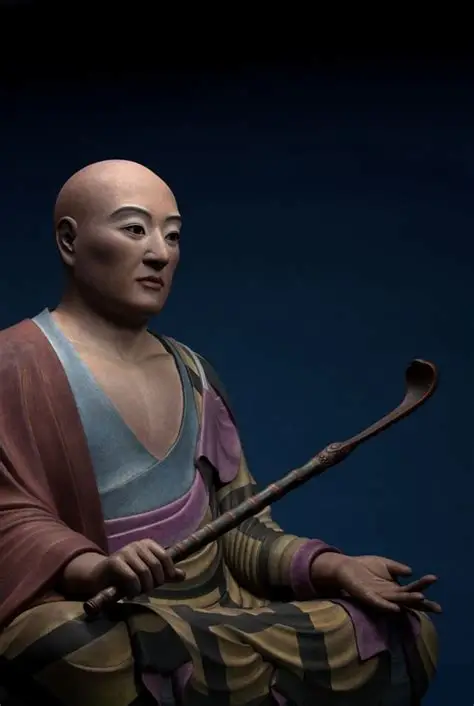
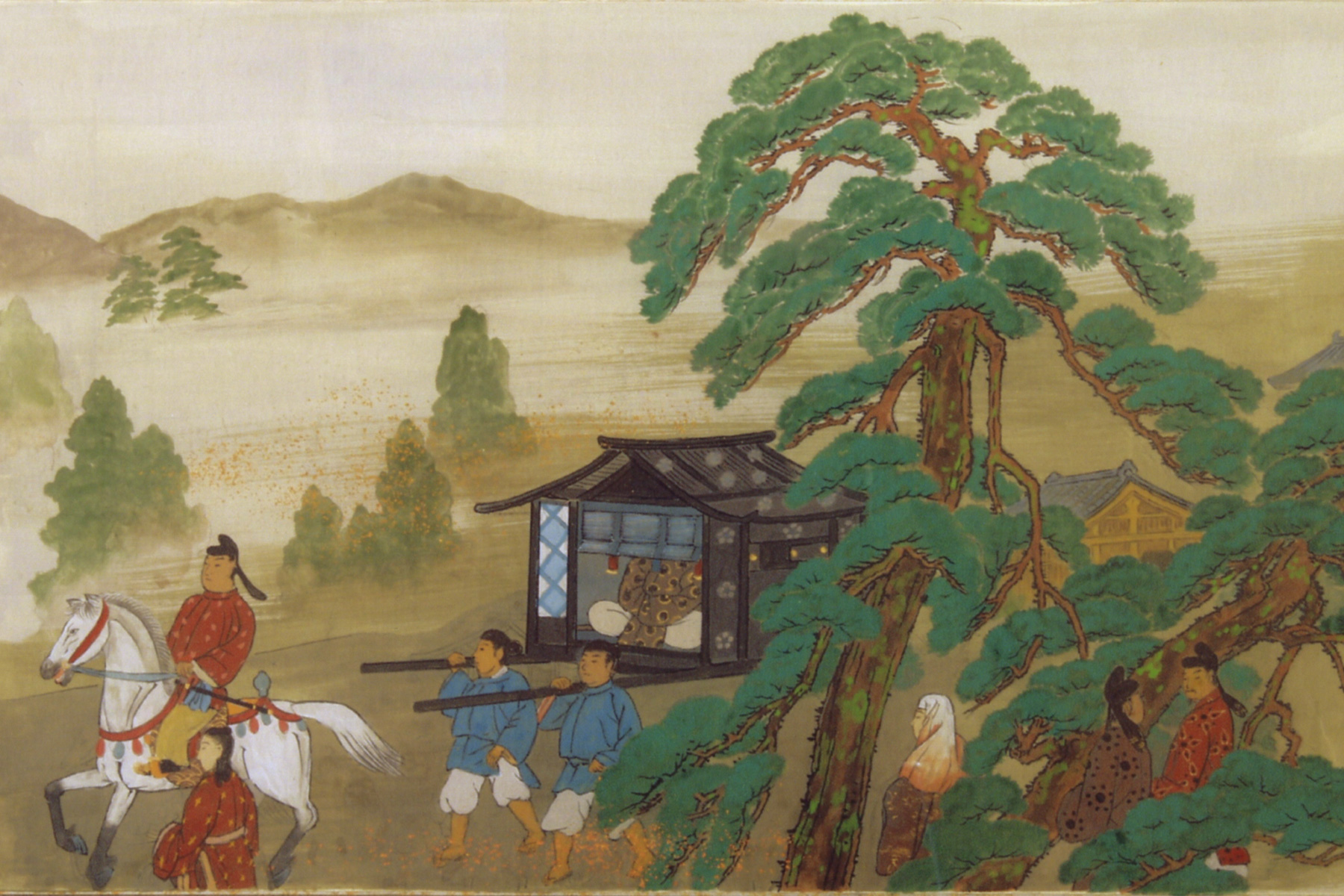
A monk was about to leave Heijō-kyō.
Dōkyō.
Just four years earlier, he had been elevated to the position of “Hōō,” receiving special treatment akin to that of an emperor.
However, with the death of Empress Shōtoku on August 4, his political standing rapidly declined.
Dōkyō was appointed as the head of the Yakushi-ji Temple in Shimotsuke Province and was relocated there.
The monk who had been at the center of court politics as Hōō had left the capital.
Why did Dōkyō, a monk, rise to the unprecedented position of Grand Minister of State and then Hōō?
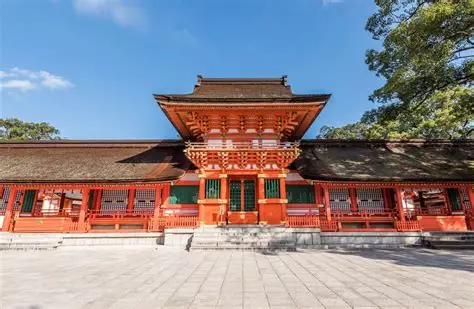
And during the 769 Oracle Incident at the Usa Hachiman Shrine, did Dōkyō truly aim for the throne?
We will explore his life, distinguishing between the facts confirmed by historical records and the image of him shaped by later generations.
1. Birth Year Unknown—Born to the Yuge Clan in Kawachi Province
Dōkyō’s birth year is unknown.
His secular surname was Yuge.
He hailed from a clan based in Wakae District, Kawachi Province, an area now around Yao City in Osaka Prefecture.
The name “Yuge” still remains in Yao City today.
Regarding Dōkyō’s lineage, several theories emerged in later generations, suggesting connections to the Mononobe clan or imperial lineage.
However, there are no contemporary records that definitively indicate his parents or birth year, leaving many aspects of his origins unclear.
It is said that Dōkyō became a disciple of Gien, trained on Mount Katsuragi, and was knowledgeable in Sanskrit, as recorded.
2. 747—Dōkyō Appears in Historical Records
Dōkyō clearly appears in historical records in 747, the 19th year of the Tenpyō era.
His name can be found in the Shōsōin documents as “Shami, the messenger of the Great Virtuous Ryōben of Tōdai-ji.”
He was a monk associated with Ryōben, and it is believed that he had only recently been ordained at this time.
Subsequently, Dōkyō entered the inner sanctum of the court and became a Zen master.
At this stage, it was difficult to predict that he would later become part of the highest echelons of court power.
A significant event that would dramatically change Dōkyō’s life occurred in 762.
3. 762—Nursing Empress Kōken
April, 762, the 6th year of the Tenpyō-hōji era.
Empress Kōken, staying at the Palace of Hōra in Ōmi Province, fell ill.
Dōkyō attended to her care and gained her strong trust.
Later accounts suggest that Dōkyō practiced esoteric rituals to heal the Empress’s illness.
However, it is important to separate the fact that Dōkyō attended to her care from the specifics of the prayers or treatments he performed.
Around this time, the relationship between Empress Kōken and Emperor Junnin also deteriorated.
Their conflict became apparent when Emperor Junnin criticized the relationship between the Empress and Dōkyō.
On June 3 of the same year, Empress Kōken declared that she would handle major state affairs and rewards and punishments herself, leaving minor matters to Emperor Junnin.
This was a significant political shift for Fujiwara no Nakamaro, who supported Emperor Junnin.
In the following year, 763, Dokyo was appointed as the Junior Chief Priest.
His status as a monk began to rise rapidly.
4. 764—The Fujiwara no Nakamaro Rebellion and the Minister-Priest
In September of the 8th year of the Tenpyō-hōji era (764).
The conflict between Fujiwara no Nakamaro and the faction supporting Empress Koken escalated into armed conflict.
Nakamaro fled the capital but was cornered by a pursuing army and died on September 18 in Takashima District, Omi Province.
Two days later.
On September 20, Dokyo was appointed as Minister-Priest.
In the same year, Emperor Junnin was deposed.
Empress Koken reclaimed the throne, becoming Empress Shotoku.
With Fujiwara no Nakamaro removed from the political scene and Emperor Junnin stepping down, Dokyo’s political influence grew even stronger.
5. 765—The Grand Minister-Priest
In the intercalary October of the 1st year of the Tenpyō-jingo era (765).
Empress Shotoku visited Yuge in Kawachi Province, Dokyo’s birthplace.
During this imperial visit, Dokyo was appointed as the Grand Minister-Priest.
The position of Grand Minister-Priest was not equivalent to that of a regular Grand Minister.
It was an extraordinary position combining the political rank of a Grand Minister with the status of a monk.
Dokyo entered the highest echelons of court politics without leaving the monastic order.
During this period, Dokyo’s family also rose in official rank.
Nevertheless, the greatest support for Dokyo’s political standing came from Empress Shotoku’s strong trust in him.
6. 766—Becoming the “Dharma King”
In October of the 2nd year of the Tenpyō-jingo era (766).
Dokyo was further appointed as the “Dharma King.”
The era name changed to Jingo-keiun in the following year, 767, so the year 766 was still the 2nd year of Tenpyō-jingo.
As the Dharma King, Dokyo was granted exceptionally special treatment.
His monthly stipend was equivalent to the emperor’s provisions, and the ceremonies for his arrivals and departures were akin to those for the emperor.
In March of the following year, 767, the Office of the Dharma King’s Household was established to manage his household and administrative affairs.
Despite being a monk, he received treatment comparable to that of an emperor.
He was an unprecedented figure even in the Nara period.
However, Dokyo himself did not become emperor.
He was granted this special position of “Dharma King” under Empress Shotoku.
7. Policies During the Reign of Empress Shotoku and Dokyo
During the period when Empress Shotoku and Dokyo were at the center of politics, there was a series of policies that strongly emphasized Buddhism.
The office of the Falconer was abolished and replaced by the office of the Release of Life, prohibiting hunting and the offering of meat or fish as sacred gifts.
Additionally, while large-scale land reclamation by the nobility was restricted, certain exceptions were made for temple lands and small-scale peasant reclamations.
During the reign of Empress Shotoku, state-sponsored Buddhist projects, such as the construction of Saidaiji and Sairyuji temples, were also advanced.
However, it is not accurate to attribute all these policies solely to Dokyo himself.
It is more appropriate to view these as policies emphasizing Buddhism, promoted during the period when Empress Shotoku and Dokyo were at the center of politics.
8. Yugi Palace and Yugi Temple—The “Western Capital” of Dokyo’s Hometown, Kawachi
The land that held significant meaning during Dokyo’s regime was his hometown, Yuge in Kawachi Province.
In 765, Empress Shotoku visited the Yuge temporary palace.
Then, on October 30, 769, in the third year of the Jingo Keiun era.
Yugi Palace was designated as the “Western Capital,” and Kawachi Province was renamed “Kawachi Office.”
However, this did not mean that Heijo-kyo itself was abandoned.
Yao City also positions Yugi Palace as a secondary capital to Heijo-kyo.
Furthermore, Yuge Temple, which was the clan temple of the Yuge family, was renovated and became known as Yugi Temple.
Excavations have confirmed the foundation of a large pagoda, and the site of Yugi Temple is now designated as a National Historic Site.
The land of Yuge, Dokyo’s hometown, transformed into a national political and religious center under the regime of Empress Shotoku and Dokyo.
9. The Year 769—The Oracle from Usa Hachiman Shrine
In the third year of the Jingo Keiun era (769).
An oracle from Usa Hachiman Shrine was conveyed from Dazaifu to the court, suggesting that if Dokyo were to ascend to the throne, peace would prevail throughout the land.
The one who reported this oracle was the Dazaifu official, Shoni Asomaro.
According to records from the “Shoku Nihongi” series, Dokyo was said to have rejoiced at this news.
To verify the oracle, Empress Shotoku dispatched Wake no Kiyomaro to Usa.
What Kiyomaro brought back was an oracle with a completely opposite message.
It stated that the throne should be occupied by someone of imperial lineage, and that a subject should not be made emperor.
Dokyo’s ascension to the throne did not come to pass.
10. Did Dokyo Really Aspire to the Throne?
The Usa Hachiman Shrine Oracle Incident requires the most careful consideration when examining Dokyo’s character.
In later generations, a story became widely known that Dokyo had fabricated a false oracle to ascend to the throne.
However, there is no contemporary evidence directly proving that Dokyo himself orchestrated the fabrication of the initial oracle.
In Yao City, there are various theories regarding the mastermind behind the incident.
On the other hand, historical records suggest that Dokyo received the initial oracle favorably, leading some interpretations to emphasize the involvement of Dokyo and his brother, Yuge no Shojin.
Therefore,
“Dokyo fabricated the oracle to seize the throne”
or,
“Dokyo had no interest in the throne at all”
cannot be definitively concluded.
What can be confirmed is that an oracle suggesting Dokyo ascend to the throne was conveyed to the court, but after a re-examination by Wake no Kiyomaro, the enthronement did not occur.
There remain unclear aspects about the extent and timing of Dokyo’s involvement in these events.
11. Dokyo’s Continued Influence After the Oracle Incident
The failure of Dokyo’s enthronement following the Usa Hachiman Oracle Incident did not immediately lead to his downfall.
Empress Shotoku’s trust in him continued thereafter.
In October of the same year as the oracle incident, Empress Shotoku visited Yuge Palace, designating it as the “Western Capital.”
In 770, Empress Shotoku again visited Yuge Palace.
The oracle re-confirmed at Usa prevented Dokyo’s enthronement.
Nevertheless, his position as a Buddhist prelate was maintained as long as Empress Shotoku lived.
This indicates that Dokyo’s political foundation was strongly tied to Empress Shotoku’s trust.
12. 770: The Death of Empress Shotoku and Dokyo’s Downfall
On August 4, 770, the first year of the Hoki era.
Empress Shotoku passed away.
This marked a significant change in Dokyo’s political standing.
On August 21,
Dokyo was appointed as the head of Yakushiji Temple in Shimotsuke Province and was relocated there.
Yakushiji in Shimotsuke was an important official temple with an ordination platform, not just an obscure provincial temple.
Even so, Dokyo’s departure from the capital, where he had been at the center of court politics as a Buddhist prelate, was a clear political downfall.
This occurred just 17 days after Empress Shotoku’s death.
13. 772: Ending His Days in Shimotsuke
On April 7, 772, the third year of the Hoki era.
A report was delivered to the court that Dokyo, head of Yakushiji Temple in Shimotsuke, had died.
Dokyo ended his life in that place.
This was about two years after he left the capital in 770.
After Dokyo’s death, various stories began to embellish his character.
Tales emphasizing a romantic relationship with Empress Shotoku.
Anecdotes exaggerating his physical traits.
The image of a “mysterious monk” who sought to usurp the throne.
However, many of these portrayals cannot be directly confirmed by contemporary historical sources.
Tracing historical records, Dokyo hailed from the Yuge clan in Kawachi Province. He entered the imperial court as a monk and significantly elevated his status after nursing Empress Koken in 762, which marked a major turning point in his life.
In 763, he was appointed as a Junior Prelate.
In 764, he became a Minister-Monk.
By 765, he held the title of Grand Minister-Monk.
In 766, he was elevated to the position of Dharma King.
He rose to an unprecedented rank for a monk.
In 769, an oracle from Usa Hachiman Shrine advocating for Dokyo’s ascension to the throne was conveyed to the court, but the succession did not materialize.
When Empress Shotoku passed away in 770, Dokyo left the capital.
Dokyo, who had risen to the rank of Dharma King under the strong trust of Empress Shotoku, ended his life in 772 in Shimotsuke Province.
His extraordinary rise and fall illustrate how deeply intertwined politics and Buddhism were in the latter half of the Nara period.
Was Dokyo truly aiming for the throne?
Why did Empress Shotoku favor Dokyo so heavily?
For those interested in delving deeper into the background of the Usa Hachiman Shrine oracle incident, this is recommended 📚