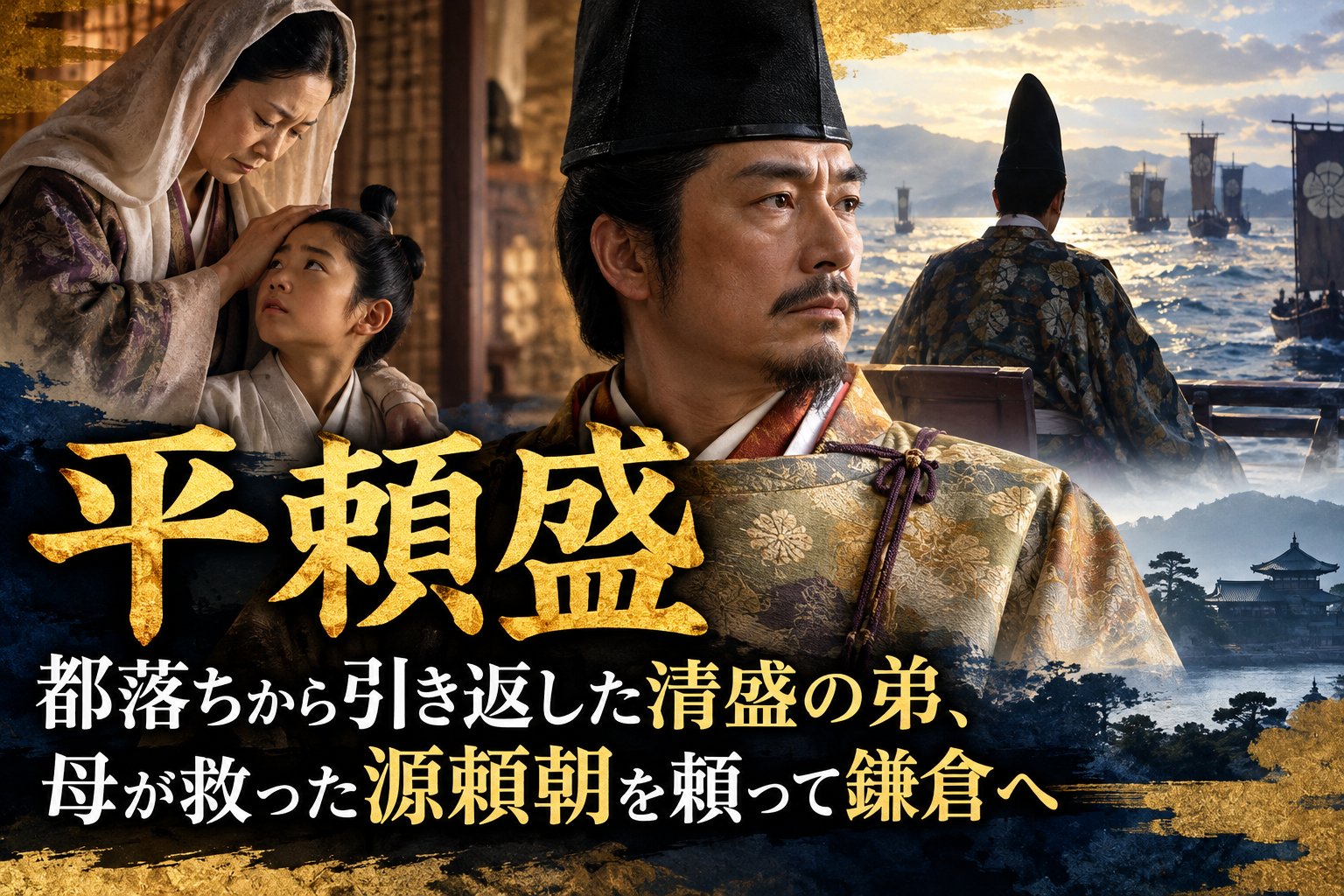
On June 1, 1184, in Kamakura.
Minamoto no Yoritomo hosted a farewell banquet for Taira no Tadamori, who was preparing to return to Kyoto.
According to the “Azuma Kagami,” influential vassals such as Oyama Tomomasa, Miura Yoshizumi, and Hatakeyama Shigetada gathered, and sake was served.
As the banquet progressed, Yoritomo presented parting gifts to Tadamori.
A gold-crafted sword.
A bundle of gold dust.
Ten horses with saddles.
Furthermore, gifts were also prepared for the retainers who accompanied Tadamori.
Tadamori was the half-brother of Taira no Kiyomori.
At this time, Kiyomori’s sons, Taira no Munemori and Taira no Tomomori, were continuing their battle against the Genji at Yashima, with Emperor Antoku in their care.
Yet here was Kiyomori’s brother, receiving a warm reception from their enemy, Yoritomo.
This hospitality was tied to events from twenty-four years earlier.
After the Heiji Rebellion, Yoritomo, the third son of Minamoto no Yoshitomo, was captured by the Taira.
He was a boy of just thirteen.
It is said that Tadamori’s mother, Ike no Zenni, pleaded with Kiyomori for Yoritomo’s life.
Yoritomo was spared execution and exiled to Izu Province.
More than twenty years passed.
Yoritomo raised an army in Izu, entered Kamakura, and became a leader among the warriors of the eastern provinces.
Meanwhile, Tadamori had separated from his clan during the Taira’s flight from the capital in 1183 and returned to Kyoto.
After receiving protection from the Hachijo-in, he headed to Kamakura with his sons.
Yoritomo had not forgotten the debt he owed to Ike no Zenni.
However, there was another story about a different person from that day’s banquet.
This is Taira no Munekiyo.
Munekiyo served Ike no Zenni and is said to have been involved in sparing Yoritomo’s life after the Heiji Rebellion.
Yoritomo intended to repay Munekiyo for his past kindness.
However, Munekiyo did not come to Kamakura.
He felt it was shameful to seek rewards in Kamakura now that the Taira clan had fallen from grace.
Munekiyo expressed this sentiment and reportedly headed to Munemori in Yashima.
Yorimori received a warm welcome from Yoritomo in Kamakura.
Munekiyo departed to join the Taira clan, who continued their fight.
These two men, both connected to Ike no Zenni, chose different paths in the face of the Taira clan’s downfall.
Taira no Tadamori‘s Fifth Son—Mother was Ike no Zenni
Taira no Yorimori was born around the first year of Chosho (1132) as a child of Taira no Tadamori.
There are alternative accounts of his birth year, with some sources suggesting 1131 or 1133.
His father, Tadamori, was a prominent military commander of the Ise Taira clan, serving under Emperor Toba.
He distinguished himself through his efforts in suppressing pirates in the western provinces and managing imperial estates, earning numerous court ranks.
Yorimori was the fifth son of Tadamori.
His brothers included Taira no Kiyomori, Taira no Iemori, Taira no Tsunemori, and Taira no Norimori.
Among them, Iemori was his full brother, while Kiyomori, Tsunemori, and Norimori were half-brothers.
His mother was Fujiwara no Muneko.
She later became known as Ike no Zenni.
Muneko was the daughter of Fujiwara no Munekane and became Tadamori’s principal wife.
The son she bore, Iemori, was highly regarded in Tadamori’s household.
Iemori entered court service at a young age, holding positions such as Captain of the Right Horse Guards.
However, in the fifth year of Kyuan (1149), he fell ill while accompanying Emperor Toba on a pilgrimage to Kumano.
Iemori passed away shortly thereafter.
He was still in his twenties.
Muneko, the mother, lost her young son.
Yorimasa also lost his brother from the same mother, and became the child left in Tadamori’s household.
Furthermore, in the third year of Ninpei (1153), his father Tadamori passed away.
The head of the Taira clan became the eldest son, Kiyomori.
Yorimasa would come to follow his half-brother Kiyomori.
However, Muneko had connections at court, and her son Yorimasa also came to have his own retainers and estates.
Within the Taira clan led by Kiyomori, Yorimasa’s household developed its own foundation.
“Ko-garasu” and “Nukemaru”—The Swords That Tell of Brothers’ Discord
There is an anecdote about the treasured swords of the Taira clan concerning Kiyomori and Yorimasa’s relationship.
These are the two swords named “Ko-garasu” and “Nukemaru.”
According to the “Tale of the Heike,” both were famous swords passed down in the Taira clan.
Nukemaru was originally a sword named “Kogarashi.”
One day, while Tadamori was napping by a pond, a giant serpent appeared.
Then, the sword unsheathed itself and drove the serpent away.
It is said that Tadamori named the sword Nukemaru after this event.
Eventually, Tadamori gave Ko-garasu to Kiyomori and Nukemaru to Yorimasa.
This is said to have led to discord between the brothers.
However, the story of the sword driving away the serpent is a legend.
The detailed circumstances of Kiyomori and Yorimasa’s conflict over the treasures cannot be confirmed from contemporary records.
On the other hand, it can be traced from their official careers and actions that the two later took different political stances.
Kiyomori, as the head of the entire Taira clan, strengthened his power at court.
Yorimasa inherited his mother, Ikeda Zenni’s, connections and began to establish relationships with Emperor Go-Shirakawa and the Eight Courts.
The first major conflict Yorimasa participated in was the Hogen Rebellion in the first year of Hogen (1156).
Hogen Rebellion—The Prince of Emperor Sutoku, Whom His Mother Served
July, first year of Hogen.
The Hogen Rebellion broke out from the conflict between Emperor Sutoku and Emperor Go-Shirakawa.
Kiyomori joined the side of Emperor Go-Shirakawa and, along with Minamoto no Yoshitomo, defeated the forces of Emperor Sutoku.
Yorimasa also set out to battle, following his brother.
At this time, Yorimasa’s mother, Ike no Zenni, found herself in a difficult situation.
Ike no Zenni had served as the wet nurse to Prince Shigehito, the son of Emperor Sutoku.
Prince Shigehito was the prince whom Emperor Sutoku hoped would succeed to the throne.
For Ike no Zenni, the house of Emperor Sutoku was a family with whom she had deep ties.
However, during the Hogen Rebellion, Yorimasa sided with Emperor Go-Shirakawa.
There are stories that Ike no Zenni, anticipating the defeat of Emperor Sutoku’s side, advised Yorimasa to follow Kiyomori.
As a result, Yorimasa stood with his brother on the victorious side.
Afterwards, Yorimasa held various official positions such as Governor of Hitachi, elevating his status at court.
However, the relationship between Kiyomori and Minamoto no Yoshitomo deteriorated after the Hogen Rebellion.
December, 1159.
Fujiwara no Nobuyori and Minamoto no Yoshitomo raised an army.
This was the Heiji Rebellion.
This conflict would intertwine the fates of Yorimasa’s mother and Minamoto no Yoritomo.
Heiji Rebellion――The Capture of Minamoto no Yoritomo
December, 1159.
Fujiwara no Nobuyori and Minamoto no Yoshitomo imprisoned Emperor Go-Shirakawa in an attempt to seize control of Kyoto.
Taira no Kiyomori, who was on a pilgrimage to Kumano, returned to the capital to prepare a counterattack.
Taira no Yorimori also fought on the Taira side.
Kiyomori’s son, Taira no Shigemori, and others took to the field, and fierce battles raged in Kyoto.
Eventually, the forces of Nobuyori and Yoshitomo were defeated.
Nobuyori was executed, and Yoshitomo fled Kyoto, only to be killed in Owari Province.
Warriors on the Minamoto side were captured one after another.
Yoshitomo’s eldest son, Minamoto no Yoshihira, was later executed.
And Yoshitomo’s third son, Minamoto no Yoritomo, also fell into the hands of the Taira.
Yoritomo was just 13 years old.
He was a boy who had lost his father, Yoshitomo, and whose brother, Yoshihira, had also been executed.
According to the “Heiji Monogatari,” the person who captured Yoritomo was Taira no Munekiyo.
Munekiyo was a warrior serving Lady Ikenozenni.
The captured Yoritomo awaited Kiyomori’s decision.
If Yoshitomo’s son were allowed to live, there was a possibility he could oppose the Taira in the future.
It is said that Lady Ikenozenni pleaded for his life.
Lady Ikenozenni’s Plea—Saving the 13-Year-Old Yoritomo
According to the “Heiji Monogatari,” Lady Ikenozenni saw in the captured Yoritomo the image of her deceased son, Iemori.
Iemori had died of illness in the fifth year of Kuan.
Having heard that Iemori and Yoritomo resembled each other, Lady Ikenozenni is said to have wanted to save Yoritomo’s life.
Lady Ikenozenni pleaded with Kiyomori for clemency.
However, Kiyomori was reluctant to spare the life of Minamoto no Yoshitomo‘s son.
It is said that Lady Ikenozenni repeatedly made her plea.
The “Heiji Monogatari” depicts her as going so far as to say that if Yoritomo were executed, she would not want to live either.
Finally, Kiyomori granted clemency.
Yoritomo was spared execution and exiled to Izu Province.
However, the scene where Lady Ikenozenni sees the image of Iemori and the detailed exchanges with Kiyomori are part of the legendary tales of military chronicles.
It is believed that political considerations of the time also played a role in the decision to spare Yoritomo’s life.
However, the belief that Ike no Zenni made every effort to save Yoritomo’s life is recorded in later works like the ‘Azuma Kagami.’
Yoritomo himself never forgot the favor he received from Ike no Zenni.
There are no detailed records about how much Yorisada was involved in his mother’s plea at that time.
As a young warrior of the Taira clan, Yorisada followed his brother, while his mother, Ike no Zenni, acted to save Yoritomo’s life.
More than twenty years passed.
Yoritomo lived in Izu, while Yorisada continued to climb the ranks in Kyoto.
The two would meet again only after the Taira clan was expelled from Kyoto.
Yorisada, Known as “Ikedono”—From Senior Third Rank to Councilor
After the Heiji Rebellion, Kiyomori’s influence expanded significantly.
Yorisada also continued to advance in the court.
He held positions such as Governor of Hitachi, Aki, Mikawa, and Owari, and in the first year of Eiman (1165), he was appointed as the Director of Repairs.
The following year, in the first year of Ninan (1166), he became the Vice-Governor of Dazaifu, and in August of the same year, he rose to Junior Third Rank.
He attained the rank of a court noble.
In January of Ninan 2 (1167), he reached Senior Third Rank.
In the following year, on October 18 of Ninan 3 (1168), he was appointed as a Councilor.
By this time, Kiyomori had already risen to the position of Grand Minister of State.
Kiyomori’s eldest son, Shigemori, also advanced to a high rank, and his younger brother, Munemori, became a Councilor.
Although Yorisada was the son of Tadamori’s principal wife, his rise within the clan was not necessarily the fastest.
Moreover, shortly after becoming a Councilor, Yorisada was relieved of his position.
He later returned to the position of Councilor and continued to accumulate ranks, but his status at court was often unstable.
Yorisada’s residence was known as “Ikedono.”
This name was derived from the Rokuhara residence where his mother, Ike no Zenni, lived.
Later, when he rose to the rank of Provisional Grand Counselor, he was also called “Ike Dainagon.”
In Yorisada’s household, he was served by retainers such as Taira no Munekiyo.
He also owned estates in various regions and was involved in the collection of taxes and land management.
The lands over which Yorisada held rights extended from the Kinai region to western Japan and Kyushu.
Within the Taira clan, centered around Kiyomori, Yorisada’s family also had its own retainers and economic base.
Relationship with Hachijo-in—The Family of His Wife, Saisho no Kimi
Considering Yorisada’s political stance, his relationship with Hachijo-in is indispensable.
Hachijo-in was Princess Akiko, born to Emperor Toba and Bifukumon-in Tokuko.
She was a powerful imperial lady with extensive estates and her own household administration.
Yorisada’s wife was a woman known as Saisho no Kimi, the daughter of Hachijo-in’s wet nurse.
Saisho no Kimi was also the sister of the monk Shunkan, who was exiled to Kikaigashima following the Shishigatani Incident.
Through this marriage, Minamoto no Yorimasa became deeply connected with the circle around Hachijo-in.
Moreover, Yorimasa himself served as a betto, or administrator, in the court of Emperor Go-Shirakawa.
While Taira no Kiyomori strengthened his influence as an imperial relative by marrying his daughter Tokuko to Emperor Takakura, Yorimasa maintained his ties with Hachijo-in and Emperor Go-Shirakawa.
Many of the estates associated with Yorimasa’s family were under the patronage of Hachijo-in.
In these estates, both the household agency of Hachijo-in and the Yorimasa family were involved in management and revenue from their respective positions.
The connection with Hachijo-in did not end with Yorimasa’s wife’s family ties.
For Yorimasa’s family, it was a relationship that supported important domains and networks.
Then came the year Jisho 3 (1179).
As the conflict between Kiyomori and Emperor Go-Shirakawa deepened, Yorimasa was stripped of his official position by his brother.
The Political Upheaval of Jisho 3—Dismissed by His Brother Kiyomori
In June of Jisho 3.
Kiyomori’s daughter, Taira no Moriko, passed away.
Moriko had married Fujiwara no Motomichi of the regent family, and after her husband’s death, she managed many of the regent family’s estates.
With Moriko’s death, disputes arose over the handling of these estates.
On July 29, Kiyomori’s eldest son, Taira no Shigemori, also passed away.
The province of Echizen, held by Shigemori’s family, became a domain of Emperor Go-Shirakawa, intensifying the conflict between Kiyomori and the retired emperor.
In November, Kiyomori led his forces from Fukuhara into Kyoto.
He ousted the regent Matsudono Motofusa and appointed Konoe Motomichi as the new regent.
Close associates of the retired emperor were also dismissed, and Emperor Go-Shirakawa was confined to the Toba Palace.
This was the Political Upheaval of Jisho 3.
On November 17.
Yorimasa was also dismissed from his position as the Captain of the Right Gate Guards.
Despite being Kiyomori’s half-brother, he was punished for his closeness to Emperor Go-Shirakawa.
At the time, rumors even spread that Kiyomori might have Yorimasa killed.
However, no records have been found indicating that Kiyomori actually ordered Yorimasa’s execution.
Yorimasa was allowed to return to court service in the following year, Jisho 4 (1180), in January.
In April of the same year, he was promoted to Junior Second Rank, and by June, he had advanced to Senior Second Rank.
Despite losing his official position due to his brother’s political upheaval, he managed to regain his standing at the court.
However, that same year, uprisings against the Taira clan erupted across various regions.
In Izu Province, a lone warrior raised an army.
This was Minamoto no Yoritomo, whose life had once been spared by Ike no Zenni.
Yoritomo’s Uprising—The Tide Begins to Turn for the Taira
August of Jisho 4 (1180).
Minamoto no Yoritomo rose in rebellion in Izu Province.
Although Yoritomo was defeated by Oba Kagechika and others at Ishibashiyama, he fled to Awa Province to regroup.
Chiba Tsunetane and Kazusa Hirotsune joined his cause, and influential warriors in Musashi Province also rallied to Yoritomo’s side.
On October 6, Yoritomo entered Kamakura.
Subsequently, the punitive force dispatched by Kiyomori, including Taira no Koremori, was defeated at the Fuji River.
Around the same time, in Shinano Province, Minamoto no Yoshinaka (Kiso Yoshinaka) was expanding his influence.
On the intercalary 4th of February, Jisho 5 (1181), Kiyomori passed away.
The head of the Taira clan became Kiyomori’s third son, Taira no Munemori.
Yorimori, Munemori’s older uncle, held the high court rank of Senior Second Rank.
However, it was Munemori who took command of the clan.
Munemori was the son of Kiyomori’s principal wife, Taira no Tokiko, and the brother of Emperor Antoku’s mother, Tokuko.
Yorimori continued to advance in the court.
In Juei 1 (1182), he held positions such as Inspector of Mutsu and Dewa, and Middle Counselor, and by April 5 of Juei 2 (1183), he became Provisional Grand Counselor.
Senior Second Rank, Provisional Grand Counselor.
Even after his mother Ike no Zenni passed away, Yorimori maintained a high position at court.
However, the following month, the punitive force the Taira sent to the Hokuriku region suffered a major defeat.
This was the Battle of Kurikara Pass.
Minamoto no Yoshinaka’s forces advanced towards Kyoto, and Yorimori found himself caught in the turmoil of the capital’s fall.
July of Juei 2—Yorimori Marches to Yamashina
May 11 of Juei 2 (1183).
Taira no Korehira and his forces suffered a crushing defeat at Kurikara Pass against Minamoto no Yoshinaka.
They were defeated again at Shinohara in Kaga Province, and Yoshinaka’s army advanced from Echizen to Omi.
The Taira clan stationed their forces around Kyoto, preparing for Yoshinaka’s advance.
Yorimasa also set out towards the Yamashina area.
This was to defend the eastern side of Kyoto.
The “Gukansho” and other sources mention that Yorimasa was in Yamashina at this time.
July 24th.
In Kyoto, Munemori and others were making preparations to escort Emperor Antoku to the western provinces.
However, Yorimasa was in Yamashina, separated from the central activities of his clan.
That night, Emperor Go-Shirakawa slipped out of Kyoto and moved to Mount Hiei.
On the following day, the 25th, Munemori and others departed Kyoto with Emperor Antoku and the Imperial Regalia.
Yorimasa learned of his clan’s departure only after it was underway.
The “Gukansho” recounts that Munemori and others left the capital without adequately informing Yorimasa.
It is said that Yorimasa was angered by this handling of the situation.
Yorimasa, the younger brother of Kiyomori and who had risen to the rank of Senior Second Rank and Provisional Grand Counselor, was nearly left behind by his departing clan.
Yorimasa decided to follow after Munemori and the others.
However, he did not intend merely to join them.
He wanted to confirm Munemori’s intentions on how to proceed.
To this end, he sent his son as a messenger.
Sending His Son, Taira no Tamemori, to Munemori—Yorimasa Awaits a Response
According to the “Gukansho,” Yorimasa dispatched his son, Taira no Tamemori, to Munemori.
What should they do from here on?
Should they head to the western provinces with their clan?
Or should they remain around Kyoto and take on a different role?
Yorimasa sought Munemori’s decision.
However, it is said that Munemori did not provide a clear response.
Amidst the chaos of the capital’s evacuation, the “Gukansho” describes Munemori as being in a state of disarray.
Tamemori returned to Yorimasa.
Yorimasa still intended to pursue his clan, but eventually decided to return to Kyoto.
The “Enkyobon Heike Monogatari” includes a scene where Yorimasa orders his retainers near Akai River to discard the red insignia that marked them as Taira.
They removed the insignia used for identifying their forces and returned to Kyoto.
The scene of discarding the red insignia is depicted in the war tales.
Meanwhile, Yorimasa’s decision not to travel west with Munemori and others, but to return to Kyoto, is also recorded in court diaries.
In the diary of Yoshida Tsunefusa, known as the ‘Kikki’, the entry for July 28 records the courtiers debating about Yorimasa’s departure.
Since the time of Kiyomori, there had been discord between Yorimasa and the central figures of the clan.
However, regarding this recent flight from the capital, there are no reports of any particular scheme by Yorimasa.
Opinions to that effect were also expressed.
Yorimasa, who had been tasked with defense at Yamashina, learned of Munemori and others’ retreat and sent his son as a messenger.
Afterwards, he separated from the clan and returned to Kyoto.
There is no evidence to conclude that Yorimasa intended to side with the Minamoto from the beginning.
The chaos of the flight from the capital and the internal relations of the clan overlapped with his decision.
Protection by Hachijo-in—Kiyomori’s Brother Returns to Kyoto
Upon returning to Kyoto, Yorimasa reported the situation to Emperor Go-Shirakawa.
According to the ‘Gukansho’, the emperor ordered Yorimasa to take refuge with Hachijo-in.
Hachijo-in was someone with whom Yorimasa had long had a deep relationship.
His wife, Saisho no Tsubone, was the daughter of Hachijo-in’s wet nurse, and Yorimasa himself was involved with the manors of Hachijo-in.
Relying on this connection, Yorimasa sought Hachijo-in’s protection.
However, returning to Kyoto did not immediately restore his official rank.
August 6.
Yorimasa was dismissed from his position as Acting Grand Counselor.
As the Taira clan, who had departed for the western provinces with Emperor Antoku, faced punitive measures, Yorimasa was also targeted.
At that time in Kyoto, relations between Minamoto no Yoshinaka and Emperor Go-Shirakawa were deteriorating.
Yoshinaka’s forces struggled to secure provisions, and conflicts with local warriors around Kyoto were escalating.
While under Hachijo-in’s protection, Yorimasa remained in the politically unstable Kyoto.
In the western provinces, Munemori and others were attempting to regroup their forces with Emperor Antoku.
In the eastern provinces was Yoritomo.
This Yoritomo was the boy whose life had been pleaded for by Ike no Zenni.
In the same autumn, Yorimasa set out for Kamakura with his sons.
The brother of the Taira clan leader, Kiyomori, was going to visit Yoritomo of the Minamoto faction.
November of Juei 2—Meeting with Yoritomo
November of Juei 2.
Yorimasa arrived in Kamakura.
According to the entry for November 6 in the diary ‘Gyokuyo’ by Kujō Kanezane, it was reported that Yorimasa met with Yoritomo.
Yorimasa wore a Tang-style hitatare and a tate-eboshi.
He was accompanied by his sons and two retainers, but reportedly carried no swords.
Yoritomo greeted him in a white silk kariginu and a tate-eboshi.
It is said that about fifty retainers stood behind him.
Yorimasa appeared before Yoritomo unarmed, along with his sons.
The ‘Gyokuyo’ also notes that Yoritomo treated Yorimasa as if he were his father.
A lodging near the provincial office of Sagami was prepared for Yorimasa, and arrangements were made for his stay.
However, this meeting was not witnessed by Kanezane himself.
The information was relayed from Kamakura to Kyoto.
At the time Yorimasa descended to Kamakura, Yoritomo was negotiating with Retired Emperor Go-Shirakawa.
In October of the second year of Juei, an imperial edict concerning the control of estates and public lands in the eastern provinces was issued.
Furthermore, Yoritomo was closely monitoring the situation in Kyoto, where tensions with Minamoto no Yoshinaka were rising.
Yorimasa had connections with the Hachijo-in and Go-Shirakawa-in, having served in the court for many years as a noble.
Welcoming Yorimasa held political significance for Yoritomo as well.
Moreover, Yoritomo owed a debt of gratitude to Yorimasa’s mother, Ike no Zenni.
This debt of gratitude would be recorded the following year as a measure to protect the lands of the Yorimasa family.
April 6, 1184 — Return of Thirty-Four Former Estates
April 6, 1184.
The “Azuma Kagami” details the measures Yoritomo took regarding Yorimasa’s estates.
After the fall of the Taira clan, their estates were treated as confiscated lands.
Estates where Yorimasa and his wife held rights were also subject to confiscation.
However, Yoritomo sought to allow the Yorimasa family to manage these estates as before.
The reason recorded in the “Azuma Kagami” was clear.
“In gratitude for the late Ike no Zenni’s kindness.”
It was to repay the kindness received from the late Ike no Zenni.
Following Yoritomo’s intervention, measures were taken to recognize the traditional rights over thirty-four estates of the Yorimasa family.
The details are preserved in a list in the “Azuma Kagami.”
Estates directly involving Yorimasa included Kawachi Province’s Hashii Sho, Iga Province’s Nagata Sho, Ise Province’s Kizukuri Sho, Harima Province’s Arita Sho, and Bizen Province’s Saeki Sho.
Additionally, estates in Chikuzen Province’s Kashii Sho, Yasutomi territory, and Kumamoto District in Higo Province were included.
Meanwhile, estates related to Yorimasa’s wife included Hyogo Sho in Settsu Province, Kumazaka Sho in Kaga Province, Munakata Shrine territory in Chikuzen Province, and Kunito Sho in Hyuga Province, part of the Hachijo-in holdings.
In these estates, the main house was often a female courtier or temple, while the Yorimasa family held rights to the management and stewardship.
Yoritomo sought to have these rights recognized as they had been.
Ike no Zenni had pleaded for Yoritomo’s life after the Heiji Rebellion.
About twenty-four years had passed since then.
Yoritomo protected Yorimasa, Ike no Zenni’s son, and advocated for his family’s estates to the court.
The “Azuma Kagami” cites Ike no Zenni’s kindness as the reason.
Meanwhile, Yorimasa had served in the court for many years, building deep connections with the Hachijo-in and Go-Shirakawa-in.
Through Yorimasa, Yoritomo could also gain insights into Kyoto’s political and estate affairs.
The protection of Yorimasa was influenced by his mother’s kindness and the political climate of the time.
By the Shores of Kamakura—Heading to Morito with Yoritomo
May 19, 1184.
Yoritomo, accompanied by Yorimasa and others, ventured to the shores of Kamakura.
According to the “Azuma Kagami,” the group boarded a boat from Yuigahama and headed towards the shores of Morito.
This area corresponds to present-day Hayama Town in Kanagawa Prefecture.
The vassals decorated their boats and rowed with competitive spirit.
Numerous boats lined the sea, and both Yoritomo and Yorimasa observed the scene.
Soon, they arrived at the shores of Morito.
There, under the pine trees, a space was prepared for horseback archery, where “ogasekake” was demonstrated.
Ogasekake is a martial art where one shoots at small targets from horseback.
Yoritomo explained that this was a samurai custom, rarely seen elsewhere.
The “Azuma Kagami” notes that Yorimasa and others greatly enjoyed it.
Yorimasa had experience as a warrior, having followed Kiyomori into battle during the Heiji Rebellion.
Later, he rose through the court ranks to become a Senior Second Rank and Acting Grand Counselor.
In Kamakura, he witnessed firsthand the martial arts of the eastern samurai led by Yoritomo.
Two days later, Yoritomo sent a letter to Kyoto.
It was to restore the official positions of Yorimasa and his sons.
May 21—Yoritomo’s Appeal for Yorimasa’s Reinstatement
May 21, 1184.
Yoritomo sent a letter to Takashina no Yasutsune.
According to the “Azuma Kagami,” the letter requested the reinstatement of Yorimasa and his sons to their former positions.
He also advocated for the appointment of Minamoto no Noriyori and other members of the Minamoto clan as provincial governors.
Yorimasa had been stripped of his position as Acting Grand Counselor after fleeing the capital the previous year.
Yoritomo sought his reinstatement with the court.
The appointments of his sons were also crucial.
In Yorimasa’s household, Hoshimori, Tamemori, Mitsumori, and Hogyō served the court and advanced in rank.
With the Taira clan’s defeats mounting, Yorimasa was in a position to entrust the future of his house to his sons.
He aimed to reclaim his estates and restore their official positions.
During his stay in Kamakura, Yorimasa sought to pave that path.
Yoritomo supported this effort.
Eventually, Yorimasa’s return to Kyoto was decided.
Before his departure, Yoritomo held a farewell banquet.
However, one warrior did not appear at the banquet.
A Sword of Gold and Ten Horses: Yoritomo’s Farewell Banquet
June 1, 1184.
Minamoto no Yoritomo invited Minamoto no Yorimasa to a farewell banquet.
The Azuma Kagami provides a detailed account of the day’s events.
Yoritomo’s close aides and influential vassals gathered, and sake was served.
Among those present were Oyama Tomomasa, Miura Yoshizumi, Yuki Tomomitsu, Shimokobe Yukihira, Hatakeyama Shigetada, and Hatta Tomoie.
The cups of sake were passed around repeatedly, and discussions about worldly affairs ensued.
Eventually, Yoritomo presented Yorimasa with parting gifts.
A sword made of gold.
A bundle of gold dust.
Ten horses with saddles.
It is recorded that the sword was delivered by Tokie and the gold dust by Aki no Suke.
Moreover, Yoritomo intended to give gifts to Yorimasa’s retainers who accompanied him.
Yoritomo then called out the name of one samurai.
It was Taira no Munekiyo.
Munekiyo was a samurai who had once served Lady Ikezumi.
After the Heiji Rebellion, he became known for his involvement in sparing Yoritomo’s life.
Yoritomo intended to repay Munekiyo for his past deeds.
However, Munekiyo did not appear at the banquet.
When Yoritomo inquired, Yorimasa explained that Munekiyo’s departure was delayed due to illness.
Yoritomo expressed his regret at Munekiyo’s absence.
Yet, according to the Azuma Kagami, Munekiyo never intended to go to Kamakura from the start.
Taira no Munekiyo: Declining Yoritomo’s Invitation to Go to Yashima
Munekiyo served Lady Ikezumi and was known for his role in sparing Yoritomo’s life during the Heiji Rebellion.
To repay this debt, Yoritomo requested that Munekiyo accompany Yorimasa to Kamakura.
However, Munekiyo declined the invitation to Kamakura.
The June 1 entry in the Azuma Kagami explains his reasoning.
If it were to go to the battlefield, he would willingly take the lead.
But now, Yoritomo’s invitation is likely to repay the past favor of sparing his life.
To accept such a reward and go to Kamakura now, when the Taira clan has fallen, would be shameful.
That is what Munekiyo reportedly said.
Leaving Yorimasa behind, he headed towards Yashima.
At Yashima was Taira no Munemori.
He was the leader of the Taira clan, who continued to fight against the Minamoto while supporting Emperor Antoku.
The Azuma Kagami records that Munekiyo headed towards Munemori.
Yorimasa turned back from his flight from the capital, received protection from Hachijo-in, and then went down to Kamakura.
With Yoritomo’s influence, he sought to reclaim his former lands and official positions.
Munekiyo declined Yoritomo’s invitation.
Though both had connections to Ike no Zenni, Yorimasa returned to Kyoto while Munekiyo went to join the Taira forces.
There are few detailed records of which battles Munekiyo participated in or where he met his end.
However, the Azuma Kagami notes the reasons why Munekiyo refused Yoritomo’s invitation.
Yoritomo regretted Munekiyo’s absence.
A few days later, Yorimasa left Kamakura.
June 5, 1184—Yorimasa Leaves Kamakura
June 5, 1184.
Yorimasa departed Kamakura, setting out on his journey back to Kyoto.
The Azuma Kagami records that Yoritomo protected Yorimasa’s estates, hosted repeated banquets during his stay, and gifted him with gold, silver, and textiles.
On the same June 5, in Kyoto, a ceremony recognized Yorimasa’s reinstatement to his official position.
The results of this reached Kamakura on June 20.
The June 20 entry of the Azuma Kagami notes that Yorimasa was reinstated as Gon-Dainagon, his son Mitsumori became Chamberlain, and Hogyō was appointed Governor of Kawachi.
Thanks to Yoritomo’s efforts, Yorimasa and his sons regained their official positions.
After returning to Kyoto, Yorimasa resumed his activities at the court.
On December 16 of the same year, Retired Emperor Go-Shirakawa visited Yorimasa’s residence at Hachijo Muromachi.
This was to observe the procession of Regent Konoe Motomichi’s pilgrimage to Kasuga.
Yorimasa’s residence once again became a place to welcome the Retired Emperor.
However, a few days later, Yorimasa resigned from his position as Gon-Dainagon.
This occurred on December 20.
Upon his resignation, he requested the promotion of his son Mitsumori to Konoe Shosho.
While stepping down from his own position, he aimed to elevate his son’s status.
In the western provinces, Munemori and Tomomori continued to fight, supporting Emperor Antoku.
Yorimasa distanced himself from that faction, working to protect his estates and position in Kyoto.
The following year, the Taira clan met their end at the Battle of Dan-no-ura.
The Defeat at Dan-no-ura—The Surviving Brother of Kiyomori
March 24, 1185.
On the waters of Akama-ga-seki in Nagato Province, the fleets of the Minamoto and Taira clans clashed fiercely.
This was the Battle of Dan-no-ura.
The Taira clan was defeated, and Emperor Antoku perished beneath the waves.
Kiyomori’s wife, Tokiko, also drowned, and many of the clan’s warriors, including Tomomori and Norimori, lost their lives one after another.
Munemori was captured along with his son Kiyotsune and later executed in Omi Province.
Yorimori did not participate in this battle.
He had separated from the clan during their flight from the capital in the second year of Juei and had returned to Kyoto after descending to Kamakura.
His father, Tadamori, had already passed away.
His half-brother Iemori also died young, and his other half-brother Kiyomori died in 1181.
At Dan-no-ura, his brothers and nephews perished one after another.
There are no detailed records of how Yorimori received this news.
Meanwhile, in Yorimori’s household, his sons obtained official positions and continued to manage estates.
Under Yoritomo’s protection, Yorimori continued to live in Kyoto even after the Taira clan’s defeat.
About two months later, Yorimori took the tonsure.
May 29, 1185—Takes the Tonsure Near Todai-ji
May 29, 1185.
Yorimori took the tonsure.
According to the Azuma Kagami entry for June 18, Yorimori’s messenger arrived in Kamakura and reported to Yoritomo that he had taken the tonsure near Todai-ji on the 29th of the previous month.
His Dharma name was Juren.
Yorimori had informed Yoritomo of his intention to take the tonsure in advance.
Having risen to the rank of Senior Second Rank and Acting Grand Counselor, Yorimori shaved his head and entered the Buddhist path.
The location of his tonsure, Todai-ji, was a temple that had once been burned by the Taira forces.
During the burning of Nanto in 1180, many of its buildings, including the Great Buddha Hall, were destroyed.
The reasons why Yorimori chose to take the tonsure near Todai-ji are not detailed in historical records.
However, it is recorded that Kiyomori’s brother took the tonsure near a temple greatly damaged by the Taira forces.
After taking the tonsure, Yorimori became known as Juren.
Nevertheless, activities concerning his family’s estates and his sons’ appointments continued.
In June of the same year, it is recorded in the Gyokuyo that Retired Emperor Go-Shirakawa made Harima and Bizen Provinces his personal domains and involved Yorimori in their management.
Yorimori is said to have recommended Fujiwara no Sanemitsu as Governor of Harima and his son Mitsumori as Governor of Bizen.
Even after taking the tonsure, Yorimori maintained his relationship with the court.
In his later years, he sent letters concerning the estates of the Hachijo-in.
The actual document still exists today.
“Letter of Novice Juren”—A Document Left by Yorimori in His Later Years
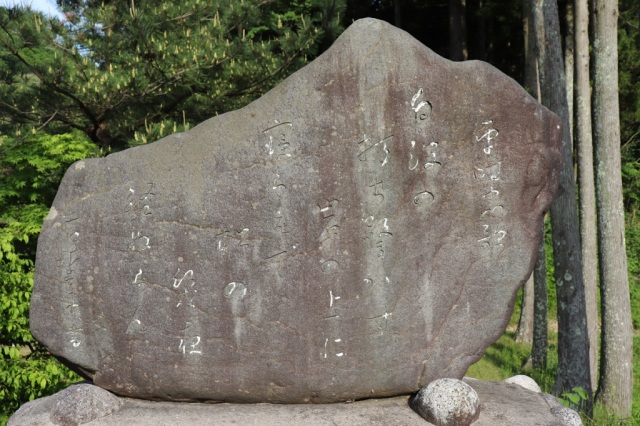
At the National Museum of Japanese History, there is a letter preserved that was written by Taira no Yorimori after he became a monk.
This letter is known as the “Letter of Monk Juren,” part of the Kōzan-ji documents.
Yorimori, who took the Buddhist name Juren, wrote about the Hyogo Manor in Settsu Province.
The letter is estimated to have been written between the first year of Bunji (1185) and around May of the second year of Bunji (1186).
Yorimori requested the Hachijo-in Office to send an envoy to the Hyogo Manor.
This was to investigate the damages that had occurred on the estate.
It is also believed that he sought to have the burden of taxes and expenses for Buddhist services reduced.
The Hyogo Manor was an estate of the Hachijo-in domain, with which Yorimori was connected through his wife.
Along the coast of Settsu Province, where Kiyomori had promoted the relocation of the capital to Fukuhara, the Taira clan’s estates were widespread.
The surrounding areas were affected by conflicts, including the Battle of Ichinotani.
Even after becoming a monk, Yorimori continued to appeal to the Hachijo-in Office regarding the estate’s damages and tax issues.
This letter is a valuable historical document that conveys Yorimori’s actions.
Yorimori’s protection under Yoritomo in Kamakura is detailed in the “Azuma Kagami.”
Meanwhile, this letter shows the monk Yorimori investigating the estate’s conditions and seeking to reduce burdens.
By then, the Taira clan had already been destroyed at Dan-no-ura.
Yet, Yorimori’s family still had estates to protect across various regions, and sons serving the court.
Even after taking the name Juren, Yorimori remained involved in managing his family’s affairs.
June 2, Bunji 2 — The Death of Taira no Yorimori
On June 2, Bunji 2 (1186).
Taira no Yorimori passed away.
There are differing accounts of his age at death, with some sources suggesting 54 or 55 years old.
His birth year varies in records, listed as 1131, 1132, or 1133, making it difficult to determine his exact age.
Details about the place of his death or his illness remain unclear.
Yorimori returned from exile in July of Juei 2 (1183).
While defending Yamashina, he learned of Munemori’s flight from the capital and sent his son Tamesada as a messenger.
Afterward, he left the clan and returned to Kyoto, receiving protection from Hachijo-in.
In the autumn of the same year, he traveled to Kamakura and met with Yoritomo.
Yoritomo had not forgotten his debt to Ike no Zenni.
The “Azuma Kagami” records that, in gratitude, Yoritomo allowed Yorimori’s family to continue managing their 34 estates as before.
He also supported the reinstatement of Yorimori and his sons to official positions.
On June 1, Genryaku 1, a farewell banquet was held, and Yorimori was gifted a sword, gold dust, and ten horses.
At the banquet, Taira no Munekiyo, whom Yoritomo called by name, did not come to Kamakura.
Once known for his efforts to save Yoritomo’s life, Munekiyo felt ashamed to seek rewards now that the Taira clan had fallen from power, and instead, he headed to Munemori at Yashima.
Yorimori returned to Kyoto and was reinstated as Gon Dainagon.
The following year, after the Taira clan was defeated at the Battle of Dan-no-ura, he took Buddhist vows near Todai-ji and adopted the name Juren.
More than a year passed.
On June 2, 1186, Yorimori passed away.
The boy saved by his mother, Ike no Zenni, had grown to become Minamoto no Yoritomo, leading warriors in the eastern provinces.
In gratitude for this favor, Yoritomo protected Kiyomori’s brother, Yorimori.
In a letter left before his death, Yorimori signed with the name “Sami Juren.”
The letter requested the Hachijo-in Temple to investigate damages at Hyogo Manor and sought to reduce the burden of taxes and Buddhist service expenses.
Even after surviving the Battle of Dan-no-ura, Yorimori strove to protect his family’s estates until the very end.