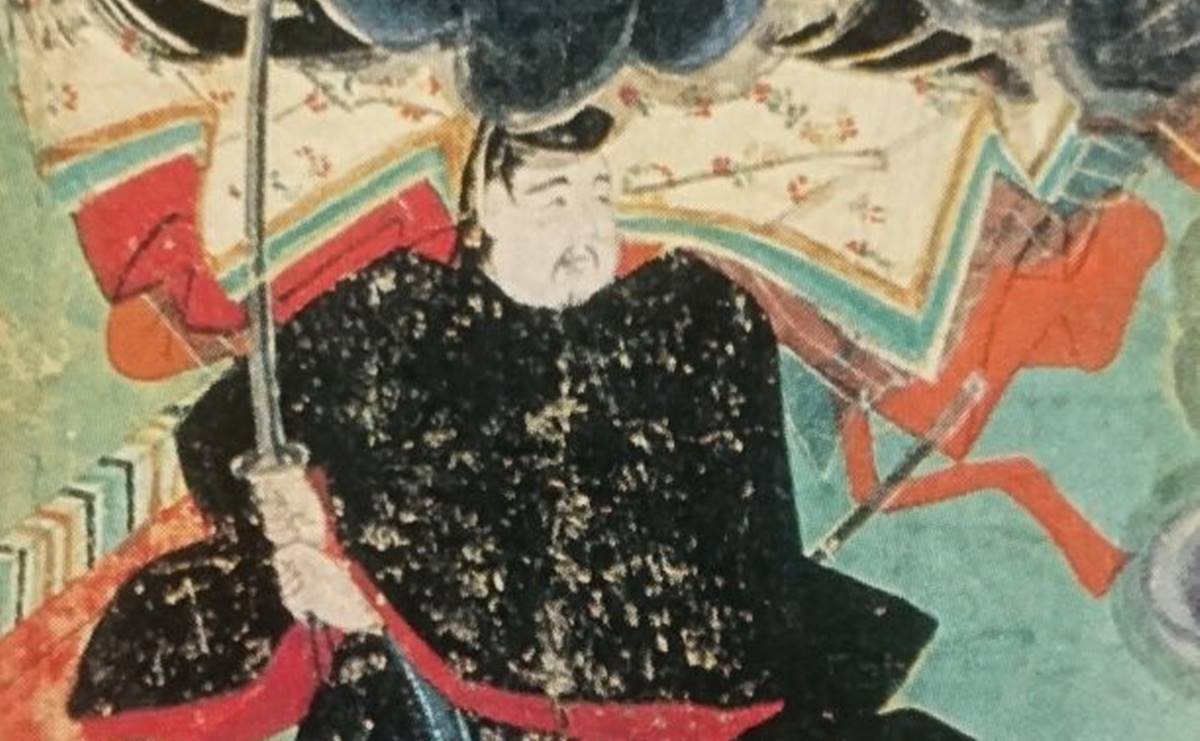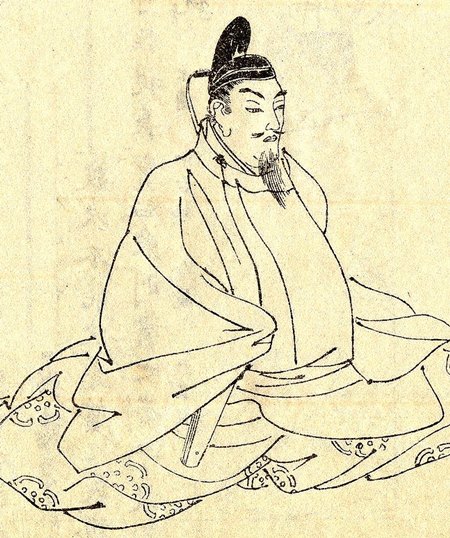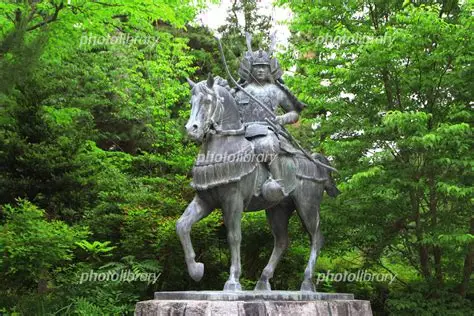
1039 — Born the Eldest Son of the Kawachi Genji
In the third year of Chogen (1039), Minamoto no Yoshiie was born.
His father was Minamoto no Yoriyoshi, his grandfather Minamoto no Yorinobu. His mother was a daughter of Taira no Naokata.
Yorinobu had brought the Rebellion of Taira no Tadatsune to an end and spread the name of the Kawachi Genji across Bando. Yoriyoshi, too, had deepened his ties to the eastern provinces while serving as Governor of Sagami and elsewhere. Yoshiie, in other words, was born to inherit the foundation his father and grandfather had built.
His maternal grandfather, Taira no Naokata, was likewise a powerful military nobleman with deep ties to Bando.
Even so, it would be premature to think of the Genji of this era as an independent warrior house like the later Kamakura shogunate.
Yoshiie was, first and foremost, a court official. He held rank, traveled to the provinces as a governor, and led troops when called upon. He lived within the aristocratic society of Kyoto even as he was born into a house whose specialty was arms.
This same Yoshiie would in time be called by the nobility “the foremost warrior under heaven.”
Coming of Age at Iwashimizu Hachiman Shrine — Taking Up the Name “Hachiman Taro”
Yoshiie carries a name more famous than his given name.
Hachiman Taro.
He took this name because his coming-of-age ceremony was held at Iwashimizu Hachiman Shrine.
His younger brother Yoshitsuna took the name “Kamo Jiro” after the Kamo Shrine, and Yoshimitsu took “Shinra Saburo” after the deity Shinra Myojin. Each of the Kawachi Genji brothers, it is said, carried into adulthood the name of the shrine tied to his own coming-of-age rite. Iwashimizu Hachiman Shrine itself records that Yoshiie underwent his ceremony there and took the name Hachiman Taro Yoshiie.
Hachiman, the god of war and of the bow, drew deep faith, and the ties between Hachiman and the Kawachi Genji ran deep as well.
More than a century before Minamoto no Yoritomo would come to revere Tsuruoka Hachiman Shrine in Kamakura, Yoshiie already carried the name of Hachiman on his own back.
At this point, though, Yoshiie was still an unknown young man.
The moment that would make his name known all at once was still to come, in Oshu.
Into the Former Nine Years War With His Father, Yoriyoshi
In the sixth year of Eisho (1051), conflict broke out in Mutsu between the Abe clan and the provincial government.
The first to fight the Abe, Governor of Mutsu Fujiwara no Narito, was defeated at Onikiribe. Yoshiie’s father, Minamoto no Yoriyoshi, was sent in as his replacement.
This was the Former Nine Years War.
Yoshiie followed his father into Oshu as well.
Working backward from the later fame of “Hachiman Taro,” it is tempting to imagine Yoshiie dominating the battlefield from the very start of this war.
The truth was the opposite.
The first great battle Yoshiie experienced was a defeat in which the Kawachi Genji very nearly ceased to exist.
1057 — Nineteen Years Old, Cornered With His Father at Koromogawa
The 11th month, the fifth year of Tenki (1057).
Yoriyoshi’s army pushed on to Koromogawa in pursuit of Abe no Sadato. The site lies around present-day Fujisawa, Ichinoseki City, Iwate Prefecture.
In the main text of the Mutsu Waki, Yoriyoshi’s army numbered a little over 1,800 against more than 4,000 for the Abe.
And it was already winter in Oshu. Yoriyoshi’s men were exhausted from the long march and struggling with their supplies. Into that weakness, the Abe army struck — with the advantage of terrain firmly on their side.
The battle was a crushing defeat for Yoriyoshi’s forces.
Yoriyoshi’s own horse took an arrow and fell, and Yoshiie lost his mount as well. Their soldiers scattered. In the end, only six riders remained at Yoriyoshi’s side, Yoshiie among them — seven riders in all, counting Yoriyoshi himself.
Yoshiie was nineteen by traditional count.
More than two hundred Abe riders closed in on them.
In this desperate moment, the Mutsu Waki singles out Yoshiie’s horsemanship and archery, praising his skill in the thick of the enemy as “godlike.”
Of course, the Mutsu Waki is a work that portrays Yoriyoshi and Yoshiie, father and son, in heroic terms.
Even so, it remains true that Yoshiie lived through fierce combat at a young age at Koromogawa.
And it was not a victory that made his name.
It was that he fought on to the end even as his own army collapsed around him — and it was this that first set people talking about his valor.
Yoshiie’s long career as a warrior did not begin with a glorious victory. It began with a crushing defeat.
1062 — the Kiyohara Join the War, and the Tide Turns
Five years after Koromogawa, in the fifth year of Kohei (1062).
The Kiyohara clan of Dewa joined Yoriyoshi’s army.
The force led by Kiyohara no Takenori numbered, by the Mutsu Waki‘s account, more than ten thousand. The Abe’s defensive line, which Yoriyoshi had failed to break for so long, now began to crumble rapidly.
Komatsu Stockade. Koromogawa Barrier. Toriumi Stockade.
And on the 17th day of the 9th month, Kuriyagawa Stockade fell.
Abe no Sadato died in battle, and Fujiwara no Tsunekiyo was captured and executed.
Yoshiie, too, took part in this final chain of battles alongside his father, and the following year, the sixth of Kohei (1063), was rewarded for his service with the rank of Junior Fifth, Lower Grade, and the post of Governor of Dewa.
Twenty-five by traditional count.
Here Yoshiie moved on from being a young warrior fighting at his father’s side to a man entrusted with a province of his own.
The “Poem Exchange” With Abe no Sadato — the Yoshiie Later Ages Loved
A famous episode involving Yoshiie and Abe no Sadato survives from the Former Nine Years War.
As Sadato fled in defeat at Koromogawa River, Yoshiie is said to have called out to him:
“The warp threads of your robe have come undone” —
a line built on the word koromo, “robe,” which also named the river.
Sadato is said to have answered at once:
“From years of tangled thread, the pain of it all” —
Impressed by the elegance of the reply, Yoshiie is said to have stopped loosing his arrows.
This story does not appear in the Mutsu Waki, which records the Former Nine Years War in detail — it comes from later works such as the Kokon Chomonju.
There is no way to confirm that this exchange truly happened on the battlefield.
Still, it is easy to see why the story endured.
Yoshiie was remembered not merely as a brute who cut down his enemies, but as a warrior who could recognize and respect an enemy commander’s own cultivation.
A Heian-period warrior was expected to possess more than martial skill — he was expected to carry the cultivation of aristocratic society as well. Yoshiie’s own poetry was later included in the Senzai Wakashu; he was a man who knew both the bow and the poem.
After the Former Nine Years War — What Did Yoshiie Do for the Next Twenty Years?
Once the Former Nine Years War ended, Yoshiie stepped away from the front lines of major warfare for a time.
He is recorded as having served as Governor of Dewa and then of Shimotsuke, Sagami, Musashi, Iyo, Kawachi, and Shinano, while in the capital holding posts such as Left Gate Guard Lieutenant, Junior Assistant Minister of Military Affairs, and Deputy Director of the Left Horse Bureau.
Looking only at the battlefield, these roughly twenty years look like a blank space.
For Yoshiie, though, this was in fact a crucial period.
Posted to the provinces, returning to Kyoto, building relationships again and again with warriors and nobles alike — through this accumulation, he gradually stepped out of the shadow of being merely “Yoriyoshi’s son.”
In the second year of Enkyu (1070), an incident occurred in which Fujiwara no Mototsune, who had stolen the official seal and the keys to the granary from the Mutsu provincial government, fled to Yoshiie, then serving as Governor of Shimotsuke.
Yoshiie’s exact relationship to this incident involving Mototsune remains debated, but it is worth noting that his name continued to surface in the politics of the eastern provinces even after the Former Nine Years War had ended.
His martial reputation was not fading into a one-time story. It was beginning, gradually, to turn into real political influence.
The Story of Studying Strategy Under Oe no Masafusa
An episode involving Oe no Masafusa also survives about Yoshiie.
Masafusa was one of the leading scholars of the late Heian period.
The later Oshu Gosannen ki tells that when Masafusa heard of Yoshiie’s conduct in battle, he acknowledged the man’s valor but judged his grasp of strategy still immature.
Hearing this, Yoshiie did not take offense — instead, the story goes, he sought Masafusa out and studied strategy under him.
This, too, is one facet of the Yoshiie shaped by later generations.
A young warrior known for his skill with the bow.
Who in time became a commander who could read the movement of troops and even the intentions of his enemy.
The famous episode of “the broken formation of the geese” from the Later Three Years War is an extension of this same image of Yoshiie.
1083 — Forty-Five Years Old, He Returns to Oshu as Governor of Mutsu
The third year of Eiho (1083).
Yoshiie entered Oshu once again.
Twenty-six years earlier at Koromogawa, he had been a nineteen-year-old drawing his bow at his father’s side.
This time was different.
Governor of Mutsu.
Yoshiie himself now held responsibility for the province of Mutsu.
But in Oshu, the Kiyohara clan, victors of the Former Nine Years War, had fallen into internal conflict.
Sanehira.
Iehira.
Kimiko no Hidetake.
This was the beginning of the Later Three Years War.
Yoshiie was not on Kiyohira’s side from the very start.
At first he backed Kiyohara no Sanehira and opposed Kiyohira and Iehira. When Sanehira died suddenly, he took in Kiyohira and Iehira instead — and then, when Iehira attacked Kiyohira and killed his wife and children, he sided with Kiyohira and turned on Iehira.
The Later Three Years War was not a war Yoshiie began with a fixed enemy already decided.
It was a war in which, as Governor of Mutsu, he was drawn ever more deeply into an internal feud within the Kiyohara clan.
Numa Stockade — Another Defeat for Yoshiie
The winter of the third year of Otoku (1086).
Yoshiie attacked Numa Stockade, where Iehira had holed up.
The stronghold did not fall.
Food ran out in the winter cold of Oshu and Dewa, and his soldiers suffered from cold and hunger. Later records say his men were driven to slaughtering their own horses for meat.
Yoshiie withdrew.
As at Koromogawa, the Oshu winter had defeated him once again.
Looking only at his later fame, Yoshiie can seem like a commander who won every time he fought.
The reality was different.
He lost.
He withdrew.
And still he rebuilt his forces and returned to the next fight.
Yoshiie’s strength did not lie in never losing.
It lay in his ability to pull his army back together even after defeat.
Kanazawa Stockade — Yoshiie’s Fighting Was Not All Noble Legend
The following year, the first of Kanji (1087).
Together with his brother Minamoto no Yoshimitsu, Fujiwara no Kiyohira, and Kimiko no Hidetake, Yoshiie attacked Kanazawa Stockade, where Iehira and Takehira had taken refuge.
The full course of the fighting is covered in the article on the Later Three Years War — here we look only at one side of Yoshiie himself.
Kanazawa Stockade did not fall easily to a frontal assault.
So Yoshiie’s side turned to starving the defenders out.
As food inside the stockade dwindled and even women and children tried to flee, the Oshu Gosannen ki records that Yoshiie’s army cut down those who fled.
Fewer people inside meant the remaining food would last longer.
So none were allowed to escape.
It was done to hasten their starvation.
This sits at some distance from the later heroic image of “Hachiman Taro.”
The Yoshiie who actually commanded this war took brutal measures whenever he judged them necessary.
On the 14th of the 11th month, Kanazawa Stockade fell.
Takehira was captured and beheaded; Iehira, too, was killed after trying to flee.
Yoshiie had won the war.
But the court did not straightforwardly honor that victory.
He Won, and Still the Court Gave No Reward
The Later Three Years War was never a formal punitive campaign ordered by the court.
It had begun as an internal feud within the Kiyohara clan, into which Yoshiie had intervened.
For that reason, the court treated the war as a private conflict and refused to grant Yoshiie the official reward he had hoped for. The following year, 1088, his term as Governor of Mutsu also came to an end.
This left Yoshiie with a difficult problem.
He had warriors who had followed him all the way to Oshu and fought at the risk of their lives.
They expected to be paid in proportion to their service.
But nothing came from the court.
The Oshu Gosannen ki records that Yoshiie used his own private wealth to reward his officers and men instead.
How far this account can be trusted in exact scale is a question that needs care.
Even so, it matters enormously for understanding Yoshiie’s reputation.
Even with no reward from the court, Yoshiie had repaid them himself.
The commander who had given the orders on the battlefield also looked after his men once the fighting was done.
For the warriors of the east, this carried enormous weight.
“Entrust It to Minamoto no Yoshiie, and Your Land Will Be Safe” — Both Men and Land Flocked to Him
After the Later Three Years War, a movement grew in which people sought to place their land under Yoshiie’s name and reputation.
Powerful local figures began donating their own land to Yoshiie, seeking his protection.
It was not only warriors.
Land itself began flowing toward Yoshiie.
The court grew wary.
In the fifth year of Kanji (1091), it banned land donations to Yoshiie, and the following year, 1092, ordered the shoen estates he had established to be dissolved.
Yoshiie had not become some lord independent of the court.
Even so, more and more people had come to believe that his protection could keep them safe.
To the court, Yoshiie was at once a military force it could rely on, and a troublesome presence if his power was allowed to grow unchecked.
Conflict With His Brother Yoshitsuna — the Kawachi Genji Were Never One Solid Bloc
Even as people gathered around Yoshiie, tension rose within the Kawachi Genji itself.
This was the conflict with his brother, Minamoto no Yoshitsuna.
In the fifth year of Kanji (1091), a dispute over land between their respective retainers raised the danger of armed clashes, and the court barred Yoshiie from entering the capital.
The word “Genji” might suggest a clan unified as one.
In reality, each brother maintained his own retainers, his own connections, and his own holdings.
As Yoshiie grew more powerful, other Genji competed with him in his shadow.
The seeds of the internal strife that would repeatedly trouble the Kawachi Genji in later generations were already visible in Yoshiie’s own later years.
The Mountain Dove That Flew Into His Bedchamber
Iwashimizu Hachiman Shrine also preserves an episode from Yoshiie’s later years, concerning the god Hachiman.
The 14th day of the 8th month, the fifth year of Kanji (1091).
A mountain dove is said to have flown into Yoshiie’s bedchamber, dropped three Japanese hackberry seeds from its beak, and died.
Doves were believed to be messengers of the god Hachiman.
Taking this as an omen of misfortune, Yoshiie is said to have made an offering the next day to Iwashimizu Hachiman Shrine of one silver sword and one swift horse.
This tradition does not prove itself as historical fact.
What is more interesting is that people of this era remembered Yoshiie as “the warrior bound to the god Hachiman.”
The name “Hachiman Taro,” taken on in his youth, never left the image of Yoshiie throughout his life.
1098 — at 60, Granted Access to the Retired Emperor’s Palace
The second year of Jotoku (1098).
Yoshiie rose to Junior Fourth Rank, Lower Grade, and was granted access to the palace of Retired Emperor Shirakawa.
Eleven years had passed since the end of the Later Three Years War.
Sixty years old by traditional count.
The boy who had fled Koromogawa with his father down to seven riders had, over more than forty years, risen high enough to enter the halls of a retired emperor.
At this point Yoshiie was hailed as “the foremost warrior under heaven.”
Even so, that praise was not pure admiration.
A man backed by armed strength, commanding a great many warriors, was now entering the upper ranks of aristocratic society.
Not every noble welcomed that.
Yoshiie was a man the court needed, and at the same time a man it watched with wariness.
The Cherry Blossoms of Nakoso, in Yoshiie’s Own Verse
A poem of Yoshiie’s own has come down to us.
A famous verse of his was included in the Senzai Wakashu.
“I thought the wind itself would heed the name of Nakoso, ‘come not here’ —
yet the mountain cherries scatter, filling the whole road.”
The poem plays on the place-name Nakoso, which also carries the meaning “do not come,” and mourns the falling of the cherry blossoms.
The man who drew his bow at Koromogawa.
The man who ordered the starvation siege at Kanazawa Stockade.
And the man who looked at falling cherry blossoms and composed a poem.
All of them are the same Minamoto no Yoshiie.
Understanding the warriors of the Heian period requires holding on to exactly this sense.
Yoshiie was not some Kamakura-era Bando warrior transplanted a hundred years too early.
He served the court, sought rank, and composed poetry.
And when it was necessary, he led troops and took lives.
He was a warrior who had grown up from within aristocratic society itself.
His Son Yoshichika, the Trouble of Yoshiie’s Later Years
In his later years, Yoshiie faced a problem far removed from the battlefield.
His son, Minamoto no Yoshichika.
Yoshichika was Yoshiie’s second son, but became his heir after his elder brother Yoshimune died young.
Sent to Kyushu as Governor of Tsushima, he ignored the orders of Dazaifu and caused trouble that included embezzling tax revenue.
In 1101, Dazaifu’s complaint reached the court.
Yoshiie sent his own retainers to bring his son back, but the matter did not settle.
The following year, the fourth of Kowa (1102), Yoshichika was stripped of his post and exiled to Oki.
Yoshiie had been able to bring the warriors of the east together.
He had settled the great conflict within the powerful Kiyohara clan of Oshu.
And still, he could not fully control his own son.
Here, side by side, sit the strength and the fragility of the Kawachi Genji.
The clan’s reputation had grown immense.
But the mechanism for holding the house itself together as one was still weak.
July 4, 1106 — Minamoto no Yoshiie Dies at 68
The 4th day of the 7th month, the first year of Kasho (1106).
Minamoto no Yoshiie died.
Sixty-eight by traditional count.
At nineteen, he had lived through the crushing defeat at Koromogawa.
At twenty-five, he became Governor of Dewa.
At forty-five, he returned to Oshu as Governor of Mutsu and was drawn into the Later Three Years War.
He won at Kanazawa Stockade, yet received no official reward from the court, and is said to have repaid the warriors who had followed him out of his own pocket.
Afterward, land as well as men flowed to him from those seeking his protection, until the court itself finally banned such donations.
At sixty, he gained access to a retired emperor’s palace.
And in his later years, he was troubled both by conflict within his own clan and by the conduct of his son, Yoshichika.
Looked at only through later legend, the story ends simply: “the greatest hero of the Genji.”
The actual life was somewhat more complicated.
There were battles he won, and battles he lost badly.
He was valued by the court, and watched warily by it at the same time.
He was admired by a great many warriors, yet could not fully hold even his own family together.
Even so, the fame of “Hachiman Taro” did not fade with his death.
Two Years After Yoshiie’s Death — the Rise of the Taira
After Yoshiie’s death, Yoshichika caused trouble again, this time in Izumo.
He killed a deputy governor and seized government property.
The court sent a force to subdue him.
The man who led it was Taira no Masamori.
On the 6th day of the 1st month, the first year of Tennin (1108), Yoshichika is said to have been killed by Masamori.
This achievement raised Masamori’s standing at court considerably.
Masamori’s son was Tadamori.
Tadamori’s son was Taira no Kiyomori.
After Yoshiie’s death, even as the Kawachi Genji were shaken by their own internal troubles, the Taira were beginning to build momentum as the house entrusted with the court’s military affairs.
The age of the Genji and the Taira was still more than seventy years away.
Even so, its opening was already coming into view.
Why Did Warriors Follow “Hachiman Taro”?
Minamoto no Yoshiie was not a shogun of the Kamakura shogunate.
He never ruled the warriors of the whole country, nor built a government independent of the court.
To the end, he remained a court official, a provincial governor, a military nobleman.
And yet a relationship had emerged that was different from the one his father and grandfather had known.
Following Yoshiie to Oshu.
Fighting for Yoshiie.
Being repaid by Yoshiie himself when the court gave nothing.
Donating land to Yoshiie and seeking his protection.
By this point, what the warriors were bound to was no longer simply the office of “Governor of Mutsu.”
It was the single man, Minamoto no Yoshiie.
It would be too simple to say they chose Yoshiie over the court’s own commands.
But it is certain that in Yoshiie’s own time, the bond of personally following the Genji commander grew one step stronger. That growth shows in the private rewards after the Later Three Years War, in the land donated to Yoshiie, and in the court’s own wary response to it.
74 Years Later — Minamoto no Yoritomo Enters Kamakura
Seventy-four years after Yoshiie’s death.
In the fourth year of Jisho (1180), Minamoto no Yoritomo raised his banner.
Behind Yoritomo’s ability to gather warriors in the east lay relationships the Kawachi Genji had built up across generations.
Yorinobu.
Yoriyoshi.
And Yoshiie.
The Genji did not simply appear in the east for the first time in Yoritomo’s own generation.
Yoritomo entered Kamakura and placed Tsuruoka Hachiman Shrine at the center of his warrior government.
Trace that devotion to Hachiman back far enough, and it leads to the era of the man who came of age at Iwashimizu Hachiman Shrine and took the name
“Hachiman Taro.”
Yoshiie never founded a shogunate.
Nor did he make Oshu his own domain.
Even so, he left something of enormous value to the Kawachi Genji who came after him.
“The warriors of the east gather around the commander of the Genji.”
This was the martial reputation he built.
The young warrior who at nineteen had barely escaped Koromogawa with his father had, by the time he died at sixty-eight, become a man whose valor could be summed up in the four words “Hachiman Taro” alone.
And that reputation, seventy-four years after his own death, would come to hold great power once again — in Kamakura.