――From a Fujiwara Clan Birth to Ruler of the Seto Inland Sea
In the Heian period of Japan, there was a man who genuinely terrified the imperial court.
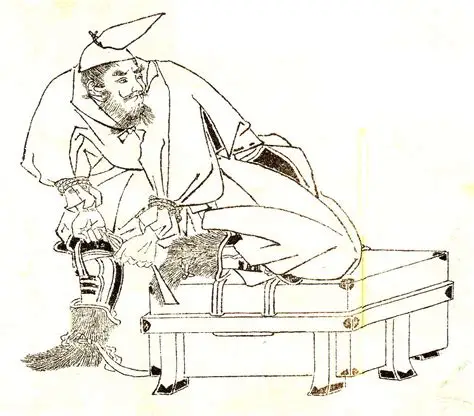
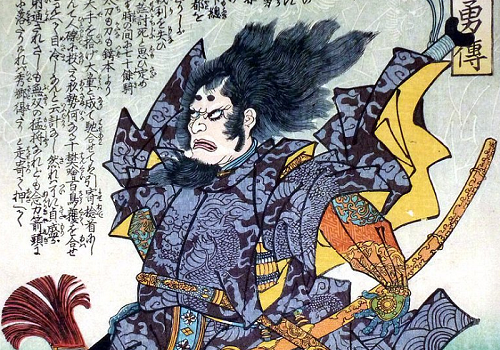
Fujiwara no Sumitomo.
Born into the Fujiwara clan, he was dispatched to Iyo Province as an official of the court.
Eventually, he forged deep connections with maritime forces in the Seto Inland Sea and became a target for capture by the court.
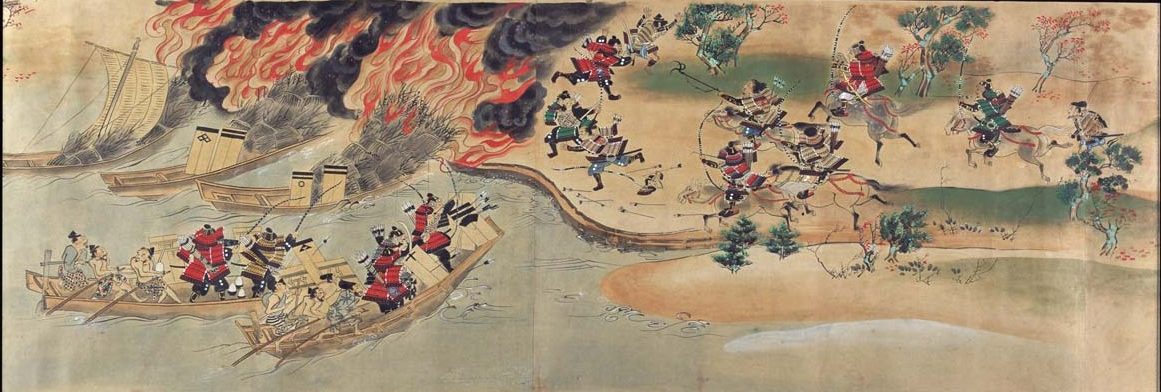
In the second year of Tenkei (939), he finally clashed with the court in armed conflict.
The following year, he expanded his attacks to Sanuki, Iyo, Bizen, Bingo, Aki, and Suo, and by Tenkei 4 (941), he had even captured Dazaifu.
Ultimately, he was defeated by the court’s forces in Hakata Bay and fled back to Iyo.
In June of the same year, he was captured and met his end.
From the time Sumitomo emerged onto the historical stage to his demise, only a few years passed.
Yet, during that time, Sumitomo transformed from a mere local official into a leader of a military force that shook western Japan.
Tracing his life reveals what was happening in local society in the 10th century.
1. Fujiwara no Sumitomo Was a Member of the Fujiwara Clan
Sumitomo’s birth year is unknown. The exact place of his birth is also uncertain.
However, there are important records about his lineage.
His father was Fujiwara no Yoshinori.
He served as Dazai Shoni and was also appointed as Chikuzen no Kami.
Sumitomo belonged to the Fujiwara Hokke, a branch connected to Fujiwara no Fuyutsugu.
In other words, Sumitomo was not raised in a pirate society from the start.
He was born into a family that could hold court positions.
On the other hand, Sumitomo was not at the center of the Fujiwara Hokke.
He was from a lineage distanced from the main line of the regent family.
He was not in a position to wield significant power in the central political scene.
Sumitomo chose not the path of continuing the competition for advancement in the capital, but the path of going to the western provinces as a local official.
This choice would greatly alter his later life.
2. To Iyo Province—Sumitomo’s Life Begins to Move
Sumitomo was appointed as Iyo no Jo and went to Iyo Province.
“Jo” is one of the roles that make up the provincial governors.
He was a local official responsible for the administration of Iyo Province.
The exact period when Sumitomo served as Iyo no Jo is not known.
However, by March of Shōhei 6 (936), records already refer to him as “former Jo.”
This means that by that time, he had completed his term as Iyo no Jo.
From here, significant developments in Sumitomo’s life began.
After his term ended, Sumitomo did not return to the capital.
He remained in Iyo and is believed to have established his influence, particularly in the Nanyo region.
Normally, losing an official position would mean returning to the capital.
But Sumitomo stayed in Iyo.
He built connections and an economic base there.
To Sumitomo, Iyo was no longer just an assignment location.
It had become a place to amass his power.
3. The Seto Inland Sea: A Vast Stage
Understanding Sumitomo’s life requires knowledge of Iyo’s geography.
Iyo is present-day Ehime Prefecture.
It is located at the western end of the Seto Inland Sea and connects to Kyushu through the Bungo Channel.
The sea lay before him.
However, this sea was not merely a natural boundary.
It was a route for the movement of people and goods.
Ships carrying rice and goods. Merchant ships heading to various places. Transport ships used by the court and local governments.
Countless ships traversed the Seto Inland Sea.
And there were people who knew the sea intimately.
They navigated ships, read the tides, and moved freely between islands.
These were powerful figures of the sea, different from land-based warriors.
By establishing roots in Iyo, Sumitomo entered this world.
4. Hiburi Island—Sumitomo’s Name Becomes Linked to the Sea
Hiburi Island is known as Sumitomo’s base.
It is an island off the west coast of present-day Uwajima City, Ehime Prefecture.
This island is essential for discussing Sumitomo’s influence.
In Shōhei 6 (936), pirate groups gathered on Hiburi Island.
According to records, there were over 2,500 pirates and over 30 leaders.
Another record mentions that the pirate forces possessed over 1,000 ships.
Of course, the numbers of people and ships mentioned in Heian period records cannot be taken as literal statistics.
Nevertheless, it is undeniable that a massive maritime force existed in the area where Sumitomo operated.
And Sumitomo would become deeply involved with this force.
5. In 936, Sumitomo Was on the Side Pursuing Pirates
This is the most intriguing aspect of Fujiwara no Sumitomo.
Sumitomo was not an enemy of the court from the beginning.
In Shōhei 6 (936), to address the pirate problem in the Nankaido, the court dispatched Kii no Yoshihito, the governor of Iyo, as the Pursuer of Pirates in the Nankaido.
Sumitomo also received an imperial order to pursue pirates.
In other words, Sumitomo was used by the court to crack down on pirates.
In June of the same year, he persuaded the pirates gathered on Hiburi Island to submit.
The target was over 2,500 individuals, with over 30 leaders.
The key point is that he did not annihilate this large group by force but persuaded them to submit to the court.
Sumitomo was in a position to negotiate with the pirates.
He knew them, and they knew him. This is where Sumitomo’s unique position lay.
While being a court official, he was also connected to the local maritime forces.
This network would become the greatest threat to the court a few years later.
6. Was Sumitomo Already a Pirate Leader at This Time?
This is a crucial question when discussing Sumitomo.
The article in the ‘Nihon Kiryaku’ for Shōhei 6 (936) June mentions “Fujiwara no Sumitomo, leader of the southern pirates.”
The course of this rebellion (Fujiwara no Sumitomo’s Rebellion) is explained in detail in this article.
If read literally, it would mean Sumitomo was a leader of the southern pirate forces.
However, in the same year of 936, Sumitomo received an imperial order to pursue pirates and worked with Kii no Yoshihito to persuade the pirates to submit.
Thus, two faces appear in the records of the same period: the court’s pirate pursuer and the leader of maritime forces.
This point is still debated in current research.
It cannot be simply depicted that Sumitomo was a complete “pirate boss” by 936.
On the other hand, it is certain that he had strong ties with maritime forces.
More importantly, Sumitomo was a person who had influence with both the court and the maritime forces.
This position became the source of Sumitomo’s power later on.
7. Why Did Sumitomo Stay in Iyo?
The reason Sumitomo stayed in Iyo is not clearly stated in the records.
However, tracing Sumitomo’s activities reveals the answer.
Sumitomo gained experience in Iyo’s administration as a local official.
He remained there afterward, establishing his influence in the Nanyo region.
In other words, Sumitomo distanced himself from the aristocratic society of the capital and built his power within the local society.
This greatly changed Sumitomo’s life.
8. 939—Sumitomo Finally Clashes with the Court
The turning point came in the second year of Tenkei (939).
That year, there was a person who intended to report on Sumitomo’s forces to the court.
Fujiwara no Kotaka.
He served as Bizen no Suke.
Sumitomo attacked Kotaka.
This incident clearly placed Sumitomo in a position to be pursued by the court.
From here, Sumitomo was no longer merely a local maritime force.
He became a rebellious force that needed to be subdued by the court.
Around the same time, in the eastern provinces, Taira no Masakado was deepening his conflict with the court.

In the east, Masakado. In the west, Sumitomo.
The 10th-century court faced a major crisis in both the east and west.
9. The Court Tried to Placate Sumitomo
The court did not immediately send a large army.
First, they tried to incorporate Sumitomo.
To do this, they granted him the rank of Junior Fifth Rank, Lower Grade.
This held significant meaning.
The court did not treat Sumitomo as a mere bandit but attempted to bring him into submission by granting him official rank.
However, Sumitomo did not choose this path.
His relationship with the court deteriorated irreparably.
Sumitomo then began military actions in the Seto Inland Sea.
10. 940—The Seto Inland Sea Becomes a Battlefield
In the third year of Tenkei (940).
Sumitomo’s forces attacked various locations.
Sanuki. Iyo. Bizen. Bingo. Aki. Suo.
He further expanded his activities to the Nagato and Tosa regions.
The strength of Sumitomo’s forces lay in their mobility.
Land-based armies would cross mountains, follow highways, and aim for provincial capitals.
Sumitomo’s forces were different.
They used ships. From Iyo to Sanuki. From Sanuki to Bizen. Further into the Chugoku region.
By using the sea, they could move the battlefield itself.
Sumitomo used the Seto Inland Sea as a vast military highway.
For the court, there was no more troublesome opponent.
11. The Man Pursuing Sumitomo—Ono no Yoshikata
The court finally organized a full-scale pursuit army.
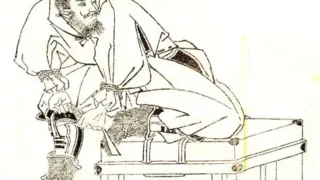
The central figure was Ono no Yoshikata.
And as his deputy, Minamoto no Tsunemoto joined.
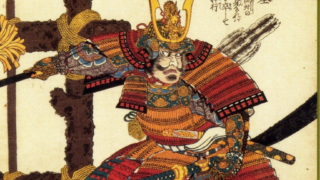
Minamoto no Tsunemoto also appears in the rebellion of Taira no Masakado.
He fought Masakado in the east and was involved in pursuing Sumitomo in the west.
Following these two rebellions reveals that the same individuals who would later lead the warrior society were gathering in this era.
The court prepared ships to pursue Sumitomo at sea.
Traditions and later records mention that the court side prepared over 200 ships.
For Sumitomo, the Seto Inland Sea became a battlefield he could not afford to lose.
12. 941—Sumitomo’s Stronghold Crumbles
In the fourth year of Tenkei (941).
The court’s forces closed in on Sumitomo’s stronghold.
What dealt a significant blow to Sumitomo was the defection of Fujiwara no Tsunetoshi.
Tsunetoshi, a key figure on Sumitomo’s side, returned to the court’s side.
The court’s forces used Tsunetoshi’s information to attack Sumitomo’s stronghold.
Sumitomo’s forces were defeated.
Having lost his stronghold, Sumitomo fled to Kyushu.
And the place he headed to was Dazaifu.
From there, Sumitomo made his final stand.
13. Attacking and Capturing Dazaifu
Dazaifu was a major political center overseeing the western provinces.
It governed the provinces of Kyushu and played an important role in diplomacy and military affairs.
The significance of Sumitomo attacking this place was immense.
He did not merely raid a local government office.
He directly attacked the center of the court’s control over western Japan.
In Tenkei 4 (941), Sumitomo’s forces attacked Dazaifu, entered the city, looted goods, and burned the government offices.
At the site of the former Dazaifu government office, the destruction caused by Sumitomo’s rebellion in 941 has been confirmed.
By this point, Sumitomo had completely exceeded the scope of “pirate.”
He was a military leader shaking the court’s control over western Japan.
14. Hakata Bay—Sumitomo’s Final Battle
However, capturing Dazaifu did not mean Sumitomo had won.
The court’s forces arrived in Kyushu.
The commander of the pursuit forces was Ono no Yoshikata.
The forces attacking Sumitomo from the sea were led by Okura Harumi and others.
From both land and sea.
Attacks were launched on Sumitomo’s forces from both directions.
The final stage of the battle was Hakata Bay.
For Sumitomo’s forces, the sea, which should have been their strong suit, became their last battleground.
After fierce fighting, Sumitomo’s forces suffered a crushing defeat.
They lost a large number of ships.
Records mention that the government forces captured over 800 ships.
Once commanding a massive fleet, Sumitomo ultimately fled in a small boat.
15. Back to Iyo—The Land He Returned to in the End
Sumitomo headed back to Iyo.
The land where he had once been dispatched as an official. The land where he had built his influence over many years.
And the land he fled back to in the end.
Sumitomo went into hiding in Iyo.
However, pursuers were closing in.
Keigotsu, Tachibana no Tōho.
Sumitomo was captured by Tōho.
The time was June of Tenkei 4 (941).
It had been only a few years since Sumitomo’s rebellion began.
And Sumitomo died in Iyo.
The details of his death vary in the records.
The ‘Nihon Kiryaku’ records that he was killed by Tachibana no Tōho, while later records suggest he died in prison after being captured.
Records from the National Archives also confirm that in June 941, Tōho killed Sumitomo and his son Shigetamaru, sending their heads to the capital.
Sumitomo died in 941.
16. Even After Sumitomo’s Death, Pirates Did Not Disappear
Sumitomo’s death did not mean the disappearance of maritime forces from the Seto Inland Sea.
Behind those who participated in Sumitomo’s rebellion was the regional society along the Seto Inland Sea.
People who lived by the sea. People who navigated ships. Influential figures along the coast. People involved in maritime transport.
They were not Sumitomo’s personal property.
Even after Sumitomo’s death, the regional society centered on the sea remained.
Therefore, maritime forces continued to operate in the Seto Inland Sea afterward.
Sumitomo’s rebellion was not an event that eradicated pirates.
It was an event where the vast maritime society of the Seto Inland Sea clashed with the court’s control.
17. The Greatest Mystery Sumitomo Left Behind
There are hardly any records left by Fujiwara no Sumitomo himself.
This leaves the greatest mystery: “Why did he rebel?”
Was it dissatisfaction with the court?
Did he aim to protect the power he had built in local society?
Was he trying to protect the interests of maritime forces?
Did he see Taira no Masakado’s rebellion as an opportunity?
We cannot directly know what Sumitomo himself was thinking.
Later records, such as the ‘Sumitomo Pursuit Record,’ suggest that Sumitomo decided to rebel after learning of Masakado’s rebellion.
However, there is no definitive evidence that Masakado and Sumitomo were closely coordinating from the start.
Therefore, portraying Sumitomo merely as “a western rebel conspiring with Masakado” narrows his character.
Sumitomo had relationships with local society that had developed between 936 and 941.
18. “The Man Who Pursued Pirates” Became “The Man Who Led Pirates”
The most striking aspect of Fujiwara no Sumitomo’s life is this transformation.
In 936.
He received an imperial order to pursue pirates.
He persuaded the pirates gathered on Hiburi Island to submit.
At this time, Sumitomo was a valuable local official from the court’s perspective.
Yet, a few years later, the court moved its forces to pursue Sumitomo.
Sumitomo raced around the Seto Inland Sea, attacked provincial capitals, gathered ships, and even attacked Dazaifu.
And in 941.
He was defeated in Hakata Bay, fled back to Iyo, and died there.
This change is dramatic.
The man who once pursued pirates under the court’s orders ended up being pursued by the court’s forces.
What happened in between? Sumitomo himself left no words.
That is why Fujiwara no Sumitomo is fascinating.
19. Following Sumitomo’s Life Reveals the “Local” Aspect of the Heian Period
From Kyoto’s perspective, Fujiwara no Sumitomo was a local official.
But the story changes when he went to Iyo.
There were human relationships different from those in Kyoto.
Those who owned land. Those who owned ships. Those who knew the sea. Those who unified the local society.
Sumitomo entered there and built his influence.
And when that power grew, he became someone who could not be moved by the court’s orders alone.
This was the fear of local society in the 10th century.
The court had official positions.
But the local areas had their own power.
As long as these two were aligned, Sumitomo was an official of the court.
The moment they clashed, Sumitomo became a rebel.
20. Fujiwara no Sumitomo—A Man Who Made His Mark on History in Just a Few Years
His birth year is unknown. His early life is unknown.
Details about his family are not well-documented.
Yet, the few years Sumitomo lived are recorded.
He was dispatched to the provinces as Iyo no Jo.
He stayed in Iyo.
He built relationships with maritime forces centered on Hiburi Island.
In 936, he was involved in pursuing pirates.
In 939, his conflict with the court became decisive.
In 940, he expanded his attacks across the Seto Inland Sea.
In 941, he attacked Dazaifu.
He was defeated in Hakata Bay. He fled to Iyo. And then he died.
Fujiwara no Sumitomo’s life is vividly etched in the scant records.
An official born into the Fujiwara clan. A local power broker rooted in Iyo.
A man who mobilized maritime forces. A rebel who turned against the court.
He was a man with these four faces.
And even after Sumitomo’s death, maritime forces did not disappear from the Seto Inland Sea.
Even after Sumitomo vanished from history, the sea and society that produced him remained.
Therefore, when looking at Fujiwara no Sumitomo’s life, the final impression is not just the word “pirate.”
In the distant west from Kyoto, a single local official amassed a vast network and maritime force, eventually clashing with the court itself.
That was the life of Fujiwara no Sumitomo.
For those who want to know more about Fujiwara no Sumitomo.
Why did “the man who pursued pirates” turn against the court?
From Sumitomo’s upbringing, his activities in Iyo, his relations with pirates, to his end.
Reading this article will change your perspective on Sumitomo👇