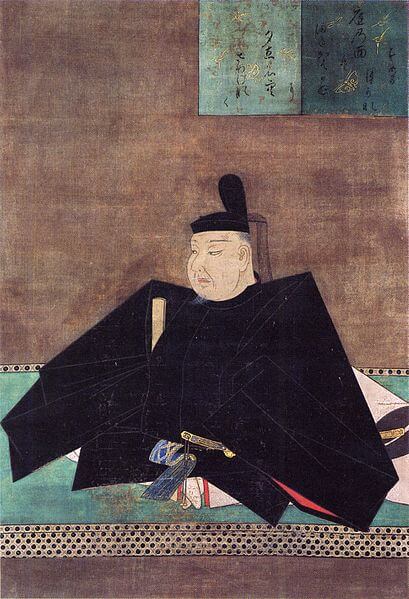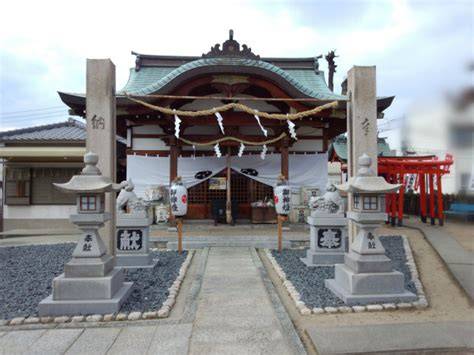
On May 26, 1180, Prince Mochihito was racing through the southern hills of Yamashiro towards Nara.
The night before, he had left Onjo-ji Temple and engaged in battle with the pursuing Taira forces at Uji. Minamoto no Yorimasa remained at Byodo-in Temple, where he met his end alongside his family. Prince Mochihito continued southward, aiming for Kofuku-ji Temple, where he hoped to find reinforcements.
He was 30 years old.
Until a few weeks prior, he had been known in Kyoto as “Takakura-no-miya” or “Sanjo-no-miya,” a son of the retired Emperor Go-Shirakawa.
However, he was not officially recognized as a prince.
Despite being Go-Shirakawa’s biological son, he had never been granted the title of prince and reached the age of 30 as merely a “king.”
His half-brother, Prince Norihito, became Emperor Takakura at the age of eight, and Norihito’s son, Prince Tokihito, became Emperor Antoku at the age of three. Prince Mochihito watched from the sidelines as the imperial succession passed through two generations.
In his childhood, he entered a temple, later returned to secular life, and underwent the coming-of-age ceremony. He was adopted by Princess Akiko, the daughter of Emperor Toba. He had a residence in Kyoto and children.
Not being made a prince did not mean he was isolated from society.
The situation began to change significantly from 1179 into the following year.
His father, the retired Emperor Go-Shirakawa, was moved to the Toba Palace by Taira no Kiyomori, effectively ending his cloistered rule. Prince Mochihito was also reportedly separated from the temple of Jo-ko-ji, with which he had long been involved.
Then, in February 1180, Kiyomori’s grandson, Emperor Antoku, ascended to the throne.
That spring, Prince Mochihito called for the overthrow of the Taira clan.
Why did this 30-year-old prince choose to resort to military action at this point?
Born in 1151 as a Prince of Go-Shirakawa
Prince Mochihito was born in 1151, the first year of Ninpei, as a son of Go-Shirakawa. While some sources suggest he was born in 1150, it is generally accepted today that he was born in 1151.
His mother was Fujiwara no Nariko, the daughter of Fujiwara no Suenari, also known as “Takakura Sanmi.”
He is often considered the third son of Go-Shirakawa, but because his older brother, Prince Morihito, entered the priesthood early, some records and dictionaries list him as the second son.
When Prince Mochihito was born, his father Go-Shirakawa was not yet emperor.
In 1155, when Emperor Konoe died at the age of 17, the imperial succession shifted, and Go-Shirakawa ascended the throne. Prince Mochihito became the son of the emperor at a young age.
However, it was not a time when every male born as a prince aimed for the throne.
Princes who were not in line for the throne often entered temples and took on significant religious roles.
For Prince Mochihito, a path in the temple was initially prepared.
A Childhood as a Disciple of the Tendai Abbot Saion
As a young boy, Prince Mochihito became a disciple of Saion, the Tendai Abbot.
Saion, a son of Emperor Horikawa, served as the Tendai Abbot of Enryaku-ji Temple, coming from a royal lineage.
For Prince Mochihito to become his disciple was a natural path for a prince to enter the religious world and secure a position, typical of the era.
His brother Morihito also entered Ninna-ji Temple and later became Prince Morihito.
However, in 1162, Saion passed away. Prince Mochihito was around 12 years old.
After this, he chose not to pursue a monastic life and returned to the secular world.
In December of the first year of Eiman (1165), he came of age at the traditional ceremony. He was 15 years old by the traditional Japanese count.
He turned away from the path of a life in the temple and began living in Kyoto as a member of the imperial family.
The Tale of the Heike portrays Prince Mochihito as a person of exceptional talent, skilled in various arts such as the flute.
While some embellishments in these abilities should be considered, he was remembered by later generations as a “prince of talent.”
Around the time of his coming of age, a younger half-brother rapidly rose in the line of succession.
A Brother About Ten Years Younger Became Crown Prince
His half-brother, Prince Norihito, was born to Taira no Shigeko, who was favored by Emperor Go-Shirakawa and later became known as Kenshunmon-in.
Shigeko was also the half-sister of Taira no Kiyomori’s wife, Tokiko.
Prince Norihito, born in the first year of Oho (1161), became Crown Prince in the second year of Eiman (1166) at the age of about six.
In the third year of Nin’an (1168), when Emperor Rokujo abdicated, Prince Norihito ascended the throne as Emperor Takakura.
Emperor Takakura was about eight years old, while Prince Mochihito was turning 18 that year.
The elder brother remained a “prince,” while the younger brother became emperor.
This highlights the significant fact that Prince Mochihito never received the title of “Shinnō” (Imperial Prince).
Why He Could Not Become a “Shinnō”
In the late Heian period, even the children of the emperor could only become official princes upon receiving the title of “Shinnō.” Prince Mochihito never received this title throughout his life.
The Tale of the Heike attributes this to Kenshunmon-in Shigeko, suggesting that she prevented the title from being granted because she feared Prince Mochihito’s talents might threaten her son, Emperor Takakura’s position.
This story is widely known, but it is difficult to accept it as historical fact.
The succession to the throne involved the maternal family’s status, the supporting factions, the intentions of the reigning emperor, and the political climate of the time.
Prince Mochihito’s mother, Nariko, was neither an empress nor a consort of Emperor Go-Shirakawa, whereas Prince Norihito had not only his mother Shigeko but also the powerful Taira clan, connected through Kiyomori and Tokiko.
Emperor Go-Shirakawa himself promoted Prince Norihito’s appointment as Crown Prince and his accession as Emperor Takakura.
There is little historical evidence to support the idea that Shigeko alone blocked Prince Mochihito from receiving the title of “Shinnō.”
Nevertheless, Prince Mochihito did not fade into obscurity within the imperial family despite not becoming a “Shinnō.”
Becoming the Adopted Child of Hachijo-in
After coming of age, Prince Mochihito became the adopted child of Princess Akiko of Hachijo-in.
Hachijo-in, the daughter of Emperor Toba and Bifukumon-in Tokuko, inherited vast estates from her parents. These estates later became known as the “Hachijo-in Domain,” spreading across the nation.
Forming an adoptive relationship with Hachijo-in, who had no biological children, was significant for Prince Mochihito.
While adoption was not the same as in modern times, establishing a pseudo-parent-child relationship with a powerful figure provided support, wealth, and connections. Around Hachijo-in were not only courtiers but also temples and samurai.
Prince Mochihito thus gained a foothold not only through his lineage as Emperor Go-Shirakawa’s son but also within Hachijo-in’s circle.
This relationship persisted even after his death.
His son, Prince Hokuriku, was later supported by Minamoto no Yoshinaka and reemerged in the struggle for imperial succession.
Life in Kyoto as “Takakura-no-miya” and “Sanjo-no-miya”
Prince Mochihito resided near Sanjo Takakura in Kyoto, and was known as “Sanjo-no-miya” or “Takakura-no-miya.”
This “Takakura-no-miya” was not named after Emperor Takakura, but rather referred to the location of his residence.
He lived as a member of the imperial family, maintaining connections with Hachijo-in, and had wives, concubines, and children.
This period was surprisingly long.
From the time Emperor Takakura ascended the throne in 1168 until Prince Mochihito raised an army in 1180, about 12 years had passed. Even as Kiyomori rose to the position of Grand Minister of State and the Taira clan expanded their influence at court, Prince Mochihito did not immediately turn to anti-Taira activities.
The balance shifted in 1179.
In 1179, Retired Emperor Go-Shirakawa is moved to Toba Palace
On November 14, 1179, Taira no Kiyomori entered Kyoto from Fukuhara.
Kanpaku Matsudono Motofusa was dismissed, and many courtiers and officials close to Retired Emperor Go-Shirakawa were removed from office. On November 20, Retired Emperor Go-Shirakawa was moved to Toba Palace, halting the cloistered rule he had maintained for over 20 years.
This was the political upheaval of 1179.
From Prince Mochihito’s perspective, the retired emperor who was sidelined from the political center was his biological father.
Moreover, shortly after the political upheaval, changes occurred in Prince Mochihito’s own economic foundation.
Losing Jokoji Temple Inherited from Saigun
Near present-day Higashi Kujo in Minami Ward, Kyoto, stands Jokoji Temple.
In the Heian period, it was a temple with extensive grounds, reportedly managed by Prince Mochihito, a disciple of Saigun, the head of the Tendai sect.
After the political upheaval of 1179, the management of Jokoji Temple was taken from Prince Mochihito. Records concerning the handling of Jokoji Temple during this period are also found in the “Sankaiki.”
Jokoji Temple was a place with deep ties to Prince Mochihito, who had been entrusted to Saigun during his childhood. It was not only a matter of land and income but also included personal connections with the temple.
The cloistered rule of his father ceased, and he lost the management of the temple he had long been involved with.
Then, a few months later, the imperial succession advanced by another generation.
The Three-Year-Old Emperor Antoku Ascends the Throne
In February 1180, Emperor Takakura abdicated.
The throne was inherited by Prince Tokihito, the son of Kiyomori’s daughter Tokuko and Emperor Takakura. Emperor Antoku was three years old by traditional Japanese counting, and one year old by modern reckoning.
Kiyomori became the grandfather of the young emperor.
Prince Mochihito was 30 years old.
His younger brother, about ten years his junior, had become emperor, and now the throne had passed to his still-young nephew. Moreover, the previous year, his father, Retired Emperor Go-Shirakawa’s cloistered rule had been halted, and he had lost the management of Jokoji Temple.
The political situation surrounding Prince Mochihito in the spring of 1180 was clearly different from before.
During this period, a connection was formed with Minamoto no Yorimasa.
When did 77-year-old Minamoto no Yorimasa form an alliance?
Minamoto no Yorimasa was a warrior of the Settsu Genji clan who remained in Kyoto and continued to serve the court even after the Heiji Rebellion.
In 1178, during the Jisho era, he was promoted to the junior third rank thanks to Kiyomori’s recommendation.
At the age of 75 by traditional Japanese counting, he became a court noble and was known as “Gen Sanmi.”
In the “Tale of the Heike,” Yorimasa visits Prince Mochihito and urges him to overthrow the Taira and ascend to the throne.
He further lists the names of Genji warriors across the provinces, encouraging them to rise up.
As a narrative, Yorimasa is vividly depicted as the mastermind behind the plan.
In reality, it is unclear when the two began their consultations.
After the plan was exposed, even when the Taira prepared an army to attack Onjoji, Yorimasa was counted among those tasked with quelling the rebellion.
It remains uncertain at what point in the spring of 1180 Prince Mochihito and Yorimasa joined forces.
Did the “Prince Mochihito’s Edict” really come out on April 9?
The most famous aspect of Prince Mochihito’s uprising is the “edict” calling for the overthrow of the Taira across the provinces.
The “Azuma Kagami” records a document dated April 9, 1180, during the Jisho era.
In it, the Genji and warriors of the Tokai, Tosan, and Hokuriku regions are called upon to join the campaign against the Taira, and Prince Mochihito is referred to as “Saisho-o.”
However, this document has long been subject to historical scrutiny.
Prince Mochihito was not an official imperial prince and thus was not in a position to issue an “edict.” The format of the document in the “Azuma Kagami” has also been questioned. Furthermore, some scholars, giving weight to the “Gukansho,” believe that the actual call to arms against the Taira was issued in May, when Prince Mochihito entered Onjoji.
There are both the April 9 issuance theory and the May issuance theory, and the timing of the issuance remains a topic of debate.
However, the fact that the “Imperial Edict” issued in the name of Prince Mochihito was disseminated across various regions is not solely based on the ‘Azuma Kagami.’ This movement is also evident in other sources like the ‘Gukansho,’ and it is acknowledged that the call to overthrow the Taira clan indeed spread widely.
Minamoto no Yukie is well-known as the messenger in this context.
Minamoto no Yukie Heads to the Eastern Provinces
Minamoto no Yukie was the son of Minamoto no Tameyoshi and the younger brother of Minamoto no Yoshitomo. He was an uncle to Minamoto no Yoritomo.
According to the ‘Azuma Kagami,’ Yukie conveyed Prince Mochihito’s call to various provinces, delivering it to Yoritomo in Izu on April 27.
The dissemination of the call to overthrow the Taira clan, using Prince Mochihito’s name, to regions including the eastern Minamoto territories, is crucial for understanding subsequent developments.
Yoritomo did not act immediately, choosing to raise his forces in August, about three months after Prince Mochihito’s death.
Prince Mochihito himself did not live to see the results of his efforts.
The Plan is Exposed, Escape from Sanjo Takakura Residence
In May, the plan was discovered by the Taira side.
It is said that the court stripped Prince Mochihito of his royal status, gave him the Minamoto surname, and planned to exile him to Tosa. Later sources also mention the name “Minamoto no Imitsu.”
Before the police could reach the Sanjo Takakura residence, Prince Mochihito escaped.
The ‘Heike Monogatari’ depicts him disguising himself as a lady-in-waiting and slipping through the night streets of Kyoto, while his retainer Hasebe Nobutsuna stayed behind to fight off the pursuers. These scenes of disguise and Nobutsuna’s valiant stand are renowned moments in military tales.
Prince Mochihito fled eastward and took refuge in Onjoji Temple.
The Prince at Onjoji, Pursued by Yorimasa
Onjoji Temple, known today as Miidera, is located in Otsu City, Shiga Prefecture.
At the time, large temples wielded significant political and military influence, possessing extensive estates and warrior monks. Onjoji welcomed Prince Mochihito, who sought further support from Enryakuji and Kofukuji.
Meanwhile, the Taira clan prepared to attack Onjoji.
The punitive force included Taira no Munemori, Tomomori, Shigehira, Koremori, and Minamoto no Yorimasa.
Yet, on the night of May 21 to the early hours of May 22, Yorimasa left his residence at Konoe Riverbank and joined Prince Mochihito at Onjoji with his family.
The 77-year-old veteran, initially among the pursuers, switched sides to support Prince Mochihito.
Prince Mochihito had the prestige of a royal name, while Yorimasa brought his long-established connections and military strength as a Kyoto-based warrior.
Warrior monks from Onjoji also joined the cause.
Nevertheless, they could not muster enough strength to confront the Taira clan head-on.
Unable to secure the full support of Enryaku-ji, the group turned to seek refuge at Kofuku-ji in Nara.
On the Night of May 25, Departing from Onjo-ji
On the night of May 25, Prince Mochihito and Minamoto no Yorimasa set out from Onjo-ji.
On their way to Nara, they entered Uji on the following day, the 26th, where they encountered the pursuing Taira forces and engaged in battle near the Uji River.
The Battle of Uji Bridge is covered in detail in another article, so here we will focus on the movements of Prince Mochihito.
According to the “Tale of the Heike,” warrior monks from Onjo-ji fought on the Uji Bridge, having removed its planks, with Tsutsui Jomyō and Ichirai Hōshi among those who fought bravely. Eventually, the Taira forces crossed the river, and Yorimasa retreated to Byodo-in, where he took his own life.
Prince Mochihito continued towards Nara.
Even after Yorimasa remained in Uji, Mochihito pressed southward, aiming to join forces with Kofuku-ji.
However, the pursuit did not relent.
May 26, Meeting His End in Southern Yamashiro
Prince Mochihito was caught by his pursuers in Southern Yamashiro and lost his life.
The “Tale of the Heike” describes him being struck by an arrow and falling from his horse near the Torii of Komyo Mountain.
In the present-day area around Kizugawa City, Yamashiro Town, Kyoto Prefecture, there are legends associated with the site of Prince Mochihito’s demise.
On May 26, 1180, at the age of 30 by traditional Japanese reckoning.
He never reached Kofuku-ji in Nara.
Prince Mochihito’s military actions ended swiftly, and Yorimasa also died on the same day. The Taira regime under Kiyomori remained intact.
However, the incident itself did not conclude there.
After Prince Mochihito’s Death, the Minamoto Rise Across the Land
In August 1180, Minamoto no Yoritomo rose in rebellion in Izu.
In Kai, Takeda Nobuyoshi and the Kai Genji moved, while in Shinano, Minamoto no Yoshinaka expanded his influence.
Of course, it wasn’t that warriors across the land rose simultaneously at Prince Mochihito’s command. In the eastern provinces, there were disputes over land holdings and conflicts with provincial offices and Taira-affiliated forces, each with its own circumstances.
Even so, the call to overthrow the Taira in the name of Emperor Go-Shirakawa’s son provided a political justification that anti-Taira forces could exploit.
Even after Prince Mochihito’s death, “the Prince’s decree” continued to resonate.
Three years later, his son would also appear in the imperial succession.
In 1183, the Hokuriku Prince Emerges as a Candidate for Emperor
In 1183, Minamoto no Yoshinaka entered Kyoto. The Taira fled the capital with Emperor Antoku, leaving the question of who would be the new emperor.
Yoshinaka proposed Prince Mochihito’s son, the Hokuriku Prince.
After his father’s death, the Hokuriku Prince is said to have fled to the Hokuriku region and returned to Kyoto under Yoshinaka’s protection.
Emperor Go-Shirakawa chose not the Hokuriku Prince but rather Prince Takakura’s son, Prince Tokihito, who ascended as Emperor Go-Toba.
The lineage of Prince Mochihito never ascended to the throne.
Nonetheless, it is intriguing that three years after Prince Mochihito’s death, his son was considered a candidate for emperor. The connections of Prince Mochihito’s lineage and the network around Hachijo-in did not vanish with the defeat at Uji.
Was Prince Mochihito Truly the “Tragic Prince” Deprived of the Throne?
In later tales, Prince Mochihito’s life was neatly arranged into a narrative.
Despite his exceptional talents, he was obstructed by Kenreimon-in Shigeko and could not become a prince. Witnessing the enthronement of the young Emperor Antoku, he resolved to overthrow the Taira clan and raised an army alongside Minamoto no Yorimasa.
This storyline is captivating when reading the Tale of the Heike.
The actual events were more protracted.
In his early years, he entered the temple under Saiun and pursued a monastic life. After Saiun’s death, he underwent his coming-of-age ceremony and became an adopted child of Hachijo-in. Even after Emperor Takakura ascended the throne, he lived in Kyoto as a member of the imperial family for over a decade.
The circumstances leading directly to the uprising in 1180 are most visible after the political upheaval of the third year of Jisho.
His father, Emperor Go-Shirakawa’s cloistered rule was halted, and he lost the management of Jokoji Temple, which he had been involved with for a long time. The following year, Emperor Antoku ascended the throne, and the imperial lineage continued through Emperor Takakura’s line.
It was then that Minamoto no Yorimasa joined him.
However, there are no historical records where Prince Mochihito himself explained, “I am raising an army because I was deprived of the throne.” It is unclear which issue—Jokoji Temple, his father’s confinement, the imperial succession, or his relationship with Yorimasa—he regarded as most significant.
Rather than attributing it to a single reason, it is more accurate to view the conditions surrounding Prince Mochihito as having changed rapidly between 1179 and 1180.
What a “Prince” Until Age 30 Left Behind
Prince Mochihito never received the official title of prince.
Nevertheless, in 1180, he called for the overthrow of the Taira clan in his own name. The document preserved in the Azuma Kagami refers to him as “Saisho-o” and fiercely criticizes the Taira clan as disruptors of the court’s order.
There is debate about the timing and format of this document.
The prince himself died on May 26.
Yet, within a few months, Yoritomo raised an army in Izu, and the Kai Genji and Minamoto no Yoshinaka (Kiso Yoshinaka) also took action. Three years later, his son, the Hokuriku Prince, appeared in Kyoto as a candidate for the throne.
Prince Mochihito never ascended the throne, nor did he become a prince.
Yet, in the spring of 1180, the call to overthrow the Taira clan made by a prince long outside the imperial succession did not fade even after his death.
What was lost at Uji was Prince Mochihito’s life, and the battles of the warriors who began to move under his name continued from there.
Though a son of the emperor, Prince Mochihito never became a “prince.” Tracing the royal family members called “kings” in the medieval period provides clearer insight into the imperial succession and the status of the imperial family at the time. Prince Mochihito is also covered in a dedicated chapter.