On May 26, 1180, the Taira forces achieved victory at Uji.
Minamoto no Yorimasa took his own life at Byodoin, and Prince Mochihito also lost his life in Minamiyamashiro on his way to Nara. The rebellion involving Onjoji was temporarily suppressed.
Seven days later, on June 2.
Emperor Antoku, the retired Emperor Takakura, and the cloistered Emperor Go-Shirakawa departed Kyoto for Fukuhara in Settsu Province.
This is present-day Hyogo Ward in Kobe City.
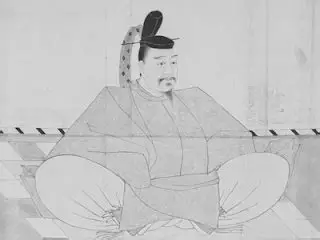
In the political upheaval of 1179, Taira no Kiyomori halted the cloistered government of Emperor Go-Shirakawa.
In February of the following year, 1180, he enthroned Prince Tokihito, born to his daughter Tokuko, as Emperor Antoku. By May, he had also crushed the uprising of Prince Mochihito and Minamoto no Yorimasa.
This was the period when Kiyomori’s political and military power appeared strongest.
However, it was Kiyomori who moved the emperor from Kyoto, the center of the imperial court for nearly 400 years.
Fukuhara lacked a completed imperial palace. The government district was not developed, and there were not enough residences for the accompanying courtiers.
Surprisingly, the issue of where to build the new capital was seriously considered only after the emperor moved to Fukuhara.
What was Kiyomori in such a hurry for?
And why Fukuhara?
Kiyomori did not come to Fukuhara for the first time in 1180
Kiyomori’s connection with Fukuhara began more than ten years before the relocation of the capital.
In February 1168, Kiyomori fell seriously ill and took religious vows. By early the following year, he had settled in Fukuhara, Settsu Province, and began a lifestyle of traveling to Kyoto only when significant issues arose.
Fukuhara is located on the southern side of the Rokko Mountains, around present-day Hirano in Hyogo Ward, Kobe City.
It was not just a private retreat for Kiyomori.
His brothers, Yorimori and Norimori, among other members of the Taira clan, also had residences in the area, attracting those close to Kiyomori.
Apart from Kyoto, a residential area for the Taira clan was gradually being established. Excavations in Kobe have uncovered items from the Gion site, including a garden pond from the late 12th century, tiles from Kyoto, and Chinese ceramics.
Both documentary and archaeological evidence suggest that a cluster of residences for influential figures existed in Fukuhara before the capital was moved there.
About 2.5 kilometers south of Fukuhara was the port of Owada no Tomari.
When considering why Kiyomori chose this location, this port cannot be overlooked.
Owada no Tomari South of Fukuhara
Owada no Tomari was not a port that suddenly emerged during the Heian period.
It had long been used as an important port on the Seto Inland Sea route, and the imperial court had been involved in its maintenance since the early Heian period.
However, it was susceptible to winds and waves from the southeast, requiring improvements to safely anchor ships.
When Kiyomori began living in Fukuhara, he focused on enhancing Owada no Tomari.
During the Shōan era, he invested his own resources to build an island in front of the port to shield it from winds and waves. This facility was later known as “Kyōgashima.” While some details about the construction site and the specifics of the work remain unclear, it is evident that Kiyomori prioritized Owada no Tomari as a hub for trade with the Song dynasty.
Goods that entered Japan through trade with the Song included ceramics, textiles, medicines, perfumes, books, and Song coins.
Chinese ceramics have also been found at the Gion site, including pottery from the Jizhou kilns, which was rare in Japan at the time. This suggests that the Taira clan and those around them in Fukuhara had direct access to goods brought by sea.
Up to this point, the reasons why Kiyomori favored Fukuhara are quite clear.
By 1180, the port’s development had reached a new stage.
On the Eve of Emperor Antoku’s Accession, Kiyomori Made Port Renovation a National Project
In February of the 4th year of Jishō, as Emperor Takakura’s abdication approached, Kiyomori lobbied the court regarding the renovation of Owada no Tomari.
There were limits to the construction he had been funding with his own wealth.
Kiyomori sought to gather labor and resources from various provinces to develop the port as a national project.
The day after his request was granted, Emperor Takakura abdicated, and Prince Tokihito ascended the throne.
This was Emperor Antoku, who was three by traditional count, one by modern reckoning.
His mother was Kiyomori’s daughter, Tokuko, making Kiyomori the new emperor’s maternal grandfather.
Takahashi Masaaki places significant weight on the fact that these two events occurred consecutively.
It suggests the possibility that Kiyomori had long envisioned a new political city centered around Owada no Tomari and was preparing for it in conjunction with Emperor Antoku’s accession.
However, it cannot be conclusively stated that the plan for the later relocation of the capital to Fukuhara was fully developed at this stage.
Nonetheless, the explanation that Kiyomori only thought of Fukuhara after witnessing the rebellion of Prince Mochihito in May does not align with the timeline.
For over a decade, Kiyomori had a residence in Fukuhara, where his family lived, and substantial funds had been invested in Owada no Tomari. Just before Emperor Antoku’s accession, there was even a move to transition the port development into a national project.
At this juncture, Prince Mochihito’s uprising occurred.
May 26: The Issues Left for Kiyomori After the Victory at Uji
Prince Mochihito was the son of Emperor Go-Shirakawa.
In May 1180, he allied with Minamoto no Yorimasa and entered Onjo-ji, raising the banner of opposition against the Taira clan. He sought cooperation from Kofuku-ji and reached out to Enryaku-ji as well.
On May 26, the Taira forces defeated Yorimasa at Uji, and Prince Mochihito also perished on the same day.
The battle was won.
Yet, new challenges emerged for Kiyomori.
The rebellion was not just the work of a single prince or an old Minamoto general. The massive temple of Onjo-ji had accepted Prince Mochihito, and there were signs of resistance against the Taira at Kofuku-ji in Nara. If Enryaku-ji also turned completely against them, relations with the influential temples surrounding Kyoto would become even more complicated.
Traditionally, the decision to move the capital to Fukuhara has often been explained as Kiyomori’s sudden move to distance himself from the temple forces behind Prince Mochihito, particularly Kofuku-ji in Nanto.
The temple issue likely hastened the relocation of the capital.
However, considering the foundation Kiyomori had been building in Fukuhara and Owada no Tomari for over a decade, it is difficult to attribute his actions solely to this reason.
It is more plausible that the Battle of Uji served as a catalyst to accelerate plans that were already in place, aligning with the developments before 1180.
And just four days after the victory at Uji, the courtiers were abruptly informed of the plan.
May 30: Courtiers Informed “To Fukuhara in Three Days”
Kujō Kanezane recorded in his diary, ‘Gyokuyō,’ on May 30, 1180, that he heard Emperor Antoku would be visiting Fukuhara on June 3.
The news came as a sudden surprise.
Moreover, the schedule was moved up even further.
Instead of departing on June 3rd, it was decided they would leave on the 2nd.
Kanezane was greatly astonished by this change as well.
On June 2nd, Emperor Antoku, Emperor Emeritus Takakura, and Retired Emperor Go-Shirakawa left Kyoto and headed for Fukuhara.
Since November of the previous year, Retired Emperor Go-Shirakawa had been restricted in his political activities by Kiyomori.
Emperor Antoku was still a child, too young to decide on such a journey by himself.
It was naturally Kiyomori who held the reins of this move.
Thus, the central figures of the court all moved to Fukuhara at once.
However, upon arrival, a problem quickly arose.
The capital that was to welcome the Emperor was not yet there.
The Emperor Arrives, But There’s No Palace
Upon reaching Fukuhara, the first place Emperor Antoku stayed was the residence of Taira no Yorimori, Kiyomori’s half-brother.
Emperor Emeritus Takakura stayed at Kiyomori’s villa, while Retired Emperor Go-Shirakawa went to the residence of Taira no Tadamori.
For the other attendants, historical records introduced by Masaaki Takahashi describe the situation as “like sitting on the road.”
There weren’t even adequate accommodations for the courtiers and officials.
On the night of June 4th, Emperor Antoku moved to Kiyomori’s villa, and Emperor Emeritus Takakura took residence at Yorimori’s estate.
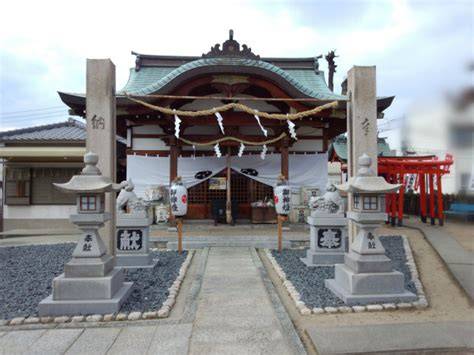
The area around Arata Hachiman Shrine is said to be where Yorimori’s mountain villa was located. It is still known today as the site of Emperor Antoku’s temporary residence.
Here, the term “relocation to Fukuhara” requires some caution.
Rather than moving to a completed new capital, the Emperor, the Emperor Emeritus, and the Retired Emperor were first transported to Fukuhara, with plans to build the capital afterward.
By mid-June, concrete plans for the new capital finally began.
The First Proposed Capital Was Not “Fukuhara-kyo” But Wada-kyo
The chosen site for the new capital was not on the mountain side of Fukuhara where Kiyomori lived.
It was in the area around Wada and Wada, stretching from the southern part of today’s Hyogo Ward to Nagata Ward in Kobe City.
Close to Owada-no-Tomari, it was a place where the port could be integrated into the city.
This initial plan is referred to in research as “Wada-kyo.”
A capital resembling Heian-kyo was to be built, with an international port right nearby.
If realized, it would have been a capital quite different in character from Kyoto.
However, the geography of Kobe posed a problem.
Mountains loomed to the north, while the sea stretched out to the south.
According to historical geography reconstructions, even if they tried to lay out a large-scale grid like in Heian-kyo, the left side of the capital could not extend far enough south, and small hills and narrow plains obstructed the right side.
The Wada-kyo plan was abandoned in a short time.
Thus, after moving the Emperor, the initial plan for the new capital collapsed.
Nevertheless, Kiyomori and his associates continued searching for a location.
Koya-no, Innan-no—A Month Without a Decision on the Capital’s Location
The next candidate that emerged was Koya-no.
The area around present-day Itami City.
Additionally, the plateau stretching from what is now Akashi City to Kakogawa City was also considered as a candidate.
After moving the Emperor to Fukuhara, Kiyomori spent about a month searching for a new capital location.
By mid-July, a decision was finally reached.
The plan to build a full-fledged new capital far away was temporarily set aside,
and it was decided to develop the area around Fukuhara, where they were currently located, as a city, under the notion that “Fukuhara shall serve as the imperial residence for a while.”
Roads were to be opened, residences provided to the court nobles, and a political city built with the Emperor’s palace at its center.
From this point, the construction of Fukuhara itself began in earnest.
Excavations have also uncovered structures around Fukuhara that may be related to urban development from the late 12th century.
At the Kusunoki-Aratamachi site, large-scale pillar buildings, moats, and structures related to land division were found, and later investigations suggested a connection with the urban planning of Fukuhara-kyo based on the orientation of the buildings.
Kiyomori’s plan did not merely remain a plan,
but it faced strong resistance from the court society.
The point of contention was Emperor Antoku’s Daijosai ceremony.
“Will the Daijosai be held in Fukuhara?” Determined the Fate of the Capital
Emperor Antoku had just ascended the throne in February.
One of the important ceremonies for the new emperor was the Daijosai.
At that time, it was customary to hold the Daijosai at the Hasshoin of the Heian Palace.
However, the Hasshoin and Daigokuden had been destroyed in the great fire of 1177.
This led to a problem.
Should Emperor Antoku’s Daijosai be held in Fukuhara?
Should it be held in Kyoto, or should it be postponed?
Kujō Kanezane was consulted by the retired Emperor Takakura and argued for holding it in the old capital. If that was impossible, he proposed postponing it to the following year.
He also opposed the idea of adding a few buildings to the current palace in Fukuhara to hold the Daijosai there.
If Fukuhara were considered a “detached palace,” there was no precedent for conducting the Emperor’s important rituals there.
Conversely, from Kiyomori’s perspective, if the Daijosai could be held in Fukuhara, it would be a significant step towards establishing the area as the official capital.
What the court nobles were really debating was not just the venue for the ceremony.
Would Fukuhara truly be recognized as the capital?
This issue was encapsulated in the debate over the location of the Daijosai.
Retired Emperor Takakura, influenced by Kiyomori, initially pushed for the ceremony to be held in Fukuhara by early summer.
However, on August 12, it was decided to postpone the Daijosai to the following year.
Kiyomori was unable to solidify Fukuhara as the “capital.”
And just five days later,
a samurai in the eastern provinces took action.
August 17, Minamoto no Yoritomo Raises an Army in Izu
On August 17, Minamoto no Yoritomo, who had been exiled to Izu, raised an army.
He attacked Yamaki Kanetaka and by the 23rd, was fighting Oba Kagechika and others at Ishibashiyama.
Yoritomo suffered a defeat at Ishibashiyama.
Nevertheless, after crossing to Awa, he rapidly expanded his influence by gathering warriors from the eastern provinces.
By September, Minamoto no Yoshinaka (Kiso Yoshinaka) was on the move in Shinano, and by October, Yoritomo’s forces and the Taira army faced off at the Fuji River.
The rebellion led by Prince Mochihito and Minamoto no Yorimasa ended around Kyoto in May, but from that summer, the battlefield expanded to the eastern provinces.
Even so, Kiyomori did not halt the construction at Fukuhara.
In fact, during this period, the building of a new imperial palace was progressing.
Plans even emerged to construct the Hachisho-in and establish necessary government offices by the following year.
Kiyomori was attempting to suppress the rebellion while simultaneously advancing the construction of the capital.
Constructing Buildings in Kyoto and Transporting Them to Fukuhara by Ship
In Fukuhara, the construction of residences for the court nobles also began.
Particularly interesting is the residence of Nakayama Tadachika.
The building materials were processed in Kyoto and transported towards Fukuhara using waterways like the Horikawa and Yodogawa.
Since the assembly took place on-site, the residence was reportedly completed about two weeks after construction began.
It wasn’t just people moving from Kyoto.
Entire houses were dismantled and transported via rivers and the sea to the new capital.
Kamo no Chomei’s “Hojoki” later depicted the scene of Kyoto houses being demolished and materials being transported due to the relocation to Fukuhara.
From the summer to autumn of 1180, the scale of the construction conveys Kiyomori’s earnest intention to shift the political center to Fukuhara.
Meanwhile, the situation in the eastern provinces worsened.
In October, the punitive force led by Taira no Koremori retreated from the Fuji River.
They were unable to suppress Yoritomo early on.
The simultaneous undertaking of constructing the new capital at Fukuhara and suppressing rebellions nationwide was becoming increasingly difficult.
November 11: The New Imperial Palace is Finally Completed
November 11.
Emperor Antoku entered the newly built imperial palace at Fukuhara.
More than five months had passed since leaving Kyoto on June 2.
The new palace was said to mimic the imperial palace of Heian-kyo, albeit on a slightly reduced scale.
The Gosechi dances associated with the Niiname-sai festival were also held in Fukuhara.
The capital construction that Kiyomori had been advancing since June finally took a visible form here.
However, by November 11, when Emperor Antoku entered the new palace, political movements were already underway to leave Fukuhara.
Rebellions were spreading across the regions, and there were increasing calls to return to Kyoto.
Emperor Antoku stayed in the new palace for only 12 days before leaving Fukuhara.
November 23: Emperor Antoku Departed Fukuhara
On November 23, Emperor Antoku and the retired Emperor Takakura began their return to Kyoto.
By the 26th, they had returned to Kyoto.
Kiyomori also left Fukuhara on the 29th.
It had been about 170 days since June 2.
The period during which Fukuhara served as the political center was less than half a year.
For this reason, the term “Fukuhara relocation” itself requires careful consideration in research.
The capital city was never completed.
The Wada capital plan was abandoned, the urban development of Fukuhara was left unfinished, and the significant Daijosai ceremony, which would have solidified its status as a formal capital, was not held.
Nevertheless, Emperor Antoku, the retired Emperor Takakura, and the retired Emperor Go-Shirakawa moved to Fukuhara, a palace was built, land was allocated to court nobles, and there were even plans to construct the Eight Ministries Complex.
The scale was too large to be considered merely a summer retreat or temporary excursion.
It is closer to reality to view it as an “unfinished relocation plan.”
Why Did Kiyomori Attempt to Move the Capital to Fukuhara?
Trying to pinpoint a single reason for the relocation to Fukuhara makes the event even harder to understand.
Trade with the Song Dynasty was a major factor.
Kiyomori had lived in Fukuhara for over a decade and invested in the nearby port of Owada no Tomari. On the day before Emperor Antoku’s enthronement, he even moved to make the port’s reconstruction a national project.
Prince Mochihito’s uprising cannot be ignored either.
The Enryaku-ji Temple accepted the prince, and there was resistance to the Taira clan at Kofuku-ji Temple, rapidly escalating tensions with the religious powers around Kyoto.
Moreover, the political system itself had changed since 1179.
Kiyomori halted the cloistered rule of the retired Emperor Go-Shirakawa and the following year enthroned his grandson, Emperor Antoku. The political scene was dominated by a royal lineage with strong blood ties to the Taira clan, centered around the retired Emperor Takakura and Emperor Antoku.
Like Emperor Kanmu moving from Heijo-kyo to Nagaoka-kyo and then to Heian-kyo, it was a vision to signal a dynastic shift through a new capital.
This was not a plan explicitly documented as “Kiyomori moved the capital to Fukuhara to create a new Taira dynasty,” but rather a scholarly interpretation derived from the political context and Kiyomori’s actions.
However, when considering the national development of the port, the Wada capital plan, the attempt to hold the Daijosai in Fukuhara, and the plan to build the Eight Ministries Complex, it is clear that Kiyomori did not view Fukuhara merely as a place of refuge.
In 1180, Kiyomori Was Not Fleeing but Embarking on Two Major Ventures Simultaneously
On May 26, Kiyomori defeated Yorimasa at Uji.
On June 2, he moved the emperor to Fukuhara.
By mid-June, he was considering the Wada capital plan and began urban development in Fukuhara from July.
On August 17, Yoritomo raised his army.
Nevertheless, construction of the palace continued, and on November 11, Emperor Antoku was installed there.
Then, on November 23, the return to Kyoto began.
Looking back over the past six months, it is difficult to say that the failure of the relocation to Fukuhara was solely due to Kiyomori’s “whim.”
Kiyomori had a foundation in Fukuhara that he had built over more than ten years, including the port of Owada no Tomari. He had even completed a new palace.
The problem was that a nationwide conflict erupted while the capital was still under construction.
Yoritomo was expanding his influence in the eastern provinces, and Yoshinaka was also on the move. The conflict with temples and shrines persisted, and the burden of running the government from outside Kyoto increased.
The turmoil did not allow time to establish a new political center in Fukuhara.
In the leap month of Jisho 5 (1181), Kiyomori passed away in Kyoto.
He was 64 by traditional count.
He never returned to Fukuhara.
Furthermore, in Juei 2 (1183), when Minamoto no Yoshinaka advanced, the Taira clan, having left Kyoto, stopped by Fukuhara. The next day, as they headed west, Munemori and others set fire to the palace in Fukuhara, according to the “Tale of the Heike.”
The capital that Kiyomori attempted to build in 1180 was never completed.
Nevertheless, the excavated gardens, building remains, plot ditches, and Chinese ceramics are traces that the Taira clan indeed lived here and attempted to create a city.
For those who want to learn more about the stage of Fukuhara’s relocation
“Kobe and the Heike in History” provides a detailed introduction to Fukuhara-kyo and Owada no Tomari during Kiyomori’s era, as well as trade with the Song dynasty. It is a recommended read for understanding why Kiyomori was so fixated on Fukuhara.

The present-day Kobe, which served as the stage for the relocation to Fukuhara. For those who have developed an interest in Kobe after reading the article, the classic Kobe souvenir “Kobe Pudding” is also recommended. It is one of the representative sweets of the port city Kobe, making it an easy choice for both personal enjoyment and gifts.

Kobe Pudding 6-Pack Kobe Hyogo Souvenir with Original Paper Bag