November 3, 592.
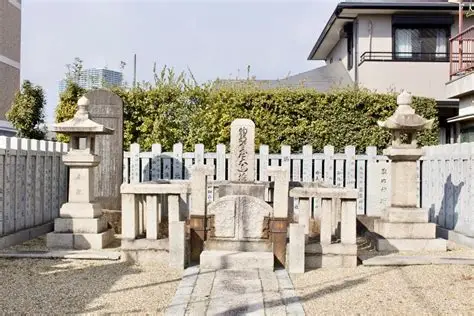
The 32nd Emperor, Emperor Sushun, was assassinated.
The act was carried out by Yamato no Aya no Ataikoma.
The “Nihon Shoki” clearly names the person behind the scenes.
It was Soga no Umako.
Emperor Sushun was a ruler whose ascension was heavily influenced by Umako himself. When the emperor opposed him, Umako sent Yamato no Aya no Ataikoma to have him killed.
Yet, this incident did not lead to Umako’s downfall.
The following month, Empress Suiko ascended the throne, and Umako continued to stand at the center of power as a minister. From the death of Emperor Sushun until Umako’s own death in 626, a span of 34 years, he advanced politics with Prince Shotoku, completed Asuka-dera Temple, and was involved in compiling the “Tennoki” and “Kokki.”
How did Soga no Umako come to wield such power that he could orchestrate the assassination of an emperor?
This was the result of the Soga clan’s growing influence, built up since the time of his father, Soga no Iname, amidst fierce political struggles over the imperial succession.
The Political Foundation Built by His Father, Soga no Iname
The exact birth year of Soga no Umako is unknown.
His father, Soga no Iname, served as a minister during the reign of Emperor Kinmei.
Even before Umako emerged on the political stage, the Soga clan had been expanding its influence as a powerful family within the Yamato court. A major pillar of this influence was marriage alliances with the royal family.
Iname married his daughters, Kitashihime and Oane no Kimi, to Emperor Kinmei.
From Kitashihime came Prince Tachibana no Toyohi—later Emperor Yomei—and Princess Nukatabe—later Empress Suiko.
From Oane no Kimi came Prince Anahobe and Prince Hasebe—later Emperor Sushun.
Emperors Yomei, Sushun, and Suiko all inherited the blood of Soga no Iname through their mothers.
The Soga clan was establishing itself as an influential family deeply involved in the imperial succession.
Furthermore, the Soga clan maintained strong ties with immigrant clans and groups of craftsmen. Their connections with people involved in finance, diplomacy, writing, and craftsmanship became an important foundation for Umako’s significant political power later on.
572—Becoming a Minister Under Emperor Bidatsu
In 572, Emperor Bidatsu ascended the throne.
The “Nihon Shoki” records that from this Bidatsu reign, Umako appeared as a minister.
Umako would go on to serve as a minister through the reigns of Yomei, Sushun, and Suiko, spanning four generations.
At that time, alongside the Soga clan at the heart of the royal power was the Mononobe clan.
The central figure of the Mononobe was the Great Minister Mononobe no Moriya.
The issue that symbolized the conflict between the Soga and Mononobe clans was Buddhism.
Umako’s father, Iname, had actively embraced Buddhism, which was introduced during the Kinmei reign. Umako continued this stance.
In 584, according to the Nihon Shoki, Umako acquired a Buddhist statue and had Zen-shin-ni, the daughter of Soga no Toko, take vows as a nun.
This marked an early significant moment in the history of Buddhism in Japan.
However, the following year, in 585, an epidemic broke out.
Mononobe no Moriya and Nakatomi no Katsumi argued that the native gods were angered by the worship of a foreign deity, Buddha, and called for the rejection of Buddhism.
When Emperor Bidatsu acknowledged this, Buddhist pagodas and temples were destroyed, and the statues were discarded into the Horikawa Canal in Naniwa, as recorded in the Nihon Shoki.
Umako himself fell ill. Nevertheless, he continued to worship Buddhism with the emperor’s permission.
The conflict between Soga no Umako and Mononobe no Moriya was not solely about the acceptance of Buddhism. Both clans were powerful political forces supporting the imperial authority, and their rivalry intensified over the succession to the throne after Emperor Bidatsu’s death.
Emperor Yomei’s Ascension: An Emperor of Soga Descent
In 585, Emperor Bidatsu passed away.
The next to ascend the throne was Emperor Yomei.
Emperor Yomei’s mother was Princess Kashiwade, the daughter of Soga no Iname. To Umako, he was a prince born of his sister.
Emperor Yomei was also inclined towards Buddhism.
In 587, while on his sickbed, the emperor expressed his desire to take refuge in the “Three Treasures” of Buddha, Dharma, and Sangha, and sought the counsel of his ministers on this matter.
Umako showed his willingness to follow the emperor’s wishes, while Mononobe no Moriya opposed.
However, in April of 587, Emperor Yomei passed away.
The throne was once again left vacant.
This led to a rapid escalation of conflict.
The Death of Prince Anahobe: The Struggle for Succession Begins
After Emperor Yomei’s death, Prince Anahobe emerged as a strong candidate for the throne.
Prince Anahobe’s mother was Soga no Koane, and he himself was of Soga descent. However, politically, he was aligned with Mononobe no Moriya.
In June 587.
According to the Nihon Shoki, Umako, acting on the orders of Princess Nukatabe—later known as Empress Suiko—dispatched Saeki no Muraji Kurohito and others to assassinate Prince Anahobe.
Additionally, Prince Takabe, who was allied with Prince Anahobe, was also killed.
Moriya lost a significant contender for the throne.
Then, in July, Soga no Umako, along with various princes and ministers, mobilized forces to confront Mononobe no Moriya.
This battle would later be known as the Battle of Shigisen.
587, the Battle of Shigisen: The Final Showdown with Mononobe no Moriya
The stronghold of Mononobe no Moriya was located in Shibukawa District of Kawachi Province, which is around present-day Yao City in Osaka Prefecture.
On Umako’s side, many members of the imperial family and powerful clans, including Prince Hasebe, Prince Takeda, and Prince Umayado, joined forces.
According to the Nihon Shoki, Moriya built a fortification and resisted, climbing a camphor tree to shoot arrows like rain.
The battle was not easily decided.
It is said that Umako’s forces retreated multiple times.
During this battle, Prince Umayado carved images of the Four Heavenly Kings from a nara tree and vowed to build a temple for them if victorious.
Umako also vowed to construct a temple upon victory, as recorded in the Nihon Shoki.
Eventually, Tomi no Akame shot Moriya down.
With the loss of their commander, the Mononobe forces crumbled, and Moriya’s clan was defeated.
The core of the Mononobe clan, which had long been responsible for the military affairs of the royal authority, was significantly diminished by this battle.
For Umako, this marked a major turning point. With the disappearance of Mononobe no Moriya, who had long competed at the political center, the Soga clan’s political dominance increased significantly.
Installing Emperor Sushun
After Moriya’s downfall, it was Prince Hasebe who ascended the throne.
He became the 32nd Emperor Sushun.
His mother was Kohime, the daughter of Soga no Iname. Thus, Emperor Sushun also carried Soga blood through his maternal line.
According to the Nihon Shoki, Prince Hasebe, who participated in the campaign against Moriya, ascended the throne after the battle and entered the Kurahashi Palace.
Umako continued to stand at the center of the government as the chief minister.
However, the relationship between Emperor Sushun and Umako would decisively deteriorate within just a few years.
The Year 588—Construction of Asuka-dera Begins
The year 588, the first year of Emperor Sushun’s reign.
Monks, temple builders, metalworkers, tile experts, and painters arrived from Baekje.
Utilizing their skills, Umako began the construction of a temple in Asuka.
This temple was Hoko-ji, known today as Asuka-dera.
The Soga clan’s acceptance of Buddhism, which had been promoted since the time of his father, Iname, began to manifest as a grand temple.
It is said that Asuka-dera was completed in 596.
Excavations have revealed that it was a temple complex with a central pagoda surrounded by three golden halls to the north, east, and west, known as the “one pagoda, three golden halls” layout.
The early tiles unearthed, which show a strong connection to the Korean Peninsula, corroborate the presence of tile experts from Baekje.
A massive temple with tiled roofs, unlike anything seen in Japan before, emerged in Asuka.
Umako sought to establish not only political but also a new religious and cultural center in Asuka.
The Conflict Between Emperor Sushun and Umako
The reign of Emperor Sushun lasted about five years.
In the year 592, a serious conflict between the Emperor and Umako became apparent.
The Nihon Shoki records an event in the tenth month of the fifth year of Emperor Sushun’s reign that symbolizes this tension.
On one occasion, a boar was presented to the Emperor.
Emperor Sushun pointed to the boar and expressed a sentiment about when he would be able to cut down those he despised, just as he could cut the boar’s head.
Furthermore, it is said that the Emperor began to prepare many weapons.
Umako heard of this.
The Nihon Shoki states that upon learning he was despised by the Emperor, Umako devised a plan to assassinate him.
It is unclear who the target was or whether the Emperor truly intended to kill Umako. However, the Nihon Shoki presents this statement about the boar as directly leading to the assassination.
November 3, 592—Umako Kills Emperor Sushun
November 3, 592.
Umako sent Otomo no Komaro to assassinate Emperor Sushun.
The Nihon Shoki clearly states that Umako used Otomo no Komaro to kill the Emperor.
The Otomo clan was a powerful immigrant family involved in writing, finance, and military activities.
The connection between Umako and the Otomo clan was evident even in the significant event of the Emperor’s assassination.
It is said that Emperor Sushun was buried at Kurahashioka Mausoleum on the same day he was killed.
The Nihon Shoki notes the unusual absence of the customary mourning period, with the Emperor being buried immediately.
The Emperor was deliberately assassinated by his vassal.
Moreover, Umako, noted as the mastermind, was not punished.
This reflects the significant political power Umako wielded at the time.
Meanwhile, after Emperor Sushun’s assassination, no large-scale internal conflict occurred, and the next Emperor ascended the throne the following month.
It is possible that a political climate existed within the royal authority that could accept the removal of Emperor Sushun.
What is certain is that the Nihon Shoki records the execution of Emperor Sushun as being ordered by Umako.
The Accession of Empress Suiko
The month after Emperor Sushun was assassinated, December 592.
Princess Nukatabe ascended the throne.
She became the 33rd monarch, Empress Suiko.
Empress Suiko is the first female emperor to appear in Japan’s historical records.
Her father was Emperor Kinmei, and her mother was Kitashihime, the daughter of Soga no Iname. From Umako’s perspective, she was his niece.
In the following year, 593, Prince Shotoku became Crown Prince and joined the political scene.
Prince Shotoku also had deep familial ties with the Soga clan.
His mother, Anahobe no Hashihito, was a granddaughter of Soga no Iname, and Prince Shotoku took Umako’s daughter, Tojiko no Iratsume, as his consort.
Empress Suiko, Prince Shotoku, and Soga no Umako.
The politics of the Suiko era unfolded within the close-knit relationships among the royal family and the Soga clan, centered around these three figures.
Umako as Minister During the “Era of Prince Shotoku”
The Suiko era was marked by a series of well-known political reforms and diplomatic initiatives in Japanese history.
In 594, the Edict for the Promotion of Buddhism was issued, advancing Buddhism as a policy of the royal authority.
In 603, the Twelve Level Cap and Rank System was introduced.
In 604, the Nihon Shoki records the establishment of the Seventeen-Article Constitution.
In 607, Ono no Imoko was dispatched to the Sui dynasty.
The following year, in 608, the Sui envoy Pei Shiqing visited the Wa state.
The Chinese Book of Sui notes that even before this, in 600, envoys from Wa had visited, indicating that diplomacy with the Chinese dynasties was becoming increasingly active during the Suiko era.
This period is often referred to in later times as the “politics of Prince Shotoku.”
Meanwhile, Umako consistently held the position of minister.
Even after Prince Umayado moved to Ikaruga Palace in 605, Umako continued his political activities based in Asuka.
The promotion of Buddhism centered around Asukadera, political coordination among powerful clans, and diplomacy with the Korean Peninsula and the Chinese mainland.
In considering the politics of the Suiko era, Umako’s presence is indispensable.
620—Compiling Historical Records with Prince Umayado
In 620.
The Nihon Shoki recounts that Prince Umayado and Soga no Umako collaborated to compile the Chronicles of the Emperors and the National Records, as well as the genealogies of ministers, clans, local governors, and commoners.
Most of these works have not survived to the present day.
However, it is evident that they aimed to document not only the imperial lineage but also the histories of influential clans and regional rulers.
Umako was the figure who triumphed over Mononobe no Moriya and ordered the assassination of Emperor Sushun.
At the same time, he was involved in organizing the histories of the nation and its clans into written records.
Even into the 620s, Umako remained at the center of royal authority.
In 622, Prince Umayado, who had long been a political partner, passed away.
After Prince Umayado’s death, Umako continued to be involved in politics as a minister.
624—Empress Suiko Rejects Umako’s Request
An event in 624 illustrates the relationship between the aging Umako and Empress Suiko.
Umako requested that Empress Suiko grant him the province of Katsuragi.
Katsuragi Province was considered one of the six provinces of Yamato, a land of great importance to the imperial authority.
Umako claimed Katsuragi as his “ancestral home.”
According to the Nihon Shoki, in the 32nd year of Empress Suiko’s reign, Umako sent a message through an envoy, asserting that the Soga clan’s name was linked to Katsuragi, and that if he were to die, future generations would question the origin of that name without an answer.
However, Empress Suiko refused.
She stated that as an empress from the Soga clan, and with Umako being her uncle, granting Katsuragi Province as he requested would lead future generations to criticize her as a foolish woman and Umako as disloyal.
The Nihon Shoki records these sentiments as words of Empress Suiko.
Umako wielded immense political power, even ordering the assassination of Emperor Sushun.
Yet, Empress Suiko rejected Umako’s demand for this land crucial to imperial authority.
The politics of Empress Suiko’s court cannot be explained solely by a narrative of Umako manipulating the emperor at will.
Empress Suiko herself demonstrated the will of the imperial authority, governing in cooperation with Umako over a long period.
Umako, Known as the “Island Minister”
Umako was known by the nickname “Island Minister.”
The Nihon Shoki provides intriguing details about Umako’s residence.
He built his home by the Asuka River, with a small pond in the garden, and an island in the pond.
Thus, people referred to him as the “Island Minister.”
The area now known as Shimasho in Asuka Village, Nara Prefecture, is believed to be where Umako’s residence once stood.
He constructed the grand Asuka Temple and built his residence near the Asuka River.
From the late 6th century to the early 7th century, Asuka transformed into the political and cultural center of imperial authority and the Soga clan.
Umako was one of the central figures who shaped this landscape.
626—The Death of Soga no Umako
May 20, 626.
Soga no Umako passed away.
His birth year is unknown, so his exact age at death is also unclear.
If he served as a minister from the reign of Emperor Bidatsu in 572, his political career spanned over half a century.
He lived through the reigns of Emperor Bidatsu, Emperor Yomei, Emperor Sushun, and Empress Suiko as a minister.
He defeated Mononobe no Moriya, ordered the assassination of Emperor Sushun, and supported the long reign of Empress Suiko and Prince Shotoku.
He also contributed to the construction of Asuka Temple and the compilation of the “Tennoki” and “Kokki.”
The Nihon Shoki records that Umako was buried at the Momohara Tomb.
Today, the Ishibutai Kofun in Shimasho, Asuka Village, Nara Prefecture, is considered a strong candidate for his tomb.
Ishibutai Kofun—Is It the Tomb of Soga no Umako?
The Ishibutai Kofun is one of the most prominent ancient tombs representing the Asuka period.
Today, the earthen mound covering the tomb has mostly eroded away, revealing a massive stone chamber.
Over 30 huge stones were used, with a total weight of approximately 2,300 tons. The largest ceiling stone alone weighs about 77 tons.
Excavations in the 1930s confirmed a rectangular mound and surrounding moat, dating the construction to the early 7th century.
Since no epitaph has been found to identify the interred, it cannot be definitively declared as the tomb of Soga no Umako.
However, given the period of its construction, its massive scale, its location in Shimasho where Umako’s residence is believed to have been, and the Nihon Shoki recording Umako’s burial at Momohara-no-misasagi, the theory that it is Umako’s tomb is compelling.
Considering the tomb as that of a powerful figure like Umako, its enormous size is not surprising.
The stone chamber, still standing in Asuka, continues to convey the magnitude of power during Umako’s era.
Remaining a Minister for 34 Years After Killing an Emperor
The most dramatic event in the life of Soga no Umako was the assassination of Emperor Sushun in 592.
Yet, what truly underscores Umako’s political prowess is the 34 years that followed.
Even after the murder of Emperor Sushun, Umako did not fall from power.
He served as a minister under Empress Suiko, collaborated with Prince Shotoku, completed Asuka-dera, supported a period of significant diplomatic activity, and was involved in compiling the Chronicles of the Emperors and the National Records.
This power was not suddenly acquired with the assassination in 592.
It was the result of decades of alliances through marriage with the royal family since the time of his father, Iname, connections with the imperial lineage of Yomei, Sushun, and Suiko, ties with immigrant clans, the acceptance of Buddhism as a new culture, and the political dominance established by defeating Mononobe no Moriya in 587.
These elements accumulated over decades, leading to the assassination of Emperor Sushun.
After Umako’s death, his influence was passed on to his son Soga no Emishi.
And then to his grandson Soga no Iruka.
The power of the main Soga family did not end with Umako’s death.
However, 19 years after Umako’s death in 626.
In June 645.
At the Asuka Itabuki Palace, Soga no Iruka was assassinated by Prince Naka no Oe and Nakatomi no Kamatari.
This was the Isshi Incident.
The following day, his father Soga no Emishi set fire to his own residence and died.
From Iname to Umako, from Umako to Emishi, and then to Iruka.
The main branch of the Soga clan, which had entrenched itself at the heart of royal power for nearly a century, met its end here.
The person who laid the foundation for this immense power was none other than Soga no Umako.