June 12, 645.
At the Asuka Itabuki Palace, Prince Naka no Oe gripped a long spear, while Nakatomi no Kamatari held a bow and arrow, waiting for Soga no Iruka.
The palace gates were shut, and Iruka, having removed his sword, entered the palace.
Soon, Saeki no Komaro and Katsuragi no Wakenokimi attacked Iruka, and he was killed in the presence of Empress Kogyoku.
This was the Isshi Incident.
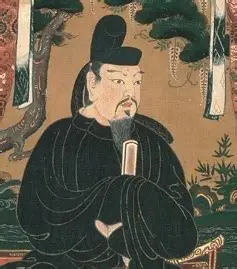
Nakatomi no Kamatari, who orchestrated this coup with Prince Naka no Oe, continued to walk alongside the prince through the reigns of Emperor Kotoku and Empress Saimei.
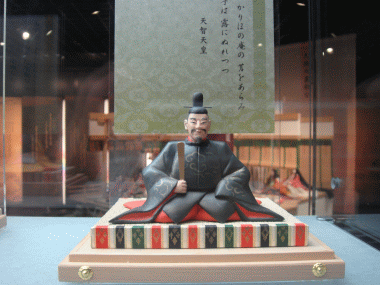
The year after Prince Naka no Oe ascended the throne as Emperor Tenji, in 669.
On his sickbed, Kamatari was granted the “Fujiwara” surname by Emperor Tenji.
From Nakatomi no Kamatari to Fujiwara no Kamatari.
The following day, Kamatari passed away.
The Fujiwara clan, which would later wield immense influence over Japanese politics, traces its origins to this man.
614—Born into the Nakatomi Clan
Nakatomi no Kamatari is believed to have been born in 614.
His father was Nakatomi no Mikeko.
The Nakatomi clan was a family involved in the court’s religious ceremonies.
The Nihon Shoki records that in the 6th century, before Kamatari’s birth, the Soga clan clashed with the Mononobe and Nakatomi clans over the acceptance of Buddhism.
There are few records detailing Kamatari’s youth.
The Fujiwara no Kaden, compiled in later years, contains articles praising the young Kamatari’s learning and abilities.
However, the Fujiwara no Kaden was a biography compiled by the Fujiwara clan after Kamatari’s death. His activities become more concretely visible in the Nihon Shoki during the era of Empress Kogyoku.
644—Declining the Position of Jingihaku
The third year of Empress Kogyoku’s reign, 644.
According to the Nihon Shoki, Kamatari was appointed to the position of Jingihaku.
However, he repeatedly declined the position, citing illness, and withdrew to Mishima.
At this time, Soga no Emishi and his son, Soga no Iruka, held significant power in the court.
The Nihon Shoki notes that Iruka took control of state affairs himself, surpassing even his father Emishi in influence.
In the previous year, 643, Iruka attacked Prince Yamashiro at Ikaruga, annihilating his family.
In this era, Kamatari deepened his connections with the imperial family.
Association with Prince Karu
Before forming a bond with Prince Naka no Oe, Kamatari was already closely associated with Prince Karu.
This prince would later become Emperor Koutoku.
According to the “Nihon Shoki,” during this time, Prince Karu was suffering from a leg ailment and was not attending court.
Kamatari visited Prince Karu’s residence, intending to stay overnight.
Prince Karu held Kamatari in high regard, preparing a special room and offering him generous hospitality.
Moved by this treatment, Kamatari reportedly told the prince’s attendants that it would be impossible not to make this prince the ruler of the realm, as recorded in the “Nihon Shoki.”
Meanwhile, Kamatari was searching for a member of the imperial family capable of achieving great deeds.
Eventually, Kamatari’s attention turned to Prince Naka no Oe.
Encounter with Prince Naka no Oe
The “Nihon Shoki” recounts a famous anecdote about Kamatari’s approach to Prince Naka no Oe.
During a kemari game under the zelkova tree at Asuka Temple, Prince Naka no Oe’s shoe came off.
Kamatari picked it up and offered it to him on bended knee.
Prince Naka no Oe also knelt to receive it.
This incident marked the beginning of their close relationship.
Fearing suspicion from others due to their frequent meetings, the two would carry books and visit Nanba no Omi’s residence to study together.
The “Nihon Shoki” notes that during their travels, they walked side by side, secretly discussing their plans.
Their target was Soga no Iruka.
Kamatari believed that the success of their plan required allies, so he proposed forming a connection with Soga no Kurayamada Ishikawa Maro, a member of the Soga clan.
They arranged for Ishikawa Maro’s daughter to become Prince Naka no Oe’s consort, thus drawing him into their plan through marriage.
Furthermore, Kamatari recommended Saeki no Komaro and Katsuragi no Wakahiko no Amida to Prince Naka no Oe.
In 645.
The plan was set into motion.
June 12, 645 — The Isshi Incident
On June 12, the fourth year of Emperor Kogyoku’s reign.
A ceremony was held at the Asuka Itabuki Palace to read a tribute from the Three Kingdoms of Korea.
Soga no Iruka also entered the palace.
Since Iruka habitually carried a sword, the conspirators arranged for him to remove it before entering the palace.
Prince Naka no Oe ordered the palace gates to be closed and took up a long spear himself.
Nakatomi no Kamatari armed himself with a bow and arrows.
Soga no Kurayamada Ishikawa Maro read the tribute aloud.
The task of executing Iruka fell to Saeki no Komaro and Katsuragi no Wani no Amida.
However, the two were so terrified of Iruka that they were too nervous to eat, trying to swallow their food with water only to throw it back up.
Kamatari scolded them, urging them to muster their courage.
Even as the ceremony began, the two remained hesitant to act.
Reading the imperial edict, Ishikawa no Maro grew anxious, sweating profusely, his voice and hands trembling.
Iruka noticed this and asked why he was shaking.
Finally, Prince Naka no Oe himself leapt forward.
Saeki no Komaro and the others followed, striking Iruka on the head and shoulders, and injuring his legs further.
Iruka approached Empress Kogyoku’s throne, pleading for an inquiry into what crime he had committed.
Empress Kogyoku asked Prince Naka no Oe for an explanation.
Prince Naka no Oe replied that Iruka was attempting to destroy the imperial family and usurp the throne.
After Empress Kogyoku withdrew from the hall, Saeki no Komaro and Katsuragi no Wani no Amida killed Iruka.
The following day, on the 13th, Iruka’s father, Soga no Emishi, also took his own life.
The political dominance of the Soga main family, from Umako to Emishi and Iruka, crumbled.
Emperor Kotoku’s Ascension—Kamatari Becomes Naishin
After the Isshi Incident, Empress Kogyoku decided to abdicate.
The intended successor was Prince Naka no Oe.
Prince Naka no Oe consulted with Kamatari.
Kamatari advised that since Prince Furubito no Oe was older than Prince Naka no Oe and Prince Karu was his uncle, Prince Karu should first ascend the throne.
Prince Naka no Oe accepted Kamatari’s advice.
Prince Furubito no Oe renounced the throne and became a monk.
Prince Karu ascended as the 36th Emperor Kotoku.
Prince Naka no Oe became the Crown Prince.
Abe no Uchimaro was appointed as the Left Minister.
Soga no Kurayamada Ishikawa no Maro became the Right Minister.
Kamatari was awarded the Grand Crown and became Naishin.
The “Nihon Shoki” records that Kamatari, at this time, was noted for his strong loyalty and significant influence within the government.
However, the specific duties and institutional role of “Naishin” remain somewhat unclear.
What is certain is that Kamatari remained at the core of the new political regime after the Isshi Incident.
Politics During the Taika Era
In 645, the era name “Taika” was established.
In December of the same year, the capital was moved from Asuka to Naniwa Nagara-Toyosaki Palace.
In January of the following year, 646, the “Nihon Shoki” records the so-called “Taika Reforms.”
These reforms outlined policies to change the control of land and people by the imperial family and powerful clans, as well as local administration, census registers, and taxation, laying the groundwork for the later Ritsuryo state.
However, it is believed that the text of the Taika Reforms in the “Nihon Shoki” reflects later institutional developments.
During the Taika era, efforts were made to establish a new national system, including the management of people and land, control of officials, and local administration.
In later generations, the ‘Fujiwara Family Chronicles’ portray Kamatari as a central figure driving these reforms.
On the other hand, tracing which policies Kamatari personally devised and how involved he was in their execution from the ‘Nihon Shoki’ is challenging.
It is not possible to retroactively depict Kamatari’s role based on the later prosperity of the Fujiwara clan.
649 — The Death of Ishikawa Maro
The 5th year of the Taika era, 649.
Soga Kurayamada Ishikawa Maro, the Right Minister who, alongside Kamatari, overthrew Iruka in the Isshi Incident, was suspected of treason.
The accuser was Ishikawa Maro’s half-brother, Soga no Hinata.
Hinata accused Ishikawa Maro to Prince Naka no Oe, claiming that Maro intended to kill the Crown Prince and start a rebellion.
Ishikawa Maro sought to plead his case directly before the Emperor, but before he could do so, military forces were mobilized.
March 25.
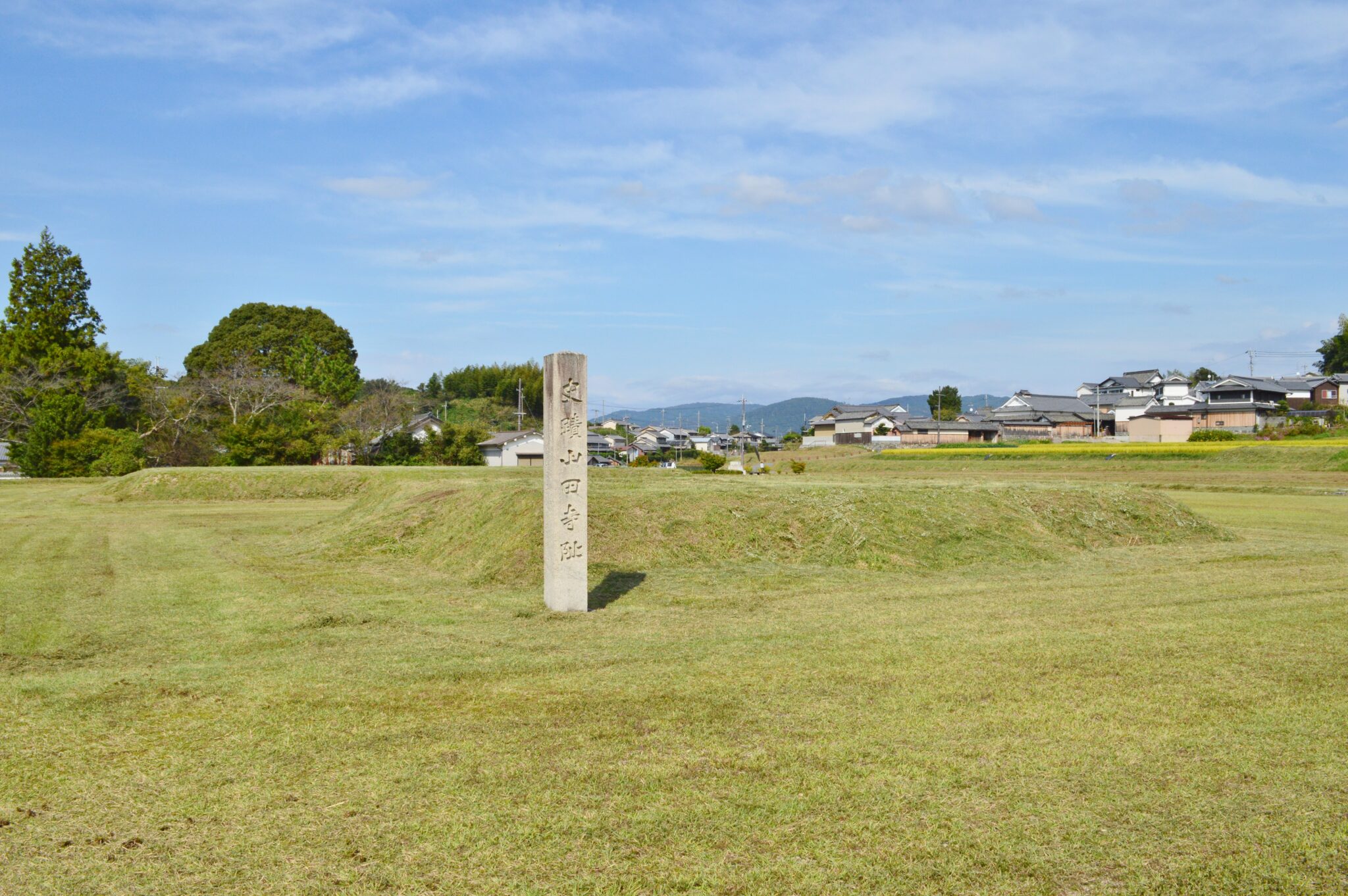
At the Yamada Temple, which he had built himself, Ishikawa Maro swore that he bore no grudge against the Emperor and took his own life.
Upon examining Ishikawa Maro’s possessions, it was found that valuable books were labeled as “the Crown Prince’s writings” and precious treasures as “the Crown Prince’s belongings.”
The ‘Nihon Shoki’ records that Prince Naka no Oe realized Ishikawa Maro’s heart remained pure and loyal to the Crown Prince, leading him to regret, feel ashamed, and deeply mourn.
The ‘Nihon Shoki’ does not record what actions Kamatari took during this incident.
Ishikawa Maro, who had been a key figure in the Isshi Incident, vanished from the scene here.
From the Koutoku Era to the Saimei Era
In 653, Prince Naka no Oe proposed to Emperor Koutoku to move the capital back to Yamato.
When Emperor Koutoku did not consent, Prince Naka no Oe moved to Asuka with Empress Dowager Kōgyoku, Empress Consort Hashihito, and Prince Ōama.
Many officials followed them.
Emperor Koutoku remained in Naniwa and passed away the following year, in 654.
In the same year, 654, the ‘Nihon Shoki’ notes that Kamatari was awarded the purple cap and his fief was increased.
In 655, Empress Dowager Kōgyoku ascended the throne again as Empress Saimei.
Prince Naka no Oe remained the Crown Prince.
Kamatari stayed close to Prince Naka no Oe, but the ‘Nihon Shoki’ from the Saimei era contains few detailed accounts of Kamatari’s activities.
During this time, the political landscape of East Asia underwent significant changes.
In 660, Baekje fell to the combined forces of Tang and Silla.
In 661, Empress Saimei passed away in Tsukushi, and Prince Naka no Oe governed without formally ascending the throne.
In 663, the Japanese-Baekje restoration forces were defeated by the Tang-Silla alliance at the Battle of Baekgang.
Subsequently, Japan fortified its defenses against potential western invasions, and in 667, the political center was moved to Omi.
It is not possible to specifically trace Kamatari’s involvement in individual policies of this period from the ‘Nihon Shoki’.
668 — Prince Naka no Oe Becomes Emperor Tenji
The 7th year of the Tenji era, January 668.
Prince Naka no Oe formally ascended the throne.
He became the 38th Emperor, Emperor Tenji.
Twenty-three years had passed since the political upheaval of 645, known as the Isshi Incident.
Kamatari appears in historical records as “Nakatomi no Naishin” at the Omi Court.
In May of that same year, when Emperor Tenji went hunting in Gamono, he was accompanied by Prince Oama, various princes, Naishin, and other courtiers.
In September, specific actions of Kamatari are documented.
When Kim Tong-gŏm and others from Silla came to the court, Nakatomi no Naishin dispatched the monk Hōben and Qin Hits to send a ship as a gift to the influential Silla figure, Kim Yusin.
This is one of the few articles that convey the movements of Kamatari in his later years.
The following year, 669.
Kamatari fell ill.
669—Emperor Tenji Visits the Ailing Kamatari
In the 10th month of the 8th year of Tenji’s reign.
Kamatari’s condition had worsened.
Emperor Tenji personally visited Kamatari’s home to see how he was faring.
The emperor asked Kamatari if there was anything he wished for.
Kamatari expressed that, since he had not achieved any great military accomplishments in his lifetime, there was no need for an elaborate funeral; he wished for it to be simple.
It had been 24 years since the Isshi Incident.
The prince who had waited with Kamatari for Soga no Iruka at the Asuka Itabuki Palace had now become Emperor Tenji.
It was this emperor who personally visited the dying Kamatari.
October 15—From Nakatomi Kamatari to Fujiwara Kamatari
On October 15.
Emperor Tenji sent his brother, Prince Oama, to Kamatari.
He bestowed upon him the title of Daishokukan and the rank of minister.
Additionally, he granted him the surname “Fujiwara.”
The “Nihon Shoki” records that from this time, he was referred to as Fujiwara no Naidaijin.
Nakatomi Kamatari became Fujiwara Kamatari.
The following day, October 16.
Fujiwara Kamatari passed away.
The “Nihon Shoki” provides two records of his age at death.
The “Nihon Seiki” states he was 50 years old.
The epitaph states he was 56 years old.
It is generally accepted that he was born in 614 and died at the age of 56, according to the latter record.
The day after receiving the Fujiwara surname, Kamatari’s life came to an end.
Emperor Tenji Visits Kamatari’s Home Again
A few days after Kamatari’s death.
Emperor Tenji visited Kamatari’s home once more.
He conveyed a message of gratitude through Soga no Akaye and presented a golden incense burner.
The articles in the “Nihon Shoki” detailing Kamatari’s final days depict Emperor Tenji personally visiting his sickbed, bestowing the Daishokukan, ministerial rank, and Fujiwara surname just before his death, and visiting his home again after his passing.
The two, who are said to have bonded under the zelkova tree at Asuka Temple, had journeyed together through the Isshi Incident of 645, the reigns of Emperor Kōtoku and Empress Saimei, all the way to Omi.
The relationship came to an end on October 16, 669, with the death of Kamatari.
After Kamatari’s Death—Fuhito and the Fujiwara Clan
Kamatari had children, including Jōe and Fuhito.
Among them, Fuhito became the figure who would carry on the Fujiwara clan after his father’s death.
During Kamatari’s lifetime, the later Fujiwara Hokke and the regency government had not yet come into existence.
The Fujiwara clan’s rise to a powerful force in the imperial court occurred after Kamatari’s death.
Fuhito advanced to the center of politics during the reigns of Empress Genmei and Emperor Monmu, playing a significant role in the formation of the Ritsuryō state.
Furthermore, from his children Muchimaro, Fusasaki, Umakai, and Maro, the Fujiwara Nanke, Hokke, Shikike, and Kyōke branches emerged.
In the Heian period, figures like Fujiwara no Michinaga from the Hokke branch appeared, ushering in the peak of the regency government.
The name that would connect to the long history of the Fujiwara clan was given to Nakatomi no Kamatari on October 15, 669.
The following day, October 16, Fujiwara no Kamatari passed away.
Then, in 671, Emperor Tenji, who had long walked alongside Kamatari, also passed away.
In Ōmi was Prince Ōtomo.
In Yoshino was Prince Ōama.
The following year, 672.
The Jinshin War began.
Learn more 📖↓

After reading about the history of Asuka and Nara during Kamatari’s life, enjoy the flavors of Nara that remain today.