In May 1183, the Taira forces, having been defeated at Kurikara Pass, retreated to Kaga.
Minamoto no Yoshinaka pursued them.
The Taira’s punitive expedition to the Hokuriku region had set out from Kyoto in April, capturing Hiuchi Castle in Echizen before advancing into Kaga and then Etchu.
The Heike Monogatari records that the force at the time of departure numbered over 100,000 horsemen.
On May 11, at Tonamiyama and Kurikara Pass, Yoshinaka’s forces defeated the Taira, who then retreated to Kaga.
The next battlefield with the pursuing Yoshinaka forces was at Shinohara in Kaga Province, around present-day Shinohara Town in Kaga City, Ishikawa Prefecture.
The Heike Monogatari places the Battle of Shinohara on May 21.
Meanwhile, the diary Gyokuyo by Kujō Kanezane records that the Taira forces were defeated at Shinohara in Kaga on June 1.
The successive defeats at Kurikara and elsewhere led to the collapse of the Taira’s Hokuriku expeditionary force.
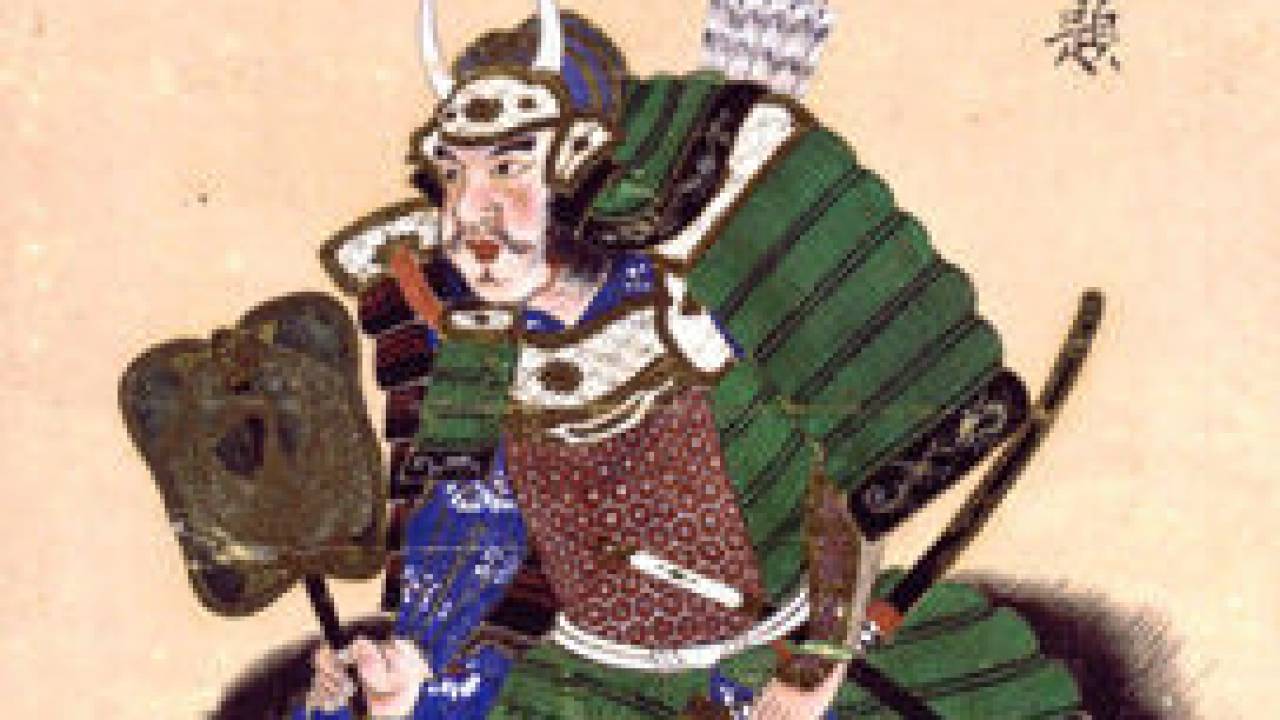
The Heike Monogatari depicts an aged warrior turning his horse among the fleeing troops.
This was Saitō Bettō Sanemori.
The Taira Forces Retreat from Kurikara to Kaga
The Taira dispatched their punitive force to Hokuriku in April of the same year.
The army included Taira no Korehira, Taira no Tomomori, Taira no Chikahira, Taira no Tsunemasa, Taira no Kiyofusa, and Taira no Yukimori among its commanders.
The Heike Monogatari records the force as numbering over 100,000 horsemen.
On April 27, they captured Hiuchi Castle in Echizen and entered Kaga.
From there, they divided their forces and advanced into Etchu, but on May 11, they were defeated by Yoshinaka’s forces at Kurikara Pass.
The soldiers, scattered in the mountains, fled back to Kaga, with Yoshinaka’s forces in pursuit.
The Heike Monogatari describes another battle at Shinohara, where the Taira were again defeated and retreated toward Echizen.
News of the defeat from Hokuriku began to reach Kyoto.
News of Defeat in Hokuriku Reaches Gyokuyo
Kujō Kanezane, who was in Kyoto, recorded the situation in Hokuriku in his diary, Gyokuyo.
On June 1, news arrived that the Taira forces had been defeated at Shinohara in Kaga.
By June 4, reports came in of a major defeat of the Taira forces that had headed to Hokuriku.
On the following day, June 5, the former Governor of Hida, Nakahara Ariyasu, visited Kanezane to provide more detailed information.
At this time, Gyokuyo records the Taira forces’ strength as 40,000 horsemen.
More than half were reported dead or wounded, and the survivors abandoned their weapons and fled into the mountains and forests.
It was reported that Taira no Moritsune, Taira no Kageie, and Taira no Tadatsune also fled without their retainers.
By June 6, the Taira forces that had fled from Hokuriku had returned to Kyoto.
The Hokuriku expeditionary force, which had left the capital on April 17, captured Hiuchi Castle and moved north, but after defeats at Kurikara and Shinohara, returned to Kyoto in less than two months.
The Heike Monogatari recounts this retreat from Shinohara alongside the last stand of Saitō Sanemori.
Saitō Bettō Sanemori
Saitō Sanemori was a warrior based in Nagai Manor, Musashi Province.
He was known as “Saitō Bettō” or “Nagai Saitō Bettō.”
There are various theories about Sanemori’s birth year, with later traditions suggesting he was born in 1111 (Ten’ei 2).
According to this, he would have been 73 years old in the year of the Battle of Shinohara.
Sanemori originally had deep ties with the Minamoto clan.
During the Hogen Rebellion in the first year of Hogen (1156), he sided with Minamoto no Yoshitomo, and he continued to support Yoshitomo during the Heiji Rebellion in the first year of Heiji (1159).
After Yoshitomo’s defeat in the Heiji Rebellion, Sanemori aligned himself with the Taira clan.
In the fourth year of Jisho (1180), he joined the punitive expedition led by Taira no Koremori to subdue Minamoto no Yoritomo in the eastern provinces.
In the Battle of Fujikawa, as recounted in the “Heike Monogatari,” Sanemori, knowledgeable about the eastern provinces, describes the fighting style of the Bando warriors to Koremori and others.
Three years later, Sanemori once again went to battle alongside Koremori and his forces.
This time, the battlefield was in the Hokuriku region.
28 Years Ago, Sanemori Saved the Young Yoshinaka
The relationship between Sanemori and Minamoto no Yoshinaka dates back to the second year of Kyūju (1155).
In that year, Yoshinaka’s father, Minamoto no Yoshikata, was killed by Minamoto no Yoshihira during the Battle of Okura in Musashi Province.
Yoshinaka was just a child at the time.
According to the “Heike Monogatari” and other sources, Sanemori rescued the young Yoshinaka and delivered him to the care of Nakahara Kanetomo in Shinano Province.
Yoshinaka grew up in Shinano.
In the fourth year of Jisho (1180), he raised an army, expanded his influence from Shinano to the Hokuriku region, and by the second year of Juei, the Taira clan had dispatched a large punitive force against him.
The Battle of Okura was 28 years ago.
At Shinohara, the warrior Sanemori, who was once said to have saved Yoshinaka, stood with the Taira forces to face Yoshinaka’s army.
The Resolve Spoken Before Heading to Hokuriku
The “Tale of the Heike” recounts a story about Sanemori before he set out for Hokuriku.
Sanemori was drinking with warriors from the eastern provinces, including Matano Kagehisa.
During the gathering, he spoke of the rising power of the Minamoto and suggested to his companions that they might join Minamoto no Yoshinaka.
Matano Kagehisa reacted strongly against this idea.
He felt it shameful for a renowned warrior from the eastern provinces to switch sides just because the Taira were at a disadvantage, and declared he would die fighting for the Taira.
Sanemori then revealed that he, too, intended to die with the Taira from the start.
He explained that he had only suggested joining Yoshinaka to test the resolve of his companions.
The “Tale of the Heike” tells that the warriors present at this gathering later lost their lives in Hokuriku, leading into the story of the Battle of Shinohara.
Sanemori Turns His Horse Amidst Retreating Allies
The Taira forces crumbled at Shinohara.
The soldiers fled towards Echizen.
In the “Tale of the Heike,” Sanemori is depicted as standing firm alone, repeatedly turning his horse to fight.
His presence on the battlefield was striking.
A brocade hitatare. Armor with green lacing. A helmet adorned with a kuwagata crest.
A gold-crafted sword. A bow with heavy rattan wrapping.
And a dappled gray horse.
According to the “Tale of the Heike,” before heading to Hokuriku, Sanemori requested permission from Taira no Munemori to wear the brocade hitatare.
Sanemori was a warrior with ties to Echizen.
Intending to die in Hokuriku, he wished to return to his homeland wearing brocade, so he asked for permission to wear it.
Munemori granted this request.
When Sanemori turned his horse at Shinohara, he was clad in that brocade.
The Battle with Tezuka Mitsumori
Approaching Sanemori was Tezuka Taro Mitsumori, a warrior on Yoshinaka’s side.
He was a warrior from Shinano who had advanced to Hokuriku with Yoshinaka.
Mitsumori asked the name of the warrior fighting in such splendid attire.
Sanemori did not reveal his name.
When the other introduced himself as Tezuka Taro Kanesashi Mitsumori, Sanemori told him to ask Lord Kiso after he had been defeated, as recorded in the “Tale of the Heike.”
The two clashed on horseback.
Soon they fell from their horses and grappled on the ground.
Then Mitsumori’s retainers joined the fray.
Sanemori was overpowered and beheaded.
Mitsumori had yet to identify the name of the warrior he had slain.
“Could it be Saito Betto Sanemori?”
Tetsuka Mitsumori brought the head to Yoshinaka.
Despite being a high-ranking warrior clad in brocade armor, he had no retainers following him.
Even when asked his name on the battlefield, he did not answer.
Yoshinaka examined the head.
He thought it might be Saito Betto Sanemori.
However, there were discrepancies with the Sanemori he remembered.
Both his hair and beard were black.
Sanemori was a much older warrior than Yoshinaka.
Yoshinaka called for Higuchi Jiro Kanemitsu, who knew Sanemori.
Kanemitsu was the son of Nakahara Kanetomo, who raised Yoshinaka, and the elder brother of Imai Kanehira.
Upon seeing the head, Kanemitsu confirmed it was indeed Sanemori.
He then recounted a story he had heard from Sanemori during his lifetime to Yoshinaka.
Washing away the black dye revealed white hair
According to the “Tale of the Heike,” Sanemori had long said that if he went to battle after turning 60, he would dye his hair black.
He disliked competing for the vanguard with young warriors in his white-haired state and did not want to be seen as an old warrior by the enemy.
Upon hearing this story, Yoshinaka had Sanemori’s head washed.
The black dye washed away.
What emerged was white hair.
Saito Betto Sanemori.
The “Tale of the Heike” depicts Yoshinaka shedding tears in front of that head.
Twenty-eight years earlier, the warrior who had saved the young Yoshinaka after his father’s death now fought against Yoshinaka’s forces on the Taira side, and his head was brought before him.
Sanemori’s final moments, fighting with his hair dyed black and clad in brocade armor, became one of the most famous scenes in the “Tale of the Heike.”
Kubiarai Pond and Sanemori Mound
The end of Saito Sanemori left many legends around the Shinohara area.
In present-day Kaga City, Ishikawa Prefecture, places associated with Sanemori remain.
One of these is “Kubiarai Pond.”
It is said to be where Mitsumori washed Sanemori’s head, revealing the white hair beneath the black dye.
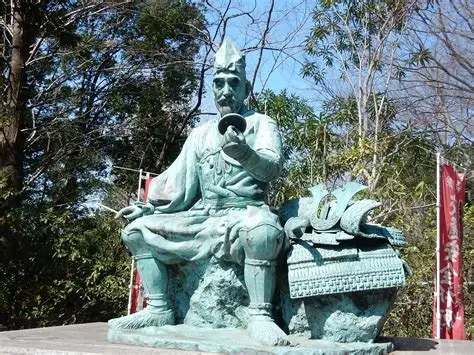
In Shinohara Town, there is also “Sanemori Mound.”
This mound is said to be where Sanemori’s body was buried.
Additionally, there is a legend of “Mirror Pond,” where Sanemori is said to have submerged the mirror he used to dye his hair.
The “Tale of the Heike” does not contain any text linking these ponds or mounds to their current locations.
These legends have become rooted in the land over the long years of recounting the Battle of Shinohara and Sanemori’s end.
The story of Sanemori has been incorporated into Noh plays like “Sanemori,” and the image of the old warrior dyeing his white hair black to fight at Shinohara has been passed down through the generations.
The Defeated Taira Forces Retreat to Kyoto
The defeat at Shinohara, where Saito Sanemori fell, forced the Taira punitive expeditionary force in the Hokuriku region to retreat further.
According to the Gyokuyo, on June 5, Kujō Kanezane reported that over half of the 40,000 cavalrymen were killed or wounded, and the remaining soldiers abandoned their weapons and fled.
On the following day, the defeated forces returned to Kyoto.
The Taira forces sent to the Hokuriku region had captured Hiuchi Castle in Echizen, but suffered consecutive defeats at Kurikara and Shinohara.
Yoshinaka’s forces advanced from Kaga into Echizen.
In Kyoto, news of the Hokuriku army’s defeat arrived in quick succession, forcing the Taira to take measures to defend the capital.
Yoshinaka continued towards Omi, closing the distance to Kyoto.
July 25, 1183.
The Taira clan, escorting Emperor Antoku, departed from Kyoto.
Delving Deeper into the Life of Saito Sanemori
Once said to have saved the young Minamoto no Yoshinaka, Saito Sanemori met his end at Shinohara, facing Yoshinaka’s forces 28 years later.
The Saito Sanemori Picture Story traces the life of Sanemori, the Nagai Saito clan, the Battle of Okura, the rescue of Komao-maru (Minamoto no Yoshinaka), the Hogen and Heiji Rebellion, and finally, Sanemori’s last stand.
For those interested in learning more about the elderly warrior Saito Sanemori, who dyed his gray hair black and remained on the battlefield until the end, this is a recommended read.