From Confidant of Emperor Uda to “Traitor” — the Truth Behind the Fall of Sugawara no Michizane, the Incident That Shook the Heian Court
Among the figures of the Heian period, one statesman remains one of the most widely known names in Japan even today.
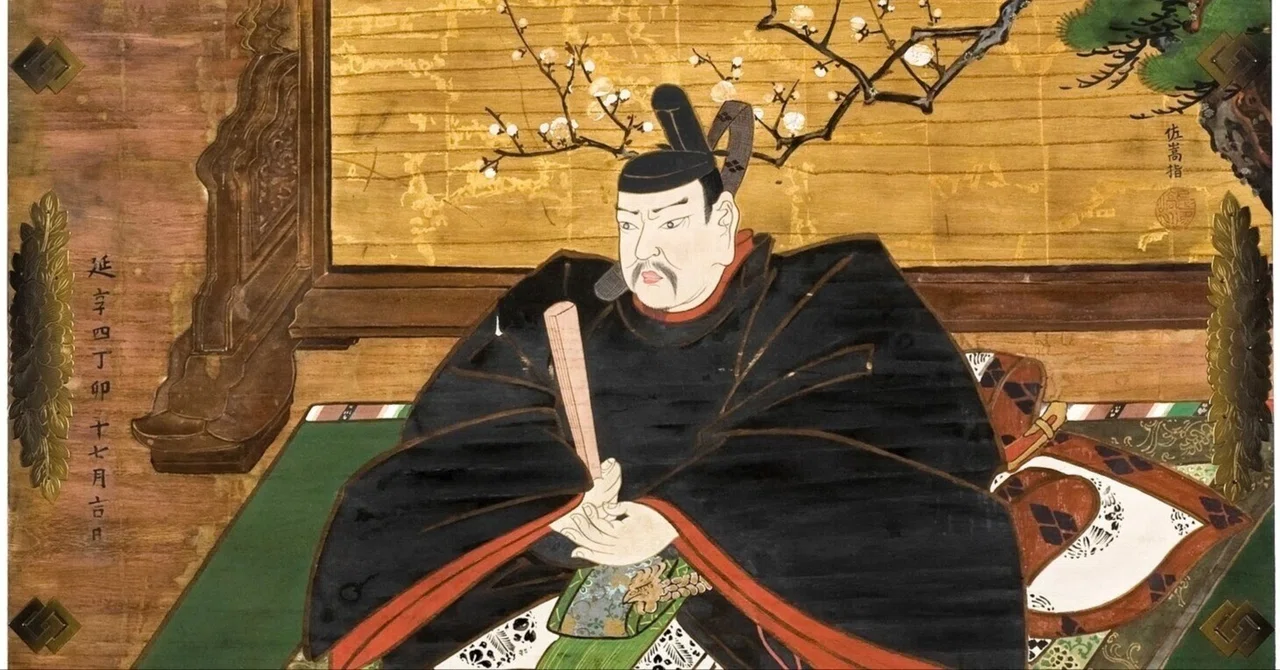
Sugawara no Michizane.
Today he is known as the “god of learning.”
But in life, Michizane was no mere scholar.
He was one of the highest-ranking statesmen at court, having risen all the way to Minister of the Right.
And yet, on the 25th day of the first month, the fourth year of Shotai (901), a devastating punishment fell on him without warning.
Exile as Provisional Governor-General of Dazaifu.
From the center of politics in Kyoto, he was sent all at once to Dazaifu in Kyushu.
And the reason was no ordinary case of misgovernance.
He was accused of involvement in a grave plot concerning imperial succession itself.
Michizane’s daughter was the wife of Prince Tokiyo, a younger brother of Emperor Daigo.
Because of this, Michizane’s fall became bound up with the suspicion that he intended to place Prince Tokiyo on the throne.
And at the center of this affair stood Fujiwara no Tokihira.
Fujiwara no Tokihira is covered in detail in a separate article.
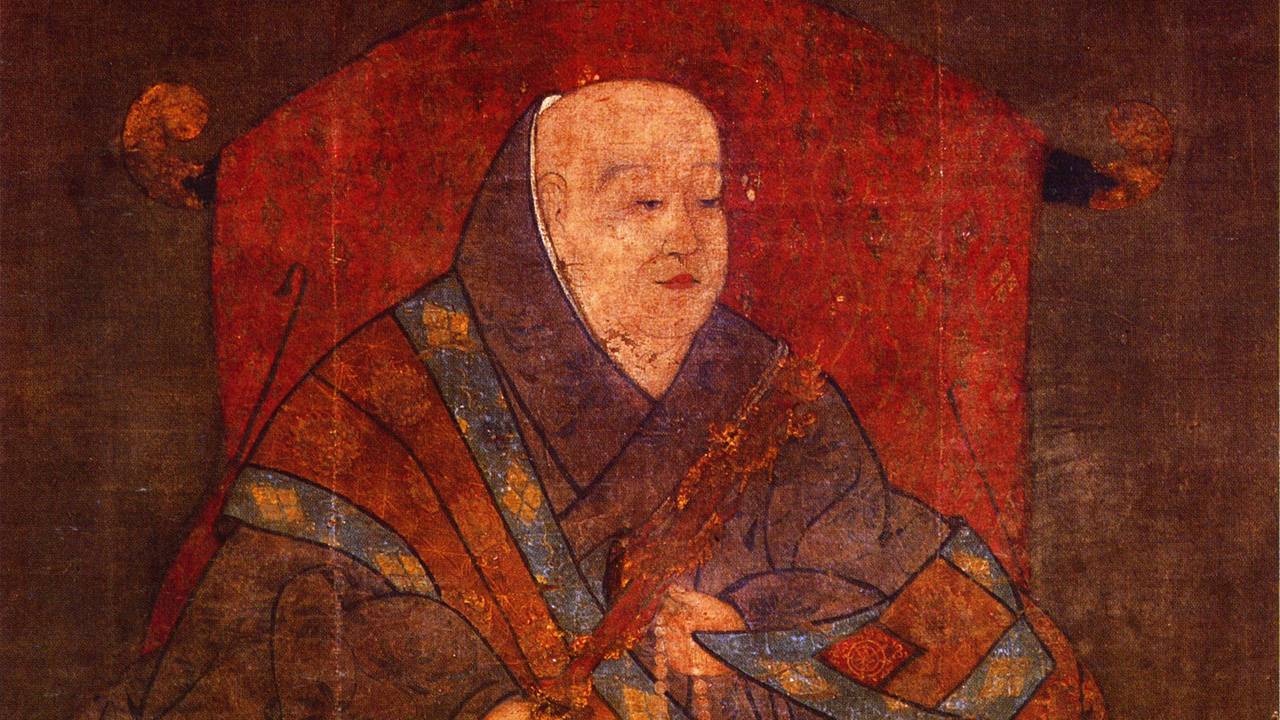
Tokihira’s father was Fujiwara no Mototsune, who had once clashed with Emperor Uda in the Ako Incident.
Tokihira, that man’s son, and Sugawara no Michizane, elevated by Emperor Uda after Mototsune’s death.
From the moment the two stood side by side as Ministers of the Left and Right, political tension began to build.
This was the Shotai Incident.
1. To Understand the Shotai Incident, First Return to the Ako Incident
The Shotai Incident did not erupt out of nowhere in 901.
It needs to be viewed against the political situation of more than a decade earlier.
In the third year of Ninna (887), Emperor Uda took the throne.
At that time, the single most powerful man at court was Fujiwara no Mototsune.
Mototsune had supported Emperor Koko’s enthronement after Emperor Yozei’s abdication, and had also played a part in Emperor Uda’s own accession following Emperor Koko’s death.
Emperor Uda entrusted government to Mototsune.
But a problem arose over the word “Ako” used in the imperial reply to Mototsune.
Mototsune took this as a denial of his own political authority and withdrew from court.
The business of government stalled.
This was the Ako Incident.
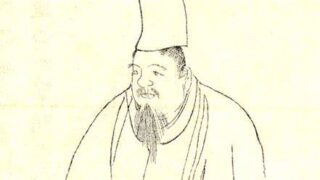
This incident became a formative experience for Emperor Uda.
Even if the emperor gave a command, government could not move forward unless the powerful nobles who actually ran the court obeyed it.
Then, in the third year of Kanpyo (891), Mototsune died.
From here, Emperor Uda began strengthening his own personal rule.
Sugawara no Michizane is covered in detail in a separate article.
The man who rose as his confidant was Sugawara no Michizane.
2. Sugawara no Michizane — From a House of Scholars to Minister of the Right
Sugawara no Michizane was born in the 12th year of Jowa (845).
His father was Sugawara no Koreyoshi.
The Sugawara were a family whose hereditary trade was scholarship.
From childhood Michizane showed a gift for Chinese poetry and prose, and held a succession of posts including Monjo Hakase, professor of literature.
Here lies what makes Michizane’s life so interesting.
In the central politics of the Heian court, powerful clans led by the Fujiwara held enormous political weight.
Within that world, Michizane advanced into politics armed with scholarship alone.
And he was discovered by Emperor Uda.
Emperor Uda, seeking a form of government that did not depend on the Fujiwara alone, elevated Michizane.
Michizane served as Governor of Sanuki, gaining experience in provincial administration as well.
Returning to the capital, he advanced rapidly toward the center of power.
In the sixth year of Kanpyo (894), he was appointed ambassador to the embassy to Tang China.
But Tang China was then in the midst of internal upheaval, and its relations with Japan had changed dramatically.
Michizane proposed suspending the mission to Tang altogether.
Emperor Uda adopted the proposal.
Michizane was no mere scholar — he had become a statesman shaping national policy.
3. Emperor Uda Abdicates
The ninth year of Kanpyo (897).
Emperor Uda abdicated in favor of the crown prince, Prince Atsugimi.
Prince Atsugimi was Emperor Daigo.
Emperor Daigo was thirteen at his accession.
Emperor Uda became a Retired Emperor. The court’s political structure shifted here.
The reigning emperor was Emperor Daigo.
But his father, Retired Emperor Uda, retained political influence as well.
And deeply bound to that Retired Emperor Uda was Sugawara no Michizane.
Michizane remained at the center of power even under Emperor Daigo’s own court.
By this point, Michizane was no longer simply “Retired Emperor Uda’s confidant.”
He had become a statesman aiming for the office of Minister of the Right in the reigning emperor’s own court.
4. Fujiwara no Tokihira Enters the Story
Here Fujiwara no Tokihira enters the picture.
Tokihira was born in the 13th year of Jogan (871).
His father was Fujiwara no Mototsune.
In other words, the son of the man who had clashed with Emperor Uda in the Ako Incident.
After his father’s death, Tokihira rose as the central figure of the Fujiwara Northern House.
And in the second year of Shotai (899).
Tokihira became Minister of the Left.
At the same time, Michizane became Minister of the Right.
The court’s highest officials now stood as
Minister of the Left Fujiwara no Tokihira and Minister of the Right Sugawara no Michizane.
This was profoundly symbolic.
A man from the great house of the Fujiwara Northern House, and a man from a family of scholars who had made an extraordinary climb, now stood together at the summit of the court.
5. Were Tokihira and Michizane Enemies From the Start?
In later legend, the story that
“Tokihira, consumed by jealousy, brought Michizane down” became extremely strong.
But there is no need to assume the two were fully opposed from the very start.
Tokihira and Michizane had political points of contact, and their exchanges extended into Chinese literary culture as well.
They stood in a relationship as fellow ministers, sharing the burden of government as Minister of the Left and Minister of the Right.
But their political backgrounds differed enormously.
Tokihira was the eldest son of Fujiwara no Mototsune. Michizane came from a family of scholars.
And Michizane enjoyed deep trust from Retired Emperor Uda, rising with striking speed even within Emperor Daigo’s own court.
What is more, Michizane had formed a marriage tie with the imperial family.
From here, Michizane’s presence grew to exceed the bounds of a mere “capable Minister of the Right.”
6. Michizane’s Daughter Becomes Prince Tokiyo’s Consort
Michizane’s daughter, Enshi, became the consort of Prince Tokiyo, a younger brother of Emperor Daigo.
This is critically important for understanding the Shotai Incident.
Michizane was Minister of the Right.
He was also a confidant of Retired Emperor Uda.
And now, he had formed a marriage tie with the imperial family itself.
In other words, Michizane’s political influence had grown considerable indeed.
What is more, Prince Tokiyo was Emperor Daigo’s own younger brother.
This is exactly where the conditions arose that would tie Michizane to a political crisis over imperial succession.
7. The Relationship Between Retired Emperor Uda and Emperor Daigo
To view the Shotai Incident as merely “a quarrel between Tokihira and Michizane” is to miss its true substance.
A far larger political structure was at work.
That structure was the relationship between Retired Emperor Uda and Emperor Daigo.
Emperor Uda had abdicated.
But he had not entirely lost his political influence.
Meanwhile Emperor Daigo, too, was maturing.
In time he would come to rule in his own right.
Here a political alignment took shape: Michizane, supporting Retired Emperor Uda, versus Fujiwara no Tokihira, close to Emperor Daigo.
Onto this the question of imperial succession was layered. The Shotai Incident arose precisely where these multiple political relationships intersected.
8. The Third Year of Shotai (900) — Michizane’s Position Was Already Dangerously High
The third year of Shotai (900).
Michizane was running the court’s government as Minister of the Right.
That year, the scholar-official Miyoshi no Kiyoyuki sent Michizane a letter urging him to withdraw from the front lines of politics.
This letter is fascinating for what it reveals about Michizane’s own position at the time.
Michizane, having risen from a family of scholars all the way to Minister of the Right, had already gone well beyond the ordinary bounds of the aristocratic world.
And the following year, the Shotai Incident occurred.
9. The Fourth Year of Shotai (901) — the Court Casts Out Michizane
The first month of the fourth year of Shotai (901).
A major coup shook the court.
Michizane was accused of plotting to depose Emperor Daigo and place Prince Tokiyo on the throne.
This became the decisive reason for Michizane’s downfall.
On the 7th day, Michizane was raised to Junior Second Rank.
And then, on the 25th.
Michizane was exiled as Provisional Governor-General of Dazaifu.
A man at the very center of court politics was cast out to Kyushu in the space of days.
This is what became known as the Shotai Incident.
Michizane’s own outsized fear was that Retired Emperor Uda, in league with him, meant to depose Emperor Daigo and enthrone Prince Tokiyo.
Prince Tokiyo was a son of Emperor Uda, and Michizane’s daughter had become his consort.
Because of this, political suspicion over imperial succession fell squarely on Michizane.
10. Why Did “Prince Tokiyo” Become the Problem?
To understand Michizane’s fall, the presence of Prince Tokiyo is essential.
Prince Tokiyo was Emperor Daigo’s younger brother.
And he was the husband of Michizane’s daughter Enshi.
In other words, a political situation had emerged in which Michizane’s own son-in-law could become a candidate for the throne.
And Retired Emperor Uda’s presence overlapped with this.
Retired Emperor Uda was Prince Tokiyo’s father, and also the man who had elevated Michizane.
For this reason, the connection between Retired Emperor Uda, Michizane, and Prince Tokiyo was something Emperor Daigo’s own side could not politically ignore.
In the Shotai Incident, this relationship became tied to suspicion over imperial succession.
11. “What Did Michizane Actually Plan to Do?”
This is the most important point of all.
No direct evidence exists that can settle, with certainty, “that Michizane truly intended to depose Emperor Daigo.”
What is clear, on the other hand, is that the court of the time punished Michizane as a man involved in a matter of imperial succession.
In other words, what Michizane actually plotted and how the court judged Michizane need to be treated as two separate questions.
This is exactly the point that matters as a matter of history.
To portray Michizane as an entirely innocent victim, or conversely to assert flatly that he truly plotted treason, both go beyond what the sources can support.
What can be confirmed as historical fact is simply this:
Michizane came under suspicion over imperial succession, and on January 25, 901, he was exiled as Provisional Governor-General of Dazaifu.
12. Michizane’s Children Were Also Punished
The Shotai Incident did not end with Michizane’s fall alone.
Michizane’s children were also punished — exiled or demoted, each in turn.
In other words, the court did not punish Michizane as an individual alone.
The Sugawara house itself took a political blow.
Having risen all the way to Minister of the Right, the Sugawara were driven back sharply from the center of court politics by the Shotai Incident.
13. Michizane Sets Out for Dazaifu
Michizane left Kyoto and set out for Dazaifu.
Dazaifu was a vital hub overseeing Kyushu’s administration, diplomacy, and military affairs.
The office of Governor-General itself was a high rank.
But for Michizane at this moment, the rank of the office was not what mattered.
What mattered was that he had been cut off completely from the politics of the capital.
Michizane made his home in Dazaifu.
And he died there on the 25th day of the second month, the third year of Engi (903).
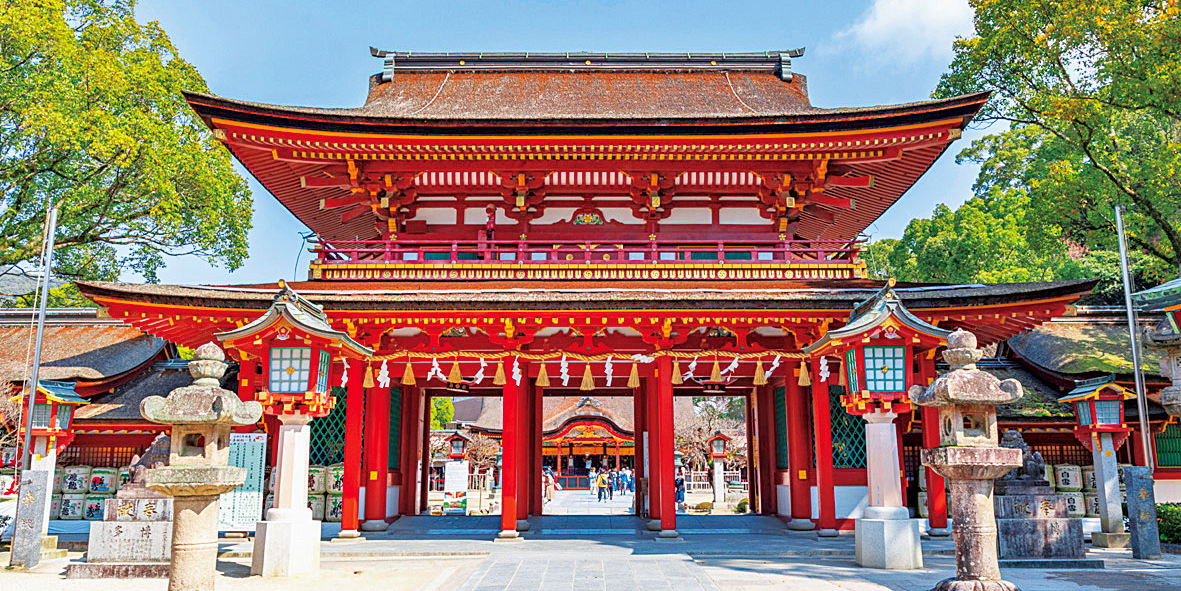
He was fifty-nine. Dazaifu Tenmangu likewise records that he was exiled as Governor-General in 901 and closed his 59-year life on February 25, 903.
Michizane never returned to the political stage of Kyoto.
14. Michizane at Dazaifu — Something More Than “Grievance”
The Chinese poetry Michizane left behind at Dazaifu reflects his own sorrow over his exiled circumstances.
At the Chrysanthemum Banquet in the third year of Shotai (900), he had composed a poem on the theme of “autumn thoughts” before Emperor Daigo himself.
The following year, Michizane was sent to Dazaifu.
A man who had stood at the very center of the court until just before his exile was suddenly moved to Kyushu.
Michizane’s own state of mind at Dazaifu can be read in the poetry he left behind.
This is a part of the story that can be understood not only through later legend, but through the literary works Michizane himself left behind.
15. Trouble Continues at Court After Michizane’s Death
After Michizane died, misfortune struck the court one after another.
Fujiwara no Tokihira died in the ninth year of Engi (909).
Crown Prince Yasuakira died in the 23rd year of Engi (923).
Imperial grandson Prince Yoshiyori died in the third year of Encho (925).
As these events piled up, the belief spread that “Michizane’s vengeful spirit was cursing them.”
From here, the historical Sugawara no Michizane and the later “vengeful spirit and thunder god” Michizane began to merge.
16. 923 — Michizane’s Honor Is Restored After Death
The first year of Encho (923).
The court restored Michizane to the office of Minister of the Right.
Restoring rank to a dead man was an extraordinary measure.
In life, Michizane had stood at the summit of the court as Minister of the Right.
After death, that status was restored to him.
And efforts to pacify Michizane’s vengeful spirit grew stronger.
17. 930 — the Seiryoden Lightning Strike
The eighth year of Encho (930).
Lightning struck the Seiryoden, within the imperial palace itself.
It was a major incident, with people killed and injured. This lightning strike, too, was linked to Michizane’s vengeful spirit.
From here, the image of Michizane as thunder god, as Tenjin, took firm hold.
In time Michizane was enshrined as a god, worshipped as Tenman Daijizai Tenjin.
Dazaifu Tenmangu likewise records that Michizane is enshrined as Tenjin, and that his worship continues to this day.
18. From “Vengeful Spirit” to “God of Learning”
Today, mention Michizane, and people think of the god of learning.
Many visit a Tenmangu shrine before an exam.
But Michizane was not, from the start, “the god of learning.”
Michizane lived as a scholar, rose as a statesman, became Minister of the Right,
was cast down by political ruin to Dazaifu, and died there.
Afterward he was feared as a vengeful spirit, enshrined as Tenjin,
and over a long stretch of time came to be worshipped as the god of learning.
This transformation is the single most striking feature of Sugawara no Michizane as a historical figure.
19. The Shotai Incident Cannot Be Reduced to “a Fujiwara Plot”
To explain the Shotai Incident purely as “Fujiwara no Tokihira, jealous of Michizane, drove him out” erases the political depth of the affair.
This incident involved several people at once:
Retired Emperor Uda. Emperor Daigo.
Fujiwara no Tokihira. Sugawara no Michizane.
Prince Tokiyo.
Emperor Uda had elevated Michizane after Fujiwara no Mototsune‘s death.
Michizane rose to Minister of the Right.
Meanwhile, Mototsune’s son Tokihira became Minister of the Left.
And Michizane formed a marriage tie with Prince Tokiyo.
Here, the emperor, the retired emperor, the Fujiwara clan, Michizane, and imperial succession all became bound together as a single political problem.
As a result, Michizane fell in 901.
The Shotai Incident was the sudden collapse of this whole tangled web of power relationships.
20. From the Ako Incident to the Shotai Incident
Seen this way, the earlier Ako Incident and the Shotai Incident connect into a single thread.
887
Emperor Uda’s accession.
↓
887–888
Political tension between Emperor Uda and Fujiwara no Mototsune.
↓
891
Fujiwara no Mototsune dies.
↓
Emperor Uda elevates Sugawara no Michizane
↓
897
Emperor Uda abdicates.
Emperor Daigo’s accession.
↓
899
Fujiwara no Tokihira, Minister of the Left.
Sugawara no Michizane, Minister of the Right.
↓
901
The Shotai Incident.
Sugawara no Michizane exiled as Provisional Governor-General of Dazaifu.
↓
903
Michizane dies at Dazaifu.
Tracing this sequence shows how dramatically
the power structure of the Heian court shifted between the Ako Incident and the Shotai Incident.
Emperor Uda, having confronted the Fujiwara clan’s power under Mototsune, reshaped the political landscape after Mototsune’s death by elevating Michizane.
Michizane, in turn, was drawn into a crisis over imperial succession and fell from power.
And afterward, the Fujiwara once again strengthened their grip on the reins of court politics.
21. After the Shotai Incident, the Age of the Fujiwara
After Michizane’s fall, Fujiwara no Tokihira led the government at the center of the court.
But Tokihira, too, did not live long.
He died in the ninth year of Engi (909) at thirty-nine. Afterward, his younger brother Fujiwara no Tadahira rose to prominence.
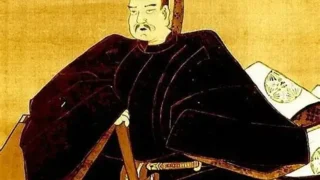
Tadahira became the central figure at court through the reigns of Emperor Daigo and Emperor Suzaku.
And in the early tenth century, Fujiwara-led regental government began to develop in earnest.
The Shotai Incident sits within that larger current.
The affair that drove out Michizane was, at once, a personal tragedy for Sugawara no Michizane,
and a turning point at which the Fujiwara clan tightened its grip on court politics.
Summary
The Shotai Incident was a political coup in the first month of the fourth year of Shotai (901), in which Minister of the Right Sugawara no Michizane, under suspicion in a matter of imperial succession, was exiled as Provisional Governor-General of Dazaifu.
Behind it lay the ongoing balance of power between the emperor and the Fujiwara clan that had continued since the Ako Incident.
After Fujiwara no Mototsune‘s death, Emperor Uda elevated Sugawara no Michizane.
Rising from a family of scholars into the center of politics, Michizane became Minister of the Right in 899.
Meanwhile, Mototsune’s eldest son Fujiwara no Tokihira became Minister of the Left.
The direct heir of the Fujiwara Northern House and a statesman of scholarly birth elevated by Emperor Uda now stood side by side as Ministers of the Left and Right.
Furthermore, Michizane’s daughter Enshi became the consort of Prince Tokiyo, Emperor Daigo’s younger brother.
This created the political condition that would tie Michizane to a crisis over imperial succession.
In 901, Michizane came under suspicion of plotting to depose Emperor Daigo and place Prince Tokiyo on the throne.
And on the 25th of the first month, he was exiled as Provisional Governor-General of Dazaifu.
No source directly proves that Michizane actually plotted to usurp the throne.
On the other hand, it is clear that the court punished Michizane as a man involved in a matter of imperial succession.
Understanding the Shotai Incident therefore requires setting aside both
the later image of “an entirely innocent Michizane” and the flat assertion “that Michizane truly plotted treason,”
and instead viewing it as a coup born from the intersection of
the political relationship between Retired Emperor Uda and Emperor Daigo, the power of the Fujiwara clan, Michizane’s extraordinary rise, his marriage tie to Prince Tokiyo, and the question of imperial succession.
Michizane was sent to Dazaifu, and died there on February 25 of the third year of Engi (903) at fifty-nine.
Afterward, the deaths of Fujiwara no Tokihira, of imperial heirs, and a lightning strike within the palace all came to be linked to Michizane’s vengeful spirit.
Michizane was posthumously restored to Minister of the Right, and in time enshrined as Tenjin.
In life: a statesman who rose from scholar to Minister of the Right.
In death: from vengeful spirit to Tenjin, and then to the god of learning.
Sugawara no Michizane became a figure who underwent one of the most extraordinary transformations in all of Japanese history.
And viewed as political history, the Shotai Incident does not end with the fall of a single statesman.
It was the turning point at which the politics championed by Emperor Uda gave way to a politics in which the Fujiwara once again seized the reins.
Emperor Uda, who had confronted Fujiwara no Mototsune in the Ako Incident.
Sugawara no Michizane, elevated after Mototsune’s death.
And Michizane, driven from the center of power by Mototsune’s own son, Fujiwara no Tokihira.
Tracing this sequence reveals how power moved back and forth between the emperor and the Fujiwara clan across the Heian period.
And roughly forty years after the Shotai Incident.
This time, out in the provinces, a man would appear who shook the court itself to its foundations.
His name was Taira no Masakado.
The political struggles of Heian-kyo would, in time, lead into a great uprising staged on the plains of the Kanto region.