January, 1184.
Having been driven out of Kyoto, Minamoto no Yoshinaka was heading toward Omi Province with only a handful of troops.
The previous year, Yoshinaka had defeated the Taira forces in the Hokuriku region and entered Kyoto, but his power was rapidly crumbling.
His conflict with the retired Emperor Go-Shirakawa deepened, and the forces of Minamoto no Noriyori and Minamoto no Yoshitsune, sent by Minamoto no Yoritomo, were closing in on Kyoto.
Yoshinaka was defeated in battle and fled the capital.
As if in pursuit of Yoshinaka, a lone warrior retreated from the direction of Seta.
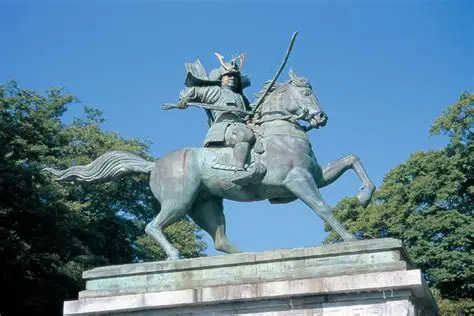
This was Imai Kanehira.
Kanehira had a deep connection with Yoshinaka since childhood, following him from the uprising in Shinano to the battles in Hokuriku, the advance into Kyoto, and finally, to the last battle.
The “Kiso’s Last Stand” chapter of the Heike Monogatari vividly depicts the final moments of Yoshinaka and Kanehira.
Their relationship, which began in childhood, came to its end on the battlefield in Omi.
Imai Kanehira, Raised with Minamoto no Yoshinaka
Imai Kanehira is believed to have been born in 1152.
His father was Nakahara Kanetō, a samurai of Shinano Province.
He was commonly known as Imai Shirō.
He was one of the prominent warriors who supported Minamoto no Yoshinaka and was later counted among the “Four Heavenly Kings of Kiso.”
In discussing Kanehira’s life, his relationship with Minamoto no Yoshinaka is indispensable.
Yoshinaka was born as the son of Minamoto no Yoshikata.
In 1155, Yoshikata was killed by Minamoto no Yoshihira during the Battle of Okura in Musashi Province.
The young Yoshinaka was then said to have moved to Shinano Province, where he was raised by Nakahara Kanetō.
Kanehira was the son of Kanetō.
He was a milk sibling to Yoshinaka, having been raised as a foster brother.
If Yoshinaka was born in 1154 and Kanehira in 1152, their age difference was merely two years.
The relationship between the two, who later became lord and retainer, had its roots in the time when Yoshinaka grew up in Shinano.
The Uprising of Minamoto no Yoshinaka
In 1180, prompted by the decree of Prince Mochihito, uprisings against the Taira clan erupted across the country.
In Izu, Minamoto no Yoritomo raised an army, and in Shinano, Minamoto no Yoshinaka rose up.
Kanehira followed Yoshinaka.
Yoshinaka expanded his influence from Shinano and eventually advanced into the Hokuriku region.
While Yoritomo was consolidating power around the Kanto region, Yoshinaka was rallying the warriors of Shinano and Hokuriku as he moved westward.
Kanehira, a prominent military commander, fought across various regions supporting this army.
In 1183, Yoshinaka’s forces clashed decisively with the Taira forces in Hokuriku.
According to the “Tale of the Heike,” Kanehira led the troops to victory against Taira no Moritoshi’s forces at Hannyano in Etchu Province.
Subsequently, Yoshinaka’s and the Taira forces collided around Kurikara Pass.
From Kurikara Pass to Kyoto
May 1183.
Yoshinaka’s army defeated the Taira forces at the Battle of Kurikara Pass.
In the subsequent Battle of Shinohara, they again repelled the Taira forces, shifting the balance of power in Hokuriku significantly in Yoshinaka’s favor.
Kanehira is also said to have participated in these series of battles.
With repeated defeats in Hokuriku, the Taira found it increasingly difficult to maintain control of Kyoto.
In July of the same year, Taira no Munemori and other members of the Taira clan left the capital, taking Emperor Antoku with them.
Subsequently, Yoshinaka and his forces entered Kyoto.
It had been about three years since he raised his army in Shinano.
Yoshinaka had expanded his power enough to advance into Kyoto.
Kanehira was with him every step of the way.
However, Yoshinaka’s position in Kyoto gradually became unstable.
Conflict with Emperor Go-Shirakawa
After Yoshinaka and his forces entered the capital, many armies from various regions gathered in Kyoto.
Frequent requisitioning of provisions and the unruly behavior of warriors led to widespread chaos in the city and its surroundings.
Moreover, the forces sent by Yoshinaka to pursue the Taira to the western provinces were defeated at the Battle of Mizushima in Bitchu Province.
Meanwhile, in the Kanto region, Minamoto no Yoritomo was solidifying his power.
The relationship between Yoshinaka and Emperor Go-Shirakawa also deteriorated.
In November 1183, their conflict escalated into armed confrontation.
This was the Battle of Hōjūji.
Minamoto no Yoshinaka’s forces defeated the faction supporting the Retired Emperor Go-Shirakawa and took control of him.
Kanemitsu is also said to have participated in this battle.
Although Yoshinaka seized military control in Kyoto, his conflict with the Retired Emperor Go-Shirakawa became irreconcilable.
Eventually, Yoritomo sent Minamoto no Noriyori and Minamoto no Yoshitsune westward.
The direct confrontation between Yoshinaka and Yoritomo’s forces began.
Imai Kanemitsu Defends Seta
January, 1184.
The forces of Noriyori and Yoshitsune advanced towards Kyoto.
According to the “Azuma Kagami,” Noriyori approached from the Seta area, while Yoshitsune advanced from the Uji area towards Kyoto.
Yoshinaka’s forces prepared to meet them on both fronts.
In the “Heike Monogatari,” Kanemitsu is depicted as the commander defending Seta.
Yoshitsune’s army broke through the Uji River and advanced into Kyoto.
In the Seta area as well, Yoshinaka’s forces were defeated, and the defensive lines protecting Kyoto collapsed.
Yoshinaka fled from the capital.
Kanemitsu also withdrew from Seta.
However, both were concerned for each other’s safety.
Yoshinaka and Kanemitsu Reunite at Uchide no Hama
Their story from this point is detailed in the “Kiso Saigo” section of the “Heike Monogatari.”
Kanemitsu, who had been defending Seta, significantly reduced his troops due to the defeat and was returning towards Kyoto, worried about Yoshinaka’s whereabouts.
Meanwhile, Yoshinaka, concerned for Kanemitsu’s safety, headed towards Seta.
The two eventually reunited at Uchide no Hama in Otsu.
Upon spotting each other, they reportedly spurred their horses and drew near.
In the “Heike Monogatari,” Yoshinaka takes Kanemitsu’s hand and expresses that he fled to this point to meet his end together.
Kanemitsu responds that he came from Seta because he was worried about Yoshinaka’s fate.
Though a scene from a war tale, it has been passed down through generations as a symbol of the bond between Yoshinaka and Kanemitsu.
Seeing Kanemitsu’s banner, allies gathered, and Yoshinaka and his group once again faced the enemy forces.
However, with each battle, their numbers dwindled.
Soon, only Kanemitsu, Tomoe, and a few others remained by Yoshinaka’s side.
Parting with Tomoe
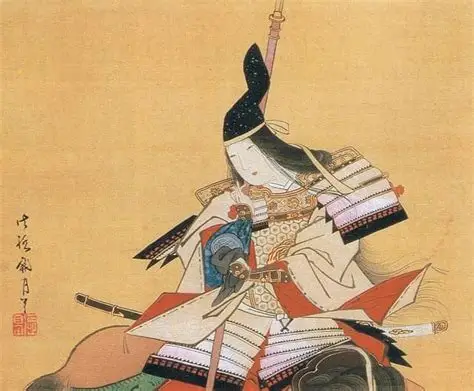
Tomoe also appears in this final battle in the “Heike Monogatari.”
She is depicted as a warrior who fought alongside Yoshinaka in various battles, renowned as a woman of unparalleled valor, “worth a thousand men.”
Yoshinaka ordered Tomoe, who remained until the end, to leave the battlefield.
Tomoe did not immediately comply, reportedly taking down an enemy warrior before departing the battlefield.
And so Yoshinaka and Kanetaira headed towards Awazu together.
The two, who had grown up together in Shinano, were finally facing their last moments.
Yoshinaka’s Wish to “End Together in One Place”
The Tale of the Heike vividly depicts the final conversation between Yoshinaka and Kanetaira.
Yoshinaka intended to meet his end alongside Kanetaira.
However, Kanetaira urged Yoshinaka to take his own life while he held off the enemy.
If a general of Yoshinaka’s stature were to be killed by mere foot soldiers, his end would be spoken of for generations.
Kanetaira is portrayed as a figure determined to protect his lord’s martial reputation to the very end.
Yoshinaka accepted these words and headed towards the pine grove of Awazu.
However, his horse stumbled into a deep rice field, rendering him immobile.
At that moment, enemy soldiers closed in.
According to the Azuma Kagami, on January 20, 1184, Yoshinaka was killed at Awazu in Omi Province.
The person credited with killing Yoshinaka is Ishida Jiro from Sagami Province.
Meanwhile, the Tale of the Heike describes Yoshinaka’s end as occurring on the 21st of the New Year, highlighting a discrepancy in the sources.
Yoshinaka is said to have been 31 years old.
The Tragic End of Imai Kanetaira
Upon learning of Yoshinaka’s death, Kanetaira too faced his final moments.
In the Tale of the Heike, Kanetaira continued to fight the enemy, but upon realizing Yoshinaka had already fallen,
he is depicted as biting the tip of his sword and leaping upside down from his horse to take his own life.
It was a dramatic end.
The January 20 entry in the Azuma Kagami records that Kanetaira and other generals on Yoshinaka’s side fought against the forces of Noriyori and Yoshitsune.
Furthermore, the January 26 entry notes that the heads of Yoshinaka and Kanetaira were displayed at the prison gate in Kyoto.
Assuming he was born in 1152, Kanetaira would have been 33 by traditional Japanese counting.
Imai Kanetaira Remembered by Posterity
The name of Imai Kanetaira was passed down through history alongside the end of Minamoto no Yoshinaka.
The “Kiso’s End” chapter of the Tale of the Heike is a prime example, depicting Yoshinaka and Kanetaira reuniting at Uchinode Beach and ultimately fighting alone together.
Additionally, a Noh play titled “Kanetaira” was created, featuring him as the protagonist.
In this story, Kanetaira’s spirit appears before a monk visiting Awazu in Omi Province, recounting Yoshinaka’s last moments and his own battles.
Kanetaira had followed Yoshinaka since he raised his army in Shinano, fought across the Hokuriku region, entered Kyoto, and finally faced Yoritomo’s forces at Seta.
In their retreat, he reunited with Yoshinaka and accompanied him to Awazu.
The glory and defeat of Minamoto no Yoshinaka.
In both, the presence of Imai Kanetaira was always there.