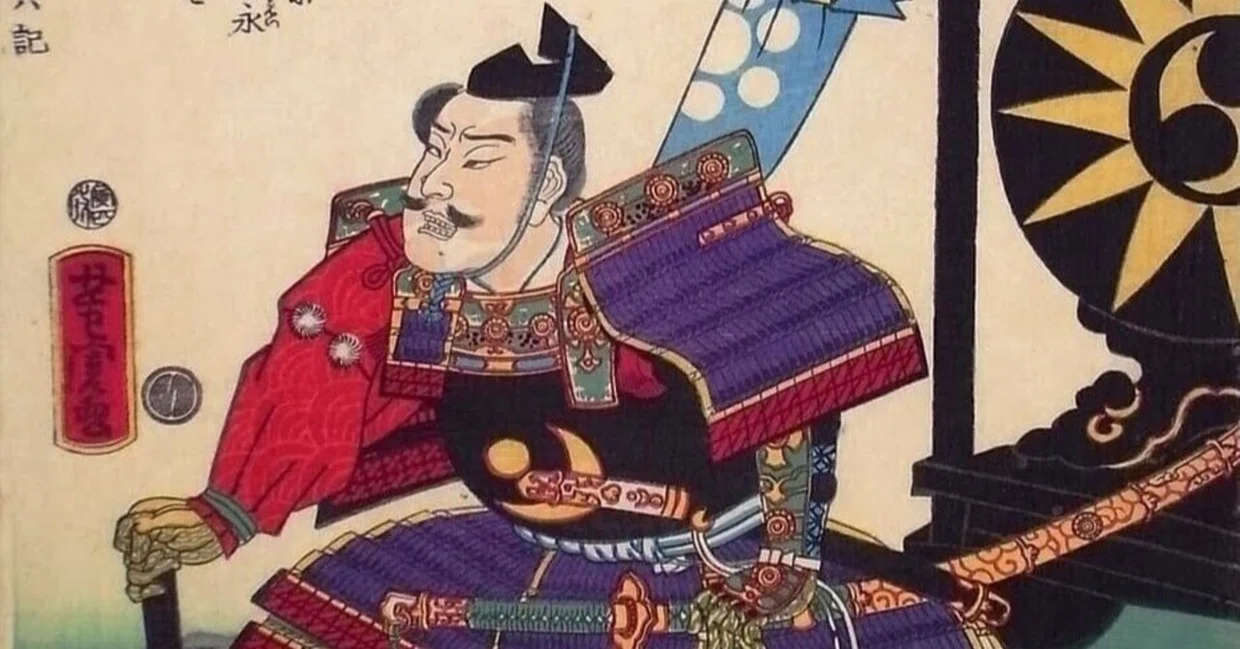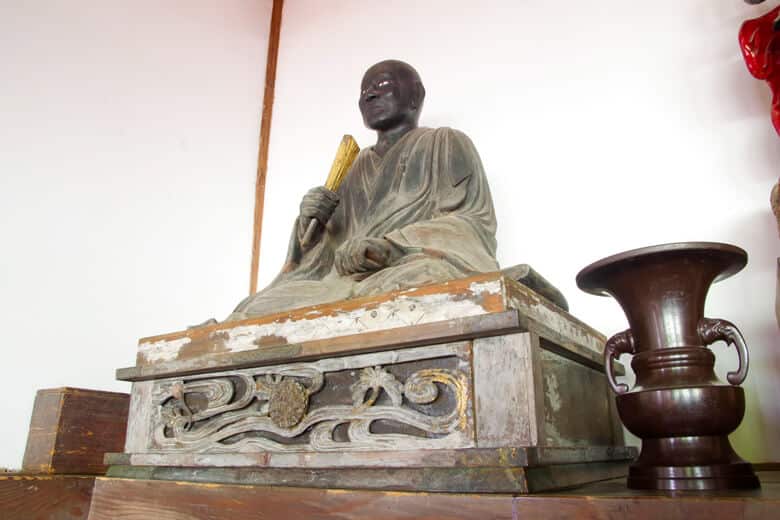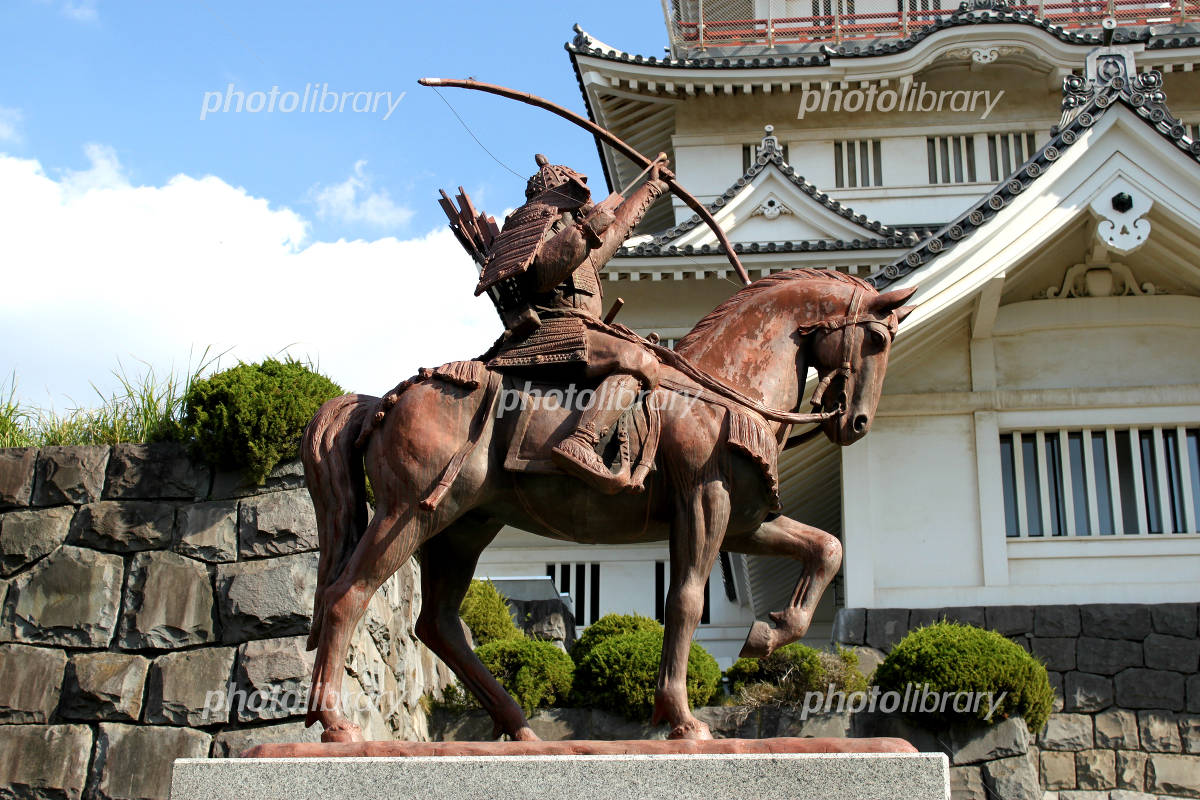
On August 5, 1192, in the administrative office of Kamakura, an elderly warrior made a request to Minamoto no Yoritomo.
He wanted Yoritomo’s personal seal on the document guaranteeing his land holdings.
This was Chiba Tsunetane, aged 75.
Tsunetane already had a document prepared by the administrative office. It was a document acknowledging the inheritance of lands passed down from his ancestors and those newly granted for his military achievements to his descendants.
However, it only bore the signatures of the office officials.
Previously, a document directly granted by Yoritomo had included his personal seal. Tsunetane requested the same for this occasion.
Yoritomo granted this request.
The “Azuma Kagami” records the contents of the document issued on this day. It noted that Tsunetane had been a loyal ally from the early days of Yoritomo’s uprising, surpassing other vassals in both battle and service.
Tsunetane first pledged allegiance to Yoritomo 12 years earlier, in 1180.
When Yoritomo, defeated at Ishibashiyama, fled to the Boso Peninsula, Tsunetane was already 63 years old.
Throughout his life, Tsunetane had repeatedly lost his lands.
The year after he inherited the family estate at 18, his father was captured by the provincial governor, losing the rights to Soma Mikuriya. Although he regained them by paying a large sum, they were confiscated again when the Heiji Rebellion saw Minamoto no Yoshitomo defeated. He also lost in conflicts with the Satake clan of Hitachi.
Then appeared Yoritomo, the son of Yoshitomo.
Tsunetane, leading his six sons, supported Yoritomo and even in his late 60s, went on campaigns to the western provinces. At 72, he led the Tokaido army in the Oshu War, expanding the Chiba clan’s territories to Mutsu and Kyushu.
The background to Tsunetane’s request for the seal at 75 was over half a century of land disputes.
The Taira Clan Rooted in Boso
Chiba Tsunetane was born on May 24, 1118, as the eldest son of Chiba Tsuneshige, a samurai of Shimousa Province.
His mother was the daughter of Taira no Masamoto.
The birth date and the names of his parents are recorded in the “Azuma Kagami” entry for March 24, 1201.
The Chiba clan descended from the Kanmu Taira lineage.
Their ancestor, Taira no Yoshifumi, is said to have been based in Muraoka, Sagami Province, later extending his influence to Soma District in Shimousa Province.
From his descendants emerged Taira no Tadamasa.
Tadamasa wielded significant power in Kazusa and Shimosa, and in 1028, he rebelled against the imperial court. This marked the beginning of the Rebellion of Taira no Tadamasa, sparked by incidents such as the murder of the governor of Awa Province.
The rebellion dragged on, but when Minamoto no Yorinobu was dispatched as the imperial commander to the eastern provinces, Tadamasa surrendered in 1031.
Tadamasa died while being escorted to Kyoto.
His descendants were spared punishment and gradually regained influence throughout the Boso Peninsula.
The Kazusa and Chiba clans also branched out from Tadamasa’s lineage.
Tsunehide’s grandfather, Tsunekane, was based near what is now Oji in Midori Ward, Chiba City, and was known as “Oji Gon-no-suke.”
Oji was located upstream of the Murata River, providing access to the provincial capital of Kazusa. It was also connected to Shimosa and the Pacific coast via inland routes.
Tsuneshige, Tsunehide’s son, is said to have moved their base to Chiba in 1126.
Tsunehide was nine years old at the time.
Chiba was close to Tokyo Bay, allowing for both land and sea transportation. The surrounding area was rich in farmland, with roads leading to the provincial capital of Shimosa.
Tsuneshige used this land as a new base to expand the clan’s influence.
However, the exact location of their residence at that time remains uncertain. While there are legends of the Chiba clan’s castle around Inohana Plateau in Chuo Ward, Chiba City, no remains have been definitively linked to the era of Tsuneshige or Tsunehide.
Soma Mikuriya Donated to Ise Shrine
The Soma Mikuriya was a land long contested by the Chiba clan.
It was an estate of Ise Shrine located in Soma District, Shimosa Province, spanning from present-day northwestern Chiba Prefecture to southern Ibaraki Prefecture.
Tsuneshige, Tsunehide’s father, became the adopted son of Taira no Tsuneharu, a prominent figure of the Kazusa clan, and inherited the rights to Soma District.
Tsuneharu was the grandfather of Kazusa Hirotsune, who later supported Yoritomo.
The Kazusa and Chiba clans had long-standing familial ties. However, their interests in Soma District did not always align.
In 1130, Tsuneshige donated the lands of Soma District to Ise Shrine.
Mikuriya were estates established to produce and procure offerings for Ise Shrine.
At the time, local warriors who developed land often found their control threatened by taxation from provincial governors or disputes with influential neighbors.
To protect their rights, these warriors would donate land to Kyoto nobles or major temples, relying on their authority for security.
Even after donating, the local warriors sometimes continued to manage the land by obtaining positions such as overseers.
Chiba Tsuneshige also attempted to safeguard the interests in Soma District by making it an estate of Ise Shrine.
However, the donation did not resolve the conflicts.
The Soma District was subject to taxation by the provincial government, and surrounding powerful warriors were also vying for its benefits.
Even as an estate of the shrine, disputes over local control persisted.
When Chiba Tsunetane inherited the family leadership, this issue would greatly shake the Chiba clan.
The Year After Inheriting Leadership at Eighteen
In the first year of Hogen (1135), Tsunetane inherited the family leadership from his father, Tsuneshige.
He was 18 years old by traditional Japanese counting.
He assumed control over the interests of Chiba Manor and Soma Mikuriya, leading the clan.
However, in the following year, Hogen 2, his father Tsuneshige was captured by Fujiwara no Chikamichi, the governor of Shimousa Province.
The reason given was the failure to deliver public taxes.
It was claimed that taxes due to the provincial government were in arrears.
Chikamichi demanded the payment of the overdue taxes and pressured for the transfer of rights to Soma Mikuriya and Tachibana Village.
Tachibana Village, later known as Tachibana Manor, was located around present-day Katori City and Tojo Town in Chiba Prefecture.
Under pressure from the provincial authorities, Tsuneshige was reportedly forced to draft documents ceding these rights.
This was a grave situation for Tsunetane, who had just taken over the family leadership.
His father was captured, and he was on the brink of losing lands inherited from his ancestors.
Moreover, it was not only the provincial governor who had eyes on Soma Mikuriya.
Minamoto no Yoshitomo also became involved in this conflict.
He would later become the father of Minamoto no Yoritomo.
At the time, Yoshitomo was expanding his influence in the eastern provinces, forging ties with warriors in Sagami and Boso.
Regarding Soma Mikuriya, it is said that he seized the document transferring rights from Tsuneshige.
This incident, where Kazusa Tsunezumi reportedly intervened on Yoshitomo’s behalf, is evident from Tsunetane’s later donation records.
Tsunezumi was the father of Kazusa Hirotsune.
Shortly after Tsunetane inherited the family estate, he became embroiled in a land dispute involving the provincial governor, influential members of the Minamoto clan, and the Kazusa clan, who were his relatives.
Yoshitomo Also Donates Land to Ise Shrine
Around 1143, Minamoto no Yoshitomo began to intervene in the rights to Soma Mikuriya, and by 1145, he had donated Soma Mikuriya to Ise Shrine.
Although Tsuneshige had supposedly already donated this land to the shrine, Yoshitomo now claimed the rights for himself and made the donation.
The existence of a donation document and the actual control of the land by the person in question were separate issues.
At Soma Mikuriya, Fujiwara no Chikamichi, Minamoto no Yoshitomo, and Chiba Tsunetane each claimed rights based on different grounds.
Tsunetane worked to compensate the provincial governor while also appealing to Ise Shrine.
An important historical document detailing this process is Tsunetane’s donation letter dated August 10, 1146.
This document records the ongoing dispute over Soma Mikuriya that had persisted since his father’s generation.
Tsunetane paid a significant amount of goods to settle unpaid taxes.
These included silk, clothing, gold dust, and horses.
The donation letter lists 30 rolls of high-quality silk, 70 rolls of lower-quality silk, 12 garments, and 32 ryo of gold dust.
He also prepared several horses.
For the young Tsunetane, this must have been a considerable burden.
Nevertheless, Tsunetane proceeded with the compensation, and by 1146, he was recognized as the district governor of Soma, granting him the right to manage district affairs.
In August of the same year, he once again donated Soma Mikuriya to Ise Shrine.
Through these compensations to the provincial government and donations to Ise Shrine, Tsunetane sought to restore his lost rights.
Following Yoshitomo, Who Seized His Lands
Tsunetane also formed a relationship with Minamoto no Yoshitomo, who had intervened in the Soma Mikuriya dispute.
Yoshitomo wielded significant military power in the eastern provinces and commanded the loyalty of many warriors.
Tsunetane could not ignore his relationship with Yoshitomo if he wanted to protect his interests in Soma Mikuriya.
By aligning with Yoshitomo, Tsunetane aimed to maintain his position as the administrator of Soma Mikuriya.
Thus, the very Yoshitomo who had once encroached upon his lands now became his supporter.
In 1156, the Hogen Rebellion erupted in Kyoto.
Minamoto no Yoshitomo sided with Emperor Go-Shirakawa and fought alongside Taira no Kiyomori and others.
According to the “Hogen Monogatari,” Chiba Tsunetane also joined the campaign under Yoshitomo’s command.
Tsunetane was 39 years old at the time.
However, details of Tsunetane’s specific actions during the Hogen Rebellion rely heavily on war tales.
Three years later, in 1159, the Heiji Rebellion broke out.
Yoshitomo, along with Fujiwara no Nobuyori and others, raised an army but was defeated by Kiyomori.
Attempting to flee to the eastern provinces, Yoshitomo was killed in Owari Province.
Minamoto no Yoritomo was also captured and exiled to Izu in the following year, 1160.
Yoshitomo’s defeat had repercussions for Tsunetane as well.
Because of his allegiance to Yoshitomo, the rights to Soma Mikuriya were confiscated by the provincial government.
Tsunetane lost the land he had tried to protect through substantial offerings and donations to Ise Shrine.
Defeated in the Conflict with the Satake Clan
After the Heiji Rebellion, a new power entered the struggle over Soma Mikuriya.
This was the Satake clan from Hitachi Province.
In 1161, Satake Yoshimune claimed rights to Soma Mikuriya and made donations to both the Inner and Outer Shrines of Ise.
Yoshimune, the son of Satake Masayoshi, was a warrior descended from the Seiwa Genji line.
The Satake clan held significant power, especially in northern Hitachi.
Yoshimune sought to secure his control over Soma Mikuriya through donations to the shrine.
Tsunetane also took action to counter this.
He leveraged his connections with the Minister of the Right, Fujiwara no Kinyoshi, to have his rights recognized by Ise Shrine.
However, in the ruling by the shrine authorities in the first year of Chokan (1163), Tsunetane’s claims were dismissed.
Tsunetane once again lost the dispute over the Soma Mikuriya.
It had been 28 years since Tsunetane had inherited the family estate.
He took over the family at the age of 18, only to have his father captured by the provincial governor.
Even after Minamoto no Yoshitomo demanded his lands, and he finally thought he had regained his rights, they were confiscated after the Heiji Rebellion.
And now, he lost the conflict with the Satake clan.
The litigation to protect the Soma Mikuriya occupied a significant part of Tsunetane’s middle years.
In the 4th year of Jisho (1180), when Minamoto no Yoritomo raised his army in Izu, Tsunetane was 63 years old.
The Sixth Son, Taneyori, Met Yoritomo
Tsunetane had six sons.
The eldest was Tanemasa, the second was Morotsune, the third was Tanemori, the fourth was Tanenobu, the fifth was Tanemichi, and the sixth was Taneyori.
The sixth son, Taneyori, was involved in palace security in Kyoto.
On June 27th of the 4th year of Jisho, Taneyori visited Yoritomo in Izu on his way back to Shimosa from Kyoto.
On the same day, Miura Yoshizumi also visited Yoritomo.
The two were returning to the eastern provinces after completing their duties in Kyoto.
However, due to the uprising by Prince Mochihito and Minamoto no Yorimasa, the situation in Kyoto was chaotic, delaying their return.
According to the ‘Azuma Kagami’, Yoritomo welcomed Taneyori and Yoshizumi, and they talked for a long time.
The content of their conversation was not heard by others.
Therefore, what they discussed remains unknown.
However, it indicates that the Chiba clan had contact with Yoritomo even before he raised his army.
Afterward, Taneyori returned to Shimosa.
On August 17th, Yoritomo attacked and raised his army against Kanetaka Yamaki, the deputy governor of Izu Province.
However, on the 23rd, at the Battle of Ishibashiyama, he was defeated by Oba Kagechika and others.
Yoritomo fled into the mountains with Doi Sanehira and others, and on the 28th, he crossed the sea heading to Awa Province.
Yoritomo’s forces had suffered significant losses.
To make a comeback, he needed the cooperation of powerful warriors from the Boso region.
One such warrior was Chiba Tsunetane.
Adachi Morinaga Visits the Chiba Residence
On September 4th, 1180, Yoritomo sent Adachi Morinaga to Chiba Tsunetane.
To Kazusa Hirotsune, he dispatched Wada Yoshimori.
On September 9th, Morinaga returned to Yoritomo and reported on his meeting with Tsunetane.
According to the ‘Azuma Kagami’, when Morinaga arrived at the Chiba residence, Tsunetane was already waiting in the guest room.
Beside him were his eldest son Tanemasa and his sixth son Taneyori.
When Morinaga conveyed Yoritomo’s words, Tsunetane remained silent for a while.
It is recorded that he appeared as if he were asleep.
At this point, Tanemasa and Taneyori spoke up.
Yoritomo has risen for the revival of the Minamoto clan. Since we are the first to be called upon, we should respond immediately.
It is said that they advised in this manner.
Hearing his sons’ words, Tsunetane expressed his intention to follow Yoritomo.
The ‘Azuma Kagami’ recounts that Tsunetane responded that being involved in the Minamoto revival was the utmost joy.
Furthermore, Tsunetane advised Yoritomo to move to Kamakura quickly.
Awa is not a land deeply connected to the Minamoto ancestors. If he moved to Kamakura, Tsunetane would lead his family and retainers to welcome him.
There are alternative accounts of this story.
According to the ‘Gikeiki,’ it is said that Tsunetane initially intended to consult with Kazusa Hirotsune, but his son Tanemasa immediately advised that they should support Yoritomo.
The details of the conversation differ in later military tales and the ‘Azuma Kagami.’
However, Tsunetane’s decision to support Yoritomo is evident from his subsequent actions.
Defeating the Deputy at Shimousa Province Headquarters
On September 13, Tsunetane launched an attack on the Taira faction’s deputy.
According to the ‘Azuma Kagami,’ if Tsunetane and his clan joined forces with Yoritomo, there was a risk of being attacked from behind by the deputy.
Thus, his sixth son, Taneyori, suggested that they should first defeat the deputy.
Tsunetane agreed and sent Taneyori and his grandson Naritane.
Naritane was the son of his eldest son, Tanemasa.
The two led their retainers to attack the deputy’s residence at the Shimousa Province headquarters.
The deputy gathered troops to defend.
The ‘Azuma Kagami’ notes that a strong north wind was blowing at the time.
Naritane had his retainers circle around to the rear of the residence and set it on fire.
As the fire spread, the deputy could no longer continue his defense.
It is said that Taneyori took the deputy’s head in the end.
The deputy was a figure who managed local affairs on behalf of the provincial governor.
By defeating the deputy, the Chiba clan took a decisive step in their conflict with the Taira faction.
Tsunetane did not merely promise support for Yoritomo in words.
Before Yoritomo advanced into Shimousa, they attacked the opposing forces behind them.
Capturing Fujiwara no Chikamasa at Yuki Beach
Upon learning of the deputy’s death, Fujiwara no Chikamasa from Chida Manor in Shimousa Province mobilized his troops.
Chikamasa was the son-in-law of Taira no Tadamori and had connections with Taira no Kiyomori.
Chida Manor corresponds to the area around present-day Tako Town in Katori District, Chiba Prefecture.
Chikamasa aimed to attack Tsunetane from this base as part of the Taira faction.
On September 14, the forces of the Chiba clan clashed with Chikamasa’s troops.
The battle is said to have occurred near Yuki Beach.
This area is identified with present-day Samukawa, Nobuto, and Soga in Chuo Ward, Chiba City.
According to the “Azuma Kagami,” Naritane, the grandson of Tsunetane, fought against Chikamasa and captured him alive.
In later accounts, such as the “Genpei Tōjōroku,” tales of the battles featuring the young warriors of the Chiba clan are vividly depicted.
However, it is possible that these narratives include later legends regarding the details of the battlefield and the actions of individual samurai.
The “Azuma Kagami” records that the Chiba clan defeated Chikamasa and presented him to Yoritomo.
On September 13, the Chiba clan defeated the deputy governor of Shimousa Province, and on the following day, they captured Chikamasa.
This not only secured the route for Yoritomo’s forces to advance northward but also suppressed the Taira-aligned forces within Shimousa.
For Tsunetane, it was also an opportunity to extend his influence around the Chida Manor.
The Day Yoritomo Said “Think of Him as a Father”
On September 17, Tsunetane met with Yoritomo at the Shimousa provincial government office.
According to the “Azuma Kagami,” he arrived with his six sons and his heir, Naritane, leading over three hundred horsemen.
Tsunetane first presented the captured Fujiwara no Chikamasa before Yoritomo.
He then offered gifts, including provisions.
Yoritomo invited Tsunetane to sit beside him.
He is said to have remarked:
“One should regard Shiba as a father.”
Shiba refers to Chiba no Suke Tsunetane.
At the time, Yoritomo was 34 years old, and Tsunetane was 63.
Tsunetane had also served Yoritomo’s father, Yoshitomo, making him a samurai of the older generation to Yoritomo.
Moreover, shortly after the defeat at Ishibashiyama, he had rallied his clan to support Yoritomo and defeated the Taira forces in Shimousa.
The “Azuma Kagami” conveys that Yoritomo held Tsunetane in particularly high regard.
At this meeting, Tsunetane introduced a young man to Yoritomo.
He was Mori Kanji Yoritaka.
Yoritaka was the son of Minamoto no Yoshitaka.
Yoshitaka is said to have followed Yoshitomo during the Heiji Rebellion and lost his life.
It is said that when Yoritaka was still an infant, he was sent to Shimousa due to his father’s involvement in the incident and was entrusted to Tsunetane.
Tsunetane brought Yoritaka to Yoritomo, requesting that he be allowed to serve him.
The “Azuma Kagami” notes that Yoritomo, recognizing Yoritaka as a young man of Minamoto lineage, treated him with great favor.
Tsunetane introduced not only his six sons and grandson but also a young Minamoto he had protected to Yoritomo.
Encouraging Kamakura as a Base
It is said that Tsunetane had been advising Yoritomo to move to Kamakura since the time he was in Awa.
Kamakura was a land with deep ties to the Minamoto clan.
Minamoto no Yoriyoshi is said to have enshrined the god of Hachiman at Tsurugaoka in Kamakura during the Former Nine Years War.
His son, Minamoto no Yoshiie, also had a deep connection with Tsurugaoka Hachimangu, and Yoritomo’s father, Minamoto no Yoshitomo, used Kamakura as one of his bases.
Chiba Tsunetane had served Yoshitomo and was likely familiar with the ties between the Minamoto clan and Kamakura.
Kamakura is surrounded by mountains on three sides and faces Sagami Bay to the south.
In Sagami and the Miura Peninsula, there were samurai who supported Yoritomo.
By entering Kamakura, Yoritomo could communicate with these samurai and advance military operations in the eastern provinces.
The story that Tsunetane recommended Kamakura suggests not only ancestral ties with the Minamoto but also military advantages.
On October 6, Yoritomo entered Kamakura.
However, the decision to choose Kamakura as a base cannot be attributed solely to Tsunetane’s advice.
Yoritomo’s own judgment and relationships with other samurai like the Miura clan must have played a role.
Nevertheless, the later chronicle ‘Azuma Kagami’ portrays Tsunetane as a key figure in Yoritomo’s entry into Kamakura.
After Fujikawa, Advising the Attack on the Satake Clan
In October of the fourth year of Jisho, Yoritomo faced the Taira army led by Taira no Koremori.
After the Taira forces retreated at the Battle of Fujikawa, Yoritomo intended to advance westward.
According to ‘Azuma Kagami’, those who opposed this plan included Chiba Tsunetane, Miura Yoshizumi, and Kazusa Hirotsune.
There were still samurai in the eastern provinces who had not submitted to Yoritomo.
Foremost among them was the Satake clan of Hitachi Province.
For Tsunetane, the Satake clan was also a rival over the Soma Mikuriya.
Satake Yoshimune had once claimed rights over the Soma Mikuriya and made offerings to the Ise Shrine.
Now, that family had become Yoritomo’s enemy.
Yoritomo halted his westward advance and decided to attack the Satake clan in Hitachi Province.
In November, Yoritomo’s forces attacked Kanesawa Castle, forcing Satake Hideyoshi to flee.
In this battle, Kazusa Hirotsune played a crucial role as a negotiator.
Tsunetane was also one of the influential samurai who encouraged Yoritomo to attack the Satake clan.
Tsunetane’s support for the campaign against the Satake clan was likely motivated by the desire for military stability in the eastern provinces, as well as longstanding territorial disputes.
Offering an Oban at Kamakura’s First New Year
On January 1, 1181, Yoritomo visited the Tsurugaoka Hachiman Shrine.
Afterwards, Chiba Tsunetane presented an oban to Yoritomo.
An oban is a ceremonial banquet where a lord is welcomed and served a meal.
The “Azuma Kagami” records that Tsunetane prepared a large carp and many people gathered for the occasion.
This was Yoritomo’s first New Year celebration since entering Kamakura.
The fact that Tsunetane was entrusted with the oban on this day suggests he was held in high regard by Yoritomo.
In Kamakura, Kazusa Hirotsune, Miura Yoshizumi, Wada Yoshimori, Hojo Tokimasa, and Doi Sanehira had gathered.
Each was a powerful samurai with their own territories and retainers.
Among these samurai, Tsunetane, due to his age and achievements since the uprising, came to be regarded as an elder statesman.
On the Day of Yoriie’s Birth, Six Sons Stand Together
On August 12, 1182, Hojo Masako gave birth to a son.
This child would become the second shogun of the Kamakura shogunate, Minamoto no Yoriie.
During Masako’s childbirth, rituals were performed to pray for a safe delivery.
Tsunetane’s wife is said to have been involved in the ceremonial wearing of the maternity belt.
Moreover, Tsunetane was tasked with the preparations for the celebration held on the seventh night after Yoriie’s birth.
The “Azuma Kagami” entry for August 18 details the events of that day.
Tsunetane and his six sons stood in white robes.
The eldest son, Tanemasa, and the second son, Morotsune, carried armor.
The third son, Tanemori, and the fourth son, Tanenobu, led horses with saddles.
The fifth son, Tanemichi, held a bow and arrows, while the sixth son, Taneyori, presented a sword.
Tsunetane’s wife served as an attendant, managing the meal service in the presence of the dignitaries.
The “Azuma Kagami” notes that the sight of the six sons in their splendid attire impressed Yoritomo.
That year, Tsunetane was 65 years old by the traditional Japanese count.
The six sons had already taken on their respective roles and were participating in important ceremonies related to Yoritomo’s family.
The cooperation with Yoritomo gradually tied the entire Chiba clan to the politics of Kamakura.
After the Death of Kazusa Hirotsune
In the winter of Juei 2 (1183), Kazusa Hirotsune was killed on Yoritomo’s orders.
Hirotsune belonged to the same Boso Taira clan as Tsunetane.
After Yoritomo’s defeat at Ishibashiyama, Hirotsune had been a loyal retainer who led the Kazusa forces to support him.
However, Hirotsune was suspected of treason and is said to have been killed by Kajiwara Kagetoki.
After Hirotsune’s death, part of the Kazusa clan’s lands was transferred to other vassals.
It is believed that the Chiba clan was among those who received these lands.
Records such as the ‘Chiba Genealogy’ state that Hirotsune’s lands were given to Tsunetane and Wada Yoshimori.
However, there are many unclear points regarding the timing and extent of the land transfers.
Both Tsunetane and Hirotsune held significant power in Boso and supported Yoritomo’s resurgence.
Yet, even after Hirotsune’s assassination, Tsunetane maintained Yoritomo’s trust.
The following year, he would head west to pursue the Taira clan, eventually advancing as far as Kyushu.
Yoritomo’s Words Admonishing Extravagant Attire
On November 21, Genryaku 1 (1184), the ‘Azuma Kagami’ records an incident where Yoritomo reprimanded a retainer’s attire.
The individual in question was Chikugo no Gon no Kami Toshikane.
Toshikane, who served Yoritomo as an administrative official, incurred Yoritomo’s wrath for wearing extravagant clothing.
Yoritomo ordered him to change his attire and admonished him to practice frugality.
The individuals cited as examples were Tsunetane and Doi Sanehira.
Both men possessed vast lands and supported their retainers, yet they did not favor extravagant attire and were dedicated to their service.
The ‘Azuma Kagami’ records that Yoritomo expressed these sentiments.
Tsunetane had six sons and numerous family members and retainers across various regions.
To maintain such a warrior band, it was necessary to allocate income from their lands to military service and the support of retainers.
The ‘Azuma Kagami’ portrays Tsunetane as a warrior who, while increasing his lands, used the income to bolster his family’s military strength.
Setting Out for the West at Sixty-Seven
In 1184, Minamoto no Yoritomo dispatched an army led by his brother, Minamoto no Noriyori, to the western provinces.
Chiba Tsunetane also joined this army.
He was counted as 67 years old at the time.
Noriyori’s forces included many warriors from the eastern provinces, including members of the Chiba clan.
The army advanced westward through the Chugoku region, pursuing the Taira clan with the aim of crossing over to Kyushu.
However, the expedition did not proceed smoothly.
As they moved further from the eastern provinces, communication with their homeland became difficult, and securing provisions and ships proved challenging.
The Taira clan’s forces still held power in various locations.
In January 1185, Noriyori reported his dire situation to Yoritomo.
Provisions were running low, and some soldiers were even considering returning home.
The “Azuma Kagami” entry for January 6 records the contents of Yoritomo’s reply to Noriyori.
In it, Yoritomo instructed Noriyori to treat Tsunetane with particular care.
Tsunetane was a figure of great merit on the battlefield, and Yoritomo emphasized the importance of valuing his contributions.
In March of the same year, Yoritomo once again praised Tsunetane’s efforts.
Despite his advanced age, Tsunetane endured the hardships of the battlefield and distinguished himself among the other warriors.
The message was clear: his achievements could not be forgotten.
Tsunetane was counted as 68 years old that year.
He continued to participate in the long campaign, remaining active despite the army’s struggles with food shortages.
Yoritomo repeatedly instructed Noriyori in the west to give Tsunetane special consideration.
Lands Acquired in Kyushu After the Fall of the Taira
On March 24, 1185, the Taira clan met its end at the Battle of Dan-no-ura.
However, Tsunetane’s work did not end there.
In the western provinces once controlled by the Taira, the question of who would manage the various lands remained.
Yoritomo granted new lands and positions as land stewards to his loyal retainers, consolidating control over the west.
Tsunetane also gained interests in various parts of Kyushu.
These included Ogori District in Hizen Province, Narihisashi in Kamige District of Buzen Province, five districts within Shimazu Sho of Satsuma Province, and Iriyama Village in Hishikari District of Osumi Province.
Ogori District in Hizen Province corresponds to the area around present-day Ogi City in Saga Prefecture.
Narihisashi in Kamige District of Buzen Province was located near present-day Koge Town in Chikujo District, Fukuoka Prefecture.
The lands within Shimazu Sho of Satsuma Province spanned the area around present-day Satsumasendai City in Kagoshima Prefecture.
The Chiba clan, based in Shimosa, came to hold estates in Kyushu as well.
However, Tsunetane himself did not travel to and live in all these lands.
In distant estates, management was sometimes conducted through family members or deputies.
These remote estates later became the foundation for the Chiba clan’s descendants to establish power in Kyushu.
The Ogi District in Hizen Province was particularly significant.
More than 70 years after Tsunetane’s death, in the 11th year of Bun’ei (1274), during the Mongol invasions, the head of the Chiba clan, Yoritane, fought in Kyushu.
Yoritane died from wounds sustained in battle, and his son, Munetane, headed to Kyushu.
Munetane remained in Kyushu, while in Shimosa, his brother Tanemune succeeded the family headship.
The division of the Chiba clan between Shimosa and Hizen was rooted in the Kyushu estates acquired during Tsunetane’s era.
Entrusted with Maintaining Order in Kyoto
In the 3rd year of Bunji (1187), Kyoto was troubled by bandit activities and unruly warriors.
Yoritomo ordered Tsunetane and Shimokobe Yukihira to go to the capital.
Their mission was to restore order in Kyoto.
Tsunetane was then 70 years old.
According to the “Azuma Kagami,” after Tsunetane and his companions arrived in Kyoto, the situation calmed down.
It is said that officials from the imperial court reported that the capital became peaceful after their arrival.
Tsunetane had previously been involved in territorial disputes with provincial governors and powerful warriors in Shimosa.
Now, he was entrusted with maintaining order in Kyoto.
Kyoto was home to the imperial court, nobles, many temples, and estate lords.
Controlling the unruly warriors there was crucial for Yoritomo’s relationship with the imperial court.
Even at 70, Tsunetane was given important responsibilities by Yoritomo.
The White Flag Made for the Battle of Oshu
In the 5th year of Bunji (1189), Yoritomo prepared to attack the Oshu Fujiwara clan.
The Oshu Fujiwara clan had established significant power in Mutsu and Dewa, centered around Hiraizumi.
Yoritomo decided to pursue Fujiwara no Yasuhira, citing reasons such as harboring Minamoto no Yoshitsune.
On June 24, Yoritomo ordered Chiba Tsunetane to prepare the clan’s flag.
According to the “Azuma Kagami,” the flag was to be modeled after one used by Minamoto no Yoriyoshi during the Former Nine Years War.
On July 8, Tsunetane presented the completed flag to Yoritomo.
The flag measured one jō and two shaku in length, and was two widths wide.
This would be approximately 3.6 meters in today’s measurements.
It was adorned with white thread embroidery, and the names of Ise Grand Shrine and Hachiman Daibosatsu were inscribed at the top.
Below that, it is said that two doves facing each other were also embroidered.
The “Azuma Kagami” records the reason why Yoritomo entrusted Tsunetane with the preparation of the banner.
In the 4th year of Jisho, after Tsunetane led his clan to join Yoritomo, many warriors began to gather under Yoritomo’s command.
Valuing this auspicious event, Yoritomo again had Tsunetane make the banner.
Tsunetane played a crucial role when Yoritomo was reestablishing himself in the eastern provinces and was given special treatment in the preparations for the Oshu Campaign.
Becoming the Commander of the Tokaido Army at Seventy-Two
In July of the 5th year of Bunji, Yoritomo divided his forces into three to attack the Fujiwara clan of Oshu.
The main army led by Yoritomo himself crossed Shirakawa Barrier and advanced north.
Another force was organized to head towards Dewa from the Hokuriku region.
Appointed as the commanders of the Tokaido army, which advanced north along the Pacific coast, were Chiba Tsunetane and Hatta Tomoie.
Tsunetane was seventy-two years old.
He was entrusted with leading an army at this age.
The Tokaido army was to proceed from Hitachi Province, crossing the Nakoso Barrier, and advance along the Pacific coast of Mutsu Province.
Tsunetane’s clan also participated in the expedition.
His six sons each held estates, and his grandsons Naritane and Tsunehide were also active.
The Chiba clan had become a family capable of mobilizing warriors across multiple generations.
In the Oshu Campaign, Yoritomo’s main army defeated the Fujiwara forces of Oshu at Atsukashiyama.
The Tokaido army also moved north, joining the main army near Tagajo and advancing towards Hiraizumi.
Fujiwara no Yasuhira abandoned Hiraizumi and fled, but was killed by his retainers, leading to the downfall of the Fujiwara clan of Oshu.
Tsunetane participated in the expedition as the commander of the Tokaido army and was greatly rewarded after the war.
Receiving the First Rewards from the Oshu Campaign
On September 20th of the 5th year of Bunji, the “Azuma Kagami” records the distribution of rewards for the Oshu Campaign.
Tsunetane was the first to receive rewards.
It was a promise made beforehand.
Yoritomo valued Tsunetane’s contributions since the beginning of his uprising.
After the Oshu Campaign, the Chiba clan came to possess extensive estates in Mutsu Province.
Later genealogies and local histories record that the Chiba clan’s influence extended to districts such as Namekata, Uda, Igu, and Watari.
However, it cannot be confirmed that all these estates were granted at once in 1189.
It is thought that later inheritances and land transfers were also involved.
The line of Tsunetane’s second son, Morotsune, inherited the Soma Mikuriya in Shimousa and eventually gained influence in the Namekata and Uda districts of Mutsu.
This lineage would later connect to the Soma clan of Oshu.
The line of his third son, Tanemori, also expanded into the Watari and Igu districts of Mutsu Province.
The Chiba clan’s estates spread from Shimousa to the distant Oshu.
In his youth, Tsunetane spent many years defending the interests of the Soma Mikuriya.
After the Oshu War, his sons came to hold lands in various parts of Mutsu.
The Six Sons Who Inherited the Chiba Clan
Tsunetane’s six sons each inherited their own domains and developed their own households.
The eldest son, Tanemasa, became the head of the Chiba clan, inheriting the main base of Chiba Sho and other territories.
He also held interests in Chida Sho and Ogigun in Hizen Province.
The second son, Morotsune, established his power centered around the Soma Mikuriya, becoming the founder of the Soma clan.
The Soma Mikuriya was land that Tsunetane had repeatedly sought to reclaim rights to since his youth.
The third son, Tanemori, made Takeishi-go his base and took the name Takeishi.
Takeishi-go corresponds to the area around present-day Hanamigawa Ward in Chiba City.
His lineage later extended its influence to Watari-gun and Igu-gun in Mutsu Province.
The fourth son, Tanenobu, held Osuga-ho in Shimousa Province, becoming the founder of the Osuga clan.
Osuga-ho is located around present-day Narita City in Chiba Prefecture.
His lineage also gained interests in places like Kojima Sho in Mutsu Province.
The fifth son, Tanemichi, made Kokubu-go his base and took the name Kokubu.
Kokubu-go corresponds to the area around present-day Ichikawa City, and he also held lands in places like Oto Sho in Katori-gun.
The sixth son, Taneyori, made To Sho his base and took the name To.
To Sho corresponds to the area around present-day Tonosho Town and Katori City in Chiba Prefecture.
The To lineage later spread to other areas, including Shimousa and Mino.
The lineages of these six sons later came to be known as the “Six Chiba Branches.”
It should be noted that the Azuma Kagami records the third son as Tanenari and the fifth son as Tanemichi. These differ from the names Tanemori and Tanemichi used in later genealogies and regional histories, so caution is needed when reading historical sources.
The sons were active across various regions even during Tsunetane’s lifetime, each holding their own domains.
The clan did not split into six branches only after Tsunetane’s death.
In the warrior society of the time, it was common for parents to divide their domains among multiple children.
In the Chiba clan, the brothers each inherited domains while maintaining a relationship centered around the head of the clan, the Chiba-no-suke.
Assigned to the Rear Guard During Yoritomo’s Journey to Kyoto
In the first year of Kenkyu (1190), Yoritomo set out for Kyoto.
It had been five years since the Taira clan was destroyed and one year since the end of the conflict with the Oshu Fujiwara clan.
Many vassals participated in Yoritomo’s journey to Kyoto.
Hatakeyama Shigetada was appointed to lead the vanguard of the procession.
As for the rear guard, it is said that Hatta Tomoie recommended Tsunetane.
Tsunetane was considered a senior elder, suitable for the responsibility of the rear guard.
Yoritomo summoned Tsunetane and ordered him to accompany the procession with his sixth son, Taneyori.
Tsunetane was 73 years old at the time.
Serving as the vanguard or rear guard in the procession to Kyoto was an honorable role for a vassal.
The fact that Yoritomo entrusted the rear guard to Tsunetane speaks to his high status.
At Seventy-Five, Seeking Yoritomo’s Signature
In July of 1192, Yoritomo was appointed as the shogun.
On August 5th of the following month, documents confirming land holdings were to be issued at the Kamakura government office.
The first person to receive such a document was Chiba Tsunetane.
However, Tsunetane expressed dissatisfaction with the prepared document from the government office.
Previously, documents directly given by Yoritomo bore his personal signature.
But once the government office was established, documents signed by officials became the norm.
This time, the document also lacked Yoritomo’s signature.
Tsunetane requested Yoritomo’s personal signature to ensure the lands could be passed down to his descendants.
Yoritomo agreed to this request.
The “Azuma Kagami” records the contents of the document from that day.
It noted Tsunetane’s cooperation with Yoritomo from the start of the uprising in 1180.
His achievements in battle and loyalty surpassed those of other retainers.
Furthermore, it confirmed his rights to ancestral lands and newly granted steward positions across various regions for his descendants.
Tsunetane was seventy-five years old that year.
At eighteen, he inherited the family estate, and the following year, his father was captured by a provincial governor.
He lost the rights to Soma Mikuriya and had to pay a large sum to reclaim them.
However, after Yoshitomo’s defeat, he lost them again and was defeated in a conflict with the Satake clan.
Later, he joined Yoritomo in campaigns against the Taira and in the Oshu War, recovering lost lands and acquiring new ones.
Tsunetane was determined to pass on the lands he had protected to his sons and grandsons.
His request for Yoritomo’s personal signature instead of the officials’ reflects his extensive experience.
Joining the Impeachment of Kajiwara Kagetoki at Eighty-Two
In January 1199, Minamoto no Yoritomo passed away.
His heir, Yoriie, succeeded him, but tensions among the retainers in Kamakura intensified.
In October of the same year, Kajiwara Kagetoki, a close aide of Yoritomo, was impeached.
According to the “Azuma Kagami,” sixty-six retainers signed a petition demanding Kagetoki’s expulsion.
On October 28th, the retainers gathered in the corridor of Tsurugaoka Hachimangu Shrine.
The document was drafted by Nakahara no Nakanari.
Nakanari read the document aloud, and the vassals signed it.
The first name among the signatories was Chiba Tsunetane.
Following him were Miura Yoshizumi, Chiba Tanemasa, Miura Yoshimura, Hatakeyama Shigetada, and Oyama Tomomasa.
Tsunetane was 82 years old by this time.
Kagetoki was a trusted figure of Yoritomo, tasked with overseeing the actions of the vassals.
Both Tsunetane and Kagetoki had long been active under Yoritomo.
However, after Yoritomo’s death, Tsunetane joined in the impeachment of Kagetoki.
There are no detailed records explaining why Tsunetane signed the document.
Amid growing dissatisfaction with Kagetoki among the vassals, Tsunetane also sided with those seeking his expulsion.
Kagetoki was banished from Kamakura and was killed along with his family in Suruga Province in January of the following year, Shoji 2 (1200).
After Yoritomo’s death, the political landscape in Kamakura changed rapidly.
Even at over 80 years old, Tsunetane was involved in these changes.
Passed Away in Kenin 1 at Age 84
On March 24, Kenin 1 (1201), Chiba Tsunetane passed away.
He was 84 years old.
The Azuma Kagami records his birth on May 24, Gen’ei 1, along with the names of his parents.
Tsunetane inherited the family estate in Hogen 1 (1135) at the age of 18.
The following year, his father was captured by the provincial governor, and the rights to Soma Mikuriya were taken away.
In Kyuan 2 (1146), he paid a large sum to regain his position as Soma district governor, but lost his lands again when the Heiji Rebellion saw Yoshitomo defeated.
In Oho 1 (1161), a dispute arose with the Satake clan, and in the ruling of Chokan 1 (1163), Tsunetane’s claims were dismissed.
In Jisho 4 (1180), at the age of 63, he pledged allegiance to Yoritomo.
Afterwards, he participated in expeditions to the western provinces and Oshu, and was involved in maintaining order in Kyoto.
After Yoritomo’s death, he joined in the impeachment of Kajiwara Kagetoki, ushering in the era of the second shogun, Yoriie.
After Tsunetane’s death, the headship of the Chiba clan was inherited by his eldest son, Tanemasa.
The lineages of his six sons each held estates in Shimosa, Mutsu, Kyushu, and other regions, developing warrior bands across the land.
The Soma Mikuriya, inherited by his second son Morotsune’s lineage, was the land over which Tsunetane had once contested with provincial governors and Minamoto no Yoshitomo and the Satake clan.
On August 5, 1192, a document bearing Yoritomo’s seal, requested by Tsunetane, stated that there should be no discrepancies regarding the ancestral lands and the newly granted position of jitō, even for future generations.