February 7, 1184.
In Ichinotani, Settsu Province, the Taira forces suffered a defeat at the hands of the Minamoto.
On this day, there was a man who lost three sons.
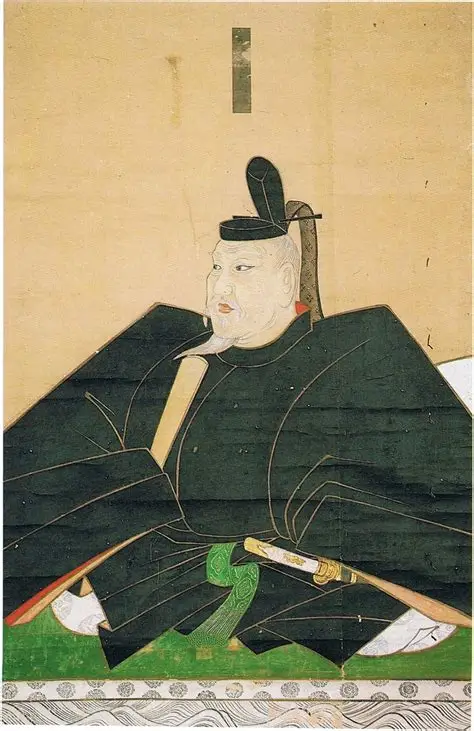
Taira no Tsunemori.
He was the brother of Taira no Kiyomori and served as a councilor and Master of Repairs at the imperial court.
His eldest son, Tsunemasa, was known as a master of the biwa, while his second son, Tsunetoshi, served as the governor of Wakasa. His youngest son, Atsumori, was a young warrior of seventeen who was slain by Kumagai Naozane.
None of the three returned from Ichinotani.
Tsunemori himself survived and retreated to Yashima with the Taira clan.
More than a year passed.
March 24, 1185, Dan-no-ura.
As the Taira defeat became inevitable, Tsunemori, taking his brother Norimori by the hand, leapt into the sea, as recounted in “The Tale of the Heike.”
Tsunemori had once been fond of waka poetry, hosting poetry contests himself, and lived for a long time at the court.
After the fall of the capital, he is said to have composed poems in Kyushu, gazing at the moon and longing for those he left behind in Kyoto.
Less than half a year after that autumn, his sons perished at Ichinotani.
Born as the Son of Taira no Tadamori
Taira no Tsunemori is believed to have been born in 1124.
His father was Taira no Tadamori. His mother is said to have been the daughter of Minamoto no Nobumasa, making him a half-brother to Kiyomori.
Tadamori served under Emperor Shirakawa and Emperor Toba, handling military and security duties while rising in rank at the court.
He expanded the influence of the Ise Taira clan, eventually passing the leadership to Kiyomori.
Besides Kiyomori, Tadamori had sons named Iemori, Tsunemori, Norimori, Yorimori, and Tadanori.
They too secured positions at the court, supporting the Taira clan centered around Kiyomori.
Tsunemori was appointed to the lower fifth rank during the Kyuan era (1145–1151).
He continued to hold various offices, actively participating in court life for many years.
His father, Tadamori, had a fondness for waka poetry and music, and was associated with the poetic circles of Emperor Sutoku.
Tsunemori also developed a love for waka, eventually organizing poetry contests himself.
Career as Master of Repairs
In the first year of Hogen (1156), the Hogen Rebellion erupted due to the conflict between Emperor Sutoku and Emperor Go-Shirakawa.
Taira no Kiyomori sided with Emperor Go-Shirakawa and achieved victory along with Minamoto no Yoshitomo and others.
In the subsequent Heiji Rebellion of the first year of Heiji (1159), Kiyomori defeated Minamoto no Yoshitomo.
After these two conflicts, Kiyomori strengthened his power and rose to the position of Grand Minister of State in the second year of Nin’an (1167).
Taira no Tsunemori also advanced within the Taira clan.
However, there are few detailed records of Tsunemori’s individual achievements in the Hogen and Heiji Rebellions.
Tsunemori advanced to the ranks of Junior Third Rank and Senior Third Rank, serving as the Grand Steward of the Empress Dowager’s Household and the Chief of Repairs.
The Chief of Repairs was the head of the office responsible for the repair and construction of court buildings.
In “The Tale of the Heike,” Tsunemori is often referred to as “Chief of Repairs.”
In the first year of Yowa (1181), he was appointed as a councilor, joining the ranks of the court nobility.
In the same year, during the intercalary second month, Kiyomori passed away.
After Kiyomori’s death, the leadership of the Taira clan shifted to Munemori.
Tsunemori, along with his younger brother Norimori, supported Munemori as senior members of the clan.
By this time, his eldest son Tsunemasa and second son Tsunetoshi had also grown up and held positions at court.
His youngest son Atsumori was growing up as a young man fond of the flute.
In Tsunemori’s household, both father and sons were fond of waka poetry and court music.
The Taira Nobles Who Hosted Poetry Contests
Tsunemori was known within the Taira clan as an enthusiastic devotee of waka poetry.
In the Heian period court, waka poetry was deeply intertwined with the interactions and ceremonies of the nobles.
At poetry gatherings, participants not only presented their works but also competed in poetry contests, where the quality of poems was judged between two sides.
Taira no Tsunemori hosted poetry gatherings himself and interacted with contemporary poets like Fujiwara no Shunzei.
Within the Taira clan, his brother Taira no Tadanori was also known as a poet and had a close relationship with Fujiwara no Shunzei.
Tsunemori, too, left his mark in the imperial anthologies of waka poetry.
The fact that his eldest son, Taira no Tsunemasa, served Prince Shukaku of Ninna-ji Temple and learned the biwa, and his youngest son, Taira no Atsumori, was fond of the flute, indicates that music was cherished in Tsunemori’s household.
Particularly intriguing is the story behind Tsunemori’s own poetry and the anonymity surrounding his name.
A Poem Left Anonymously in the “Senjū Waka-shū”
A waka attributed to Tsunemori is included in the “Senjū Waka-shū,” Volume Eleven, “Love Poems I.”
Poem number 668.
“What should I do? On Mikaki-ga-hara, I pick wild parsley,
Only the sound of my crying echoes, but no one knows my pain.”
What should I do?
My feelings do not reach the one I long for, and though I continue to weep, there is no one who understands my suffering.
The expression “picking wild parsley” alludes to an old poetic story of unfulfilled love and suffering.
The poem plays on the words “root” of parsley and the “sound” of crying, expressing a love that cannot be conveyed.
However, in the “Senjū Waka-shū,” the author of this poem is listed as “anonymous.”
Tsunemori’s name was not recorded.
On the other hand, the “Jishō Sanjūrokkasen Uta-awase,” compiled in the late Heian period, includes the same poem attributed to Tsunemori.
However, the second line differs, reading “Miyagi-no-hara,” unlike the “Senjū Waka-shū.”
Despite the variations, the poem’s attribution to Tsunemori is confirmed by this anthology.
The “Senjū Waka-shū” was an imperial anthology compiled by Fujiwara no Shunzei under the order of Emperor Go-Shirakawa.
Tsunemori’s brother, Taira no Tadanori, also had his poems included anonymously.
Regarding Tadanori, there is a tale in the “Heike Monogatari” that he entrusted his poems to Shunzei when fleeing the capital.
The reasons why Tsunemori’s poem was marked “anonymous” remain unclear.
Nevertheless, Tsunemori’s activities as a poet and his surviving works can be traced through the imperial anthologies and poetry gatherings.
Taira no Tsunemasa: The Master of the Biwa
Tsunemori’s eldest son is Taira no Tsunemasa.
Like his father, Tsunemasa had a passion for waka and music, and he was particularly renowned for his skill with the biwa.
He served Prince Shukaku of Ninna-ji Temple and was known for studying court music.
In July of Juei 2 (1183), when the Taira clan decided to flee the capital, Tsunemasa visited Ninna-ji Temple.
He went to return the famous biwa “Seizan,” which he had been entrusted with by Prince Shukaku.
This scene is depicted in “The Tale of the Heike,” Volume Seven, “Tsunemasa’s Departure from the Capital” and “The Matter of Seizan.”
Tsunemasa believed that once he headed to the western provinces, he might never return to Kyoto.
Bringing a biwa to the battlefield risks losing it.
Thus, it is said that he returned it to Prince Shukaku and bid farewell.
There are also accounts that he played the biwa on the spot.
There is no record of Tsunemasa himself being present at this farewell.
However, the fact that Tsunemasa had built a relationship with the Prince of Ninna-ji and was familiar with court music is linked to his father Tsunemori, who was known as a poet.
The Flute “Saeda” Passed Down to Atsumori
Tsunemori’s youngest son, Atsumori, was also a young man who loved music.
In “The Tale of the Heike,” Volume Nine, “The Death of Atsumori,” it is recorded that when Atsumori was killed at Ichinotani, he had a flute tucked in his waist.
Its name was “Saeda.”
This flute had a history dating back to the time of his grandfather, Tadamori.
According to “The Tale of the Heike,” Tadamori was a master of the flute and received this flute from Emperor Toba.
It was then passed down to his son Tsunemori.
It is said that Atsumori, who excelled at playing the flute, eventually came to possess it.
From Tadamori to Tsunemori, and from Tsunemori to Atsumori.
It was a renowned flute passed down through three generations.
In later times, it was also known as “Aoba,” but in the Kakuichibon version of “The Tale of the Heike,” it is referred to as “Saeda.”
It is difficult to verify from contemporary records that this flute was indeed passed down through three generations.
However, after Atsumori was killed at Ichinotani, this flute appears in “The Tale of the Heike” as an item that conveyed the identity of the young warrior.
Atsumori carried the flute, said to have been handed down from Tsunemori, to the battlefield.
The Fall of the Capital—Father and Son Leave Kyoto
In May of the second year of Juei, Taira no Koremori and others led a punitive force that was defeated by Minamoto no Yoshinaka at Kurikara Pass in the Hokuriku region.
In the subsequent Battle of Shinohara, the Taira forces were again defeated, and Yoshinaka’s troops advanced towards Kyoto.
In July, when Emperor Go-Shirakawa fled Kyoto, Munemori decided to take Emperor Antoku and the Imperial Regalia and head west.
Tsunemori also left Kyoto with his family.
It was Kyoto where his father Tadamori had established his position at court and his brother Kiyomori had seized power.
Tsunemori himself had long held official positions, participated in poetry gatherings and musical performances, and raised his sons.
His eldest son, Yoshitada, returned the biwa to Ninna-ji.
It is said that his youngest son, Atsumori, also carried his flute as he left the capital.
The family traveled through Fukuhara and headed towards Kyushu.
However, the local samurai did not all align with the Taira, making a resurgence in Kyushu increasingly difficult.
During this time, a poem composed by Tsunemori is preserved in the ‘Tale of the Heike.’
The Night of September 13th—Longing for the Capital at Dazaifu
September 13th, 1183.
The Taira clan was in Kyushu.
In the eighth volume of the ‘Tale of the Heike,’ titled “The Necklace,” there is a scene where Tsunemori and others gaze at the moon, reminiscing about Kyoto.
The night of September 13th has long been cherished as a night of the beautiful moon.
When they were in Kyoto, the Taira clan would often gaze at the moon and compose poems.
But now, they had been driven from the capital, retreating as far as Kyushu.
According to the ‘Tale of the Heike,’ on this night, Tadanori was the first to compose a poem.
“The friends with whom I gazed at the moon on this night last year,
Are they thinking of me in the capital?”
He wondered if those who had shared the moonlit night with him the previous year were now remembering him in the capital.
Tsunemori followed with his own poem.
“Longing so deeply, on this night last year,
I recall the person with whom I spent the entire night talking.”
He was overwhelmed with longing for the person with whom he had shared the night last year.
The name of the person Tsunemori remembered is not recorded.
It is a poem lamenting the separation from someone left behind in the capital.
Furthermore, his eldest son, Tsunemasa, also composed a poem.
“Without vanishing like the dew on the fields,
I find myself gazing at the moon in an unexpected land.”
It was an anecdote of Tsunemori and Tsunemasa composing poems under the same moon.
Less than two months had passed since their flight from the capital.
Neither Tsunemori nor Tsunemasa knew how far west they would have to wander.
As their prospects in Kyushu dimmed, the Taira moved towards Yashima in Sanuki Province.
Counterattack in the West and Advancement to Fukuhara
The Taira used Yashima as a base to regain their strength.
In the intercalary month of October 1183, they defeated the forces of Minamoto no Yoshinaka at Mizushima in Bitchu Province.
In November, they also triumphed over the forces of Minamoto no Yukie at Mount Muro in Harima Province.
The Taira advanced to Fukuhara in Settsu Province, returning to the land where Kiyomori had once sought to establish the capital.
Meanwhile, in Kyoto, Minamoto no Yoshinaka clashed with Emperor Go-Shirakawa, attacking Hoshoji.
Soon, the forces of Minamoto no Noriyori and Yoshitsune entered Kyoto and defeated Yoshinaka.
The Minamoto forces then turned their attention to pursuing the Taira.
In February 1184, the Taira established their positions from Ikuta Forest to Ichinotani, preparing to face the Minamoto forces.
Tsunemori’s sons also joined the forces.
His eldest son, Tsunemasa, served as an imperial chamberlain and was renowned as a master of the biwa, a traditional Japanese lute.
The second son, Tsunetoshi, held the position of governor of Wakasa.
The youngest, Atsumori, was still a teenager.
On February 7th, the Genji forces launched an attack on the Heike’s camp.
Ichinotani: The Deaths of Tsunemasa and Tsunetoshi
February 7th, 1184.
The forces of Minamoto no Noriyori and Minamoto no Yoshitsune attacked the Heike army, which was positioned from Ikuta Forest to Ichinotani.
Despite the Heike’s defensive efforts across various locations, their lines broke under the Genji assault.
Many noblemen were killed, and the Heike suffered significant losses.
Among them was Tsunemori’s eldest son, Tsunemasa.
Tsunemasa was the one who returned the famous biwa “Seizan” to Ninna-ji Temple just before the fall of the capital.
At court, he served under Prince Shukaku of Ninna-ji, engaging in biwa playing and poetry.
Even Tsunemasa, who fought armed against the Genji at Ichinotani, lost his life.
The “Azuma Kagami” records that Tsunemasa’s death was reported as a military achievement by Yasuda Yoshisada.
On the other hand, “The Tale of the Heike” offers a different account of Tsunemasa’s death, making it difficult to determine who exactly took his head.
Furthermore, the second son, Tsunetoshi, also perished in battle.
Tsunetoshi served as the governor of Wakasa, but fewer stories about him survive compared to his brothers Tsunemasa and Atsumori.
“The Tale of the Heike” and other sources note that Tsunetoshi was also killed at Ichinotani.
Tsunemori lost two sons in the battle on the same day.
And, his youngest son, Atsumori, would also meet his end at Ichinotani.
Atsumori’s Final Moments and His Father’s Flute
As the Heike forces retreated, Atsumori headed towards the shore.
Heike warships were offshore.
Atsumori rode his horse into the sea, trying to reach the ships, but was called back by a Genji warrior from behind.
It was Kumagai Jiro Naozane.
According to “The Tale of the Heike,” Atsumori turned back and fought with Naozane, who eventually overpowered him.
When Naozane lifted Atsumori’s helmet, he saw a youth of the same age as his own son.
Naozane wanted to spare him, but his comrades were closing in from behind.
In the end, he took Atsumori’s head.
Atsumori is said to have been seventeen years old.
When Naozane examined Atsumori’s belongings, he found a flute in a brocade bag.
It was “Koeda.”
That morning, the sound of court music had been heard from the Heike camp.
Naozane recalled this and lamented the young man’s fate, who had brought a flute to the battlefield.
When the flute was delivered to Minamoto no Yoshitsune, those around him were moved to tears, as “The Tale of the Heike” recounts.
Later, the name of the young man who was killed became known.
Taira no Tsunemori’s son, Atsumori.
The famous flute passed down from Tadamori to Tsunemori, and then to Atsumori, was left behind in the scene recounting the young seventeen-year-old’s final moments.
Tsunemori’s Loss of Three Sons
During the Battle of Ichinotani, Tsunemori lost three of his sons.
Tsunemasa, Tsunetoshi, and Atsumori.
His eldest son, Tsunemasa, studied the biwa at Ninna-ji Temple, while his youngest, Atsumori, had a fondness for the flute.
Tsunetoshi also held a court position as the governor of Wakasa Province.
While living in Kyoto, the sons were courtiers frequently visiting the palace.
However, after the fall of the capital, they fought as Taira warriors in the western provinces.
There is no record of what Tsunemori said upon learning of his three sons’ deaths.
At the same Ichinotani, his brother Norimori also lost his eldest son, Michimori, and his third son, Narimori.
Three from Tsunemori and two from Norimori.
In a single day of battle, five sons from the brothers’ families lost their lives.
Tsunemori continued to follow the Taira clan thereafter.
After losing Fukuhara, the clan retreated once more to Yashima.
More than a year after losing his three sons at Ichinotani,
Tsunemori would face his final battle at Dan-no-ura.
Losing Yashima and Moving to Nagato Province
After the defeat at Ichinotani, the Taira clan used Yashima in Sanuki Province as their base.
However, in February of Genryaku 2 (1185), Minamoto no Yoshitsune’s forces crossed to Shikoku and attacked Yashima.
The Taira retreated to the sea, losing Yashima.
The clan then headed towards the Hikoshima area in Nagato Province.
Tsunemori moved together with Munemori, Tomomori, and his brother Norimori.
The Taira, carrying Emperor Antoku and the Imperial Regalia, prepared for a decisive sea battle with the Minamoto.
On March 24, Genryaku 2.
The fleets of the Minamoto and Taira clashed at Dan-no-ura in Nagato Province.
The battle soon turned in favor of the Minamoto, and the Taira ships were successively overpowered.
Emperor Antoku sank into the sea, and it is said that many of the Taira clan also followed suit.
Tsunemori met his end in this battle.
With His Brother Norimori, Hand in Hand to Dan-no-ura
By Tsunemori’s side was his brother, Taira no Norimori.
Norimori also lost two sons at the Battle of Ichi-no-Tani.
They were his eldest son, Michimori, and his third son, Narimori.
Tsunemori lost Tsunemasa, Tsunetoshi, and Atsumori, while Norimori lost Michimori and Narimori.
The “Heike Monogatari” Volume Eleven, “The Last Moments of the Lord of Noto,” records the brothers’ final moments.
“Taira no Norimori, the Middle Counselor of Kadowaki, and Tsunemori, the Minister of Repairs, carried anchors on their armor and, hand in hand, entered the sea.”
The two carried heavy anchors on their armor and took each other’s hands.
Then, they threw themselves into the sea.
Norimori was 58 years old.
Tsunemori was said to be 61 years old.
However, there is a different account of Tsunemori’s end in the “Azuma Kagami.”
According to the entry for March 24, 1185, Tsunemori once left the battlefield and went ashore.
There, he became a monk and later returned to the sea to drown himself.
This differs from the account of his drowning with his brother Norimori in the “Heike Monogatari.”
There is also another tradition that Tsunemori went into the mountains and committed suicide.
While it is difficult to determine a single course of events, it is documented in various historical sources that Tsunemori lost his life in the defeat at Dan-no-ura.
The Legend of the Heike’s Escapees in Harima
There is also a legend that Tsunemori survived Dan-no-ura.
This story is passed down in the Onodzu area of Kamigori Town, Ako District, Hyogo Prefecture.
According to the legend, Tsunemori fled to Harima Province with his retainers and hid in the deep mountains of Onodzu.
The Genji pursuers searched for Tsunemori and his group but could not find their location.
However, eggplants and chopsticks floated down the river.
The pursuers realized there were people living upstream and followed the valley.
Guided by the sound of a rooster crowing, they discovered Tsunemori’s hiding place.
Tsunemori pleaded for the lives of his retainers and is said to have committed seppuku.
The retainers were spared and settled in the village.
The place believed to be Tsunemori’s grave is called “Heikezuka” and has been a site of local memorial services.
In connection with this incident, there is a custom in Onodzu of not growing eggplants or keeping chickens.
However, there are no contemporary historical records proving that Tsunemori actually escaped from Dan-no-ura and lived in Onodzu.
This is a local legend of escapees, differing from the accounts of drowning at Dan-no-ura in the “Heike Monogatari” and “Azuma Kagami.”
The Poem of the Thirteenth Night of September
Tsunemori served the court as Kiyomori’s brother, holding positions such as councilor and Minister of Repairs.
He hosted poetry gatherings and interacted with poets like Fujiwara no Shunzei.
His eldest son, Tsunemasa, was known as a master of the biwa, and his youngest son, Atsumori, was fond of the flute.
However, when the Genpei War began, the clan was driven out of Kyoto, and Tsunemori went to the western provinces with his sons.
September 13, 1183.
The Heike Monogatari recounts that Tsunemori, while in Kyushu, gazed at the moon with Tadanori and Tsunemasa, composing poems as they longed for those they had left behind in the capital.
Less than five months later.
Tsunemasa, Tsunetoshi, and Atsumori were killed in battle at Ichi-no-Tani.
Tsunemori retreated to Yashima, yet he remained loyal to the Taira clan.
March 24, 1185, Dan-no-ura.
According to the Heike Monogatari, Tsunemori clasped hands with his brother Norimori and entered the water together.
In contrast, the Azuma Kagami states that he first took monastic vows on land before returning to the sea.
There is a poem attributed to Tsunemori, said to have been composed in Kyushu.
“Longing so deeply, on this night of last year,
Memories of the one I pledged my love to return.”
The thirteenth night of the ninth month of the previous year.
What Tsunemori recalled was the time he spent in Kyoto, sharing the night with a cherished companion.
In the autumn when he composed that poem, Tsunemasa was still by his father’s side.
Before the thirteenth night of the ninth month the following year, both Tsunemori and Tsunemasa had departed this world.