On August 2, 1193, Minamoto no Noriyori submitted a written oath to his brother, Yoritomo.
He had gone to the battlefield as Yoritomo’s deputy and defeated the imperial enemies. He pledged never to harbor disloyalty towards his brother and his descendants. This document, sworn before the gods and Buddha, also contained a plea.
He mentioned that a letter he had previously received from his brother was carefully stored at the bottom of a box. By looking at that letter, one could understand how much trust had been placed in him.
Noriyori had led over a thousand horsemen to pursue the Taira clan, advancing from the Sanyo region to Kyushu. Despite the lack of ships and provisions, he continued the campaign and was tasked with managing local territories after the Taira’s downfall. Yoritomo received this document detailing his service.
However, according to the “Azuma Kagami,” Yoritomo took issue with the signature.
“Minamoto no Noriyori, Governor of Mikawa.”
It was deemed inappropriate for him to use the “Minamoto” name.
Fifteen days later, Noriyori was sent to Izu. There was no set date for his return. His subsequent whereabouts fade from reliable historical records.
The “Kama no Kanja” Raised in Totomi
Noriyori was the sixth son of Minamoto no Yoshitomo, making him Yoritomo’s half-brother and Yoshitsune’s half-brother. His birth year is unclear. Some suggest it was around 1150, but no definitive birth records exist.
According to “Sonpi Bunmyaku,” his mother was a courtesan from Ikeda-juku in Totomi Province. Ikeda-juku is near present-day Iwata City in Shizuoka Prefecture. Noriyori had strong ties to Kama no Mikuriya in the same Totomi Province, earning him the nickname “Kama no Kanja.” Kama no Mikuriya corresponds to the area around present-day Hamamatsu City. Mikuriya were estates that provided income to places like Ise Shrine.
Clues about his youth surprisingly appear in the diary of a Kyoto court noble.
On September 3, 1184, Kujō Kanezane recorded in “Gyokuyō” a visit from Fujiwara no Norisue. During this visit, it was mentioned that Noriyori had been raised as Norisue’s child. Norisue was a court official, and it is believed that the “Nori” in Noriyori’s name came from Norisue. However, the exact circumstances of his naming remain unknown.
In 1159, his father Yoshitomo was defeated alongside Fujiwara no Nobuyori in the Heiji Rebellion and was killed in Owari Province while fleeing. Yoritomo was exiled to Izu, and Yoshitsune lost his father. Details of Noriyori’s life afterward are scarce. It is uncertain when Norisue’s guardianship occurred in relation to the Heiji Rebellion.
After Yoritomo raised his army in 1180, Noriyori also joined his brother’s military campaigns. However, unlike Yoshitsune’s famous meeting at Kisegawa, there are no records detailing when the brothers reunited.
The First Appearance of His Name at Nogimiya
At Nogimiya in Shimotsuke Province, Yoritomo’s uncle, Shida Yoshihiro, fought against Oyama Tomomasa and others. Yoshihiro gathered forces to oppose Yoritomo and sought Tomomasa’s cooperation, but Tomomasa sided with Yoritomo.
According to the “Azuma Kagami,” Tomomasa pretended to accept Yoshihiro’s invitation and ambushed him near Nogimiya. He had his retainers climb into the trees and shout battle cries, creating the illusion of a larger force. The battle ended in victory for Tomomasa’s side.
The name “Kamakuwasha Noriyori” appears at the end of this article. It is mentioned in a brief sentence stating that Noriyori also rushed to the scene. However, it does not specify how many troops he led or where he fought the enemy.
Attention must be paid to the dates of the battles. The Azuma Kagami places it on the intercalary 23rd of the second month in the first year of Yowa (1181), but there is also a theory that it occurred on the 23rd of the second month in the second year of Juei (1183), and some local histories adopt the latter date. In any case, this is an early record where Noriyori’s military activities are concretely documented in historical sources.
Defeating Yoshinaka and Attacking the Front at Ichinotani
In the seventh month of the second year of Juei (1183), Minamoto no Yoshinaka (Kiso Yoshinaka) entered Kyoto. Although the Taira clan retreated to the western provinces with Emperor Antoku and the Imperial Regalia, relations between Retired Emperor Go-Shirakawa and Yoshinaka deteriorated. In November, Yoshinaka attacked the Hojuji Palace and seized the Retired Emperor.
Yoritomo dispatched forces to Kyoto, entrusting Noriyori and Yoshitsune with command. In the first month of the third year of Juei (1184), Noriyori advanced from the Seta area, while Yoshitsune moved from the Uji area. In battles on both fronts, Yoshinaka’s forces were defeated, and Yoshinaka was killed at Awazu in Omi Province.
Noriyori and Yoshitsune then proceeded to pursue the Taira clan. During the Battle of Ichinotani on February 7, Noriyori led the main force attacking from the Ikuta Forest area. Yoshitsune attacked from a different direction, breaking the Taira’s camp.
Eastern warriors such as Kumagai Naozane and Kajiwara Kagetoki also participated in this battle. While the “slope descent” of Yoshitsune depicted in the Heike Monogatari is well-known, there are discrepancies among sources regarding the route and details of the command. Noriyori’s role was to lead the main force from the Ikuta area to attack the Taira’s front.
The Taira clan suffered significant losses, including Taira no Tadanori, Taira no Michimori, and Taira no Atsumori, and Taira no Shigehira was captured. Yet, Munemori and Tomomori managed to escape by ship, holding onto Emperor Antoku and the imperial regalia. The pursuing forces were compelled to continue their chase across the sea.
The Horse and Armor Gifted by His Brother
On June 5, 1184, Noriyori was appointed Governor of Mikawa by Yoritomo’s recommendation. Mikawa corresponds to the eastern part of present-day Aichi Prefecture, and the position of governor was an official court appointment. According to the “Azuma Kagami” entry for June 20, news of this appointment reached Kamakura. From then on, Noriyori, a warrior, was referred to as “Governor of Mikawa.”
On August 6, Yoritomo hosted a banquet for the warriors departing for the western provinces. The “Azuma Kagami” notes that horses were given to the departing retainers, and Noriyori received a cherished horse and a suit of armor from Yoritomo.
Noriyori’s mission was to lead influential retainers from the eastern provinces to the west, defeat the Taira forces, and win over local warriors. Yoritomo remained in Kamakura, entrusting the expedition to his brother.
Over a Thousand Mounted Warriors Head West
On August 8, Noriyori departed Kamakura as the commander tasked with pursuing the Taira. The “Azuma Kagami” records that his forces numbered over a thousand mounted warriors. Among those accompanying him were Hojo Yoshitoki, Ashikaga Yoshikane, Chiba Tsunetane, Miura Yoshizumi, Wada Yoshimori, Kasai Kiyoshige, Hiki Tomomune, Hiki Yoshikazu, and Amano Tokikage.
Yoritomo reportedly set up a viewing stand near Inase River to see off the departing troops. Noriyori was described as wearing a navy blue hitatare and riding a chestnut horse. His retainers, carrying flags and quivers, led the way.
Upon arriving in Kyoto on August 27, Noriyori received official orders from the court to pursue the Taira on the 29th, and he advanced westward in early September. This reflects the era when Kamakura’s appointed generals acted under court orders, showing Yoritomo’s negotiations with the court while conducting military campaigns.
However, the circumstances differed between the journey from the Tokaido to Kyoto and the further advance westward. The Taira maintained fleets in the Seto Inland Sea and had allies along the Sanyo Road’s coastlines and ports. Noriyori’s forces had to negotiate with local warriors as they progressed.
The Sea Barrier Revealed at Fujito
On December 7, in Fujito, Bizen Province, Sasaki Moritsuna attacked Taira no Yukimori. The “Azuma Kagami” records that Moritsuna crossed the sea on horseback and drove away the Taira forces on the Kojima side.
The “Heike Monogatari” includes a story where Moritsuna learned of a shallow crossing from a fisherman and killed him to keep the secret. However, the fisherman’s murder is a tale from war chronicles and cannot be confirmed as historical fact. Additionally, the “Azuma Kagami” describes Moritsuna as Yoritomo’s envoy, and it is unclear if Moritsuna crossed the sea directly under Noriyori’s command.
The progression of this battle and the differences in historical sources are discussed in detail in the existing article “The Battle of Fujito. What is crucial about Noriyori’s expedition is that the difficulty of crossing the sea while pursuing the Taira fleet was not resolved in the future.
Distress from Suo
On January 6, 1185, a letter from Noriyori arrived in Kamakura. It had been sent on November 14 of the previous year.
Provisions were scarce, and the cohesion of the troops was lost. More than half of the men longed for the eastern provinces and wished to return home. Noriyori also requested a resupply of horses.
The retainers participating in the battle each led their own followers. As the long expedition continued, both food and horses were depleted. It was not guaranteed that the warriors from various regions would remain in the western provinces for the same reasons as Noriyori. The general’s orders alone could not produce provisions.
In his reply dated the same day, Yoritomo repeatedly instructed Noriyori to act in a manner that would not alienate the warriors of Kyushu. Without cooperation from the local leaders, it would be impossible to secure ships or rice. He did not send the requested horses, citing concerns that they might be seized by the Taira forces during transport.
The reply also included instructions to respectfully receive Emperor Antoku and the Second Rank Nun, Taira no Tokiko, and others. Yoritomo emphasized not only the pursuit of the Taira but also the protection of the emperor and the imperial regalia.
Furthermore, Yoritomo issued documents urging the residents of Kyushu to obey Noriyori’s orders and cooperate in the pursuit of the Taira. These documents promised the recognition of their original domains and instructed them to follow Noriyori’s directives in the pursuit. For the local warriors who wanted to protect their lands, Yoritomo’s orders carried significant weight. Supporting Noriyori’s forces required not only reinforcements from the eastern provinces but also local cooperation.
No Ships at Akama-seki
On January 12, Noriyori moved from Suo to Akama-seki in Nagato Province. The opposite shore was Kyushu. However, there were no ships to cross the sea, and provisions were running low, halting the advance.
The “Azuma Kagami” records that even Wada Yoshimori secretly attempted to return to Kamakura. Yoshimori was a prominent retainer who had followed Yoritomo since his uprising. Even Yoshimori, who had long been loyal to Yoritomo, wished to return home. The exhaustion of the expeditionary force was profound.
Noriyori returned to Suo and sought the provision of ships from Usuki Koretaka and Ogata Koreie in Bungo Province. The brothers were influential warriors in Bungo and had previously opposed the Taira. Noriyori relied on them not only for ships but also to gain the cooperation of the Kyushu warriors.
82 Ships Cross to Bungo
On January 26, the situation changed. Usuki Koretaka and Ogata Koreie provided 82 warships, and Usa Nakagami Kaminao also offered provisions of rice. The “Azuma Kagami” notes that with this, Noriyori set sail and crossed to Bungo Province.
The number 82 remains, but it is unclear how many people boarded or how horses and supplies were distributed. The Bungo warriors who provided the ships had their own history of opposing the Taira. Here, Noriyori’s forces from the eastern provinces and the local forces of Kyushu joined their strengths.
When crossing the sea, Noriyori consulted Chiba Tsunetane about which warriors to leave behind to guard Suo. Tsunetane recommended Miura Yoshizumi. Although Yoshizumi initially expressed dissatisfaction as he wished to lead the vanguard himself, Noriyori entrusted him with the defense of Suo.
Even though everyone desired to be at the forefront, not all could cross the sea, as the rear bases needed protection. While managing retainers eager for military achievements, Noriyori advanced both the crossing and the defense.
In the same article about crossing the sea, there’s a story of Shimokobe Yukihira selling his armor to buy a small boat. When surprised by the idea of fighting without armor, Yukihira reportedly replied that he wanted to lead the charge with his own boat. Yukihira’s anecdote is detailed in the existing article “The Battle of Ashiyoura.”
Defeating Harada Tanenao at Ashiyoura
On February 1st, the forces of Minamoto no Noriyori, having crossed to Kyushu, clashed with the Taira faction led by Harada Tanenao. This is the “Battle of Ashiyoura” as recounted in the “Azuma Kagami.”
Leading the Minamoto vanguard were Hojo Yoshitoki, Shimokobe Yukihira, and Shibuya Shigekuni. Harada Tanenao was a prominent figure in northern Kyushu, supporting the Taira clan. The Minamoto forces circled the enemy, firing arrows, and ultimately defeated the Harada faction.
However, the exact location of Ashiyoura remains uncertain. Some theories place it around present-day Ashiya Town in Fukuoka Prefecture, while others suggest the vicinity of Nakatsu in Buzen Province. Reports of Harada Tanenao’s death in battle exist, but subsequent records indicate his survival, making it difficult to confirm his death in combat.
The detailed course of the battle is left to the existing “Battle of Ashiyoura” article. For Noriyori, the significant achievement was finally landing in Kyushu and engaging with a prominent Taira warrior.
Victory Despite Food Shortages
Even after the victory at Ashiyoura, food shortages persisted. On March 9th, a report from Noriyori was recorded in the “Azuma Kagami.”
Upon reaching Bungo, the residents fled, making it impossible to procure provisions. Some retainers, including Wada Yoshimori, wished to return home, and Noriyori was trying to dissuade them.
Noriyori also expressed dissatisfaction regarding the movements of Kumano Betto Tanza. Tanza, influenced by Yoshitsune, had joined the pursuit and crossed to Sanuki. Noriyori had heard rumors of Tanza entering Kyushu as well.
Noriyori wrote to his brother, stating that while Yoshitsune was in charge of Shikoku, he was responsible for Kyushu. If another pursuer arrived in Kyushu, it would undermine his authority and make it seem as though there were no other brave warriors. This concern about losing face is clearly noted in the “Azuma Kagami” entry for March 9th. For a commander unable to gather sufficient provisions during a western campaign, maintaining his assigned leadership role was crucial.
On March 11th, Yoritomo replied, assuring that Tanza’s entry into Kyushu was not true. He also instructed Noriyori to take special care of the elderly Chiba Tsunetane, who endured the campaign, and sent letters recognizing the achievements of twelve others, including Hojo Yoshitoki and Oyama Tomomasa.
Though Noriyori was the commander, it was Yoritomo who ultimately decided the rewards for the retainers. Even while fighting in distant Kyushu, Noriyori reported his difficulties to his brother, who kept an eye on the warriors’ efforts.
Supporting the Victory at Dan-no-ura from Kyushu
On March 24th, 1185, the Taira were defeated at Dan-no-ura. The naval battle was led by Yoshitsune, and there is no record of Noriyori commanding the same fleet.
Noriyori’s forces advanced westward along the Sanyo Road, attacking the Taira faction in Kyushu. Meanwhile, Yoshitsune attacked Yashima in Shikoku, driving the Taira to the sea. The Taira were supported by fleets in the Seto Inland Sea and warriors from western provinces, but the Minamoto’s pursuit from various directions limited their activities. In fact, Noriyori needed the ships of Bungo warriors to cross to Kyushu. The allegiance of powerful figures in the western provinces was a critical factor in determining the outcome of the conflict.
There are no historical records indicating that the actions of Noriyori and Yoshitsune were a meticulously planned joint operation from the start. The two armies faced their own challenges in different regions. Noriyori’s achievements are more attributed to his efforts in dealing with the Taira supporters in Kyushu before the naval battle at Dan-no-ura, rather than his valor in that battle itself.
Unable to Return Even After the Taira’s Fall
Even after the Taira clan’s downfall, Noriyori did not immediately return to Kamakura. On April 12, the Azuma Kagami records the decision to keep Noriyori in Kyushu to handle the confiscated Taira lands and other matters.
How to deal with the lands of warriors who had served the Taira? How to recognize the rights of those newly pledging allegiance to Yoritomo? In Kyushu, the rights of estate lords and provincial governors were also intertwined. Post-war land settlements required adjustments with these interests.
Noriyori was involved in these post-war settlements while receiving instructions from Kamakura. Records also mention non-combat duties, such as communications regarding the return of Tsushima Governor Chikamitsu.
On September 21, 1185, Noriyori’s messenger arrived in Kamakura, reporting delays in his return due to rough seas. On September 26, Kujo Kanezane noted Noriyori’s arrival in the capital in his diary, Gyokuyo. Over a year had passed since he left Kamakura in August of the previous year.
Yoshitsune Pursued, Noriyori Returns
As Noriyori completed his western campaign, tensions between Yoritomo and Yoshitsune were escalating in Kyoto. In October, Yoshitsune’s residence was attacked by Tosabo Shoshun, and Yoshitsune, along with Minamoto no Yukie, obtained an imperial edict to pursue Yoritomo. Subsequently, Yoritomo secured imperial approval to pursue Yoshitsune and Yukie.
Yoshitsune fled from Kyoto. Meanwhile, there is no record of Noriyori joining Yoshitsune’s actions. After his long campaign, Noriyori returned to Kamakura and continued his activities under his brother’s leadership.
Yoshitsune escaped to Hiraizumi in Oshu and, in 1189, was attacked by Fujiwara no Yasuhira’s forces and took his own life. That year, Yoritomo set out to subdue the Oshu Fujiwara clan. The Azuma Kagami entry for July 19 lists Noriyori as part of that military force.
The progression of the conflict between Yoshitsune and Yoritomo is detailed in “The Break Between Minamoto no Yoritomo and Minamoto no Yoshitsune.”
Unlike the western punitive force Noriyori once led, in Oshu, Yoritomo personally commanded a large army. Noriyori served under him. On November 7, 1190, when Yoritomo entered Kyoto, Noriyori was recorded as part of the procession. Once the commander of the western army, Noriyori was now noted as a member of the entourage.
Yoshitsune, who shared the same father, was already deceased, while Noriyori remained by Yoritomo’s side. However, there are few accounts detailing the private relationship between the brothers.
Family Ties to the Adachi and Hiki Clans
Noriyori’s wife is said to have been the daughter of Adachi Morinaga, a close aide to Yoritomo. Morinaga’s wife was the daughter of Hiki no Ama, Yoritomo’s wet nurse, suggesting that Noriyori’s family was connected by marriage to both the Adachi and Hiki clans.
The names of Norien and Minamoto no Sho are recorded as his children in sources like the Sonpi Bunmyaku, and both are said to have become monks. Norien’s son, Tameyori, reportedly inherited his maternal lands and took the name Yoshimi.
However, much of the detailed information about his descendants relies heavily on later genealogies. There are no records of what Noriyori discussed with his family or how they lived. In Kamakura, there was a residence known as the Hama no Yado mansion, where Noriyori’s retainers were known to reside, as revealed by later incidents.
Rumors from the Fuji Hunting Event
In May of 1193, Minamoto no Yoritomo organized a grand hunting event at the base of Mount Fuji. On the night of May 28, the Soga brothers, Soga Sukenari and Tokimune, avenged their father’s death by killing Kudo Suketsune. Sukenari was killed on the spot, and Tokimune was captured.
It is said that a false report reached Kamakura, claiming that Yoritomo had been killed. According to the “Horeki Kanmonki,” a chronicle from the Nanboku-cho period, Hojo Masako was consoled by the absent Minamoto no Noriyori upon hearing the news.
“With Noriyori here, there is no need to worry about the reign.”
These words were interpreted by Yoritomo as an indication of Noriyori’s ambition to seize power in his absence, leading to Noriyori’s downfall.
However, this conversation does not appear in the “Azuma Kagami.” The “Horeki Kanmonki” is a historical source compiled after the events, so it is uncertain whether Noriyori actually made such a statement or if it was the direct cause of suspicion.
What is certain is that by August, Noriyori was suspected of treason by Yoritomo and was forced to defend himself.
The Oath Document Sworn to the Gods
On August 2, the “Azuma Kagami” records Noriyori’s oath document. The document was delivered to Yoritomo through Oe no Hiromoto, who was then the Governor of Inaba.
Noriyori cited his repeated service as Yoritomo’s deputy in battle, quelling enemies of the court. He pledged loyalty to Yoritomo’s descendants and wrote that he would accept divine punishment from Brahma, Indra, and the deities of Ise, Kasuga, Kamo, and the Great Bodhisattva Hachiman if he ever broke his vow.
Noriyori also mentioned a letter he had previously received from his brother.
“Kept hidden at the bottom of a box.”
This means it was carefully stored at the bottom of a box. The letters he repeatedly received from his brother were proof that he had not been suspected and had met his brother’s expectations.
Before heading to the western provinces, Yoritomo gifted Noriyori a horse and armor. He dispatched a large army from Kamakura and sent letters when he heard of Noriyori’s plight. Noriyori had years of following his brother’s orders.
However, the loyalty expressed in the oath document did not align with Yoritomo’s judgment.
“Do Not Use the Name ‘Minamoto'”
The signature read “Mikawa no Kami Minamoto no Noriyori.” According to the “Azuma Kagami,” Yoritomo took issue with the use of the character “Minamoto.”
Was he trying to assert his position as a member of the Minamoto clan? It was deemed inappropriate for his status.
Hiromoto conveyed Yoritomo’s intentions to Noriyori’s envoy, Taihozoku Sadayoshi. Sadayoshi argued that Noriyori was the son of Minamoto no Yoshitomo and Yoritomo’s brother. When Noriyori was dispatched as the commander to the western provinces in the first year of Genryaku, Yoritomo himself had informed the court of their brotherhood. Therefore, it was not unreasonable for Noriyori to use the name “Minamoto.”
Yet, no new orders came from Yoritomo. The “Azuma Kagami” notes that Noriyori was dismayed upon hearing Sadayoshi’s report.
At that time, Yoritomo was consolidating power by leading the eastern warriors and negotiating with the court. Noriyori was also a significant military figure within the Minamoto clan. How Yoritomo perceived his name and position is not fully clear from the records.
Why Yoritomo took issue with a single character in the signature remains unknown. Perhaps, already harboring suspicions, he read the oath document with distrust. Noriyori, as the son of Minamoto no Yoshitomo, included the character “Minamoto” in his signature. This was treated as a flaw in the oath document.
The Man Beneath Yoritomo’s Bed
On August 6th, it is recorded in the Azuma Kagami that Yoritomo summoned Usami Sukemochi from Izu and gathered samurai to serve as his close aides. The historical records do not specify what this preparation was for, but it occurred during a period of ongoing tension regarding Noriyori’s treatment.
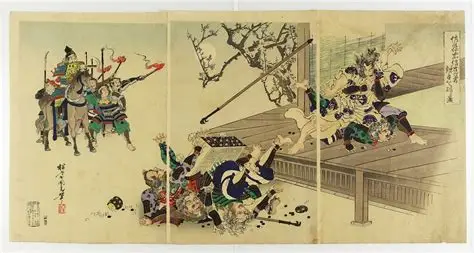
On August 10th, during the hour of the tiger, a disturbance broke out in Kamakura. Toma Taro, a retainer of Noriyori, was found hiding beneath Yoritomo’s bed.
Yoritomo sensed something was amiss and had Toma captured by Tomomitsu of the Yuki clan, Usami Sukemochi, and Kagekiyo of the Kajiwara clan. When questioned at dawn, Toma explained that Noriyori had been deeply troubled by the lack of response after submitting a written oath. He claimed he had sneaked in to gauge Yoritomo’s true intentions and denied any conspiracy.
Yoritomo also questioned Noriyori about the incident. Although Noriyori claimed ignorance, suspicions remained. The Azuma Kagami notes that Toma was a skilled archer and swordsman, highly trusted by Noriyori. A retainer of someone already suspected of rebellion was found hiding under Yoritomo’s bed, and Yoritomo did not overlook this.
There are no historical records to confirm whether Toma’s explanation was truthful or if he acted under someone’s orders. There is also no evidence to conclusively state that Noriyori himself ordered an assassination.
August 17th, To Izu
On August 17th, Noriyori was sent to Izu Province. He was placed under the supervision and watch of Kano no Sukemochi and Usami Sukemochi, with no set date for his return. The Azuma Kagami describes this as “akin to exile.” It was a punishment equivalent to banishment.
Toma Taro was also sent to Satsuma Province. Although he should have been executed, it is said that the sentence was lightened because Yoritomo’s daughter, Ohime, was ill.
On the following day, August 18th, Noriyori’s retainers barricaded themselves in a residence in Kamakura. Upon receiving reports that Tachibana Tazaemon and others were preparing weapons, Yoritomo dispatched Tomomitsu of the Yuki clan and Kagetoki of the Kajiwara clan and his son. According to the Azuma Kagami, the retainers at the residence were defeated.
Were the retainers trying to help Noriyori? Or were they afraid of their own punishment? The detailed circumstances are not recorded. Noriyori himself had already departed for Izu by then.
Once a general who led over a thousand horsemen to the western provinces, he now left Kamakura by his brother’s command. Nine years had passed since Yoritomo had sent him off with gifts of horses and armor for his expedition.
The End at Shuzenji
After Noriyori was sent to Izu, the exact time and place of his death remain uncertain. The Azuma Kagami records the punishment on August 17th but does not clarify the date or circumstances of his death.
On the other hand, the Horeki Kanki mentions that Noriyori was killed in August of Kenkyu 4. In present-day Shuzenji, Izu City, Shizuoka Prefecture, there is a site said to be Noriyori’s grave, and a tradition holds that he was confined at Shuzenji and committed suicide when attacked. However, his end cannot be traced through reliable contemporary records.
There are also traditions in Kanazawa Ward, Yokohama City, Kanagawa Prefecture, and Kitamoto City, Saitama Prefecture, suggesting that Noriyori fled there or met his end there. These stories cannot be reconciled into a single factual account with the tale of his death in Izu.
The Lineage Left to the Yoshimi Clan
Samurai believed to be descendants of Noriyori left their mark in Musashi Province. According to the genealogies in the Sonpi Bunmyaku, Noriyori’s son, Norien, inherited his mother’s estate and took the name Yoshimi.
In present-day Yoshimi Town, Saitama Prefecture, there is a site said to be Noriyori’s residence, and the legend of Noriyori is also tied to the Ishito Kabazakura in Kitamoto City. There is even a story that a cherry tree grew from a staff he planted.
These local stories alone cannot prove Noriyori’s footsteps. After being sent to Izu, his name disappeared from historical records, remaining only in later genealogies and regional legends.
The Letter at the Bottom of the Box
The letter that Noriyori reportedly received from his brother does not survive today. What was written in it remains unknown.
The oath document mentioned a passage about storing the letter “at the bottom of a box.” This was Minamoto no Noriyori’s way of demonstrating his loyalty to his brother.
The Azuma Kagami records that Yoritomo entrusted a large army to his brother, gifted him horses and armor, and sent replies to reports from the western provinces. Noriyori’s long-standing obedience to his brother’s orders can also be traced through the records of his expeditions.
On the other hand, in response to Noriyori’s final defense, Yoritomo reportedly took issue with the use of the character “Minamoto.”
There is no reliable record of Noriyori being sent to Izu and then returning to Kamakura. It is also unknown what eventually happened to the letter that was stored at the bottom of the box.