November 19, 1183.
Kyoto, Hojuji Palace.
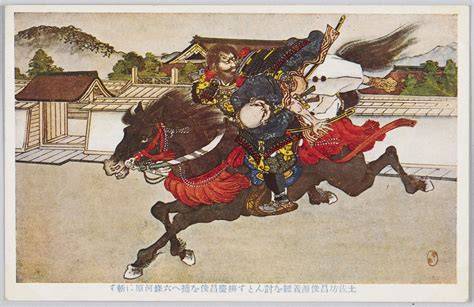
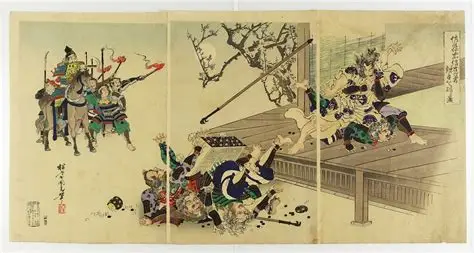
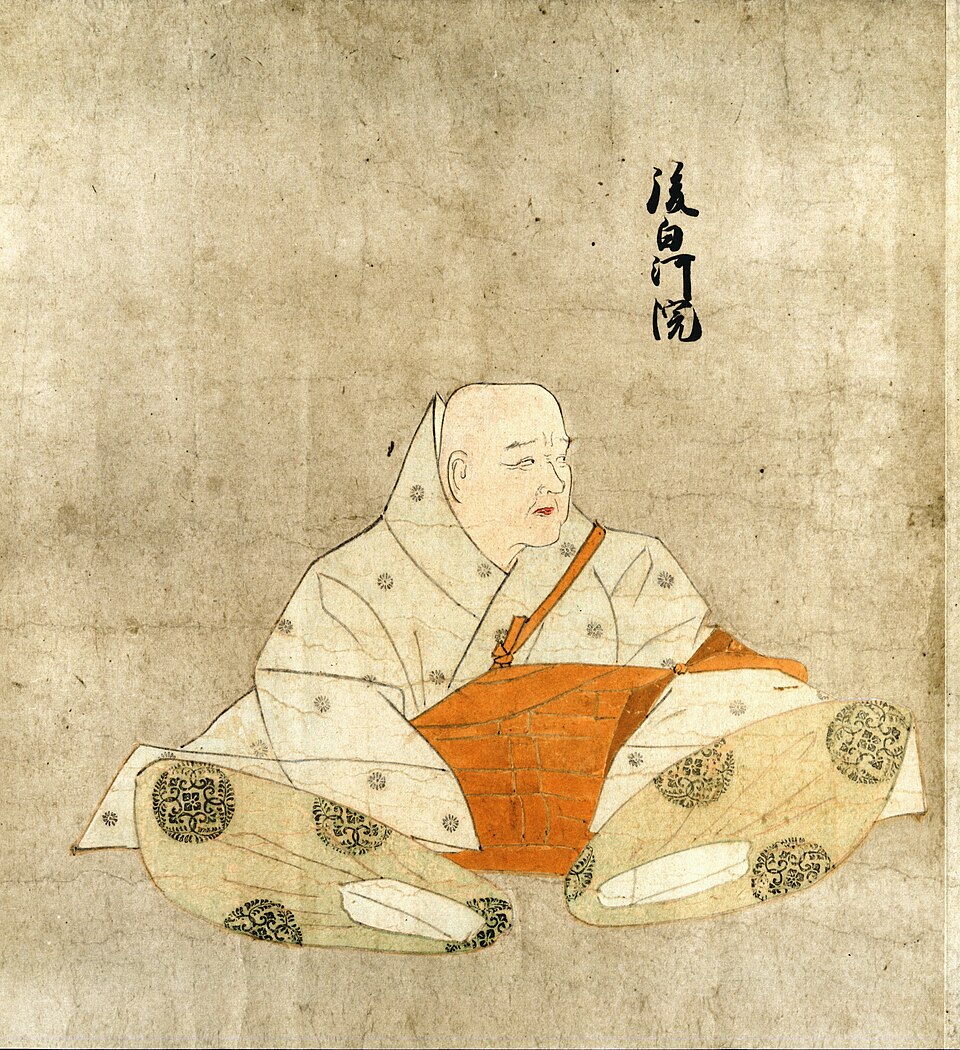
Minamoto no Yoshinaka’s forces advanced upon the residence of Emperor Go-Shirakawa.
Warriors and warrior monks loyal to the Emperor had gathered at the palace, and moats were dug around it. They were prepared to confront Yoshinaka.
However, they could not withstand Yoshinaka’s attack.
The buildings were set ablaze, and the Emperor’s forces were defeated one after another.
Myoun, the head of the Tendai sect, also lost his life.
Prince En’yu, a son of Emperor Go-Shirakawa and head of Onjoji Temple, also perished in this battle.
The Emperor himself was captured by Yoshinaka and moved to the residence of Konoe Motomichi at Gojo Higashi-no-Toin.
Yoshinaka, who had fought against the Taira clan until the previous year, now set fire to the Emperor’s palace.
For Emperor Go-Shirakawa, being captured by warriors was not a new experience.
Four years earlier, on November 20, 1179, he had been confined in the Toba Palace by Taira no Kiyomori.
In 1159, during the Heiji Rebellion, he was attacked and captured at Sanjo Palace by the forces of Fujiwara no Nobuyori and Minamoto no Yoshitomo.
Three times his palace was attacked.
Each time, the politics of Kyoto changed dramatically.
Yet, Emperor Go-Shirakawa’s cloistered rule continued until his death in 1192.
His reign as Emperor lasted just over three years. After abdication, he lived through the reigns of five emperors: Nijo, Rokujo, Takakura, Antoku, and Go-Toba, spanning thirty-four years.
He was involved in the rise and fall of Taira no Kiyomori, the fall of the Taira clan, and the eastern rule of Minamoto no Yoritomo.
Emperor Go-Shirakawa, who was originally not expected to ascend the throne, played a role in all these events.
Prince Masahito, Far from the Throne
September 11, 1127.
Prince Masahito was born as the fourth son of Emperor Toba.
His mother was Fujiwara no Shoshi, known as Taikenmon’in. Emperor Sutoku was also born from the same mother.
At that time, Emperor Toba was conducting cloistered rule.
Emperor Sutoku abdicated due to his father’s wishes, and in 1141, his half-brother Emperor Konoe ascended the throne.
Emperor Konoe’s mother was Bifukumon-in Fujiwara no Tokuko.
Retired Emperor Toba favored Tokuko and placed the young Emperor Konoe on the throne.
Meanwhile, Retired Emperor Sutoku, despite having abdicated, was unable to establish a cloistered government, as Retired Emperor Toba continued to hold the reins of power.
Prince Masahito grew up in such a court environment.
From a young age, he was deeply engrossed in imayo.
Imayo was a popular form of song in the late Heian period, sung widely from the residences of nobles to entertainers like courtesans and puppeteers.
Masahito sought out singers and learned various songs.
His later compilation, the ‘Ryojin Hisho Kuden-shu,’ records his experiences of visiting people to learn imayo from a young age.
His youth was marked more by his passion for songs than by political activities aimed at the throne.
Masahito ascended to the throne due to the sudden death of Emperor Konoe.
Emperor Konoe’s Death at Seventeen
On July 23, 1155, Emperor Konoe passed away at the age of seventeen.
He left no heirs.
Retired Emperor Toba had to choose the next emperor.
One candidate was Prince Morihito, the son of Prince Masahito, who would later become Emperor Nijo.
Prince Morihito was adopted by Bifukumon-in and was considered a strong candidate for succession.
However, there were issues regarding the order of succession if his son were to ascend the throne, bypassing his father Masahito.
Thus, it was decided that Masahito would first ascend the throne and later abdicate in favor of Prince Morihito.
On July 24, Prince Masahito ascended the throne.
He became the 77th Emperor, Emperor Go-Shirakawa.
He was twenty-nine years old by traditional Japanese count.
However, there is scholarly debate about whether this ascension was initially intended as a prelude to abdication in favor of Prince Morihito.
What is certain is that the succession was reconsidered after Emperor Konoe’s death, and Masahito’s ascension was decided upon after deliberations by Retired Emperor Toba and the regent family.
Meanwhile, Prince Shigehito, the son of Retired Emperor Sutoku, was not placed on the throne.
It is believed that Retired Emperor Sutoku desired his son’s ascension, leaving dissatisfaction over the succession.
The following year, when Retired Emperor Toba passed away, this dissatisfaction escalated into armed conflict.
The Hogen Rebellion and His Brother, Retired Emperor Sutoku
On July 2, 1156, Retired Emperor Toba passed away.
Emperor Go-Shirakawa was supported by Fujiwara no Michinori, who had taken the tonsure and was known as Shinzei.
Shinzei was well-versed in scholarship and administration, deeply involved in court appointments and policies.
Fujiwara no Tadamichi, the Kanpaku, sided with Emperor Go-Shirakawa.
In contrast, around the retired Emperor Sutoku gathered figures like the Minister of the Left, Fujiwara no Yorinaga.
Yorinaga was Tadamichi’s younger brother and had been vying with him for the headship of the Sekkan family.
The imperial family’s sibling rivalry was mirrored by the Sekkan family’s own fraternal conflict.
Both factions began to gather warriors.
On Emperor Go-Shirakawa’s side were Taira no Kiyomori and Minamoto no Yoshitomo.
On the side of retired Emperor Sutoku were Minamoto no Tameyoshi, Minamoto no Tametomo, and Taira no Tadamasa.
Both the Minamoto and Taira clans found themselves divided between opposing sides.
July 11th.
The forces of Emperor Go-Shirakawa attacked the Shirakawa Palace where retired Emperor Sutoku and his followers were entrenched.
The Heihanki records that Taira no Kiyomori led over three hundred horsemen, Minamoto no Yoshitomo had over two hundred, and Minamoto no Yoshiyasu commanded over one hundred.
The battle ended in victory for Go-Shirakawa’s side.
Fujiwara no Yorinaga was wounded and soon died. Retired Emperor Sutoku was exiled to Sanuki.
Minamoto no Tameyoshi and Taira no Tadamasa were executed.
Go-Shirakawa maintained his position as emperor.
His brother, retired Emperor Sutoku, never returned to Kyoto.
Retired Emperor Sutoku passed away in his place of exile, Sanuki, in the second year of Chokan (1164).
The conflict over Go-Shirakawa’s ascension deprived the brothers of any chance to meet again.
The Hogen New Code Promoted by Shinzei
After the Hogen Rebellion, political affairs at the imperial court were led by Shinzei.
This was a series of policies known as the “Hogen New Policies.”
Efforts were made to reorganize the manors, control temples and shrines, and reform court ceremonies and administration.
At that time, the court’s revenue was supported by the public lands of various provinces and the manors owned by nobles and temples.
However, disputes over the establishment of manors and land control continued across the regions.
Even when provincial governors attempted to collect taxes, local influential figures sometimes refused to comply.
Temples and shrines would assert their rights and file complaints with the court.
Shinzei sought to address these issues and restore the court’s governance.
Emperor Go-Shirakawa also played a supportive role in this political effort.
While the military might of Kiyomori and Yoshitomo determined the outcome of the Hogen Rebellion, officials like Shinzei were essential for peacetime governance.
Appointments to official positions, the management of manors, and the handling of temple and shrine petitions.
These were the tasks carried out by officials who supported Go-Shirakawa’s administration.
However, there were those who opposed Shinzei’s strong influence.
One such figure was Fujiwara no Nobuyori.
Conflict with His Son, Emperor Nijo
On August 11, 1158, in the third year of Hogen.
Emperor Go-Shirakawa abdicated in favor of his son, Prince Morihito.
This marked the enthronement of Emperor Nijo.
Go-Shirakawa became the retired emperor and began his cloistered rule.
Like retired emperors Shirakawa and Toba, he continued to be involved in politics after abdication.
However, around Emperor Nijo, there were those who emphasized governance by the emperor himself.
These included Fujiwara no Tsunemune and Fujiwara no Korekata.
They sought to advance an administration centered on Emperor Nijo.
Meanwhile, around the retired Emperor Go-Shirakawa were Shinzei and Fujiwara no Nobuyori.
However, it is important to be cautious in assuming that the cloistered rule faction and the Nijo administration faction were completely divided and opposed from the start.
Shinzei, while a close associate of the retired Emperor Go-Shirakawa, was also involved in Emperor Nijo’s administration.
The positions of various officials shifted based on personnel and policy decisions.
Amidst this, the conflict between Shinzei and Fujiwara no Nobuyori intensified.
Nobuyori was a figure who had risen as a close associate of the retired Emperor Go-Shirakawa.
Minamoto no Yoshitomo formed an alliance and moved against Shinzei.
Then, in the winter of the first year of Heiji (1159), military forces once again stirred in Kyoto.
The Burning of Sanjo Palace
On the night of December 9, Heiji 1 (1159).
The forces of Fujiwara no Nobuyori and Minamoto no Yoshitomo attacked the Sanjo Palace, the residence of the Retired Emperor Go-Shirakawa.
The building was set ablaze, and the Retired Emperor was captured.
Nobuyori and Yoshitomo aimed to overthrow the political regime centered around Shinzei.
Although Shinzei fled, he eventually took his own life.
For a brief period, Nobuyori seized control of the imperial court.
However, when Taira no Kiyomori returned to Kyoto from a pilgrimage to Kumano, the situation changed.
Emperor Nijo fled to Rokuhara, where Kiyomori’s forces were stationed, and the Retired Emperor Go-Shirakawa escaped from Nobuyori’s control.
Nobuyori and Yoshitomo were defeated.
Nobuyori was executed, and Yoshitomo was killed while attempting to flee to the eastern provinces.
Yoshitomo’s son, Yoritomo, was captured and exiled to Izu.
The Retired Emperor Go-Shirakawa was attacked in his own palace by Fujiwara no Nobuyori, who had once served him.
The “Heiji Monogatari Emaki” (Illustrated Scrolls of the Tale of Heiji) depicts the burning Sanjo Palace and the fleeing people.
Although the scrolls were created some time after the event, they vividly convey the shock of the palace being attacked by military force.
In the Heiji Rebellion, Go-Shirakawa lost Shinzei.
And in Kyoto, Taira no Kiyomori gained significant power.
The Sanjusangendo Built by Kiyomori
After the Heiji Rebellion, Emperor Go-Shirakawa and Taira no Kiyomori cooperated for a long time.
Go-Shirakawa needed Kiyomori’s military strength, while Kiyomori expanded his clan’s influence by acquiring court positions and lands.
The first year of Eiryaku (1160).
Emperor Go-Shirakawa commissioned the construction of the New Kumano Shrine in Kyoto.
This shrine enshrined the deities of the Three Kumano Mountains in the capital.
Kiyomori was involved in its construction.
In the following year, Eiryaku 2 (1161), in April, Emperor Go-Shirakawa moved to the Hojuji Palace in Higashiyama.
This area was equipped with palaces and Buddhist halls, becoming a center for the emperor’s political and religious activities.
The second year of Chokan (1164).
Rengeoin was constructed within the Hojuji Palace grounds.
This was the predecessor of the present-day Sanjusangendo.
The construction was overseen by Taira no Kiyomori.
The large-scale Buddhist hall, housing a thousand statues of the Thousand-Armed Kannon, required extensive resources and manpower.
Kiyomori’s financial and human resources were utilized to realize Emperor Go-Shirakawa’s religious vision.
Go-Shirakawa built temples and conducted memorial services and Buddhist ceremonies.
Kiyomori supported these efforts while elevating his status at court.
Their collaboration left a lasting mark on Kyoto’s temples and palaces.
The Connection Between the Cloistered Emperor and the Taira Clan Forged by Kenreimon-in Shigeko
A woman played a significant role in the relationship between Go-Shirakawa and Kiyomori.
That woman was Taira no Shigeko.
Shigeko was the daughter of Taira no Tokinobu and the half-sister of Kiyomori’s wife, Tokiko.
She served Emperor Go-Shirakawa and gave birth to Prince Norihito in Eiryaku 2 (1161).
This prince would later become Emperor Takakura.
Shigeko eventually received the title of Kenreimon-in.
The emperor’s son and the Taira clan.
Through Shigeko, the ties between them strengthened.
In the first year of Eiman (1165), Emperor Nijo passed away.
The throne was passed to the young Emperor Rokujō.
However, in Nin’an 3 (1168), February, Emperor Rokujō abdicated in favor of Prince Norihito.
This marked the ascension of Emperor Takakura.
For Emperor Go-Shirakawa, it meant his own son had taken the throne.
For Kiyomori, the ascension of the prince born to his wife’s sister was of great significance.
In 1167, Taira no Kiyomori became the Grand Chancellor.
A man born into a warrior family had reached the highest office in the imperial court.
Although Kiyomori later resigned from the position of Grand Chancellor, the influence of the Taira clan continued to expand.
Retired Emperor Go-Shirakawa advanced the imperial succession with Kiyomori’s support, and Kiyomori elevated his clan’s status through his relationship with the Retired Emperor.
Shigeko was the link between the two men.
Politics Continued Even as a Monk
In 1169, the first year of the Kaō era.
Retired Emperor Go-Shirakawa took Buddhist vows.
His Dharma name was Gyōshin.
From then on, he was known as the Cloistered Emperor Go-Shirakawa.
Even after becoming a monk, he continued to be involved in the politics of the court.
The Cloistered Emperor’s government was supported by officials and warriors working close to him.
Both retired and cloistered emperors maintained their own palaces and administrative offices after stepping down from the throne.
Government affairs were conducted at the cloistered office, and the Cloistered Emperor’s will was conveyed through imperial edicts.
Surrounding the Cloistered Emperor were warriors known as the “North-Facing Warriors.”
These were the people who had been responsible for the security and personal affairs of the retired emperors since the time of the Shirakawa cloistered rule.
Go-Shirakawa used this system to engage in matters concerning temples, estates, and court appointments.
However, it became difficult to override the demands of military warriors and large temples with the Cloistered Emperor’s orders alone.
Enryaku-ji Temple owned vast estates and had many warrior monks.
Kōfuku-ji Temple also held significant power.
The Cloistered Emperor protected temples and sometimes rejected their demands.
Temples, objects of faith, also became political negotiation partners.
The Master of Imayō, Gojo no Aniozen
There was something that the Cloistered Emperor Go-Shirakawa had continued since his youth.
It was Imayō songs.
The “Ryojin Hisho Kuden-shu” details his experiences learning Imayō.
Go-Shirakawa sought instruction from anyone renowned for their singing, regardless of their social status.
He learned from courtesans and puppeteers, people who passed down songs outside the court.
Among them, he particularly valued Gojo no Aniozen.
Aniozen was known as a master of Imayō with ties to Aoba in Mino Province.
It is said that in 1157, the second year of the Hogen era, Go-Shirakawa visited Aniozen and formed a mentor-student relationship.
This was during the time when Go-Shirakawa was still the emperor.
Aniozen was elderly and had been passing down the techniques and singing styles of Imayō for many years.
Go-Shirakawa eagerly learned these skills.
The “Ryojin Hisho Kuden-shu” records from whom he learned what and the kinds of melodies he was taught.
He was so passionate about learning songs that he even recounted experiences of singing to the point of damaging his throat.
Go-Shirakawa did not merely collect song lyrics.
He sought to preserve not only the songs but also the techniques of singing them.
This effort led to the compilation of the ‘Ryojin Hisho.’
The Voices Preserved in ‘Ryojin Hisho’
‘Ryojin Hisho’ is a collection of imayo songs compiled by Emperor Go-Shirakawa.
It is believed to have consisted of twenty volumes, combining sections of collected lyrics and oral traditions detailing the learning process of these songs.
However, most of it has been lost.
What remains today is limited to parts of the lyric collection and oral tradition collection.
The ‘Ryojin Hisho Kuden Shu Volume Ten Fragment,’ held by Kokugakuin University, is a precious manuscript copied in the mid-Kamakura period.
About seventy lines remain.
It records the process by which Go-Shirakawa learned imayo and his mentor-student relationship with Gojo no Nyogo Otozen.
Imayo songs covered a range of themes, from Buddhist faith to children’s games, love, and farewells.
“Was I born to play?”
This well-known song is also one of the imayo preserved in ‘Ryojin Hisho.’
In Heian period court literature, waka held a significant place.
Go-Shirakawa was passionate about songs different from waka and recorded the skills of those who passed down these songs.
Imayo continued to be passed down even after Go-Shirakawa’s death, and through ‘Ryojin Hisho,’ we can glimpse some of the voices of the people from that time.
The Emperor Who Visited Kumano Thirty-Four Times
Emperor Go-Shirakawa was also deeply devoted to the Kumano faith.
It is said that he made thirty-four pilgrimages to the Kumano Sanzan in his lifetime.
The journey from Kyoto to Kumano required traversing a long path.
He crossed mountain paths, forded rivers, and offered prayers at the Oji shrines along the way.
His pilgrimages were accompanied by nobles, warriors, and monks, necessitating arrangements for lodging and provisions.
Go-Shirakawa repeated such pilgrimages many times.
The ‘Ryojin Hisho Kuden Shu’ also records experiences of singing imayo on the way to Kumano.
For Go-Shirakawa, song and faith were intertwined in his life.
He also had a deep interest in the Pure Land teachings.
In 1174, he invited Honen to receive precepts and attended lectures on the ‘Ojo Yoshu.’
His efforts in memorial services for Kenchumon-in and the construction of Buddhist halls were rooted in such faith.
However, temples needed estates to support their faith.
To cover the costs of temple maintenance and Buddhist events, taxes and goods were collected from various regions.
Go-Shirakawa’s religious activities were also linked to the financial resources of the cloistered government and the control of estates.
Meeting the Song People in Fukuhara
In 1170.
Emperor Go-Shirakawa visited Fukuhara in Settsu Province and met with the Song people.
Fukuhara, which Kiyomori had established as an important base, had the port of Owada no Tomari.
Kiyomori developed this port and advanced trade with the Song dynasty.
From the Song Dynasty, items such as ceramics and books were imported, while various goods were exported from Japan.
It was during this trade that Song merchants met directly with the retired emperor.
The Gyokuyo records this meeting with some concern.
For the court nobles who valued court ceremonies and precedents, it was unprecedented for the retired emperor to meet directly with Song merchants.
For Taira no Kiyomori, Fukuhara was a hub for maritime transport and trade.
Retired Emperor Go-Shirakawa also visited the area and interacted with the Song merchants.
This event highlighted the economic activities of the Taira clan and their relationship with the court.
However, a few years later, a significant rift developed between Kiyomori and the retired emperor.
The Death of Kenreimon-in Shigeko
In July of Angen 2 (1176).
Kenreimon-in Shigeko passed away.
She was the mother of Emperor Takakura and a key figure connecting Retired Emperor Go-Shirakawa and the Taira clan.
After her death, the relationship between the retired emperor and Kiyomori gradually deteriorated.
At that time, the Taira clan held high court positions and controlled many provinces.
Meanwhile, around Retired Emperor Go-Shirakawa, there were courtiers seeking positions and lands.
These included figures like Fujiwara no Narichika and Saiko.
Additionally, tensions with Enryaku-ji Temple were escalating.
In disputes over the temple’s monks and estates, the decisions of Retired Emperor Go-Shirakawa and Kiyomori often clashed.
Kiyomori sought to protect the interests of the Taira clan, while the courtiers around the retired emperor aimed to strengthen their political positions.
Shigeko had been a mediator between them, and her death meant the loss of an opportunity to reconcile their relationship.
The following year, an incident occurred where several of the retired emperor’s close courtiers were punished.
The Shishigatani Incident and the Loss of Close Courtiers
In Angen 3 (1177).
Fujiwara no Narichika, Saiko, and Shunkan were accused of plotting against the Taira clan.
This was the Shishigatani Incident.
In the Heike Monogatari, it is described how a secret meeting to overthrow the Taira clan was held at Shunkan’s mountain villa, and how Tada no Yukitsuna informed Kiyomori of the plan.
The famous scene of a banquet where the plot to overthrow the Taira was discussed is also included in this tale.
However, when examining contemporary records, the conflicts over Enryaku-ji Temple and the differing positions of the courtiers become apparent.
There is a cautious scholarly view against considering Narichika and Saiko as acting as a single political group from the start.
Saiko was captured and executed.
Narichika was exiled to Bizen, where he later died.
Shunkan and others like Taira no Yasuyori were also exiled.
Retired Emperor Go-Shirakawa was not immediately stripped of his power to govern.
However, Narichika and Saiko had been key figures supporting the retired emperor’s administration.
With the loss of these important courtiers, the retired emperor’s circle was significantly weakened.
The relationship with the Taira clan became increasingly strained.
The Deaths of Moriko and Shigemori
The year was 1179.
Within the Taira clan, two key figures passed away in quick succession.
In June, Taira no Kiyomori’s daughter, Taira no Moriko, died.
Moriko was married to Fujiwara no Motomichi of the regent family, and after his death, she was involved in managing his estates.
Following Moriko’s death, Retired Emperor Go-Shirakawa took steps regarding the regent family’s estates.
These decisions were significant for the Taira clan’s interests.
In July, Kiyomori’s heir, Taira no Shigemori, also passed away.
Shigemori had been a key figure in mediating between Kiyomori and Retired Emperor Go-Shirakawa.
Issues also arose concerning the management of Shigemori’s holdings in Echizen Province.
For Kiyomori, the court’s decisions following the deaths of Moriko and Shigemori were likely unacceptable.
However, there is no historical evidence to definitively conclude that the Retired Emperor planned from the outset to exclude the Taira clan.
The estates of the regent family and the provinces involved had existing rights and personnel issues.
Who would manage the land, and who would receive the income?
These issues led to a clash between Kiyomori and Retired Emperor Go-Shirakawa.
Then, in November, Kiyomori led his forces into Kyoto.
Imprisonment in the Toba Palace
November 14, 1179.
Kiyomori entered Kyoto from Fukuhara.
The “Sankaiki” records that he led thousands of soldiers.
On the 15th, the regent Matsudono Motofusa was dismissed.
Konoe Motomichi was appointed as his successor.
On the 17th, many court nobles and governors, including the Chancellor Fujiwara no Moronaga, lost their positions.
Those close to Retired Emperor Go-Shirakawa were systematically removed from key court positions.
November 20.
The Retired Emperor was moved to the Toba Palace.
The cloistered government was suspended.
Kiyomori, who had long cooperated with Go-Shirakawa, used military force to change court appointments and curtail the Retired Emperor’s political activities.
At this point, Go-Shirakawa was fifty-three years old by traditional count.
More than twenty years had passed since he had abdicated the throne.
That cloistered government was halted by Kiyomori.
Kiyomori aimed to establish a political system favorable to the Taira clan, centering on Emperor Takakura and his prince.
The Retired Emperor found himself unable to conduct political affairs freely.
However, from the following year, events began to unfold that would challenge Kiyomori’s control.
The Uprising of Prince Mochihito and the Move to Fukuhara
The year was 1180.
Emperor Takakura abdicated in favor of Prince Tokihito, the son of Kiyomori’s daughter, Tokuko.
This marked the enthronement of Emperor Antoku.
Kiyomori became the grandfather of the young emperor.
Meanwhile, Prince Mochihito, a son of the retired Emperor Go-Shirakawa, found himself sidelined from the line of succession.
Prince Mochihito grew up without receiving the title of crown prince, leaving him with limited status at court.
In May of the same year, Prince Mochihito called for the overthrow of the Taira clan and raised an army.
Minamoto no Yorimasa joined the cause, but they were defeated by the Taira forces at Uji, and Prince Mochihito lost his life in southern Yamashiro.
The prince’s call to arms was communicated to the Minamoto clan across various regions.
In Izu, Minamoto no Yoritomo received this message and rose in rebellion.
However, there is no definitive record that Emperor Go-Shirakawa planned Prince Mochihito’s uprising.
The relationship between father and son and their involvement in the uprising should be considered separately.
In June, Kiyomori moved the court from Kyoto to Fukuhara.
Emperor Go-Shirakawa also relocated to Fukuhara.
However, the development of the new capital did not progress, and the dissatisfaction among the nobles grew stronger.
In the eastern provinces, Yoritomo was expanding his influence, while in Shinano, Minamoto no Yoshinaka was gathering troops.
In November, the court returned to Kyoto.
In the intercalary second month of the following year, Jisho 5 (1181), Kiyomori died of illness.
Emperor Go-Shirakawa resumed his cloistered rule in Kyoto.
However, around the court, there appeared an unprecedented number of warrior factions.
The Taira Clan’s Flight and the Emperor’s Escape
Juei 2 (1183).
Minamoto no Yoshinaka’s forces advanced toward Kyoto from the Hokuriku Road.
In May, at Kurikara Pass, the forces led by Taira no Koremori were defeated, making it difficult for the Taira to defend Kyoto.
Late July.
The Taira prepared to escort Emperor Antoku and the Imperial Regalia to the western provinces.
Just before this, Emperor Go-Shirakawa disappeared from Kyoto.
He fled to Mount Hiei.
The Taira left the capital with Emperor Antoku and the regalia, without the emperor.
July 28.
Yoshinaka and Minamoto no Yukie entered Kyoto.
Emperor Go-Shirakawa returned from the mountain and ordered the two to pursue the Taira.
However, a significant issue remained in Kyoto after the Taira’s departure.
Emperor Antoku and the Imperial Regalia were in the western provinces.
There was no emperor in Kyoto.
The emperor would proceed with a new imperial succession.
Emperor Go-Toba Without the Imperial Regalia
Yoshinaka supported the claim of Hokuriku no Miya, the son of Prince Mochihito, to the throne.
However, Emperor Go-Shirakawa did not accept this demand.
Instead, Prince Tokihito, the son of Emperor Takakura, was chosen.
On August 20, 1183, Prince Tokihito ascended to the throne.
He became Emperor Go-Toba.
Meanwhile, Emperor Antoku was with the Taira clan in the western provinces.
The Imperial Regalia had not been returned.
With Emperor Go-Toba in Kyoto and Emperor Antoku in the west, an unprecedented situation of two emperors arose.
To maintain the Kyoto court, Emperor Go-Shirakawa pushed forward with the new succession.
However, Yoshinaka’s wish to support Hokuriku no Miya was rejected.
Though Yoshinaka had driven the Taira from Kyoto, he could not overturn the Emperor’s decision on succession.
Subsequently, the relationship between Yoshinaka and the Emperor deteriorated.
Disorderly conduct by Yoshinaka’s men and shortages of supplies in Kyoto became problematic.
Emperor Go-Shirakawa ordered Yoshinaka to pursue the Taira while also beginning negotiations with Yoritomo in the east.
Yoshinaka’s Fury and the Juei Second Year October Decree
October of the second year of Juei.
The court issued orders to Yoritomo concerning the manors and public lands of the Tokaido and Tosando regions.
This was the Juei Second Year October Decree.
The aim was to restore the rights of manor lords and provincial governors that had been obstructed by the war.
Yoritomo was tasked with implementing the necessary measures.
Yoritomo was granted authority by the court to restore order in the eastern provinces.
For Yoshinaka, this meant that his rival Yoritomo had received the court’s endorsement.
Yoshinaka suspected that the Emperor was aligning with Yoritomo to oust him.
By November, the Emperor also increased his vigilance against Yoshinaka.
Warriors and warrior monks were gathered at Hojuji Palace, and defenses were strengthened.
This was to counter Yoshinaka.
However, militarily, Yoshinaka’s forces were superior.
On November 19, Yoshinaka’s troops attacked Hojuji Palace.
The Day Hojuji Palace Burned
The attack by Yoshinaka’s forces engulfed Hojuji Palace in flames.
Emperor Go-Shirakawa’s son, Prince Enkei, was killed.
Myoun, the head of the Tendai sect, was also slain.
Many warriors and warrior monks loyal to the court perished.
Yoshinaka seized the Emperor and took control of politics in Kyoto.
The cloistered emperor, who had been imprisoned by Taira no Kiyomori, reestablished his rule after Kiyomori’s death.
However, his palace was burned down by Minamoto no Yoshinaka.
Yoshinaka intervened in court appointments, removing the regent Konoe Motomichi and installing Fujiwara no Morotada.
Yet, Yoshinaka’s control did not last long.
In January of the following year, Juei 3 (1184), Minamoto no Noriyori and Minamoto no Yoshitsune, dispatched by Minamoto no Yoritomo, advanced their forces to Kyoto.
Yoshinaka was defeated at the Uji River and Seta, and met his end at Awazu in Omi Province.
Emperor Go-Shirakawa was freed from Yoshinaka’s control.
At Sanjo Palace, it was Nobuyori and Yoshitomo.
At Toba Palace, it was Kiyomori.
At Hojuji Palace, it was Yoshinaka.
Emperor Go-Shirakawa, having been deprived of his freedom by each of these forces, now proceeded with politics by negotiating with Yoritomo in Kamakura.
The Court Negotiates with Yoritomo
After Yoshinaka’s defeat, the warriors dispatched by Yoritomo were present in Kyoto.
They were Yoshitsune and Noriyori.
Yoritomo himself remained in Kamakura.
In the eastern provinces, there were vassals loyal to Yoritomo who received orders regarding land grants and military mobilization.
Yoritomo sent troops and envoys to Kyoto to negotiate with Emperor Go-Shirakawa.
The Taira clan continued to resist in the western provinces.
The emperor sought to use the Minamoto’s military power to pursue the Taira while maintaining the court’s authority.
For Yoritomo, obtaining the court’s orders was also significant.
There were instances where an official order for pursuit was necessary to mobilize vassals and advance into various provinces.
In Kyoto, Yoshitsune was appointed as a police commissioner and became involved in maintaining the city’s security.
Though Yoritomo’s brother, in Kyoto he also served under Emperor Go-Shirakawa as a military commander.
This relationship was maintained during the pursuit of the Taira, but after the war, the conflict between Yoritomo and Yoshitsune intensified.
Emperor Go-Shirakawa was also drawn into this conflict.
The Lost Sword at Dan-no-ura
March 24, Genryaku 2 (1185).
The Taira clan was annihilated at Dan-no-ura.
Emperor Antoku is said to have drowned with his grandmother, Taira no Tokiko.
Of the three sacred treasures, the sword is said to have sunk into the sea.
For the court, the loss of the sword was a significant issue.
The sacred treasures essential for imperial succession had been lost.
Although Emperor Go-Shirakawa had already enthroned Emperor Go-Toba, the enthronement took place without the sacred treasures.
With the fall of the Taira clan, the faction supporting Emperor Antoku vanished.
However, the sacred sword was not recovered.
Emperor Go-Shirakawa had to address the issues of imperial succession and the disposition of lands following the war.
Meanwhile, the relationship between Minamoto no Yoshitsune, who defeated the Taira, and Minamoto no Yoritomo in Kamakura began to deteriorate.
Despite his military achievements in the campaign against the Taira, Yoshitsune was not permitted to enter Kamakura and was denied an audience with his brother.
Even after returning to Kyoto and being appointed Governor of Iyo, Yoshitsune could not mend his relationship with Yoritomo.
In October, Yoshitsune sought an imperial order from Emperor Go-Shirakawa to pursue Yoritomo.
In 1185, Approval to Pursue Yoritomo
October of the first year of the Bunji era.
Yoshitsune expressed his grievances against Yoritomo to Emperor Go-Shirakawa.
He claimed he had not received rewards for his military achievements against the Taira and that his lands were confiscated.
Even as Governor of Iyo, he argued that Yoritomo’s local officials obstructed his duties.
Furthermore, he asserted that Yoritomo intended to attack him.
On October 16, Yoshitsune sought an imperial decree to pursue Yoritomo.
The following day, Yoshitsune’s residence in Kyoto was attacked.
This was the Horikawa Night Attack.
On the 18th, the court issued a decree to Yoshitsune and Minamoto no Yukie to pursue Yoritomo.
However, there was no consensus within the court.
The “Gyokuyo” records the process of Emperor Go-Shirakawa seeking opinions from Fujiwara no Tsunemune and others.
If they refused Yoshitsune’s demands while he had troops in Kyoto, and a conflict arose, who would prevent it?
This danger was being debated.
Although Emperor Go-Shirakawa approved Yoshitsune’s request, Yoshitsune could not muster enough troops to fight Yoritomo.
On November 3, Yoshitsune and Yukie left the capital.
By November 12, an imperial order was issued to capture Yoshitsune and Yukie.
The court’s decision to pursue Yoritomo was reversed in less than a month.
The Bunji Edict and Kamakura’s Authority
Yoritomo dispatched Hojo Tokimasa to Kyoto.
To advance the pursuit of Yoshitsune and Yukie, he sought the authority to station warriors across the provinces and collect rice for military provisions.
On November 28, Kujō Kanezane recorded in his diary, Gyokuyō, his astonishment at the demands he had heard.
It was said that Tokimasa’s subordinates were involved with estates and public lands, collecting rice as military provisions from the land.
On the following day, the 29th, the court began to move toward accepting the demands from Kamakura.
This was under the Bunji Imperial sanction.
There is still scholarly debate today about the specific scope of the authority granted by this sanction.
Yoritomo had already been appointing stewards in the eastern provinces and was also involved with the confiscated lands of the Taira in the western provinces.
What Emperor Go-Shirakawa was asked to determine was the extent of authority that Kamakura’s warriors could wield across various provinces in the pursuit of Yoshitsune.
If Yoritomo intensified his demands backed by military power, the court was compelled to respond.
However, if Kamakura’s warriors entered the lands, conflicts with estate lords and provincial governors would arise.
In the second year of Bunji, there was a review of the collection of military provisions and the authority of the stewards.
Emperor Go-Shirakawa and Yoritomo continued these negotiations, each trying to maintain their respective authority.
Restoring the Eyes of the Burned Great Buddha
In 1185, as the conflict between Yoritomo and Yoshitsune deepened, Emperor Go-Shirakawa was engaged in an important ceremony in Nara.
August 28.
This was the eye-opening ceremony of the Great Buddha of Tōdai-ji.
In the fourth year of Jishō (1180), during the attack on Nanto by the forces of Taira no Shigehira, the temple complexes of Tōdai-ji and Kōfuku-ji were destroyed by fire.
The Great Buddha was also severely damaged.
The monk Shunjōbō Chōgen led the efforts to restore it.
Chōgen solicited donations and, with the cooperation of craftsmen like the foundry master Chen Heqing from Song China, advanced the restoration of the Great Buddha.
Emperor Go-Shirakawa and Minamoto no Yoritomo also supported the reconstruction.
During the eye-opening ceremony, Emperor Go-Shirakawa personally took up the brush.
This brush is still preserved in the Shōsōin.
It was the same brush used for the initial eye-opening of the Great Buddha in the fourth year of Tenpyō Shōhō (752).
The Emperor used this brush once again.
On the brush handle, an inscription marks its use by the Emperor for the eye-opening on August 28, the first year of Bunji.
The brush used for the Tenpyō eye-opening was thus employed again over 130 years later for the restoration.
As the Emperor opened the eyes of the Great Buddha, internal conflicts within the Minamoto clan were intensifying in Kyoto.
Yet in Nara, the restoration of the Great Buddha, lost to war, was progressing.
The completion of the Great Buddha Hall occurred after the Emperor’s death, in the sixth year of Kenkyū (1195).
Kujō Kanezane Appointed as Regent
March 12, 1186.
Kujō Kanezane became the regent.
Kanezane was the son of Fujiwara no Tadamichi and a member of the regent family.
He is known for leaving behind the “Gyokuyō.”
He had close ties with Minamoto no Yoritomo and was involved in negotiations between the court and Kamakura.
Meanwhile, around Emperor Go-Shirakawa, there were close courtiers like Fujiwara no Tsunefusa and Minamoto no Michichika.
They conveyed the emperor’s orders and were involved in personnel matters, estate management, and temple and shrine petitions.
In his later years, Tōgō no Tsubone Takashina no Eiko gained significant influence.
Emperor Go-Shirakawa’s cloistered rule was managed by such individuals.
Kanezane valued court precedents and rituals, and he sometimes criticized the emperor’s personnel decisions and policies.
There were times when Kanezane’s judgments clashed with those of the emperor’s close aides.
While Go-Shirakawa appointed Kanezane as regent, he also utilized his close courtiers to advance politics.
The court’s power was not entirely controlled by the emperor alone.
Regents, officials, court ladies, warriors, temples, and shrines.
People with different interests supported the politics of Emperor Go-Shirakawa’s court.
Conflict Over the Ōshū Fujiwara Clan
1189.
Yoritomo was preparing to attack the Ōshū Fujiwara clan.
Yoshitsune, who had fled to Hiraizumi, was killed by Fujiwara no Yasuhira.
Nevertheless, Yoritomo did not halt his military actions against Ōshū.
The Ōshū Fujiwara clan had long held power in Mutsu and Dewa, and had established relations with the court.
Yoritomo sought an order for pursuit from the court.
However, even as preparations for departure progressed, news of obtaining imperial permission had not arrived.
The “Azuma Kagami” records the process of Yoritomo consulting Ōba Kageyoshi.
Kageyoshi reportedly expressed the opinion that in the military camp, one should follow the general’s orders.
Yoritomo moved his troops and advanced into Ōshū.
Later, on July 19, 1189, the order for pursuit was delivered.
There was a time lag between the decision to depart and the transmission of the court’s order.
The Ōshū Fujiwara clan was defeated, and Yasuhira was killed while fleeing.
Yoritomo’s military authority extended to Ōshū.
Between Emperor Go-Shirakawa and Yoritomo, the court’s approval of military actions remained an issue.
Meeting Yoritomo in Kenkyū 1
November, 1190.
Minamoto no Yoritomo entered the capital.
It had been ten years since he raised his army in Izu.
Yoritomo, having destroyed the Taira clan and vanquished the Northern Fujiwara, made his way into Kyoto.
Yoritomo met with Emperor Go-Shirakawa.
The Azuma Kagami records that on November 23, Yoritomo visited the retired emperor’s residence and spent the entire day there.
Yoritomo was appointed as Acting Grand Counselor and then as Commander of the Right Imperial Guards.
However, he did not hold these positions for long and eventually resigned.
Yoritomo’s political base was in Kamakura.
Even with high-ranking positions in Kyoto, he maintained his authority over the samurai of the eastern provinces.
To Emperor Go-Shirakawa, Yoritomo was a counterpart with whom he had been negotiating through emissaries for nearly a decade.
He was asked for authority to pursue Yoshitsune and was pressured for decisions regarding the expedition to Oshu.
Yoritomo came to Kyoto to accept court appointments.
The specifics of their conversation are not fully known.
However, the meeting between the emperor and Yoritomo is documented.
“The Greatest Tengu of Japan”
A phrase often quoted when discussing Emperor Go-Shirakawa is:
“The Greatest Tengu of Japan”
According to the Azuma Kagami, Minamoto no Yoritomo described the emperor in this way.
Yoritomo often felt strong dissatisfaction with Emperor Go-Shirakawa’s responses.
Granting Yoshitsune the imperial order to pursue Yoritomo was a significant example.
The court’s orders were crucial for legitimizing Yoritomo’s military actions.
However, the emperor was not someone who always acquiesced to Yoritomo’s demands.
The approval of the court was also a contentious issue for the expedition to Oshu.
Nevertheless, the term “Greatest Tengu” is not found in Yoritomo’s own letters but is a statement conveyed by the later-compiled Azuma Kagami.
It is necessary to carefully consider what words Yoritomo actually used.
Emperor Go-Shirakawa did not have the military power to freely command the samurai.
He collaborated with Kiyomori, was imprisoned by Kiyomori, and had his palace attacked by Yoshinaka.
When Yoritomo’s forces defeated Yoshinaka, he then negotiated with Yoritomo.
His political decisions were deeply intertwined with the shifting power dynamics of the warrior clans surrounding him.
The Rokujō Palace and the Chōkōdō Estate
In the later years of Emperor Go-Shirakawa’s reign, his residence was located at Rokujō Nishinotōin in Kyoto.
This residence was known as the Rokujō Palace.
Within its grounds was the Chōkōdō.
Formally called the Hokke Chōkō Amida Samādhi Hall, it was a Buddhist temple.
The Emperor conducted Buddhist rituals here, maintaining his devotions.
Maintaining this facility required substantial financial resources.
These included managing the temple buildings, providing for the monks, and supplying materials for the ceremonies.
These resources were gathered from estates across the country.
In October of the second year of Kenkyū (1191).
Emperor Go-Shirakawa donated approximately ninety estates he had long held to the Chōkōdō.
This collection of estates became known as the Chōkōdō Territories.
The Important Cultural Property, the ‘Chōkōdō Territories Inventory,’ preserved at Kyoto University, lists the names of the estates spread across the Five Provinces and Seven Circuits, along with the types and quantities of taxes levied.
The existing inventory is believed to have been transcribed during the mid-Kamakura period.
Nevertheless, it remains a valuable historical document that reveals the scale of the lands consolidated by the Emperor in his later years.
The Chōkōdō Territories reflect a portion of the lands that economically supported Emperor Go-Shirakawa’s cloistered rule.
Despite being repeatedly attacked during times of conflict, the Emperor managed to retain such a vast number of estates in his later years.
Tango no Tsubone and Sen’yōmon-in
A woman who wielded significant influence in Emperor Go-Shirakawa’s later years was Tango no Tsubone, Takashina no Eiko.
Tango no Tsubone was the wife of Taira no Narimori.
Narimori was one of those punished during the political upheaval of the third year of Jishō.
Subsequently, Tango no Tsubone served closely with Emperor Go-Shirakawa and became involved in politics.
Tango no Tsubone gave birth to Princess Kinshi.
She later became known as Sen’yōmon-in.
Emperor Go-Shirakawa decided to pass on the Chōkōdō and its estates to this imperial princess.
After the Emperor’s death, the Chōkōdō Territories were inherited by Sen’yōmon-in.
As time went on, through the inheritance of imperial lands, they became a crucial economic foundation for the Jimyōin lineage.
The estates gathered by Emperor Go-Shirakawa in his later years continued to influence the politics and finances of the imperial family even after his death.
The ‘Chōkōdō Territories Inventory’ specifically details the types of goods to be delivered from the estates.
The financial resources supporting the court’s politics are preserved as the names of lands and the items of tribute.
The Final Days at Rokujō Nishinotōin
On March 13, in the third year of Kenkyū (1192).
Emperor Go-Shirakawa passed away.
He was at his residence at Rokujō Nishinotōin in Kyoto, at the age of sixty-six by traditional Japanese count.
The ‘Gyokuyō’ records that the Emperor died at the hour of the Tiger.
The remains were interred in the Hokke Hall of the Hojuji Palace.
Today, the tomb of Emperor Go-Shirakawa remains in the Higashiyama Ward of Kyoto City.
At the time of Emperor Go-Shirakawa’s death, Minamoto no Yoritomo had already established Kamakura as his base and wielded extensive military authority.
However, he had not yet been appointed as the shogun.
On July 12 of the same year, Yoritomo was appointed as the shogun.
This was four months after the death of Emperor Go-Shirakawa.
The emperor passed away without witnessing Yoritomo’s appointment as shogun.
The Master of Imayo Preserved in Seventy Lines
The Ryojin Hisho, compiled by Emperor Go-Shirakawa himself, has mostly been lost.
However, parts of an oral transmission collection detailing the process of learning imayo still survive.
This is the Ryojin Hisho Kuden Shu Volume Ten Fragment, housed at Kokugakuin University.
It is believed that this ancient manuscript, copied in the mid-Kamakura period, contains about seventy lines of text.
In it, the process by which Go-Shirakawa visited masters of imayo and learned songs is recorded.
One such master was Gojo no Ani Otozen, associated with Aoba in Mino Province.
Go-Shirakawa revered this elderly woman as his teacher and learned songs and melodies from her.
The year was 1157, the second year of the Hogen era.
It is said that their master-disciple relationship began two years after Go-Shirakawa became emperor.
The following year, Go-Shirakawa abdicated in favor of Emperor Nijo.
Subsequently, he was imprisoned by Taira no Kiyomori, his palace was burned by Minamoto no Yoshinaka, and he spent years negotiating with Yoritomo.
Even during his cloistered rule, Go-Shirakawa never lost his interest in imayo.
He personally recorded the songs he learned from Otozen.
Even after most of the Ryojin Hisho was lost, Otozen’s name remains in the surviving fragments.
These were the songs that captivated Prince Masahito, who was once far from the throne.
The name of his teacher has been preserved in ancient manuscripts, more than eight hundred years after the death of Emperor Go-Shirakawa.