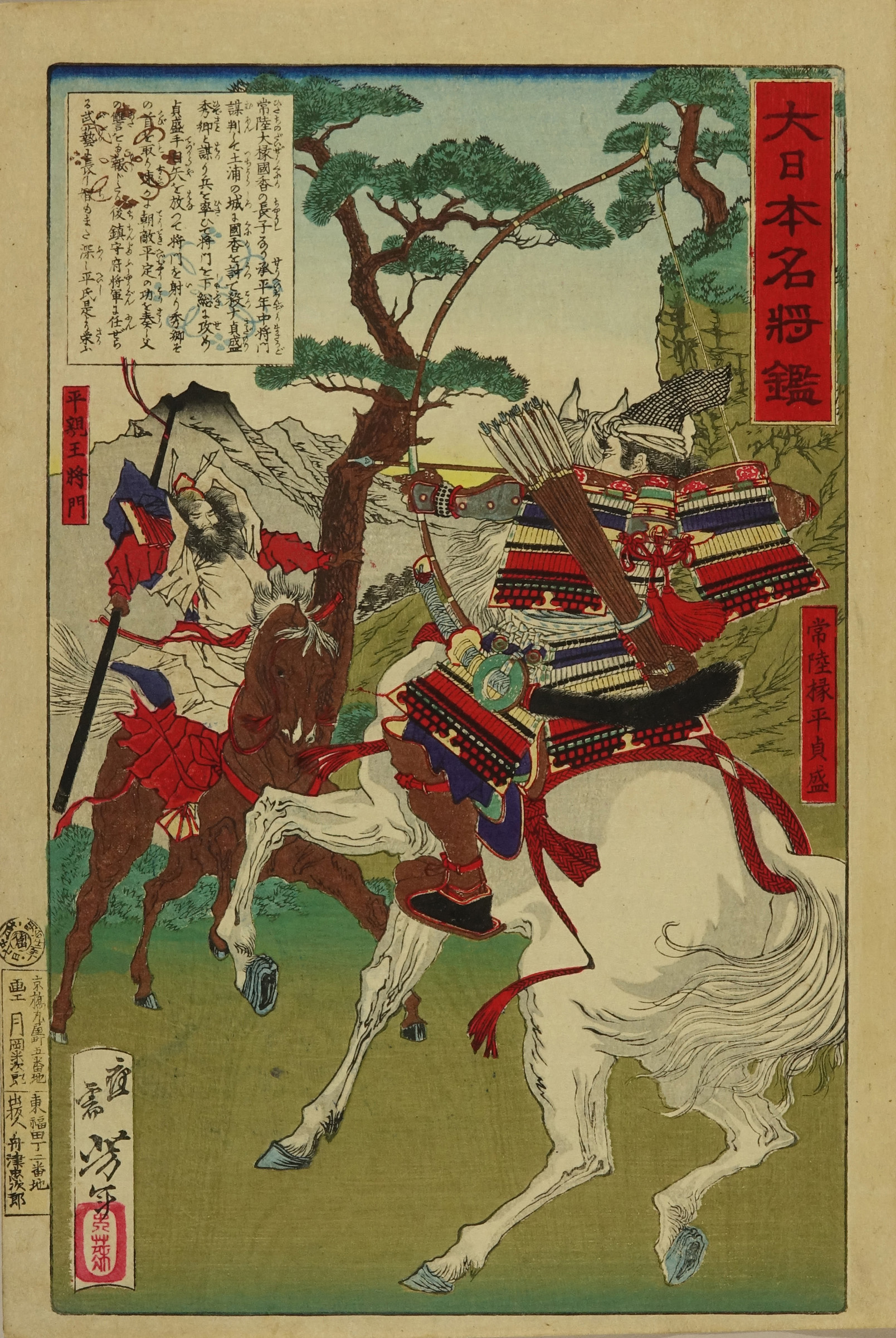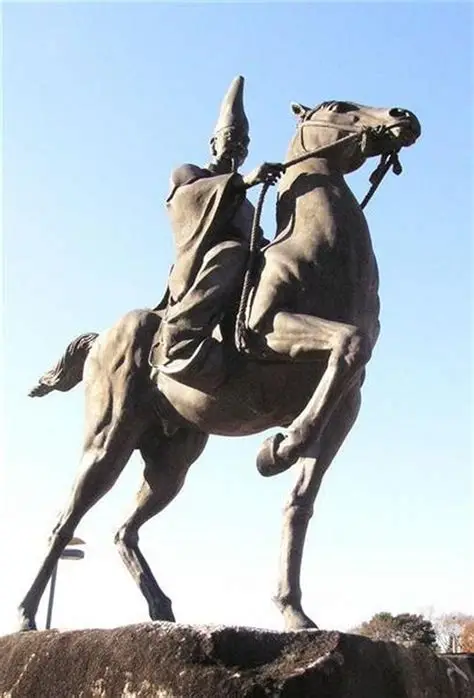
Taira no Masakado.
A man who declared himself the “New Emperor,” shook the Kanto region, and was ultimately defeated on February 14, 940.
To understand the Rebellion of Taira no Masakado,
the details of the rebellion itself are thoroughly explained in this article.
The image of “Taira no Masakado, who gained power in the Kanto, rebelling against the imperial court” emerges.
However, that alone does not reveal the true nature of Masakado.
First of all, why was Taira no Masakado in the Kanto?
Why did Masakado’s family wield influence across Hitachi, Shimosa, and Kazusa?
And why, in the 10th century, did so many powerful figures in the Kanto possess military strength?
The answer begins before Masakado was even born.
1. Taira no Masakado did not start as a “local chieftain born in the Kanto”
Taira no Masakado was born into a lineage connected to Emperor Kanmu.
His grandfather is said to be Prince Takamochi.
Prince Takamochi was a great-grandson of Emperor Kanmu, who left the imperial family and took on the Taira surname.
Then, Takamochi moved to the eastern provinces.
This marked the beginning of the deep connection between the clan later known as the “Kanmu Heishi” and the Kanto region.
Takamochi’s children included,
Taira no Kunika, Taira no Yoshikane, Taira no Yoshimasa (Yoshimochi), Taira no Yoshifumi.
Masakado was born among this family, as the son of Taira no Yoshimasa.
His father’s name varies in historical records between “Yoshimasa” and “Yoshimochi”.
In other words, Masakado was a member of a family that had built power in the eastern provinces, backed by a lineage connected to the imperial court.
2. Why did the Taira clan come to the Kanto?
This is the first point to understand Masakado.
The background to the Taira clan’s rise to power in the Kanto includes,
their descent to the eastern provinces as local officials.
Takamochi is said to have been appointed as the governor of Kazusa.
Kazusa Province is centered around present-day central Chiba Prefecture.
At that time, in Kazusa, a prince was nominally the governor, but the role of the actual administrator, the governor, was significant.
Takamochi entered the eastern provinces and established a foundation there.
Subsequently, his children expanded into areas like Hitachi, Shimosa, and Kazusa.
Taira no Kunika held the position of Daijo in Hitachi, Yoshikane was involved in Kazusa and Shimosa, and Yoshimasa also engaged in military and administrative roles in the eastern provinces.
Thus, the Taira clan intertwined with the local governors and powerful figures of the eastern provinces.
The Taira clan’s strength in the Kanto was not simply because they were warriors.
They had a lineage connected to the central court, entered the eastern provinces as local officials, and accumulated land, people, and military power there.
This is crucial.
3. The Kanto was not “Taira territory”
This is especially important.
It is not accurate to think of the Kanto during Masakado’s time as “completely controlled by the Taira.”
There were many other powerful figures in the eastern provinces besides the Taira.
The Minamoto were there. The Fujiwara were there. Influential families like the Tachibana were also present.
There were also provincial governors, district governors, local magnates, and forces managing pastures.
In other words, the 10th-century Kanto was a society where multiple powerful figures competed over land, people, and interests.
Amidst this, the Kanmu Heishi formed a strong power base centered on Hitachi, Shimosa, and Kazusa.
Therefore, Masakado’s battles cannot be understood as merely “imperial forces versus Taira no Masakado.”
In reality,
there were conflicts within the Taira clan, disputes with local magnates, clashes with provincial governors, and the imperial court’s local governance intertwined.
4. Shimosa, Toyoda, and Sashima where Masakado grew up
Masakado’s stronghold was in the Toyoda and Sashima regions of Shimosa Province.
This area corresponds to present-day western Ibaraki Prefecture and the vicinity of Bando City.
The landscape at that time was entirely different from today.
Rivers like the Kinugawa flowed, and there were many wetlands and marshes.
In such lands, water transport, land development, agriculture, and pastures were crucial.
And to actually control such areas, land alone was not enough.
People to cultivate the land. People to handle transportation. People to manage horses. People who would act as soldiers in times of conflict.
It was necessary to hold these human connections.
Masakado accumulated power within this eastern provincial society.
5. In the eastern provinces, military power became political power
In the Kanto, far from Kyoto, the imperial court’s orders did not directly influence local affairs.
Provincial governors were dispatched from Kyoto.
However, it was the local magnates who knew the land and people best.
Thus, military power became crucial.
When disputes over land arose, they fought.
When family conflicts occurred, they gathered troops.
When clashing with provincial governors, they negotiated with military backing.
In other words, holding land and being able to mobilize troops were closely linked.
The background to Masakado’s ability to lead a large army later on was this structure of eastern provincial society.
6. Masakado went to Kyoto in his youth
Masakado himself did not live solely in the eastern provinces from the start.
In his youth, he went to Kyoto.
He is said to have served under Fujiwara no Tadahira.
This is significant in considering Masakado’s character.
Masakado was not an armed local force unaware of the imperial court’s existence.
He went to the capital, saw central politics, knew aristocratic society, and understood the court’s system.
However, he could not secure a significant position in the center.
Eventually, Masakado returned to the eastern provinces.
And from here, his life changed dramatically.
7. “Family conflict” awaited Masakado upon his return to the eastern provinces
When Masakado returned to the eastern provinces, there were influential figures of the Taira clan.
Among them, the important ones were,
Taira no Kunika
Taira no Yoshikane
Taira no Yoshimasa.
And Kunika’s son was Taira no Sadamori.
Masakado and they were of the same family.
However, precisely because they were kin, they fiercely competed over land and power.
Masakado’s life became a series of battles from here on.
8. 935—The defeat of Taira no Kunika
In the 5th year of Shohei (935), Masakado clashed with the Minamoto clan in Hitachi Province.
This conflict also involved Taira no Kunika and Yoshimasa.
And a battle ensued.
Masakado attacked Kunika’s base and defeated Taira no Kunika.
This was a significant event that greatly changed Masakado’s life.
Moreover, Kunika had a son.
One of them was Taira no Sadamori.
He would later become the man who defeated Masakado.
In other words, the conflict between Masakado and Sadamori began as an internal family dispute within the Taira clan.
This created a significant connection leading to the later Rebellion of Taira no Masakado.
9. Masakado was once summoned by the imperial court
As Masakado’s battles continued, the imperial court also took action.
In the 6th year of Shohei (936), Masakado was summoned to Kyoto due to a complaint by Minamoto no Mamoru.
Masakado headed to Kyoto.
His life did not end there.
He returned home due to a general amnesty accompanying Emperor Suzaku’s coming of age.
Back in the eastern provinces, Masakado again entered into battles with his family.
From 935 to 939, Masakado repeatedly engaged in combat with the Taira clan and surrounding forces.
At this point, he was not yet the “New Emperor.”
Masakado’s battles began as family conflicts in the eastern provinces.
10. 937—The Battle of Kogai Crossing
Among Masakado’s battle history, there is an interesting battle.
The Battle of Kogai Crossing.
In the 7th year of Shohei (937).
Taira no Yoshikane attacked Masakado.
Masakado countered.
However, in this battle, Masakado’s side was defeated.
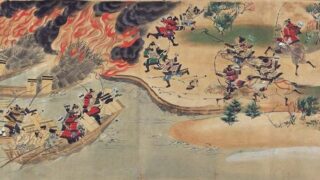
Yoshikane’s forces entered Masakado’s territory and burned his base.
Yet, Masakado did not end there.
He continued to fight around Mount Tsukuba and Ishii’s encampment, rebuilding his forces.
Masakado was not a warrior who disappeared after a single defeat.
Even after a loss, he reorganized his army and returned to the battlefield.
This was Masakado’s strength.
11. 938—Masakado and Taira no Sadamori clash directly
In the 8th year of Shohei (938).
The relationship between Masakado and Taira no Sadamori worsened.
Sadamori attempted to head to Kyoto.
Masakado pursued Sadamori.
The stage was set around the Chikuma River in Shinano Province.
The family conflict in the eastern provinces spread to Shinano.
By this time, the conflict between Masakado and Sadamori had grown beyond a mere family feud.
Sadamori was becoming a key figure in the effort to defeat Masakado.
12. 939—Masakado’s life takes a dramatic turn
In the 2nd year of Tengyo (939), Masakado became involved in issues in Musashi Province.
In Musashi, there was a conflict between the acting governor, Prince Kose, the assistant governor Minamoto no Tsunemoto, and the acting district governor Musashi no Takeshiba.
Masakado intervened as a mediator. However, the situation worsened instead.
Minamoto no Tsunemoto accused Masakado and others of rebellion to the imperial court.
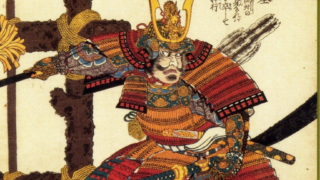
At this point, Masakado’s position was not yet decisive.
However, in November of the same year,
a decisive event occurred.
Due to issues surrounding Fujiwara no Harumitsu in Hitachi, Masakado headed to the Hitachi provincial government.
And he attacked the Hitachi provincial government.
Here, Masakado’s life completely changed.
13. The significance of attacking the provincial government
The provincial government was the administrative center of the province.
The provincial governor conducted governance, handled taxes, and managed the province’s rule.
Masakado attacked it.
Moreover, he seized the provincial seal and key.
The provincial seal was a crucial tool indicating the official authority of the provincial government.
The key was related to the management of warehouses, etc.
In other words, Masakado seized the very core of local administration by force.
From here, Masakado’s actions exceeded the scope of family disputes.
From the imperial court’s perspective, it became a clear challenge to the state’s local governance.
14. Masakado becomes the “New Emperor”
Masakado advanced further.
Shimotsuke. Kozuke. And the Kozuke provincial government.
Here, Masakado is said to have declared himself “New Emperor,” according to the “Shomonki.”
He also appointed provincial governors for the various Kanto provinces, attempting to create a governance system mindful of the imperial court’s structure.
This was the greatest turning point for Masakado as a figure.
935. The battle that began from a family conflict.
939. The attack on the provincial government.
And then “New Emperor.”
In just a few years, he transformed from a family warrior to the ruler of the eastern provinces opposing the imperial court.
15. Why did Masakado advance so far?
Masakado’s actions reflect the realities of eastern provincial society.
Land. Family. Provincial governors. Local forces. Military power.
These were intricately intertwined.
Masakado continued to win within this context.
He extended his influence to Hitachi, Shimotsuke, Kozuke, and various parts of the Kanto.
And by seizing the provincial government,
“the reality that he could control the eastern provinces” became apparent.
The “New Emperor” was a continuation of this trajectory.
16. However, Masakado had formidable opponents
Standing in Masakado’s way were,
Taira no Sadamori and Fujiwara no Hidesato.
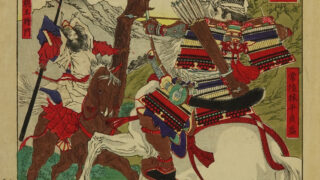
Sadamori was the son of Taira no Kunika.
In other words, he was the person whose father was killed by Masakado.
Hidesato was a powerful figure based in Shimotsuke.
This was fatal for Masakado.
Influential figures familiar with the eastern provincial society sided with the imperial court.
The imperial court issued orders for his pursuit.
In the eastern provinces, Sadamori and Hidesato gathered troops.
Conditions were set to diminish Masakado’s power.
17. February 14, 940—Masakado’s end
In the 3rd year of Tengyo (940).
The campaign to defeat Masakado began.
Masakado’s side gathered troops to counter.
However, maintaining military strength was difficult.
Military forces at the time were not standing armies like in later eras.
People engaged in agriculture or trade participated in military actions as needed.
If battles dragged on, they had to return home.
In fact, after Masakado disbanded his troops, it is recorded in the “Shomonki” that the remaining soldiers, numbering less than 1,000, were attacked by Sadamori and Hidesato’s side.
And on February 14, 940.
The final battle took place around Kitayama in Sashima District, Shimosa Province.
Masakado stood on the battlefield.
And he was struck by a stray arrow, and was defeated.
Masakado’s life ended here.
18. What happened to the Kanto after Masakado’s death?
Even after Masakado’s death, the Taira did not disappear from the Kanto.
On the contrary, the local forces of the Taira, Fujiwara, Minamoto, and others continued to grow in the eastern provinces.
The descendants of those who fought in Masakado’s rebellion became significant figures in later eastern provincial society.
From the descendants of Taira no Sadamori, a lineage leading to the later Ise Taira emerged.
From the descendants of Fujiwara no Hidesato, families like the Ashikaga, Oyama, and Yuki, who became later eastern provincial warriors, emerged.
And from Masakado’s family, a lineage leading to later figures like the Chiba clan was formed.
19. In the latter half of the 10th century, new warrior bands grew in the Kanto
Even after Masakado’s death, local forces in the eastern provinces grew based on land.
Even if provincial governors changed, it was the local magnates who knew the land and human relationships best.
They,
managed land.
Commanded people.
Held military power.
Fought when conflicts arose.
They accumulated such power.
By the 11th century, many warrior bands were formed in the eastern provinces.
Among them, the Minamoto and Taira emerged as major forces.
And in the 12th century,
Minamoto no Yoritomo appeared.
20. Why Kamakura became the political center
When Yoritomo made Kamakura his base, it was not that a warrior society suddenly emerged there.
In the eastern provinces, over a long period,
local magnates with land and warrior bands with military power had grown.
This history began even before Masakado’s time.
Masakado was a figure who, within this flow,
attempted to transform the military power of local forces in the eastern provinces into a broad political authority.
This attempt ended in 940.
However, the warrior society in the eastern provinces itself remained.
21. After Masakado’s death, he became something other than a “traitor”
Masakado’s head was sent to Kyoto and displayed at the East Market.
To the imperial court, Masakado was a rebel.
However, legends about Masakado began to emerge.
The head laughed. The head flew back to the eastern provinces. Even after death, he threatened the capital as a vengeful spirit.
These legends spread, and eventually, Masakado came to be worshipped as a deity.
The Masakado Mound in present-day Otemachi, Tokyo, symbolizes this long-standing faith.
The eastern provincial warrior defeated in 940 is still worshipped in Tokyo over a thousand years later.
This fact alone shows how powerful a presence Taira no Masakado was in Japanese history.
Taira no Masakado—The true identity of the “New Emperor” born in the Kanto
Taira no Masakado was not a rebel who suddenly appeared in the Kanto.
The Taira clan, connected to Emperor Kanmu, descended to the eastern provinces, entered local society as officials, and accumulated land, people, and military power.
Masakado was born from that family.
He went to Kyoto and learned about the central world.
Upon returning to the eastern provinces, he became embroiled in conflicts with his family and local forces, defeating Taira no Kunika in 935.
In 937, he fought Taira no Yoshikane at Kogai Crossing, and in 938, he pursued Taira no Sadamori to Shinano.
And in 939,
he attacked the Hitachi provincial government and seized the provincial seal and key.
At the Kozuke provincial government, he declared himself “New Emperor” and embarked on ruling the Kanto provinces.
Immediately afterward, the imperial court and influential figures in the eastern provinces moved to defeat Masakado.
Taira no Sadamori. Fujiwara no Hidesato.
And on February 14, 940,
Masakado was defeated.
However, even after Masakado’s death, the warrior society in the eastern provinces did not end.
The local forces of the Taira, Fujiwara, Minamoto, and others continued to grow, and from the 11th to the 12th century, eastern provincial warrior bands developed.
And they connected to Kamakura.
Therefore, when looking at Taira no Masakado, it is important not to see him as merely “a man who rebelled against the imperial court.”
A family that moved from the central aristocratic society to the eastern provinces.
Local forces that accumulated power based on land.
An eastern provincial society that grew with military power.
Taira no Masakado emerged from this context.
Masakado climbed to the pinnacle of that world.
And he declared himself “New Emperor.”
Just a few months later, his life was ended by a single arrow.
Yet, even after Masakado’s death, warriors in the eastern provinces continued to grow in power.
Beyond that lies Kamakura.
Taira no Masakado’s life ended on February 14, 940.
However, the history of the eastern provinces where Masakado lived continued to evolve significantly from there.
In the eastern provinces, Taira no Masakado rebelled against the imperial court and declared himself “New Emperor.”
However, Masakado was not the only one shaking the imperial court during this era.
Around the same time, disturbances were occurring in the Seto Inland Sea in western Japan.
At the center of this was Fujiwara no Sumitomo.
While Masakado swept through the eastern provinces, Sumitomo expanded his influence in the Seto Inland Sea.
And his ultimate target was the attack on Dazaifu.
Masakado in the east, Sumitomo in the west.
Why did such significant rebellions occur in both the east and west during the same period?
Next, we will follow the Rebellion of Fujiwara no Sumitomo, which shook the imperial court in the Seto Inland Sea.
For those who want to delve deeper into the Rebellion of Taira no Masakado.
“Why did Masakado fight?” can be explored from both the “Shomonki” and historical perspectives in this book.

Taira no Masakado and the Tengyo Rebellion (Kodansha Gendai Shinsho) [ Naishi Masahiko ]