July 25, 1183, Kyoto.
Taira no Koremori was donning his armor, preparing to mount his horse.
With Minamoto no Yoshinaka’s forces closing in on the capital, the Taira clan had decided to escort Emperor Antoku to the western provinces.
Koremori had to depart as well.
However, his ten-year-old son, Rokudai, and his eight-year-old daughter rushed to him, clinging to his armor’s sleeves and skirt.
They pleaded to be taken along.
The young children cried, refusing to let go.
The “Tale of the Heike,” Volume Seven, “Koremori’s Departure from the Capital,” vividly recounts the farewell between father and children on this day.
Koremori comforted his children and bid farewell to his wife, promising to send for them once a safe place was found.
At that moment, his brother Taira no Sukemori and others arrived.
Emperor Antoku’s procession had already progressed far. They needed to leave quickly.
Koremori finally mounted his horse.
Yet, just before passing through the gate, he brought his horse back to the veranda once more.
He lifted the bamboo blinds with the tip of his bow, gazing at his wife and children.
Koremori was 26 years old at the time.
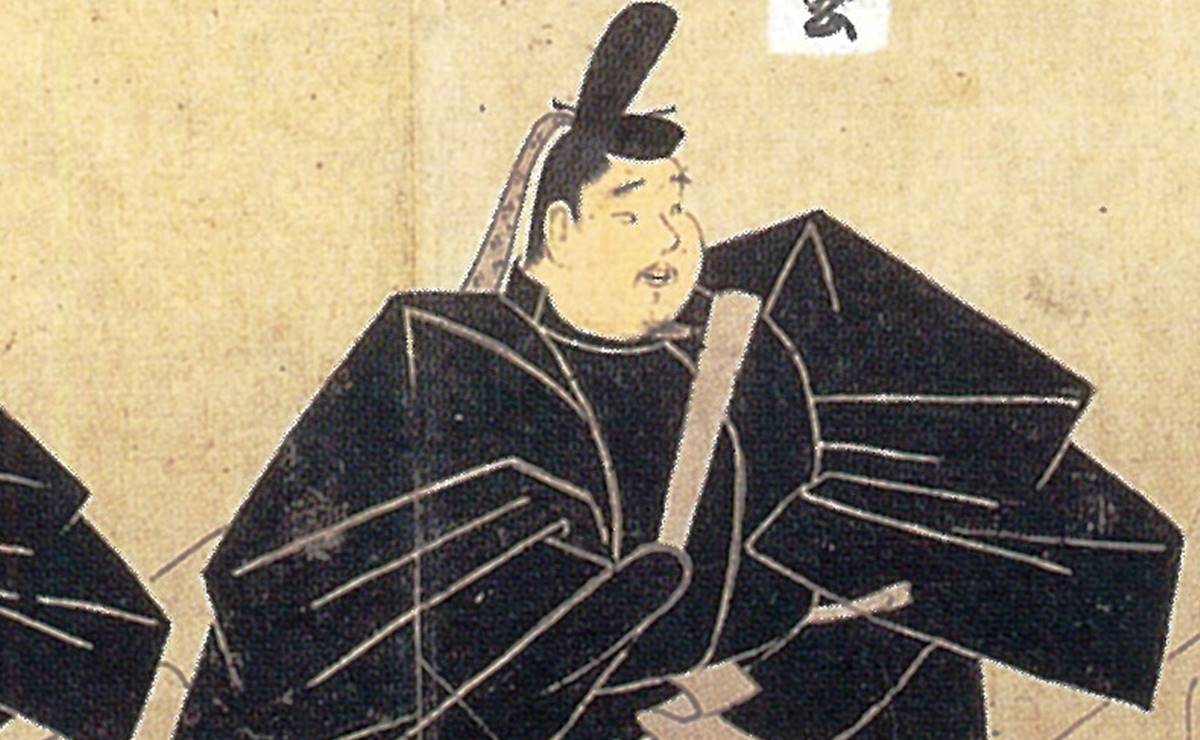
He was the grandson of Taira no Kiyomori and the eldest son of the Minister of the Interior, Taira no Shigemori.
Once likened to Hikaru Genji in the court, he was expected to become a minister or general in the future.
However, the punitive expedition against Minamoto no Yoritomo had collapsed at the Fuji River in the east, and they suffered a crushing defeat to Minamoto no Yoshinaka at Kurikara Pass in the north.
The Taira clan was driven from Kyoto, and Koremori left his family behind to head west.
Eight months later.
Koremori vanished from the clan’s forces.
According to the “Tale of the Heike,” he took vows at Mount Koya, visited the Kumano Sanzan shrines, and on March 28, 1184, he drowned himself off the coast of Nachi.
He was 27 years old.
However, alternative accounts of his end remain.
Why did the eldest son of Shigemori, once seen as Kiyomori’s successor, leave his clan?
Taira no Shigemori’s Eldest Son—Raised as Kiyomori’s Grandson
Taira no Koremori was born around the third year of the Hogen era (1158) as the eldest son of Taira no Shigemori.
There are various theories about his birth year, but according to the “Tale of the Heike,” he was 27 years old at the time of his death in the third year of the Juei era.
His grandfather was Taira no Kiyomori.
His father, Shigemori, was Kiyomori’s eldest son and participated in the Hogen Rebellion and the Heiji Rebellion, rising to the rank of Minister of the Interior at the imperial court.
The identity of Koremori’s mother is uncertain, as different genealogies provide different accounts.
His brothers included Sukemori, Kiyotsune, Arimori, Morimori, and Tadahira.
Shigemori, alongside his father Kiyomori, was active on the battlefield while also advancing his rank at court.
In the second year of the Nin’an era (1167), he became Acting Major Counselor, and by the third year of the Angen era (1177), he had risen to Minister of the Interior.
He was seen as Kiyomori’s successor, possessing his own retainers and fiefs.
As Shigemori’s eldest son, Koremori served at court from a young age.
In the second year of the Nin’an era, he received a court rank and became the Acting Governor of Mino.
By the second year of the Kōō era (1170), he was appointed Acting Minor Captain of the Right Imperial Guards, and in the second year of the Jōan era (1172), he also served as Acting Assistant to the Empress.
The Empress was Kiyomori’s daughter, Taira no Tokuko.
Koremori obtained a position serving Tokuko and began participating in court events.
Just as his father Shigemori was expected to succeed Kiyomori, Koremori, as the eldest son, was also seen as a promising figure for the future.
In the second year of the Angen era (1176), Koremori performed a memorable dance at court.
Sakuraba Shosho—The Seigaiha Dance at Emperor Go-Shirakawa’s Celebration
March of the second year of the Angen era.
A grand celebration was held at Hojuji Palace to mark Emperor Go-Shirakawa’s fiftieth birthday.
Emperor Takakura celebrated his father’s longevity, with courtiers and nobles gathering for the splendid event.
Bugaku, traditional court music and dance, was also performed.
It is said that Koremori performed the Seigaiha dance at this event.
The Seigaiha is an elegant dance performed by two people, also featured in “The Tale of Genji” during the “Momijiga” chapter.
In the tale, Hikaru Genji performs the dance with Tō no Chūjō, and their beauty is widely praised.
It is said that the sight of Koremori reminded people of Hikaru Genji.
There was a woman who remembered this scene even years later.
She was the Lady of the Right of Kenreimon-in.
The Lady of the Right served Tokuko, the daughter of Kiyomori, and was also on friendly terms with Koremori’s younger brother, Sukemori.
In her work, ‘The Collection of the Lady of the Right of Kenreimon-in,’ there is a passage praising Koremori’s appearance.
“His form and preparation were truly unparalleled, with no equal among those seen in the past or present.”
Koremori’s appearance and demeanor were unmatched, even among all the people she had seen from past to present.
When he performed the Seigaiha dance at the celebration of the Hojuji Palace, it is said that people were reminded of Hikaru Genji.
The ‘Tale of the Heike’ also contains scenes that convey Koremori’s beauty.
His appearance, dancing with a cherry blossom branch tucked into his eboshi, was likened to a flower adorned with dew.
Koremori was called “the Young General of Cherry and Plum.”
At the time, he was still a young general, but he was expected to rise to the ranks of minister or general in the future.
His father, Shigemori, had advanced to a high-ranking court official as a warrior, and Koremori was also raised within the court.
However, behind this glamorous life, the conflict between the Taira clan and the Retired Emperor Go-Shirakawa was intensifying.
Koremori’s wife’s family was also caught up in this struggle.
Her Father, Fujiwara no Narichika—Relatives Lost in the Shishigatani Incident
Koremori’s wife was the daughter of Fujiwara no Narichika.
Narichika was a court noble who was favored as a close aide to the Retired Emperor Go-Shirakawa, rising to the position of Gon-Dainagon.
He also had close familial ties with Koremori’s father, Shigemori.
In the first year of Jisho (1177), Narichika was captured by Kiyomori for being involved in a plot to overthrow the Taira clan.
This was the Shishigatani Incident.
Kiyomori punished the close aides of the Retired Emperor Go-Shirakawa, executing Saiko.
Shunkan and others were exiled to Kikaigashima, and Narichika was banished to Bizen Province.
Narichika lost his life in exile that same year.
The ‘Tale of the Heike’ details the circumstances of Narichika’s murder, though there are discrepancies in the historical sources regarding the specifics of his execution.
Koremori’s wife was Narichika’s daughter.
Koremori took as his wife a woman who had lost her father due to her grandfather Kiyomori’s actions.
In the ‘Tale of the Heike,’ when Koremori later parts from his wife, it is repeatedly mentioned that she was a woman who had lost both her parents.
Meanwhile, Shigemori was trying to maintain relations with the Retired Emperor Go-Shirakawa.
The ‘Tale of the Heike’ tells of Shigemori’s efforts to save Narichika’s life after he was captured by Kiyomori.
However, the conflict between Kiyomori and the Retired Emperor Go-Shirakawa did not subside.
In the midst of this, Shigemori fell ill.
On July 29, in the third year of Jisho (1179).
Taira no Shigemori has passed away.
He was 42 years old.
Taira no Koremori was about 22 years old by traditional Japanese age reckoning.
The Death of Shigemori—Munemori Becomes the Successor
Shigemori’s death altered the succession dynamics within the Taira clan.
Shigemori had many sons, including Koremori.
Koremori was in a position to inherit his father’s household as the eldest son.
However, the one who became the central figure of the clan as Kiyomori’s successor was Koremori’s uncle, Taira no Munemori.
Munemori was Kiyomori’s third son, and his mother was Kiyomori’s principal wife, Taira no Tokiko.
Tokiko’s sister, Taira no Shigeko, became a favored consort of Emperor Go-Shirakawa and gave birth to Emperor Takakura.
Through his maternal connections, Munemori was deeply tied to the imperial family and had already risen to the rank of Acting Grand Counselor.
Koremori was still in the process of advancing from his position as Minor Captain of the Palace Guards.
There was a significant gap in both age and rank between the uncle and nephew.
Moreover, after Shigemori’s death, Echizen Province became part of Emperor Go-Shirakawa’s domain, further changing the circumstances surrounding Shigemori’s family.
That year, the relationship between Kiyomori and Emperor Go-Shirakawa deteriorated irreparably.
In June, Kiyomori’s daughter, Taira no Moriko, passed away, leading to disputes over the management of the estates she had overseen.
Further conflicts arose over personnel matters within the regent family.
In November, Kiyomori led his forces from Fukuhara into Kyoto.
He ousted Regent Matsudono Motofusa, appointed Konoe Motomichi as the new regent, and confined Emperor Go-Shirakawa to the Toba Palace.
This was the political upheaval of the third year of the Jisho era.
In the following year, Jisho 4 (1180), in February, Emperor Antoku ascended the throne.
He was Kiyomori’s grandson and Koremori’s cousin, a young emperor.
The Taira clan secured an even more prominent position in the imperial court.
However, in May of the same year, Prince Mochihito and Minamoto no Yorimasa raised an army.
Following this, in August, Minamoto no Yoritomo raised his forces in Izu.
The Taira clan dispatched troops to suppress uprisings in various regions.
The general chosen to defeat Yoritomo in the eastern provinces was Taira no Koremori.
The 23-Year-Old General Leading the Taira Forces Along the Tokaido
August 23, 1180.
Minamoto no Yoritomo was defeated by Oba Kagechika and others at Ishibashiyama.
However, he fled to Awa Province and regrouped on the Boso Peninsula.
Chiba Tsunetane and Kazusa Hirotsune joined his cause, and influential warriors in Musashi Province also pledged their allegiance to Yoritomo.
On October 6, Yoritomo entered Kamakura.
To quell the rebellion in the eastern provinces, Kiyomori dispatched a punitive force.
The commander-in-chief was Taira no Koremori.
He was 23 years old by traditional Japanese counting.
The army included Taira no Tadanori and other clan warriors.
The practical support came from Ito Tadakiyo.
Tadakiyo was a prominent retainer of the Taira and Koremori’s foster father.
He had been involved in military activities since the time of Kiyomori and Shigemori, gaining extensive battlefield experience.
The ‘Heike Monogatari’ vividly depicts Koremori’s warrior appearance as he headed east.
A courtier who once performed court dances now donned armor and led his troops along the Tokaido.
However, the march did not proceed smoothly.
In the eastern provinces, the number of warriors siding with Yoritomo continued to grow.
In Suruga Province, Takeda Nobuyoshi of the Kai Genji and others moved their forces, attacking local warriors loyal to the Taira.
By the time Koremori and his forces arrived in Suruga, the situation had already turned against the Taira.
October 20.
Koremori’s forces set up camp on the western bank of the Fuji River.
From the east, Yoritomo was advancing, and the Kai Genji were deploying troops around them.
The Retreat at the Fuji River—Koremori and Ito Tadakiyo’s Decision as Recorded in the ‘Gyokuyo’
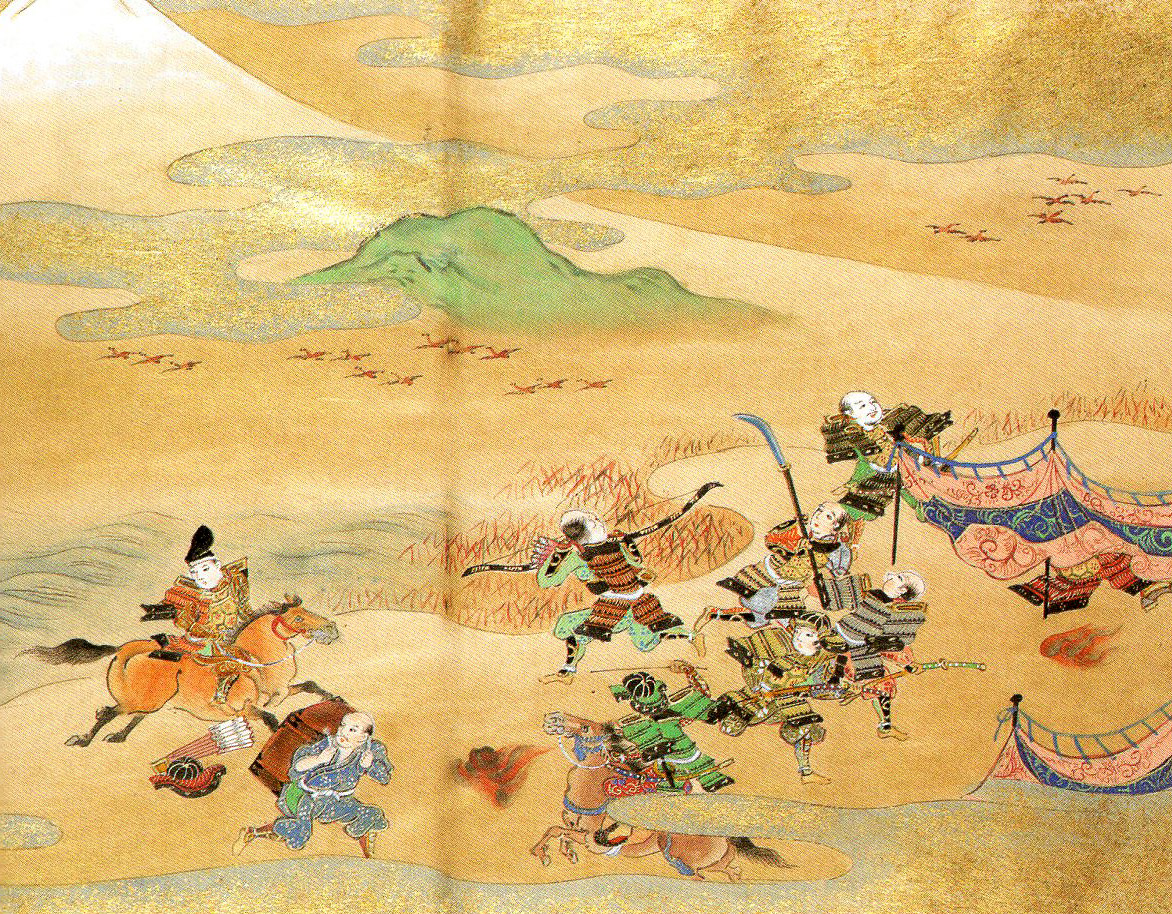
The Battle of Fujikawa is famous for the Taira forces fleeing in panic at the sound of waterfowl taking flight.
The “Tale of the Heike” records that the Taira army numbered over seventy thousand horsemen.
However, the number of troops recorded in the diary “Gyokuyo” by Kujō Kanezane is significantly different.
The Taira forces that arrived at Fujikawa numbered just over four thousand horsemen.
Moreover, many soldiers deserted from the camp, leaving only about one to two thousand men.
Taira no Koremori and his men had also heard reports that the Kai Genji forces were very numerous.
According to “Gyokuyo,” Itō Tadakiyo advised a retreat.
Initially, Koremori intended to fight.
Tadakiyo explained the state of the troops and continued to urge withdrawal.
Other warriors also sided with Tadakiyo, and Koremori eventually accepted the retreat.
That night, waterfowl near Fujikawa suddenly took flight.
The “Tale of the Heike” describes how the Taira forces, mistaking the sound for an enemy attack, fell into chaos and fled in a panic.
The “Azuma Kagami” also contains a story about the sound of the waterfowl.
In reality, the Taira forces were already weakened by the time they reached Fujikawa, and with the advance of the Kai Genji, the punitive army found itself in a dire situation.
According to “Gyokuyo,” Koremori decided to retreat based on Tadakiyo’s advice.
The Taira army withdrew westward without engaging in a large-scale battle.
Koremori ended up leading the defeated troops back to Kyoto.
Kiyomori’s Wrath—The Order to Exile to Kikaigashima
Upon Koremori’s return from Fujikawa, Kiyomori reportedly reprimanded him harshly.
The fifth volume of the “Tale of the Heike,” “Gosechi Zata,” recounts that Kiyomori ordered Koremori to be exiled to Kikaigashima and Itō Tadakiyo to be executed.
Kikaigashima was known as the place where Shunkan and others were exiled following the Shishigatani Incident.
The tale suggests that Kiyomori could not forgive Koremori and his men for returning without properly engaging in battle.
However, there was opposition from the Taira retainers regarding Tadakiyo’s execution.
Tadakiyo had long served Kiyomori and Shigemori, supporting the clan’s military activities.
The retainers could not accept the execution of such a figure over a single defeat.
In the end, Tadakiyo was not executed, and Koremori was not exiled.
In November of the same year, Koremori was promoted to the position of Provisional Middle Captain of the Right Guards.
The “Tale of the Heike” notes that people found it suspicious that he was promoted so soon after the retreat.
Whether Kiyomori actually ordered the exile to Kikaigashima cannot be confirmed from contemporary records.
Meanwhile, Koremori’s promotions continued at the court.
Leading the punitive army at Fujikawa was Koremori’s first large-scale expedition.
The following year, Koremori would once again face the forces of the Genji.
Victory at the Sumimata River—Koremori Becomes a Court Noble
February 4, 1181 (leap month).
Taira no Kiyomori passed away.
He was 64 years old.
After Kiyomori’s death, Munemori became the head of the Taira clan.
The following month, near the Sumimata River in Owari Province, the Taira forces clashed with the army of Minamoto no Yukie.
Minamoto no Yukie was the uncle of Yoritomo and had spread Prince Mochihito’s call to arms to the various Minamoto factions.
Among the Minamoto forces was Yoshitsune’s brother, Yoshiyuki.
Leading the Taira side was Kiyomori’s son, Taira no Shigehira.
Koremori also participated in the battle.
The battle concluded with a Taira victory, forcing Yukie’s forces to retreat.
Yoshiyuki was killed in action.
About five months had passed since the retreat at the Fuji River.
This time, Koremori returned to Kyoto as part of the victorious army.
On June 10 of the same year, Koremori was appointed as Provisional Middle Captain of the Right Guards and also served as Chief of the Kuroudo.
The Chief of the Kuroudo was a crucial position, responsible for handling the emperor’s documents and orders as a close aide.
Later, in December of the first year of Yowa (1181), he was promoted to Junior Third Rank.
Koremori joined the ranks of the court nobles.
This is why he came to be known as “Komatsu Sanmi Chujo.”
His father, Shigemori, rose to the rank of Minister of the Interior, and his heir, Taira no Koremori, also attained the high court rank of Third Rank Middle Captain.
However, in the eastern provinces, Minamoto no Yoritomo was consolidating his power, while in the Hokuriku region, Minamoto no Yoshinaka was gathering anti-Taira warriors.
Munemori organized a large punitive expedition to the Hokuriku region.
Once again, Koremori was chosen as one of the commanders.
The Hokuriku Expeditionary Force—Capturing Hiuchi Castle and Advancing to Tonami Mountain
April, 1183.
The Taira clan dispatched a large army to the Hokuriku region to defeat Minamoto no Yoshinaka.
In addition to Koremori, Taira no Tomomori, Taira no Chikato, Taira no Tsunemasa, and Taira no Kiyomori’s other relatives joined the campaign.
The Tale of the Heike mentions an army of over 100,000 horsemen, though the actual number of troops is unknown.
The Taira clan aimed to suppress the rebellion in the Hokuriku region by deploying a large number of their own warriors.
The forces advanced from Omi to Echizen.
In Echizen, warrior monks from Heisenji Temple and local samurai had joined Yoshinaka’s side.
One of their strongholds was Hiuchi Castle.
According to the Tale of the Heike, the castle’s defenders dammed the river to prevent the Taira forces from approaching.
However, Saimei, the chief priest of Heisenji, secretly communicated with the Taira, revealing how to drain the water.
The Taira army captured Hiuchi Castle and advanced into Kaga.
This occurred in late April.
But upon entering Etchu, they found Minamoto no Yoshinaka’s forces waiting for them.
May 11.
At Tonami Mountain, which straddles the border between Kaga Province and Etchu Province, the Taira and Yoshinaka’s forces faced off.
This was the Battle of Kurikara Pass.
The Great Defeat at Kurikara Pass—The Collapse of the Second Punitive Expedition
Kurikara Pass lies on the border between present-day Tsubata Town in Ishikawa Prefecture and Oyabe City in Toyama Prefecture.
The Hokuriku Road ran along the mountain ridge, surrounded by steep slopes and valleys.
According to the Tale of the Heike, Yoshinaka divided his forces to encircle the Taira army.
While attacking from the front, he sent another unit to flank them via the mountain paths.
By nightfall, war cries rose from behind the Taira forces as well.
Soldiers and horses surged onto the narrow path, causing many to fall into the valley.
This battle later became known as the “Kurikara Drop.”
The “Gikeiki” describes the “Fire Ox Strategy,” where torches were tied to oxen’s horns and driven into enemy lines.
However, the tale of the fire oxen appears in later military chronicles, and there is no definitive proof it was actually used.
Though Taira no Koremori and his forces managed to escape the battlefield, the Taira army suffered significant losses.
They were defeated again at Shinohara in Kaga Province, and Yoshinaka’s forces advanced from Echizen to Omi.
The “Gyokuyo” also records the defeat of the northern expeditionary force.
In this battle, Saito Bettou Sanemori, who had followed Koremori, was killed in action.
Sanemori was an old warrior based in Nagai Manor, Musashi Province, who had joined the Taira in their northern campaign.
The “Heike Monogatari” recounts that he dyed his gray hair black before fighting and dying in battle.
Koremori experienced another defeat of the punitive forces at Kurikara Pass, following the one at the Fuji River.
Now, even Kyoto itself was in danger.
Yoshinaka’s forces pressed into Omi, and Enryaku-ji Temple also refused to cooperate with the Taira.
The Taira had lost the military strength to protect the capital.
July 25, 1183 — Leaving Wife and Children in Kyoto
Between the night of July 24 and the early morning of July 25, Emperor Go-Shirakawa fled Kyoto and moved to Mount Hiei.
Munemori gave up on resisting in the capital.
July 25.
The Taira clan, accompanied by Emperor Antoku and the Imperial Regalia, headed west.
Koremori was to follow the clan.
However, he had a wife, the daughter of Fujiwara no Narichika, and two children in Kyoto.
The “Heike Monogatari,” Volume Seven, “Koremori’s Departure from the Capital,” notes that Rokudai was ten years old and his sister, the princess, was eight.
Koremori did not attempt to take his wife and children with him.
The road to the west was fraught with enemies lying in wait.
There was no guarantee of safely passing through with young children.
Koremori reportedly told his wife that if she heard of his death, she should not become a nun but instead raise their children.
However, his wife could not accept those words.
She had neither father nor mother left.
She had lived with her husband and vowed never to part, even in death.
And now, he was telling her to rely on someone else to live.
The “Heike Monogatari” recounts her plea.
Koremori promised that he would send for them once he found a safe place.
He then donned his armor and prepared to depart.
At that moment, Rokudai and the princess ran to their father, clinging to his armor sleeves and skirt.
They pleaded to be taken along.
The two children cried and refused to let go.
Then, his younger brothers, Tomomori, Kiyotsune, Arimori, Tadahira, and Morimasa, arrived.
The procession of Emperor Antoku had already advanced far into the distance.
How long would they remain here?
Urged by his younger brothers, Taira no Koremori finally mounted his horse.
However, before leaving the gate, he once again brought his horse close to the veranda.
He lifted the bamboo blinds with the tip of his bow and gazed at his wife and children.
The “Tale of the Heike” records that Koremori shed tears.
It is said that his brothers, who were in the garden, also wept upon seeing this.
Koremori urged his horse forward.
He left his wife and two children in Kyoto and headed west.
The Sons of Saito Sanemori—Brothers Entrusted with Rokudai
During the fall of the capital, two young retainers sought to follow Koremori.
They were brothers named Saito Go and Saito Roku.
According to the “Tale of the Heike,” the elder brother was 19 years old by count, and the younger was 17.
Their father was Nagai Saito Betto Sanemori.
That May, he had died in battle as an old warrior at the Battle of Shinohara in Kaga Province.
The brothers clung to Koremori’s horse, pledging to accompany him wherever he went.
But Koremori held them back.
When their father Sanemori set out for the north, he did not take his sons with him.
Even though the brothers wished to follow, Sanemori had his reasons and left them in Kyoto.
Sanemori later perished at Shinohara.
Koremori told the brothers that perhaps their father had foreseen this outcome.
He then informed them that Rokudai remained in Kyoto.
Leaving behind the young Rokudai, he needed someone trustworthy to care for him.
He pleaded with them to stay in the capital and protect Rokudai.
The brothers, holding back tears, accepted Koremori’s request.
They saw Koremori off.
Having just lost their father in the north, Koremori entrusted his own son to the brothers.
The Taira Clan’s Descent to the West—Doubts Between Koremori and Munemori
After leaving Kyoto, the Taira clan headed towards Kyushu via Fukuhara.
However, resistance from Ogata Koreie and others in Bungo Province made it difficult to establish a stable base around Dazaifu.
The clan returned to the Seto Inland Sea, gathering their forces around Yashima in Sanuki Province.
In the intercalary October of the second year of Juei, the Taira defeated the forces of Minamoto no Yoshinaka at Mizushima in Bitchu Province.
In November, they also achieved victory over the forces of Minamoto no Yukie at Mount Muro in Harima Province.
The Taira clan regained their strength in the western provinces and by the New Year of Juei 3 (1184), they had advanced to the vicinity of Fukuhara.
Key figures in the battles at Mizushima and Mount Muro were Taira no Tomomori and Taira no Shigehira.
There are no detailed records of what actions Koremori took in these battles.
During this period, differences in the positions of various houses within the Taira clan began to emerge.
Kiyomori’s half-brother, Taira no Yorimori, chose to separate from the clan and remain in Kyoto.
Yorimori’s mother, Ike no Zenni, is known for having pleaded with Kiyomori to spare the young Yoritomo’s life after the Heiji Rebellion.
Yorimori later deepened his ties with Yoritomo.
Koremori’s wife was also the daughter of Fujiwara no Narichika, who had been executed by Kiyomori.
In the “Koya Volume” of the “Tale of the Heike,” it is depicted that Munemori and Taira no Tokiko began to suspect Koremori after seeing his longing for his wife and children in Kyoto.
Could it be that, like Lord Yorimori, he intended to side with the Minamoto?
Koremori himself reportedly spoke of being perceived this way later on.
Whether Munemori or Tokiko actually doubted Koremori cannot be confirmed.
However, the “Tale of the Heike” conveys this suspicion in detail as the reason for Koremori’s departure from the clan.
The tale narrates that even after descending to the western provinces, Koremori could not forget his wife and children left behind in Kyoto.
And in February of Juei 3, the Taira forces suffered a significant defeat at Fukuhara.
The Defeat at Ichinotani—The Disappearance of the Third Rank General from Yashima
February 7, Juei 3.
The forces of Minamoto no Noriyori and Yoshitsune launched an attack on the Taira forces around Fukuhara in Settsu Province.
This was the Battle of Ichinotani.
The Taira clan suffered a crushing defeat, and among those who perished in battle were Taira no Tadamori, Taira no Tadanori, Taira no Atsumori, and Taira no Tsunemori.
Taira no Shigehira was captured alive, and Munemori and others retreated to Yashima, taking Emperor Antoku with them.
It remains unclear whether Taira no Koremori participated in this battle or what specific actions he took.
The exact timing of when he parted from his clan is also uncertain, though it is thought to be around the time of the Battle of Ichinotani.
According to the “Heike Monogatari,” after the defeat at Ichinotani, Koremori secretly left the camp at Yashima.
It is said that Koremori headed to the province of Kii and visited Mount Koya.
There, he encountered Takiguchi Nyudo, who had once served Shigemori.
His former name was Saito Tokiyori.
He appears in the “Heike Monogatari” as a man who, after ending a romance with a woman named Yokobue, became a monk and entered Mount Koya.
Koremori sought out Takiguchi Nyudo.
Once praised at court, Koremori was now weathered and worn by the sea breeze.
Takiguchi Nyudo was taken aback.
Why had he left Yashima?
Koremori confessed that he could not forget his wife and children left in Kyoto and that Munemori and Tokiko had begun to doubt him.
He longed to see his family once more.
However, returning to Kyoto risked capture by the Minamoto forces.
The capture of Shigehira at Ichinotani also weighed heavily on Koremori’s mind.
Koremori decided to take vows as a monk at Mount Koya and make a pilgrimage to the Kumano Sanzan.
Yosaburo Shigekage—A Debt of Gratitude from His Father’s Time
There were retainers who followed Koremori from Yashima.
They were Yosaburo Shigekage and Ishidomaru.
The “Heike Monogatari” volume ten, “Koremori’s Ordination,” details the relationship between Shigekage’s family and the Komatsu family.
Shigekage’s father was Yosazaemon Kageyasu.
During the Heiji Rebellion, he followed Taira no Shigemori and fought against the forces of Minamoto no Yoshihira, where he met his end in battle.
At that time, Shigekage was only two years old.
He did not remember his father’s face.
Furthermore, when he was seven, his mother also passed away.
Shigemori took the young Shigekage under his care.
Kageyasu was a warrior who had lost his life for Shigemori’s sake.
It is said that he raised Kageyasu’s son with great care and even oversaw his coming-of-age ceremony.
Shigekage’s childhood name was Matsuō.
It is said that Shigemori, known as Komatsu-dono, gave him this name.
Furthermore, at his coming-of-age ceremony, Shigemori bestowed upon him the character “Shige” from his own name, allowing him to take the name Shigekage.
Even on his deathbed, Shigemori summoned Shigekage and instructed him to serve Taira no Koremori, as recorded in the ‘Heike Monogatari.’
Shigekage had come to Mount Koya with Koremori.
Before taking vows, Koremori called Shigekage and Ishidomaru to his side.
He declared his intention to become a monk.
He asked them to return to Kyoto, assist his remaining family, and pray for his soul.
However, Shigekage refused.
His father had sacrificed his life for Shigemori, and he himself had been raised under that debt of gratitude.
He could not abandon Koremori now.
Shigekage expressed this sentiment and reportedly cut his own topknot.
Ishidomaru followed suit.
Ishidomaru had served Koremori since he was eight years old and was said to be eighteen at the time.
The two had their heads shaved by Takiguchi Nyudo.
Koremori witnessed this and then shaved his own head.
His Buddhist name was Jōen.
According to the ‘Heike Monogatari,’ both Koremori and Shigekage were twenty-seven years old.
“Karawa” and “Ko-garasu”—The Heirlooms Entrusted to the Sixth Generation of the Taira Clan
After becoming a monk, Koremori summoned his retainer, Takezato.
According to the ‘Heike Monogatari,’ Koremori instructed Takezato to return to Yashima and deliver a message to his family.
Among the messages was a reference to the Taira clan’s treasured heirlooms.
The armor known as “Karawa.”
The sword called “Ko-garasu.”
These treasures have been passed down as heirlooms within the family since the time of Taira no Sadamori.
Taira no Korehira spoke of how they had been inherited through nine generations up to his own time.
He requested that if fortune favored the family and they could return to Kyoto, these armors and swords should be given to Rokudai.
Rokudai was his legitimate son left in Kyoto.
During the fall of the capital, he entrusted himself to the brothers Saito Go and Saito Roku.
Having taken vows at Mount Koya, Taira no Korehira now sought to leave the family treasures to Rokudai.
The legends surrounding the Togarawa and Kogarasu Maru are detailed in the “Tale of the Heike.”
However, confirming the story that the same items were passed down through nine generations since Taira no Sadamori as historical fact is difficult.
In the “Tale of the Heike,” Taira no Korehira is depicted as attempting to pass on the heirlooms of the Taira clan to his son as he concluded his life as a warrior at Mount Koya.
It is said that Takezato wept upon hearing Korehira’s words.
He then requested to remain by Korehira’s side until the end.
Korehira granted this request.
The group left Mount Koya and headed towards Kumano.
Pilgrimage to the Three Mountains of Kumano—Recalling His Father Shigemori’s Prayers
Leaving Mount Koya, Korehira and his party set their sights on the Three Mountains of Kumano.
In the “Tale of the Heike,” Volume Ten, “Pilgrimage to Kumano,” it is said they visited Kumano Hongu, Shingu, and Nachi in that order.
Kumano was a sacred site that had long attracted the faith of retired emperors and nobles.
Emperor Go-Shirakawa also made frequent pilgrimages there.
Korehira’s father, Shigemori, also has anecdotes related to Kumano.
According to the “Tale of the Heike,” Shigemori once made a pilgrimage to the Kumano Gongen, praying that his father, Kiyomori, would not harbor evil intentions.
He wished that if Kiyomori’s actions could be corrected, he would not mind shortening his own life.
So the story goes.
It is said that when Korehira visited Kumano Hongu, he recalled his father’s prayers.
Shigemori had already passed away.
Kiyomori was also no longer in this world.
Korehira is said to have prayed for his own peaceful passing before the gods of Kumano, and for the safety of his wife and children left in Kyoto.
The group proceeded from Shingu to Nachi.
There, it is said that a monk at Nachi recognized Korehira.
Wasn’t he the noble who once danced the Seigaiha with cherry blossoms in his hair at the celebration at Hojuji Palace?
The monk remembered the Korehira of years past.
Back then, the courtiers and nobles of the Taira clan gathered, and Taira no Koremori was the subject of much admiration.
He was a man expected to become a minister or a general in the future.
However, now standing before us, Koremori had let his hair down and was walking through the mountains of Kumano in a humble appearance.
The Tale of the Heike recounts that the monk shed tears.
March 28, 1184—To the Open Sea at Nachi
After completing his pilgrimage to the Three Mountains of Kumano, Koremori set out from Hamanomiya by boat.
The Tale of the Heike states that this occurred on March 28, 1184.
The boat headed towards the offshore island of Yamanarijima.
Upon landing, Koremori is said to have stripped the bark from a large pine tree and inscribed his name there.
His grandfather, Taira no Kiyomori.
His father, Taira no Shigemori.
And then his own name.
“Sangi Chujo Koremori, Dharma name Joen, age twenty-seven, on March 28, 1184, entered the water off Nachi.”
The Tale of the Heike conveys that this is what he wrote.
Koremori boarded the boat again and rowed out to sea.
The season was late spring.
A mist hung over the sea, and fishing boats could be seen in the distance.
It is said that flocks of geese were flying northward across the sky.
As Koremori watched, he thought of his wife and children left behind in Kyoto.
How sorrowful his wife would be upon hearing of his death.
Rokudai and his daughter might still be waiting for news from their father.
Koremori tried to recite the Nembutsu, but thoughts of his family would not leave his mind.
He then confided in the monk Takiguchi Nyudo.
“Ah, how unfortunate it is for a person to have a wife and children.”
Even after becoming a monk, he could not sever his attachment to his family.
His heart, which was supposed to have entered the Buddhist path, was still drawn back by love for his family.
It is said that Koremori spoke of this anguish.
Takiguchi Nyudo advised Koremori.
All who live must eventually die, and all who meet must eventually part.
Now is the time to recite the Nembutsu and wish for rebirth in the Pure Land.
As a Buddha, he could guide the wife and children he left behind.
Koremori finally resolved his heart.
Facing west, he clasped his hands together and chanted a Buddhist prayer.
Then, with the words “Namu” on his lips, he leapt into the sea, concludes the ‘Tale of the Heike’.
It is said that Yosaburo Shigekage and Ishido-maru followed after him.
He was 27 years old.
This event is depicted as occurring about a year before the Taira clan’s downfall at Dan-no-ura.
‘Kenreimon-in Ukyodaibu-shu’—The Woman Who Heard of His Drowning
The drowning of Taira no Koremori is vividly depicted in the ‘Tale of the Heike’.
Meanwhile, the story of his leap into the sea at Kumano was also recorded by Kenreimon-in Ukyodaibu, who was closely associated with the Taira clan.
Ukyodaibu was a woman deeply connected with Koremori’s younger brother, Taira no Sukemori.
After the fall of the Taira clan, she reminisced about its members and composed numerous poems mourning their deaths.
She also recorded hearing the news of Koremori’s drowning at Kumano.
Upon receiving this news, she recalled Koremori performing the Seigaiha dance at the celebration at Hojuji Palace.
He was likened to Hikaru Genji by those around him.
His beauty was praised as surpassing even the splendor of flowers.
And it was the image of Koremori with whom she had shared intimate conversations.
Ukyodaibu composed the following poem:
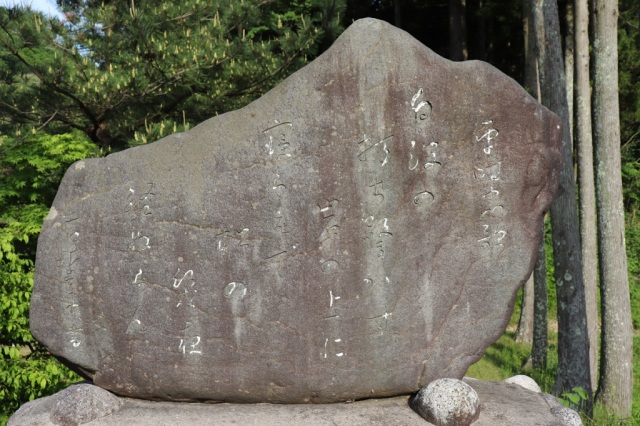
“The image likened to the color of spring flowers now lies beneath the empty waves.”
The figure of Koremori, compared to the beauty of spring flowers, now rests beneath the waves.
She also left behind poems lamenting his submersion into the sea at Kumano.
The writings in ‘Kenreimon-in Ukyodaibu-shu’ reveal that the news of Koremori’s drowning at Kumano had reached the people of that time.
However, Ukyodaibu herself did not witness Koremori’s final moments.
There is no confirmation from her records about him leaving his name on a pine tree or being persuaded by the monk Takiguchi to drown himself.
Moreover, there are other traditions regarding Koremori’s end.
Drowning at Nachi or Dying of Illness in Sagami?
The ‘Gikeiki’ contains an alternative account that Koremori did not drown at Nachi but returned to Kyoto after a pilgrimage to Kumano.
In this story, Koremori pleaded for his life to Emperor Go-Shirakawa.
The emperor negotiated with Minamoto no Yoritomo regarding Koremori’s fate.
Yoritomo reportedly requested that Koremori be sent to Kamakura.
However, it is said that Koremori died of illness at Yuge-shuku in Sagami Province on his way to the eastern provinces.
The ‘Gikeiki’ introduces this alternative account as being based on Fujiwara no Nagakata’s diary, ‘Zenchuki’.
However, the relevant text of ‘Zenchuki’ is currently unverified.
The drowning theory and the illness theory present vastly different accounts of Koremori’s actions and final resting place.
Furthermore, it is difficult to determine the exact timing of Koremori’s departure from the Taira clan based on existing historical records.
The ‘Tale of the Heike’ narrates that Koremori, having taken vows at Mount Koya, ended his life by chanting Buddhist prayers and drowning after visiting the three shrines of Kumano.
The “Kenreimon-in Ukyo no Daibu-shu” also records the news that he had thrown himself into the sea at Kumano.
On the other hand, the “Genpei Seisui-ki” conveys the theory that he died of illness after returning to Kyoto.
Whether Taira no Koremori actually drowned himself off the coast of Nachi remains inconclusive.
However, it is certain that Koremori, who had fled the capital with the Taira clan, eventually parted ways with them and soon after disappeared without a trace.
Meanwhile, in Kyoto, his wife and two children awaited his return.
Rokudai—The Male Heir Left in the Taira Line
Even after Koremori vanished from the clan, his wife and children remained in Kyoto.
The eldest son, Rokudai, was named as such because he was the sixth generation in the line from Taira no Masamori through Tadamori, Kiyomori, Shigemori, and Koremori.
On March 24, 1185, the Taira clan was defeated at the Battle of Dan-no-ura.
Emperor Antoku drowned in the sea, Munemori was captured, and many of the clan’s warriors, including Tomomori, lost their lives.
Subsequently, the Minamoto forces searched for surviving members of the Taira clan in Kyoto.
According to “The Tale of the Heike,” Volume Twelve, “Rokudai,” he was captured by Hojo Tokimasa.
Rokudai was the great-grandson of Kiyomori and the legitimate grandson of Shigemori.
As a male heir connected to the main Taira line, he was regarded with caution by the Minamoto.
Rokudai was on the brink of execution, but it is said that the monk Mongaku from Takao pleaded for his life.
Mongaku, who had a close relationship with Yoritomo, offered to take custody of Rokudai and have him enter the priesthood.
According to “The Tale of the Heike,” Rokudai’s life was spared thanks to Mongaku’s intervention.
However, Rokudai’s position remained unstable.
After Yoritomo’s death, when Mongaku fell from power, Rokudai was captured again and executed, as the story goes.
There are differing accounts regarding the date and location of Rokudai’s execution, and “The Azuma Kagami” does not contain a direct account of his end.
“The Tale of the Heike” concludes that with Rokudai’s death, the main line of Kiyomori came to an end.
On July 25, 1183, when Koremori left Kyoto, Rokudai was ten years old by traditional Japanese count.
It is said that he clung to his father’s armor, crying to be taken along.
Koremori left his son in Kyoto, entrusting his care to the brothers Saito Go and Saito Roku.
Even when he became a monk at Mount Koya the following year, he left a message for Rokudai.
The Taira clan’s heirlooms, the armor “Karakawa” and the sword “Ko-garasu.”
If the clan could return to Kyoto, he wished for these to be given to Rokudai.
According to “The Tale of the Heike,” Koremori later visited the three shrines of Kumano and threw himself into the sea off Nachi.
Before his departure, he inscribed on a pine tree the names of his grandfather Kiyomori, his father Shigemori, and himself.
Rokudai’s name was not among them.
It is unclear when the wife and Rokudai, left behind in Kyoto, first heard the news of Taira no Koremori’s drowning.
On the day Koremori fled the capital, he promised to send for his wife.
That promise was never fulfilled.